Adaptive Reuse Concert Hall Architecture: Transforming the Imperial Spa in Karlovy Vary
An exploration of adaptive reuse concert hall architecture through the transformation of the Imperial Spa into a cultural landmark.


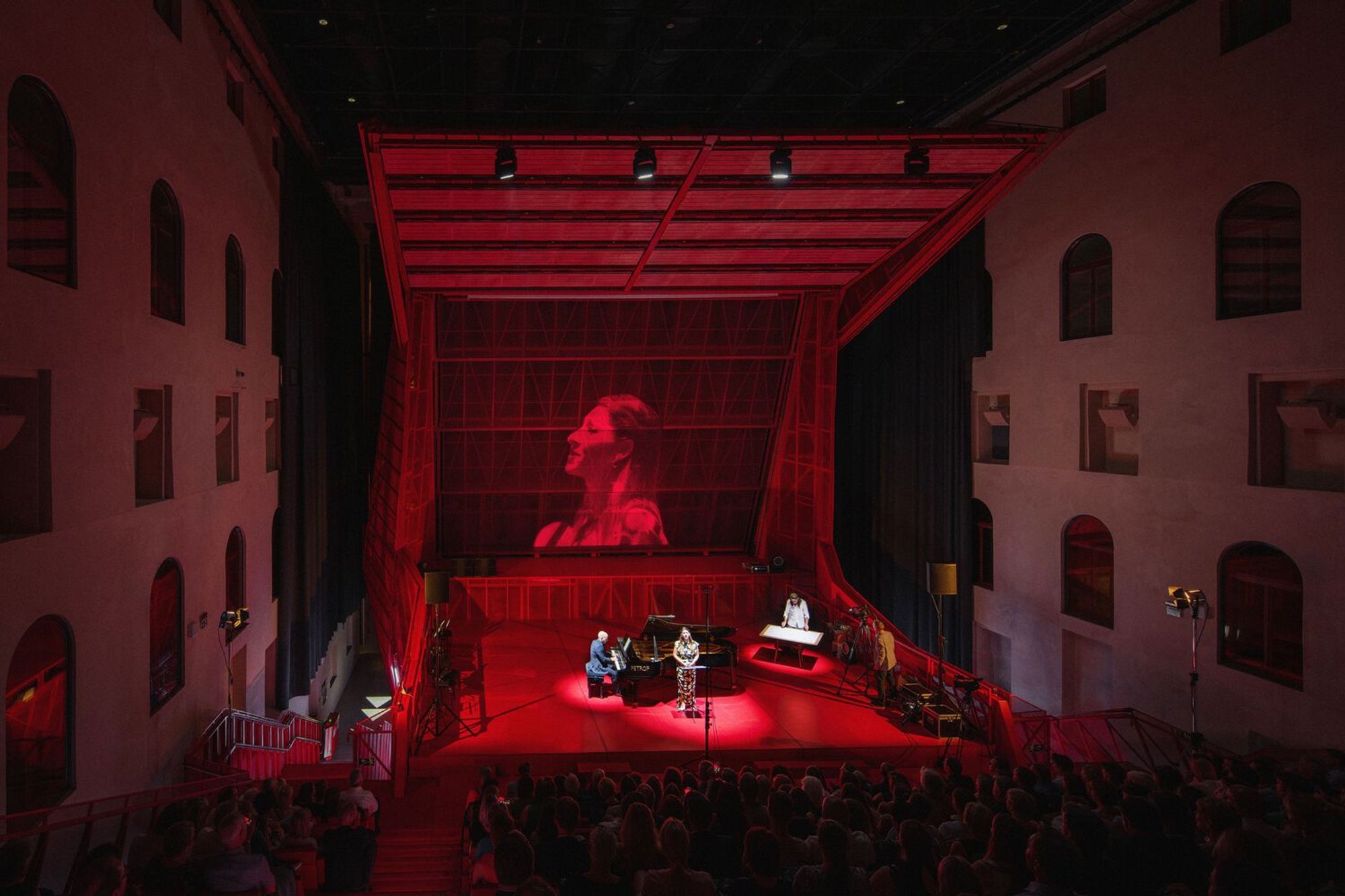
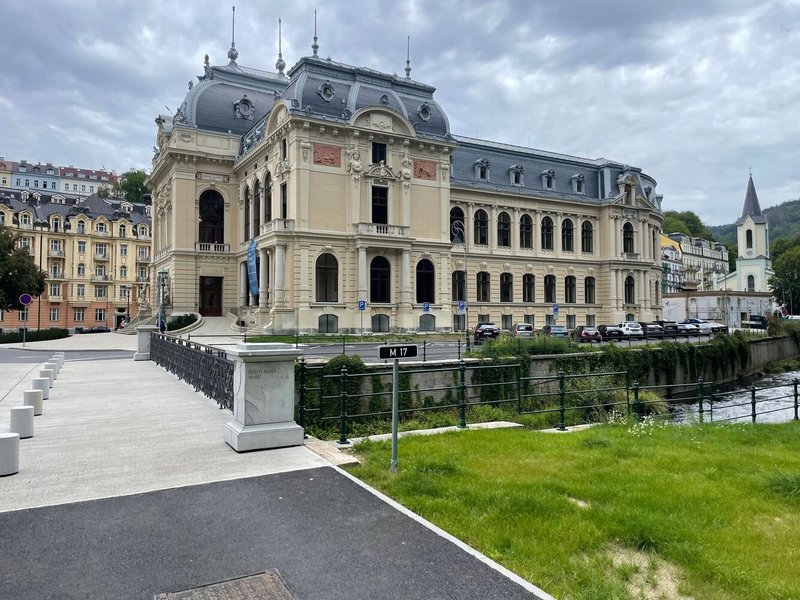
Adaptive reuse concert hall architecture is redefining the relationship between history and modern design, breathing new life into neglected heritage buildings. The transformation of the Imperial Spa in Karlovy Vary, Czech Republic, by Petr Hájek Architekti exemplifies this architectural approach, merging innovative acoustic technology with the preserved elegance of a 19th-century spa. This project stands as a beacon of how adaptive reuse can revitalize cultural landmarks while addressing contemporary functional demands.
The Historical Significance of the Imperial Spa
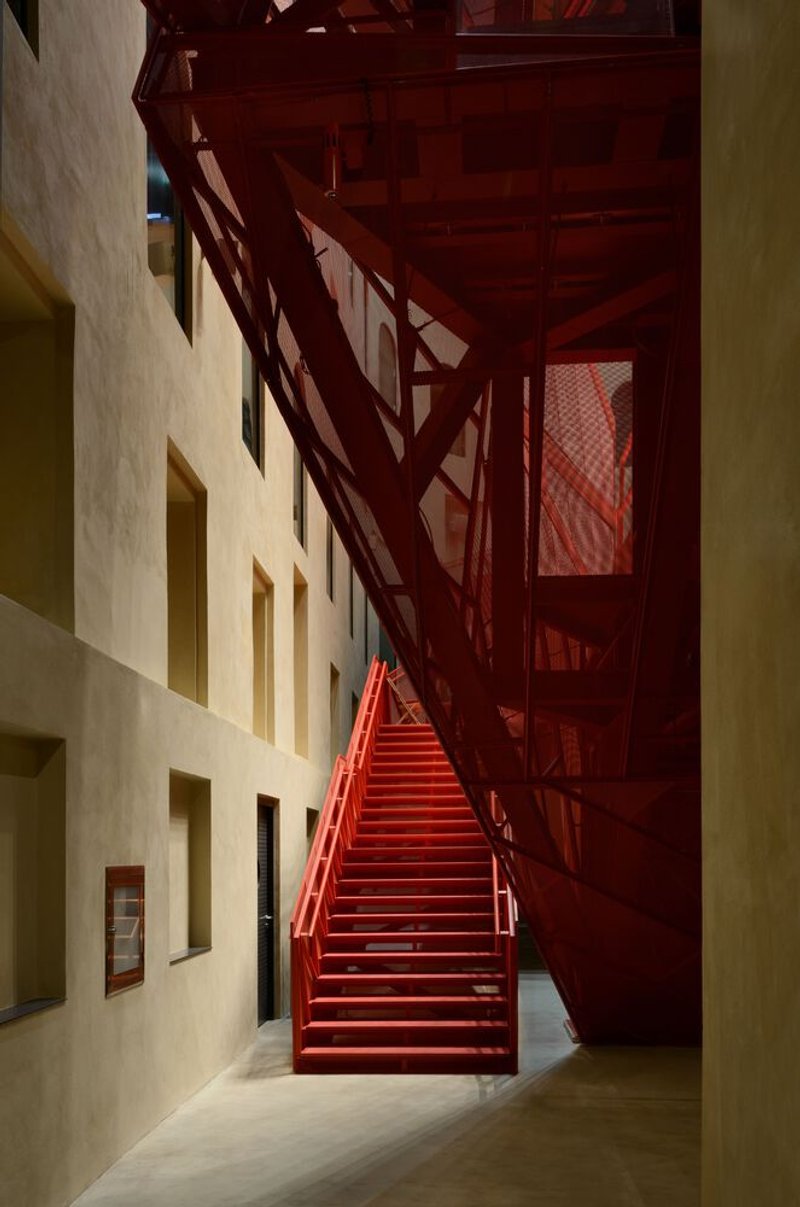
The Imperial Spa, completed in 1895, represented technological and architectural innovation during the industrial revolution. It stood alongside other groundbreaking developments of its era, such as Thomas Edison’s light bulb and Nikola Tesla’s induction motor. Designed by renowned architects Ferdinand Fellner and Hermann Helmer, the spa housed an advanced mechanical system that transported and distributed peat for therapeutic baths. This unique mechanism enabled the spa to accommodate up to 2,000 guests per day, transforming it into a bustling hub of wellness.
Over the following decades, as the popularity of spa treatments declined, the building’s purpose became increasingly obsolete. By the late 20th century, it was used only sporadically for cultural events and began to fall into disrepair. The challenge arose to repurpose this architectural gem into a space that respected its historical roots while serving a modern cultural function.
The Vision for Adaptive Reuse
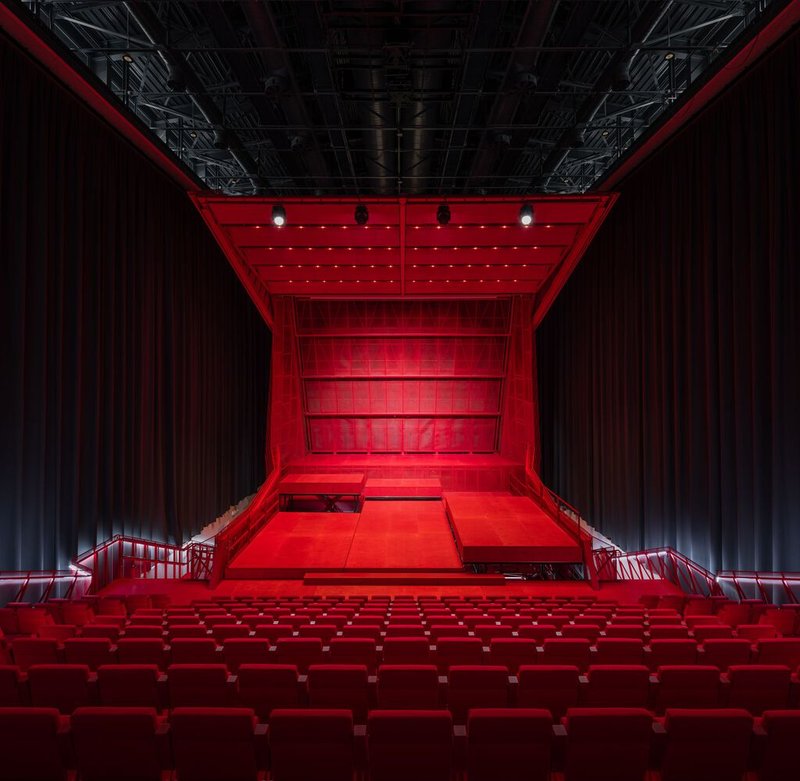
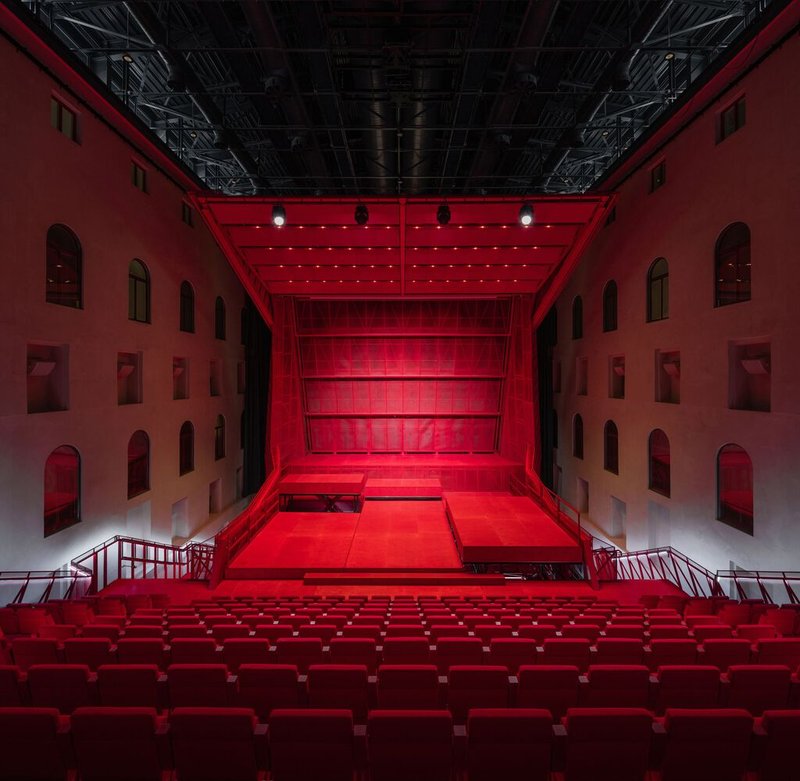
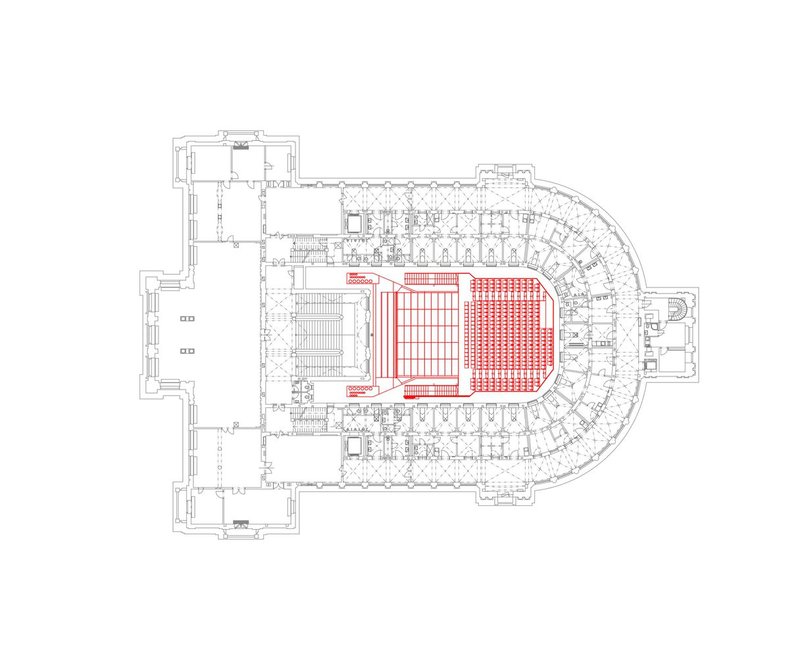
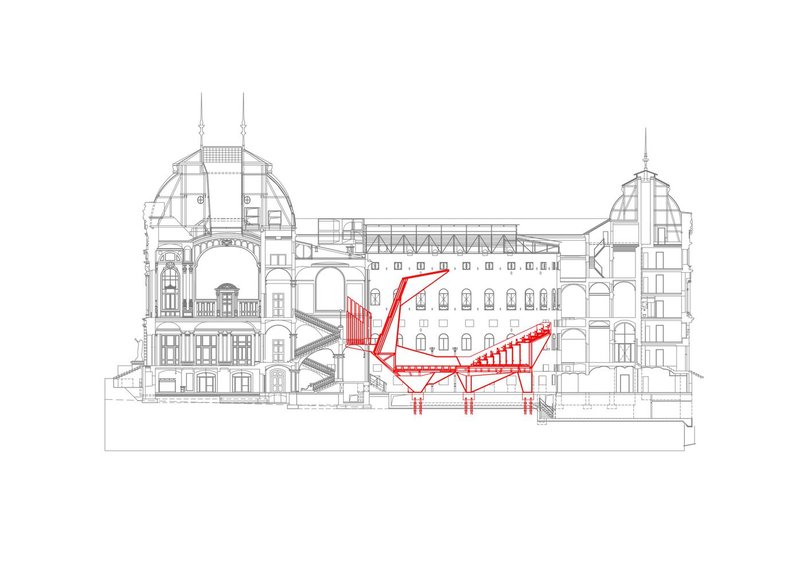
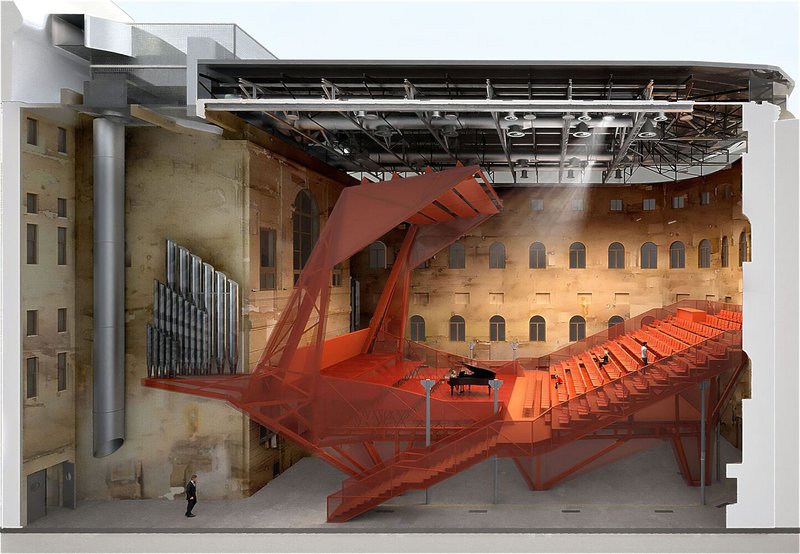
Petr Hájek Architekti undertook the task of reimagining the Imperial Spa as a multifunctional cultural center, with a concert hall as its centerpiece. Situated within the atrium, which once housed the peat conveyor system, the new concert hall draws inspiration from the building’s industrial past. The design pays homage to the original “peat machine” by integrating cutting-edge acoustic and scenic technology into the architectural narrative.
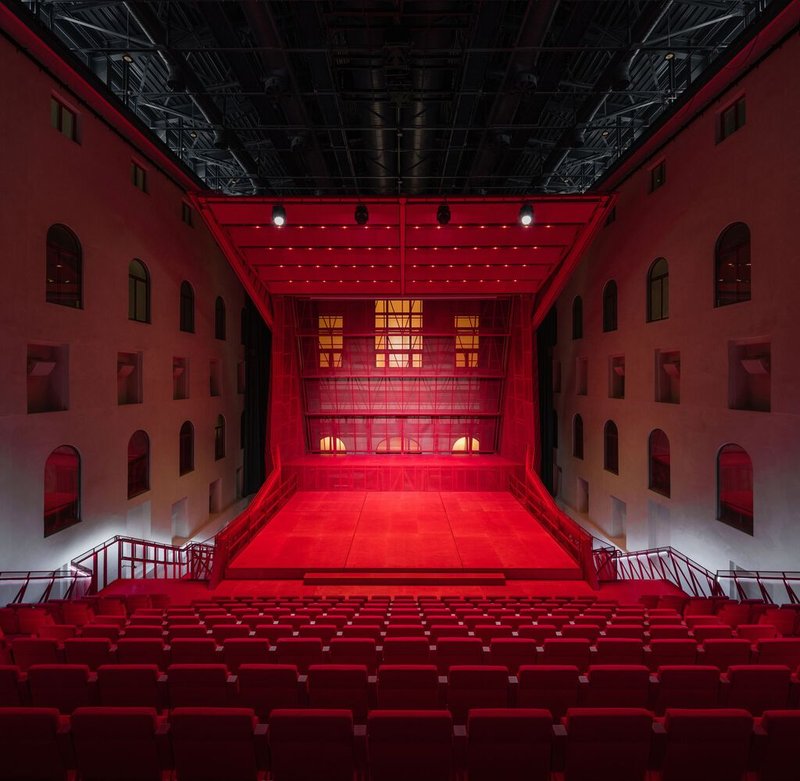
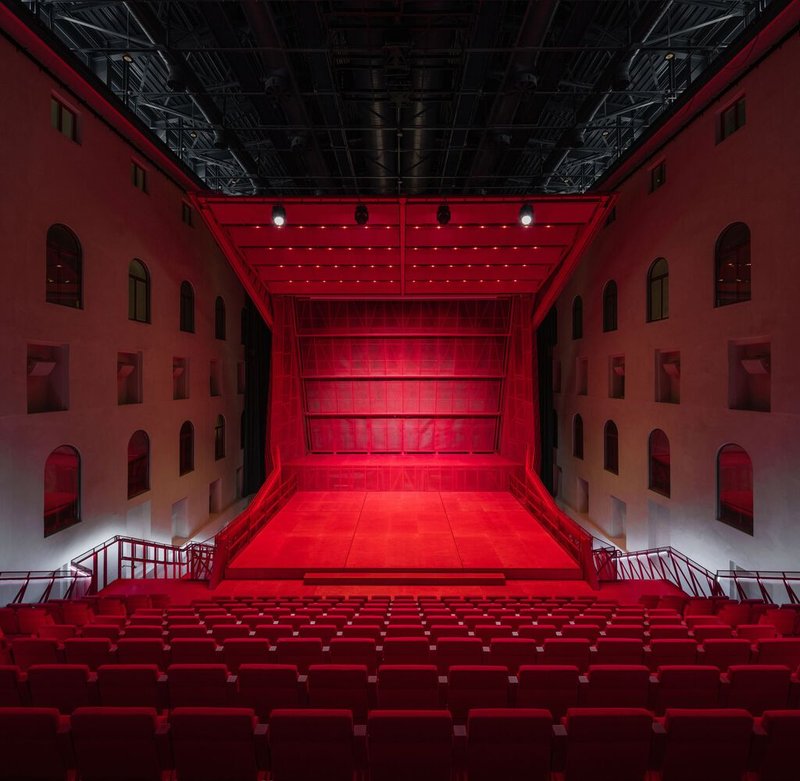
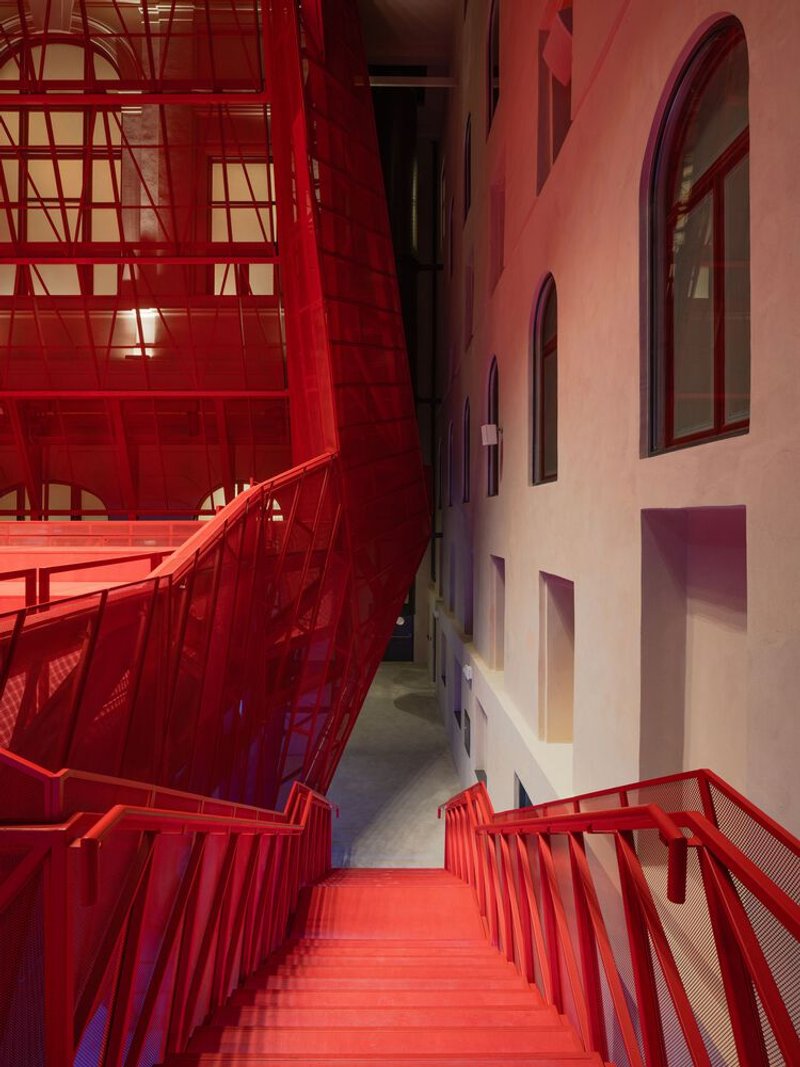
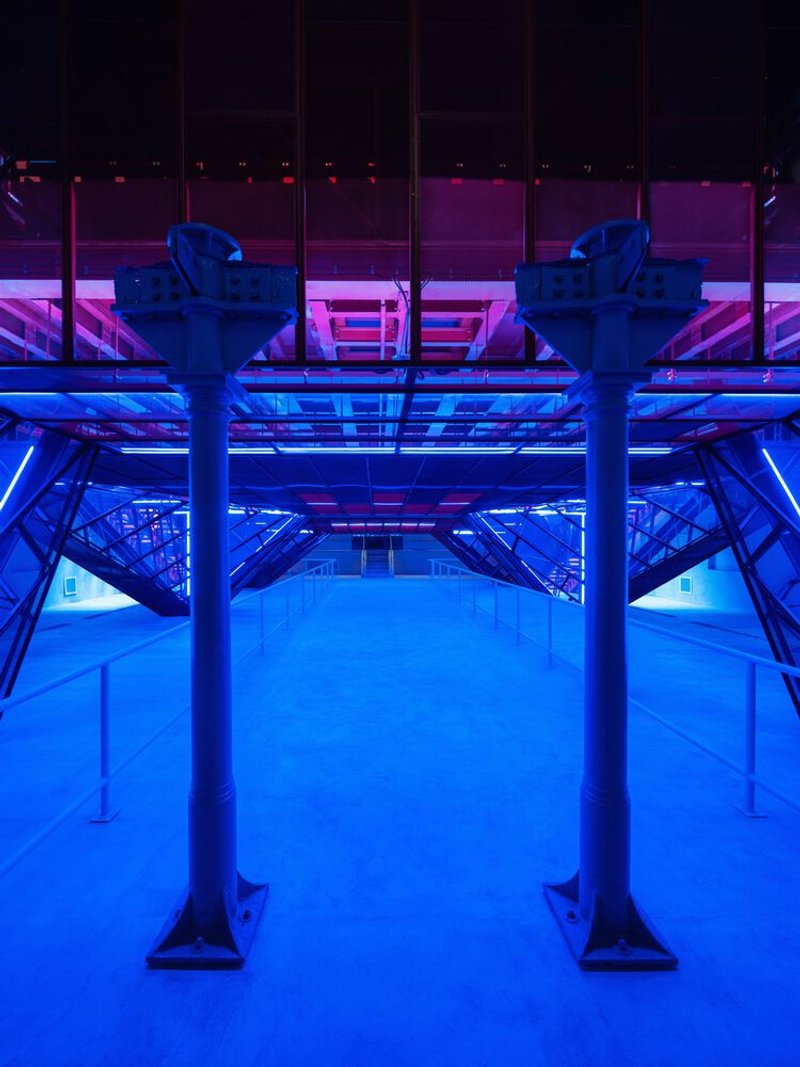
The adaptive reuse approach allowed for the retention of cast-iron columns and other surviving structural elements while introducing modern interventions that coexist with the building’s historical identity. This fusion of past and present defines the essence of adaptive reuse concert hall architecture, where preservation and innovation intersect.
Architectural Transformation and Design Philosophy
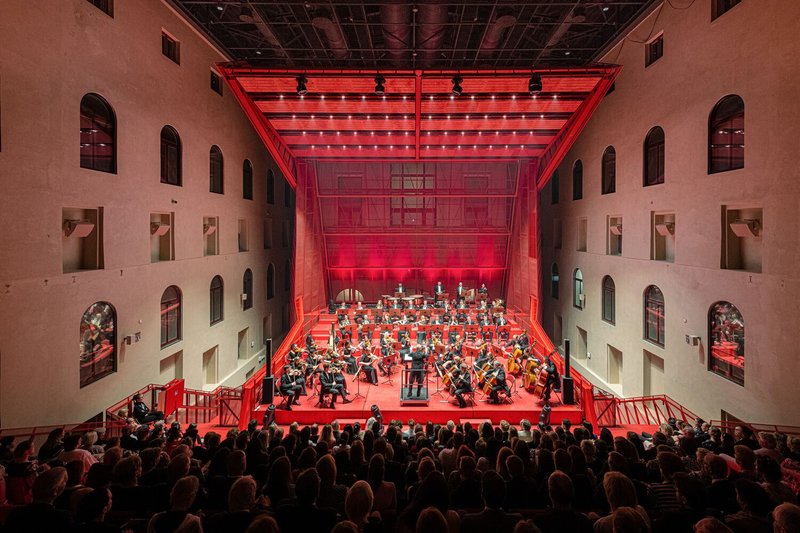
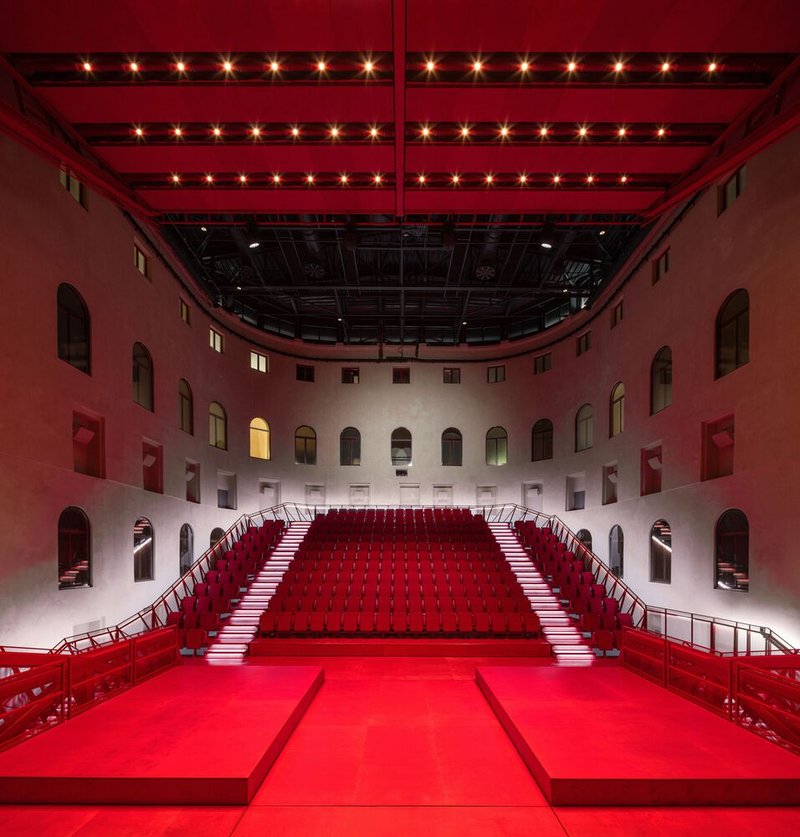
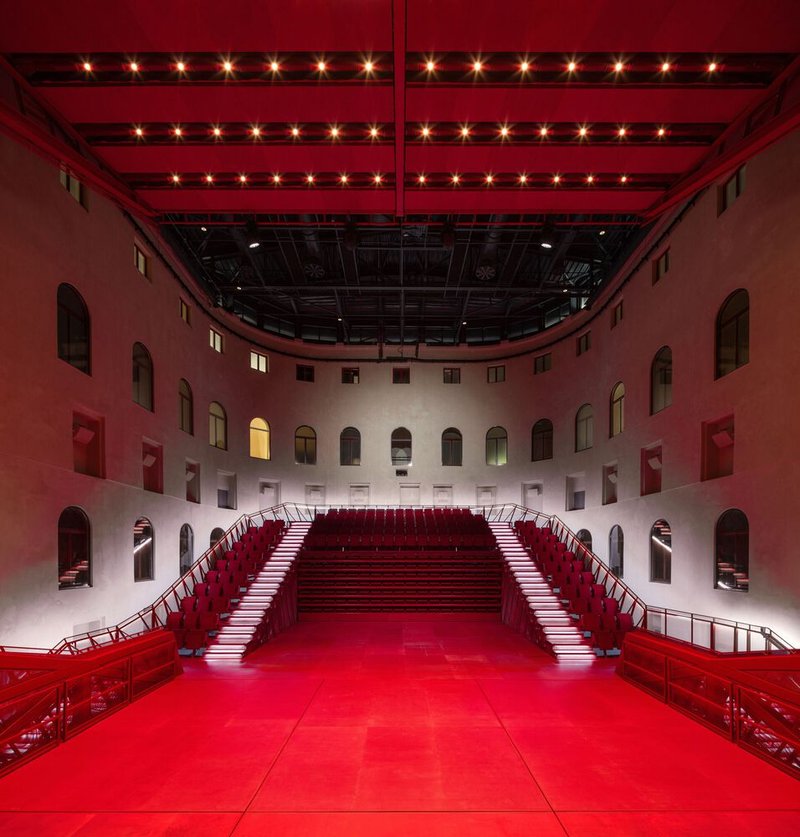
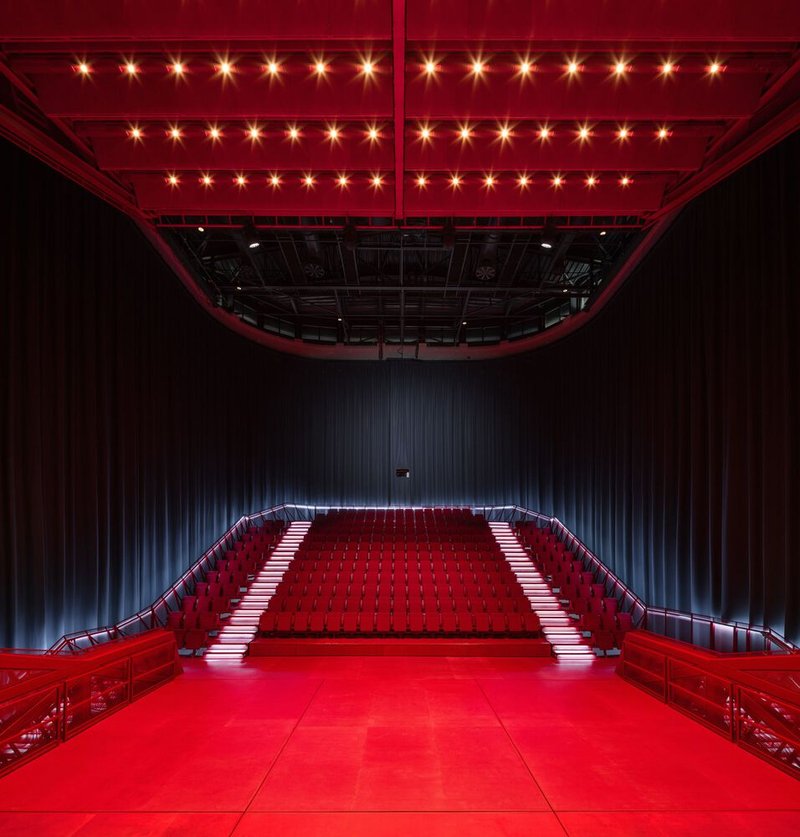
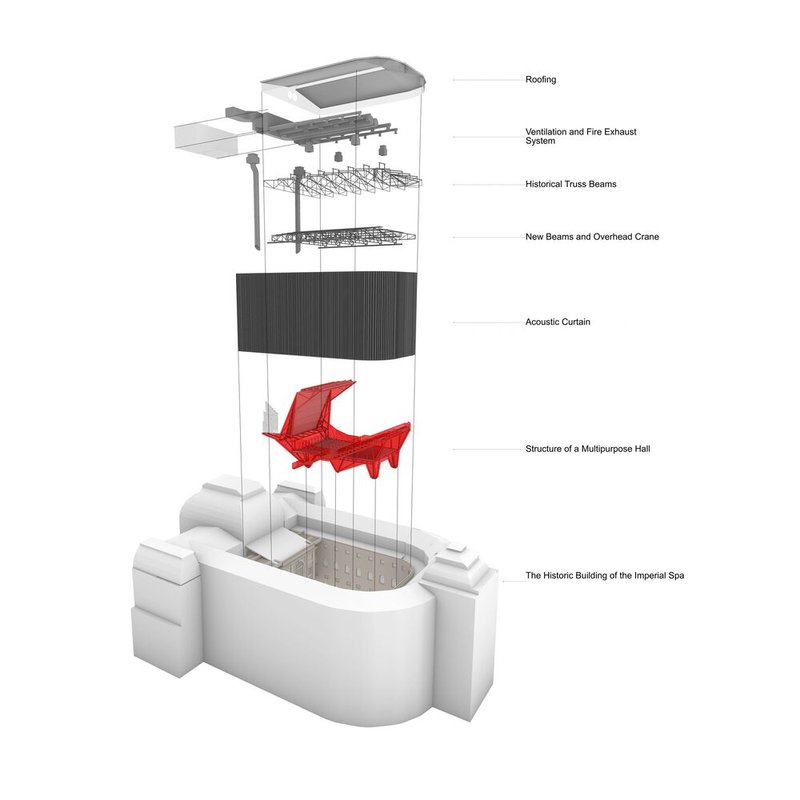
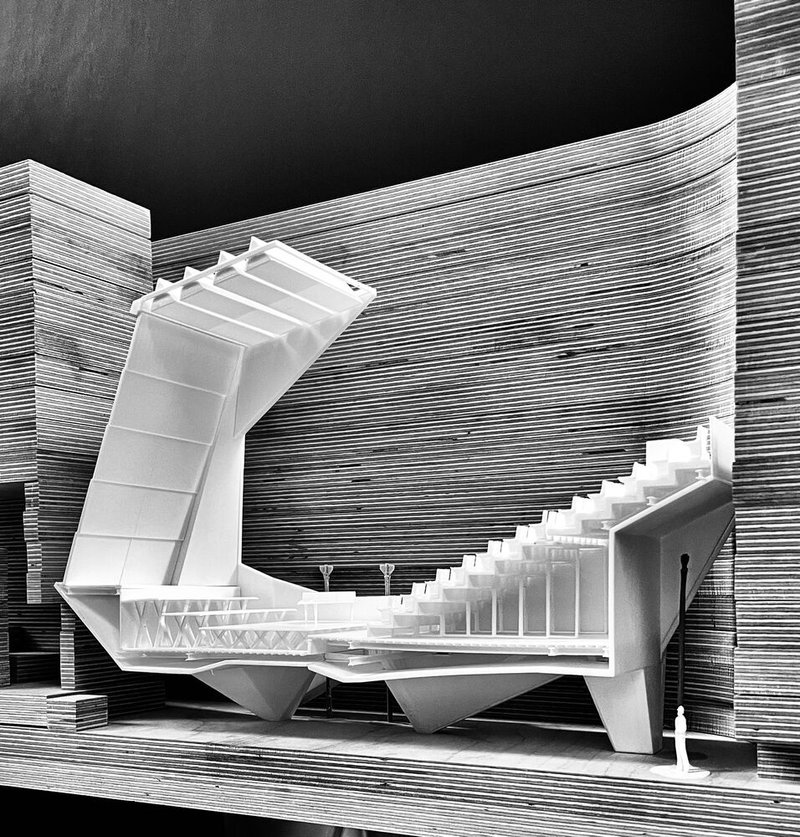
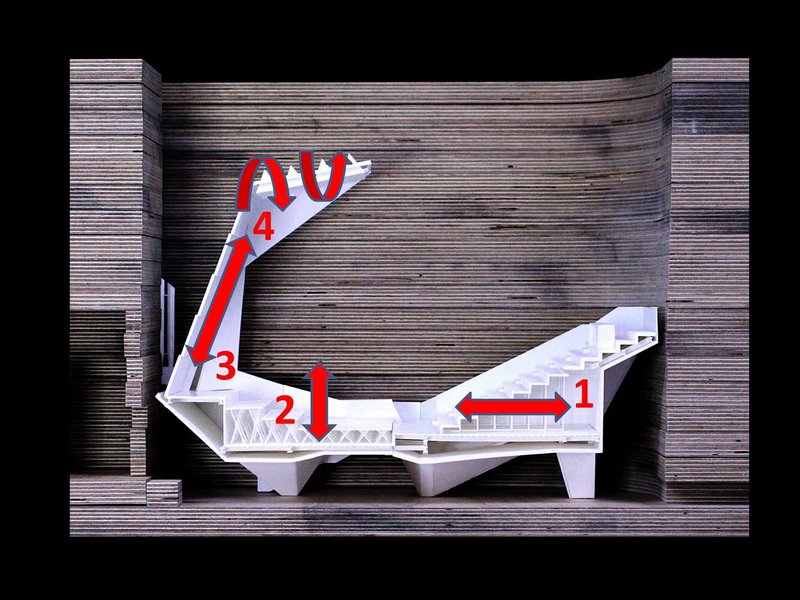
The concert hall was conceived as a “transformer,” capable of adapting to various performance requirements. Its spatial and acoustic configurations can be modified to suit concerts, theater performances, dance shows, conferences, film screenings, and popular music events. This adaptability mirrors the versatility of a Swiss army knife, offering multiple functional possibilities within a single space.
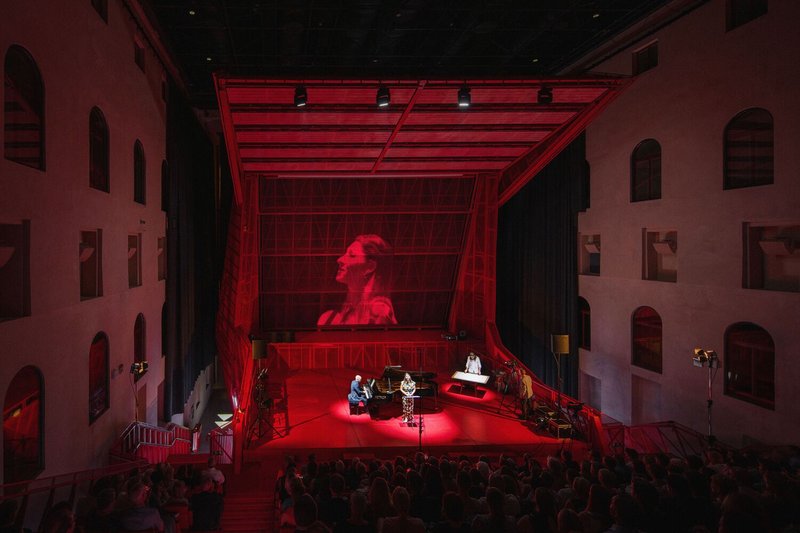
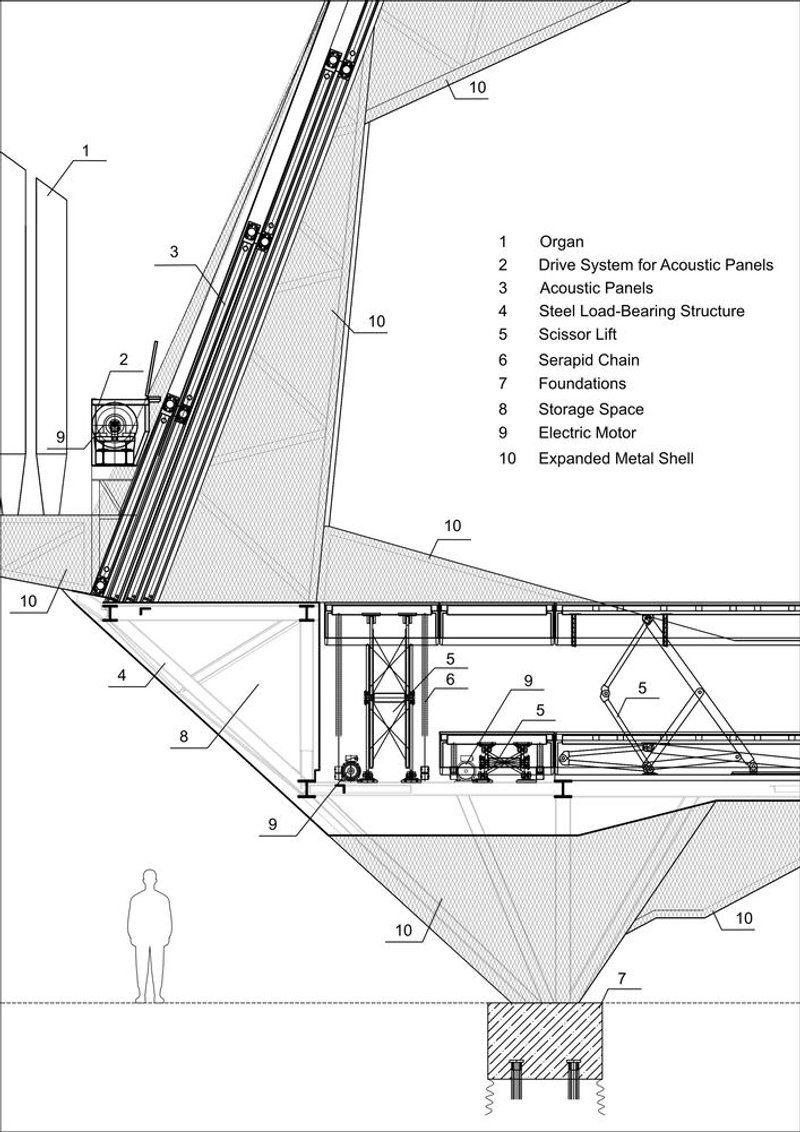
Rotating triangular panels above the stage allow sound to be reflected, absorbed, or dispersed based on the event’s needs. A retractable screen serves as an orchestral shell, optimizing sound projection toward the audience. The stage floor incorporates wooden panels mounted on a steel structure, functioning as acoustic resonators that harmonize with the orchestra’s instruments.
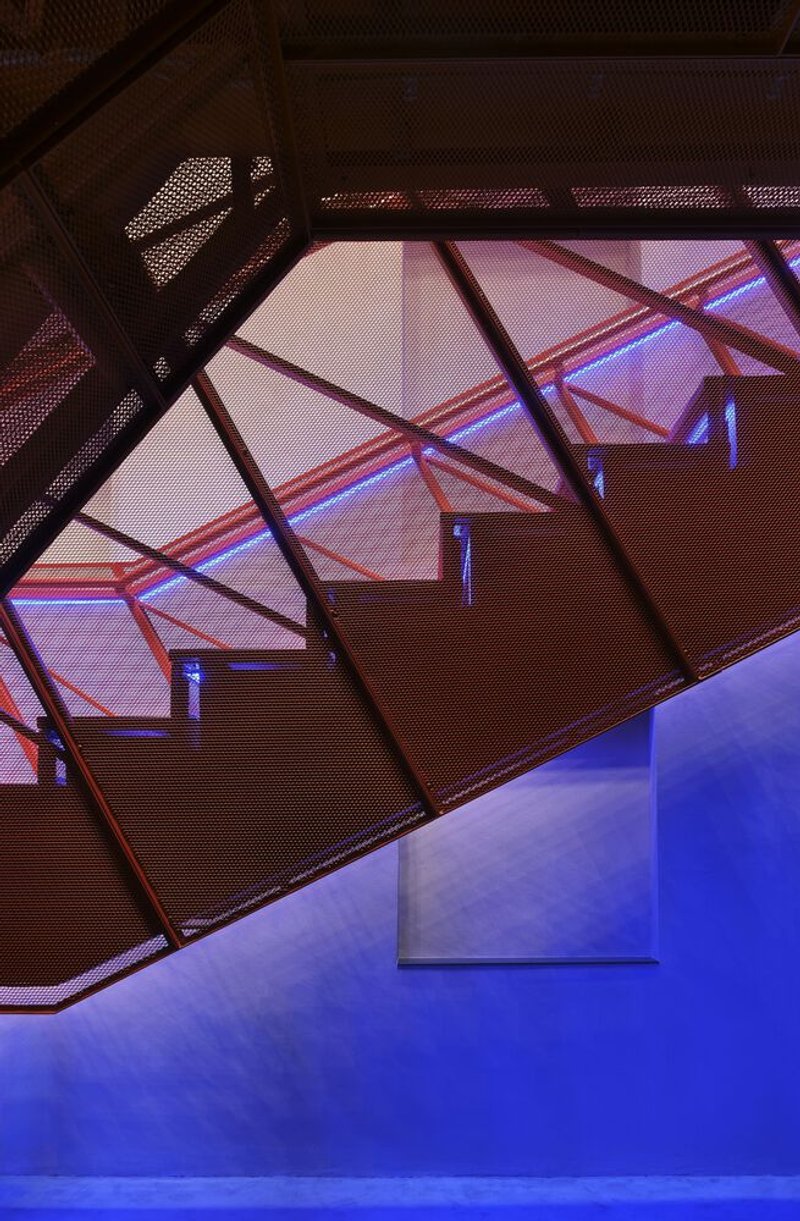
Reverberation time, sound direction, and energy distribution are meticulously controlled through these integrated acoustic elements. A blackout curtain can enclose the hall, creating a completely dark and acoustically dampened environment when required. The seamless integration of performance technology into the architectural framework exemplifies the potential of adaptive reuse concert hall architecture to cater to contemporary artistic expressions.
Construction Challenges and Engineering Innovation
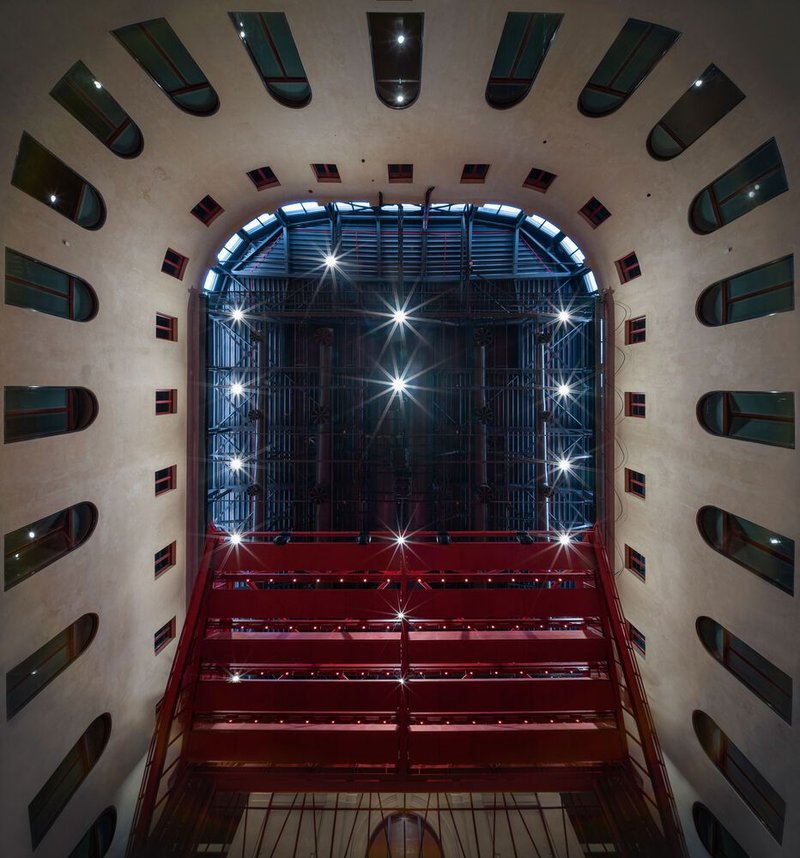
The transformation of the atrium into a concert hall posed significant construction challenges. Large structural components could not be transported through the existing building due to its historical fabric. Instead, the architectural team devised an innovative approach, assembling the structure from smaller elements transported through an opening in the roof.
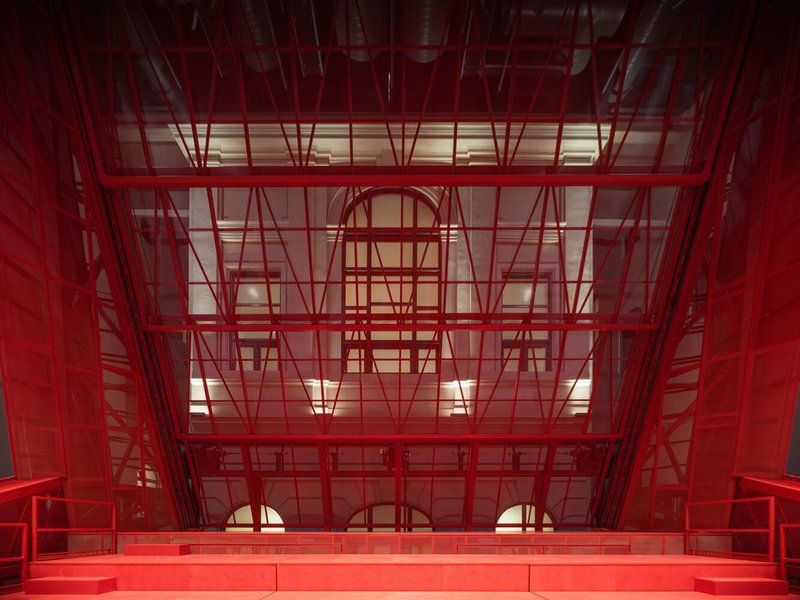
Ventilation and fire safety systems were discreetly incorporated above the main staircase roof, ensuring that modern infrastructure did not compromise the visual integrity of the heritage building. This meticulous attention to detail underscores the complexity and precision required in adaptive reuse concert hall architecture.
Harmonizing Acoustics and Aesthetics
Acoustic excellence was at the forefront of the design process. The hall’s interior surfaces balance functionality and visual harmony, ensuring that every element contributes to both sound performance and architectural beauty. Steel frameworks concealed within the structure support acoustic panels and reflective surfaces, while timber finishes create warmth and resonance.
The result is a concert hall where music and architecture converge. Performers experience unparalleled sound quality, while audiences are enveloped in an environment that respects the building’s historic grandeur. This synthesis of acoustic precision and architectural elegance elevates the adaptive reuse concert hall to a level of cultural and sensory significance.
Preserving Heritage Through Adaptive Reuse
The transformation of the Imperial Spa exemplifies the broader potential of adaptive reuse concert hall architecture in preserving heritage buildings. By repurposing underutilized structures, architects can safeguard cultural identities while addressing contemporary needs. The Imperial Spa now stands not only as a monument to its 19th-century origins but also as a vibrant cultural hub for the 21st century.
This project serves as an inspiration for cities worldwide seeking to preserve their architectural heritage while fostering artistic expression. Adaptive reuse emerges as a sustainable solution, bridging the gap between history and modernity.

The Imperial Spa’s transformation into a concert hall by Petr Hájek Architekti exemplifies the power of adaptive reuse concert hall architecture. Through innovative design, acoustic mastery, and respect for historical context, the building has been reimagined as a dynamic cultural venue. This project underscores the potential of adaptive reuse to rejuvenate heritage structures, ensuring their continued relevance in contemporary society. The Imperial Spa now resonates not only with music but with the enduring legacy of architectural preservation and reinvention.
All Photographs are works of Benedikt Markel, Petr Polák, Ester Havlová