
Airship Hangar Replacement: A Landmark in Sustainable Timber Architecture
The Airship Hangar Replacement by Smyk Fischer Architekten showcases sustainable timber architecture, integrating renewable materials, energy efficiency, and circular construction principles.

A New Era of Airship Hangar Design
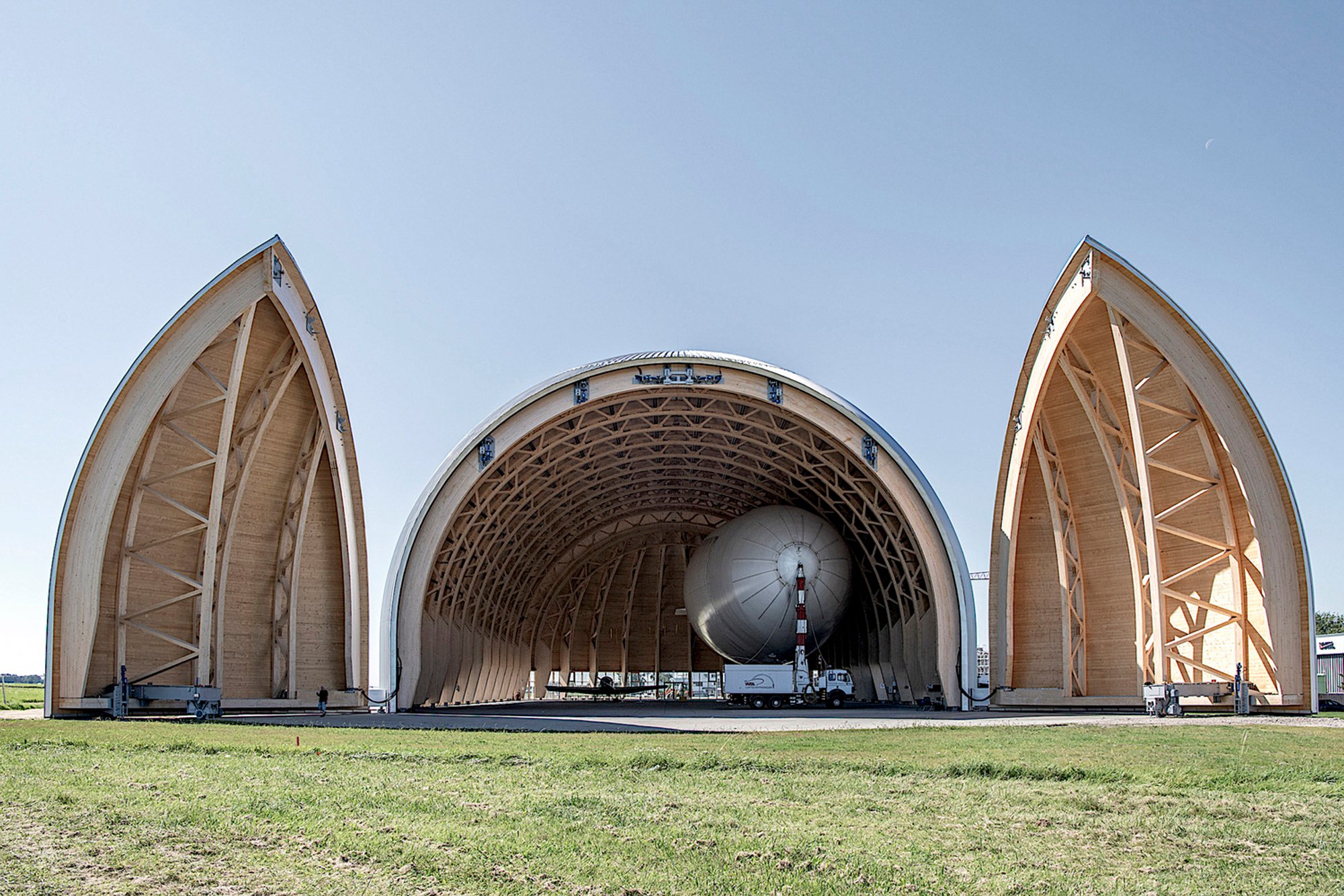
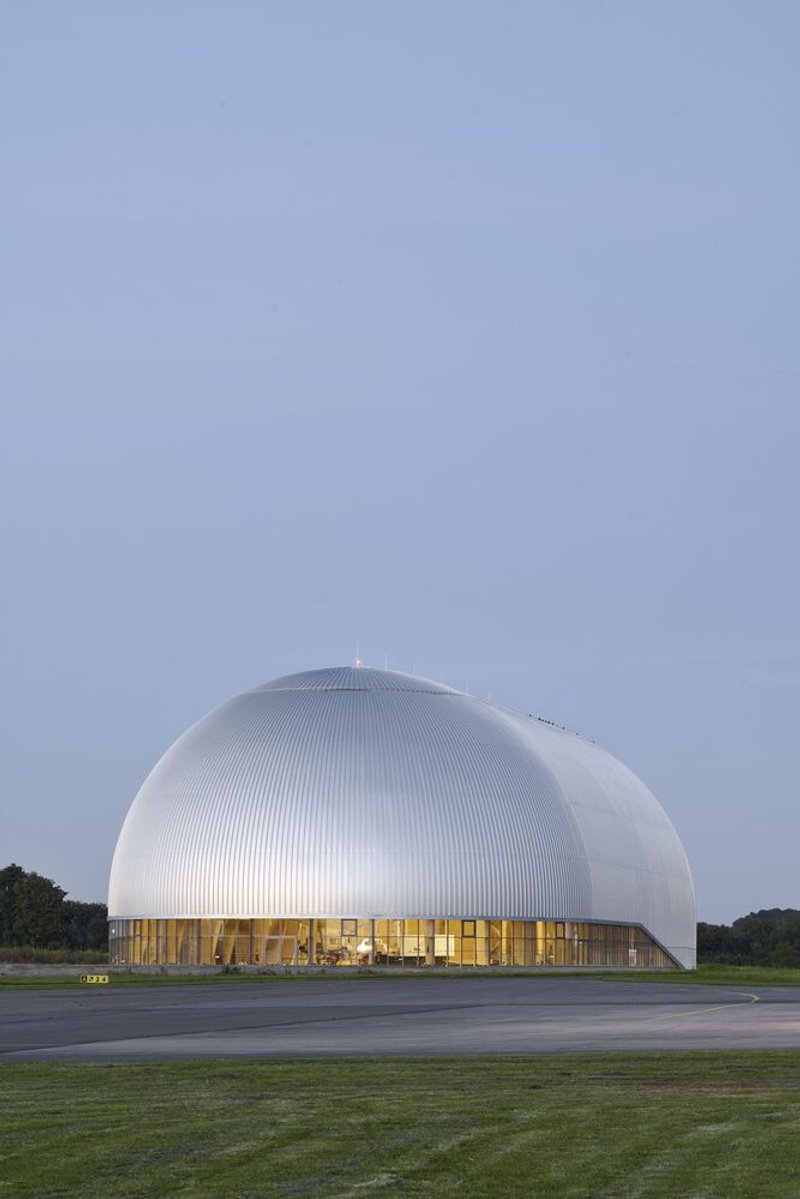
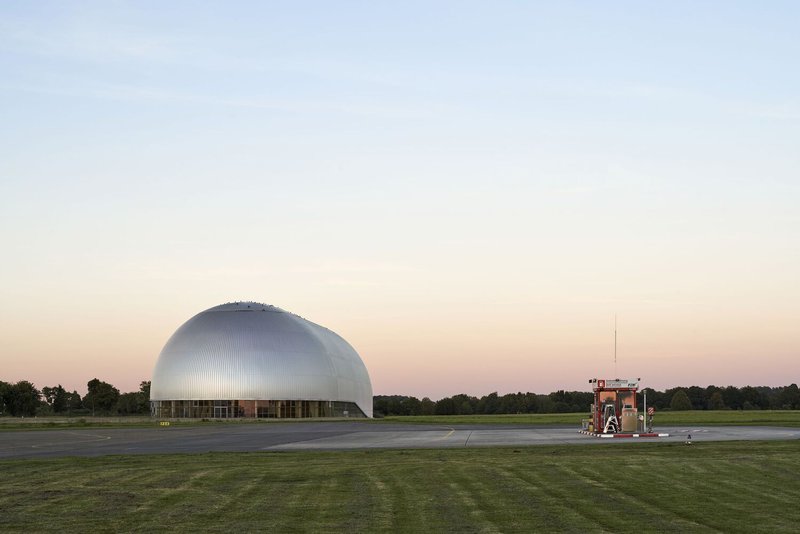
The Airship Hangar Replacement in Mülheim an der Ruhr, designed by Smyk Fischer Architekten, is a pioneering example of sustainable timber architecture. More than just a storage facility for the airship "Theo," the hangar serves as a multifunctional space for events, accommodating up to 1,500 people. Its innovative approach to construction integrates renewable materials, energy efficiency, and architectural elegance, earning it the prestigious DGNB Gold certification—Germany’s highest recognition for sustainable building practices.
This project redefines industrial architecture by merging sustainability with contemporary design, reinforcing the hangar’s role as a regional landmark while embracing ecological responsibility.
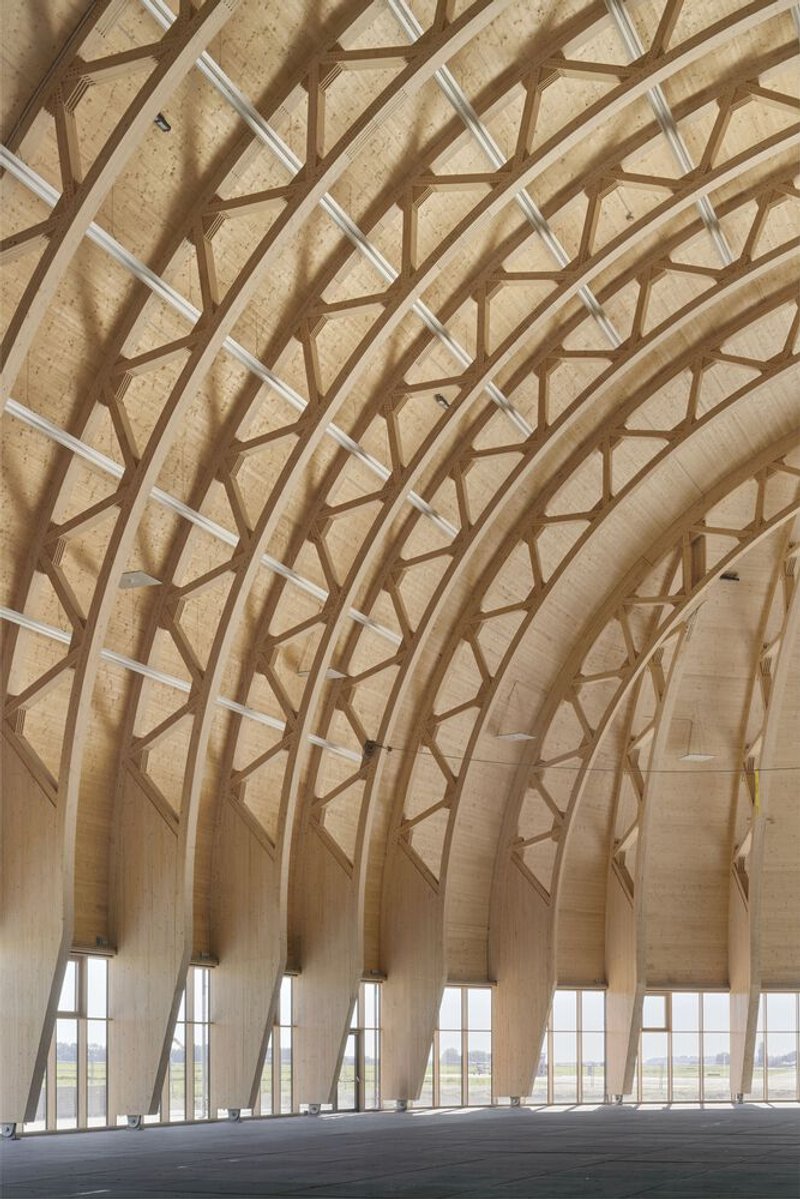
Architectural Form and Material Innovation
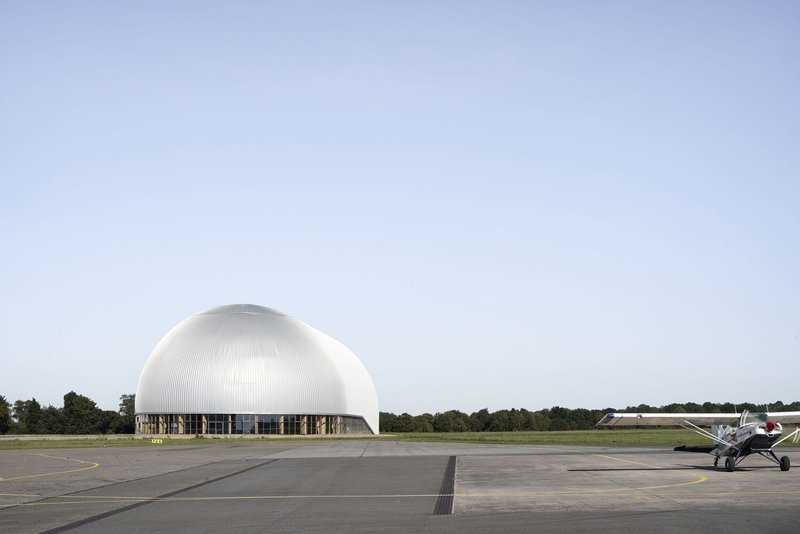
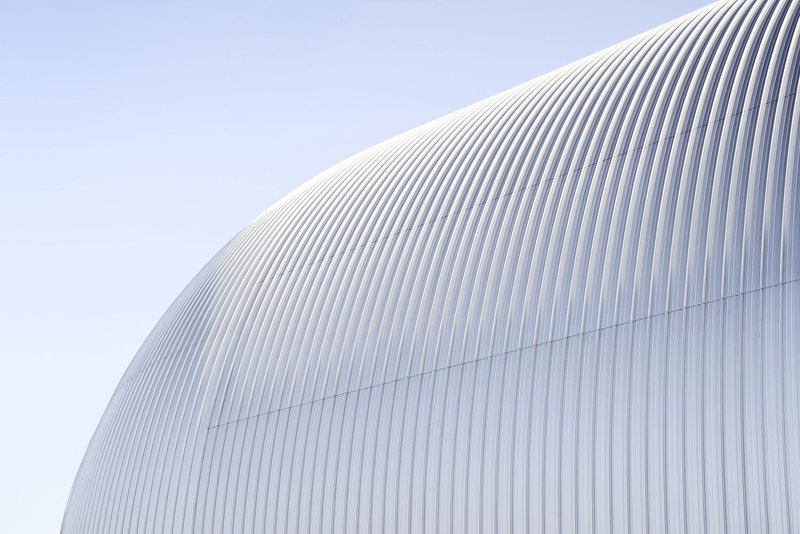
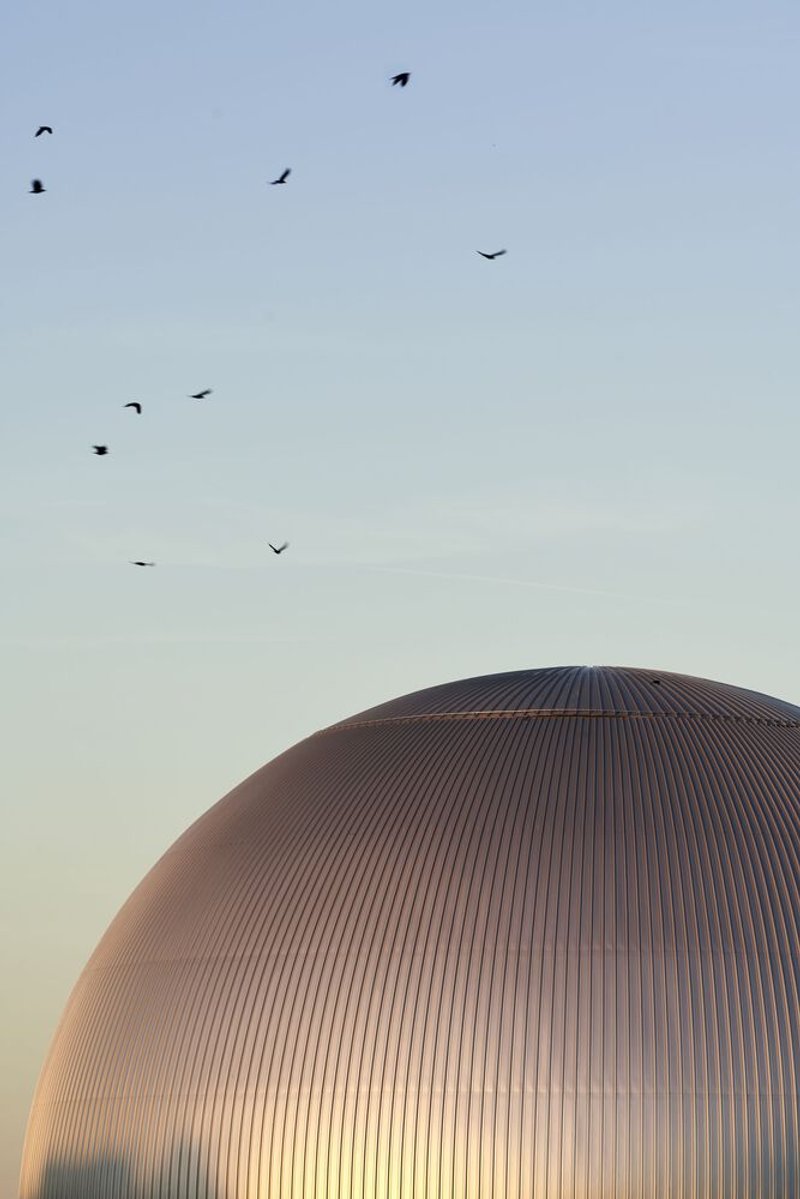
The new airship hangar pays homage to its historic predecessors through its distinctive form while introducing a modern interpretation. The exterior is clad in a fully recyclable aluminum facade, composed of fine vertical standing seams that enhance its sculptural quality through dynamic light and shadow interplay.
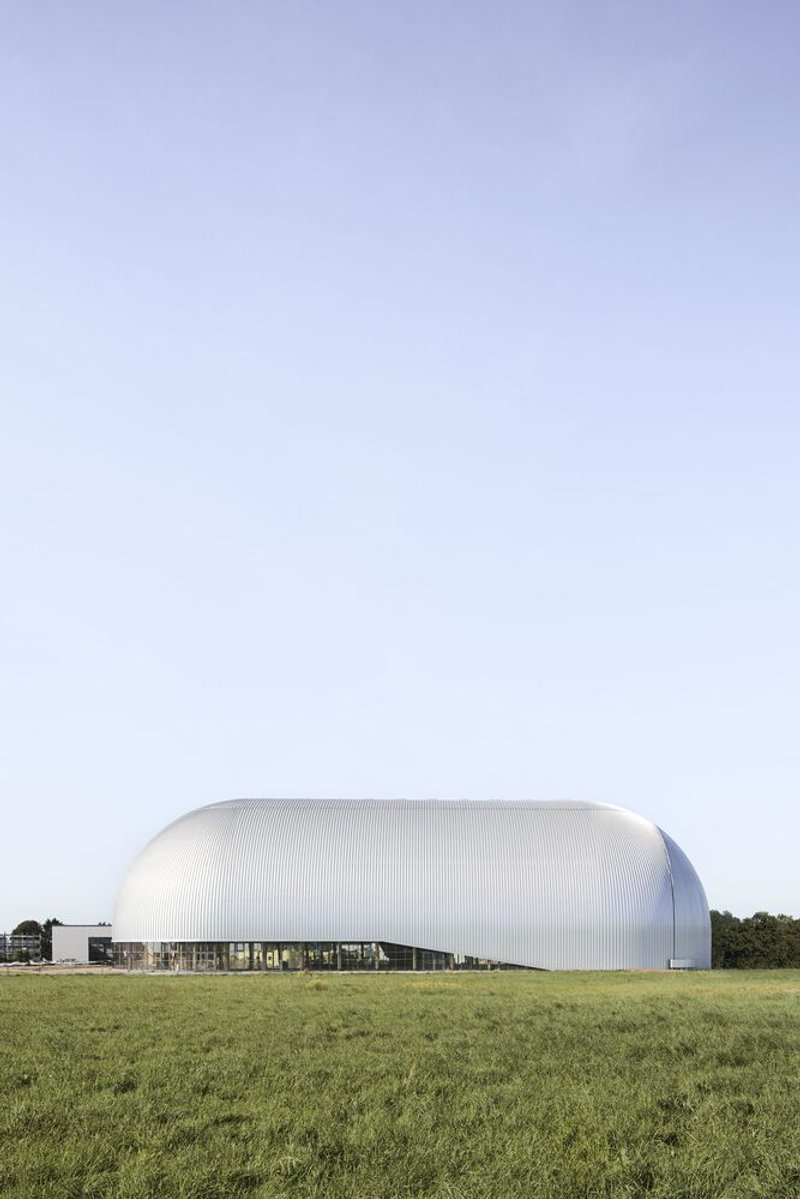
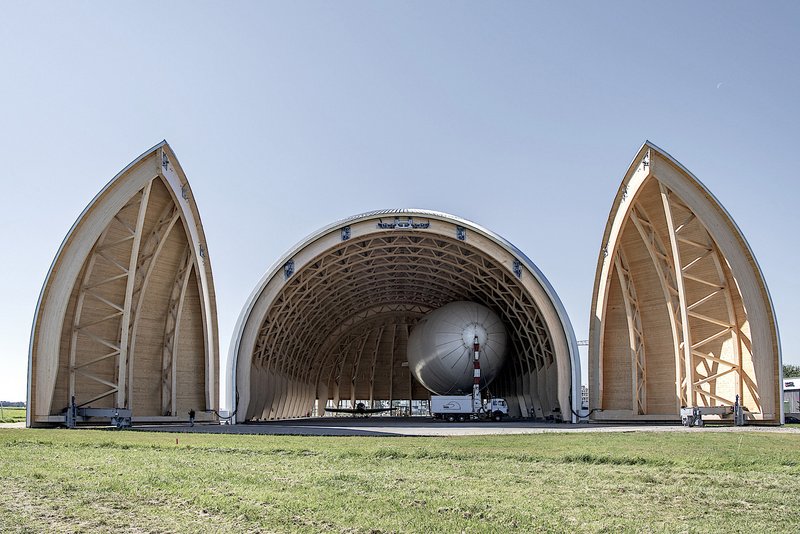
A strategic glass strip on the west side introduces natural daylight and offers expansive views of the airfield, creating a seamless connection between interior and exterior spaces. The massive hangar doors, weighing 72 tons each, open in a theatrical motion, framing the airship’s movements with a sense of grandeur.
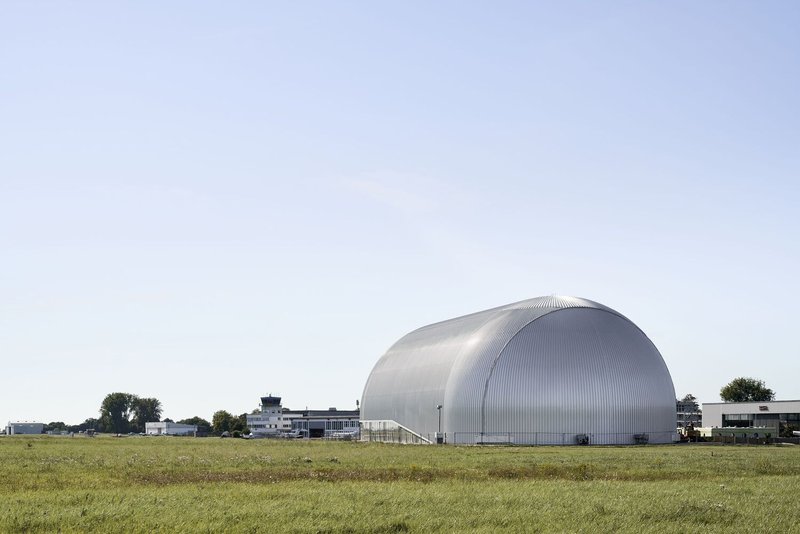
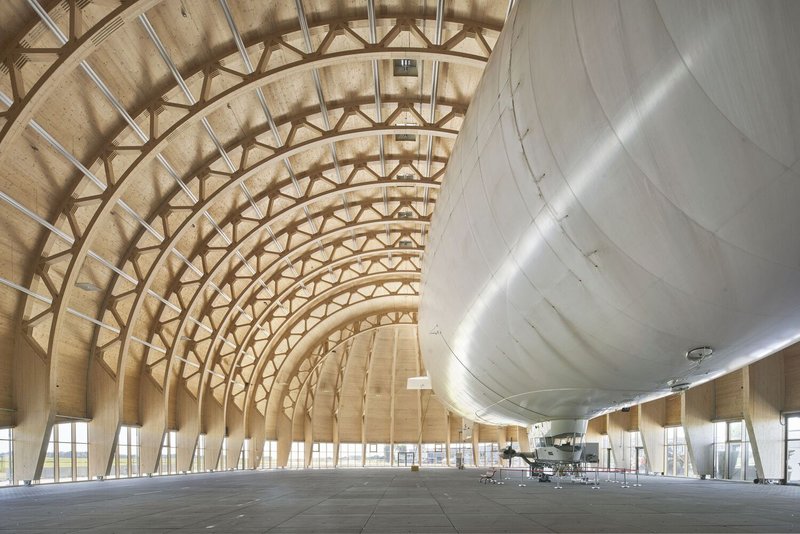
Internally, the hangar contrasts its cool metallic exterior with a warm timber structure. This hybrid design approach balances aesthetics and function, ensuring a welcoming atmosphere within a highly technical environment.
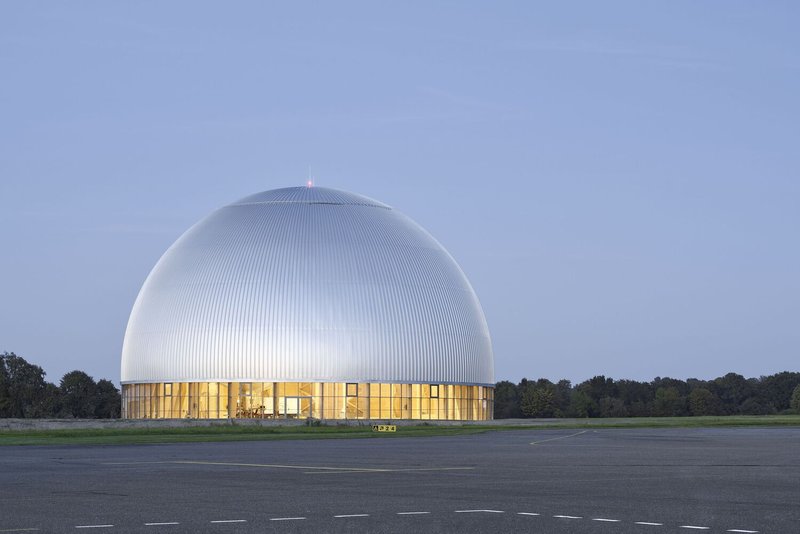
Engineering Excellence and Timber Sustainability
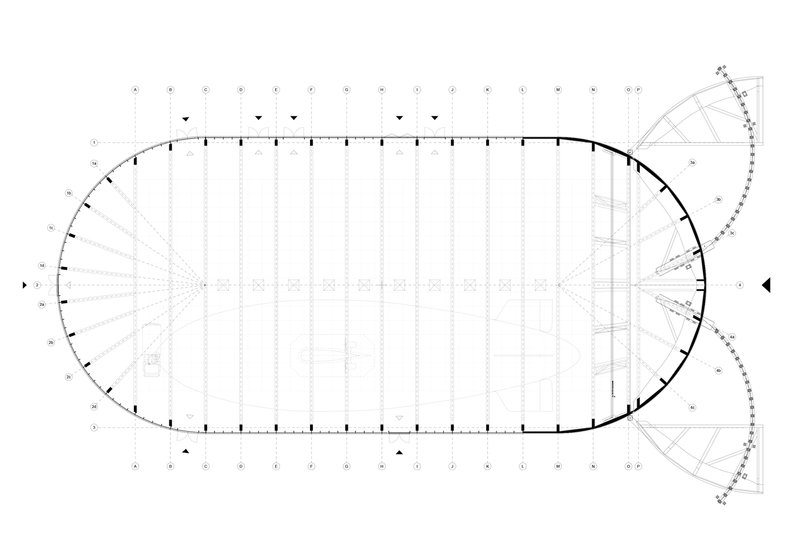
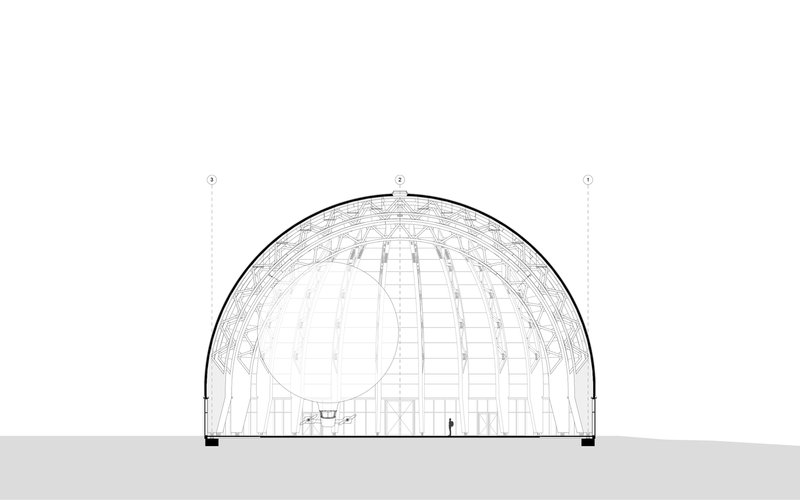
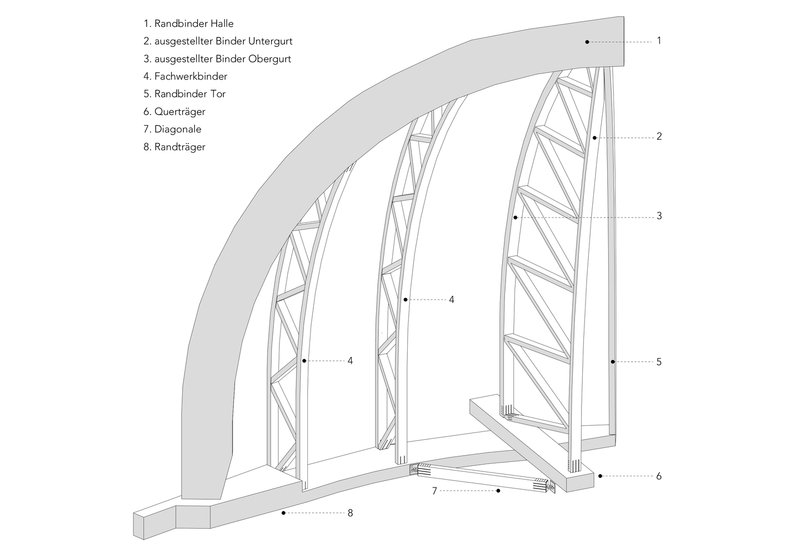
Spanning 90 x 42 meters and reaching a height of 26 meters, the hangar’s dimensions rival those of a football field. Beyond its scale, the project exemplifies sustainable timber architecture through its structural innovations. The supporting framework is constructed from 557 tons of German-sourced timber, assembled using an advanced timber frame system with two-hinged frames spanning 42 meters.
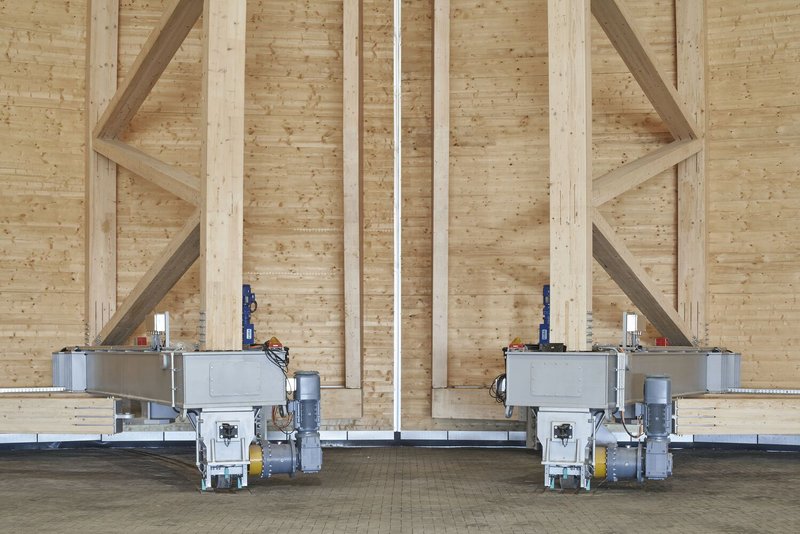
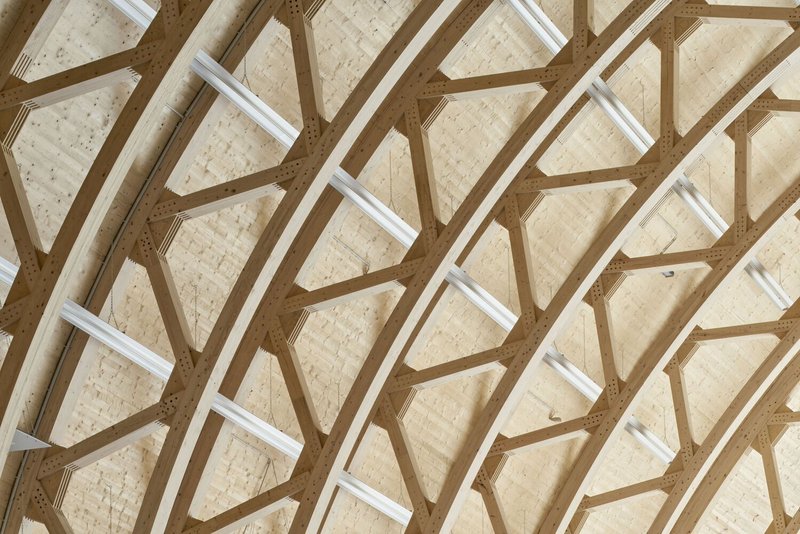
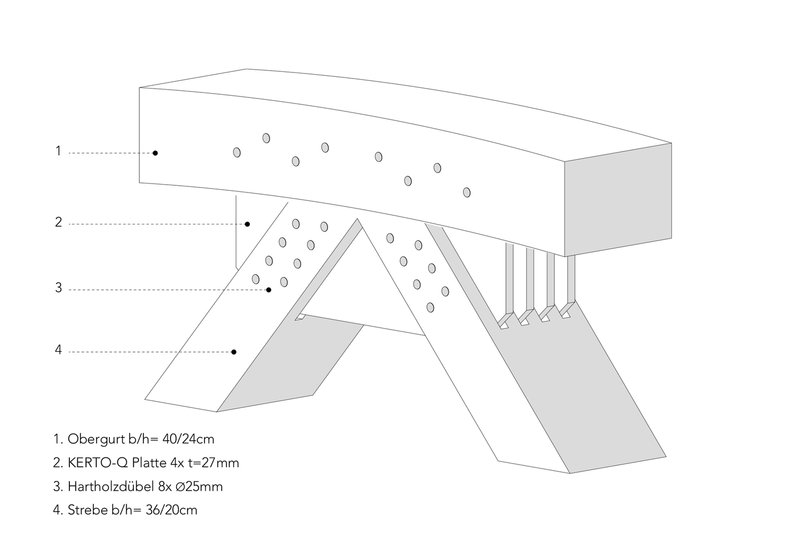
The truss girders are connected exclusively through pure timber joinery, utilizing laminated veneer lumber panels and hardwood dowels. This design not only enhances structural integrity but also aligns with circular construction principles, reducing the need for steel and synthetic adhesives.
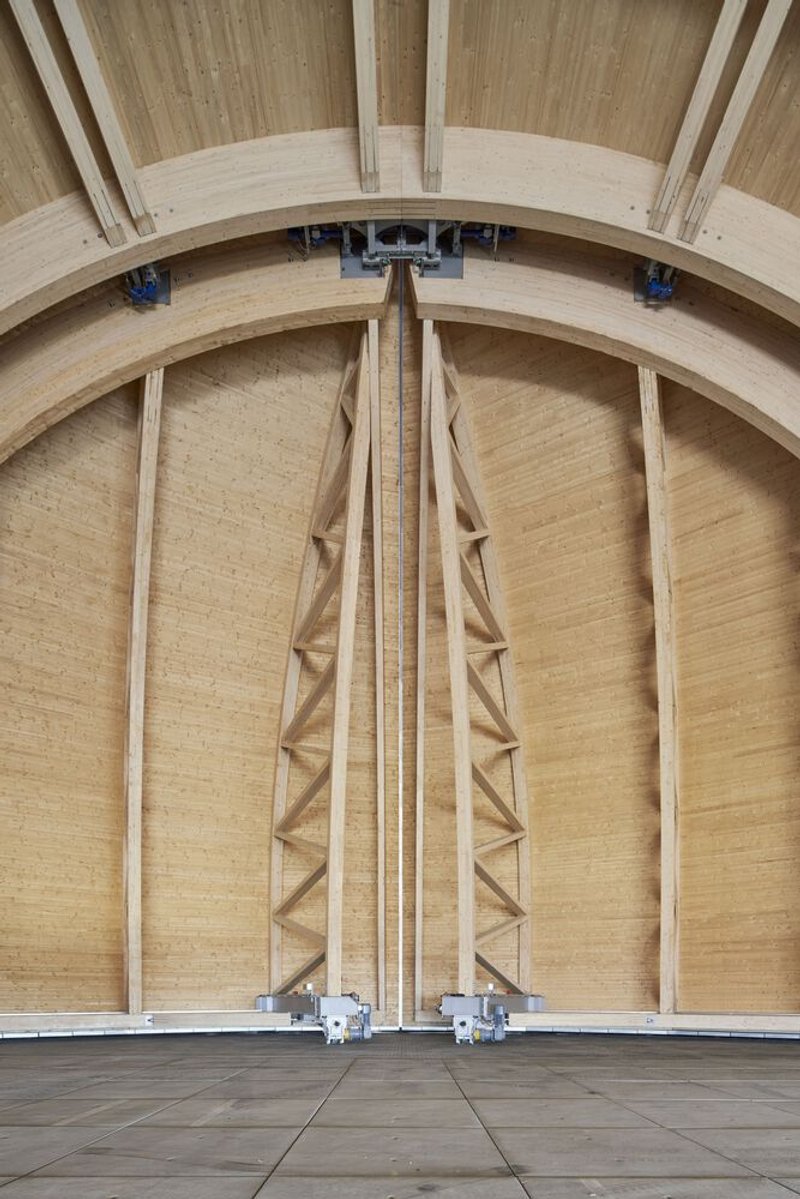
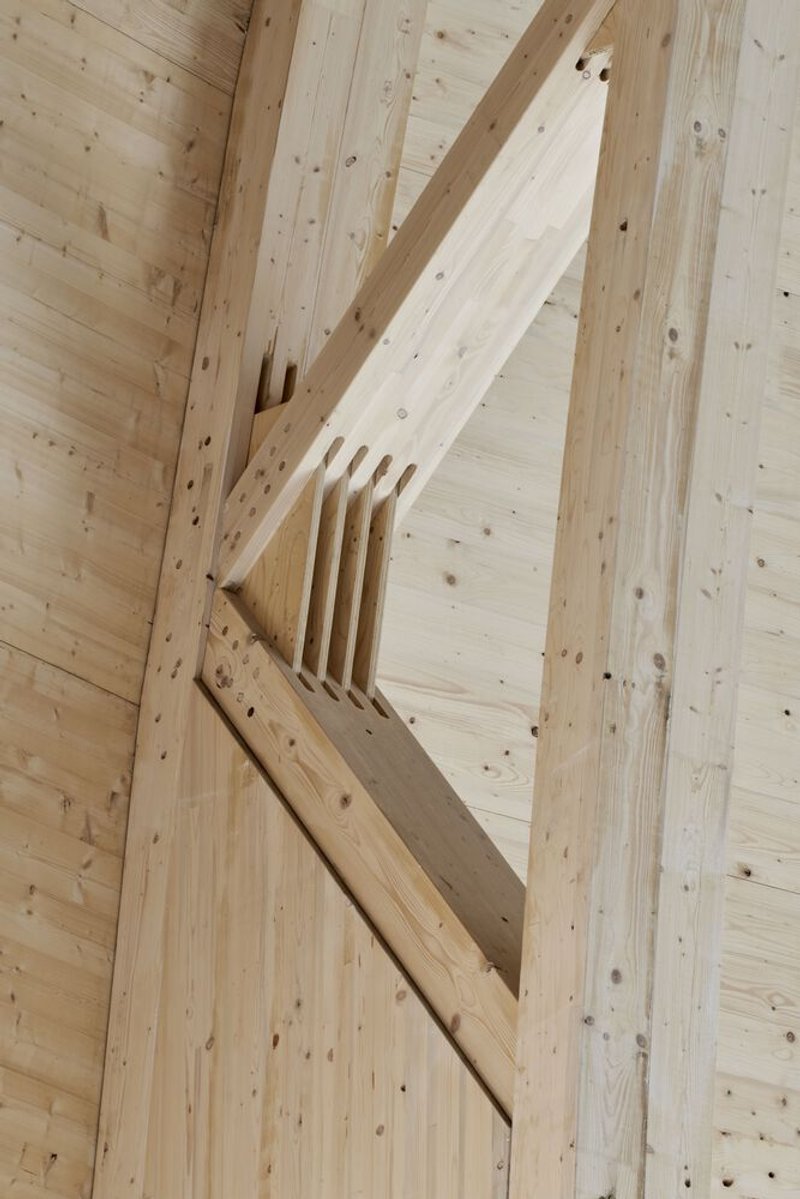
The roof system, composed of large-format laminated timber panels, functions as both a load-bearing element and an insulating layer. This dual-purpose approach optimizes energy efficiency while contributing to acoustic comfort within the hangar.
Circular Construction and CO2 Reduction
A standout aspect of the project is its commitment to circular construction. The original foundations were crushed and repurposed on-site to form the base of the new hangar floor. Additionally, the visible floor slab consists of recycled concrete sourced from a nearby construction site, significantly reducing the project’s carbon footprint by minimizing material transportation.
Through these resource-conscious strategies, the project successfully prevented 156 tons of CO2 emissions, demonstrating how large-scale industrial architecture can actively contribute to climate resilience.
Setting a Benchmark for Sustainable Industrial Architecture
The Airship Hangar Replacement is more than a functional structure; it is a statement of sustainability and innovation in industrial architecture. By integrating renewable materials, minimizing carbon emissions, and optimizing energy performance, Smyk Fischer Architekten has set a new benchmark for sustainable timber architecture.
All photographs are works of Annika Feuss, Stefan Lamberty, WDL




Popular Articles
Popular articles from the community

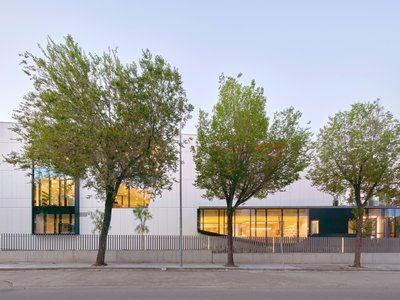
Magic Box Office Barcelona Innovative Sustainable Workplace Design
Innovative sustainable office design featuring triangular form, ceramic façade, flexible interiors, natural light optimization, and creative workspace for modern work culture.
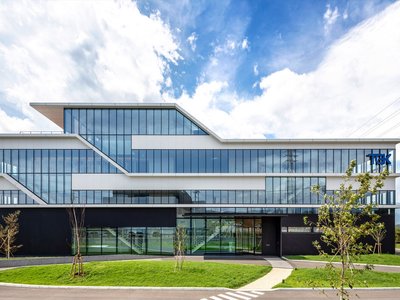
TGK Nirasaki Plant: A Smart Factory Blending Technology, Landscape, and Wellness
Smart factory in Japan blending IoT manufacturing, scenic trail design, natural ventilation, and landscape integration to enhance user experience and sustainability.

Free Architecture Competitions You Can Enter Right Now
No entry fees, real prizes. Here are the best free architecture competitions open for submissions in 2026.
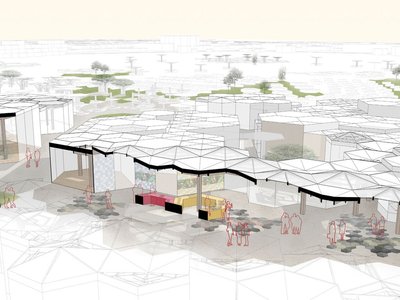
20 Most Popular Commercial Architecture Projects of 2025
From sustainable market concepts to heritage factories, the commercial buildings and proposals that drew the most attention on uni.xyz this year.


Similar Reads
You might also enjoy these articles
20 Most Popular Commercial Architecture Projects of 2025
From sustainable market concepts to heritage factories, the commercial buildings and proposals that drew the most attention on uni.xyz this year.
Free Architecture Competitions You Can Enter Right Now
No entry fees, real prizes. Here are the best free architecture competitions open for submissions in 2026.

Top 15 Architecture Competitions to Enter in 2026
From student-friendly idea competitions to prestigious international awards, here are the best architecture competitions open for entries in 2026. Updated regularly.

DIY & Engineering in Computational Design : Enter the BeeGraphy Design Awards
Showcase Your Creativity with Computational Design and Open Source Projects


Explore Architecture Competitions
Discover active competitions in this discipline




The International Standard for Design Portfolios


The Global Benchmark for Architecture Dissertation Awards


The Global Benchmark for Graduation Excellence


Challenge to reimagine the Iron Throne
Comments (0)
Please login or sign up to add comments
No comments yet. Be the first to comment!