Tying together the threads of humans, evolution and nature in Australia.
Alcheringa: The Dreamtime


Introduction
Terra by Uni has launched a competition based in Australia that aims to build a tourist village that helps visitors to learn about the history of human evolution which not only sensitizes but spreads awareness about the changing relationship between nature, natives and the country of Australia. As new Australia inclusively moves ahead in time with a more unified approach to development, there’s a fresh wave of hope that embarks on equality. To join the threads of human evolution, nature and its inhabitants of past and present.
Human Evolution:
All of the world’s modern populations can be traced back to one single “Out Of Africa” migration roughly 72,000 years ago, a 2016 study discovered. Among this group of ancient ancestors, the Aboriginals were the first to become genetically isolated, making them the world’s oldest civilization.
They became distinct in the genetic record approximately 58,000 years ago while European and Asian ancestral groups became genetically isolated roughly 16,000 years later.
The group of Papuan and Aboriginal ancestors who left Africa at the time were most likely the first group of people to ever cross an ocean when they made their way to Sahul, the supercontinent made up of modern-day Tasmania, Australia and New Guinea which existed at the time of their migration.
Aboriginals:
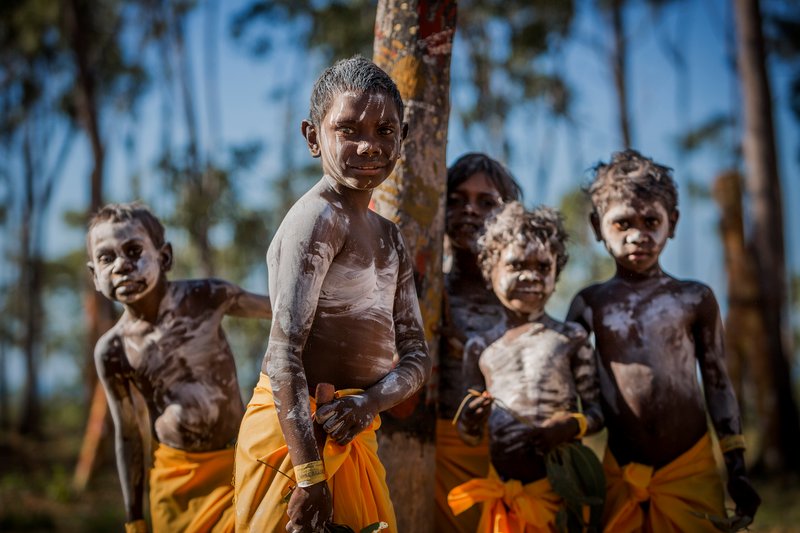
Aborigines are Australia's indigenous people and currently makeup about 2% of Australia's total population, approximately 400,000. Australian Aborigines migrated from somewhere in Asia at least 30,000 years ago. Though they comprise 500–600 distinct groups, aboriginal people possess some unifying links. Among these are strong spiritual beliefs that tie them to the land; a tribal culture of storytelling and art; and, like other indigenous populations, a difficult colonial history.
There are 400 distinct Aboriginal groups across Australia, each distinguished by unique names usually identifying particular languages, dialects, or distinctive speech mannerisms. Each language was used for original myths, from which the distinctive words and names of individual myths derive.
With so many distinct Aboriginal groups, languages, beliefs and practices, scholars cannot attempt to characterise, under a single heading, the full range and diversity of all myths being variously and continuously told, developed, elaborated, performed, and experienced by group members across the entire continent.
Spiritual Belief - Dreamtime:
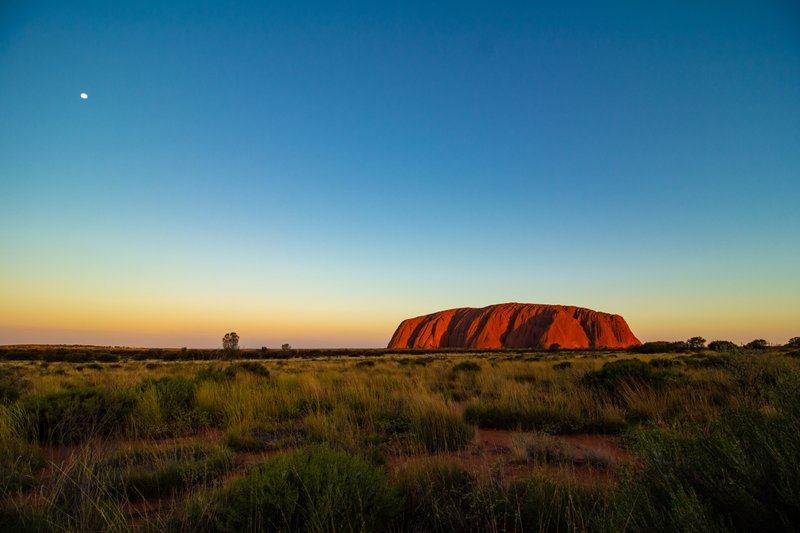
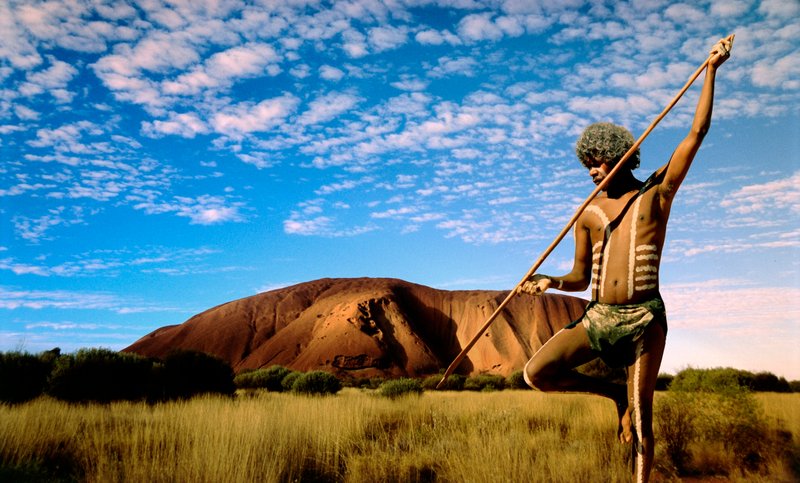
Aboriginal spirituality entails a close relationship between humans and the land. In the animist framework of Australian Aboriginal mythology, The Dreaming is a sacred era in which ancestral Totemic Spirit Beings formed The Creation. Aborigines call the beginning of the world the "Dreaming," or "Dreamtime (Alcheringa)."
In the "Dreamtime " or aboriginal "Ancestors" rose from below the earth to form various parts of nature including animal species, bodies of water, and the sky. Unlike other religions, however, aboriginal belief does not place the human species apart from or on a higher level than nature. Aborigines believe some of the Ancestors metamorphosed into nature (as in rock formations or rivers), where they remain spiritually alive.
Dreaming stories vary throughout Australia, with variations on the same theme. For example, the story of how the birds got their colours are different in New South Wales and in Western Australia. Stories cover many themes and topics, as there are stories about the creation of sacred places, land, people, animals and plants, law and custom. It is a complex network of knowledge, faith, and practices that derive from stories of creation. It pervades and informs all spiritual and physical aspects of an indigenous Australian's life.
They believe that every person essentially exists eternally in the Dreaming. This eternal part existed before the life of the individual begins and continues to exist when the life of the individual ends. Both before and in the afterlife, it is believed that this spirit-child exists in the Dreaming and is only initiated into life by being born through a mother. The spirit of the child is culturally understood to enter the developing fetus during the fifth month of pregnancy.
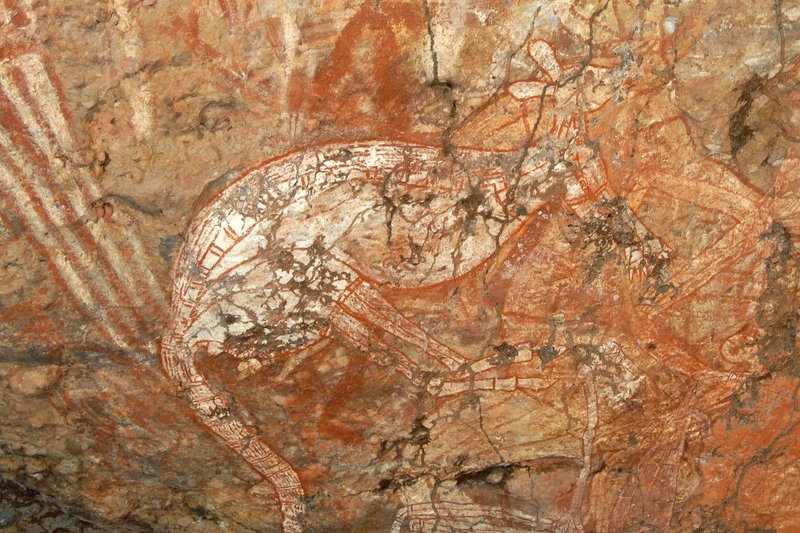
The oral tradition of storytelling informs aboriginals' vibrant cultural life. Songs illustrate the Dreamtime and other tales of the land, while dances and diagrams drawn in the sand accompany oral tales. In the Northern Territory, aboriginal art includes sculpture, bark and rock paintings, and baskets and beadwork. Rock carvings and paintings can be found in places such as Arnhem Land, Ubirr, and Nourlangie. Many aborigines earn a living by selling native artworks.
Art, Culture and Music:
Aboriginal culture dates back as far as between 60,000 to 80,000 years. This is when Aborigine’s first settled in Australia. The first evidence of Aboriginal ethos or philosophy is evident in the still visible rock art which dates back more than 20,000 years. Ochres were used to paint on rocks. Archaeologists have been able to date remains and findings as far back as 40,000 to 60,000 years from discoveries of primal campsites. There is no written language for Australian Aboriginal People so in order to convey their important cultural stories through the generations it is portrayed by symbols/icons through their artwork. It is imperative to pass on information to preserve their culture. Indigenous art is centred on story-telling. It is used as a chronicle to convey knowledge of the land, events and beliefs of the Aboriginal people. The use of symbols is an alternate way to writing down stories of cultural significance, teaching survival and use of the land. The interpretations of the iconography differ depending on the audience.
Aboriginal music is often recognizable for its most famous instrument, the didgeridoo. A wind instrument typically made from bamboo, it extends about five feet and produces a low, vibrating hum. Aborigines use didgeridoos in formal ceremonies at such events as sunsets, circumcisions, and funerals.
Colonisation and Current Situation:
As a result of forced assimilation, by the late 1880s, most aborigines had joined white rural and urban communities. Aboriginal people became economically marginalized and were exposed to new diseases. The consequence was massive depopulation and extinction for some aboriginal tribes.
Land and property rights fueled an important civil rights movement in the 1970s. Aborigines spoke out for equal rights, and specifically for land rights for a property that had been forcibly taken by colonizers. The Aboriginal Land Rights Act, passed in 1976, became instrumental in territories with tribal associations. The 1990s witnessed further rights milestones, including government legislation that returned a great degree of autonomy, and increased wages and welfare benefits to aboriginal people.
For more information on the same, visit https://uni.xyz/competitions/we-australia
Sources
[i] “Aboriginal Australia”, https://www.infoplease.com/aboriginal-australia
[ii] ”Earth’s Oldest Civilization”, https://allthatsinteresting.com/aboriginal-australians-oldest-culture,
[iii] “Dreamtime” , https://www.crystalinks.com/dreamtime.html