Beyond the Game: Adaptive Stadium Architecture
Exploring Modular Design Strategies to Prevent Underuse and Enable Post-Event Versatility

Introduction
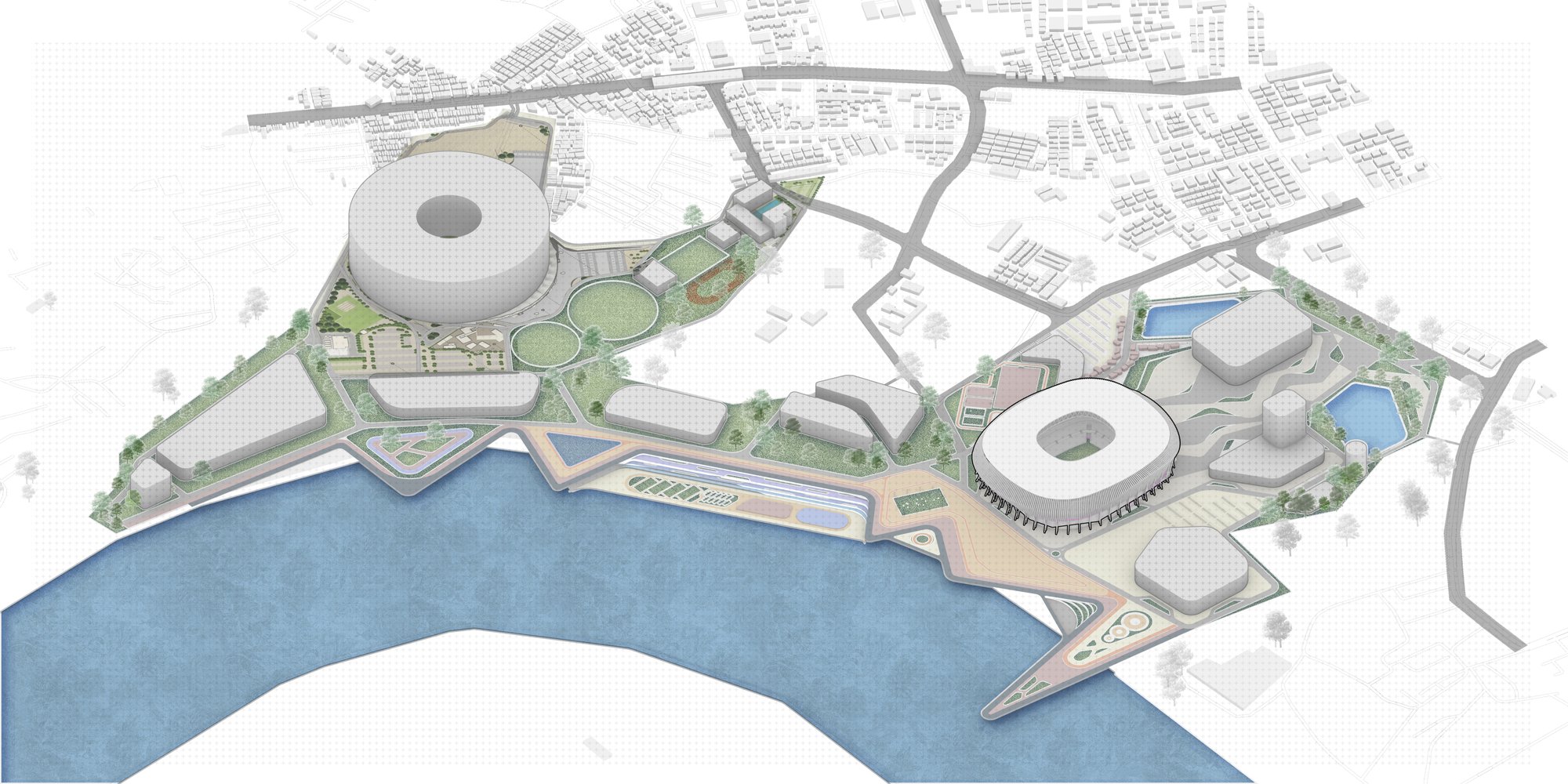
Architecture thrives on adaptability — a discipline that must anticipate change in society, technology, and urban needs. Stadiums, however, are often rigid monuments, designed for singular spectacles and then rendered obsolete once the global spotlight fades. My thesis, Using Modular Architectural Strategies for Versatility in Adaptive Stadium Design, addresses this challenge directly. This journal documents the design process of a proposed 50,000-seat football stadium in Ahmedabad, Gujarat, as part of the Sardar Vallabhbhai Patel Sports Enclave. It explains how research, site analysis, case studies, conceptual development, and iterative design strategies culminated in a project that seeks to reconcile event-scale grandeur with post-event community life.
1. Understanding the Problem
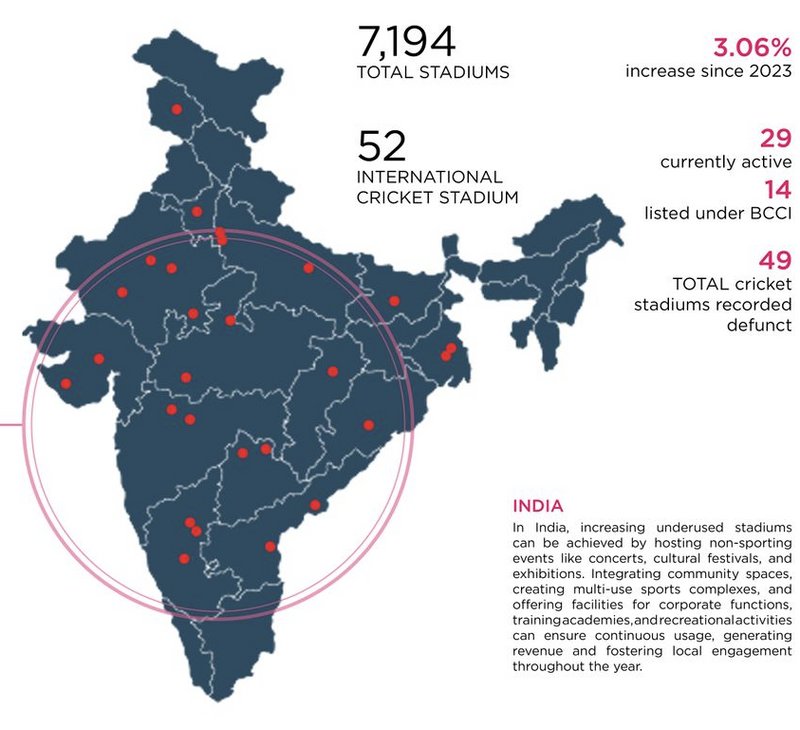
The starting point of this journey was the recurring phenomenon of stadium abandonment worldwide. From Athens 2004 to Brazil 2014, venues costing billions fell silent within years of their inauguration. Even in India, cricket-centric stadiums dominate, leaving other facilities underused. The question arose: how can stadiums remain relevant beyond mega-events?
A review of literature, government proposals, and news archives revealed that India itself is preparing bids for the 2036 Olympics, with Ahmedabad positioned as the central venue. This contextual urgency gave my thesis not only academic relevance but also practical immediacy. The research objective became clear: to design a modular, adaptive stadium capable of transforming functionally and spatially to suit multiple futures.
2. Site Analysis
The chosen site lies within the proposed Sardar Vallabhbhai Patel Sports Enclave at Motera, Ahmedabad — a 201-acre precinct anchored by the Narendra Modi Stadium. Analysis of connectivity showed strategic accessibility through highways, metro stations, and airport proximity. Climatic analysis indicated a hot semi-arid climate with average summer highs above 40°C, necessitating shading, ventilation, and material strategies. Soil studies confirmed the alluvial base, influencing foundation design. The Sabarmati riverfront bordering the site introduced opportunities for ecological integration and active recreational spillover.
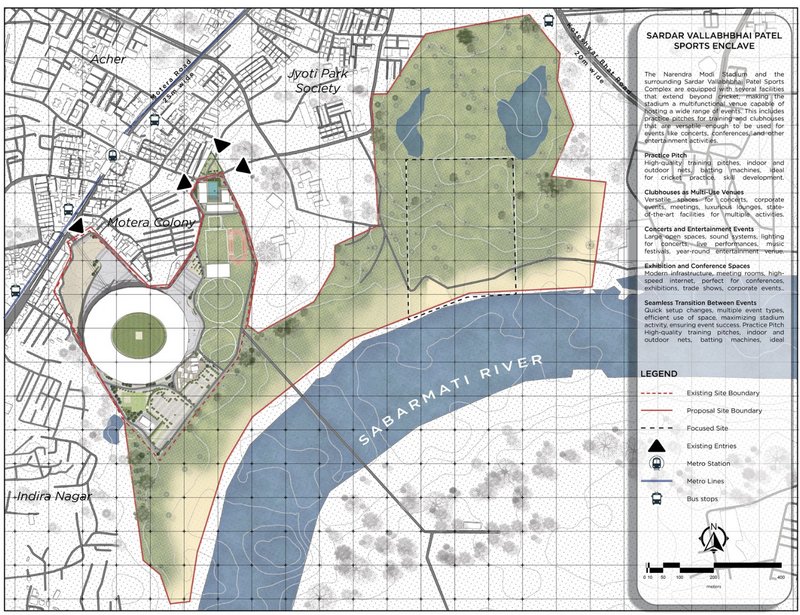
Slope studies, though gentle, informed water management strategies. The most valuable inference was contextual: the enclave aims to host the Olympics, meaning the project had to scale globally while also anchoring locally.
3. Case Studies and Lessons
Three major case studies framed my design decisions:
- Stadium 974, Qatar — taught modular disassembly, using shipping containers and prefabricated elements for flexibility.
- Tottenham Hotspur Stadium, London — demonstrated multifunctionality through layering of amenities (brewery, marketplace, NFL adaptability).
- Jawaharlal Nehru Stadium, Delhi — highlighted circulation segregation and the pitfalls of underused legacy facilities.
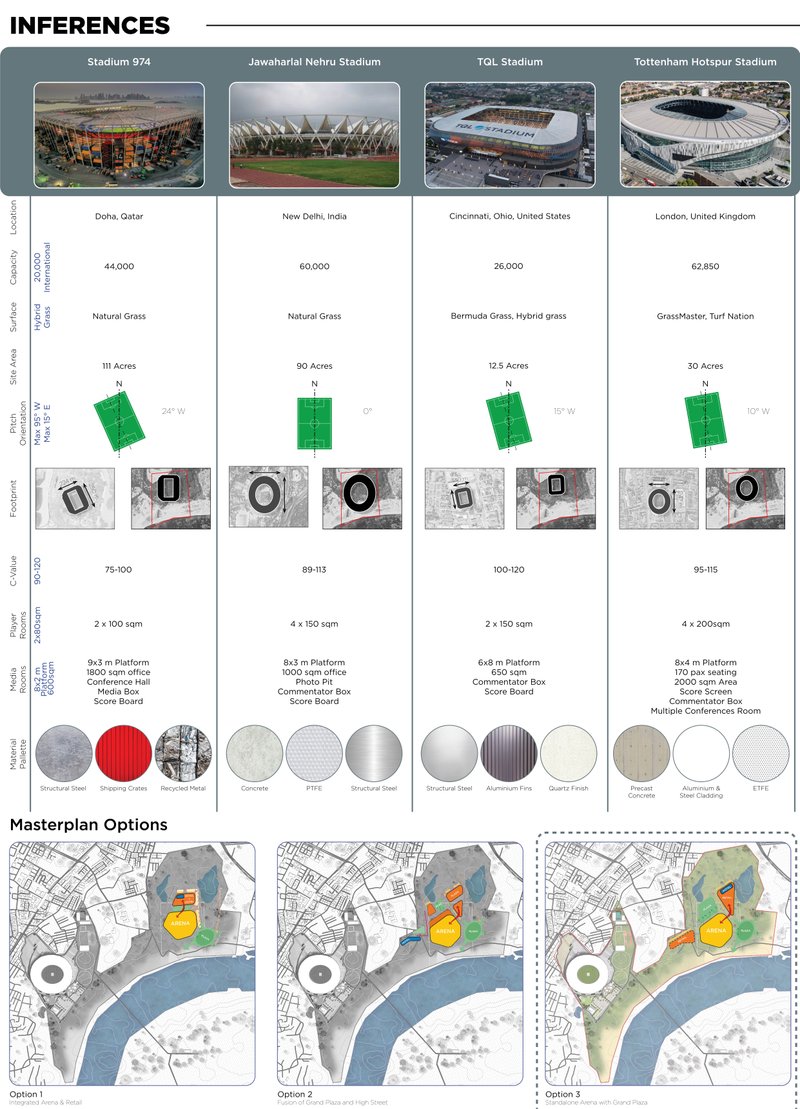
From these, I distilled three principles: reconfiguration, multifunctionality, and user segregation.
4. Concept Development
The design concept emerged from the movement of a footballer — dynamic, fluid, responsive — translated into architectural form. This informed the façade: aluminium fins oriented to mimic trails of movement, creating a kinetic aesthetic. Structurally, modularity drove every decision: prefabricated steel frames bolted for disassembly, panelised PTFE roofing, and crate-like service modules.
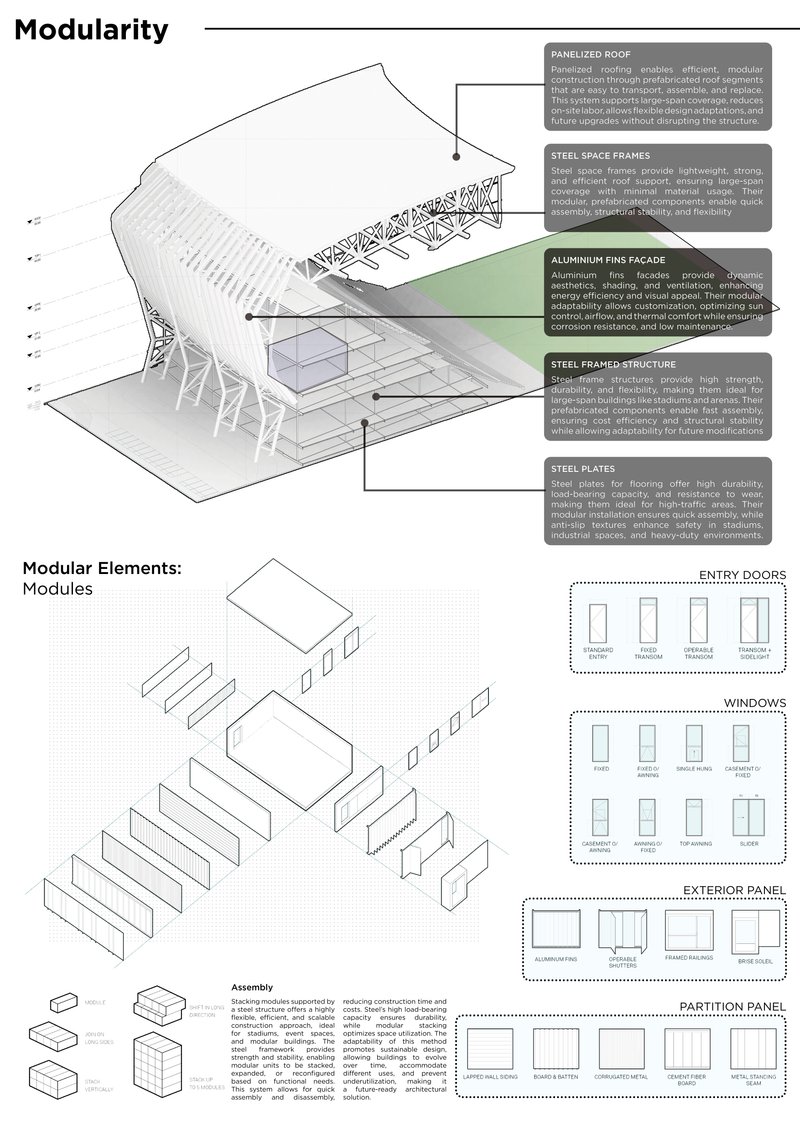
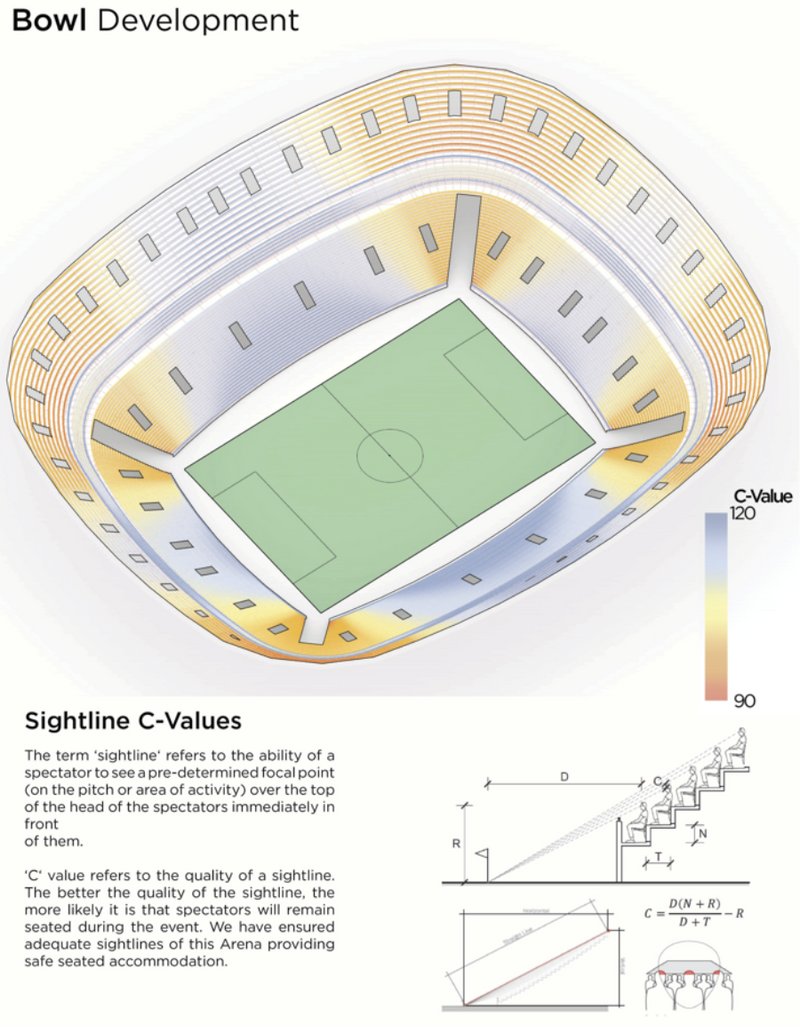
Spatially, the stadium bowl was defined with FIFA-compliant “C-values” ensuring optimal viewing. The concourse was activated with retail and fan experiences. Riverfront edges transformed into communal spaces with gyms, skateparks, and markets. This dual identity — global event venue and local community hub — underpinned the design process.
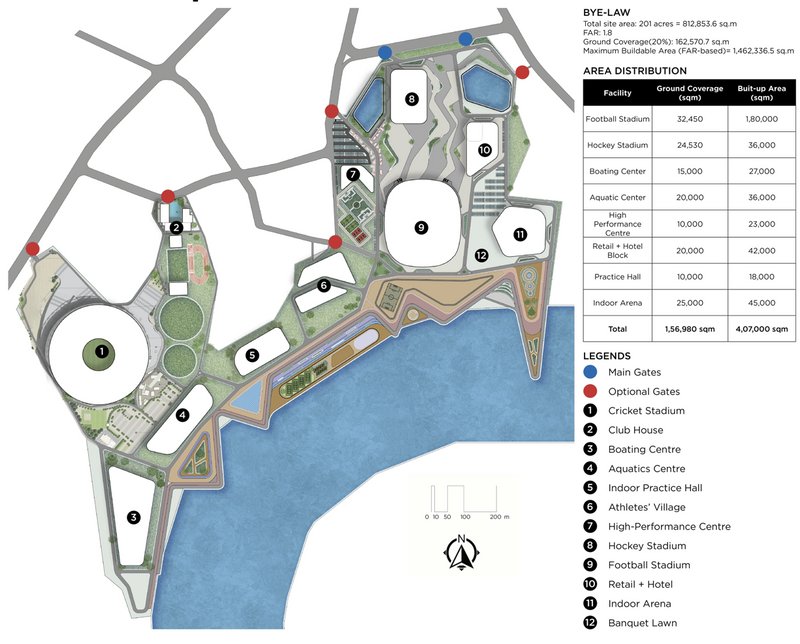
5. Zoning Strategy
Zoning was critical for functionality. Three primary spines were developed:
- Spectator Plaza (front) — a vehicle-free forecourt with kiosks, ticketing, and retail.
- Athlete’s Spine (rear) — a secure, shaded passage linking practice grounds, village, and athlete-exclusive areas.
- Riverfront Activation (side) — public leisure spaces integrating sports and ecology.
Within the stadium, circulation was stratified vertically: general spectators, VIPs, media, and athletes each had segregated entries and pathways to prevent conflict. Back-of-house services were isolated in a ring, ensuring uninterrupted operations.
6. Modularity in Design
The structural system relied on steel space frames with ball-bolt joints for rapid assembly and disassembly. Concrete was restricted to the base and foundations. Seating modules were designed to be temporary in certain tiers, allowing capacity adjustments. Roofing panels could be removed and reused as shading devices elsewhere. Facade fins were mounted on a secondary steel pipe grid, enabling easy replacement or rearrangement.
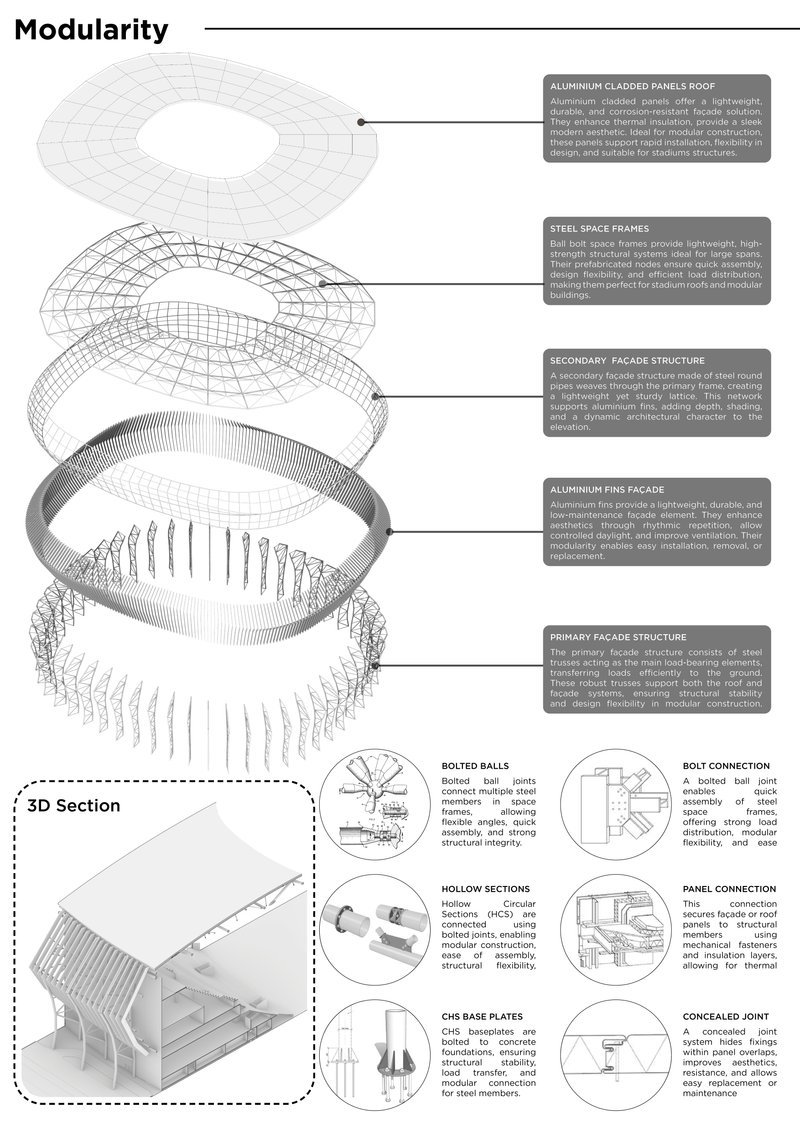
This modularity extended to programming: service pods (washrooms, retail stalls, food counters) were container-sized units that could be reconfigured or relocated. Thus, the stadium was not a static object but a kit of parts.
7. Post-Event Reuse Strategies
The most defining feature of the design is its post-event adaptability. Seating tiers can be dismantled and redistributed to smaller venues across Gujarat, supporting regional sports growth. Roofing elements can shade public plazas or open-air theatres. Service pods can serve as independent kiosks or classrooms. The stadium is envisioned not as a singular investment but as an infrastructure bank, storing and distributing resources as needs evolve.
8. Design Development: Plans and Sections
Floor plans emphasized radial concourses for efficient flow. Public amenities were clustered at ground levels, while premium/VIP boxes occupied upper tiers. First-aid rooms, doping control labs, and press areas were carefully located per FIFA standards. Sections highlighted the bowl’s geometry, roof cantilevers, and structural layering. Each drawing reinforced the principle of adaptability without compromising global compliance.
9. Reflection on the Process
The design journey was neither linear nor without challenge. The greatest difficulty lay in reconciling structural feasibility with architectural vision. Ensuring that modularity did not reduce spatial experience required constant balancing. Jury feedback — especially on linking concept to building — sharpened my focus on modules as experiential as well as structural elements.
This process taught me that design is not just about form or function, but about anticipating change. The stadium had to serve not only an Olympic or FIFA match but also an everyday jogger, a weekend market, or a student festival.
Conclusion
The resulting design is an adaptive, modular stadium that aspires to balance iconicity with usability. It offers Ahmedabad a venue capable of hosting global events while serving its citizens year-round. By embedding modular strategies, the project challenges the traditional lifecycle of stadiums, aiming instead for longevity, flexibility, and inclusivity.
This thesis has been as much a personal journey of questioning architecture’s role as it has been a design proposal. It reflects my belief that architecture must extend beyond spectacle — it must endure, adapt, and enrich.