
Biophilic Commercial Architecture: Elements of Nature Office by Source Architecture in Bangalore
A sales office in Bangalore redefines biophilic commercial architecture through material honesty, sensory design, and dismantlable sustainability.

Reimagining the Sales Office through Nature and Material Honesty
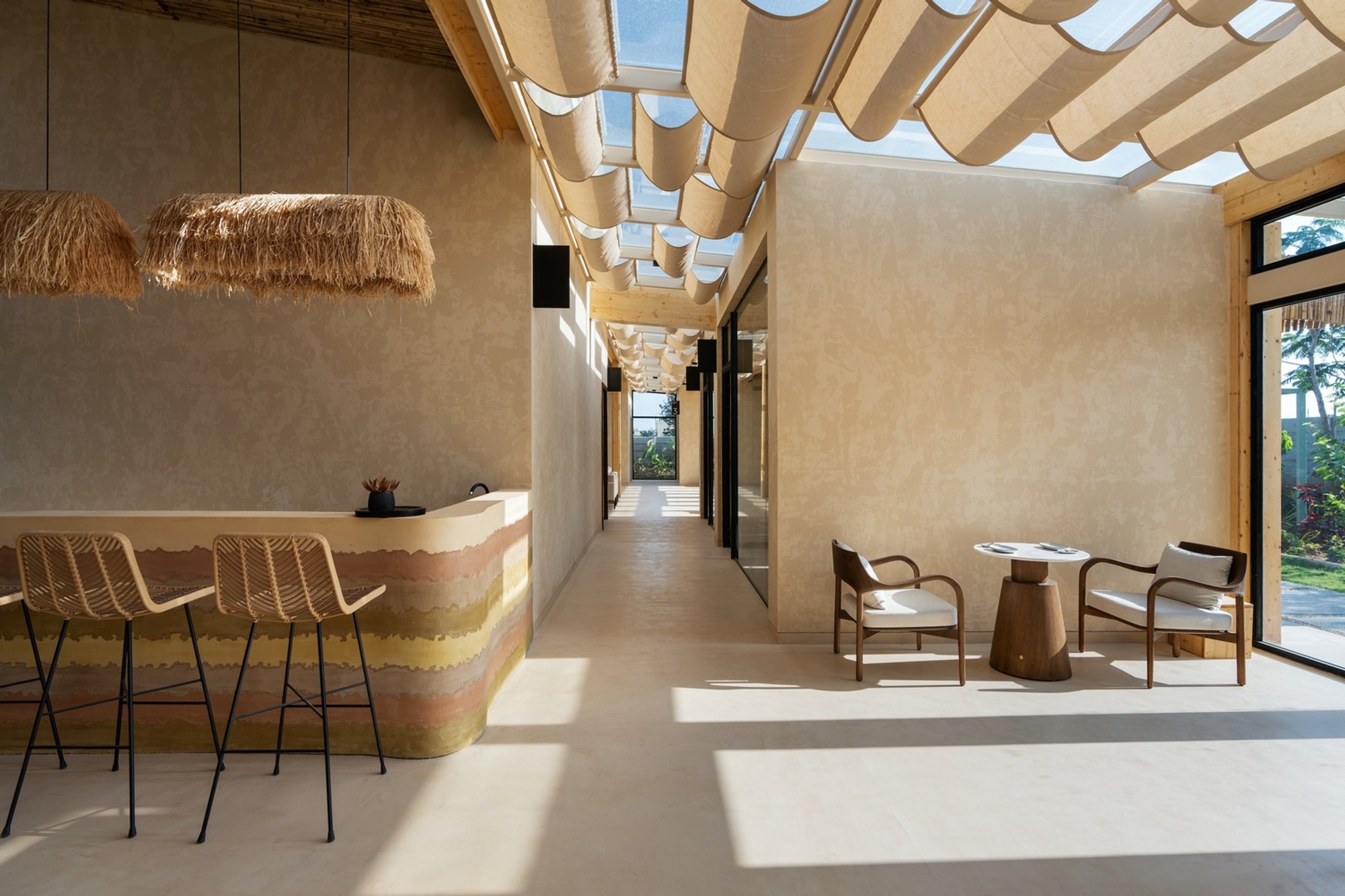
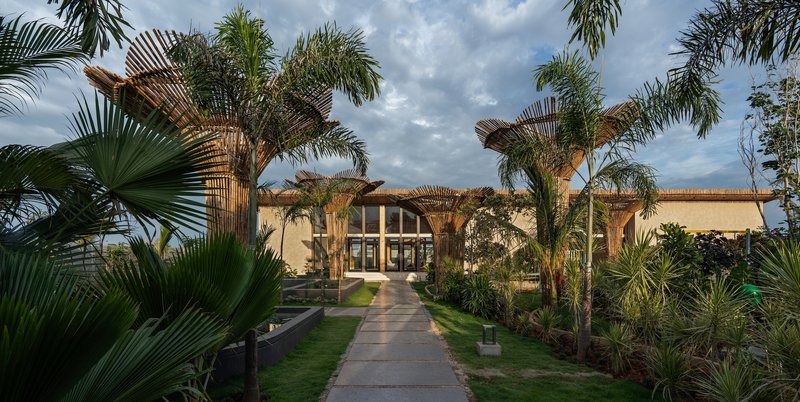
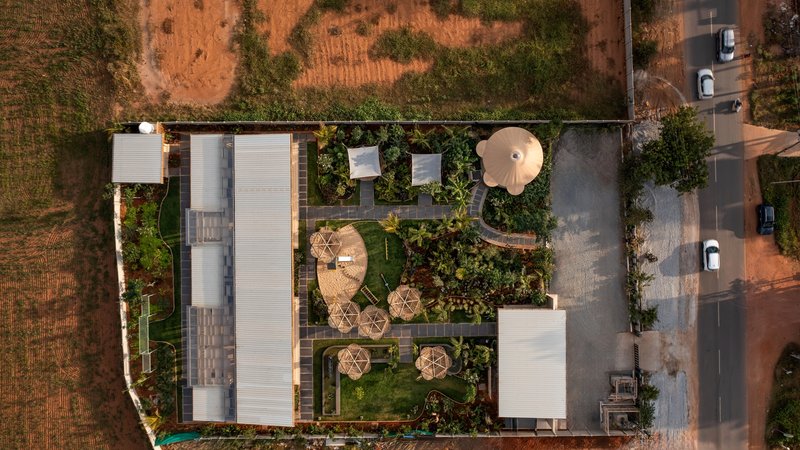
In the dry, industrial outskirts of Hoskote near Bangalore, Elements of Nature by Source Architecture stands as a biophilic commercial architecture model that challenges conventional office design. Led by Sneha Ostawal, the founder of Source Architecture, this 8,000-square-foot marketing and sales office transcends its commercial function, immersing visitors in a sensory journey rooted in material simplicity, elemental light, and atmospheric spatial sequences.
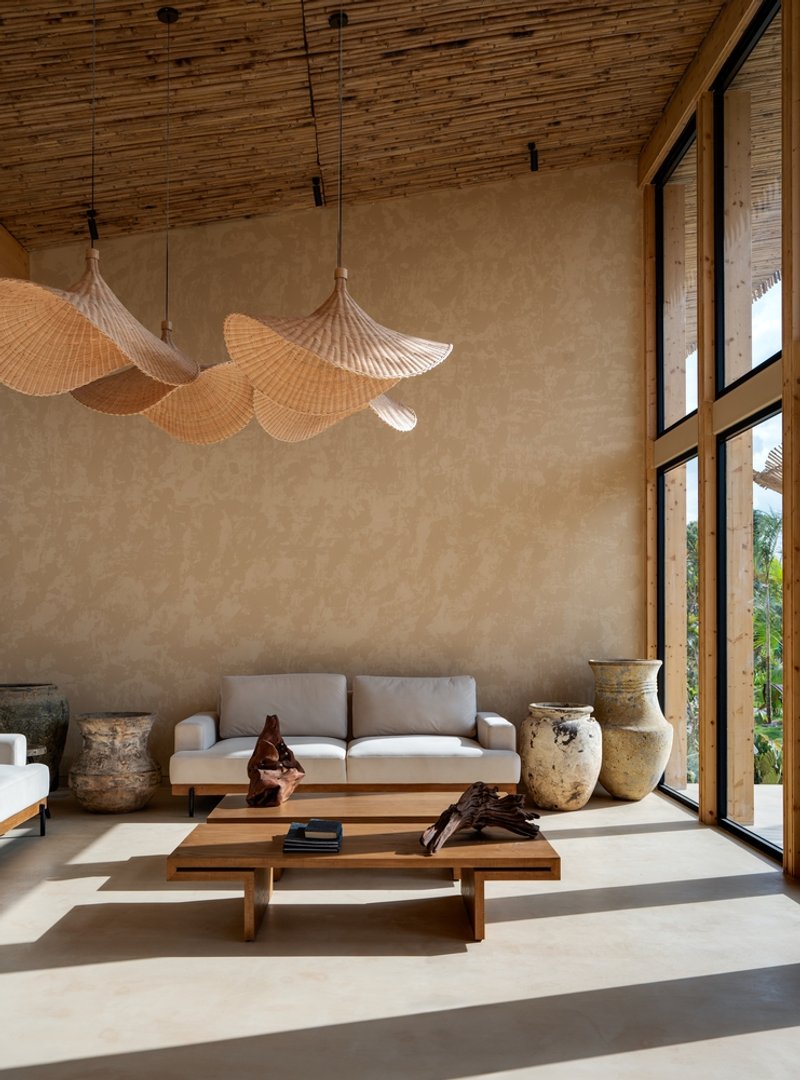
The Architecture of Stillness and Sensory Engagement
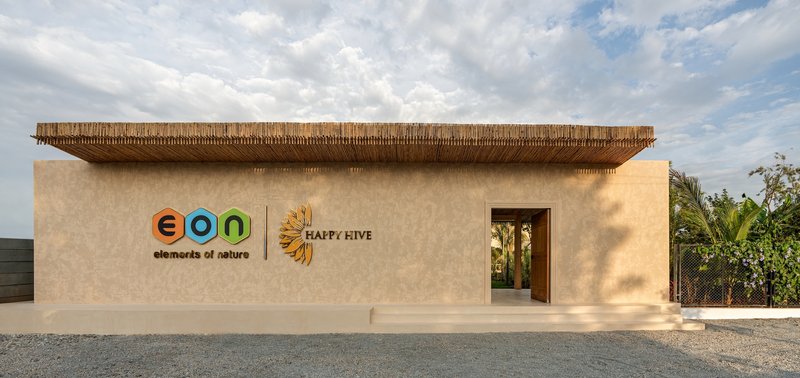
Positioned at the gateway of a new township, the project occupies a half-acre site on a dusty, undeveloped landscape. Rather than masking the harshness of its environment, the design embraces it, offering cultivated calm through light and shadow play, raw materials, and a layout inspired by Vastu principles. A monolithic beige wall introduces the site with quiet grandeur, its solid surface punctuated by a solitary wooden door—a humble, almost concealed entry that signals transition into a deliberately unfolding spatial narrative.
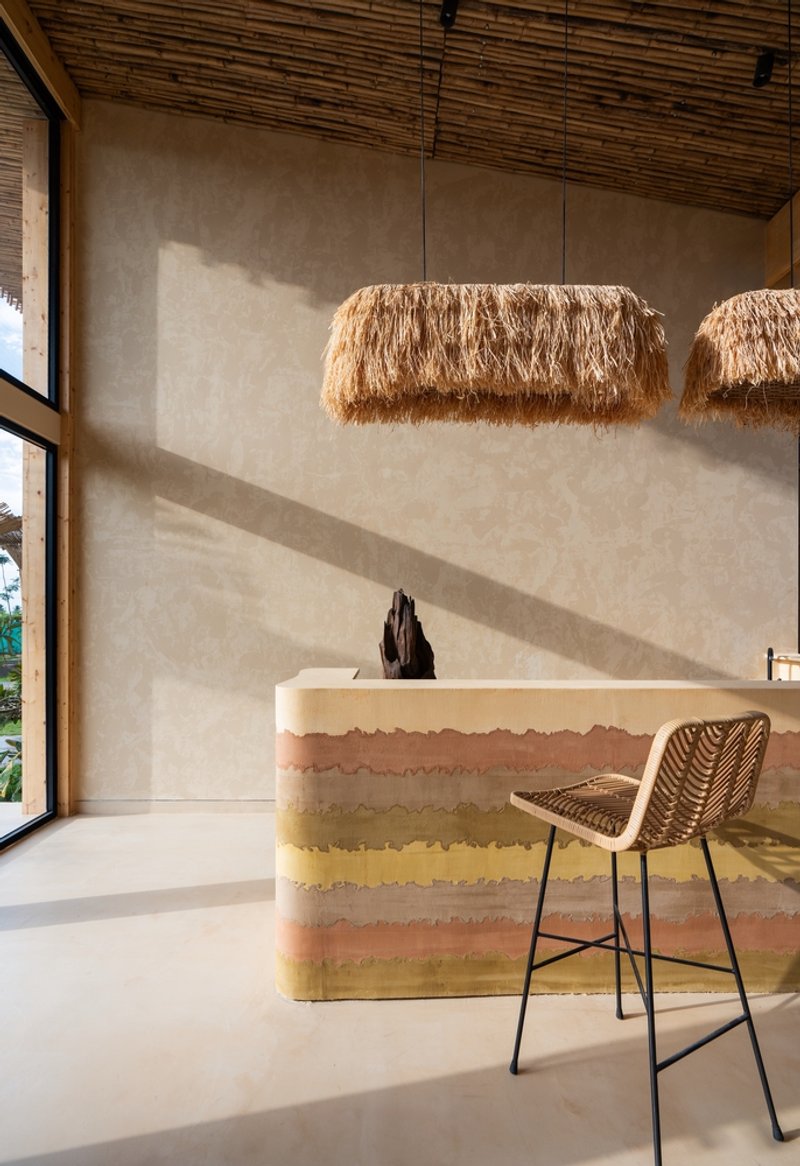
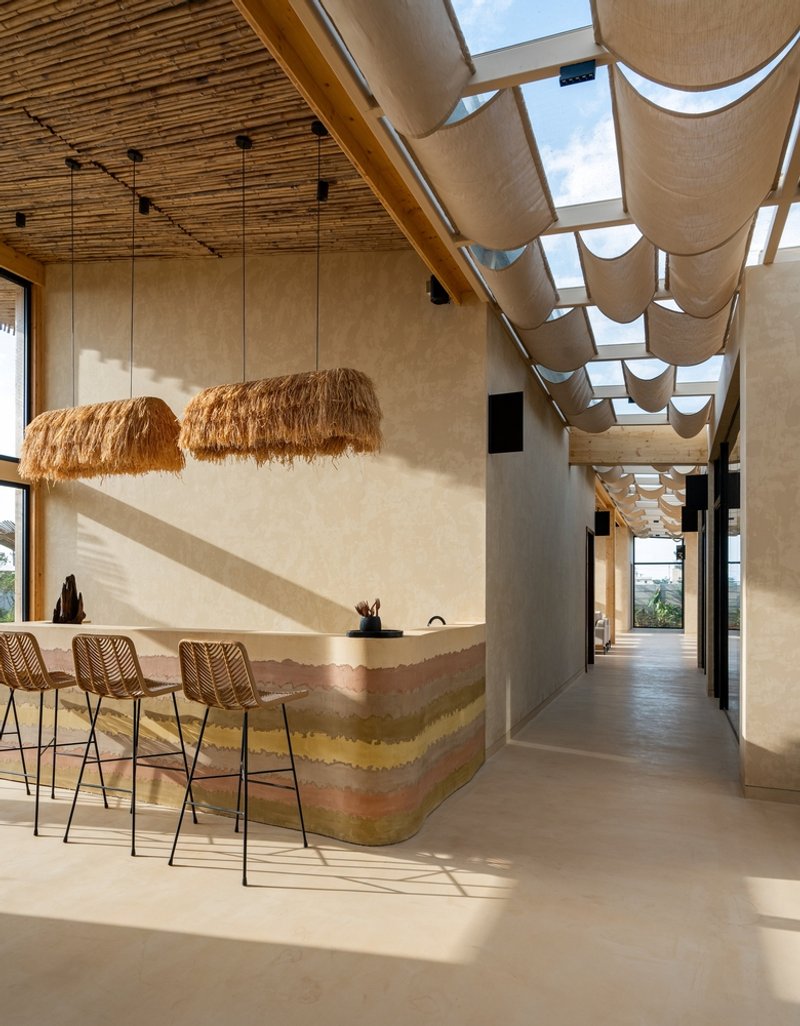
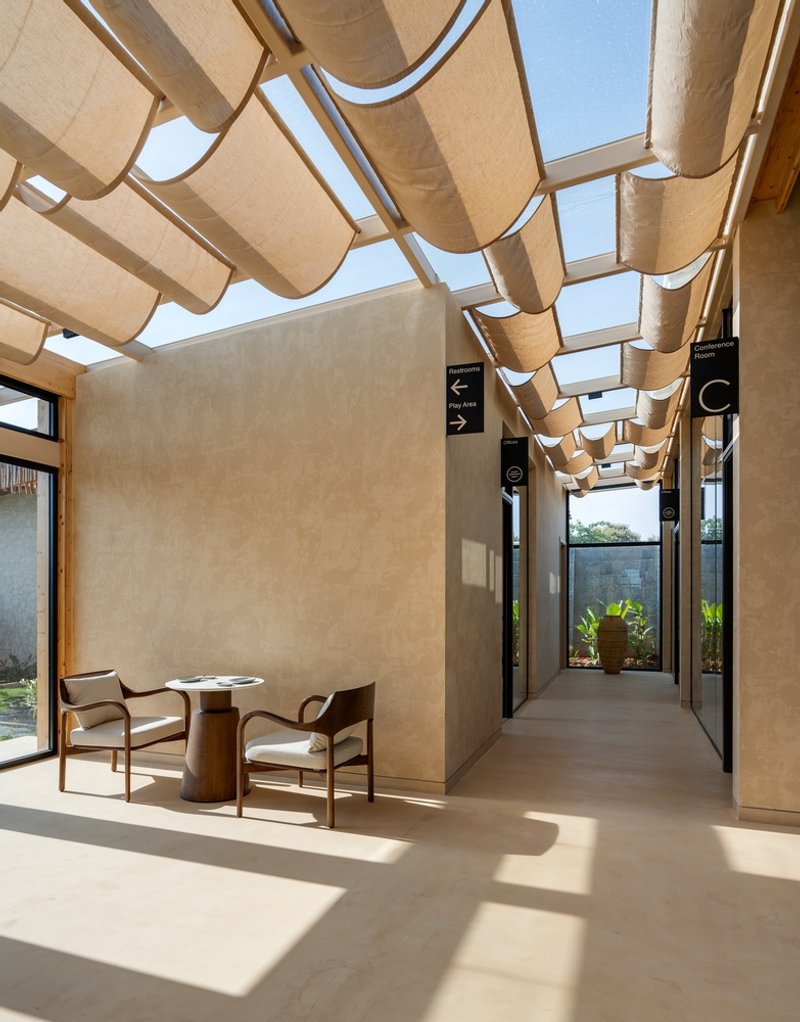
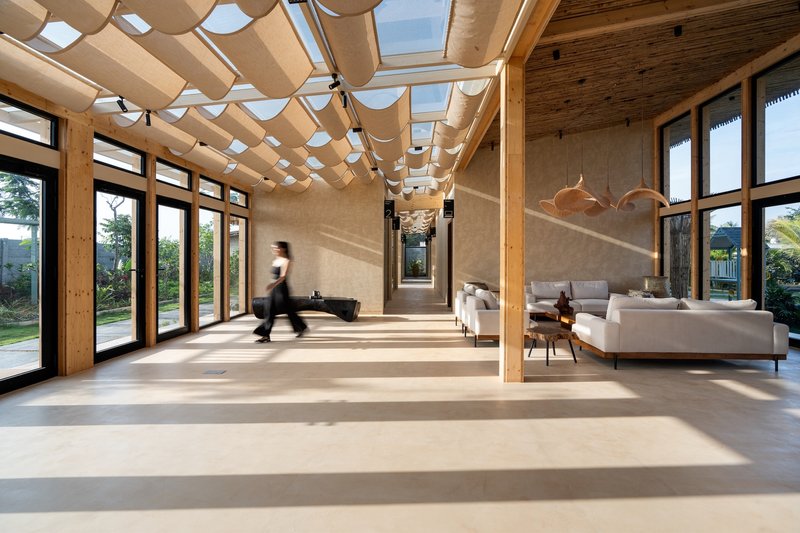
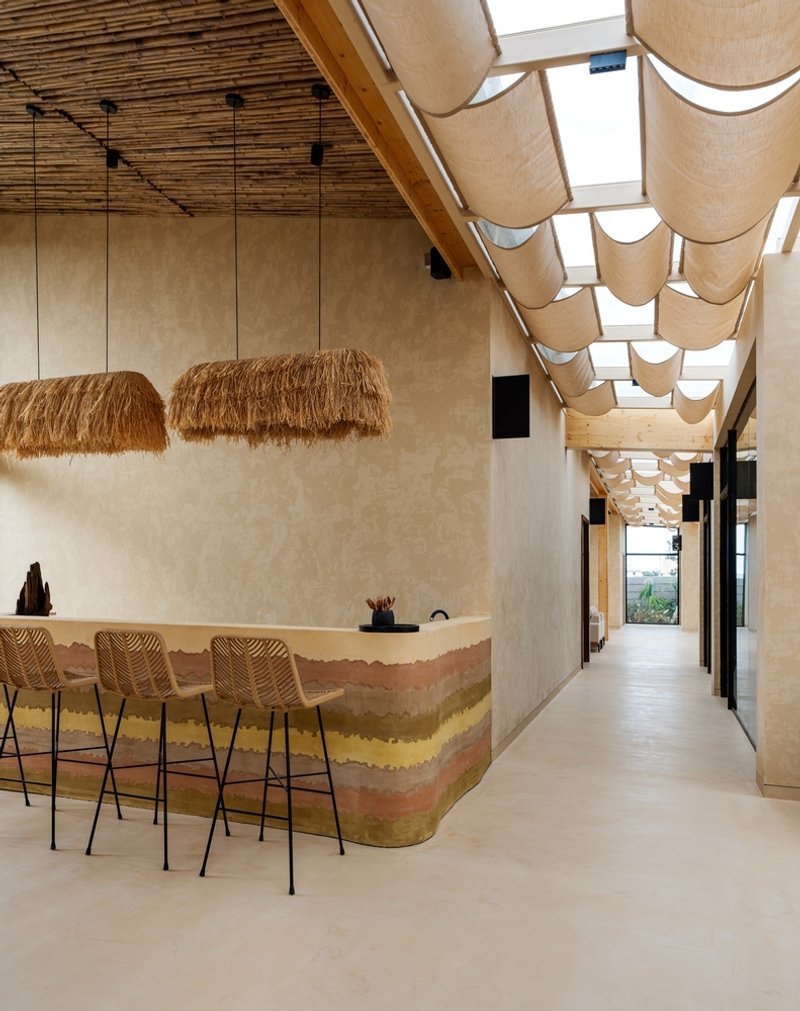
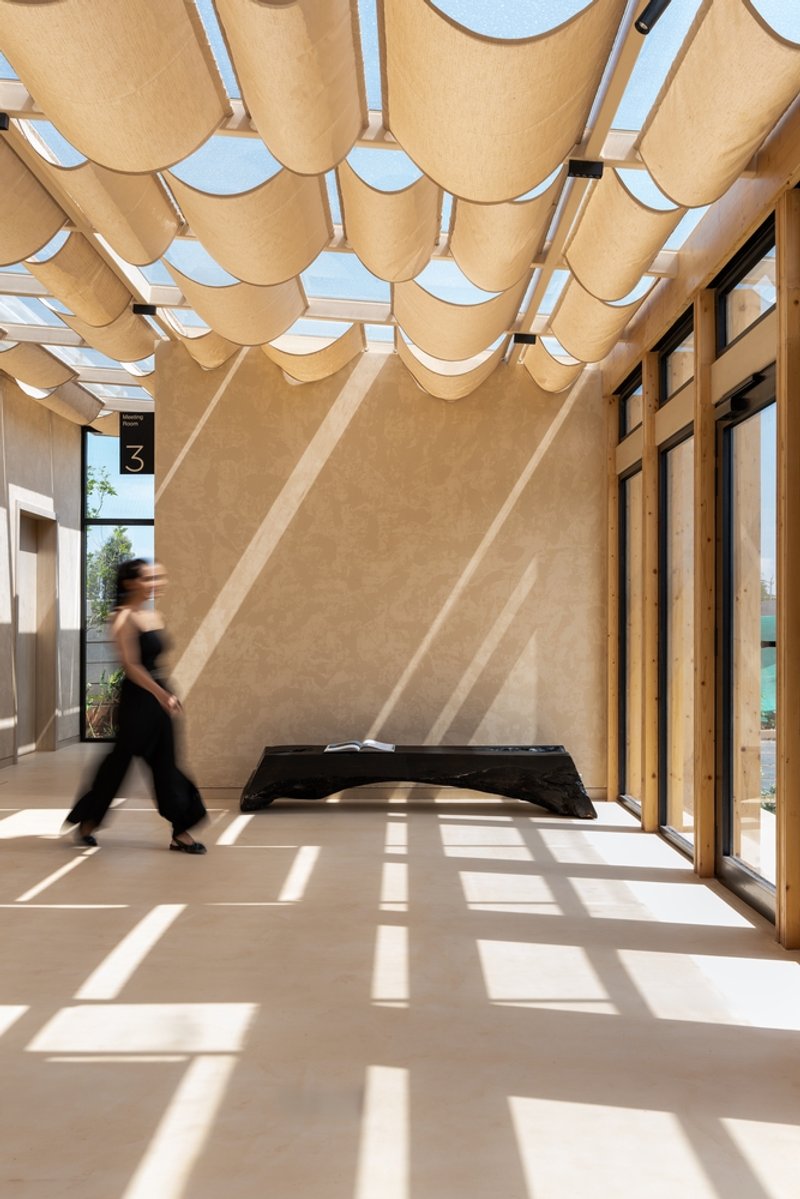
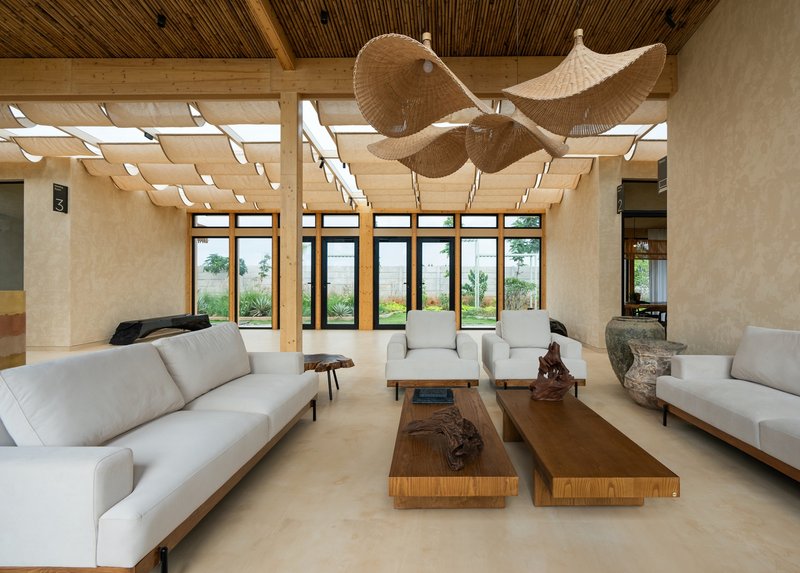
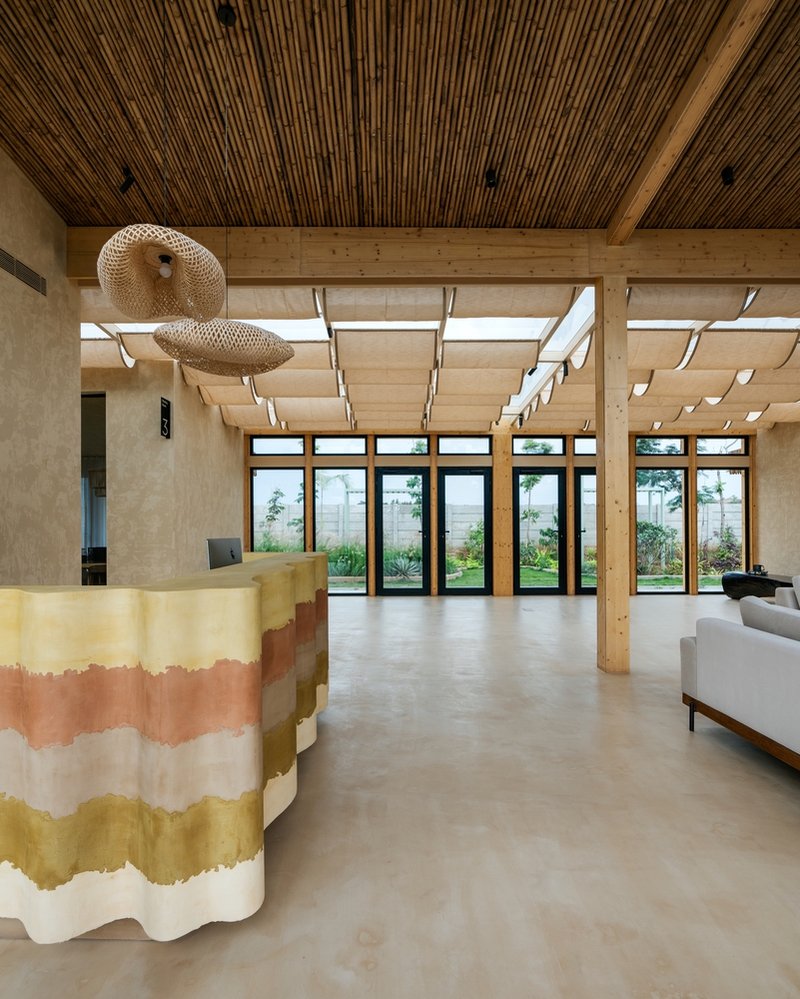
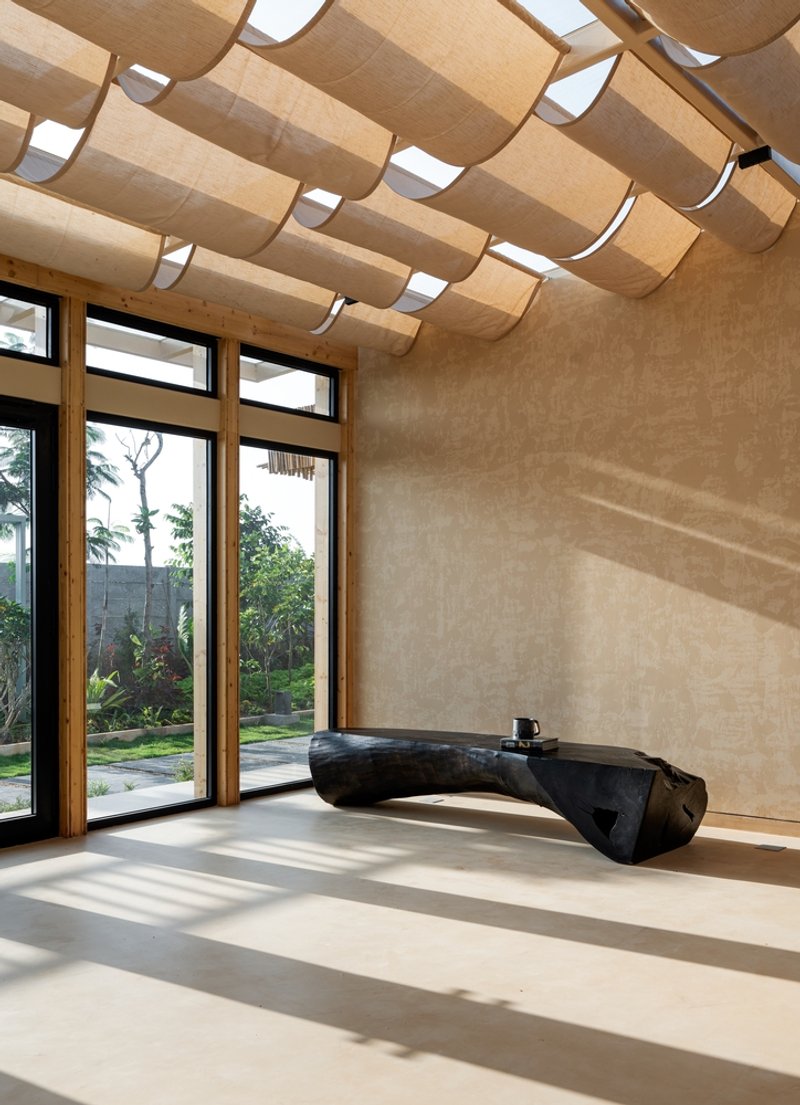
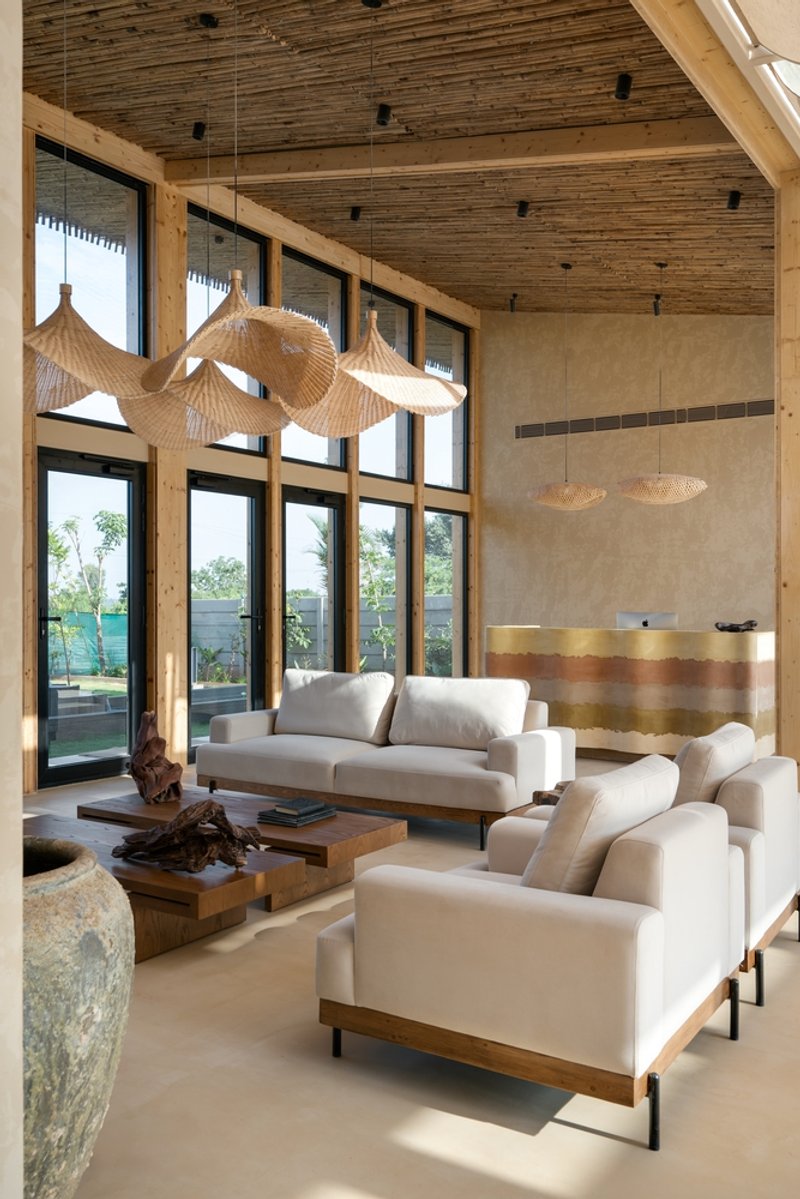
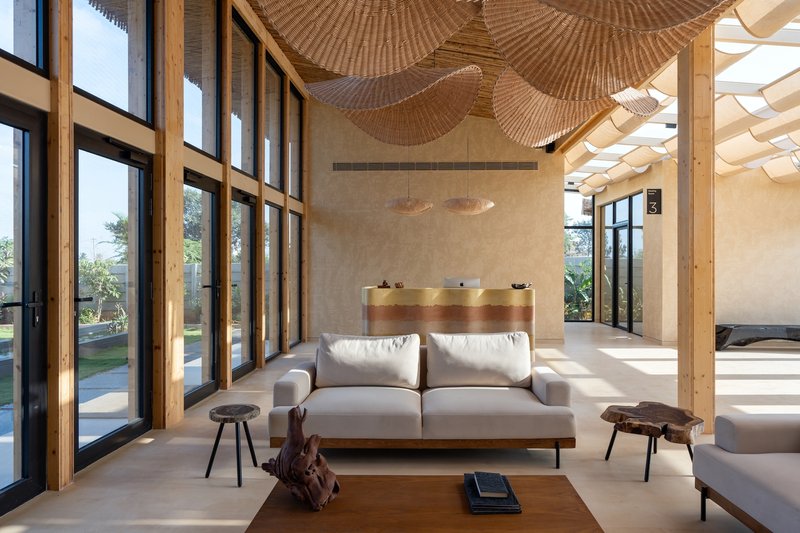
Upon entry, visitors are immediately immersed in a sensory realm where air cools and light filters gently. The reception area avoids conventional corporate cues; instead, a sculpted rammed-earth desk and two reclaimed wooden logs redefine waiting as a moment of tactile contemplation. This space invites pause rather than haste, mirroring the philosophical essence of biophilic commercial architecture.
Designing with Texture, Light, and Material Integrity
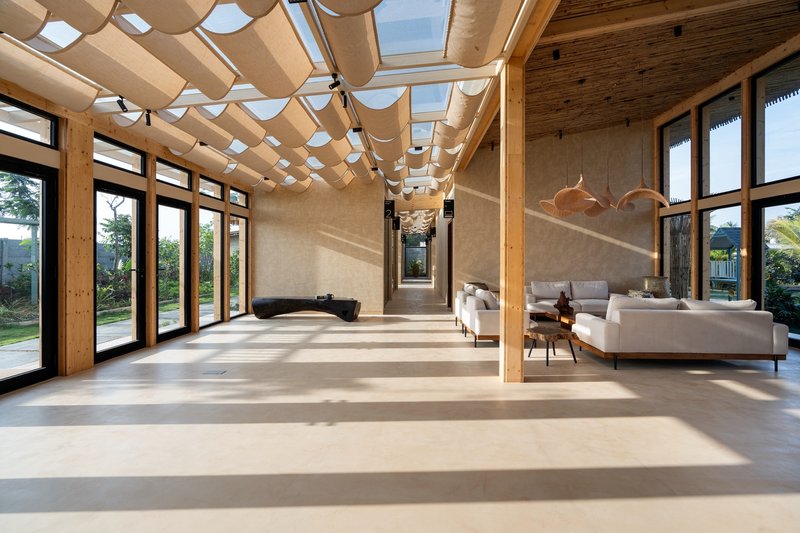
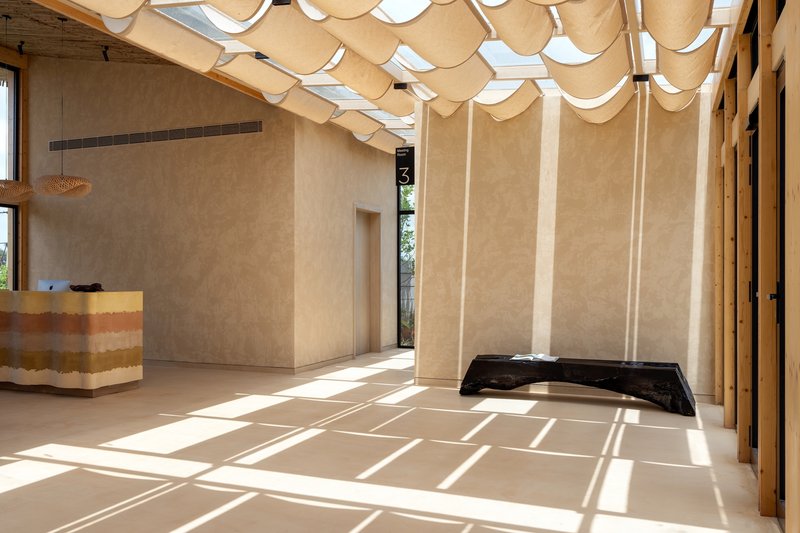
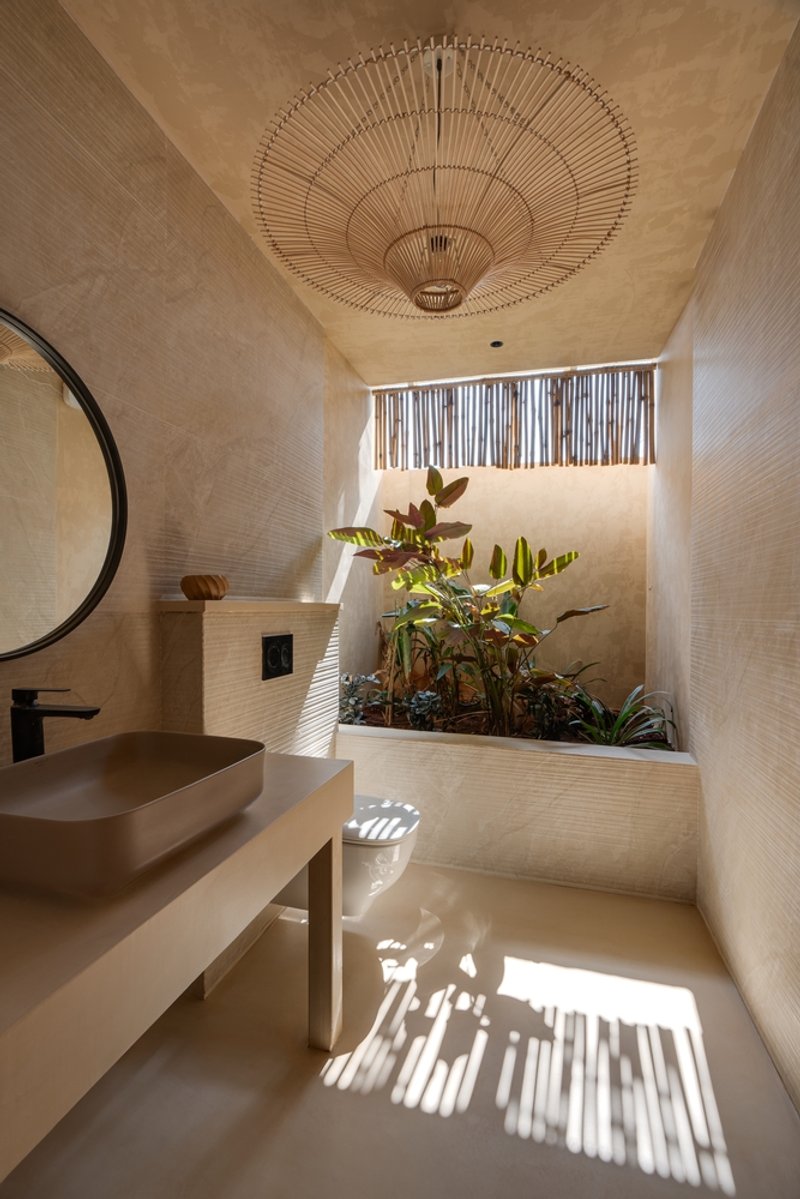
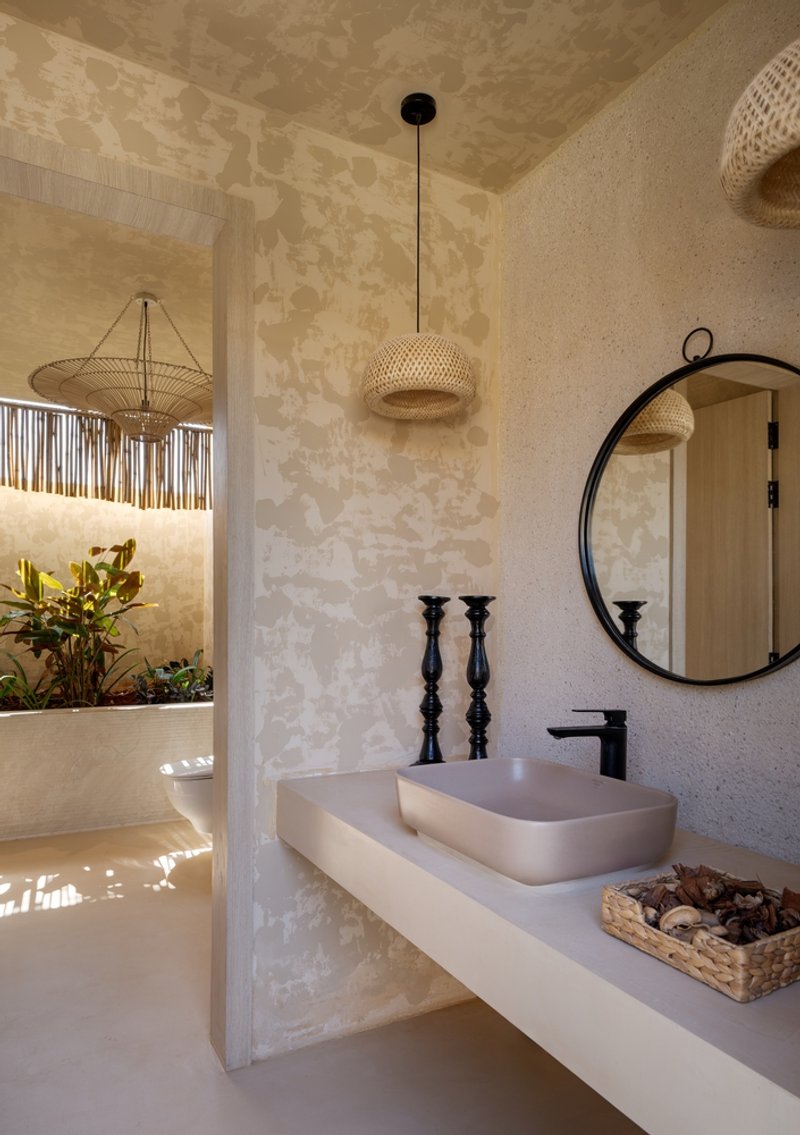
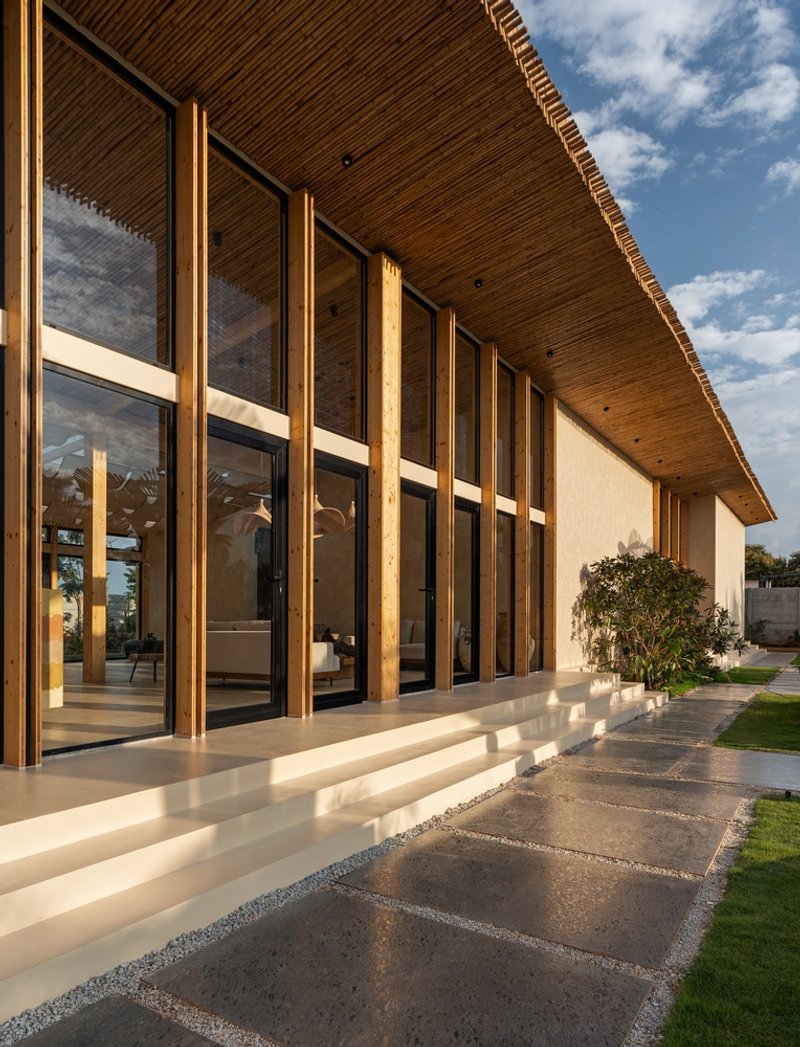
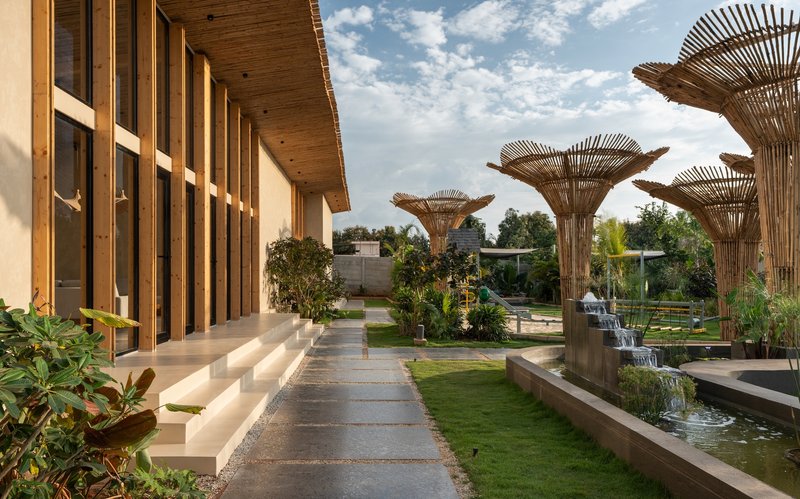
A consistent palette of bamboo, micro-cement, and untreated wood defines the interior. Bamboo cladding across the façade acts as a living skin, filtering sunlight into animated patterns throughout the day. The use of micro-cement floors and textured surfaces keeps the visual field muted yet rich with character, allowing natural elements to narrate the space rather than ornamental excess.
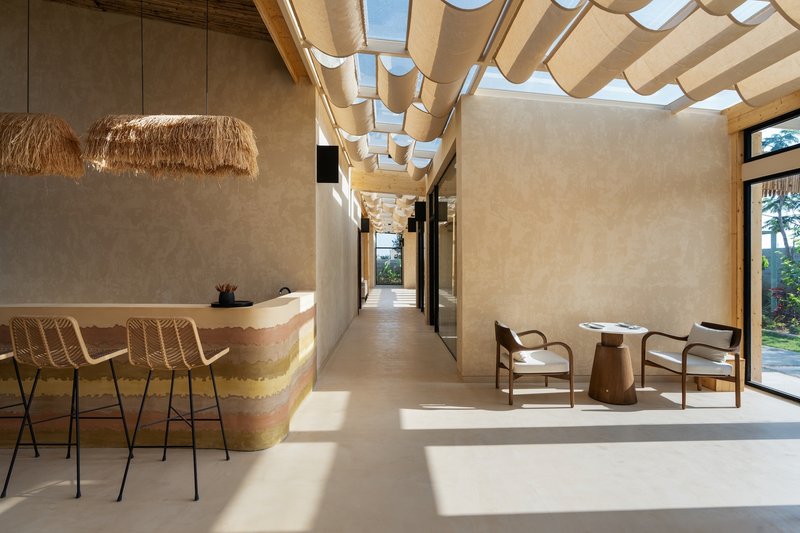
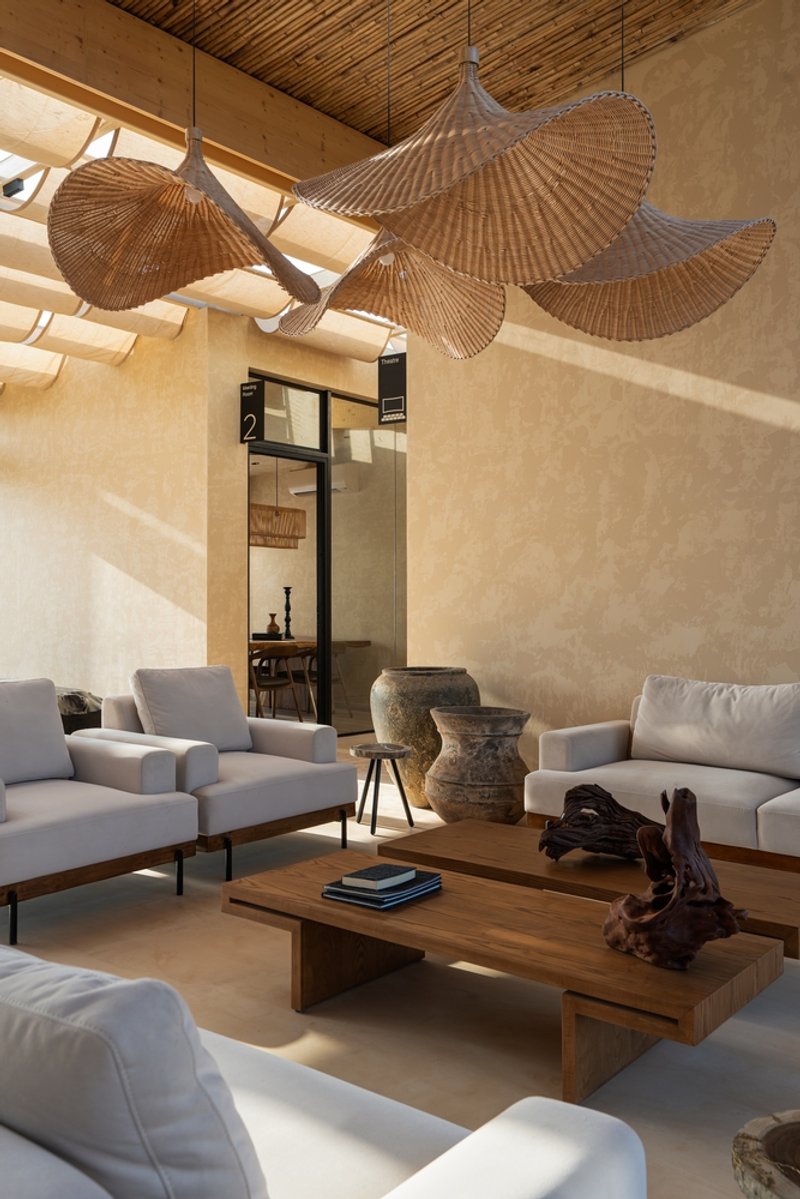
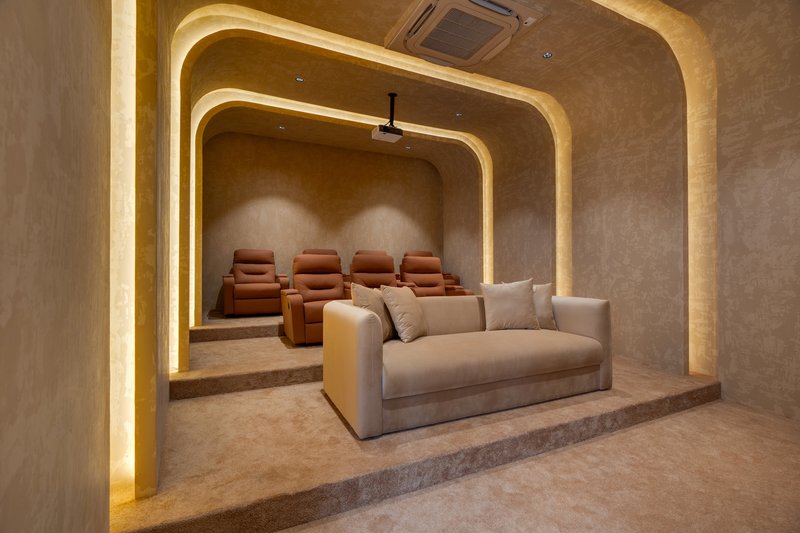
Beyond the reception, the AV room is a space of controlled immersion. Enclosed by solid walls, it enhances focus, letting digital media and storytelling unfold uninterrupted. In contrast to typical marketing setups cluttered with visuals and printed material, this space fosters emotional resonance, aligning with the ethos that architecture should shape feelings before decisions.
Spaces of Dialogue: Meeting Rooms and Café
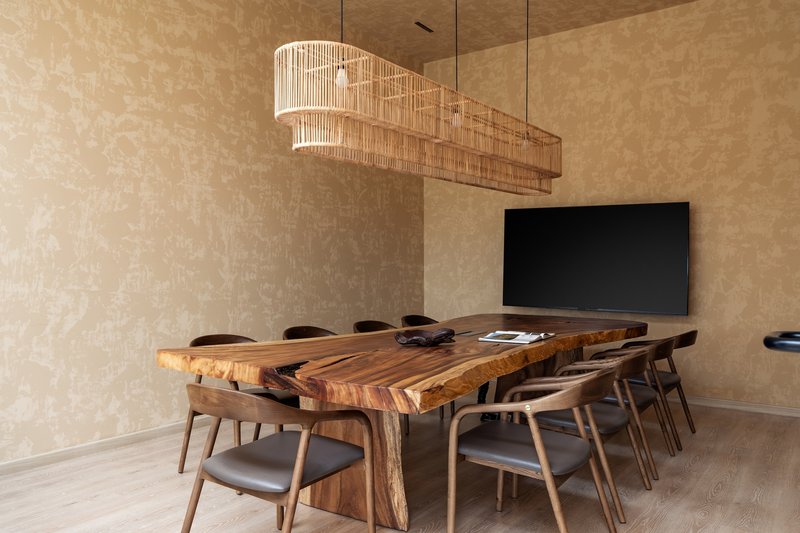
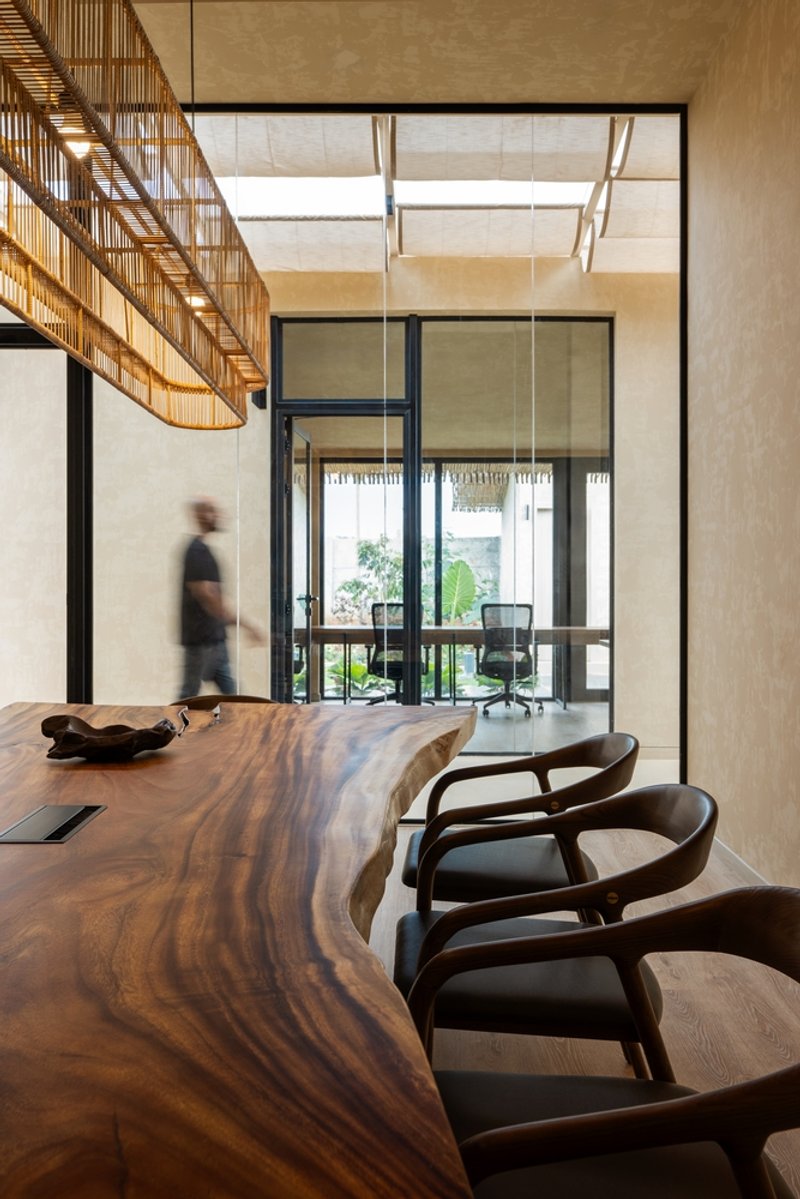
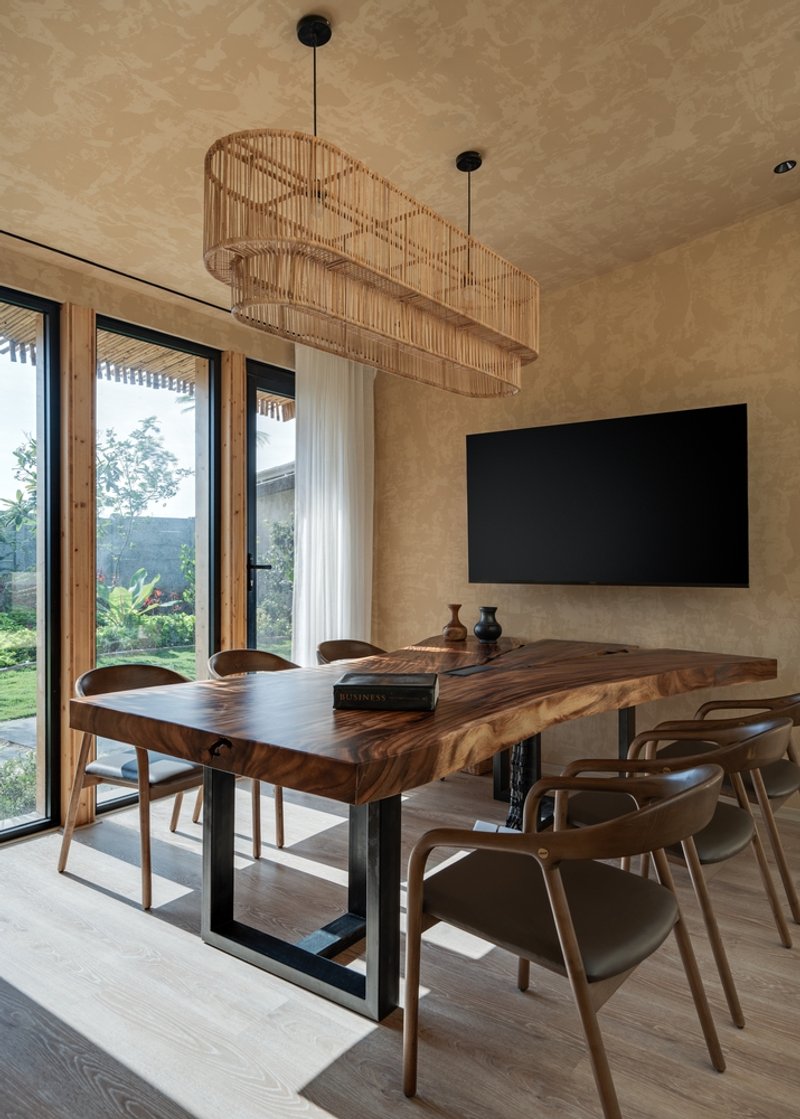
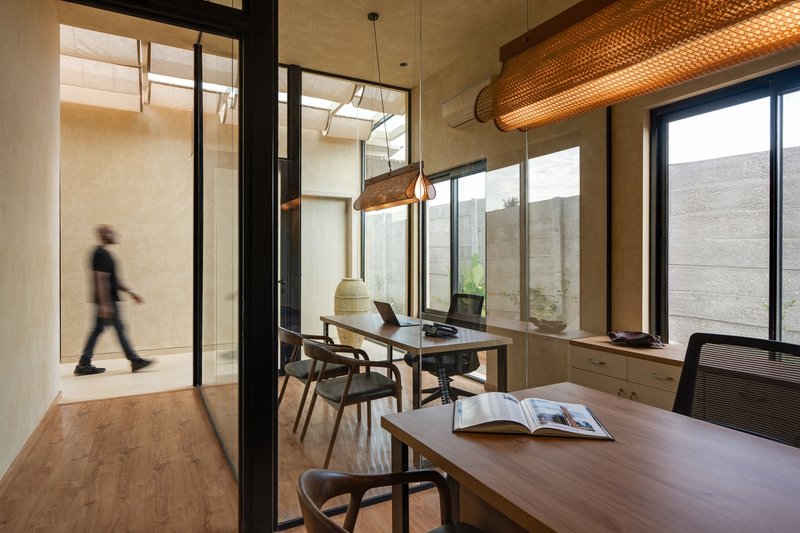
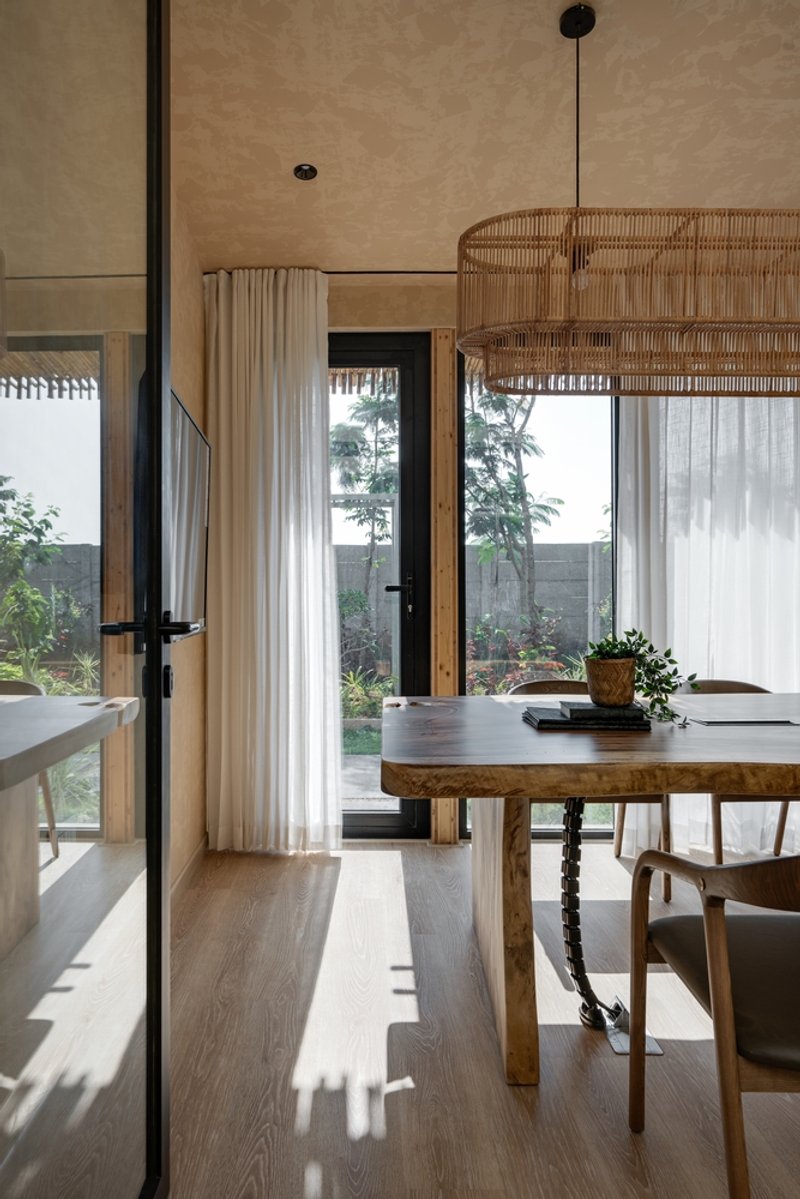
Meeting rooms maintain a mood of understated intimacy. A 12-foot wooden table anchors discussions, its surface marked by natural imperfections that echo the honesty of the materials around it. Natural fabric seating and warm ambient lighting create a setting more akin to a thoughtful conversation than a transactional exchange. The soft interplay of textures and tones makes these rooms feel grounded and human-scaled.
The adjacent café brings a shift in energy. With flowing curtains replacing rigid blinds and minimal yet inviting seating, it promotes lingering moments of informal conversation. It’s a deliberate interlude in the spatial sequence, reminding visitors that the journey toward homeownership should begin with slow reflection rather than hard selling.
Outdoor Integration and Adaptive Typologies
The transition to the outdoor areas is seamless. A children’s play area and open lawn extend the experience beyond built form, accommodating community events or quiet solitude. Nestled in one corner is a yurt—a prototype dwelling that proposes flexibility and impermanence as viable architectural ideals. Built from locally sourced materials, the yurt becomes both symbol and solution, encouraging visitors to explore non-traditional living models before committing to permanent construction.
Sustainability as Structural Ethos
Sustainability in Elements of Nature is intrinsic, not applied. The entire structure is designed to be dismantled after its lifecycle of 5–10 years, with a steel frame that can be reused. Bamboo, known for its biodegradability and warmth, defines the building’s skin, while interiors rely on locally sourced, untreated wood and tactile micro-cement. The project's environmental ethos aligns with biophilic principles—creating architecture that is temporally light, materially authentic, and emotionally grounded.
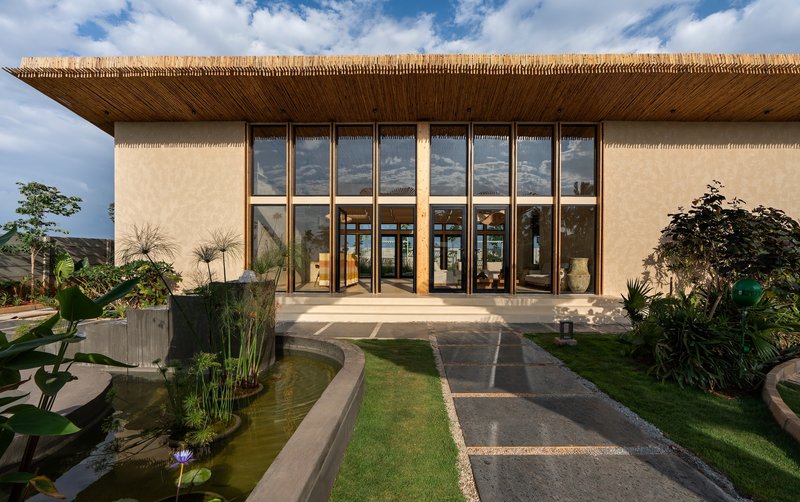
Even senior management cabins uphold this philosophy. Set at the rear for privacy yet enclosed in transparent glass, they reflect both quiet authority and spatial continuity. There is no dominance in this design—only gentle guidance, clarity of layout, and an architecture that invites presence rather than performance.
A New Typology for Commercial Spaces
Ultimately, Elements of Nature redefines the architecture of sales offices by rejecting superficial gloss in favor of sensory resonance. It is a manifesto for biophilic commercial architecture, where commerce intersects with calm, and branding gives way to being. Rather than overwhelming visitors with messages, it allows them to feel—silently, deeply, and memorably. As sunlight shifts across bamboo screens and courtyards breathe with air and shade, this space remains alive in its stillness, enduring in its quiet impact.
All Photographs are works of Shamanth Patil Photography




Popular Articles
Popular articles from the community

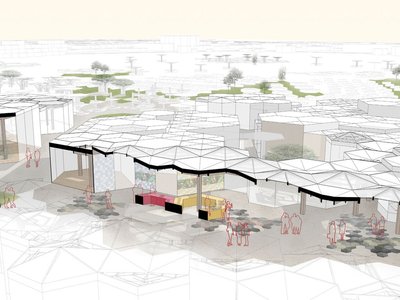
20 Most Popular Commercial Architecture Projects of 2025
From sustainable market concepts to heritage factories, the commercial buildings and proposals that drew the most attention on uni.xyz this year.

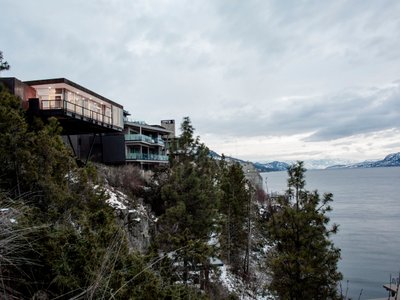
Alton Cliff House: A Harmonious Retreat by f2a Architecture in Lake Country, Canada
Alton Cliff House blends corten steel, prefabrication, and sustainable design, creating a luxurious, energy-efficient retreat perched on Canadian cliffs.
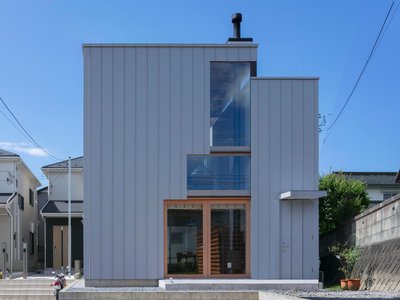
Split House: A Compact Urban Home Blending Privacy, Light, and Flexible Living in Japan
Compact Japanese home featuring DOMA space, flexible café potential, passive lighting, privacy zoning, and sustainable urban living design.
Free Architecture Competitions You Can Enter Right Now
No entry fees, real prizes. Here are the best free architecture competitions open for submissions in 2026.


Similar Reads
You might also enjoy these articles
20 Most Popular Commercial Architecture Projects of 2025
From sustainable market concepts to heritage factories, the commercial buildings and proposals that drew the most attention on uni.xyz this year.
Free Architecture Competitions You Can Enter Right Now
No entry fees, real prizes. Here are the best free architecture competitions open for submissions in 2026.
Top 15 Architecture Competitions to Enter in 2026
From student-friendly idea competitions to prestigious international awards, here are the best architecture competitions open for entries in 2026. Updated regularly.

DIY & Engineering in Computational Design : Enter the BeeGraphy Design Awards
Showcase Your Creativity with Computational Design and Open Source Projects

Explore Architecture Competitions
Discover active competitions in this discipline




The International Standard for Design Portfolios


The Global Benchmark for Architecture Dissertation Awards


The Global Benchmark for Graduation Excellence


Challenge to reimagine the Iron Throne
Comments (0)
Please login or sign up to add comments
No comments yet. Be the first to comment!