

Brewed Bali
Journal

INTRODUCTION
In order to design ‘Brewed,’ the design approach began with Research and Site Analysis. Studying the architecture, history and culture of Bali was the basis to derive inspiration for the form, materials and functions of the space. Creating a space that takes references from the surroundings yet stands out as a structure was the main goal.
FUNCTIONS OF THE SPACE
A coffee house overlooking the beach along with a pavilion dedicated to hold workshops. Local artisans and craftsmen can utilise the space to conduct workshops and promote the art of the region. A small pavilion dedicated for the exhibition of handcrafted local products or for conducting workshops as well.
Purpose : To encourage and promote the local art and crafts of Bali. Providing a platform to the artisans to showcase their craft and helping in sustaining their livelihood.
Eg : Pottery classes
Bamboo weaving workshops for tourists/visitors
Local Balinese cooking workshop
The cafe uses all local produce from Bali
Incorporating bamboo, local wood in interiors, lighting, accessories or even architecture
Using ceramic ware in the cafe itself to further promote it + attract people to sign up for the workshops.

CONCEPT & INSPIRATION
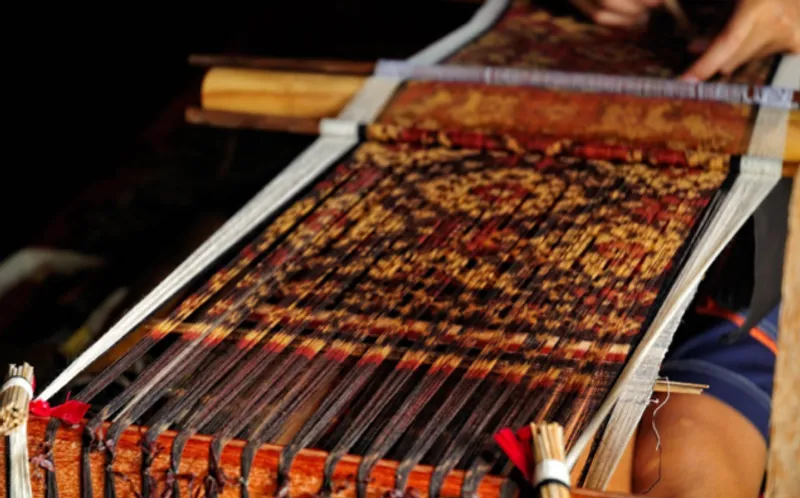
In order to derive inspiration from the surroundings, we looked at the beautiful surroundings and nature evident in Bali. The inspiration came from the stepped rice terraces of the region. For thousands of years, the Balinese people have been cultivating the beautiful rice terraces of Bali. Bali’s rice terraces and their watering system were added to UNESCO’s World Heritage sites because of the way they demonstrate Tri Hita Karana. Tri Hita Karana prioritises Harmony with nature, with other humans and with god.
In order to respect this philosophy, the structure is designed with an accessible roof garden to connect it with nature. Trees and landscaping elements have been brought into the interiors with focus on natural lighting and ventilation. When seen from afar, the roof is sloping on all four sides. The form has been inspired from the sloped and hipped roofs seen in Balinese homes and buildings. Taking references from Bali’s traditional structures, the cafe building still depicts a modern approach by employing geometric blocks and creating a visually dramatic structure.
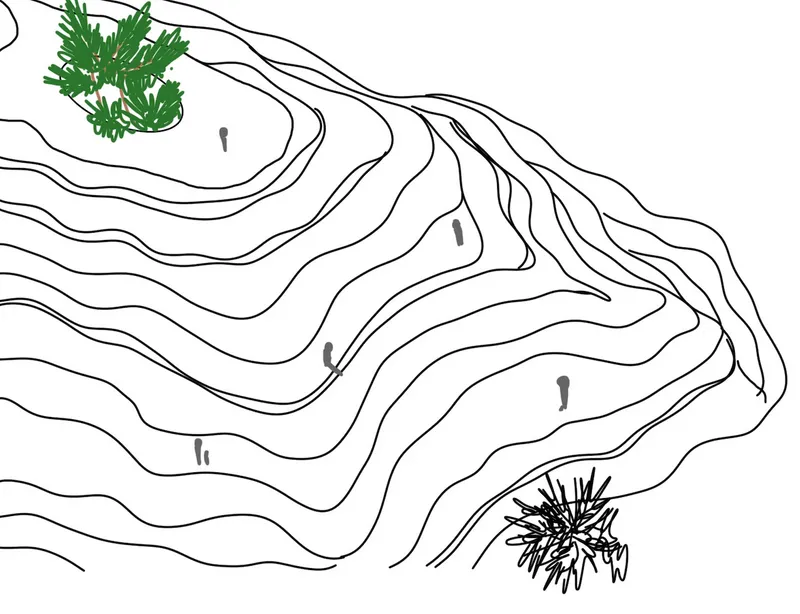
Roof inspired from rice terraces
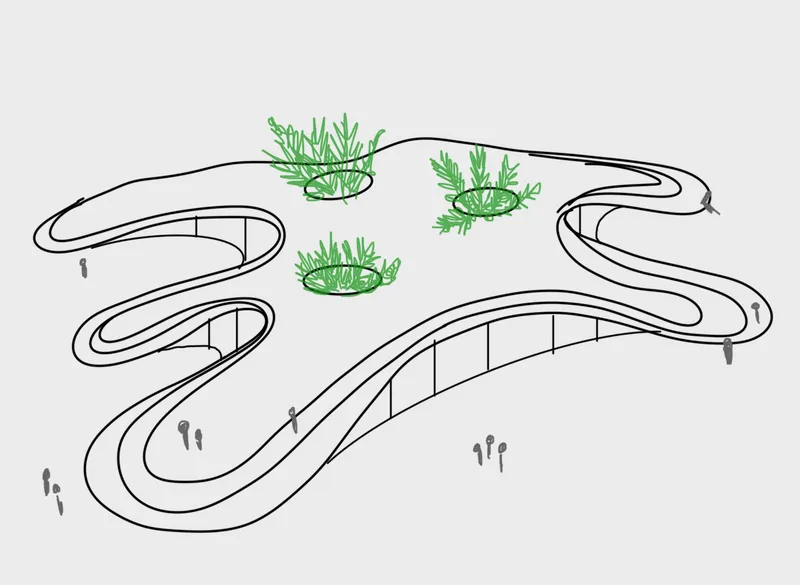
Roof inspired from rice terraces

Form inspired from the hipped roofs
ZONING OF INTERIOR SPACES
The structure is irregularly shaped, creating an expansive polygonal area in the interiors.
As one enters the main structure, the reception desk is at the front. Seating modules have been created for groups of two, four along with community seating for larger groups. A central kitchen area is designed with high seating.
The spiral staircase leads the traffic to the first floor. A circular serving counter has been designed with bar stools. Seating modules for groups of various sizes have been placed throughout the first floor that boasts a high ceiling. One can enjoy the beach view from the First floor.
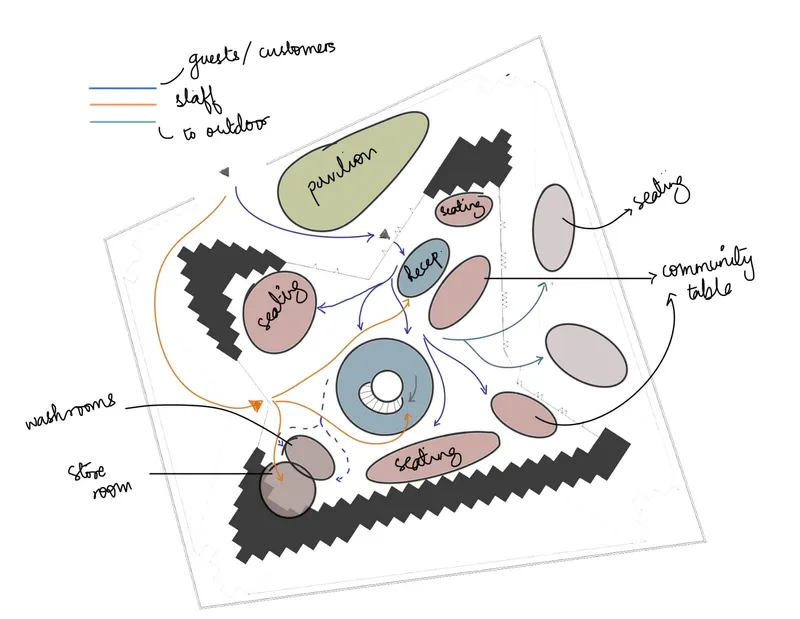
Ground Floor Zoning and Movement Plan
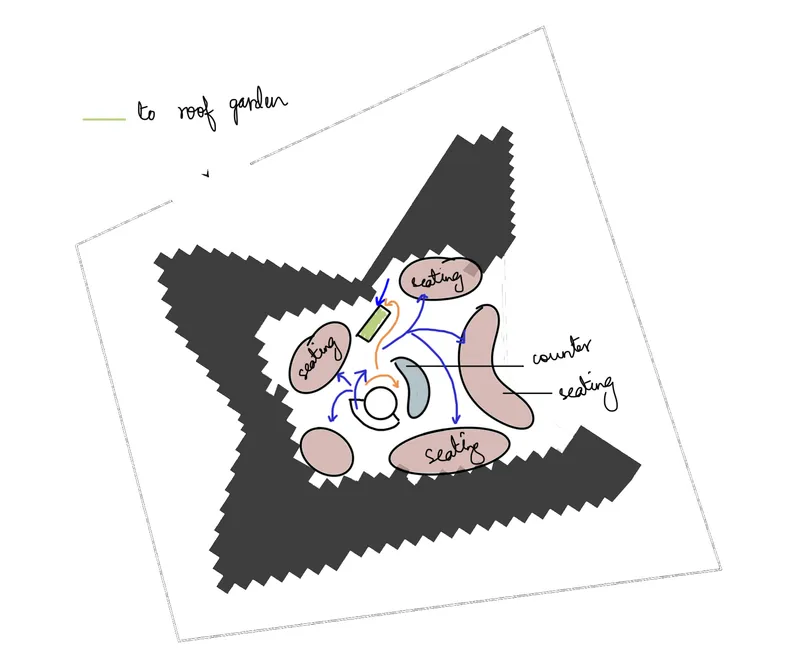
First Floor Zoning and Movement Plan
CHOSEN MATERIALS
Sustainability was an important aspect considered while choosing materials for the project. Thus, the structure is completely built of reinforced concrete blocks with recycled plastic. Bali faces a major plastic pollution to the extent of a trash emergency being declared in 2017.
Most of the trash ends up on the beautiful beaches of the island or in huge landfills. By using this plastic to reinforce concrete, the block becomes 15% stronger than concrete blocks made with regular Portland cement. This method also replaces concrete with irradiated plastic thus reducing the cement industry’s global carbon footprint.
Furthermore, a roof garden acts as a vertical landscaping feature and accelerates natural cooling. The form has been designed to maximise natural lighting and ventilation. Bamboo sliding doors and screens along with local Balinese wood forms the furniture and interior fixtures. Using these local materials ensures they are transported locally and do not cover long distances to reach the site. Additionally, a rainwater harvesting pit collects run off water from the roof and the site.
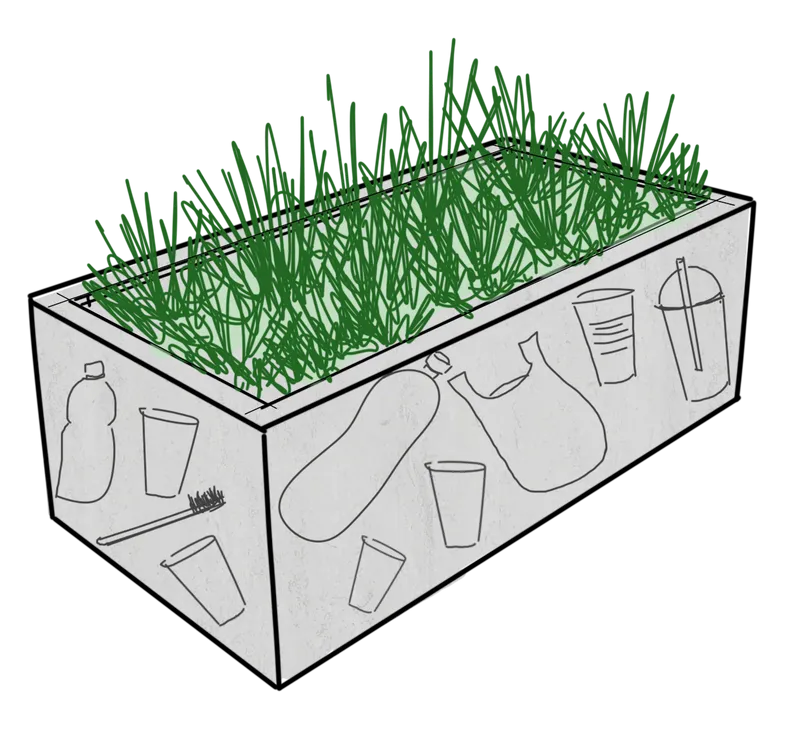
Concrete block reinforced with plastic trash
CONCLUSION
After a number of iterations and brainstorming, a cohesively designed cafe structure has been designed. The interiors respect the architecture and serve the functions of the space besides a coffee house. It can be used by tourists, local people, artisans and craftsmen collectively to eat and drink, admire the local crafts and exchange ideas. ‘Brewed’ is hence a space for social gatherings and personal unwinding as well. One can sip coffee and enjoy the beach views or attend local Balinese workshops. It is a space for young and old alike.



Popular Articles
Popular articles from the community


Lunar Spiral: Space Architecture Shaped by the Mathematics of the Universe
Lunar Spiral reimagines space architecture through Fibonacci geometry, lunar regolith, levitating habitats, and self-sustaining Moon living.

Co-Life: Senior Housing Design That Reconnects Older Adults With the City
Co-Life reimagines senior housing design through healing gardens, shared streets, workshops, and a sustainable community across generations.

The Earth Pod: 3D Printed Homes for Resilient Refugee Communities
The Earth Pod reimagines refugee housing through 3D printed homes made from clay, combining resilience, self-sufficiency, and rapid shelter.

Riyadh For All: Intergenerational Urban Design for Active Aging in Rabat
Riyadh For All reimagines urban design in Rabat with intergenerational co-living, adaptive courtyards, and Moroccan cultural exchange today.


Similar Reads
You might also enjoy these articles

Day and Night Park: A Time-Based Urban Newsstand in Beijing
A temporary urban newsstand in Beijing blending travel, light, and reading through poetic colors, compact form, and community-focused design.

Modernist Patio Renovation in El Masnou, Barcelona by Oliver Segura Arquitectura + Cebrià Arquitectura
Modernist patio renovation blending tradition and innovation with a movable pool, leveled floors, and Catalan materials in El Masnou.

Alto Residencial Coop: Cooperative Housing Development in Santiago de Compostela by Carbajo Barrios Arquitectos
A linear cooperative housing complex blending white volumes and perforated metal façades, enhancing community living, natural light, privacy, and urban integration.
Vil Genis School by BPA ARCHITECTURE – Massy, France
Vil Genis School in Massy, France, features sustainable design, south-facing classrooms, community integration, accessible spaces, and modern educational architecture.


Comments (0)
Please login or sign up to add comments
No comments yet. Be the first to comment!