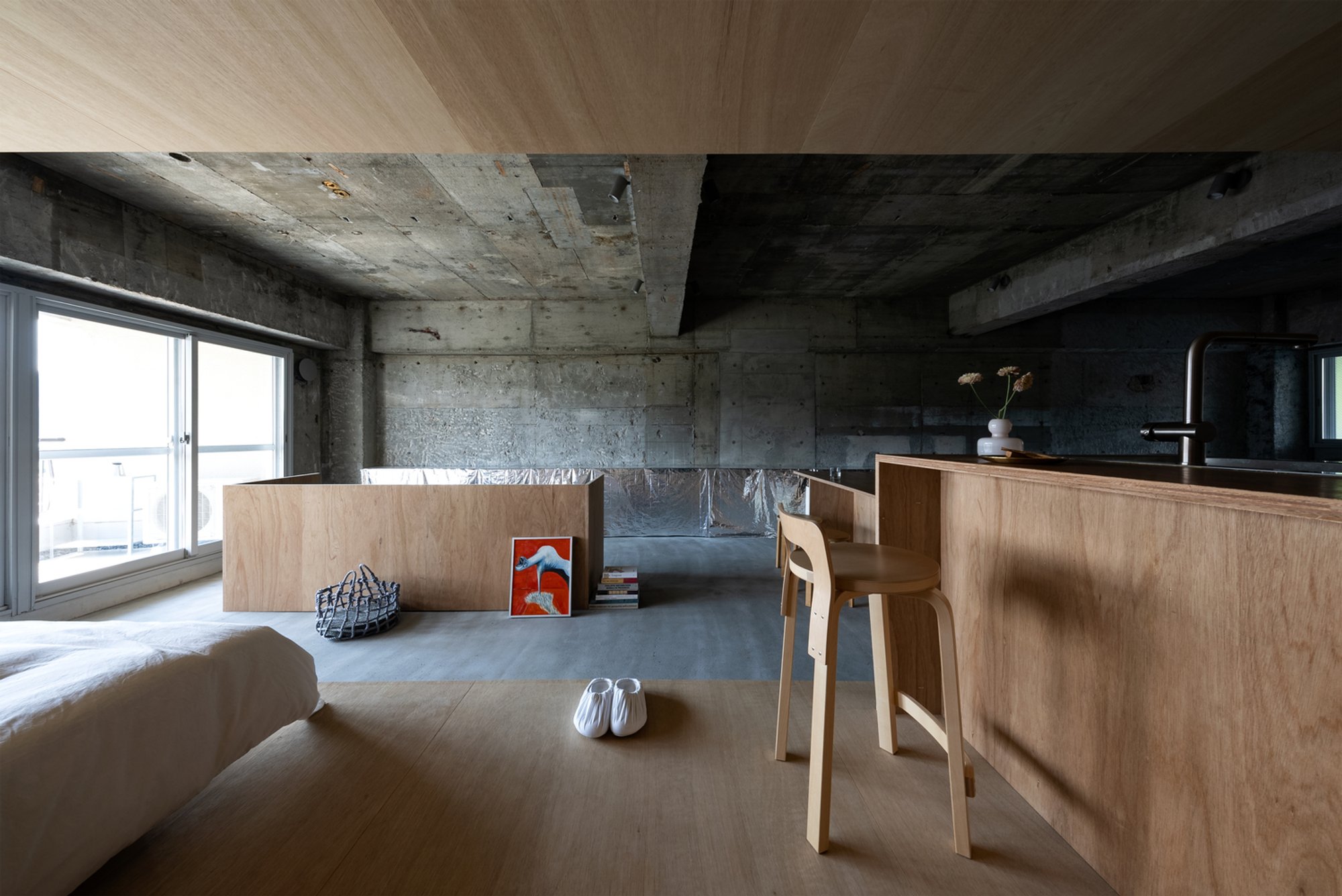
Casting Shadows Apartment Renovation by MASATO TAKAHASHI ARCHITECTS, Sendai, Japan
An atmospheric apartment renovation in Sendai where dismantled walls, hinoki plywood, and shifting shadows redefine light, space, and everyday living.


Casting Shadows is a contemplative apartment renovation by MASATO TAKAHASHI ARCHITECTS, located in Sendai, Miyagi Prefecture, Japan. Completed in 2023, the 85-square-meter interior project reimagines a half-century-old apartment through the architectural potential of darkness, shadow, and spatial ambiguity. Rather than prioritizing brightness or visual clarity, the renovation explores how shadows can dissolve spatial boundaries, reshape perception, and introduce a poetic dimension to everyday domestic life.
Urban Context and Site Conditions
The apartment is situated within a seven-story residential building facing Katahira-cho Street, an area that once functioned as a feudal lord’s alley during Japan’s feudal era. Perched along a dramatic cliff edge where a river terrace meets the Hirose River, the site offers expansive views toward Mount Aoba, forming a distinctive landscape unique to Sendai. This layered historical and geographical context plays a subtle yet significant role in shaping the project’s architectural philosophy.
Reinterpreting the Existing Apartment Layout
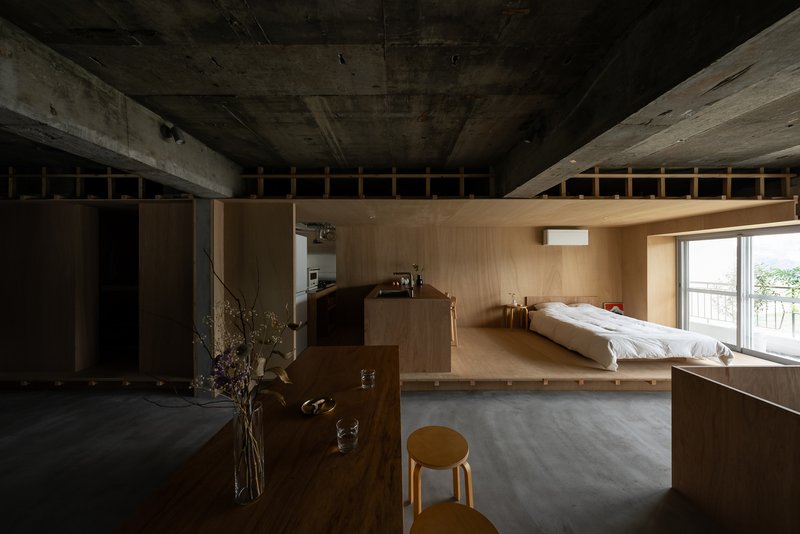
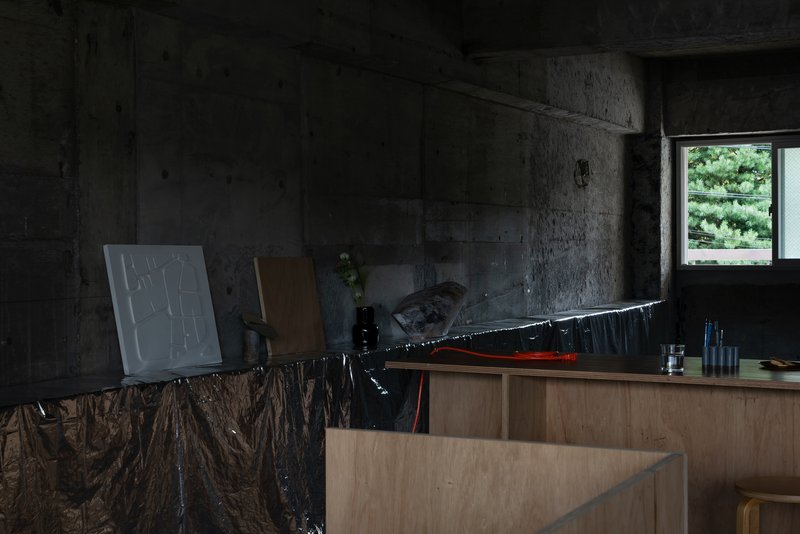
The original apartment followed a typical 4K floor plan, composed of a south-facing Japanese-style room, a western-style room, and service spaces aligned to the north. This configuration produced a sharp contrast between light-filled living areas and dark, enclosed bathrooms and corridors. Instead of correcting this imbalance, the architects chose to amplify and reinterpret the contrast, using darkness as an active design element.
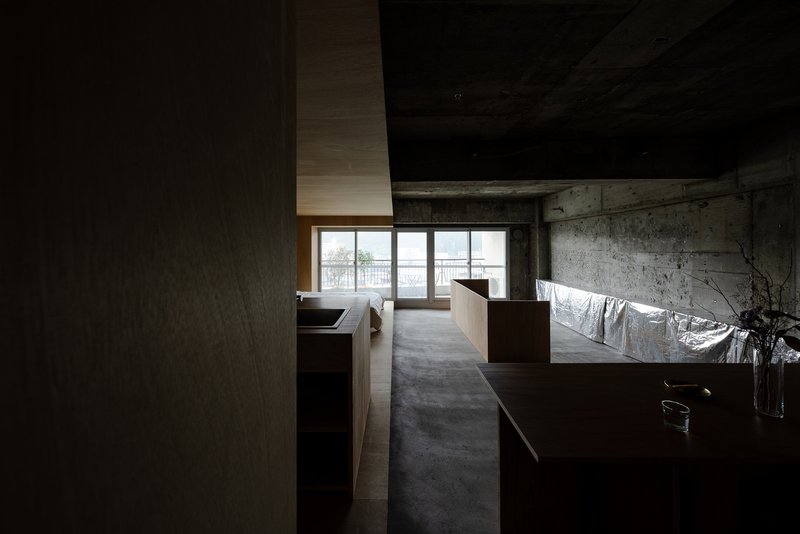
By dismantling the internal walls that divided the apartment into east and west zones, natural light—previously concentrated along the southern façade—was intentionally dispersed. The removal of spatial contours such as partitions, finishes, and fixtures disrupted the conventional flow of light, resulting in a single continuous interior where shadows accumulate and deepen.
Living Within the Shadows
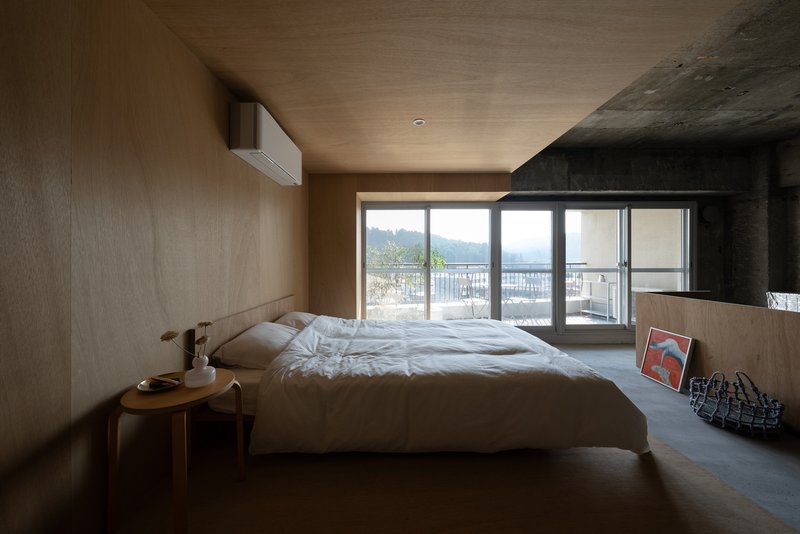
This newly formed space, referred to as the “Shadows room,” is not defined as a conventional room but as a spatial condition shaped by light loss, depth, and perception. Drawing from Eastern philosophies that value subtlety, ambiguity, and darkness, the architects conceptualize the Shadows room as a place where occupants are invited to imagine what cannot be seen and to sense what cannot be heard.
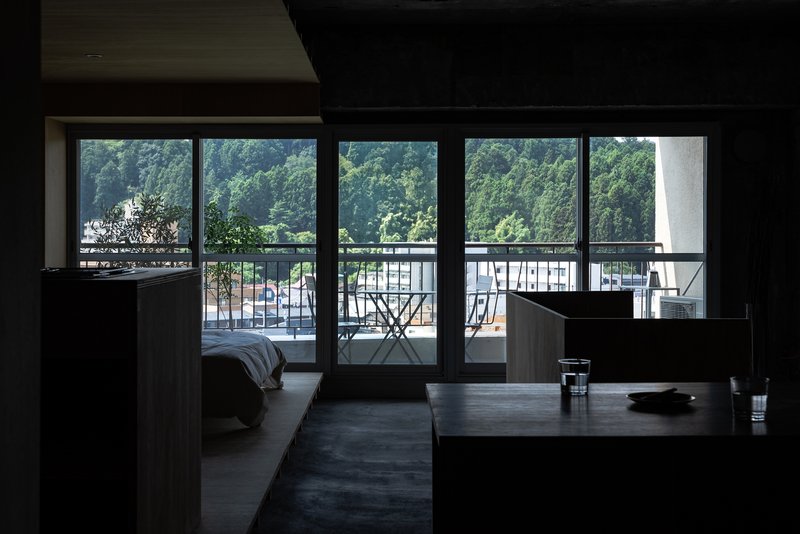
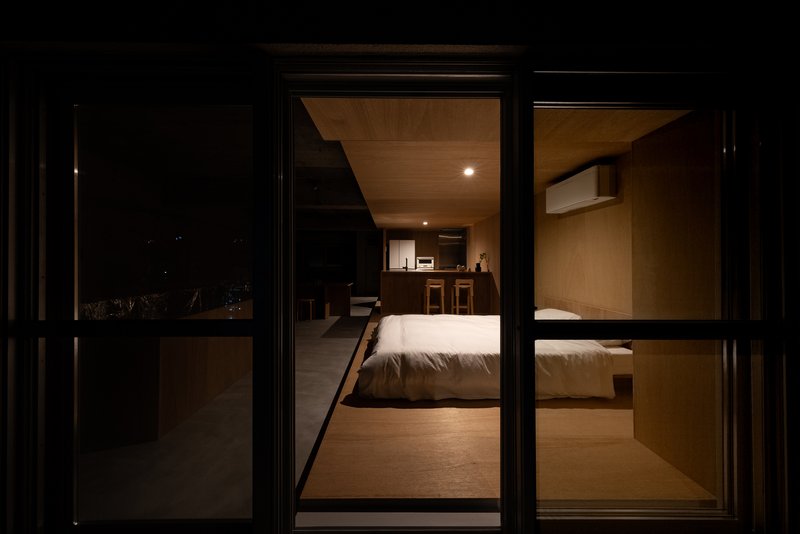
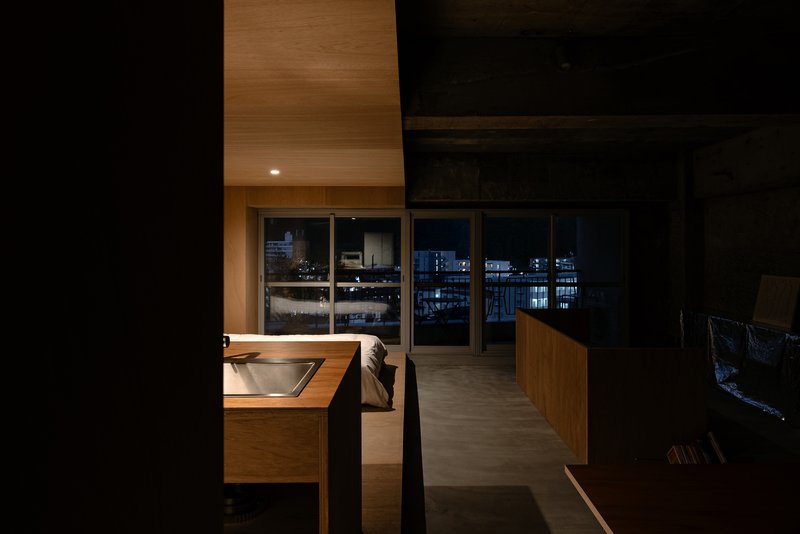
During the daytime, the scenery framed by north and south windows appears as a borrowed landscape, floating within darkness like a distant image. At night, shadows engulf the interior, causing portions of the apartment to seemingly disappear. Walls dissolve visually, and the space takes on the sensation of an endless void. These continuously shifting shadows create temporal depth, transforming routine daily activities into layered spatial experiences.
Spatial Organization and Daily Movement
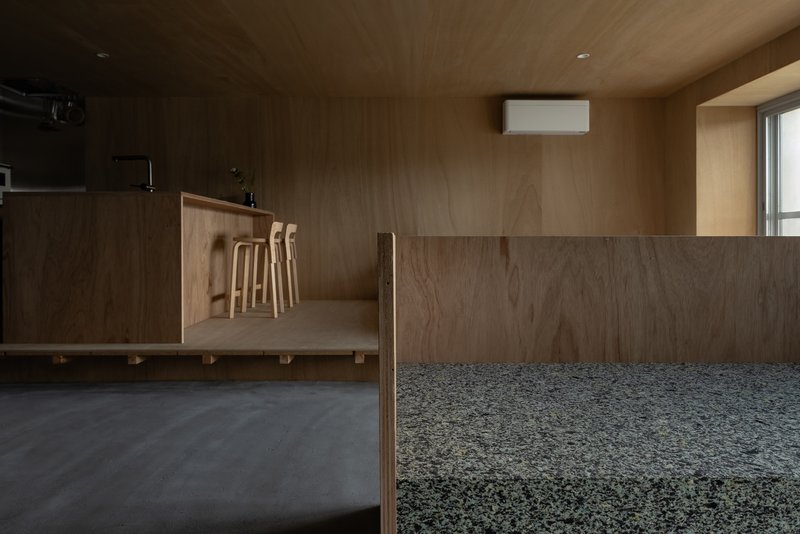
Responding to the client’s request for a spacious dirt-floor area and a compact living arrangement, the architects reorganized the apartment along a strong north–south axis. Living spaces, bedrooms, and bathrooms are aligned to ensure that daily circulation repeatedly passes through the Shadows room.
An existing wall separating the living room from the bathroom was deliberately extended to the edge of the floor slab. This design decision ensures that residents must cross the Shadows room during everyday movement, reinforcing its role as a threshold rather than a destination. The Shadows room functions simultaneously as an opening—connecting various spaces—and a pause, where movement and perception slow under the influence of darkness.
The Concept of “Awai” and Noh Theatre Influence
The spatial relationship between the light-filled living room and the Shadows room draws inspiration from Mugen Noh, a classical form of Japanese theatre in which reality and fiction unfold through dialogue between the living and spiritual realms. In this analogy, the living room represents reality, while the Shadows room embodies the spiritual presence, placing the space between them in a state of “Awai”—an in-between condition.
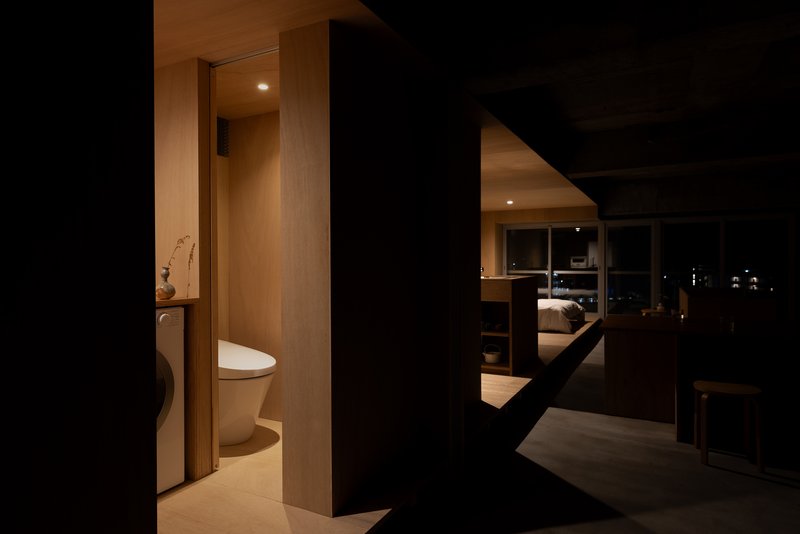
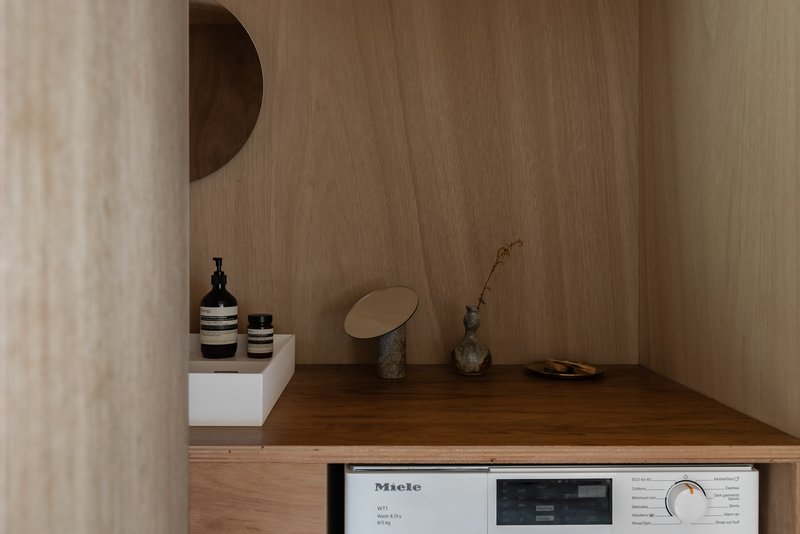
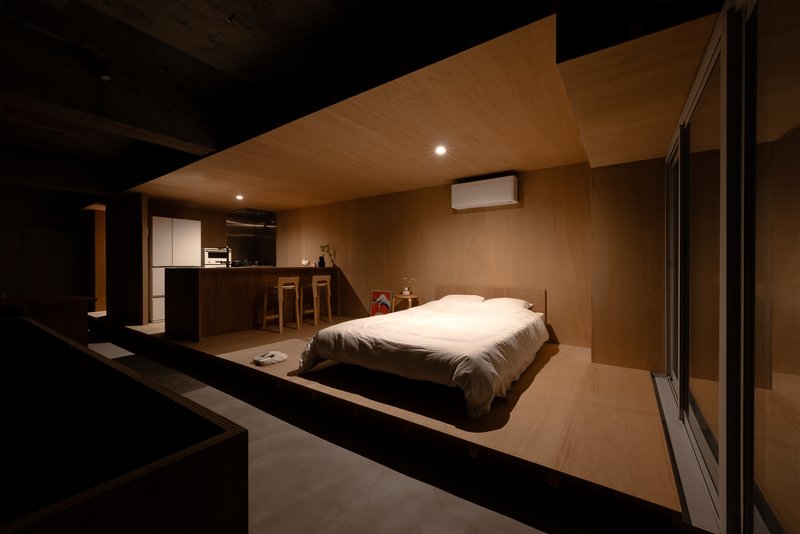
The living room, conceived as the stage of daily life, is finished entirely in hinoki plywood. The warm, pale wood surface reflects natural light, creating a striking contrast with the surrounding darkness. The boundary between light and shadow is carefully articulated: wooden studs are intentionally exposed, not as remnants of demolition, but as a “paused surface” where the architecture momentarily holds still.
Material Strategy and Sectional Manipulation
Beyond its tactile warmth, hinoki plywood was selected for its durability and water resistance, ensuring functional longevity while enhancing atmospheric contrast. The living room floor is elevated 20 centimeters above the Shadows room, clearly signaling a spatial transition. Meanwhile, the ceiling height is reduced to 1.9 meters, intensifying the sense of compression and heightening awareness of bodily movement.
When viewed from the Shadows room, the illuminated living space appears as a framed scene, reminiscent of the Kagami-ita—the painted pine backdrop of a traditional Noh stage. By exposing structural frames once concealed, the architects expanded the perceived spatial volume, allowing light, air, and human activity to flow through the shadows.
Darkness as Comfort and Spatial Depth
Rather than treating darkness as absence, Casting Shadows repositions it as a source of comfort, imagination, and spatial richness. The renovation challenges contemporary interior norms that equate comfort with brightness, proposing instead a domestic environment where shadows shape experience, blur boundaries between inside and outside, and invite quiet reflection.
Through minimal intervention and conceptual clarity, MASATO TAKAHASHI ARCHITECTS transform an aging apartment into a deeply atmospheric living space—one where light, darkness, and movement coexist in constant dialogue, and where everyday life unfolds within the subtle depth of shadows.
Project Information
Project Name: Casting Shadows Architects: MASATO TAKAHASHI ARCHITECTS Lead Architect: Masato Takahashi Location: Sendai, Miyagi Prefecture, Japan Area: 85 m² Year: 2023 Photographs: Shutoh Yohei
All photographs are works of Shutoh Yohei