Chapultepec Environmental Culture Center – ERREqERRE Arquitectura y Urbanismo
The Chapultepec Environmental Culture Center integrates gardens, Biocultural Walks, and a sustainable Pavilion, promoting environmental education, biodiversity, and urban forest engagement.


The Chapultepec Environmental Culture Center, designed by ERREqERRE Arquitectura y Urbanismo in collaboration with Taller ID, represents a pioneering approach to sustainable cultural architecture in Mexico City. Completed in 2023, the 2,000 m² project seamlessly integrates cultural, educational, and environmental functions within the historic and ecologically rich Chapultepec Forest. This environmental and cultural hub encourages visitors to engage with nature, ethnobotanical knowledge, and urban ecology through its thoughtful spatial design.
Site and Context
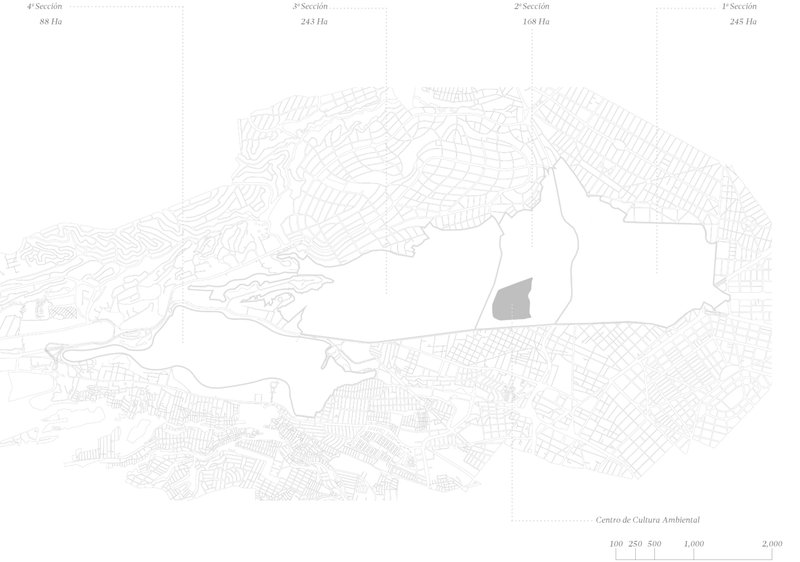
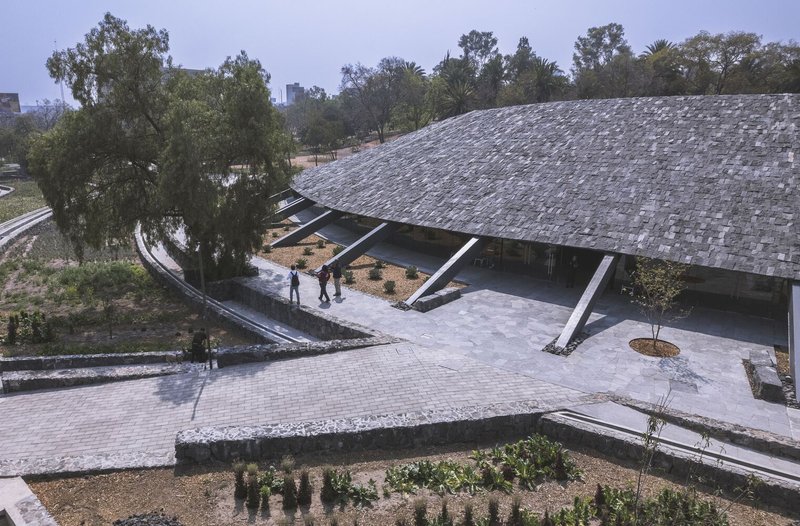
Strategically located within the Chapultepec Forest, the project preserves and enhances existing vegetation, topography, and natural water systems. Its design celebrates the diverse ecosystems of the Valley of Mexico Basin, including temperate forests, grasslands, wetlands, and Pedregal volcanic landscapes. By incorporating these ecological references, the project transforms the forest area into a dynamic urban environmental learning space while enhancing the site’s ecological potential.
Gardens and Biocultural Walks
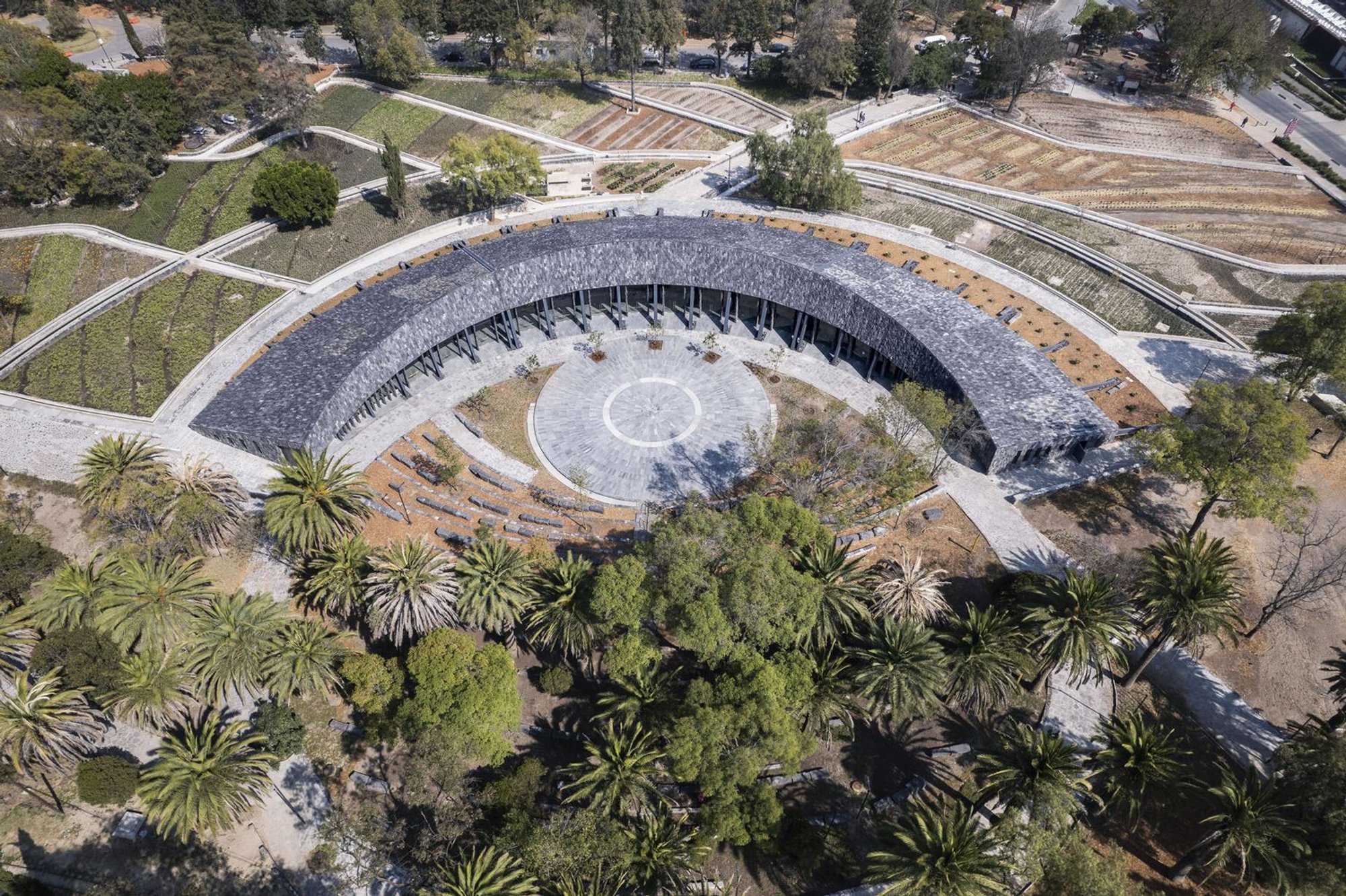
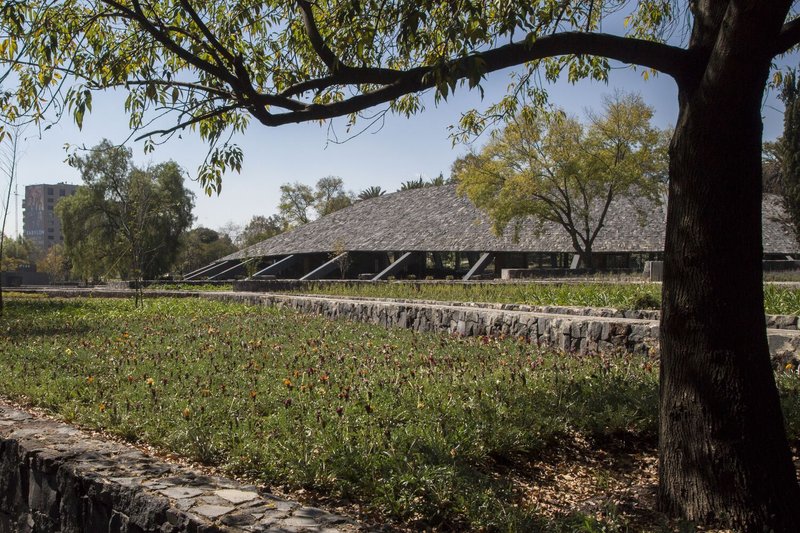
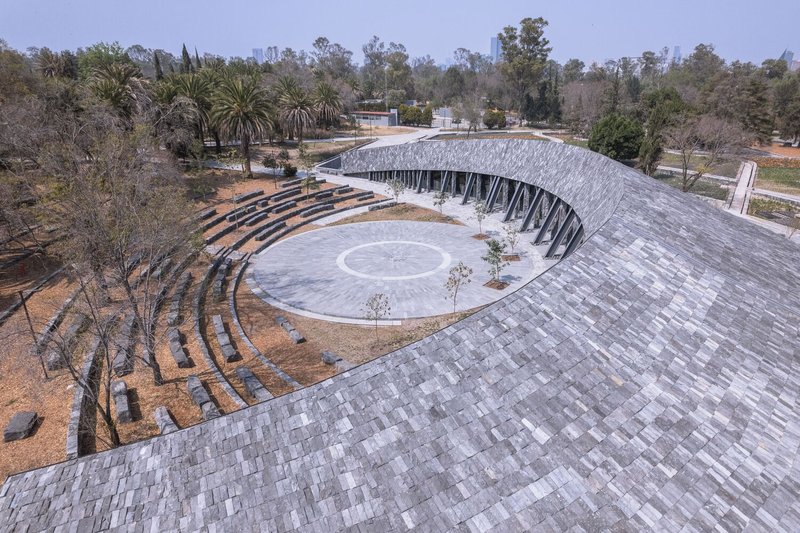
Surrounding the Pavilion is a series of ethnobotanical gardens that reflect the native biodiversity and natural landscapes of the region. To improve accessibility and pedestrian connectivity, the design introduces Biocultural Walks, which provide an immersive experience in nature while fostering environmental education. These spiral walkways follow the contours of Menor Lake, linking cultural nodes and the Environmental Pavilion into a cohesive network that encourages learning and exploration.
The Walks serve not only as connectors but also as educational landscapes, offering visitors a firsthand understanding of the interplay between human activity and natural ecosystems.
Pavilion Design and Architectural Concept
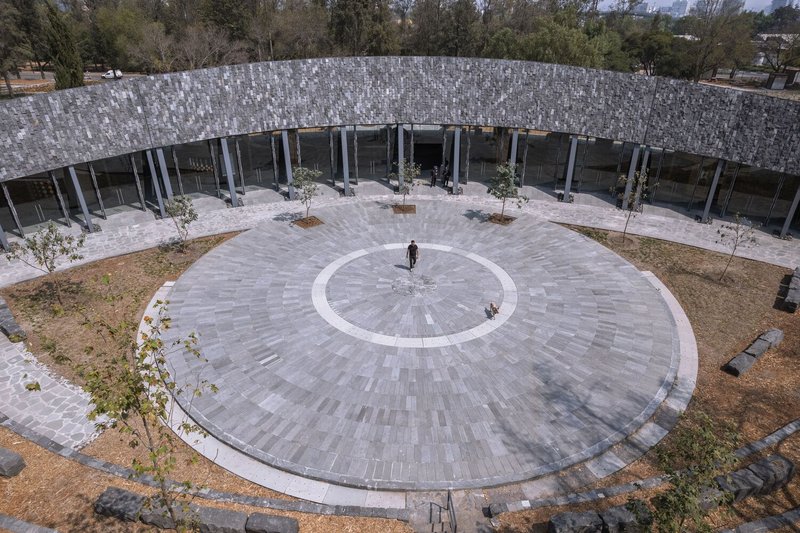
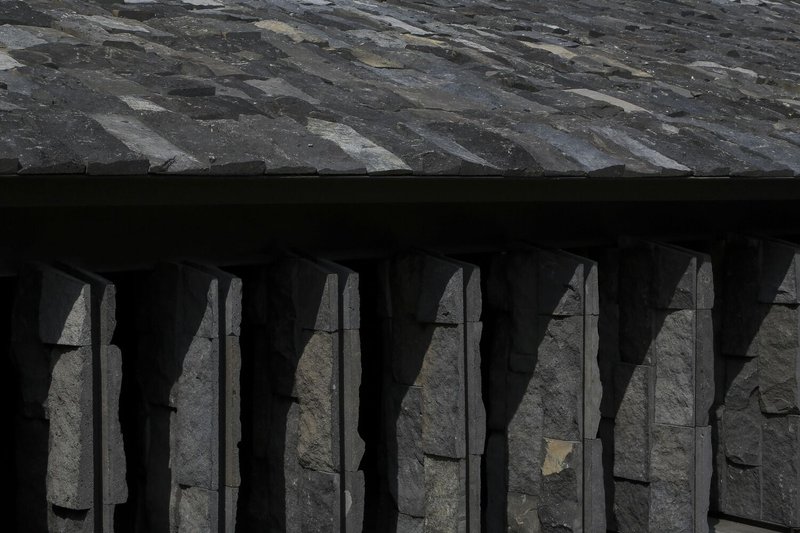
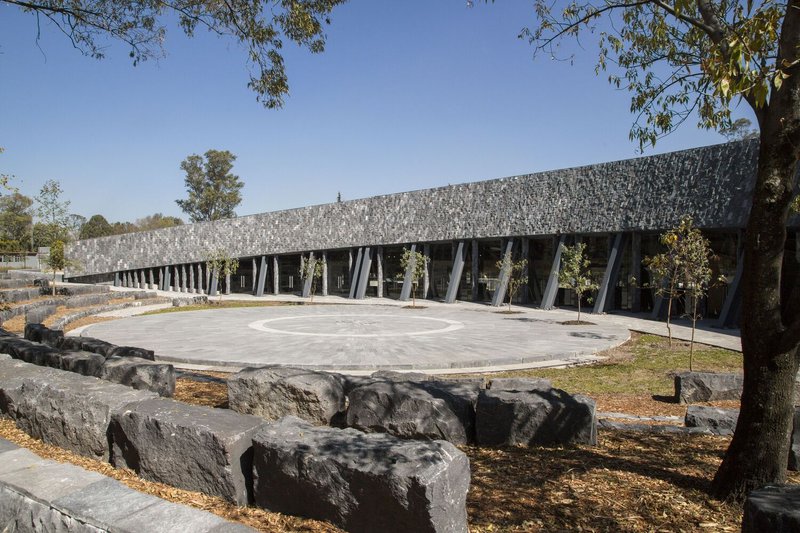
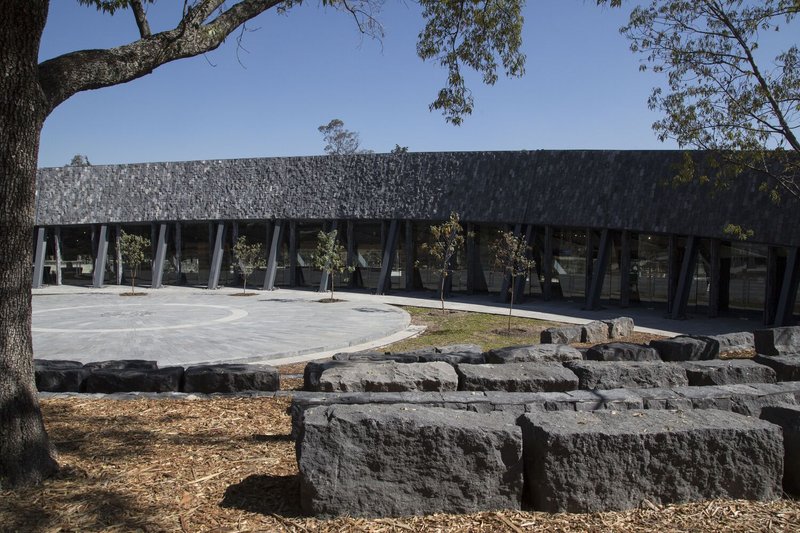
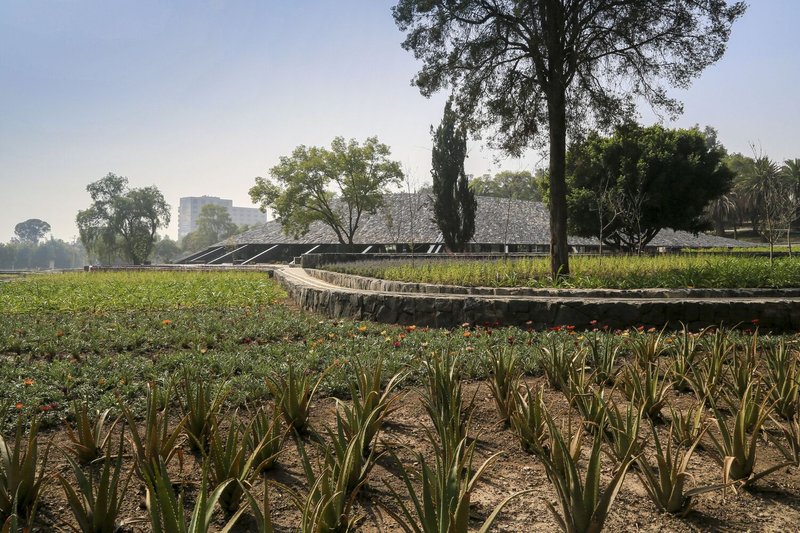
The Environmental Pavilion acts as both a cultural and environmental landmark. Its semi-conical geometry and black volcanic stone cladding reflect the Pedregal landscapes, subtly integrating with the surrounding environment. Designed for flexibility and low maintenance, the Pavilion accommodates exhibitions, workshops, and educational programs, all while maintaining visual transparency to the surrounding gardens and Cultural Space.
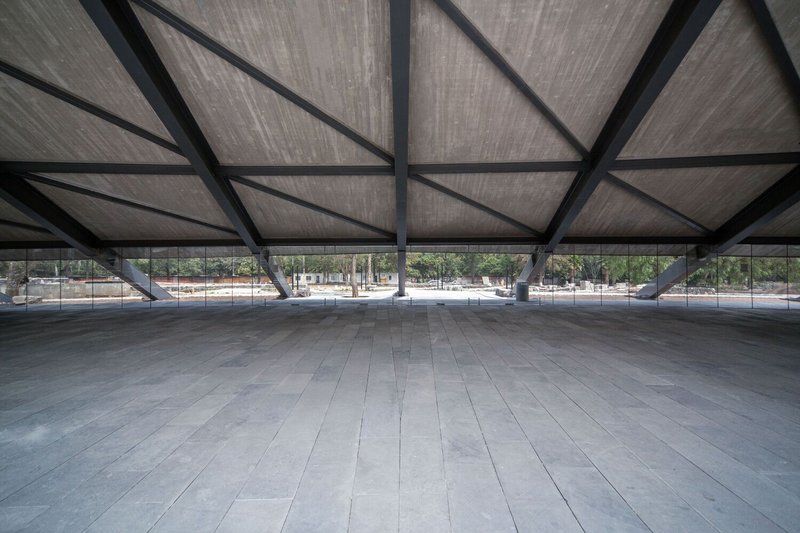
Inside, the Pavilion features open, continuous spaces that adapt to different museography strategies and public events. The spatial arrangement emphasizes interactions between people, nature, and cultural programming, enhancing the visitor experience and reinforcing the importance of environmental education.
Agroecological Zone and Sustainable Practices
Replacing a former parking lot, the project introduces an Agroecological Zone with rotating crops contained by stone “tecorrals,” promoting biodiversity and urban agriculture. Citizen participation is encouraged through educational programs, demonstrations, and agricultural activities.
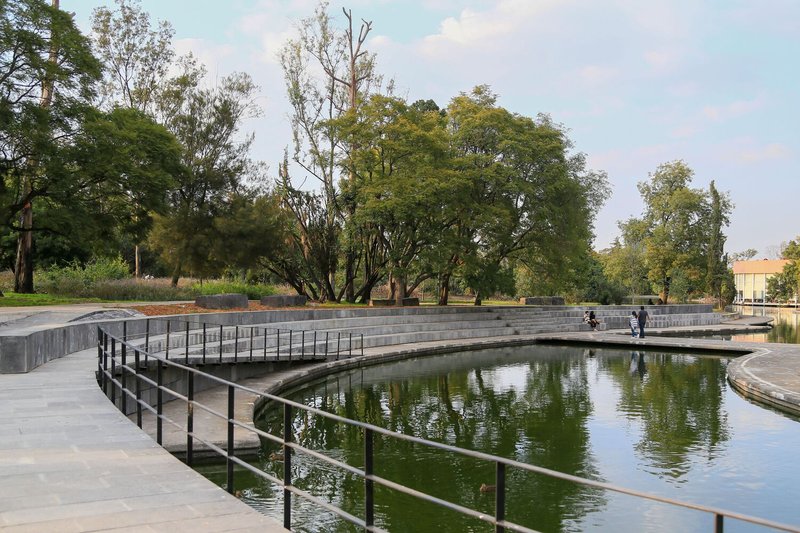
The project adheres to permaculture principles, zoning spaces according to their proximity to the Center and implementing a gravity-fed irrigation system sourced from Lago Menor. The visible master and secondary water channels optimize water efficiency and sustainable resource management, making the site a living laboratory for environmental stewardship.
Integration with the Urban Forest
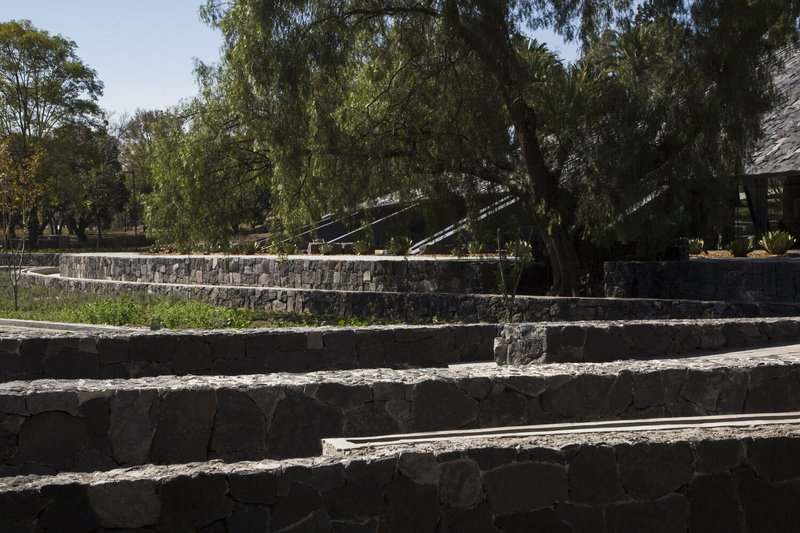
The Center’s spatial configuration prioritizes harmony with the natural environment, connecting the Pavilion, gardens, and Agroecological Zone to create a seamless landscape-architecture fusion. Volcanic stone steps, terraces, and plazas offer rest, contemplation, and engagement with nature, creating a multi-sensory experience that blends recreation, education, and ecological awareness.
The Chapultepec Environmental Culture Center is a groundbreaking example of sustainable cultural architecture in urban forests. By blending environmental design, educational programming, and innovative landscape strategies, the project fosters a meaningful relationship between humans and nature. It is a model for urban ecological resilience, promoting biodiversity, environmental culture, and community engagement within one of Mexico City’s most iconic green spaces.