
Children's Oasis
The Concept development path for a Daycare in the Mojave Desert

Groups:
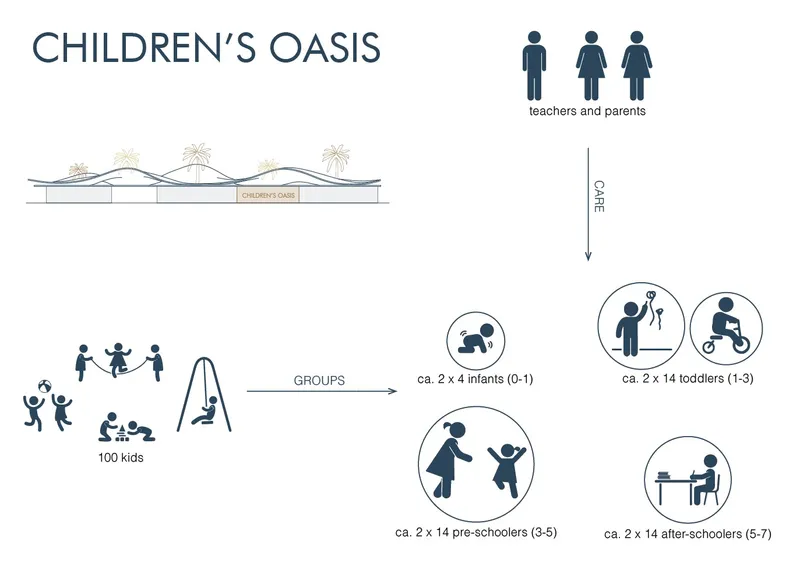
The daycare is designed for 100 children of four different age groups. In our public-use daycare facility-creche program, each group, except for the 8 infants, consists of almost 28 kids. The age groups are as follows:
-Infants (0-1)
-Toddlers (1-3)
-Pre-schoolers (3-5)
-After-Schoolers (5-7)
Design Process:
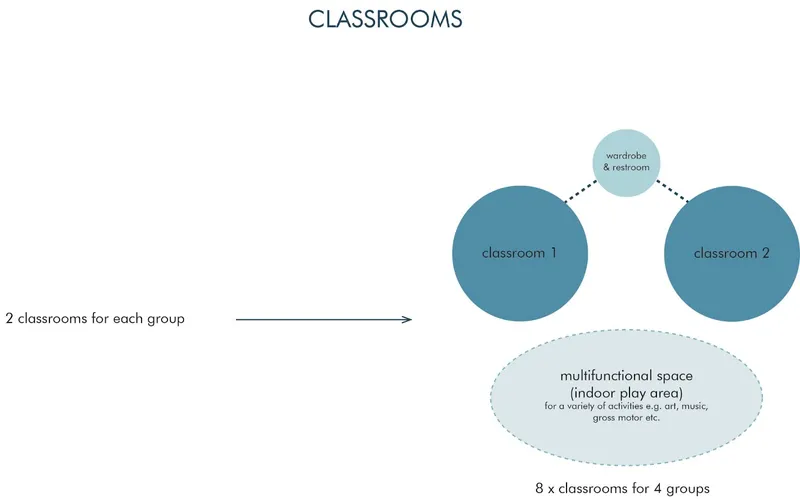
Our initial space program considered to assign two classrooms per age group. In addition, the goal was to create a multifunctional space as an indoor play area e.g. for gross motor activities and wardrobe and restrooms were allocated to each age group. The overall number of classes based on this program was eight. Altogether, we differentiated between “Educational”, “Administration”, and “Other” spaces.
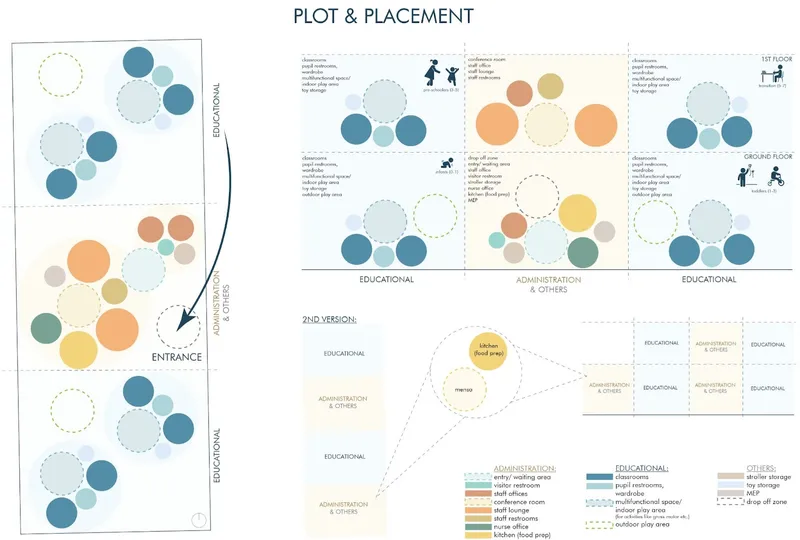
Having a two-story building was our first idea, in which we placed infant and toddler spaces as well as administrative functions on the ground floor. Navigating through the spaces was meant to be via the entrance/drop-off zone and the reception. Following that, we thought of allocating the first floor to preschoolers and after-schoolers. The staff lounge and associated adjoining rooms shared the first floor with the older age groups.
However, this space distribution did not seem very sustainable to us afterward, due to the lost space for hallways, etc.. Also, the older kids did not have a direct entrance to the courtyards, whereas the younger ones did, even though they did not need to use the outdoor play area as much. As the infants would to a higher extent be mostly sleeping in their cots and the toddlers could be playing in a supervised indoor space.
We then tried to have a more concentric design with the older kids on the ground floor having direct access to a central outdoor play area that would be covered. And have the classrooms surround an indoor gross motor play area, which would be visible from outside. Allowing parents to look in when required. And we would have the toddlers and infants on the upper floor. The toddlers then have an outdoor covered play space on the roof away from the much older kids on the ground floor.
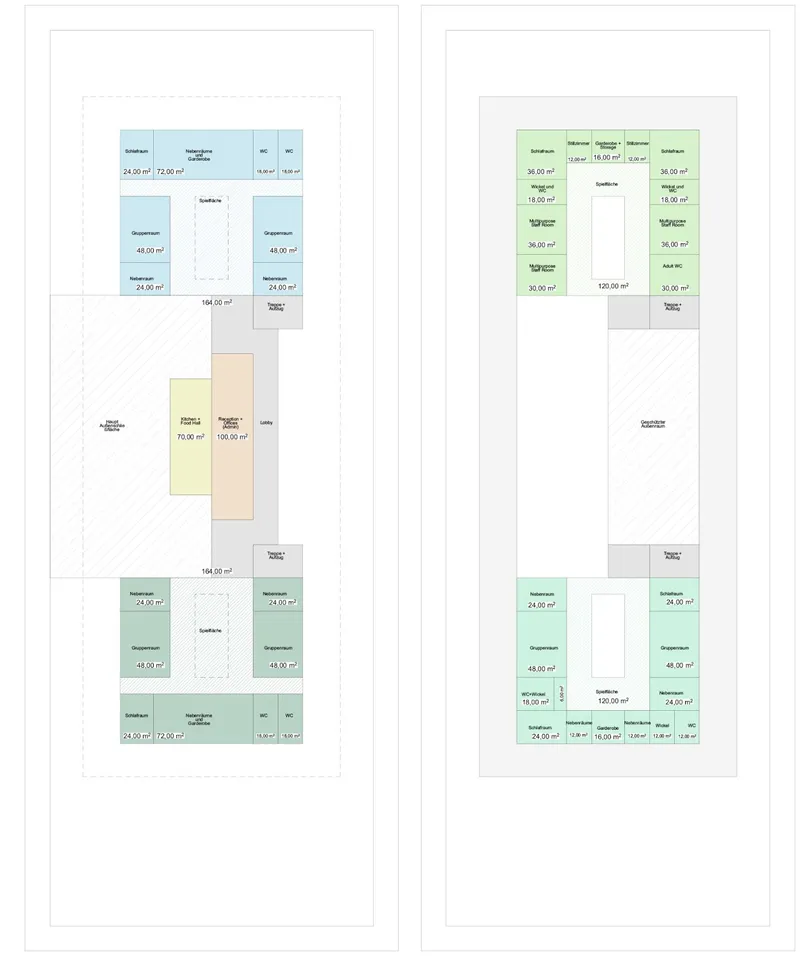
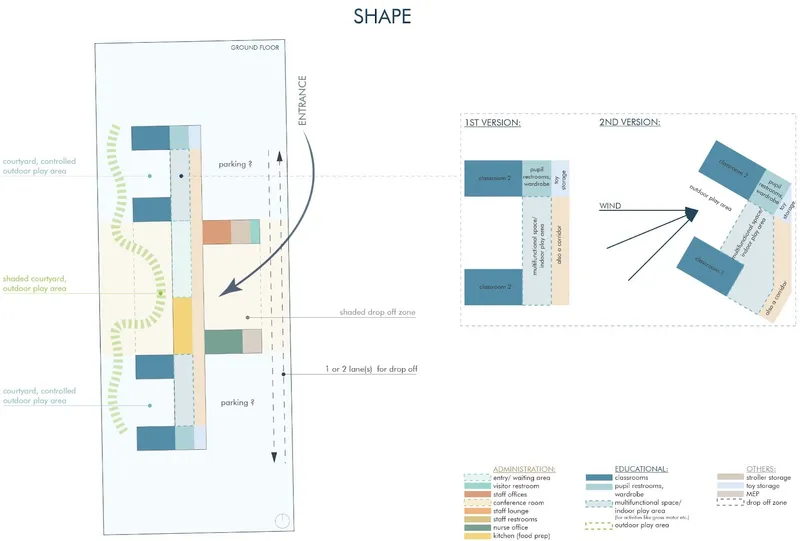
This version shown above, where the age groups swapped floors also had the idea of using the big indoor play areas and the adjacent overhead voids as wind towers for a passive cooling design that would channel wind through the slabs of the building. While also allowing hotter air to travel up within these voids.
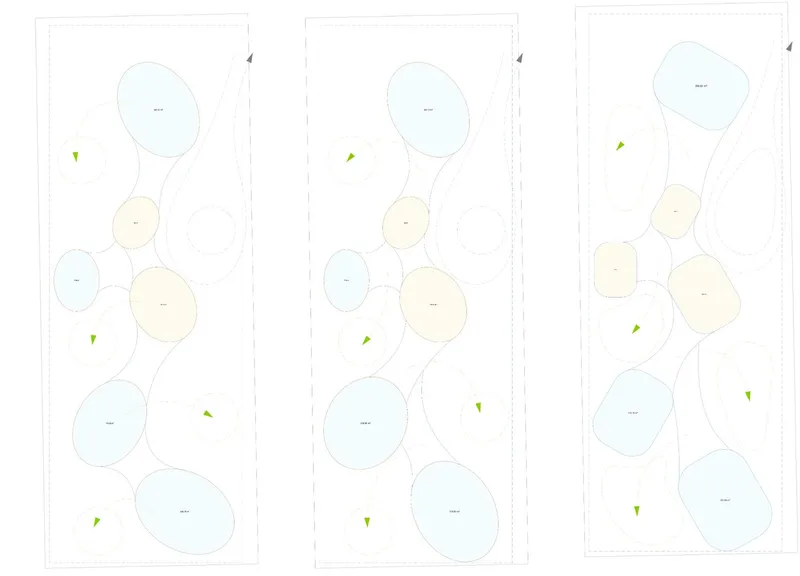
The previous design had a flaw for us. The passive cooling system would not work very well over a double storied daycare. Taking inspiration from our own plot placement diagram we started to use the bubble idea of the diagram to place all the functions on a single floor. Furthermore, our new attempt was to start improving wind-related aspects in the design. This helped us come up with the circular and irregular shape which breaks the wind. In this new effort, we tried to use the space more efficiently, remove some sections and replace them with more relevant ones. Taking 5 bubble shapes and opening them up to inner courtyards which would replace the space eating indoor play areas we had in the previous design allowed us to be able to have a single storey Daycare while staying within the area constraints of the 25% coverage given by the plot. All in all, our main modification was to bring all the functions to the ground floor and use one roof to create as much shaded space as possible.
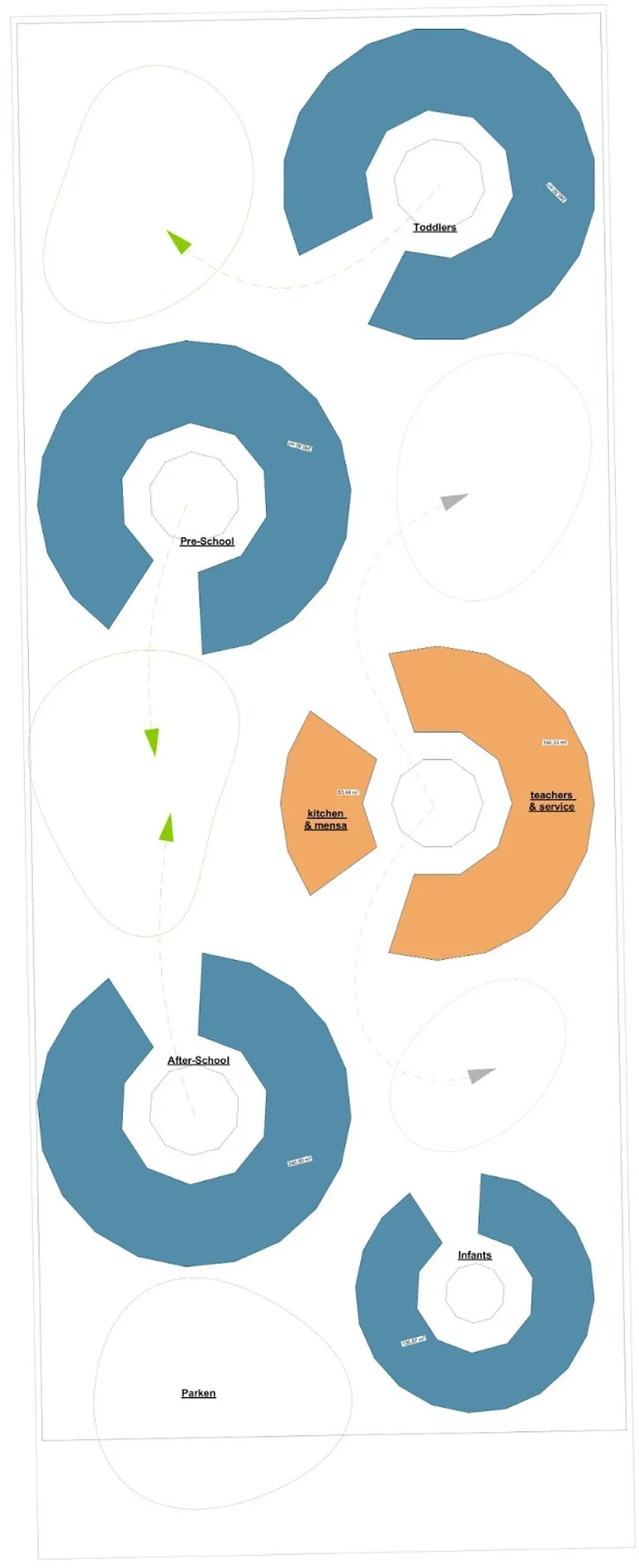
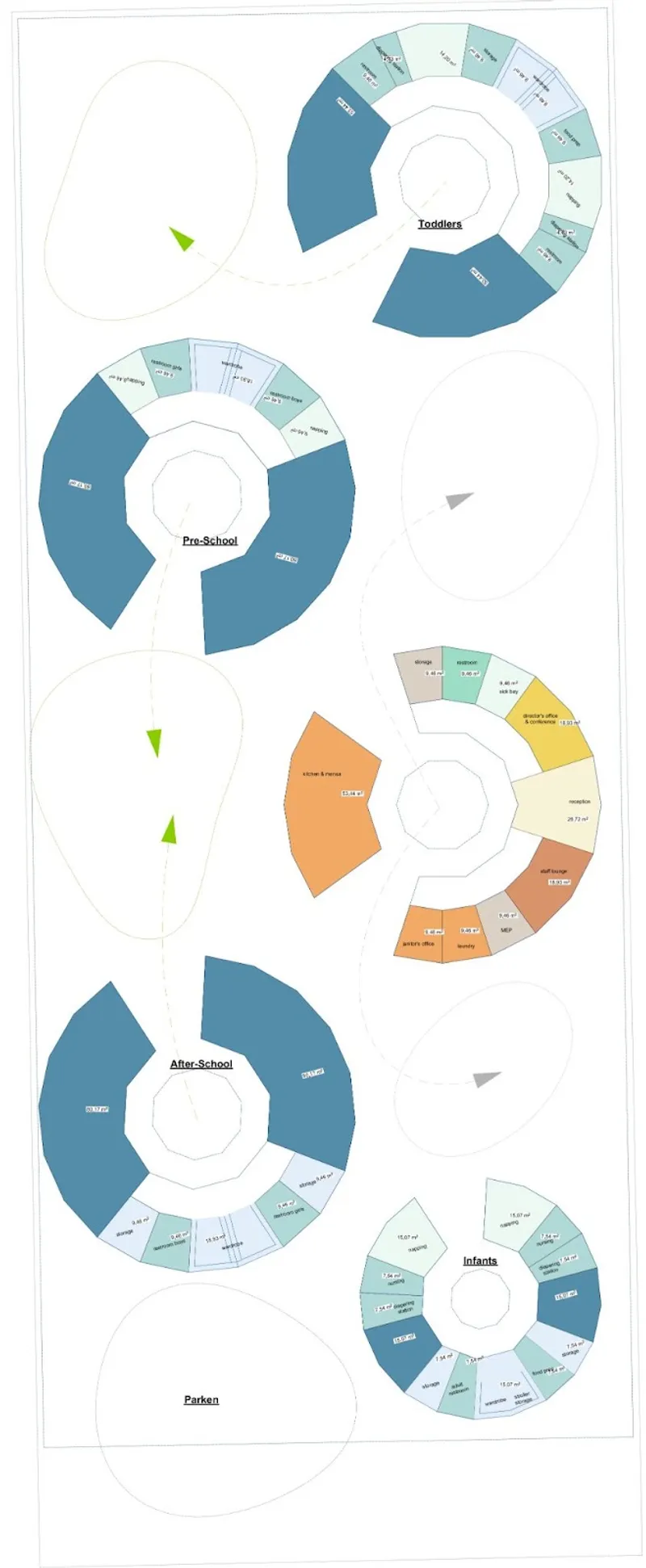
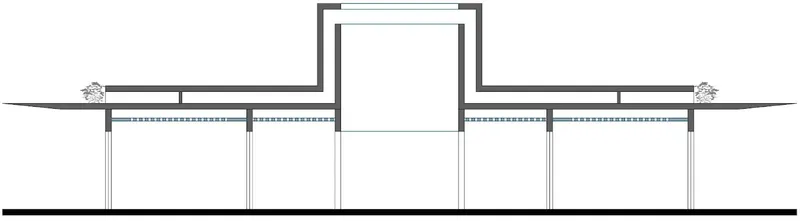
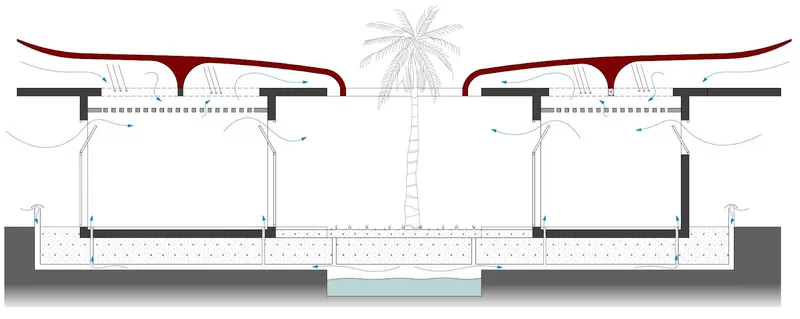
The fourth and final version showed the idea of using a more regular shape, that of a circle to better plan the floorplans. Taking back to our previous ideas we had for a passive cooling system for the building of channeling wind through the slab. We decided to use a double roof to channel the wind and draw cold air into the building from underground through geothermal pipes similar to the old concept of wind towers.
Final Design:
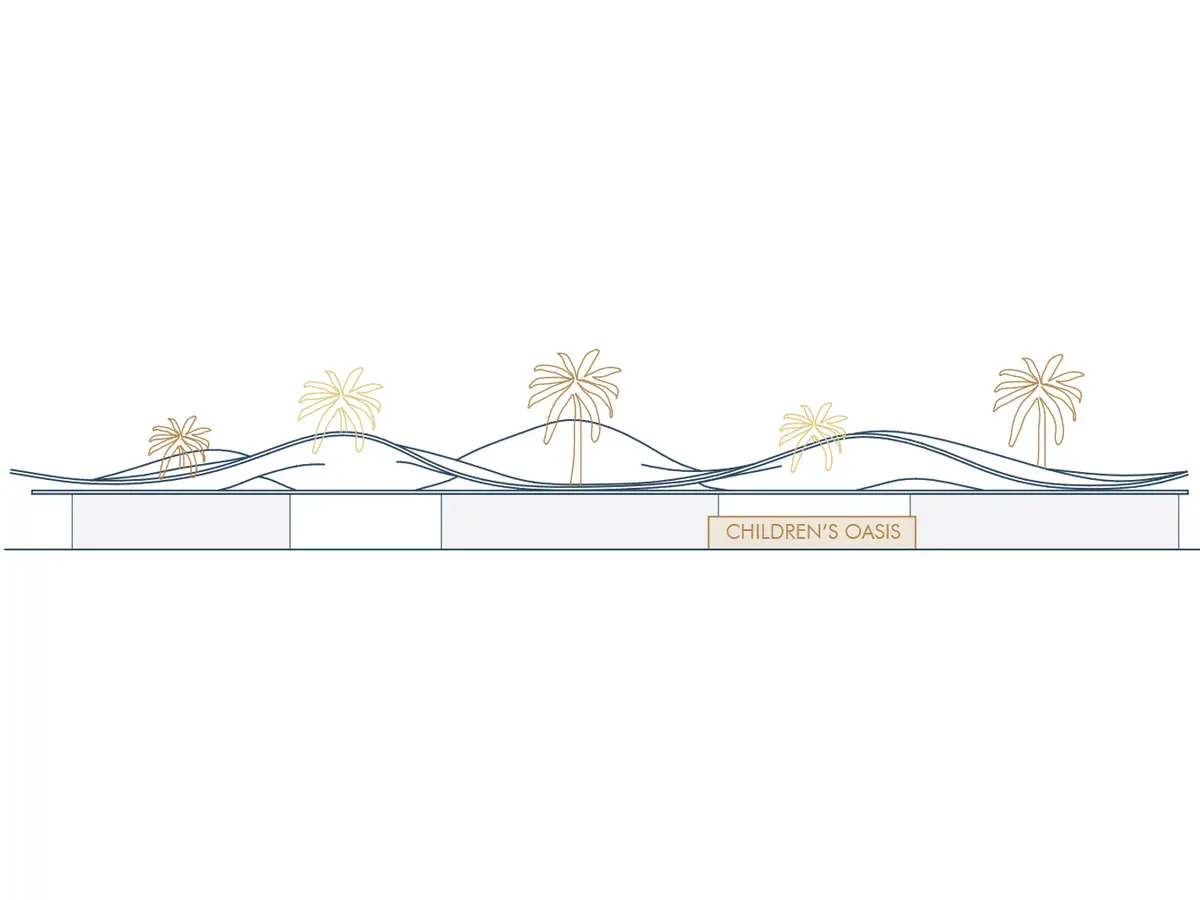
The concept was to create space for four different age groups with numerous classrooms and multipurpose areas as well as indoor/secluded and outdoor playgrounds. The project focused also on providing as much shade as possible to the areas and placing diverse plants to make our project more climate-friendly. To increase the aspect of child friendly atmospheres and the feeling of security of space for the parents we strategically placed 5 buildings on the plot each housing separate functions. This allowed us to separate the different age groups not only into different clusters but also to separate them spatially on the plot allowing the staff to easily manage the clusters of children. With the Double layered roof and us wanting to not restrict the height on the outdoor play areas we formed the second roof in a more free formed shape that would also be able to structurally support itself easier while keeping a thin profile. The free formed curved roof and the Palm trees poking out through the courtyards that provide additional shade in the openings create an almost Oasis like atmosphere in the area. Hence, the idea of the Children’s Oasis was formed.
Project Areas:
Built Area in sq meters:
- Infants:162,40 m²
- Toddlers: 284,06 m²
- Pre-schoolers: 255,56 m²
- After-schoolers: 255,56 m²
- Administrative: 246,51 m²
Site area: 5002 m²
A site coverage of 25% equates to an area of 1250.5 m²
The total site coverage of the design equates to 1204,09 m² hence we stayed within the limitations.
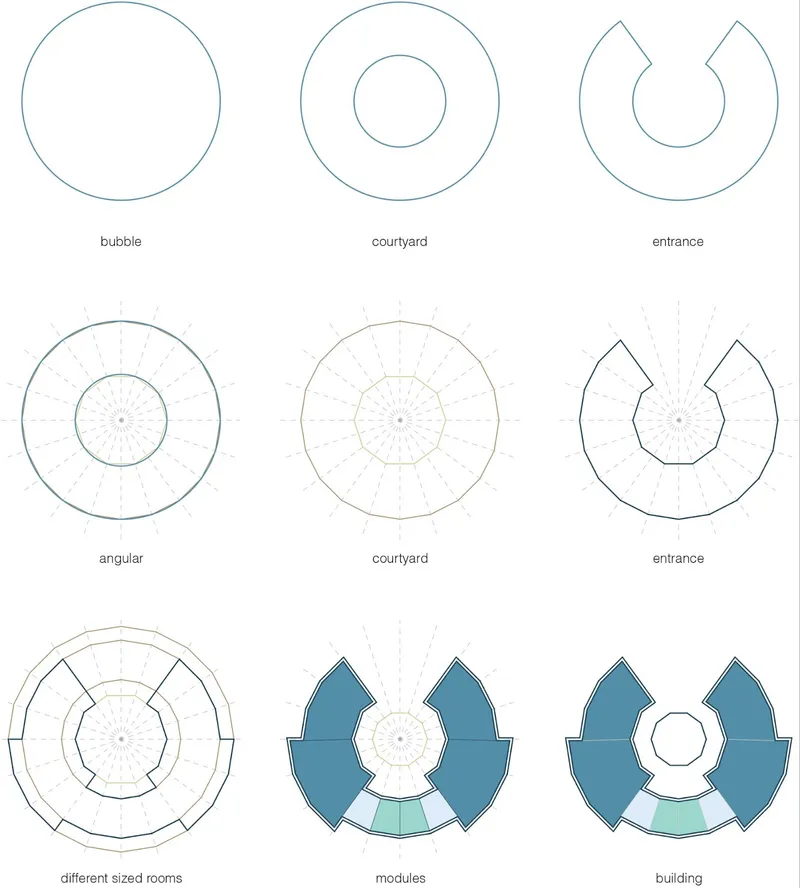
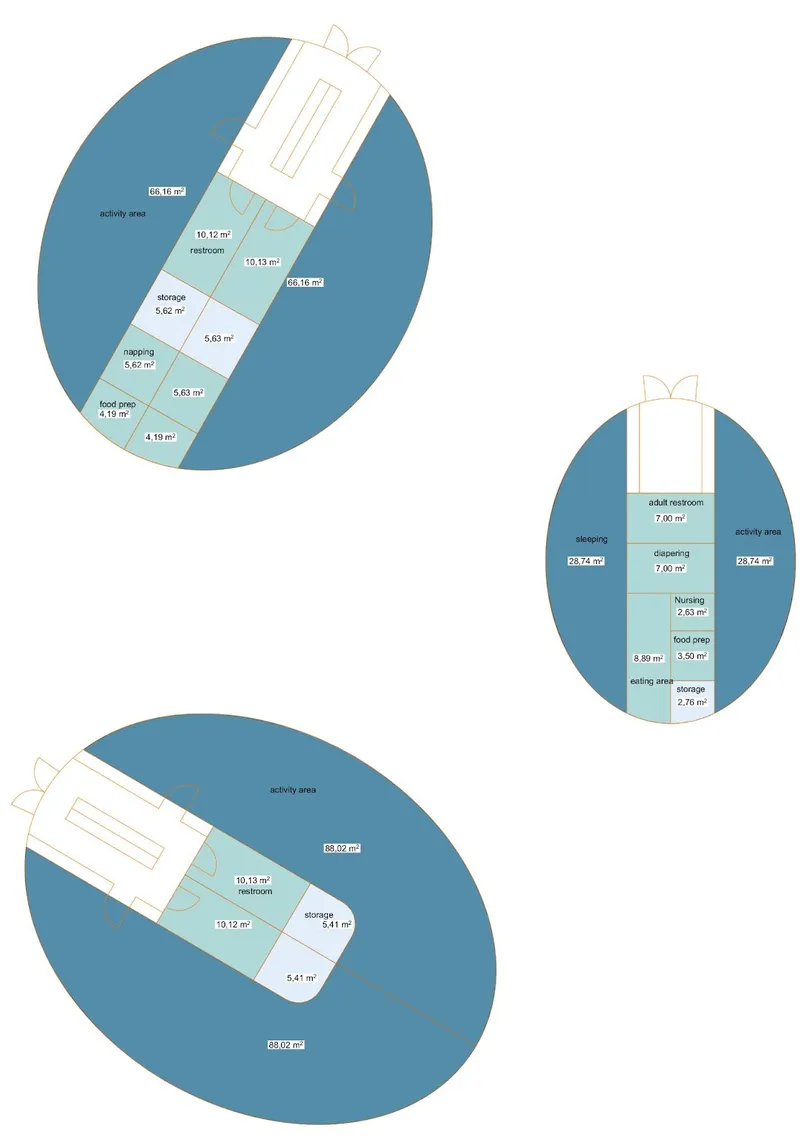
The shape and design development of the singular buildings is demonstrated in the above diagrams. Starting off with a single bubble that opens up into a courtyard. We then divided the bubble into equal angular segments. Allowing us to create a modular building shape that could be prefabricated with CLT off site for a more sustainable building construction.
Climate considerations:
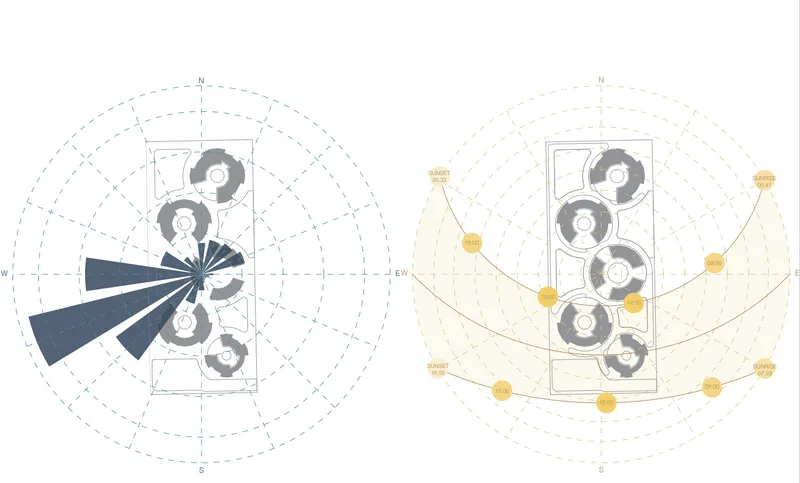
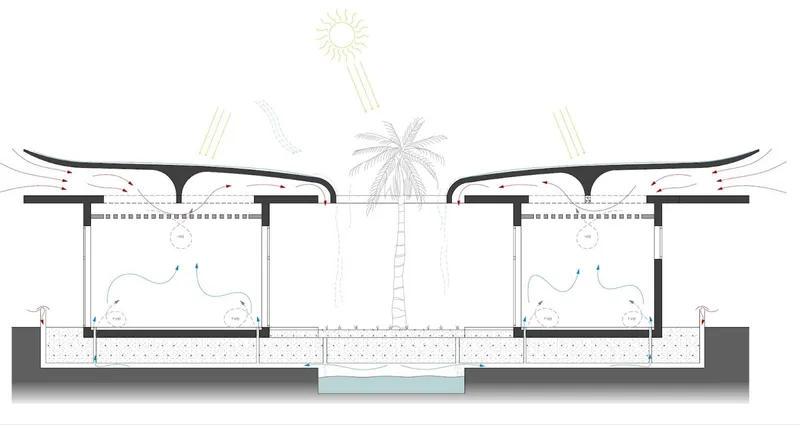
Due to the extreme climate circumstances of Mojave Desert (strong sunshine through the day), incorporating passive ways of addressing this is crucial. Moderating the inner-space temperature and cooling it, as well as ventilation are 2 key aspects we needed to manage properly.
Building Materials:
The prefabricated modules produced with CLT would have the interior walls cladded with a clay plaster for thermoregulation of the interior spaces. Allowing for great humidity control for the children.
The lower roof is made of CLT and on the exterior covered with clay building panels and the second free formed roof is built in concrete with concave shape acting as a thermal mass storage as a first protection layer against the heat rays.
Cooling
The concept behind the passive cooling system is that the air entering the roof-void is compressed through the ever constricting space and hence sped up while passing through the false ceiling outward, causing a negative pressure in the room. The air within the underground pipes that has been also passively cooled by the cooler geothermal temperatures and possible underground water storage is pulled into the room by that negative pressure creating a cycle. This causes a passive system much like an air conditioning system.
Plants and vegetation
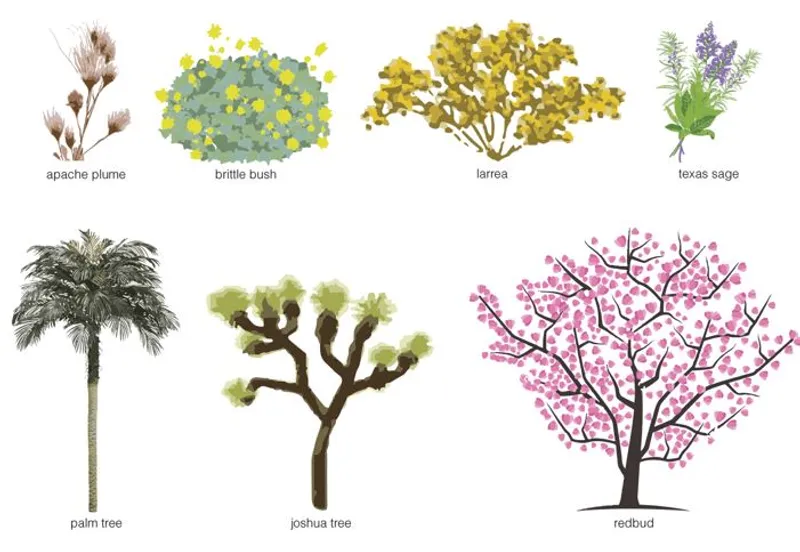
When it comes to choosing the species we can plant in this region (Mojave Desert), it is important to consider the soil type and capability. The plants need to be low-maintenance and heat-friendly. We incorporated large-sized trees like Joshua to small-sized plants like Apache Blume and Brittle Bush. Some of these plant types are native to Mojave,however, some are also local to Nevada, but also very appropriate to be cultivated in a desert climate. The plants are placed within the courtyards and a few outdoor areas. Most of the shrubs and bushes create a protective ring around the plot boundary which is not only visually appealing but also creates a natural dust barrier. Trapping some of the dust brought in by the desert winds before these can reach the inner areas of the daycare.
Community
The Auditorium within the daycare and the multipurpose room in the admin area both serve as community spaces. These can be used by the daycare during the day and by the community during holidays or in the evenings.

Popular Articles
Popular articles from the community


Play: Fragments of Their World
Familiar architecture becomes modular playground design, creating safe spaces where displaced children can learn, connect, imagine and play.

Lunar Spiral: Space Architecture Shaped by the Mathematics of the Universe
Lunar Spiral reimagines space architecture through Fibonacci geometry, lunar regolith, levitating habitats, and self-sustaining Moon living.

Co-life: Sustainable Architecture for Age-Friendly Community Living
Co-life reimagines sustainable architecture for seniors through courtyards, rammed earth, shared gardens, and spaces designed for belonging.

Co-Life: Senior Housing Design That Reconnects Older Adults With the City
Co-Life reimagines senior housing design through healing gardens, shared streets, workshops, and a sustainable community across generations.

Similar Reads
You might also enjoy these articles

The Rhythm of Seasons
A Farmers' Market Connecting Nature and the City

More Than a Building-Designing a Living System
More Than a Building-Designing a Living System
Base Beyond
DESERT COMPOUND ARID: TOURISM OF ABSENCE AND ABUNDANCE

Explore Daycare Competitions
Discover active competitions in this discipline


Challenge to reimagine the Iron Throne

Photograph architecture without architects

Illustrate the lost glory of Angkor Wat - Render Challenge

Design challenge to reuse E-waste
Comments (0)
Please login or sign up to add comments
No comments yet. Be the first to comment!