
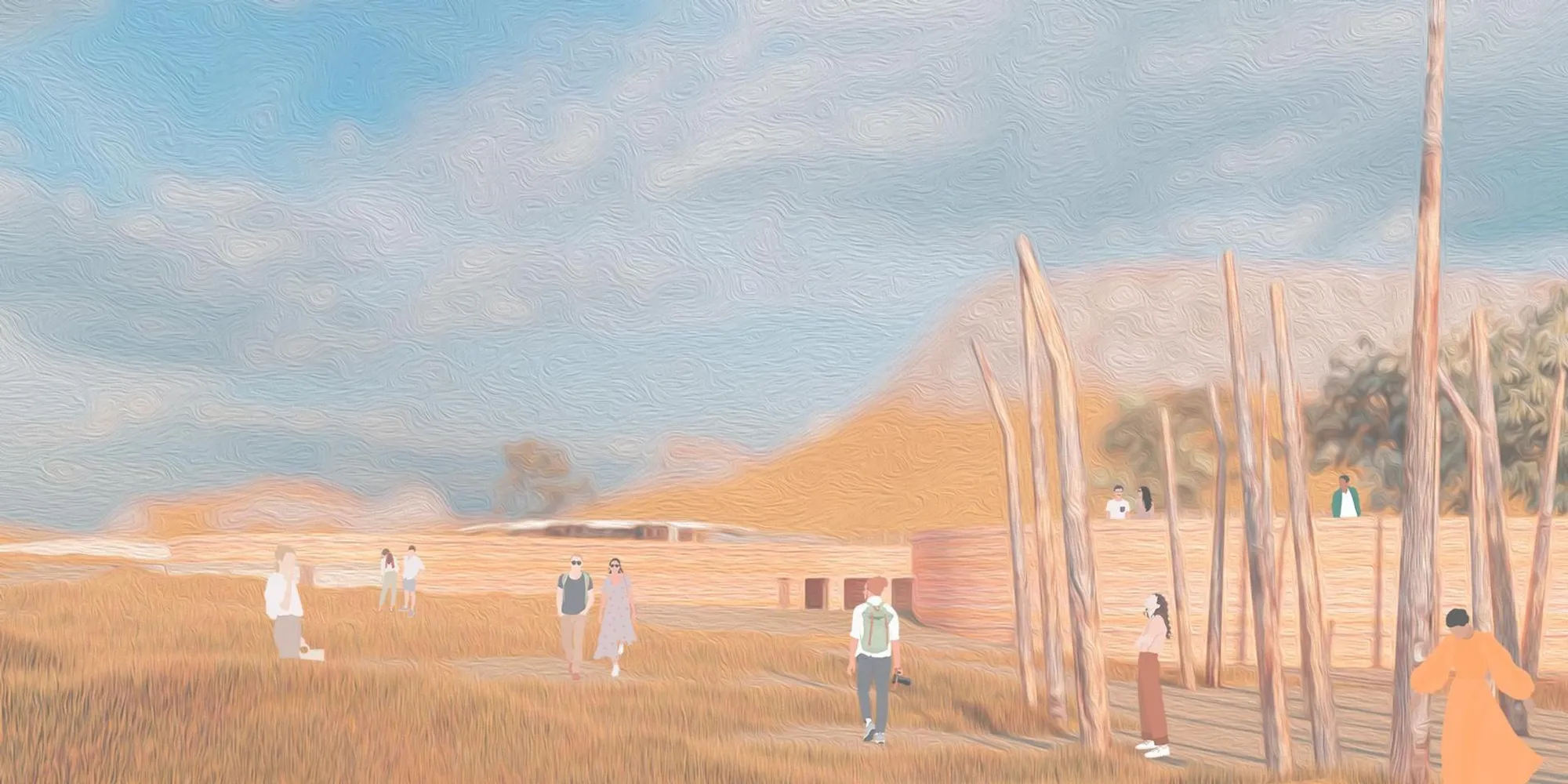
Connecting with nature: Forest interpretation center in Australia's Wollemi National Park
‘Asatti’ - Landscape design competition - Result story


Origins of forests can be traced back to the planet’s earliest photosynthesizing organisms -Cyanobacteria. They enabled lichens and ferns to advance from sea to land with a gradual increase in oxygen. Among these plants, one grew 20-meter high known as Archaeopteris, the first tree.
Subsequently, the first forests along with the forest floor evolved with the protective expanse of the biosphere. With shifting geography due to ice ages, various forest ecologies began to spread as per regional and climatic factors. Today, these forests cover 31 percent of the global land area.
Since ancient times forests have been symbols of growth, prosperity, and healing. In Japanese tradition- Shinto, they are held in reverence and meant to be the dwelling of the divine spirits musubi (spirit of growth). Many similar cultures were physically and spiritually built upon forest ecosystems.
There has always been a tangible and intangible connection between natural ecosystems, culture, science, and livelihood. Nature and forests profoundly influence human consciousness and society. Apart from the biodiversity of a forest, we depend on them for our basic survival; the air we breathe and the food we eat all emerge from the forest floor.
Forests mitigate climatic cycles, prevent soil erosion and provide watershed protection. They are home to 80% of the world’s terrestrial biodiversity and multiple indigenous tribes. However, forests are becoming casualties to human activities as mundane as gender reveal parties and illegal construction.
The repercussions of these small activities as well as huge deforestation projects have led to a decrease in primary forests by 80 million hectares since 1990.
How can we restore this lost cover?
Forest ecology falling prey to human problems is indirectly related to how we have caged ourselves to urban life. Moreover, our ignorance gives unquestionable passages to such activities.
While nature and vegetation may seem far away or are defined only as a small pot of plants on our desks. It still takes just one action of looking up to find an evening lit sky or down to discover a ground covered with jasmine that reminds us of our connection with nature.
In our fast-paced lives, how do we renew this natural connection with forests and nature?
Brief: The challenge was to design a forest visitor’s center, which balances with nature and provides spaces of interaction with the local biodiversity.
The goal is to be sensitive to the regional context while designing stable structures. The design seeks avenues for interactive and educational exhibits. Most importantly, the project should reflect what it preaches.
Some of the Best competition projects are as follows:
Winning Project: Regeneration
By: cg studio
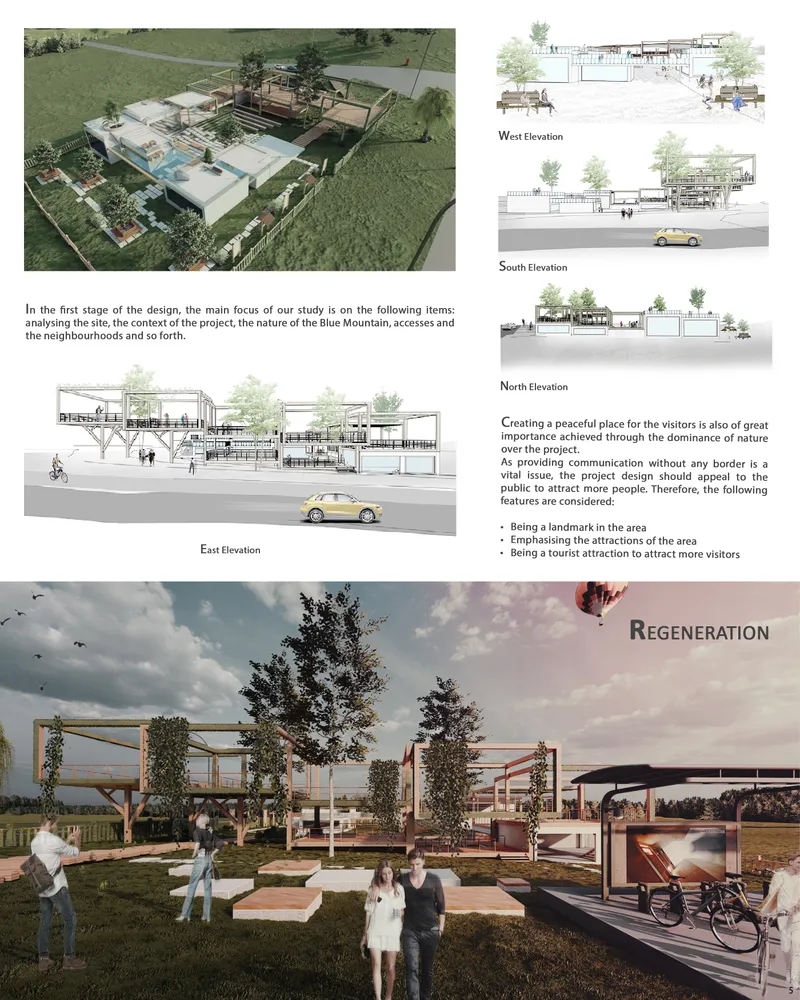
Fig: 1 Site View and Elevation Plan
Description: This project represents regeneration. The design shows the adoption process in nature after Human intervention and its endeavor for survival. The thought behind the design process was to design a structure as if once upon a time a Symmetrical man-made building was built in this forest but as time passed nature's endeavor for survival and its insinuation.
-----------------------
Editor’s Choice: Forest Interpretation Centre
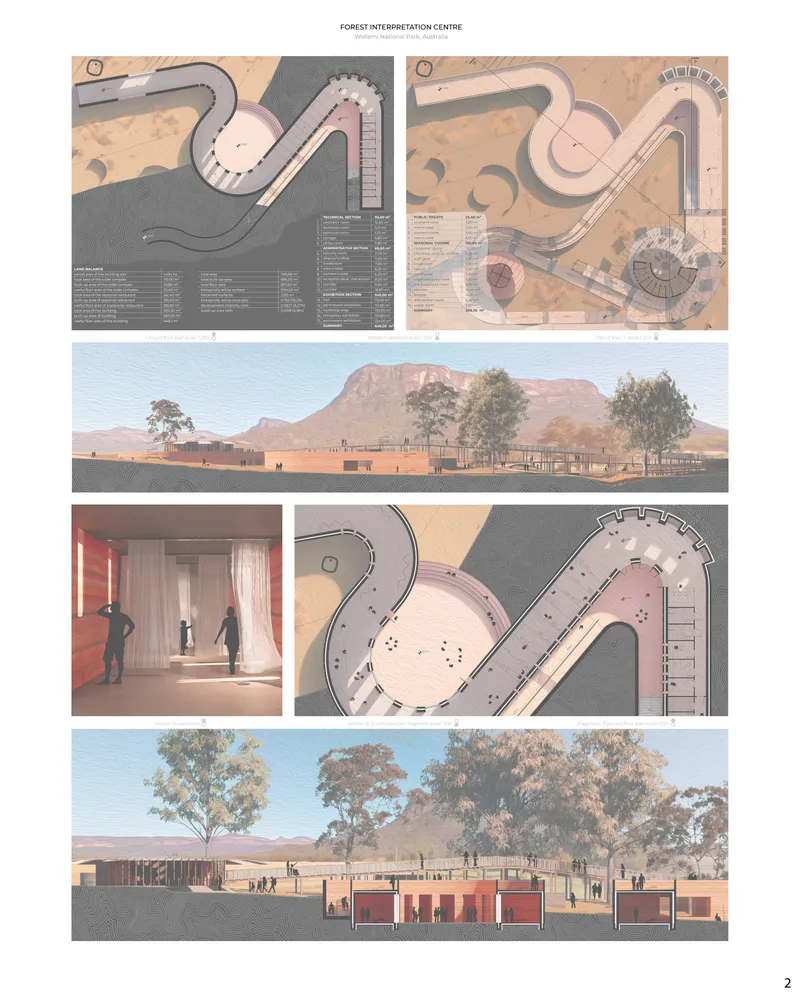
Fig: 2 Section plan, Site plan and interior Visualization
Description: The building implements sustainable strategies by using natural construction and finishing materials sourced from the surrounding area. (soil, straw, wood). It also fits in with the Australian landscape by recessing the building into the terrain and the earthy color scheme of the facade.
-----------------------
Editor’s Choice: Assati
By: James Bennett
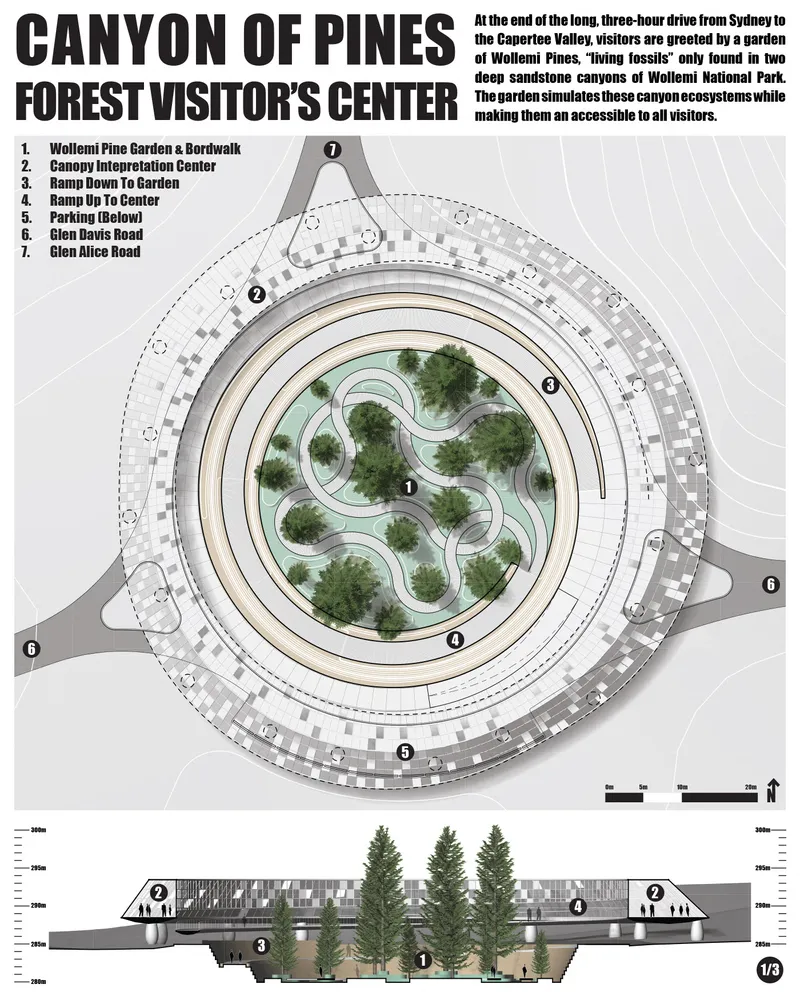
Fig: 3 Site and Section Plan
Description: Bring in connection: Forest Interpretation Center Design Challenge. The visitor’s center sits raised up on Piloti not only provides views of the surrounding landscape and to serve as a beacon on the long drive. Additionally, the visitor’s centers serve as an extension of the sandstone walls of the Wollemi pine garden, providing additional shade and shelter to these rare trees.

Follow us on social media: Facebook | Instagram | LinkedIn | Twitter | Youtube
References (3)



Popular Articles
Popular articles from the community


Hill & Cross Opera: Sculptural Opera House Architecture Shaped by Tallinn’s Landscape and Identity
Hill & Cross Opera reimagines opera house architecture in Tallinn through its sculptural hill, civic plaza, glass wave and a luminous cross.

The Ocean Hive: Sustainable Architecture for a Self-Sufficient Civilization at Sea
The Ocean Hive imagines sustainable architecture at sea, where modular habitats, algae, wave power and ocean waste sustain a growing colony.

The Earth Pod: 3D Printed Homes for Resilient Refugee Communities
The Earth Pod reimagines refugee housing through 3D printed homes made from clay, combining resilience, self-sufficiency, and rapid shelter.

Play: Fragments of Their World
Familiar architecture becomes modular playground design, creating safe spaces where displaced children can learn, connect, imagine and play.
Similar Reads
You might also enjoy these articles

Lunar Spiral: Space Architecture Shaped by the Mathematics of the Universe
Lunar Spiral reimagines space architecture through Fibonacci geometry, lunar regolith, levitating habitats, and self-sustaining Moon living.
The Main Dream: Modular Architecture for Play, Learning, and Community
A modular playground turns recycled plastic into adaptable spaces where refugee children can play, build, learn, and reconnect.
Play: Fragments of Their World
Familiar architecture becomes modular playground design, creating safe spaces where displaced children can learn, connect, imagine and play.

Wadi Rum Observatory: Desert Architecture Designed for the Night Sky
Wadi Rum Observatory turns desert architecture into a quiet instrument for astronomy, hiding research spaces under Jordan's starlit terrain.


Comments (0)
Please login or sign up to add comments
No comments yet. Be the first to comment!