Cooltoren Tower by V8 Architects: Redefining High-Rise Living in Rotterdam
Cooltoren Tower redefines Rotterdam’s skyline with flexible high-rise living, outdoor spaces, and a striking three-part architectural form.


Architects: V8 Architects
A Landmark of Vertical Urban Living
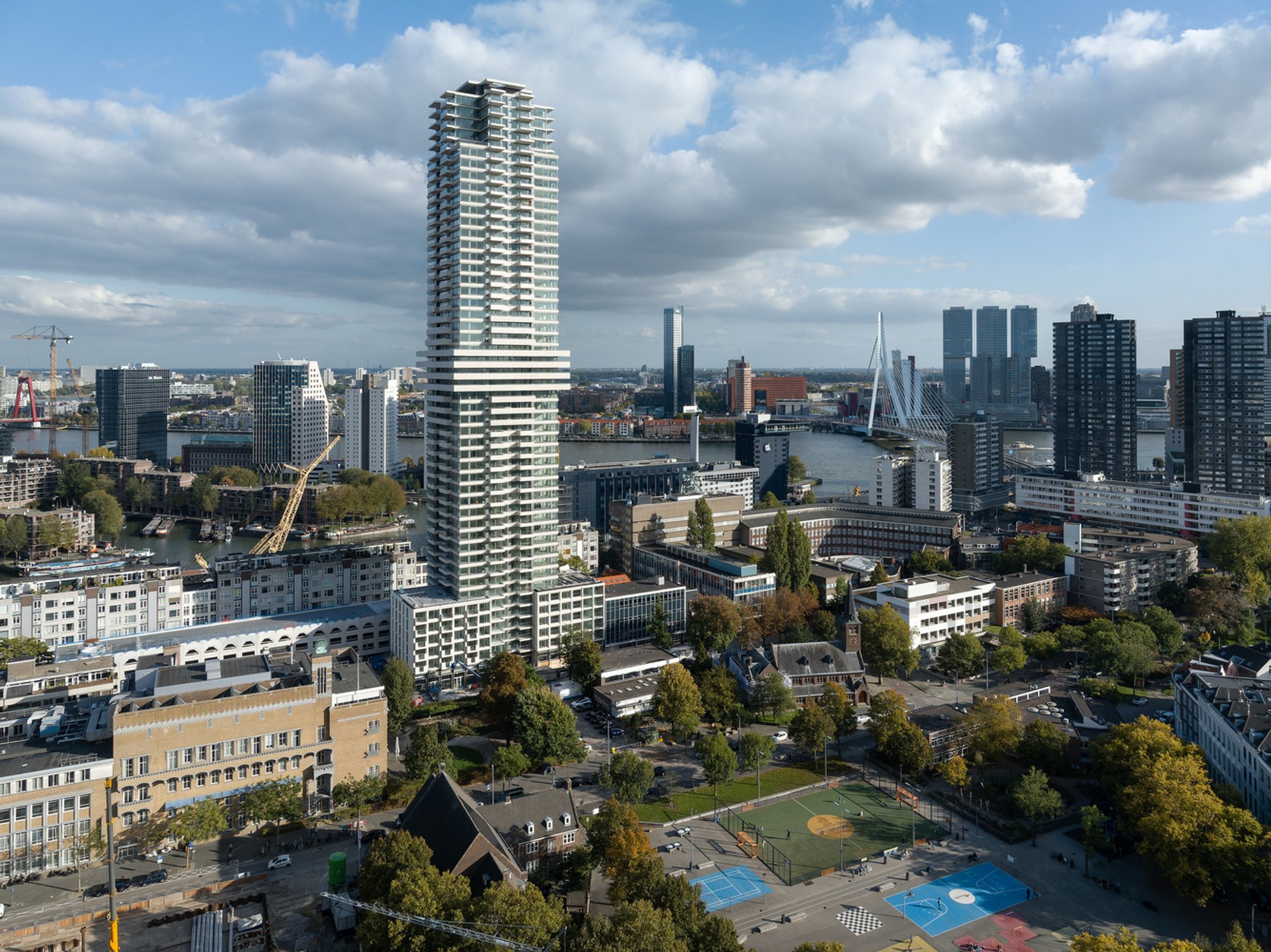
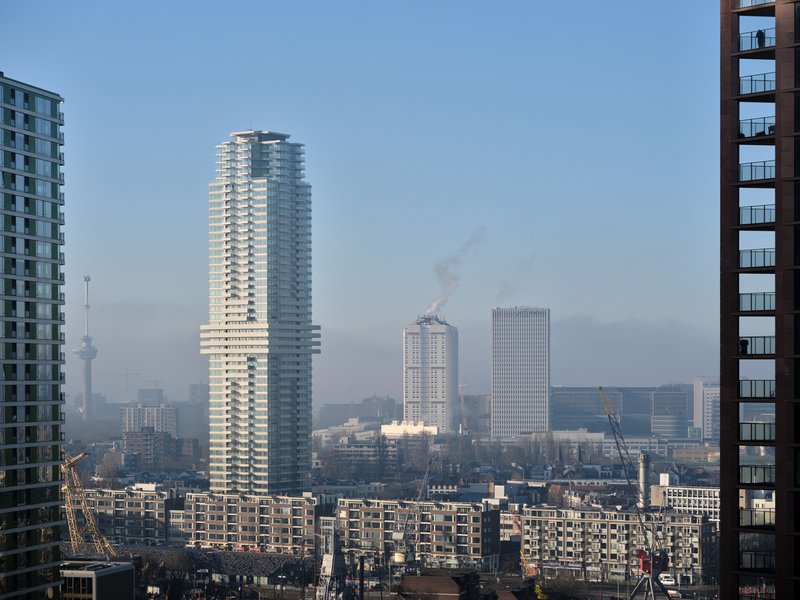
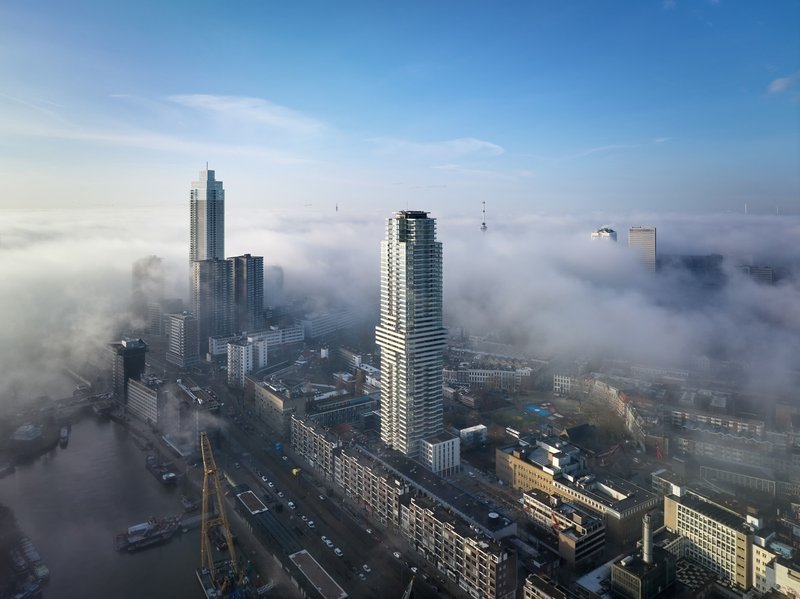
The Cooltoren Tower by V8 Architects stands as a striking new icon within Rotterdam’s evolving skyline. Rising 154 meters high in the vibrant Baan Quarter—adjacent to the city center—the tower introduces a modern architectural language that bridges heritage, urban vibrancy, and vertical residential living. Designed on a post-WWII site, Cooltoren reimagines the potential of high-rise buildings by merging aesthetic innovation, structural ingenuity, and flexible outdoor living spaces.
Contextual Regeneration in the Baan Quarter
Cooltoren marks a pivotal moment in the urban regeneration of the Baan Quarter, a once-overlooked district now blooming with cultural life. Steps from Witte de Withstraat, one of Rotterdam’s most dynamic streets lined with restaurants, galleries, and bars, the tower anchors a renewed interest in high-density, livable urban zones.
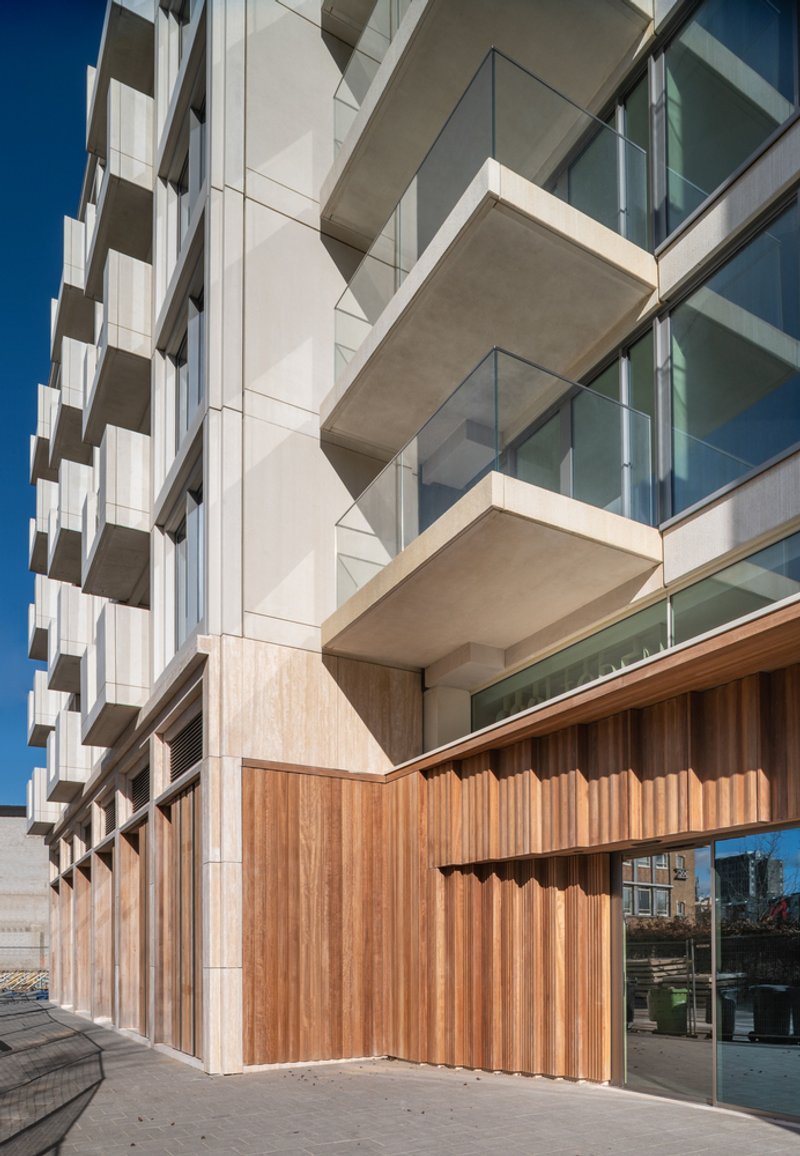
The design replaces four modest 1950s structures, paying homage to their original volumes and façade rhythm in the podium floors. This thoughtful gesture grounds the tower in local memory while elevating it into a forward-looking architectural narrative.
Layered Vertical Form: Urban Dialogue in Three Parts
The tower is articulated in three distinct volumes, each with a specific urban function:
- Podium (Ground–5th Floor): A re-interpretation of the site’s earlier architecture, fostering neighborhood interaction through street-level commercial spaces and lower-level residential units.
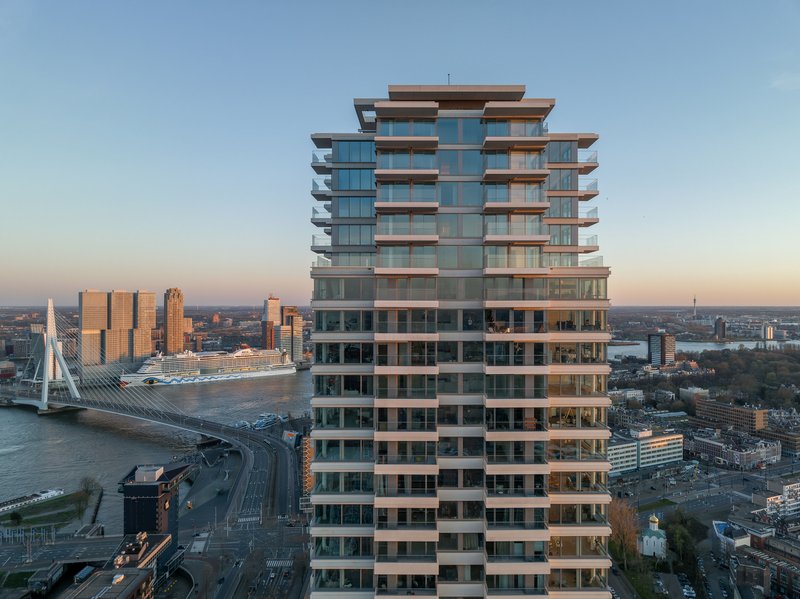
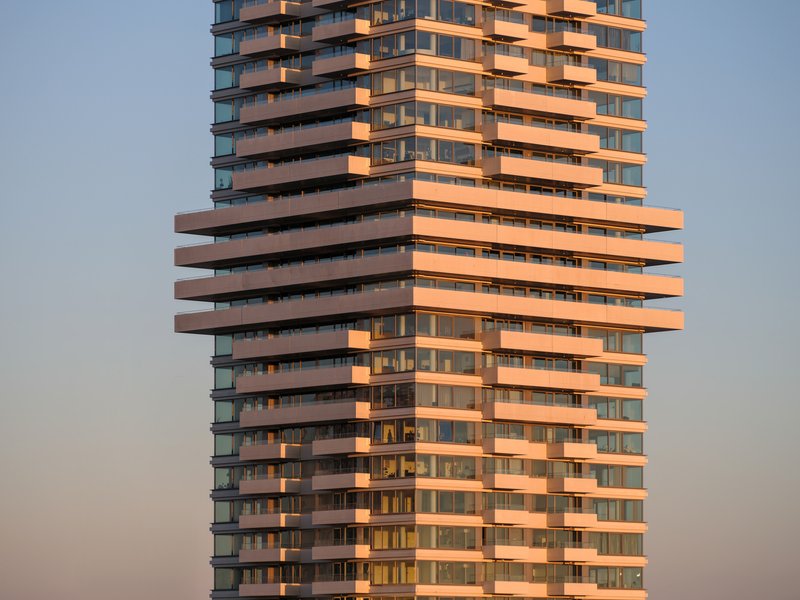
- Middle Crown (Floors 6–9): A standout section featuring four corner apartments per floor with generous 75 m² outdoor terraces, evoking the scale and luxury of penthouses.
- Upper Volume: Echoes the lower block while seamlessly integrating with the skyline, offering panoramic views and a high-rise living experience rarely matched in Dutch residential design.
The tower also responds to Dutch fire code regulations, which cap most buildings at 70 meters. By creating a pronounced visual and programmatic pause at that level, the design remains code-compliant while still achieving architectural elegance.
Structural Innovation: The Outrigger System
At the core of Cooltoren’s flexibility is its “outrigger” structural system. Rather than central load-bearing cores, the building utilizes eight perimeter columns to stabilize the tower and free up internal layouts. This allows for:
- Customized apartment configurations
- Maximized daylight and façade access
- A compact form factor of 0.8, an impressive feat in high-rise residential architecture
This system also supports a 1,770 m² communal garden, enhancing the tower’s biophilic qualities and promoting shared urban green space.
A Model for Vertical Outdoor Living
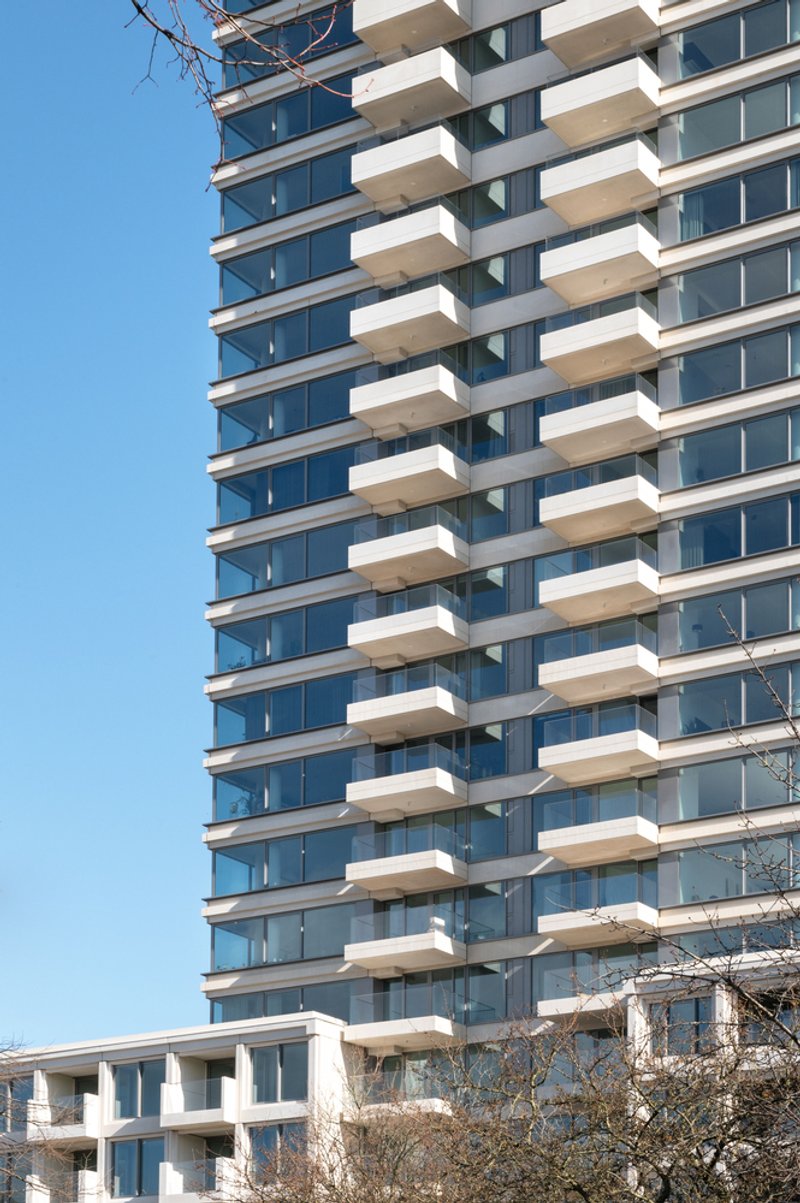
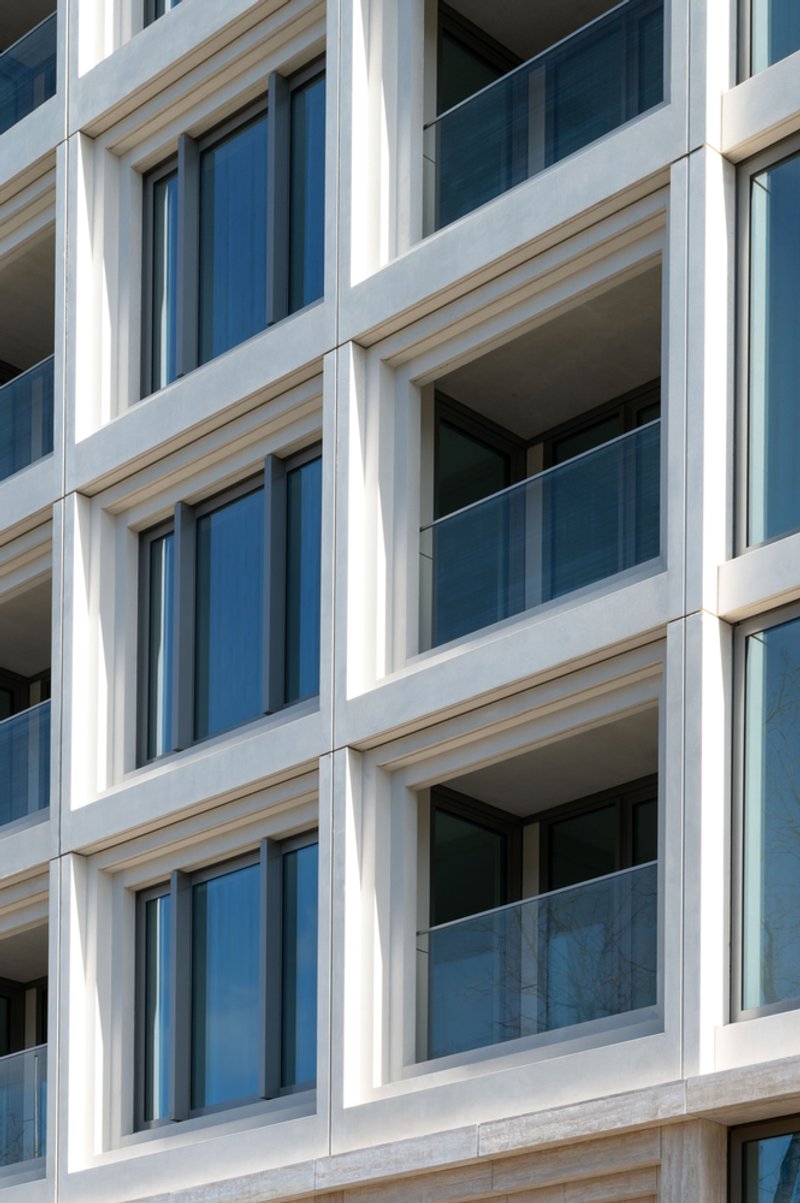
Cooltoren challenges the typical image of dense urban housing by integrating outdoor space at every level. From private loggias and balconies to large terraces in the crown, the design promotes healthy, open-air lifestyles without compromising privacy.
Every apartment benefits from large glazed surfaces (supplied by Guardian Glass), expansive views, and thermal comfort supported by advanced façade systems by Kawneer and vertical mobility via KONE elevators.
Rotterdam’s Vertical Future
The Cooltoren Tower exemplifies how contemporary architecture can balance density, identity, and lifestyle. V8 Architects have not only designed a residential tower but crafted a vertical neighborhood, rich in spatial diversity, community connections, and human-scale outdoor experiences.
This innovative tower sets a new precedent for high-rise living in European cities, especially in contexts where heritage, regulation, and livability intersect.
All photographs are works of Ossip van Duivenbode, Aiste Rakausaite