CSF Center for People With Disabilities by Rizvi Hassan: An Inclusive Architectural Model for Community Empowerment
The CSF Center creates an inclusive, child-focused environment offering therapy, learning, community support, and nature-integrated spaces for children with disabilities.


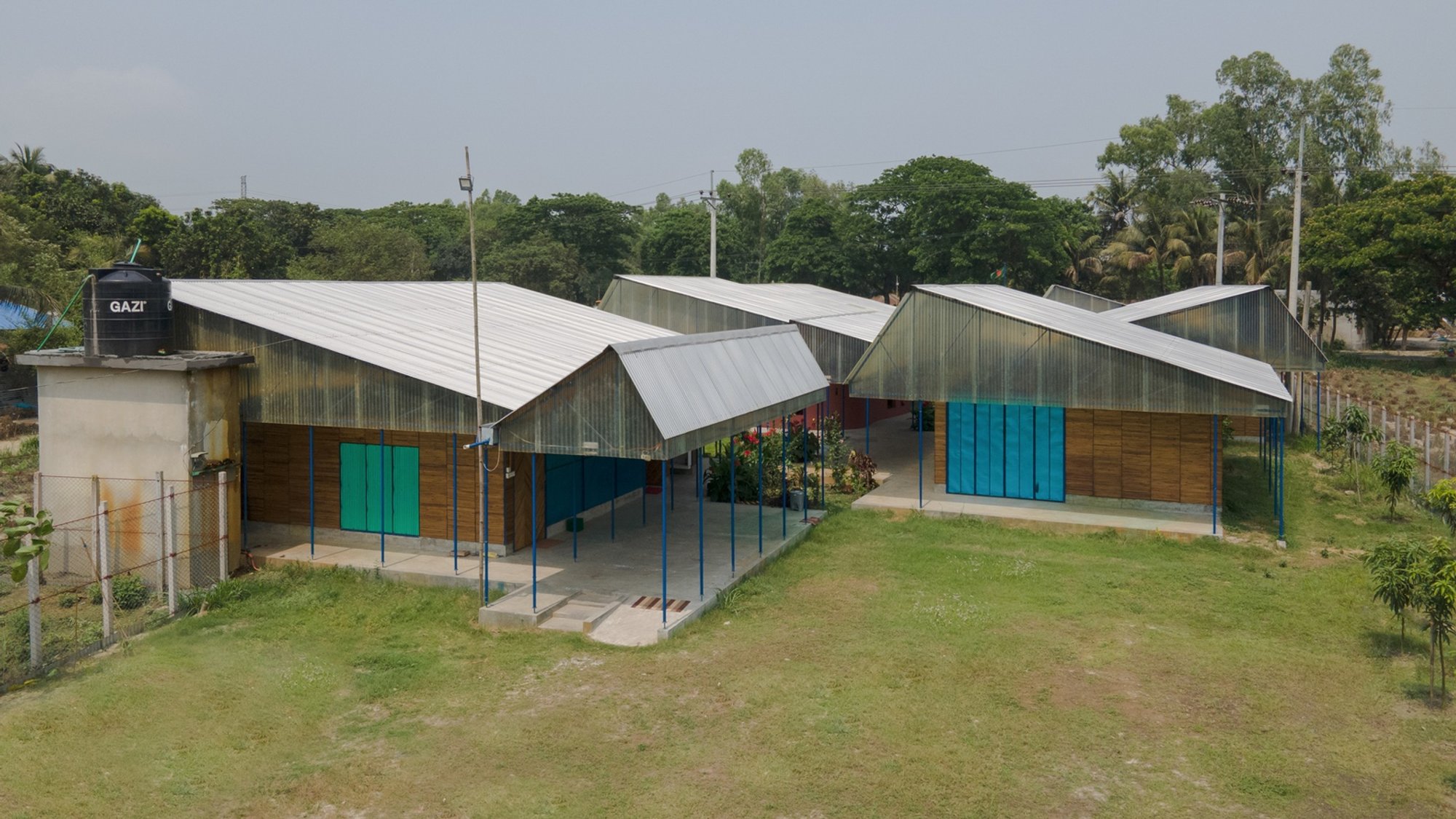
The CSF Center for People With Disabilities, designed by architect Rizvi Hassan in Shahjadpur, Bangladesh, stands as a transformative example of community-driven, inclusive architecture. Completed in 2024 and spanning 1,115 m², the center was created as a holistic environment where children with disabilities, their families, and the broader community can connect, learn, heal, and grow. More than a school or therapy facility, the center embodies a vision of collective wellbeing, social responsibility, and equal opportunity.
Since 2000, CSF Global—formerly the Child Sight Foundation—has championed an inclusive society focused on early intervention, disability support, and preventive health care. The new center reinforces this mission by ensuring every child receives dignified care, meaningful engagement, and pathways to personal development.
A Participatory Approach to Inclusive Architecture
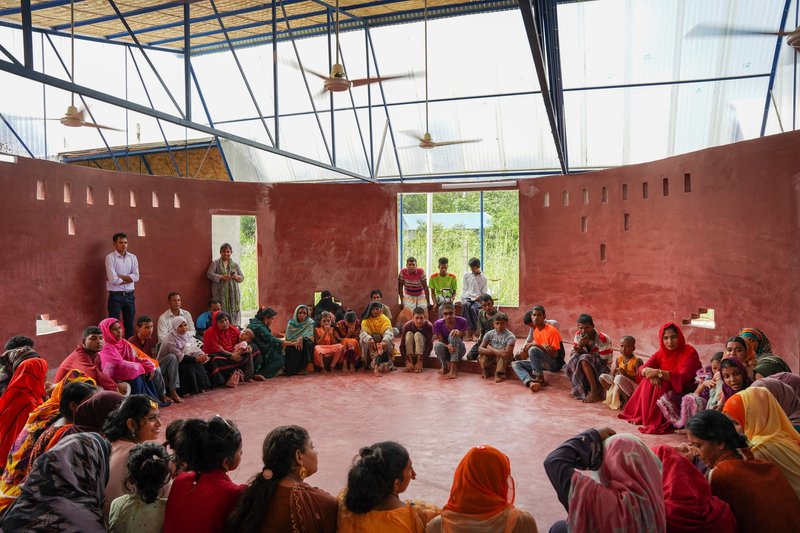
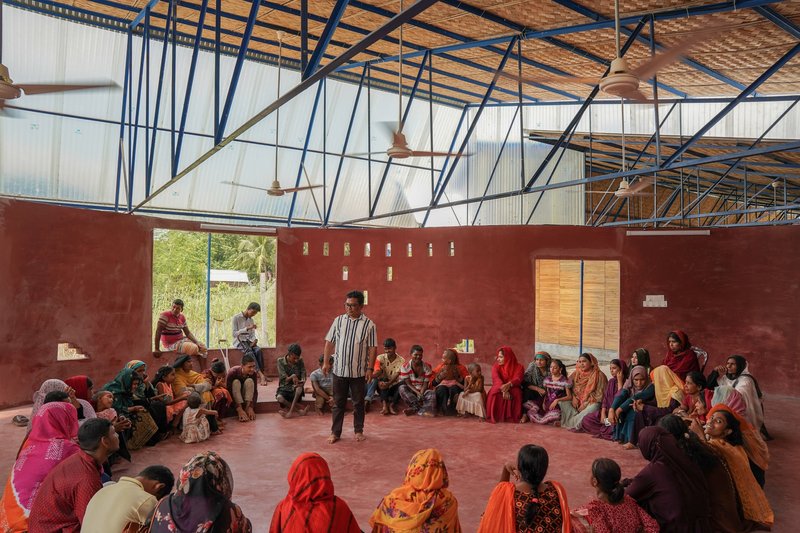
The design began with a profound responsibility: to create a place of belonging for children who are often marginalized. Instead of imposing a conventional architectural program, the design team embraced a participatory design process, inviting children, parents, caregivers, teachers, and community members to shape the space together.
Workshops, discussions, sketches, and large printed plans allowed users to walk through the design before construction even began. This collaborative method ensured every room, circulation path, and sensory space reflected real needs—mobility restrictions, emotional comfort, social connection, and opportunities for physical and cognitive development.
The process also fostered emotional ownership, turning the center into a space created with the community rather than for it.
A Human-Centered Spatial System for Therapy, Learning, and Play
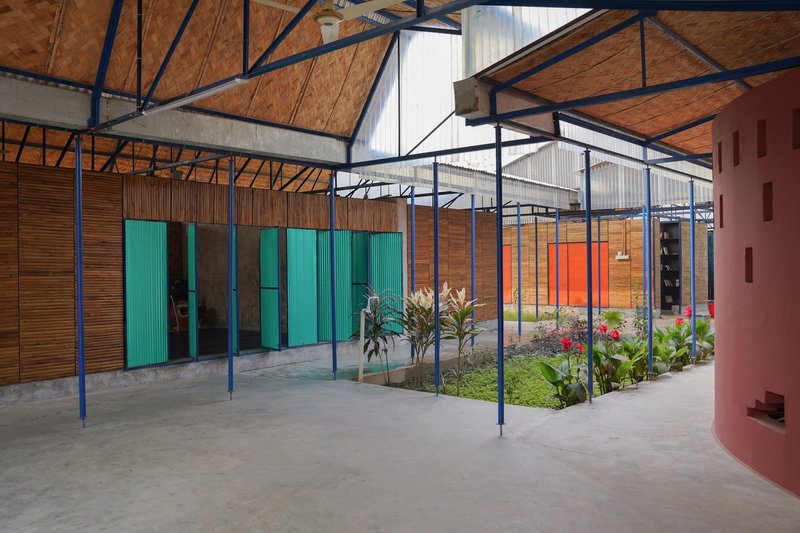
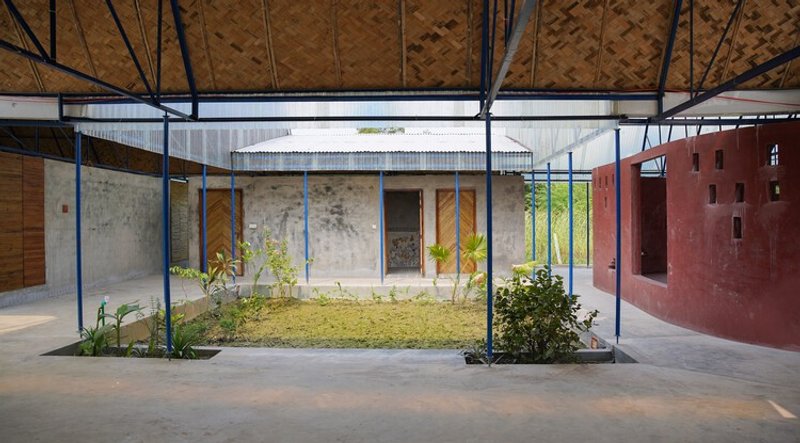
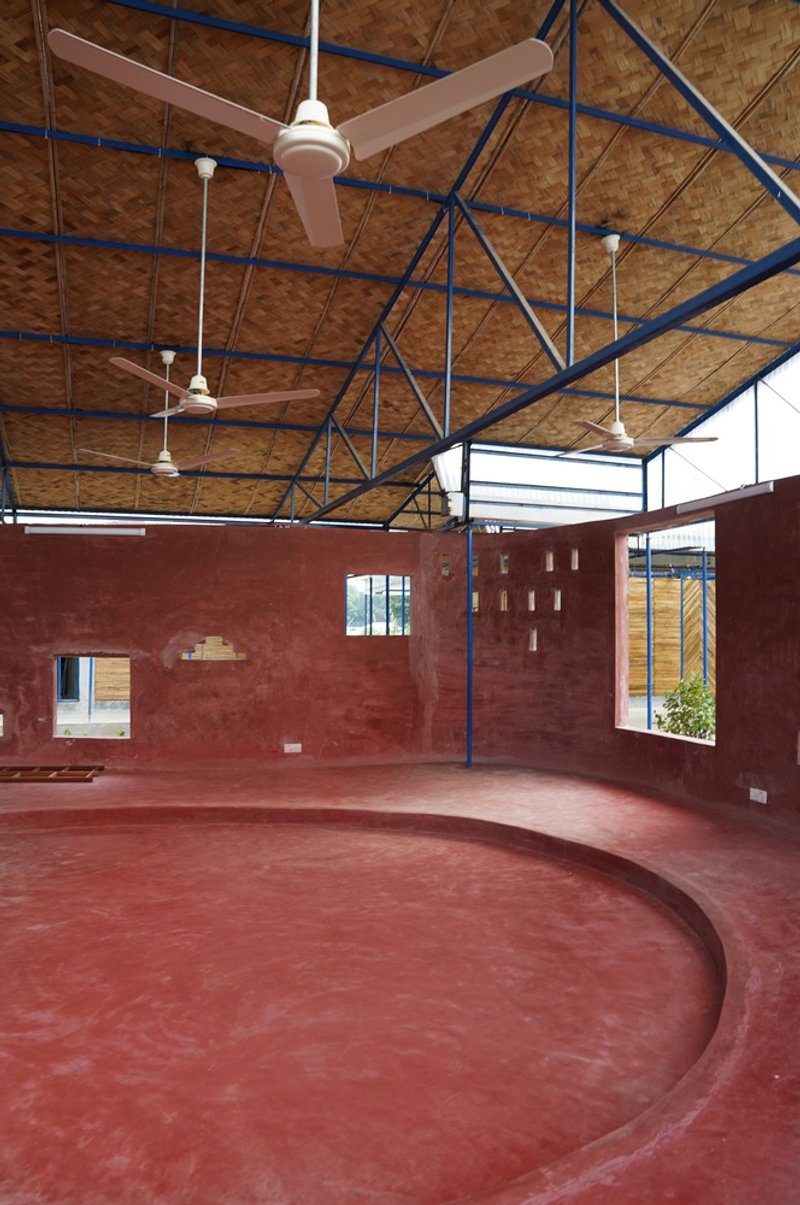
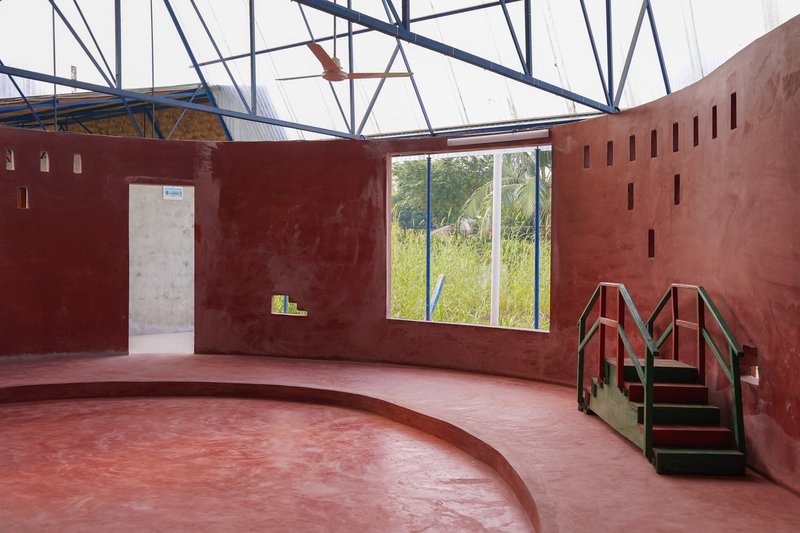
At the heart of the center lies the Orbital Group Therapy Room, an oval-shaped therapeutic core connecting all major spaces. Around this central volume, functions are organized in a fluid, child-friendly layout:
- Therapy rooms for physical, vocal, and music therapy
- Shishu Shorgo classrooms designed as “Children’s Heaven”
- Consultation rooms for specialists
- Training spaces for parents, volunteers, and caregivers
- The Ability Club, where children learn computers, creative arts, and social skills
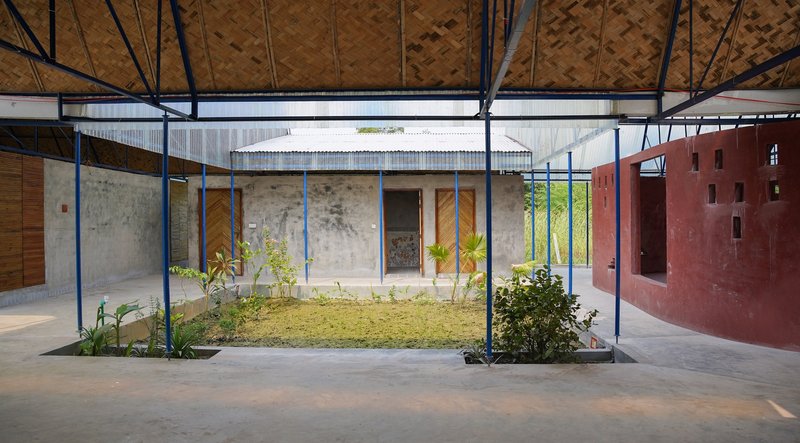
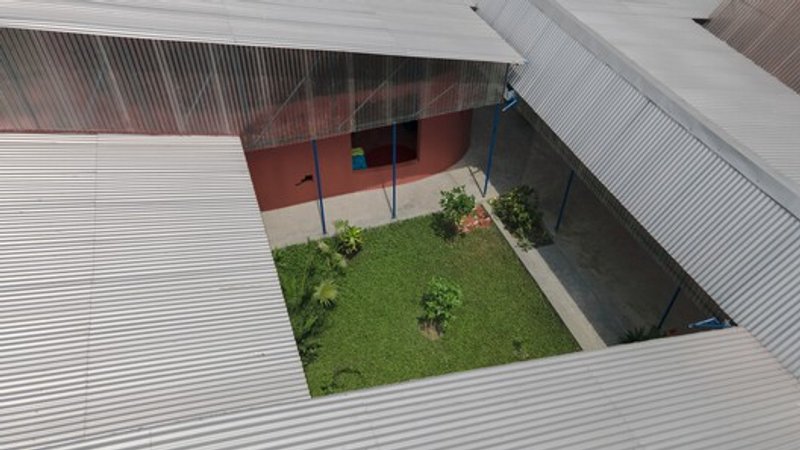
Nature is woven into this spatial ecosystem through four distinct therapeutic gardens. Each garden offers sensory variation—texture, greenery, openness, shade—to support both emotional regulation and free play. By integrating nature, the design promotes mental wellbeing and encourages a calming connection to the outdoors.
Craft, Culture, and Community in Construction
Construction itself became a tool for empowerment. Local artisans were actively involved, including celebrated potter Niva Di, who guided pottery workshops for the children. These collaborative sessions produced murals, clay dolls, and textured wall pieces now embedded throughout the building. The art symbolizes resilience, pride, and cultural continuity—turning the center into a living museum of the children’s creativity.
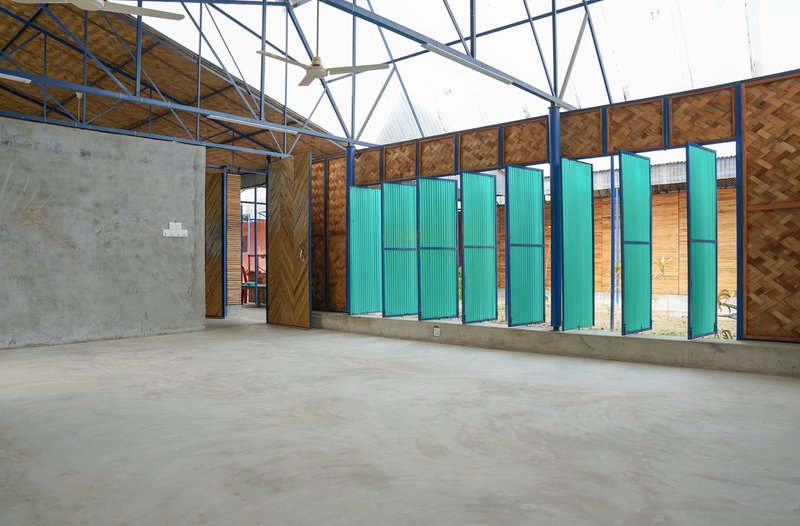
Materials were carefully chosen for affordability, thermal comfort, and local availability. Makla bamboo, crafted by artisan Md. Rofiq and his team, forms warm, tactile interior partitions. Metal pipes, simple trusses, bamboo chatai, insulation sheets, and high ceilings ensure durability, easy maintenance, and passive climate control in Bangladesh’s humid climate.
The flexible roofing system allows spaces to be reconfigured based on changing programmatic needs, giving the building longevity and adaptability.
A Space That Encourages Movement, Interaction, and Belonging
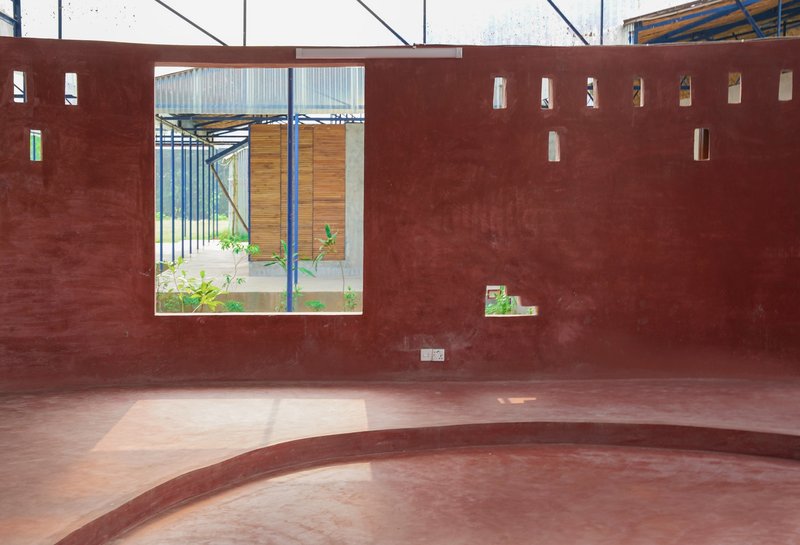
The architecture encourages exploration through textured pathways, climbing steps, alcoves, and child-scale nooks designed for sensory discovery. “Peek-through” openings in the therapy room walls offer playful interaction while preserving privacy.
Accessibility remains central throughout the design. Low-height walls help caregivers remain close while encouraging independence and safe mobility for children with varied abilities.
The Ability Club, positioned along the green field, acts as a social hinge between indoor learning and community engagement. Its open structure invites adolescents with disabilities to share experiences and build confidence, bridging the boundary between therapy and everyday life.
A Symbol of Collective Strength and Hope
The CSF Center stands as a testament to the courage and resilience of children with disabilities and the unwavering commitment of their families. Every room, garden, artwork, and pathway resonates with their stories, hopes, and challenges.
More than a building, the center represents what is possible when communities unite with empathy and purpose. It advocates for a future where every child is seen, supported, and celebrated—reinforcing the belief that inclusive design can genuinely change lives.
All photographs are works of Rizvi Hassan