
Eco-Friendly Surf Architecture: Unveiling the Surf Ghana Collective by DeRoché Strohmayer
The article discusses the Surf Ghana Collective, highlighting its eco-friendly design and role as a community hub for local youth.


In the serene town of Busua, on the picturesque western coast of Ghana, stands a testament to Eco-Friendly Surf Architecture—the Surf Ghana Collective. Designed by the innovative minds at DeRoché Strohmayer, this project is a beacon of sustainability and community engagement in the world of sports architecture.


Building a Community Hub in Dixcove, Ghana
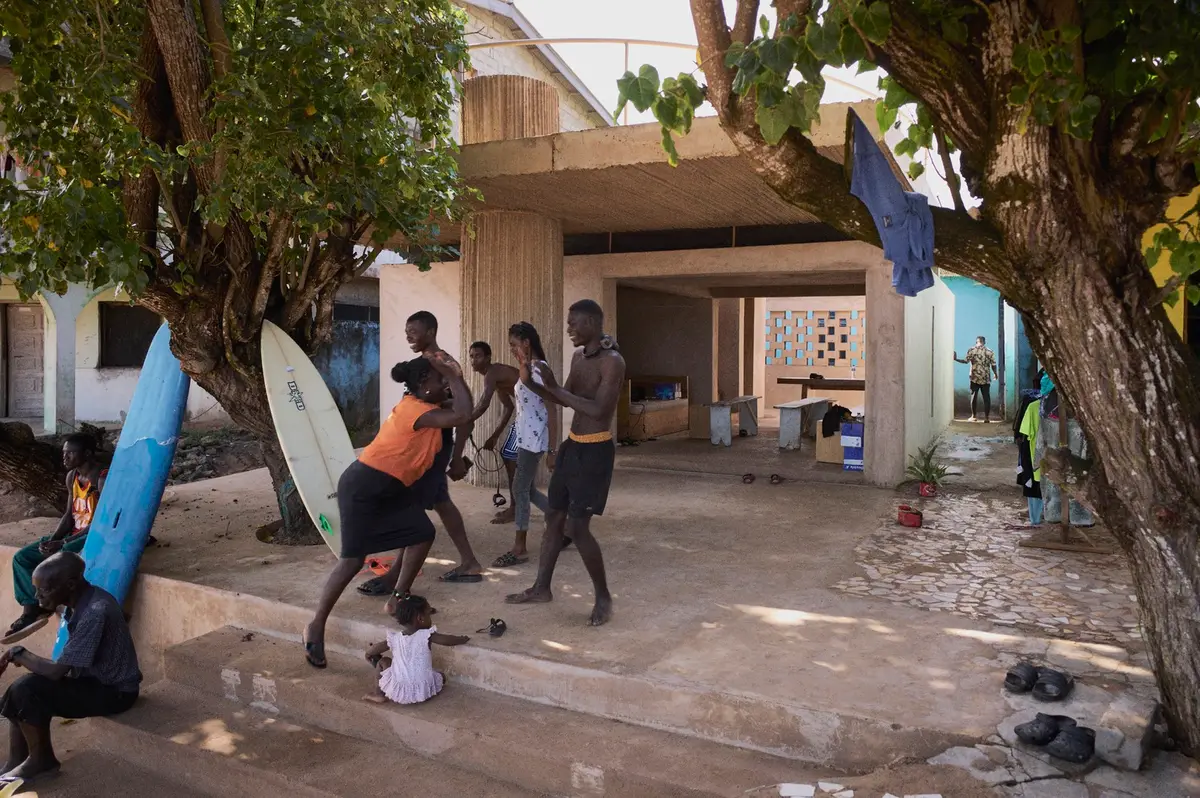
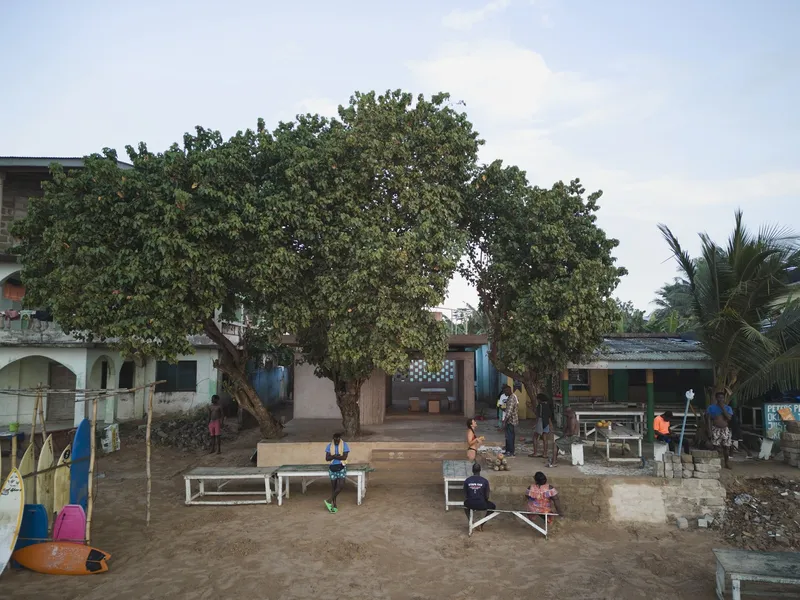
Surf Ghana Collective has emerged as a dynamic space that fosters community among the youth of Busua, a renowned surfing destination. This architectural marvel is not just a building; it's a hub that connects various elements of the local surf culture, including surf schools and beachfront lodges. With its multi-functional design, the facility serves as a vital communal space offering amenities such as WiFi, a beach shower, and equipment storage.


The Heart of Local Youth Engagement
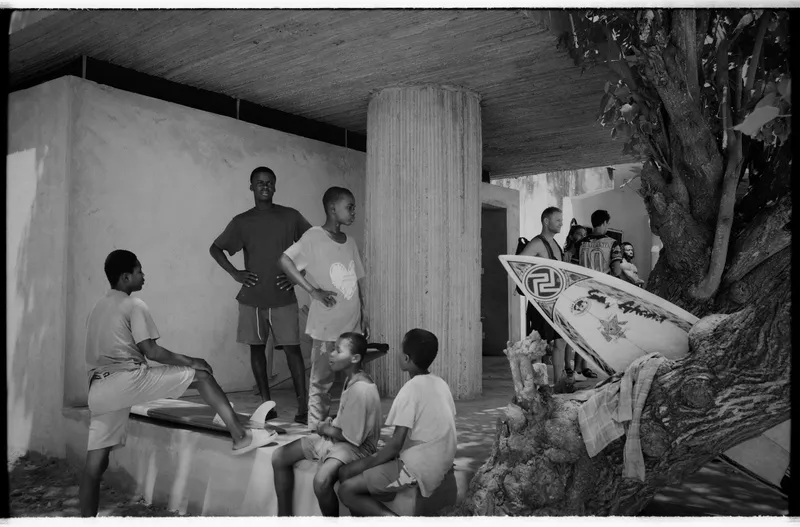
The building's adaptable single-room structure is ingeniously designed to serve multiple purposes throughout the year. It acts as a chill-out zone for local youngsters, transforming into a classroom and dormitory during significant surfing events. When the surf season winds down, the structure is rented out, contributing to the project's sustainability by covering operational costs.


Sustainable Design Strategies of the Surf Ghana Collective
The Surf Ghana Collective stands out for its commitment to Eco-Friendly Surf Architecture. The project's sustainability strategies are both innovative and practical, ensuring that the building harmonizes with its natural surroundings while minimizing its environmental footprint.



Innovative Architectural Features Promoting Sustainability
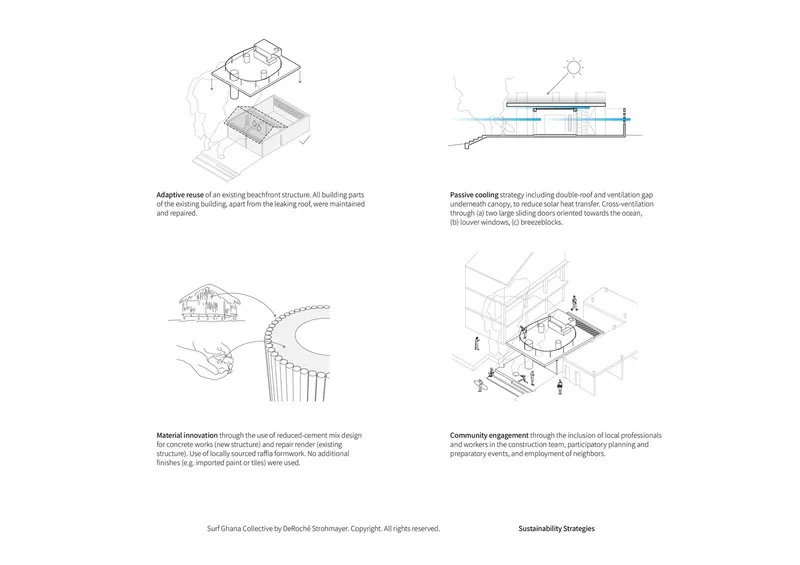
The original leaking roof has been replaced with a new canopy that extends over the existing room, creating inviting social spaces both above and below. This new design not only enhances the building's functionality but also integrates seamlessly with the natural environment, incorporating two preserved Ficus trees into the ocean-facing community terrace.


Passive Cooling and Reduced-Carbon Construction
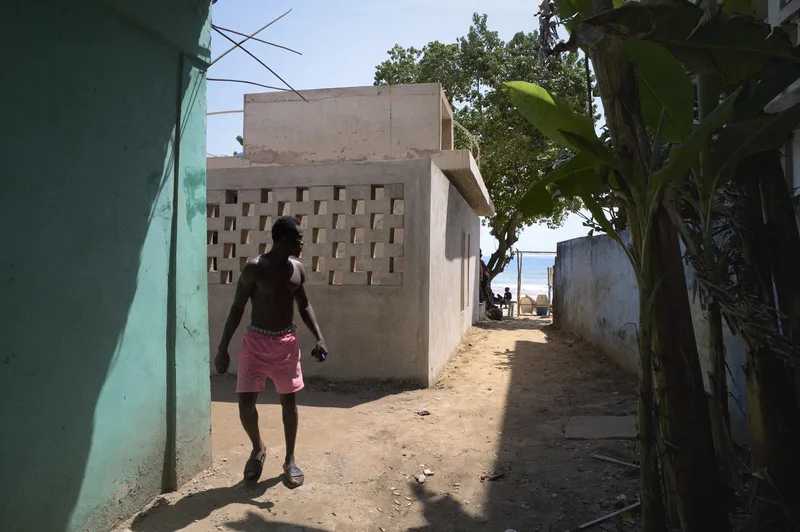
One of the project's standout features is its commitment to passive cooling, utilizing a double-roof design and cross-ventilation to maintain comfortable temperatures without the need for energy-intensive air conditioning. In a significant move towards reducing the building's carbon footprint, the traditional cement mix has been substituted with locally sourced laterite, resulting in a sustainable, reduced-carbon concrete that is both low-maintenance and resistant to the corrosive effects of salt.


Local Materials and Cultural Integration
In keeping with the principles of Eco-Friendly Surf Architecture, the Surf Ghana Collective makes extensive use of local materials. The replacement of imported formwork with local raffia not only reduces the project's environmental impact but also helps integrate the building into the local architectural vernacular, mirroring the aesthetic of the region's Nzulezu stilt village.
A New Wave in Surf Architecture
The Surf Ghana Collective by DeRoché Strohmayer is more than just a building; it's a symbol of sustainable development and community empowerment. Through its innovative design and sustainability practices, the project sets a new standard for Eco-Friendly Surf Architecture in Ghana and beyond, demonstrating that it is possible to create spaces that are both environmentally responsible and deeply connected to the local community.


All photographs are work of Julien Lanoo


Popular Articles
Popular articles from the community


The Musturak Paradise: Senior Living Architecture for a Connected Future in Temara, Morocco
The Musturak Paradise reimagines senior living architecture in Temara via private homes, social spaces, culture, community, and shared care.

ALGAL REALM: A Bio-Integrated Lunar Habitat Design for Life Beyond Earth
ALGAL REALM reimagines lunar habitat design with algae-powered life support, 3D-printed regolith, and vertical living for a lunar future.

Play: Fragments of Their World
Familiar architecture becomes modular playground design, creating safe spaces where displaced children can learn, connect, imagine and play.

The Ocean Hive: Sustainable Architecture for a Self-Sufficient Civilization at Sea
The Ocean Hive imagines sustainable architecture at sea, where modular habitats, algae, wave power and ocean waste sustain a growing colony.

Similar Reads
You might also enjoy these articles


Hodi-Mandai Geram
Project Function: Preservation and revitalization of the Intangible heritage and socio-spatial identity of the Hodi by Housing, Cultural Memory Center, Sacred Grove, landscape, local tourism economy


Olio Towers: A Mid-Rise for Performers That Fuses Housing, Rehearsal, and Stage
Located blocks from Houston's Theater District, this modular tower stacks living units around a central performance atrium.

Oasis: Modular Green Housing Carved into Dhaka's Urban Fabric
A shortlisted Plugin Housing entry reclaims unauthorized settlements in Dhaka with stepped concrete volumes, green roofs, and ventilation-driven design.

Black Hole: A Floating Megastructure for the Post-Physical Era
Emiliano Mazzarotto envisions a spherical, self-scaling arena where e-sports, digital hotels, and holographic stadiums replace traditional public space.

Explore Architecture Competitions
Discover active competitions in this discipline

Challenge to reimagine the Iron Throne

Photograph architecture without architects

Illustrate the lost glory of Angkor Wat - Render Challenge

Design challenge to reuse E-waste
Comments (0)
Please login or sign up to add comments
No comments yet. Be the first to comment!