
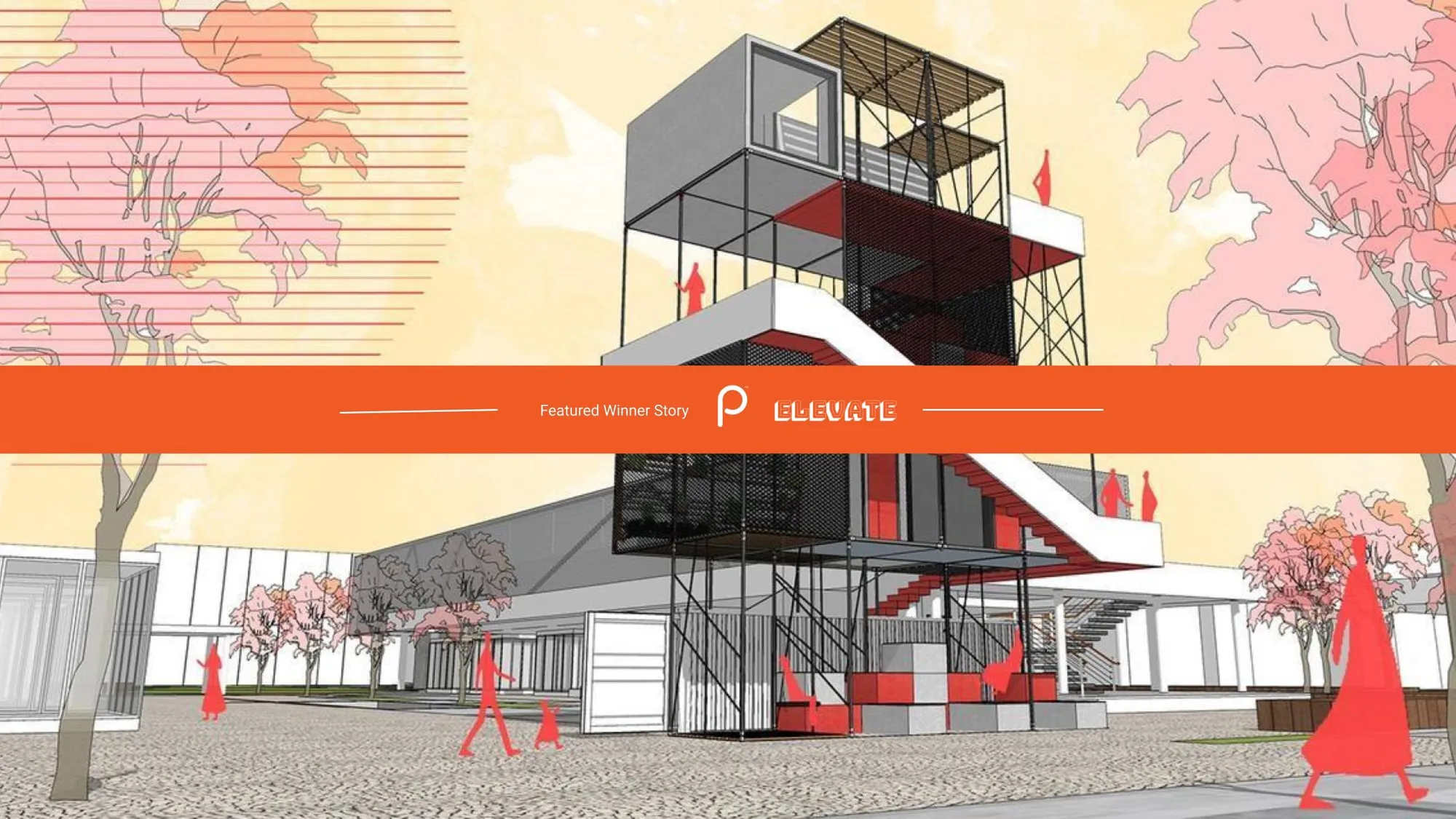
Elevate and Upheave the public experience
Bringing urban spaces to life


Introduction
Technology has miraculously enabled people to stay connected, informed, and entertained, almost everywhere. It is usual for someone to stare at their screens despite being surrounded by people in public spaces. Even though these spaces are designed to offer respite from the constant hubbub of urban life while fostering interactions between strangers. Social interaction is a way to communicate ideas, meet new people and share conversations in a social setting. However, this definition is changing with the introduction of new companions in the form of devices that accompany people everywhere we go. This raises the question of whether we have surrendered ourselves to devices that in turn isolate us from those around us?
Or conversely, is the real world not interesting enough?
Context
Wikipedia defines human-centred design (HCD) as “a design and management framework that develops solutions by involving the human perspective in all steps of the problem-solving process.” Our entire existence has been about involving the human perspective in all steps of the process, so is the technology we use. This core idea has also framed the cities we live in and homes we dwell in. When we get down to unfold the parts and pieces that surround us, we realised human-centred design is just an extension of this belief in both name and execution.
Issue
This connectivity continuum, at its outset, has enabled us to do more than what we could in the past. In a way, this has also implied that we can be present anywhere anytime without actually being there. The hyper-productivity mindset with passing time has eventually made humans more dissatisfied and caught up with things in the name of efficiency. And our feelings for the role of public spaces, in general, are no different from this fundamental idea. Its this similar mindset that propels the civic planners to squeeze in an extra office block, or a housing unit, or a road for quick mobility - instead of creating actual quality public space for plenty reasons - but mostly in the name of ‘efficient’ and ’cost effective’ city planning.
Does this mean our devices are getting better but our public spaces are not?
BRIEF
This competition thus enquired on the whole context and asked the participants to answer the following question through their design!
Design questions: What can we do for these outdated poorly performing public spaces/streets suffering from this quality crisis and outdated design? If we can’t break this connectivity continuum, how can we break the screen time for a short while to disconnect and reconnect, even for a few seconds? If not possible to break the screen time then how can we use these devices in our hands to make our public spaces relevant again?
Design challenge: The design challenge was to create an installation in the public realm, that can 'elevate' its people from these busy streams of thought / break their long screen time / introduce an element of play in their busy urban lives.
The term ‘elevate’ was stated here metaphorically and is open for interpretation by the participants. This activity/function/installation could be a permanent/temporary / or just a minor functional deviation every day that can brighten city lives even in the most unplanned places.
Objectives
The following objectives were given as points of beginning to conceive this design. Participants were supposed to assume their contexts and audience before initiating their design process.
Lively: Should be a vibrant part of the streetscape
Inviting: Should be open/accessible for people to be a part of.
Relevant: Uses fun / fresh / digital mediums to engage.
Inclusive: Should be able to connect a wide age group.

The best projects of this competition are as follows :
Winning Project: Under The Skin
By: Rachel Sau
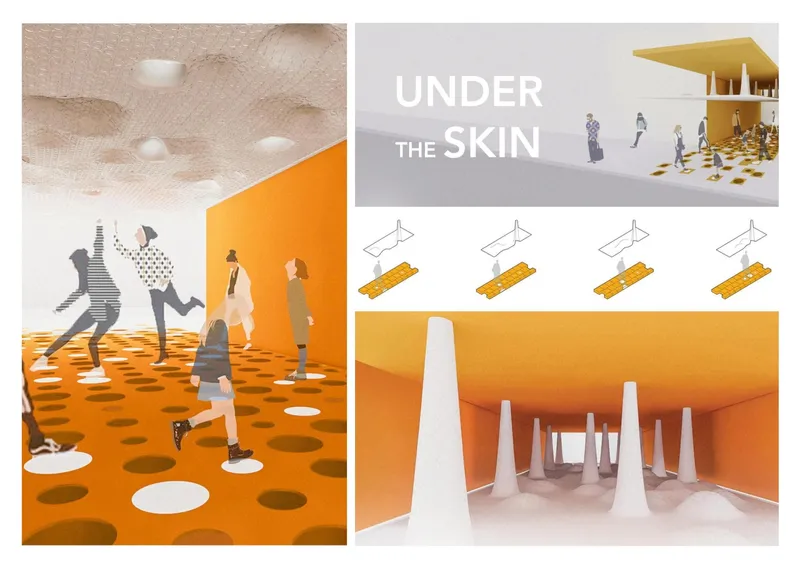
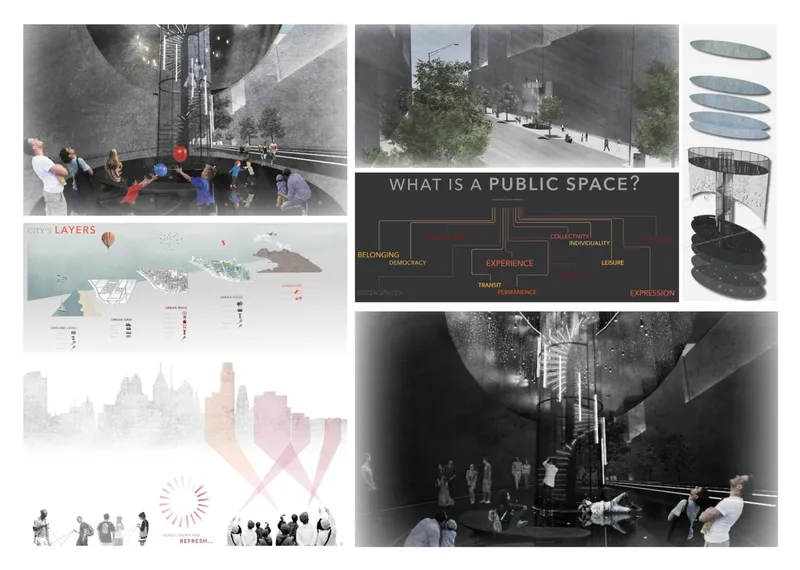
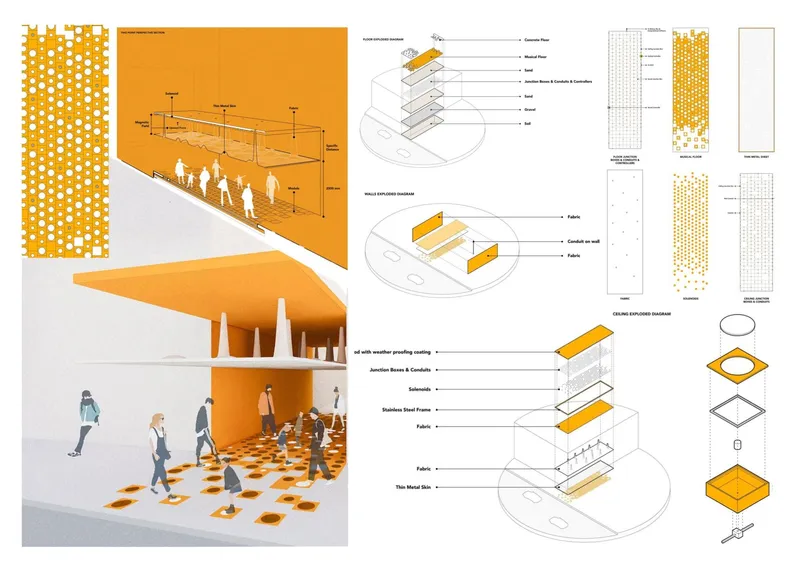 Description: Under The Skin is an interactive musical installation that invites people to take a pause from their digital realm and be present in the physical world by having them explored and engaged physically with the sound and movement of the installation with others. It also invites people to awaken their inner child, to elevate their sound beneath the skin.
-----------------
Runner-Up: PROP
By: Christopher Green & Rahman Ismail
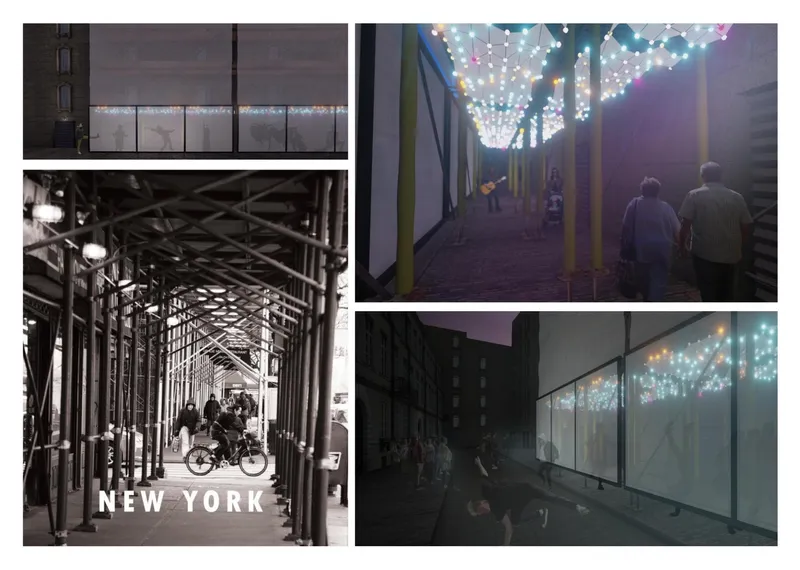
 Description: PROP utilizes a universal approach in that it applies to any scaffolding system. It is a people-driven project as we strive to regain our public space. It gives citizens and organizers the capacity to take an under-utilized space and create a memorable experience.
-----------------
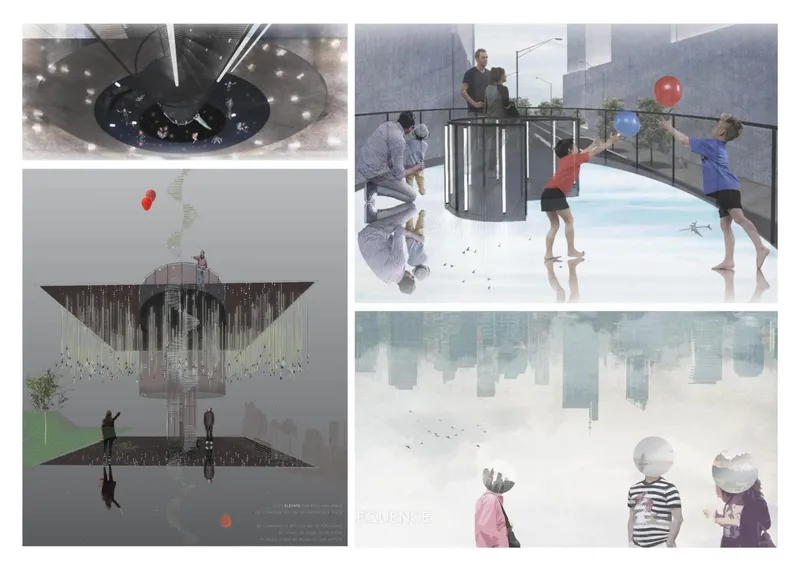
Runner-Up: OUR INFINITE CONSEQUENCE
By: Veronica Vacaro & Roberta Sinesio
 Description: This project seeks to promote a space for reflection on our scale and our role in the collective space. An experience where visitors see themselves in infinity to perceive their place, their actions and therefore their consequences. Space only exists in our presence, that is, it exists only because of our presence.
-----------------
People’s Choice: Fore^t De Poche
By : Anita Stankova & Sehr Gupta
 Description: Creating an oxygen chamber using elements from nature, and creating a micro-climate within, along with raising awareness regarding pollution are the main objectives of this natural walkway. The installation is a self-sufficient module, that produces its electricity, and focuses on highlighting sensory experience within the design.
------------------
People’s Choice: CUBE(ish)
By: Selen Karadogan, Mert Akay & Ecem Kutlay

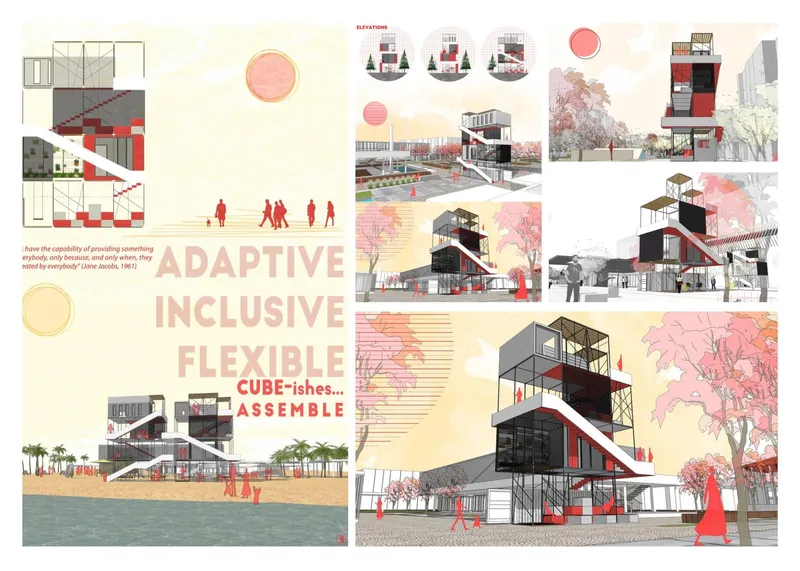
 Description: People are in a rush between their homes and workplaces. They sometimes miss the opportunity to pause, look around and feel good. At this point, in-between spaces (between home and workplace) in cities draw attention. Our concept is an in-between space that creates an escape point from the daily rush.
------------------
Editorial Choice: ARCADED MID-AIR
By: Feiyi Bi & Xinyu Yi
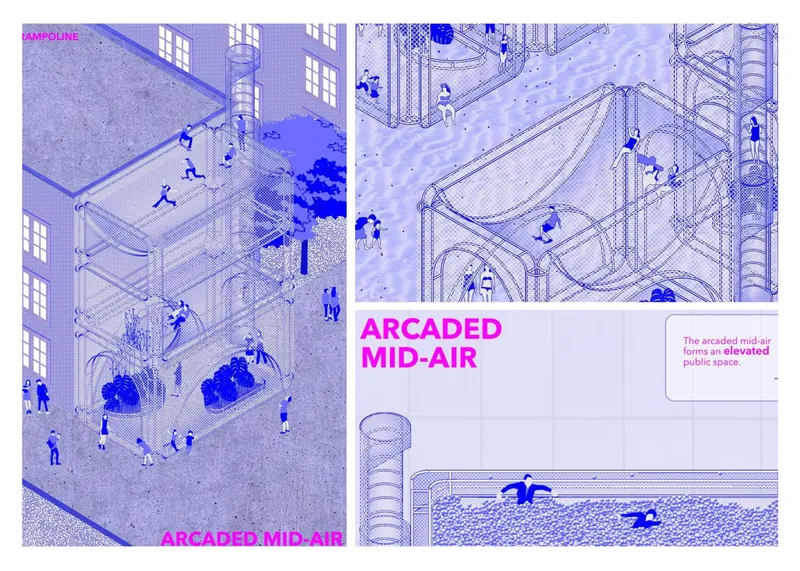
 Description: ARCADED MID-AIR encourages people to climb away from everyday life to fragmented leisure time. Isolation between the city and its inhabits exists due to the side effects of fast development. The scaffold arcade installation functions as vertical urban furniture to elevate people?s experience in public, and to re-connect them with the physical environment.
-------------------
Editorial Choice: THE GAP - City APP for the public
By: Wenpeng Bi & Yi Zhong

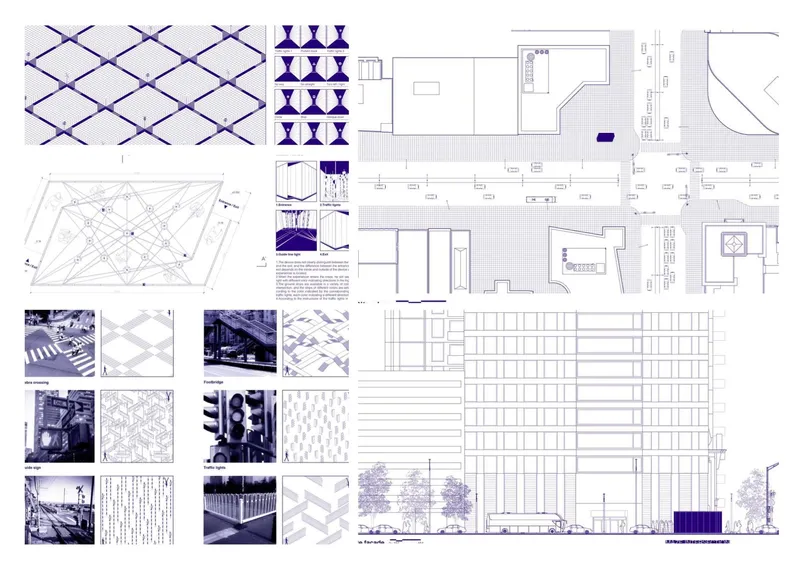 Description: Our city is changing into a highly-connected machine thanks to the 'high-efficiency technology. People rely so much on mobiles for the reason that they are the terminals of the huge city device. Sadly, our public space turns into a gap in the 'network' gradually. How can we help our public space keep up with the development of the whole city system?
----------------------
Editor's Choice: Maze Intersection-Back of the order in urban spaces
By: Wenqi Wu, Zhao Meng & Yang Wenhao
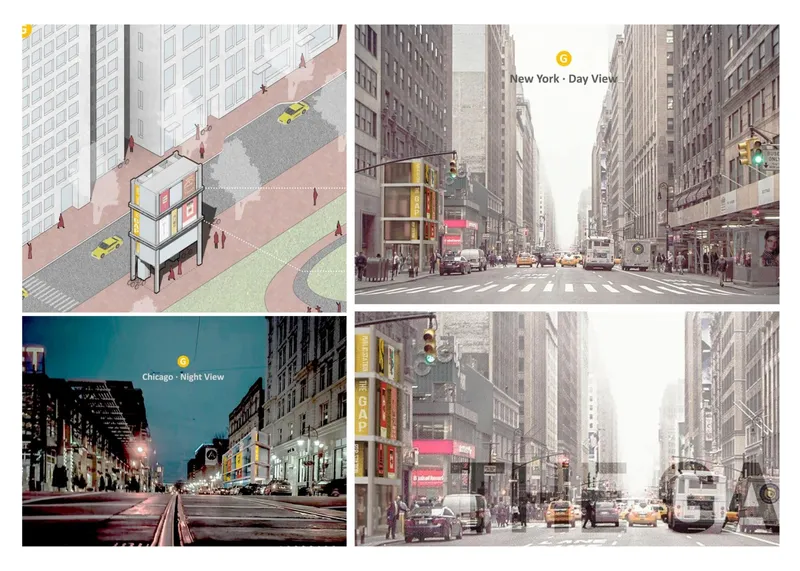
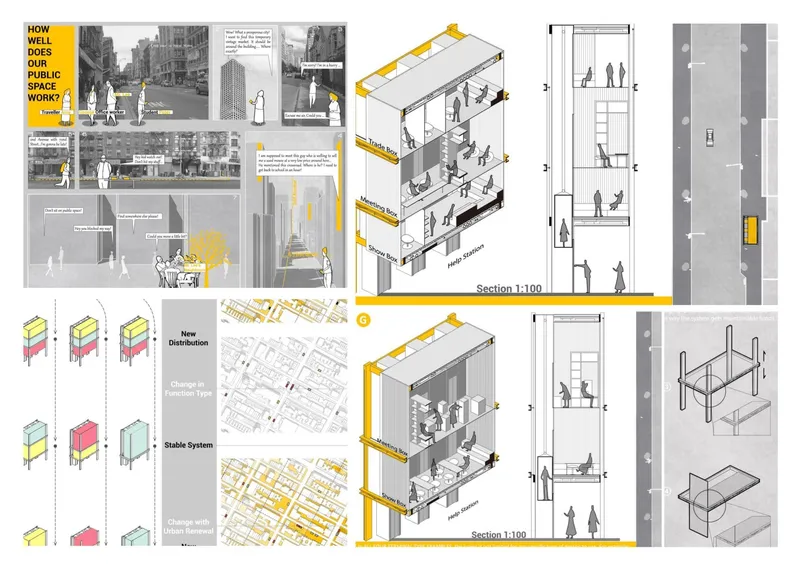 Description: The purpose of the device "Maze Intersection" awakens people's initial perception of space, and still find the direction to the exit in the fog. It is a true portrayal of reality, and it is also a reflection of the real world. It is also expected that people in it can find an exit instead of being trapped in it or returning from the original road.
----------------
Editor's Choice: Tropos
By: Evangelos Polykandriotis, Giulia Arienzo & Shiri Dobrinsky
 Description: Tropos is an aerial prototypical system based on the idea of atmospheric architecture. We propose a model for an airborne infrastructure that is dynamic, autonomous and agent-based to generate new spatial experiences in the city that challenge the relationship of architectural quality and permanency.
Conclusion
This competition offered the participants to interpret the context of urban spaces from their eyes using various lenses. They designed an installation in the public realm that can elevate its people from these busy streams of thought, break their long screen time and introduce an element of play in their busy urban lives.
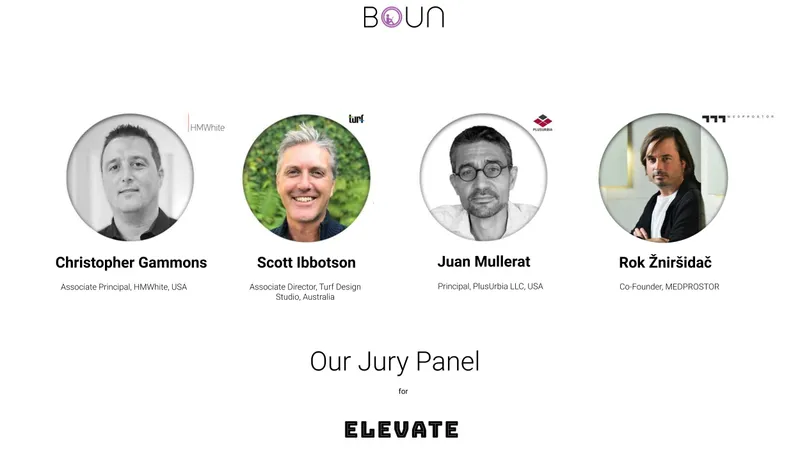
The jury for the competition consisted of esteemed designers, professionals and academicians from around the world. The Lead Jurors for the competitions were as follows:
Christopher Gammons, Principal, HMWhite, United States
Rok Žnidaršič, Co-founder, MEDPROSTOR d.o.o., Slovenia
Juan Mullerat, Principal, PlusUrbia LLC, United States
Scott Ibbotson, Associate Director, Turf Design Studio, Australia
Discover the full results here:https://uni.xyz/competitions/elevate/entries
Discover the design brief here: https://uni.xyz/competitions/elevate/info/about
Follow us on social media: Facebook | Instagram | LinkedIn | Twitter | Youtube
Discover other design competitions to participate here: https://uni.xyz/competitions



Popular Articles
Popular articles from the community


Play: Fragments of Their World
Familiar architecture becomes modular playground design, creating safe spaces where displaced children can learn, connect, imagine and play.

Riyadh For All: Intergenerational Urban Design for Active Aging in Rabat
Riyadh For All reimagines urban design in Rabat with intergenerational co-living, adaptive courtyards, and Moroccan cultural exchange today.

Co-life: Sustainable Architecture for Age-Friendly Community Living
Co-life reimagines sustainable architecture for seniors through courtyards, rammed earth, shared gardens, and spaces designed for belonging.

Hill & Cross Opera: Sculptural Opera House Architecture Shaped by Tallinn’s Landscape and Identity
Hill & Cross Opera reimagines opera house architecture in Tallinn through its sculptural hill, civic plaza, glass wave and a luminous cross.
Similar Reads
You might also enjoy these articles

Lunar Spiral: Space Architecture Shaped by the Mathematics of the Universe
Lunar Spiral reimagines space architecture through Fibonacci geometry, lunar regolith, levitating habitats, and self-sustaining Moon living.
The Main Dream: Modular Architecture for Play, Learning, and Community
A modular playground turns recycled plastic into adaptable spaces where refugee children can play, build, learn, and reconnect.
Play: Fragments of Their World
Familiar architecture becomes modular playground design, creating safe spaces where displaced children can learn, connect, imagine and play.

Wadi Rum Observatory: Desert Architecture Designed for the Night Sky
Wadi Rum Observatory turns desert architecture into a quiet instrument for astronomy, hiding research spaces under Jordan's starlit terrain.

Comments (0)
Please login or sign up to add comments
No comments yet. Be the first to comment!