
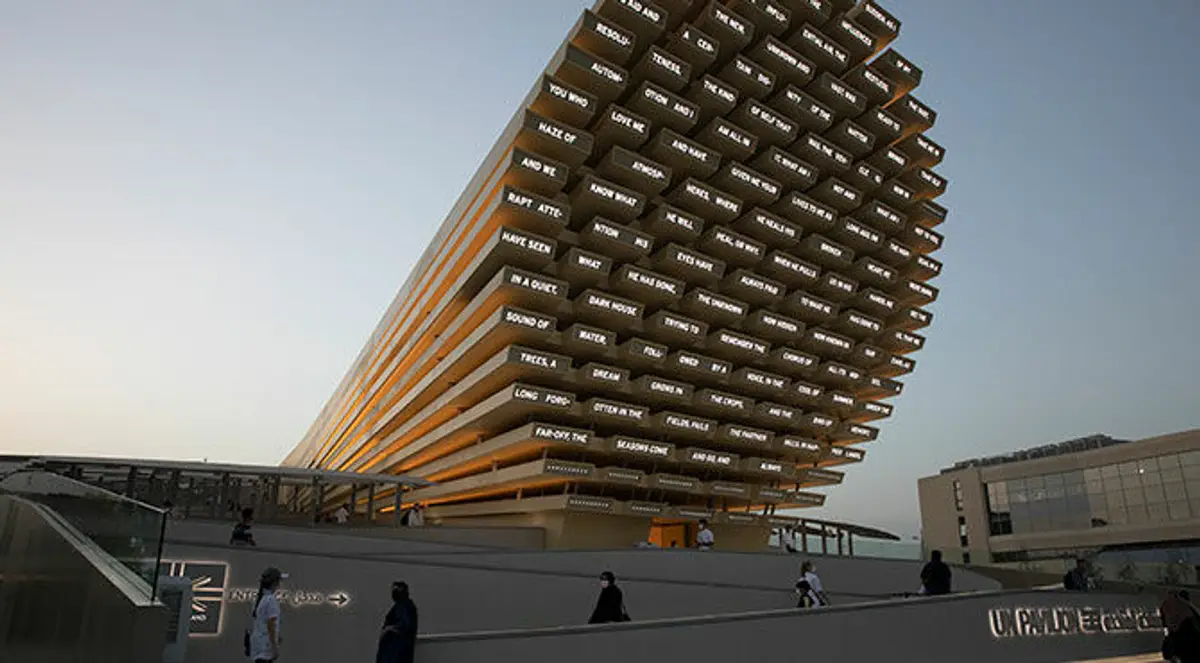
Es Devlin's visionary design for UK Pavilion wows crowds as it debuts at Expo 2020 Dubai
Cutting-edge technology and stunning visual displays create a one-of-a-kind immersive experience for visitors

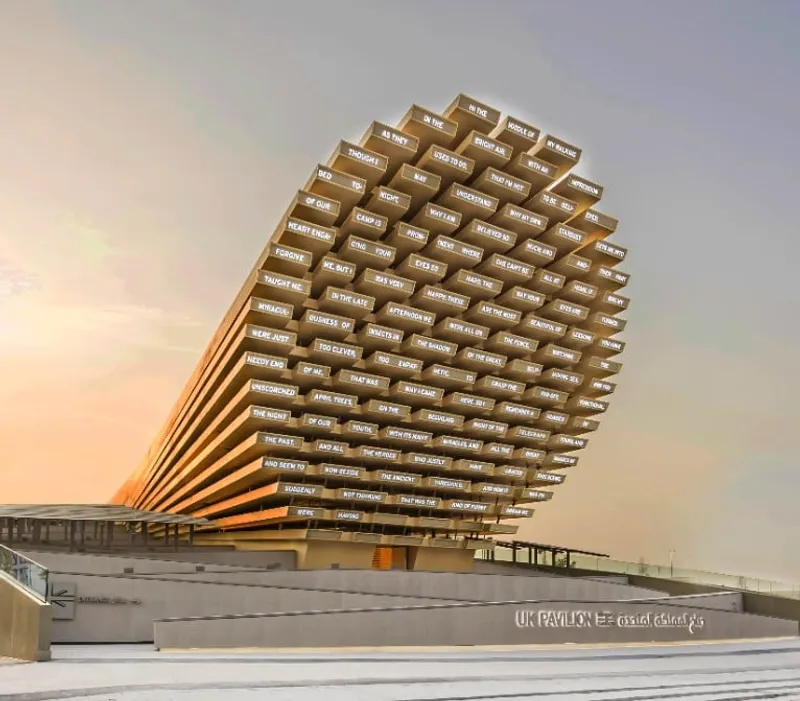
In a landmark moment, the UK Pavilion at Expo 2020 Dubai has been designed by leading artist and designer, Es Devlin – the first time a UK pavilion has been designed by a woman since the inception of Expo in 1851. Called the Poem Pavilion, the unique structure is shaped like a giant wooden conical musical instrument and gathers words donated by visitors, which are then used by an advanced machine learning algorithm to generate a cumulative collective poem that illuminates its façade, measuring 20 metres in diameter.
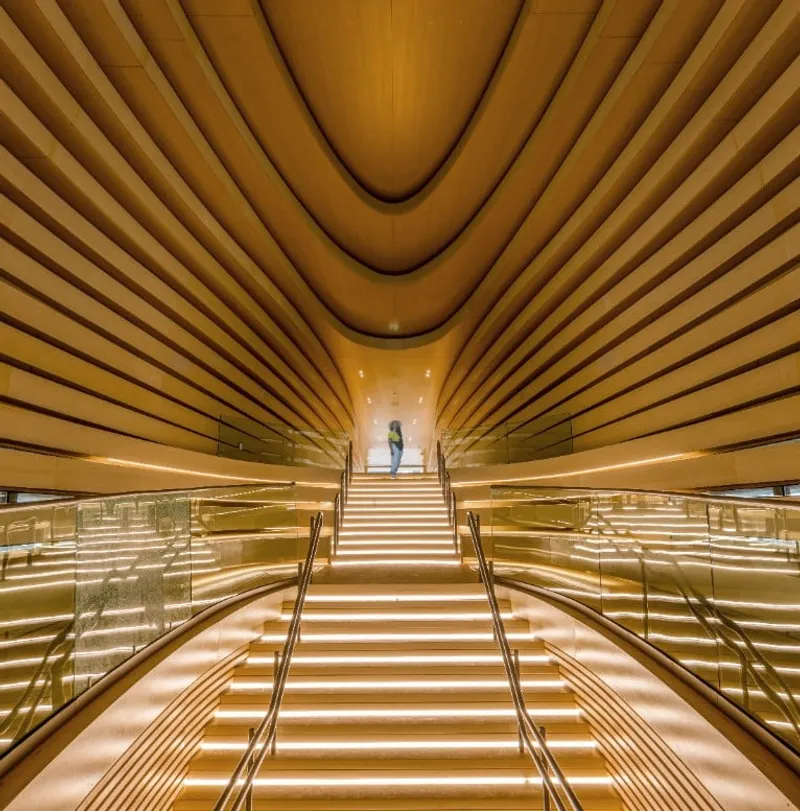
Devlin worked closely with a team of engineers, environmental design consultants, executive architects and creative agency Avantgarde to develop and construct the Poem Pavilion, with the material choice being a standout feature. Cross laminated timber was chosen as the structural element for the building, with European forests in Austria and Italy providing the source. Meanwhile, the LED tiles were engineered in Belgium and manufactured in China, with local teams from the UK and the UAE handling the installation process. As part of Devlin’s holistic vision for a building celebrating cultural inclusivity, this intercontinental and international collaboration is a testament to the power of teamwork and shared responsibility.
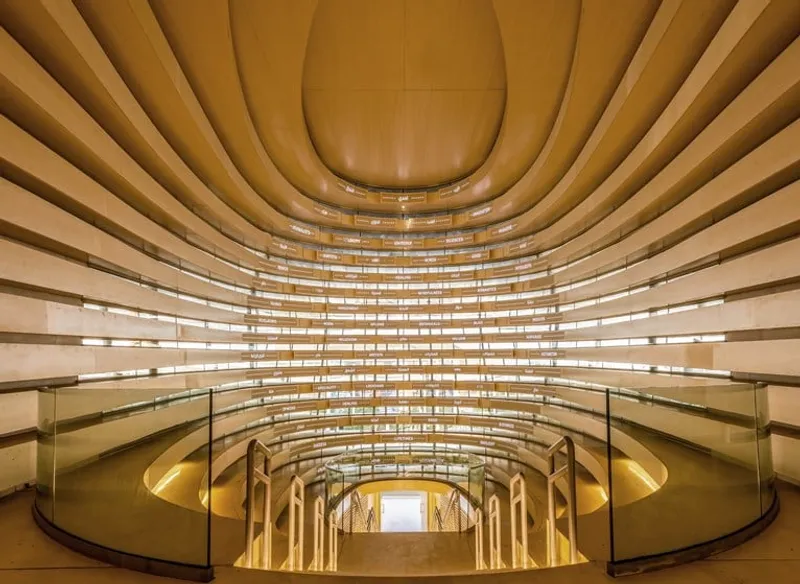
As part of the experience of visiting the Poem Pavilion, visitors will be encouraged to donate a word at the 'mouthpiece' of the building, which forms a focal point of the entire design. After this, they will be invited to step within the heart of the instrument, where they will be surrounded by a glowing arrangement of donated words displayed in illuminated Arabic and English. A soundscape gathered from multicultural choirs across the UK will play in the background as visitors add their contributions to the structure. The ambition of embracing cultural diversity doesn’t stop there, as the poetry-generating algorithm was developed by creative technologists located in California.
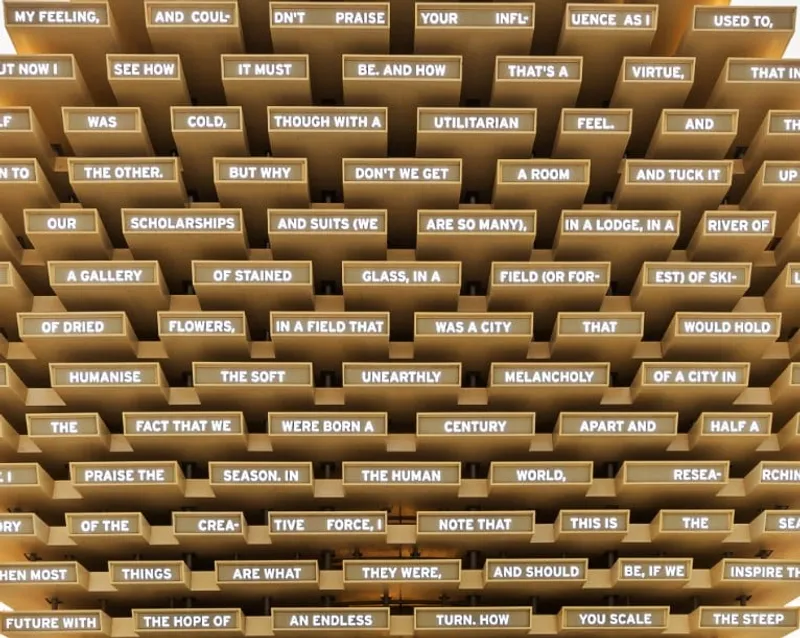
Delving into this concept of machine-generated poetry isn't a new concept for Devlin, who began exploring it in 2016 with PoemPortraits at the Serpentine Gallery, evolving the idea further in 2017 when she turned the V&A's artist-conceived Christmas tree into a collective carol. In 2018, she projected text generated from visitors feeding words into the mouth of one of the lions in Trafalgar Square up the length of Nelson's column. However, the sheer scale of the Poem Pavilion makes it the crowning achievement of Devlin's exploration of machine-generated poetry to this point.
As Europe shifts towards alternative building materials, with wood becoming an increasingly popular choice due to its sustainable characteristics, cross-laminated timber as a primary material for the Poem Pavilion shows how the industry is adapting to the demands of a more conscious consumer base. Indeed, the Poem Pavilion as a whole demonstrates how cultural icons can be built with sustainability in mind. This coming together of creativity, technology and sustainability sets a precedent that other projects in the field of architecture and design are sure to follow.
The Poem Pavilion is a celebration of multiculturalism – an apt theme for an event like Expo 2020 Dubai. With over 25 million people predicted to pass through the site over six months, Devlin’s design serves as an inspiring beacon of inclusivity in a world that still grapples with accepting diversity. As the first female designer of a UK pavilion at any Expo event, Devlin’s Poem Pavilion will no doubt stand as a landmark example of how the worlds of art, architecture and technology can come together to create something that inspires millions of people in a meaningful way.
Devlin says:
“Algorithms are among us, they are an ever-growing part of our culture, and their output is based on what they are trained on and who trains them. The pavilion is at once an expression of the ideal of a culturally diverse Britain that I grew up with, tempered with our growing awareness of the part algorithms play in shaping the future of our culture.”


Popular Articles
Popular articles from the community


Co-life: Sustainable Architecture for Age-Friendly Community Living
Co-life reimagines sustainable architecture for seniors through courtyards, rammed earth, shared gardens, and spaces designed for belonging.

The Ocean Hive: Sustainable Architecture for a Self-Sufficient Civilization at Sea
The Ocean Hive imagines sustainable architecture at sea, where modular habitats, algae, wave power and ocean waste sustain a growing colony.

Co-Life: Senior Housing Design That Reconnects Older Adults With the City
Co-Life reimagines senior housing design through healing gardens, shared streets, workshops, and a sustainable community across generations.

ALGAL REALM: A Bio-Integrated Lunar Habitat Design for Life Beyond Earth
ALGAL REALM reimagines lunar habitat design with algae-powered life support, 3D-printed regolith, and vertical living for a lunar future.

Similar Reads
You might also enjoy these articles
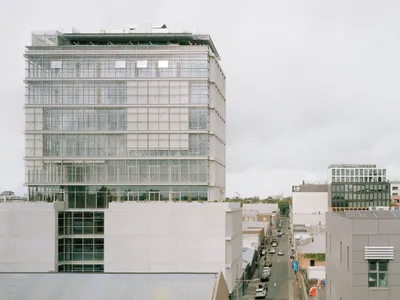
116 Rokeby Building, Collingwood
Sustainable Collingwood office building featuring double-skin façade, natural ventilation, rooftop amenities, and carbon-neutral design focused on wellbeing and longevity.
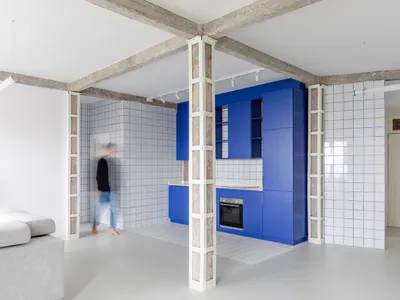
Contemporary Apartment Renovation in Spain: RV House by BIAN Opens Up to the Sea
A minimalist 1930s apartment in Santander is transformed into a flexible, sea-facing home through contemporary Spanish renovation.
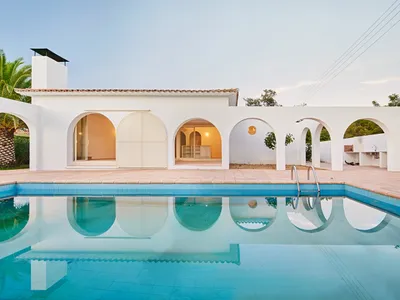
3 Marías House: A Contemporary Mediterranean Courtyard Retreat by Bajet Giramé + Burckhardt
Mediterranean courtyard home blending traditional architecture with modern design, terracotta flooring, flexible interiors, sustainable climate strategies, and garden integration.
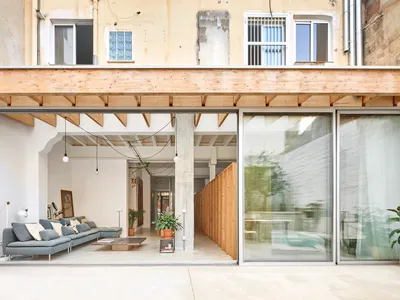
NZ10 Apartment by auba studio: Adaptive Reuse in Palma de Mallorca
Adaptive reuse apartment transforms bakery into light-filled home with patios, privacy layers, and wood interiors enhancing urban living experience.

Explore Architecture Competitions
Discover active competitions in this discipline


Challenge to reimagine the Iron Throne

Photograph architecture without architects

Illustrate the lost glory of Angkor Wat - Render Challenge

Design challenge to reuse E-waste
Comments (0)
Please login or sign up to add comments
No comments yet. Be the first to comment!