Floating Canopy Grove by People’s Architecture Office + Ziwei Xu
A modular forest pavilion for cyclists featuring floating translucent canopies, a café, and eco-restrooms, blending nature, art, and sustainable design.


A Floating Forest Pavilion Merging Public Space, Art, and Ecological Design in Huizhou, China
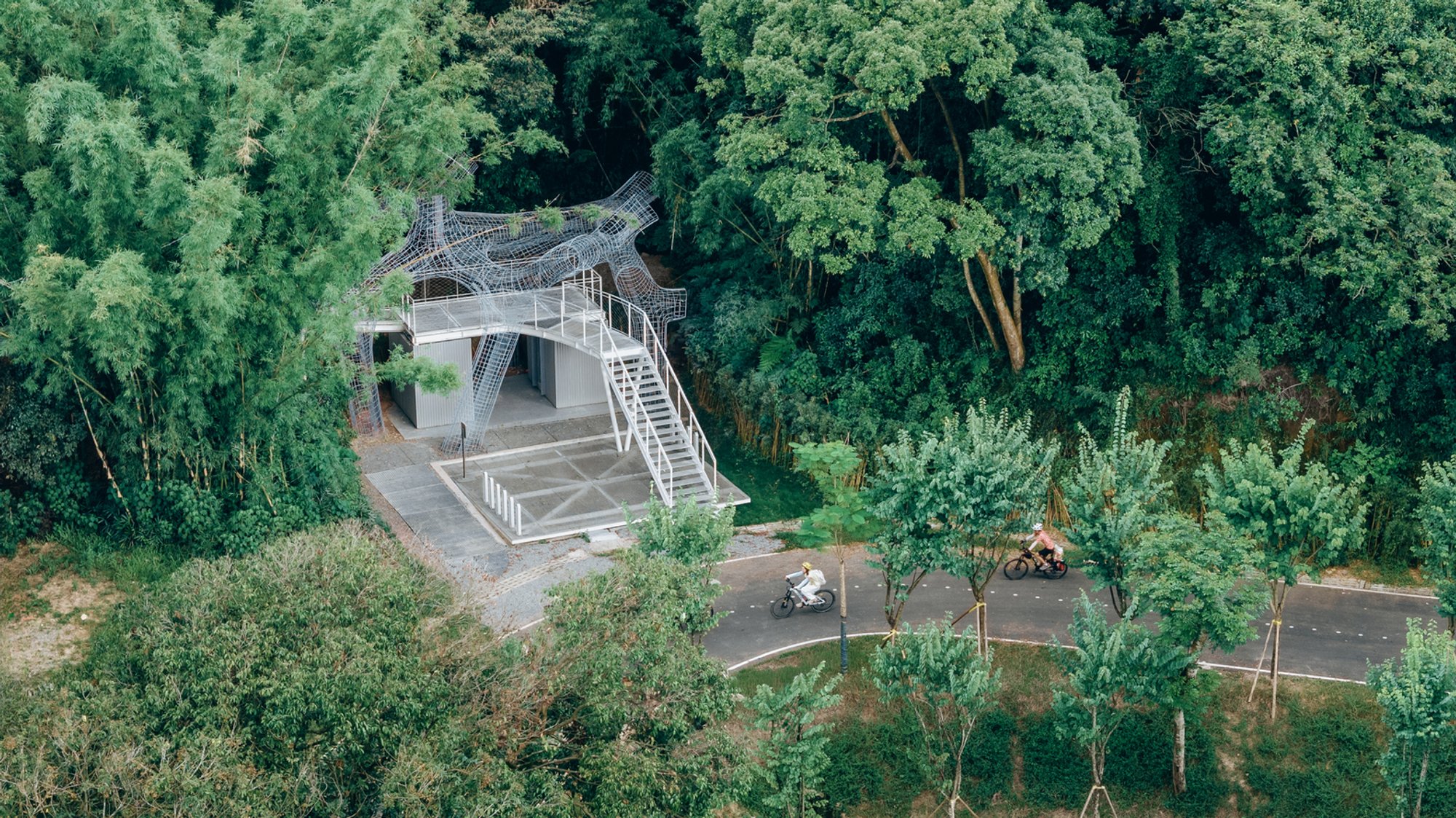
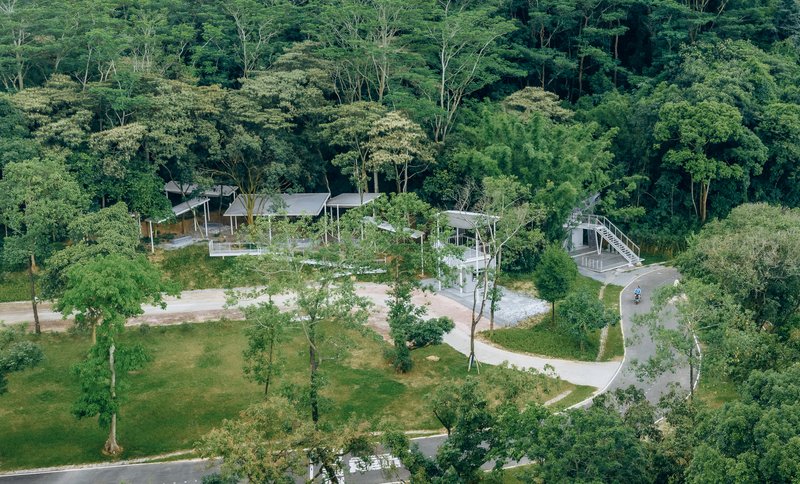
Nestled within the dense native woodland near Guoqian Village and the serene Xiangang Reservoir in Huizhou, China, the Floating Canopy Grove by People’s Architecture Office in collaboration with artist Ziwei Xu creates a sculptural haven for bicyclists, hikers, and nature-seekers. This compact 36 m² intervention transforms a previously utilitarian rest stop into a poetic, nature-immersed pause point—where public architecture, art, and ecology converge in a seamless forest experience.
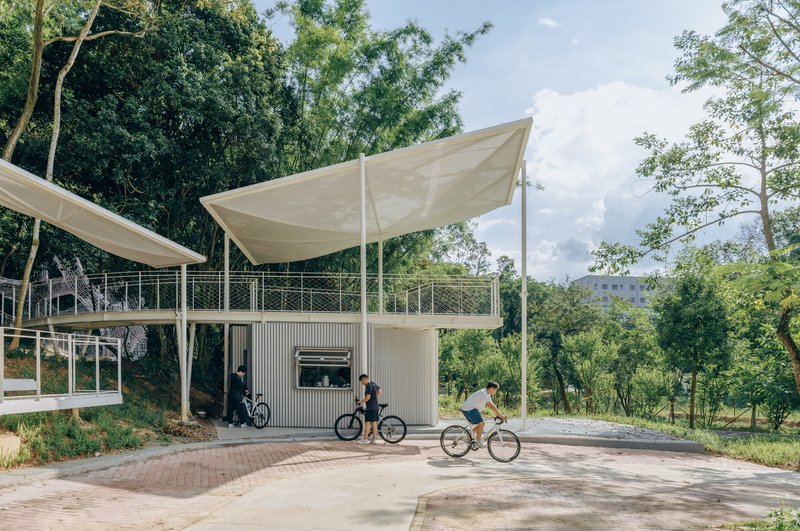
Designed as a tranquil rest hub along a popular cycling route around Luofu Mountain, the project replaces outdated restroom facilities with a thoughtfully integrated site featuring a modular café, restrooms, repair amenities, and elevated viewing platforms that reconnect visitors with the landscape.
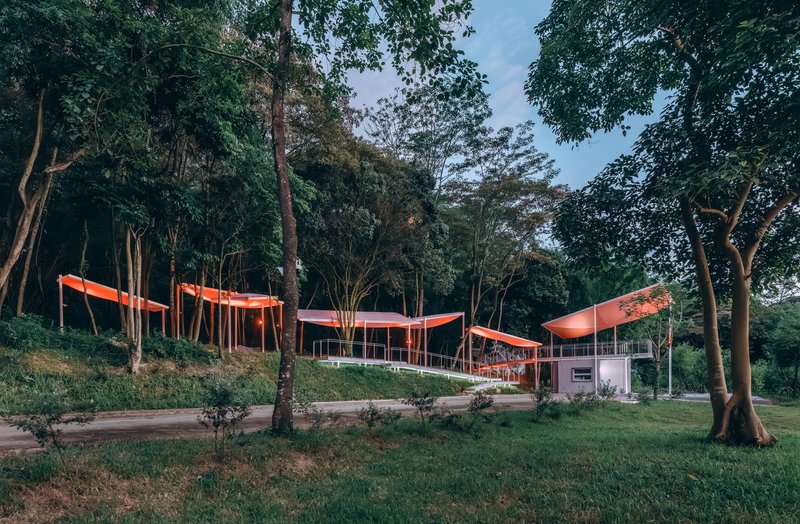
A Canopy Landscape that Floats Among the Trees
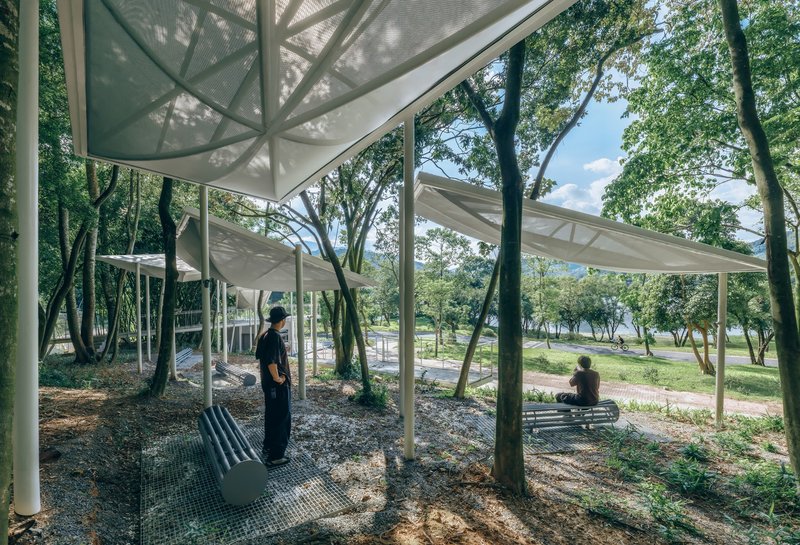
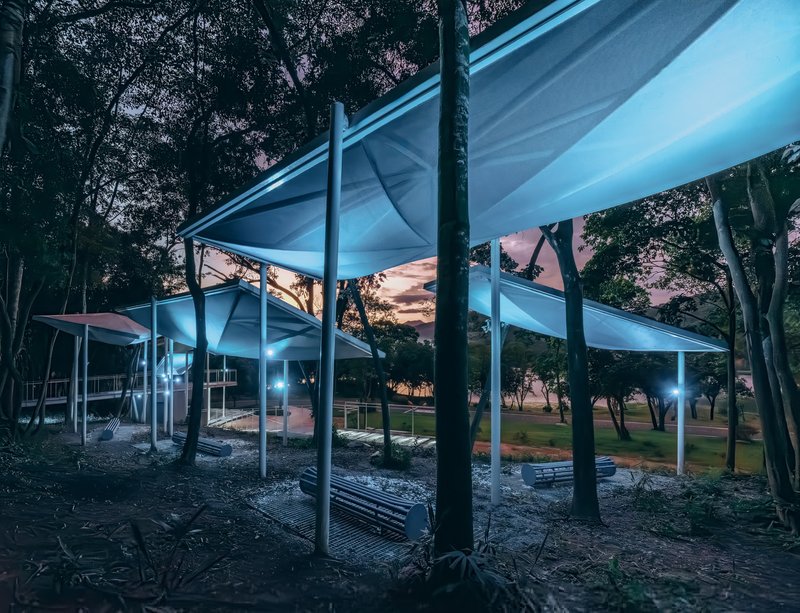
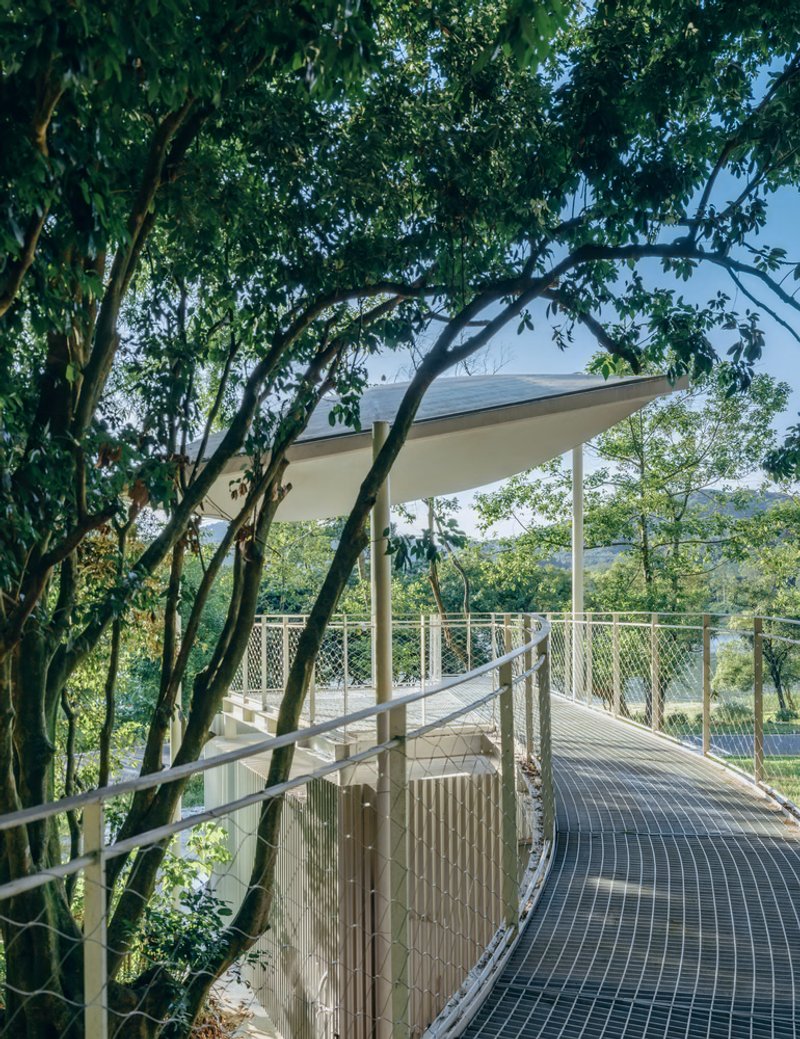
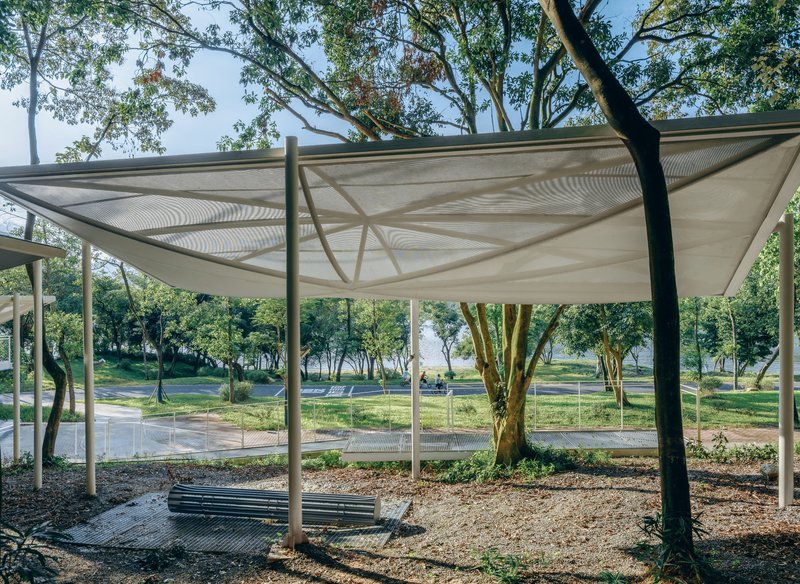
The grove’s most striking gesture is its ensemble of seven translucent PTFE/Ferrari membrane canopies, suspended delicately above the forest floor at varied angles and heights. These ethereal canopy forms echo the layered texture of tree foliage, filtering sunlight while creating an immersive play of shadow, light, and spatial rhythm.
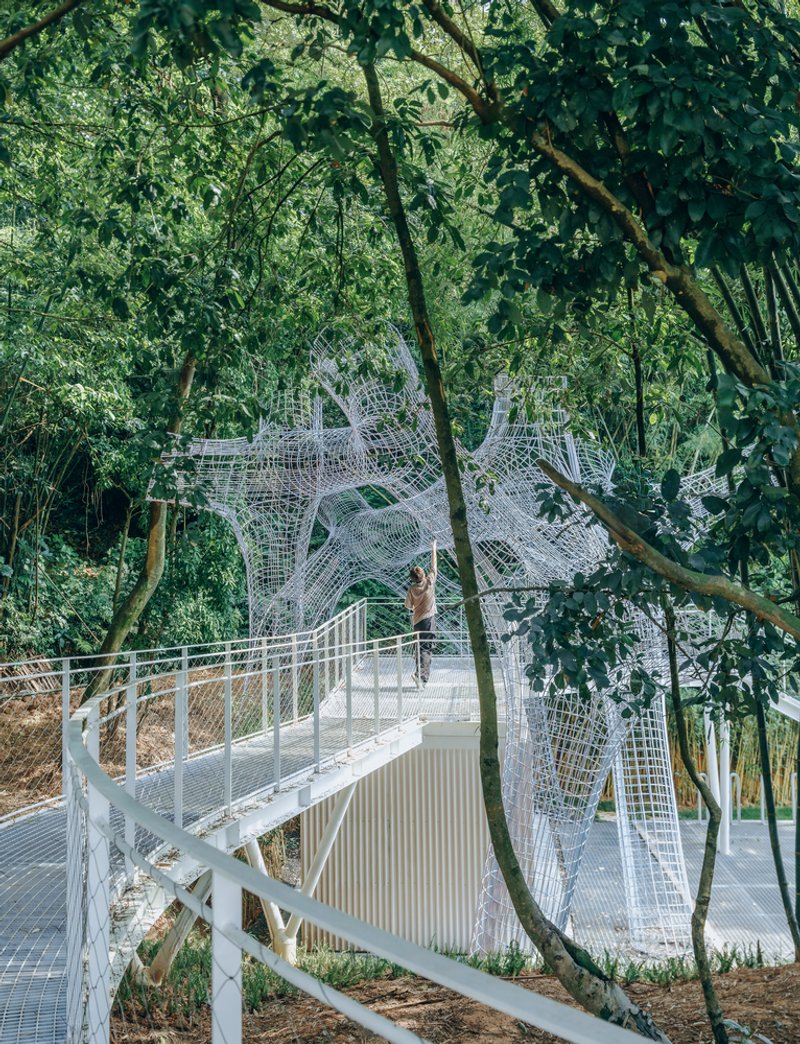
A steel-grate boardwalk threads through the trees beneath these floating elements, linking the café to the restroom pods and leading toward a panoramic viewing deck overlooking the water. This transparent pathway fosters lightness and permeability, ensuring the forest floor and its ecosystem remain largely untouched.
The result is an elevated forest promenade, a serene sequence that encourages visitors to slow down and inhabit the woodland—not pass through it.
Modular Architecture for Minimal Impact
In alignment with PAO’s research on rapid-deploy, low-impact construction, the café is built using the firm’s Plugin House system—a prefabricated, flexible building system known for efficiency and adaptability. Prefabricated restroom units mirror this strategy, enabling swift installation while protecting the surrounding biodiversity.
This system ensures the architecture rests lightly on the land, reducing construction disturbance and allowing components to be recycled or relocated in the future—a key gesture toward circular design.
Lightwoven Forest: Art Interlaced with Nature
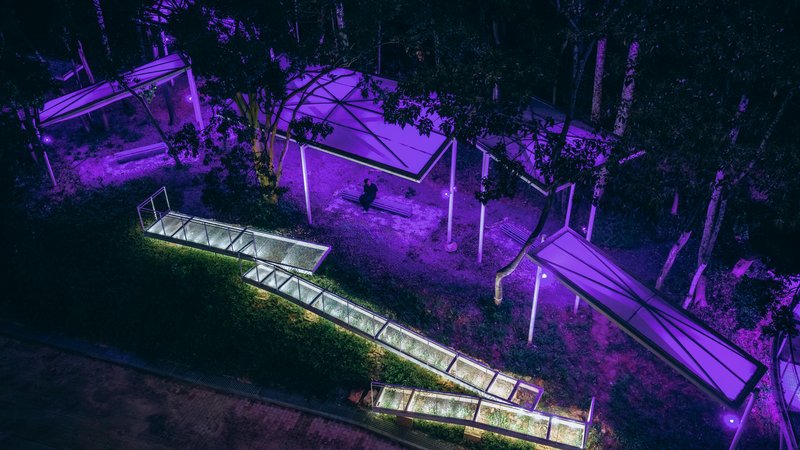
Above the facilities, Ziwei Xu’s installation “Lightwoven Forest” enhances the sensory atmosphere. Woven textile elements interact with changing daylight, casting dynamic shadows and creating a soft shifting canopy beneath the translucent roofs. This artistic addition blurs boundaries between utility and poetic expression, elevating the rest stop into a contemplative cultural space.
Sustainable Systems Rooted in Ecology
Sustainability is embedded at both structural and infrastructural levels. A dual-stage wastewater treatment system—combining underground filtration with an above-ground settling pond—ensures wastewater purification before release, safeguarding the pristine Xiangang Reservoir.
This closed-loop ecological mechanism reinforces the project’s mission: architecture as gentle intervention, not imposition.
A Regenerative Forest Refuge for Cyclists and Wanderers
Instead of merely offering restrooms and refreshments, Floating Canopy Grove offers visitors a moment of pause within nature, framed by sculptural light, forest textures, and soft architectural gestures. It becomes:
- A rest stop with dignity and beauty
- A forest-immersive art experience
- A model for ecologically responsive public infrastructure
- A micro-destination within a natural cycling route
By replacing aging infrastructure with a minimal, modular, and poetic intervention, the project demonstrates how small public architecture can hold cultural and environmental power, inspiring deeper connection between people and landscape.
Key Project Details
| Attribute | Details |
|---|---|
| Location | Huizhou, China |
| Architects | People’s Architecture Office |
| Artist | Ziwei Xu |
| Area | 36 m² |
| Year | 2025 |
| Program | Café, restrooms, boardwalk, viewing platform, public installation |
| Features | Prefabricated modules, PTFE canopy system, ecological wastewater treatment |
All photographs are works of Yumeng Zhu