Hong Tra Hoa Binh Bui Thi Xuan Cafe: A Contemporary Renovation Rooted in the Highlands Identity
A warm, highland-inspired café renovation blending textured materials, redesigned facades, and soft rooftop forms to transform a typical Vietnamese townhouse.


Located in the heart of Đà Lạt, Vietnam, the Hong Tra Hoa Binh Bui Thi Xuan Cafe by xưởng xép transforms a typical four-story townhouse into a warm, atmospheric destination that blends architectural preservation with regional storytelling. Completed in 2024 and spanning 360 square meters, the project reimagines a conventional concrete-frame structure—common throughout Vietnamese cities—into a vibrant café that celebrates the cultural and environmental character of the Central Highlands.
Reimagining a Typical Urban Townhouse
Rather than demolishing the existing building, the architects approached the project as a thoughtful renovation. Their goal was to uncover hidden potential within the existing structure, allowing it to evolve into a new space with its own identity while honoring its place in Đà Lạt’s urban fabric. This adaptive reuse strategy provides a sustainable foundation, minimizing waste and preserving the building’s inherent spatial logic.
A Redesigned Facade that Opens to the City
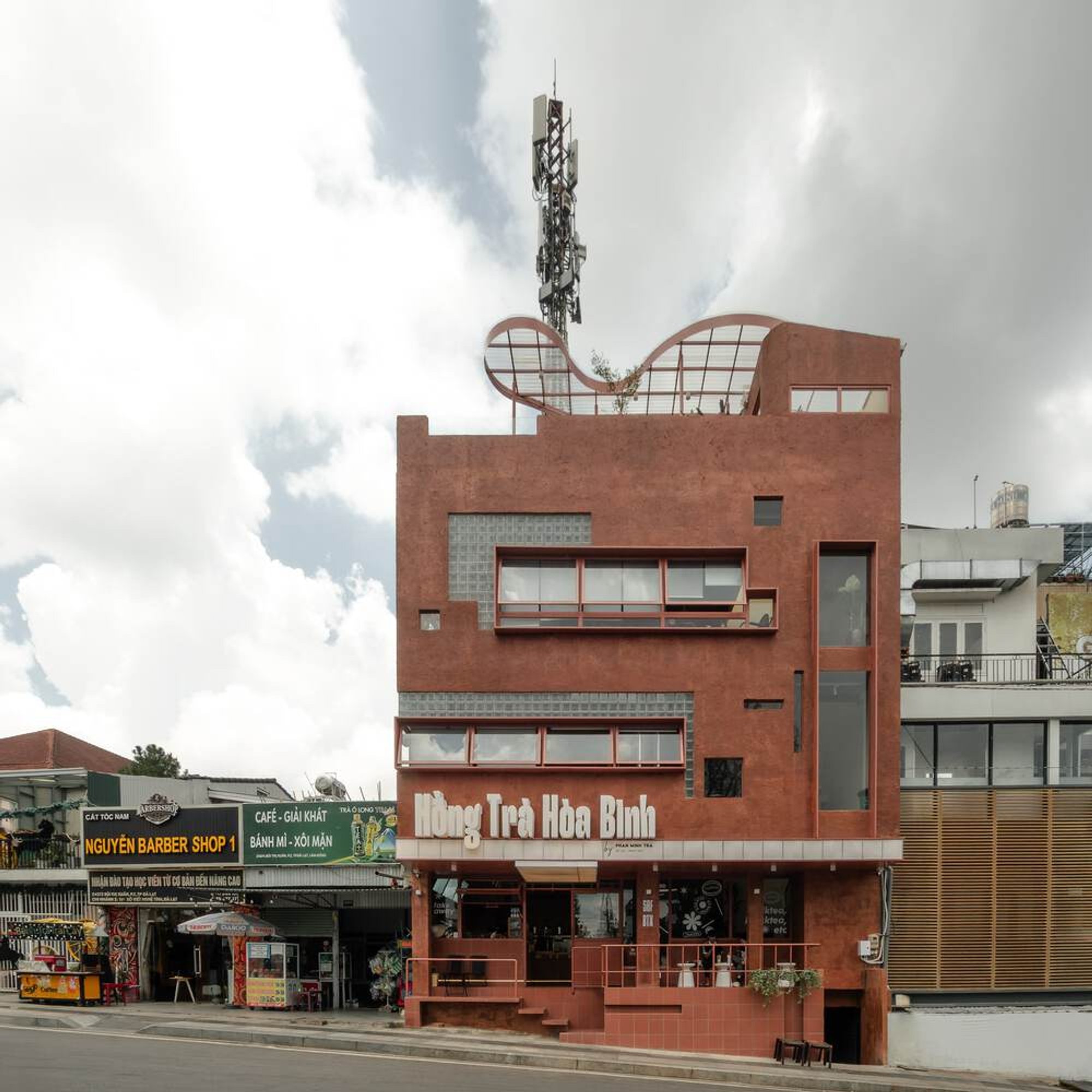
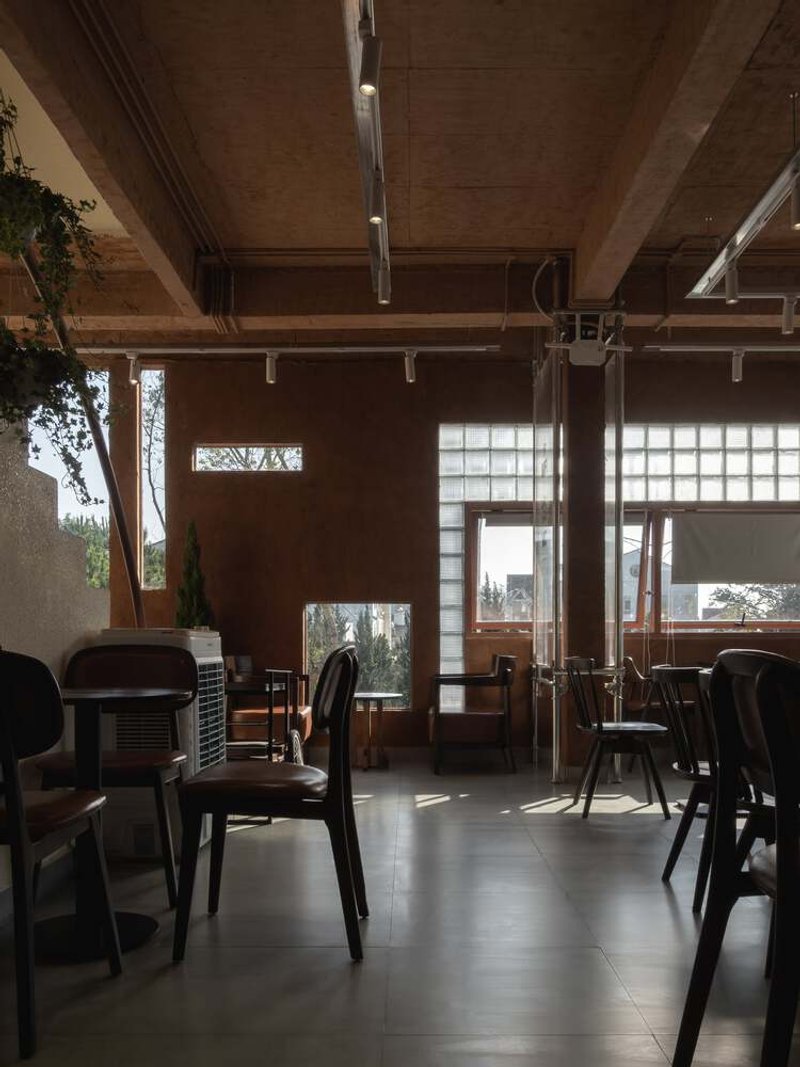
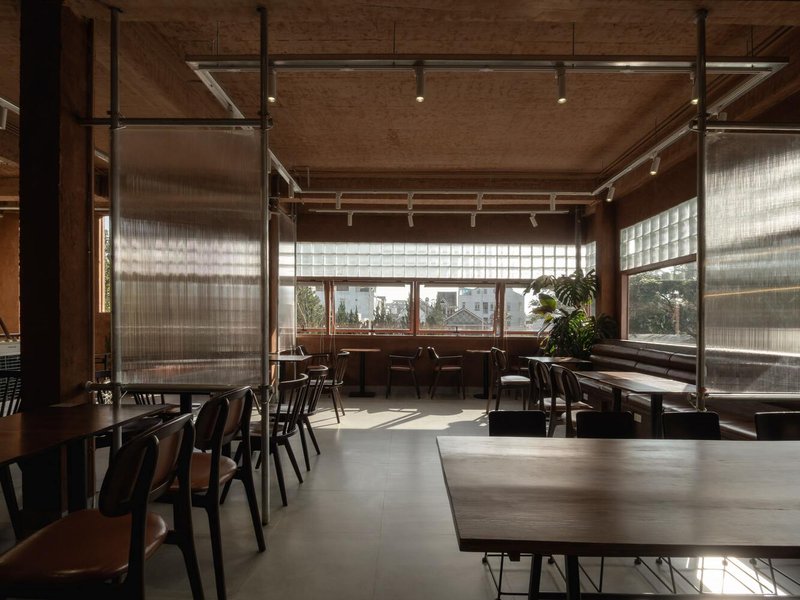
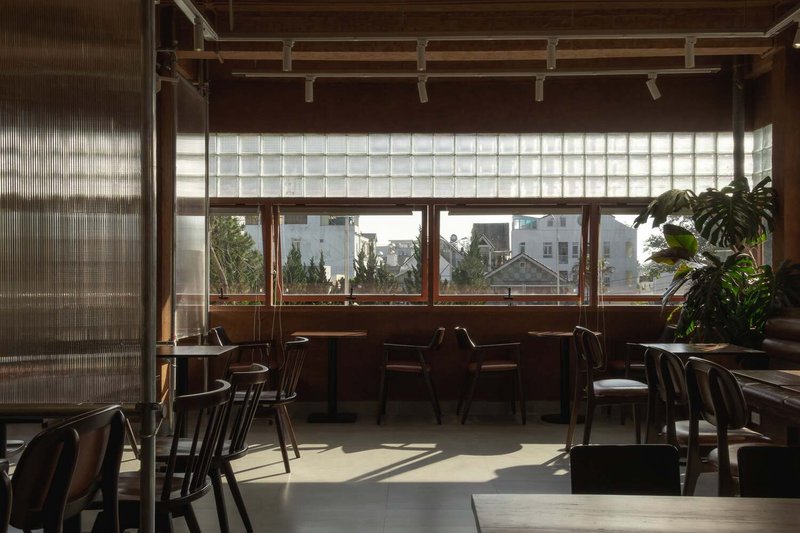
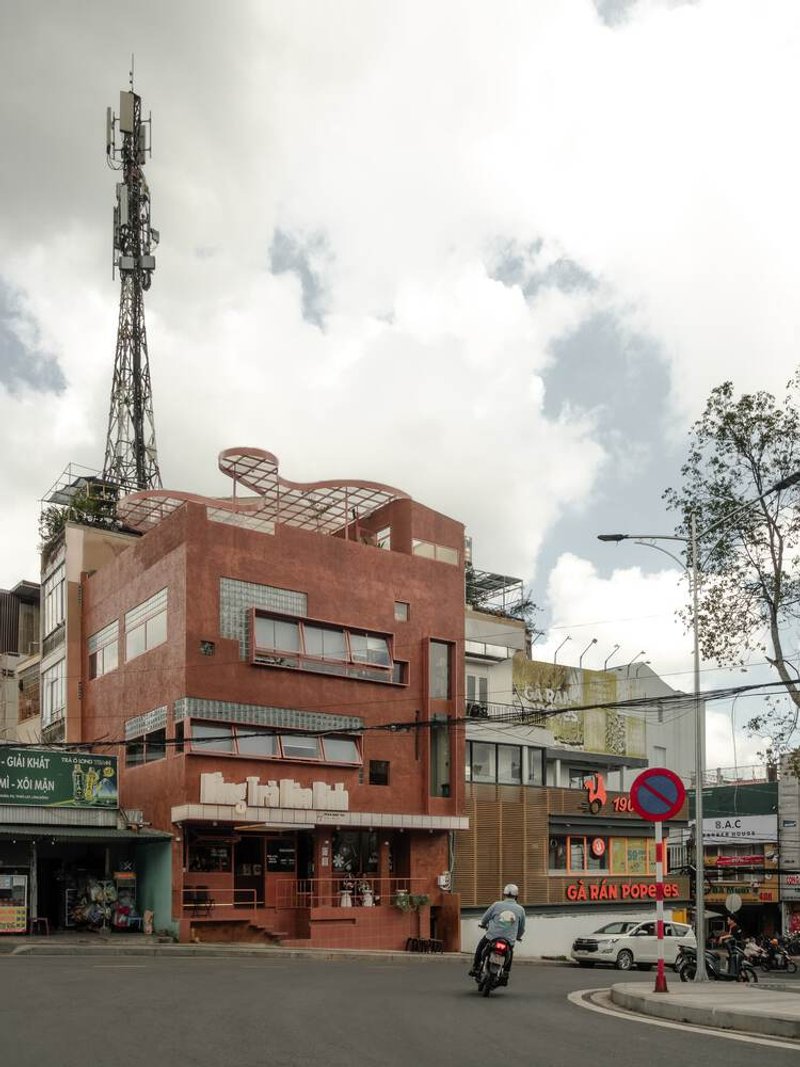
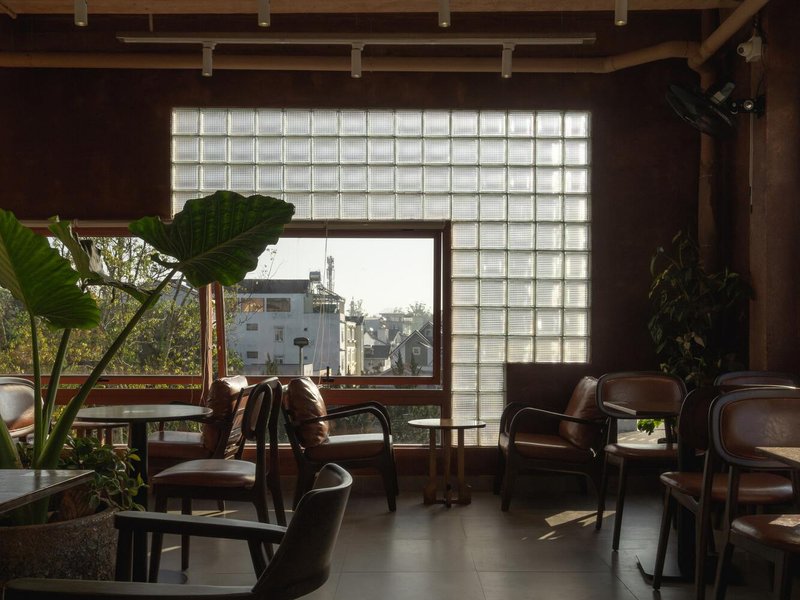
The façade became the first major focus of transformation. The design breaks away from the original rigid grid of windows, replacing it with a dynamic composition of glass openings and pivoting panels. This new elevation introduces a sense of openness and visual variation, fostering a stronger connection between interior spaces and the street. Natural light filters deeper into the building, while the adjustable panels allow the café to adapt to weather and ventilation needs, enhancing the overall visitor experience.
Materiality Inspired by Red Basalt Soil
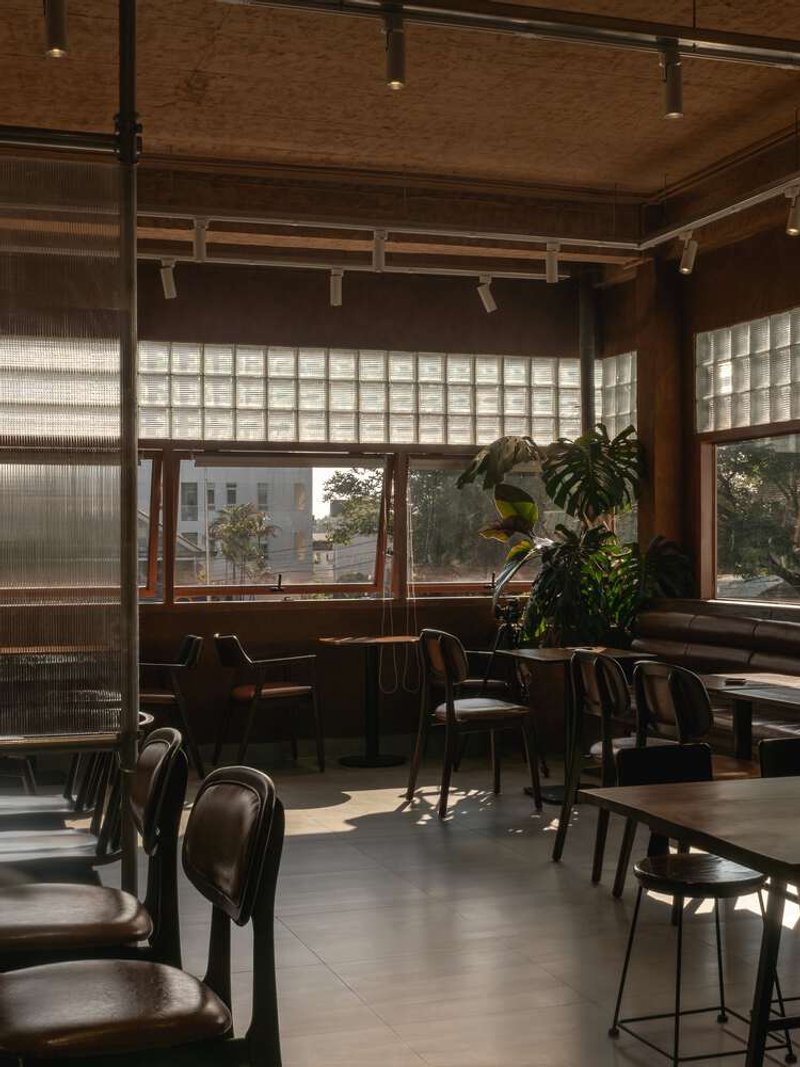
Central to the architectural concept is a material palette derived from the region’s distinctive red basalt soil, a defining element of the Central Highlands. The warm-toned finishes create a tactile, grounded atmosphere that echoes the natural landscape and reinforces the brand identity of Hồng Trà Hòa Bình. This narrative-driven approach strengthens the connection between architecture, location, and the experience of tea culture embedded in the café’s concept.
Softened Geometry and Lightness at the Rooftop
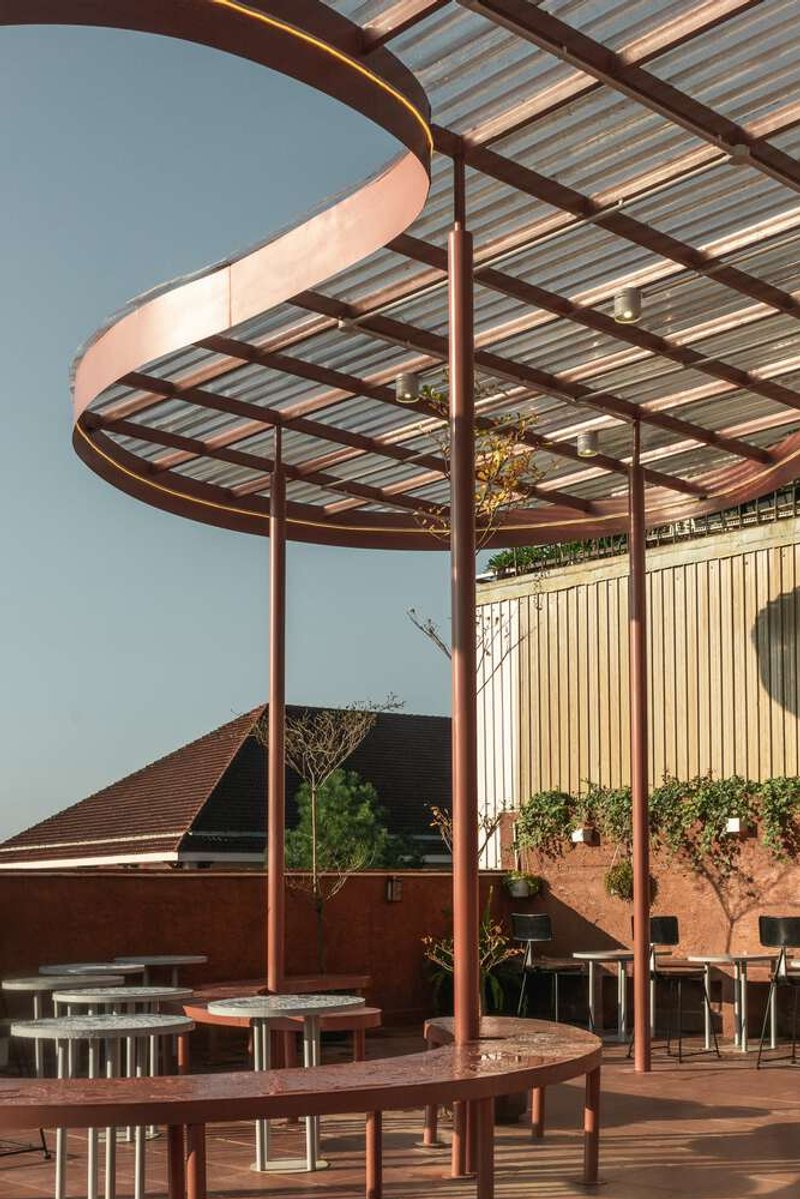
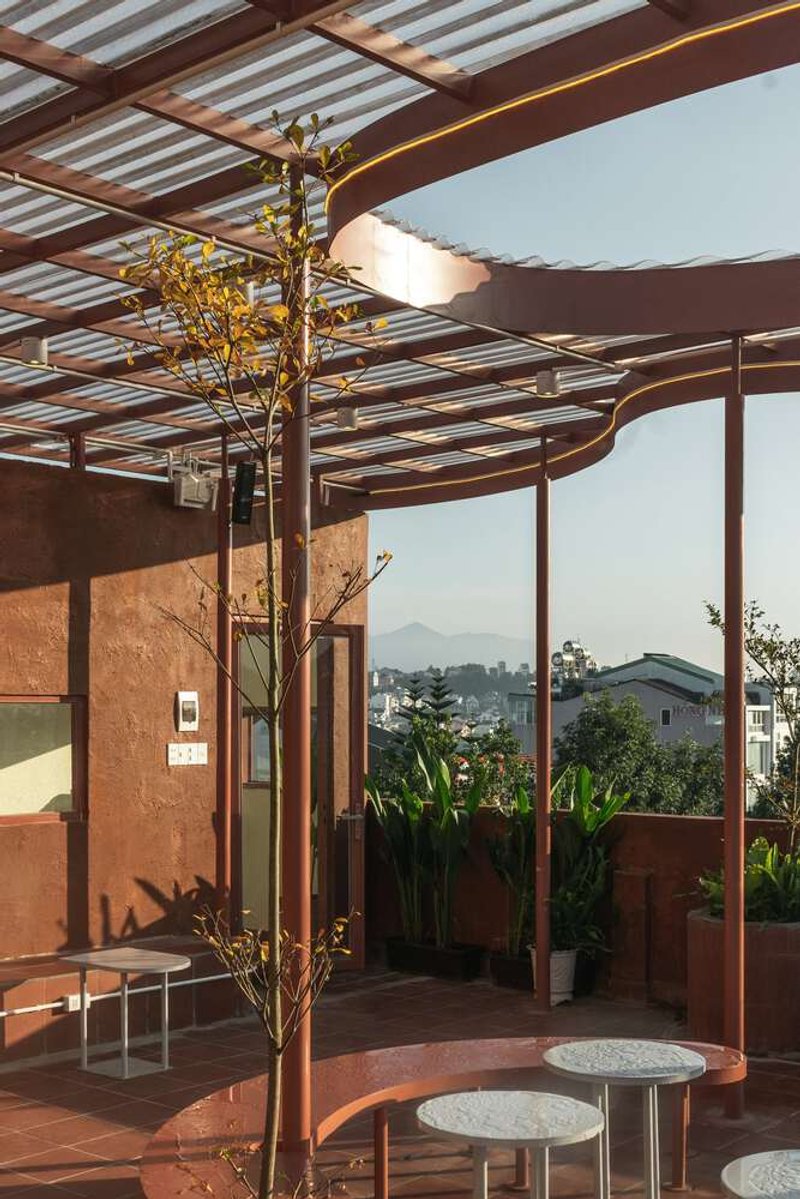
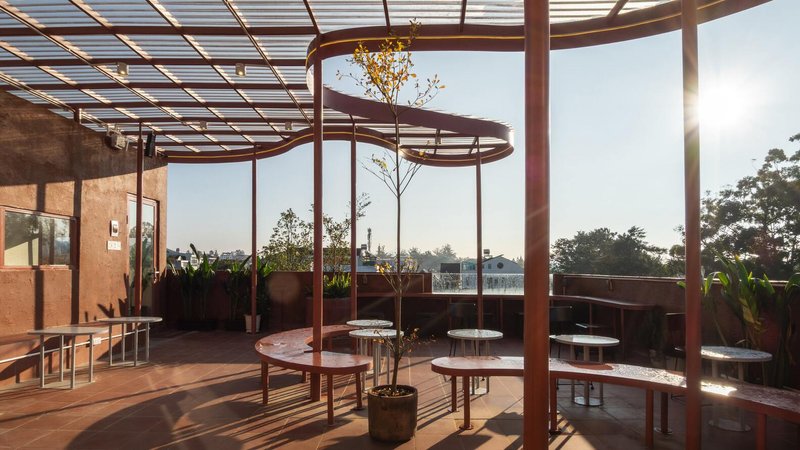
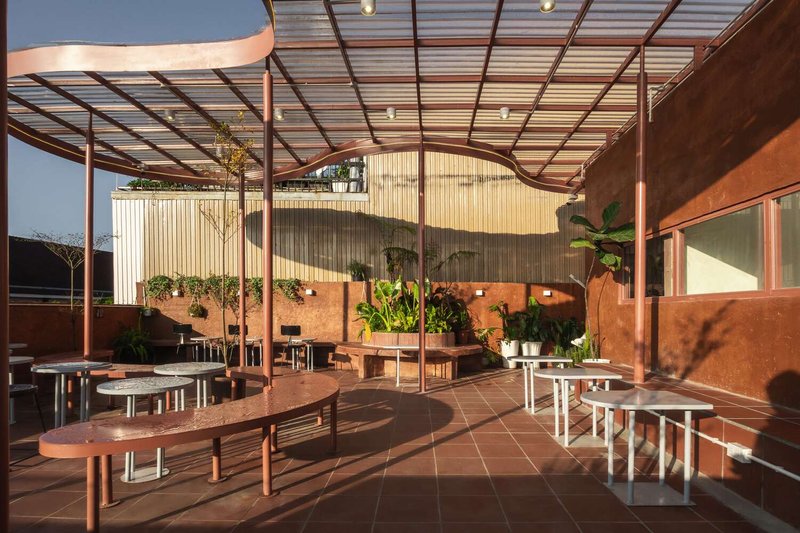
In contrast to the rectilinear lower floors, the rooftop takes on a gentler, more playful character. Circular forms introduce softness and visual relief, distinguishing the upper level from the structure below. A translucent, lightweight canopy filters sunlight while remaining open to Đà Lạt’s signature mist and rainfall. This space creates a subtle but meaningful connection to the climate and cultural rhythms of the highlands, offering an inviting, atmospheric setting for visitors.
Balancing Preservation and Transformation
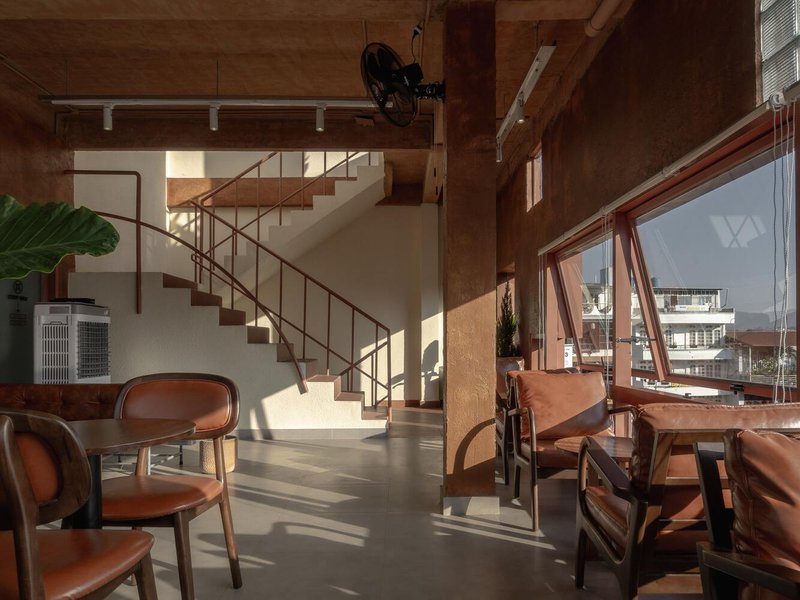
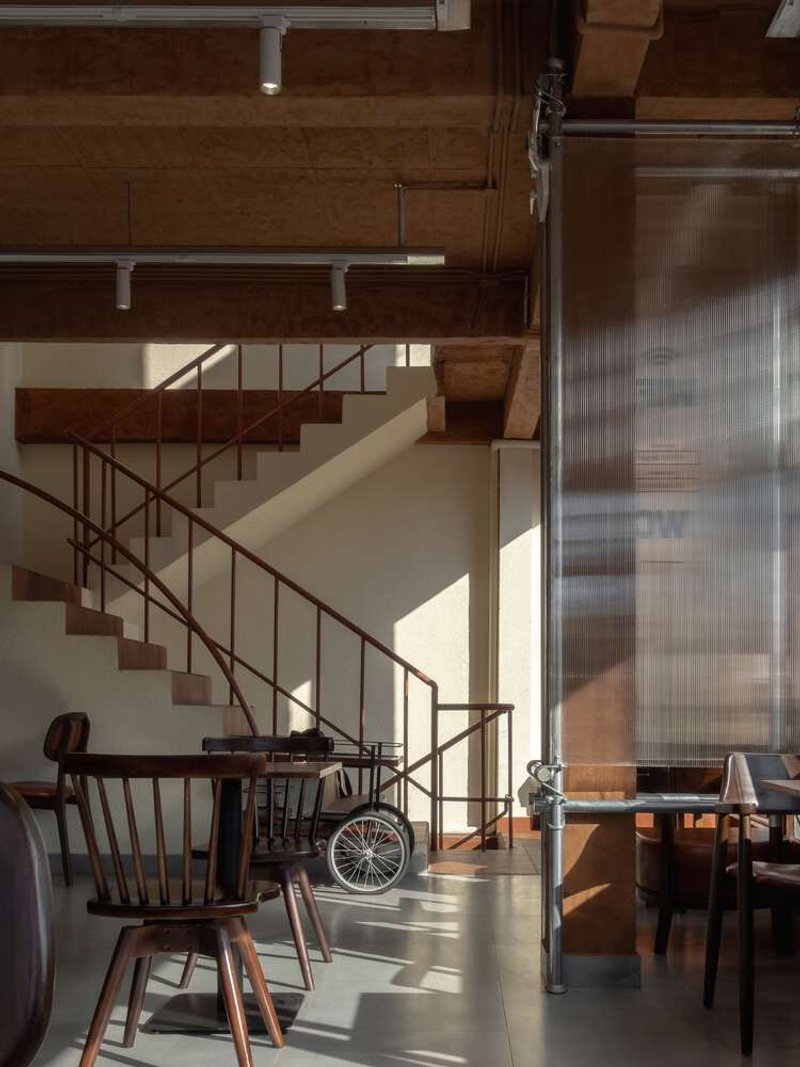
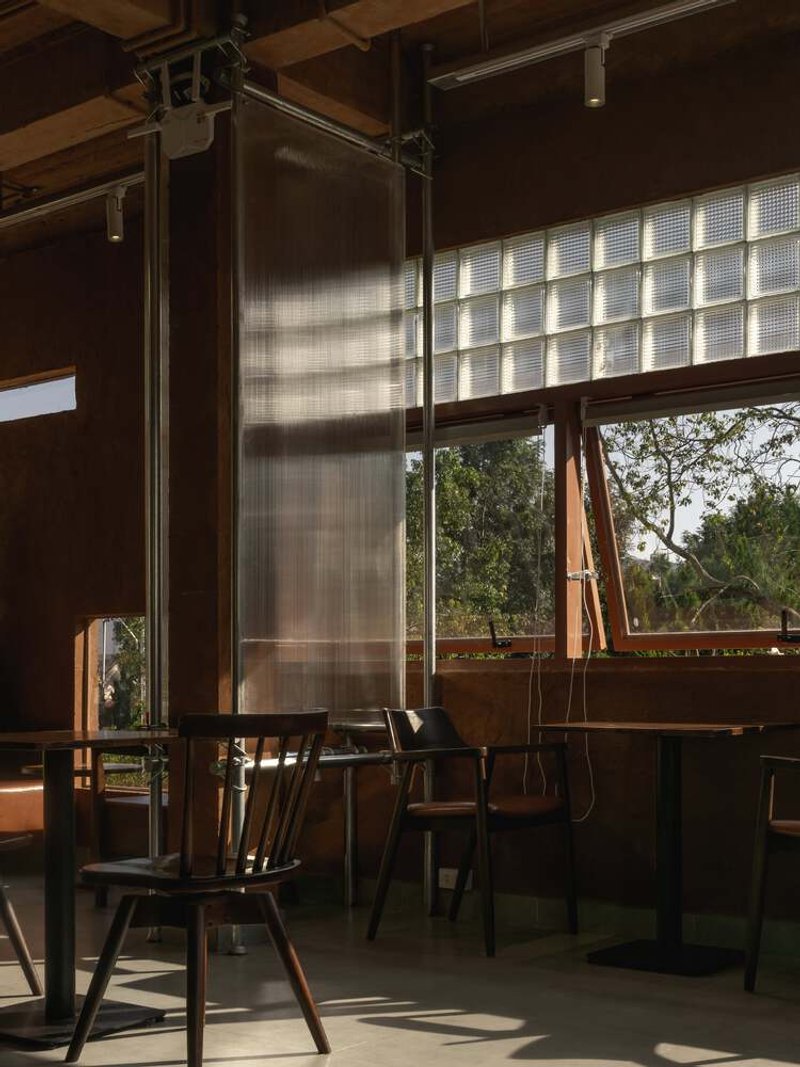
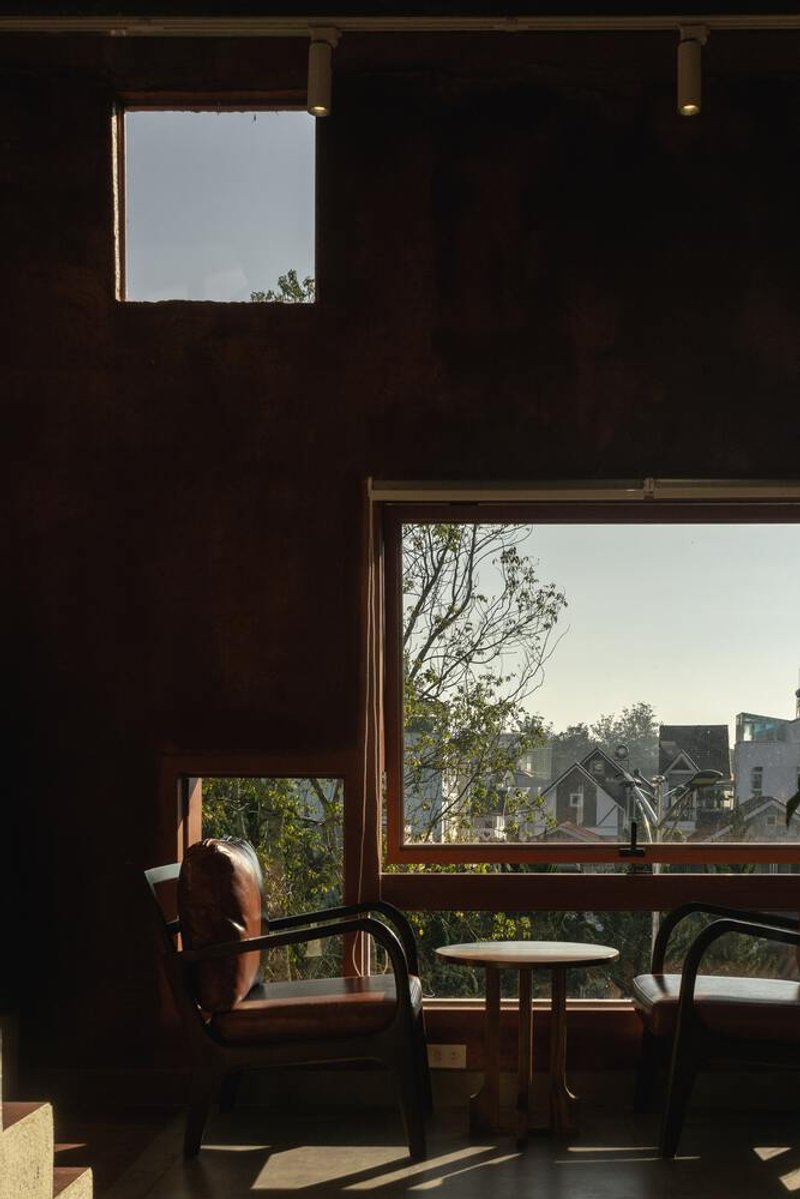
Throughout the project, xưởng xép balances restoration, adaptation, and refinement. The design avoids overwriting the old; instead, it reorganizes the familiar structure to support a new function while maintaining its architectural continuity. Interior spaces echo this principle through warm wooden elements, soft lighting, and framed views that highlight both the urban context and the internal spatial layers.
A Café Where Architecture and Culture Merge
Hong Tra Hoa Binh Bui Thi Xuan Cafe stands as a meaningful example of contemporary Vietnamese renovation architecture—where sustainability, local identity, and spatial storytelling converge. Through subtle interventions and regionally inspired materials, the project creates a revitalized space that not only serves its program but also celebrates the cultural landscape of Đà Lạt’s highlands.