
Interlock
Understanding the intent behind the design

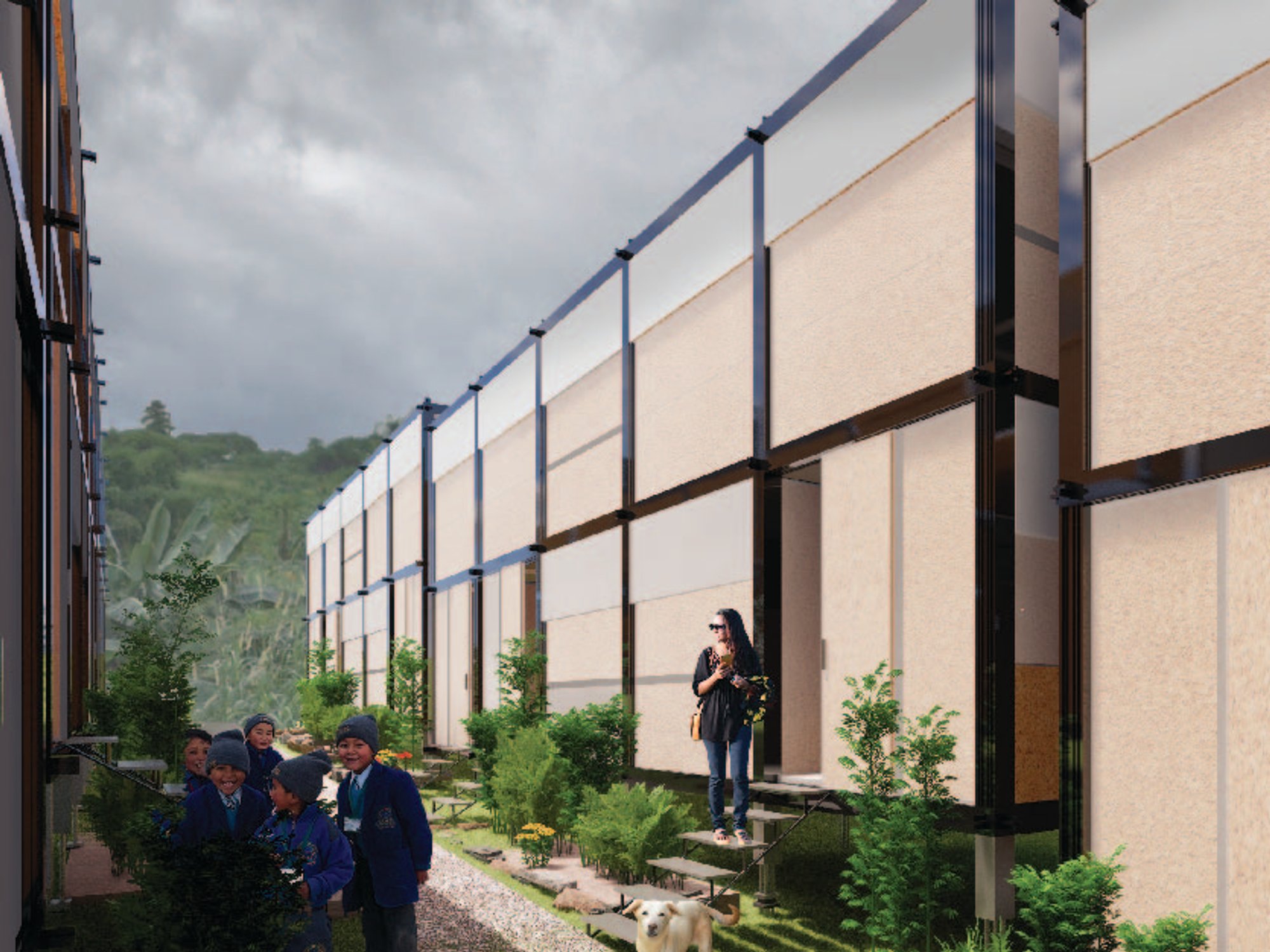
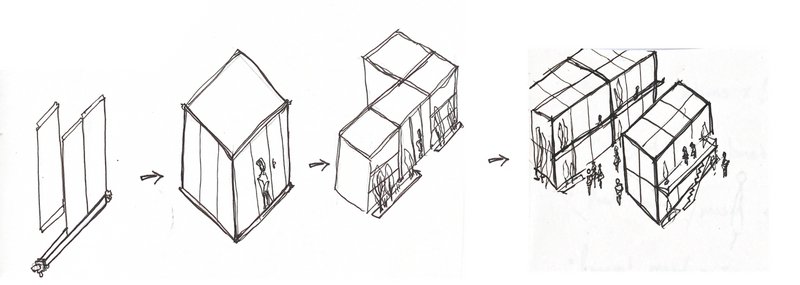
Does architecture attempt resilience only until after a disaster has occurred? The passage of time brings with it unpredictable events that require buildings and cities to grow and change. However, this change and adaptability is most important when architecture fails to protect people against natural disasters. When a building crumbles, architects must find solutions to rebuild and fortify resilient spaces that can reintroduce comfort to those affected. The design process began with the concept of interlocking elements as its core for formal and programmatic development. The intent was to create adaptable systems that could be easily executed and constructed by anyone, allowing any future resident to quickly assemble their home with ease. Through precedent analysis, sketches and 3D modeling, the modular interlock homes were developed with an examination of disaster housing. These cubic homes are composed of prefabricated elements that can interlock in varying arrangements, where components are organized into rooms, rooms built into homes, and homes are merged into communities.
Solving the Problem
Natural disasters like earthquakes are not only physically and tangibly damaging, but are also deeply traumatizing and emotionally impactful on those affected. To find the solution in designing emergency housing, it was understood that these homes are not only about providing shelter, but about creating welcoming and secure living spaces for those who have faced a great amount of loss and deprivation. The intimate and familiar design of the rooms is a result of the project's focus on creating units where residents do not feel alien in their new environment. In each unit, the kitchen has become the designated spot for family gathering, embracing the sentiment of cooking and eating as an important daily ritual in Filipino homes. Contrarily, the bedrooms are designed to be secluded private spaces that allow residents to maintain individual autonomy. On a larger scale, community and cooperation are the intentions set to address the needs of people who feel isolated and lack a sense of belonging. To achieve this, the typology of housing in the Philippines was studied, allowing the design to draw inspiration for its configuration of homes. The proposed site layout introduces multiple home blocks composed of similar unit types. Each unit relies on its neighbouring home in order to be structurally erected, resulting in small pockets of gathering within each block. Here, kids are given space to run and play and neighbours are able to interact and farm together within their shared or adjacent gardens. The blocks also include balcony spaces shared by two or three units where stronger relationships can flourish between immediate neighbours. These homes not only allow for intimacy but can be easily joined together with doors to the occupant's discretion and join multiple families together between two separate units.
The Module
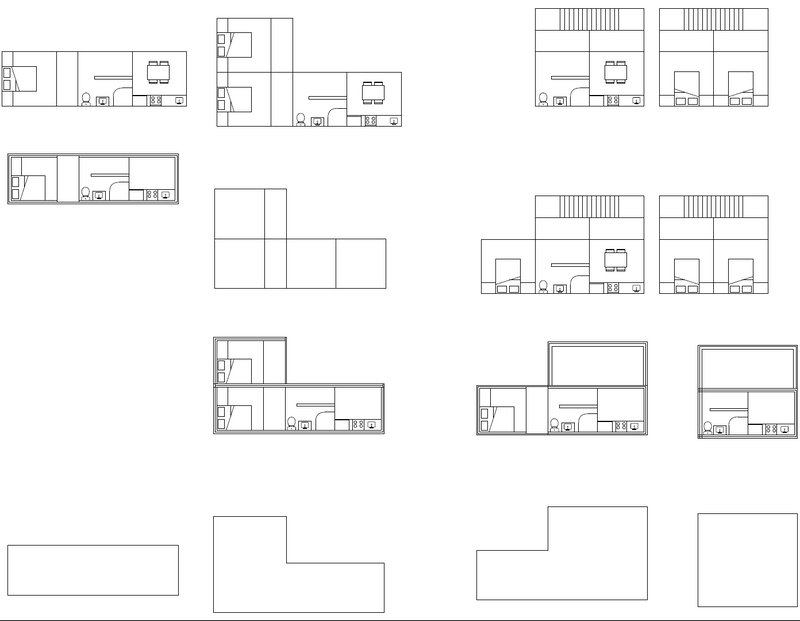
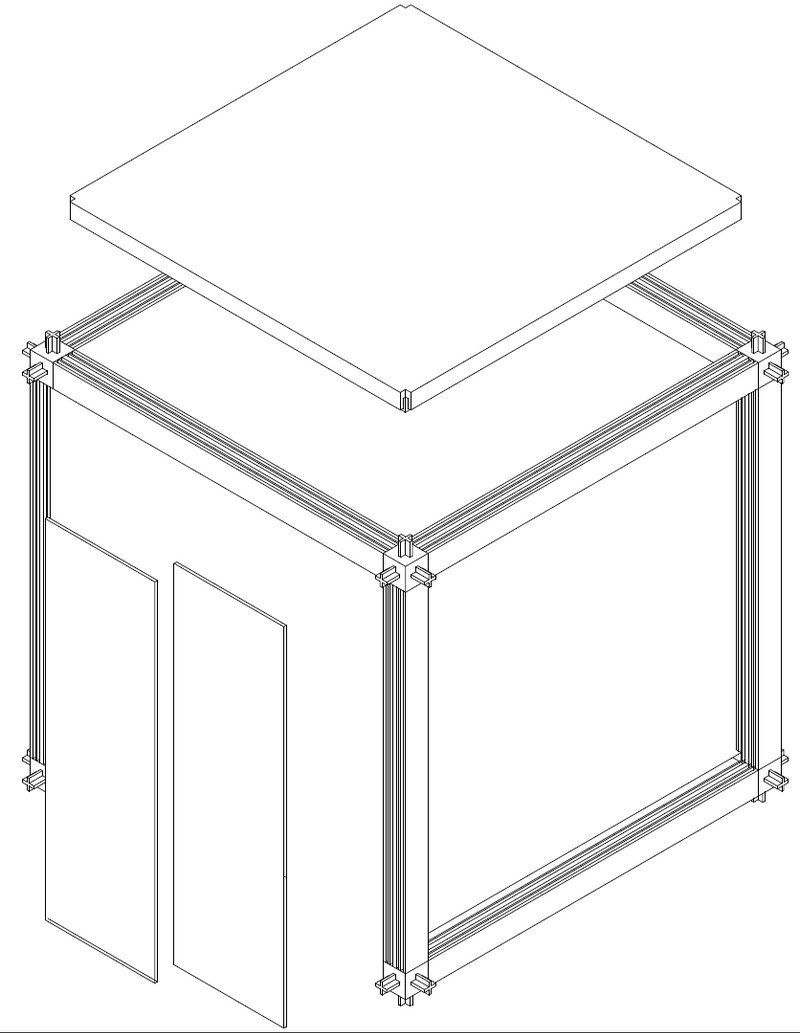
All aspects of the design have been carefully detailed and experimented in order to achieve the most flexibility in function. The aluminum structure is composed of a singular member type, dimensioning 3 meters in length. This aluminum element can be used as both a column or a beam as the grooves on its two sides determine the vertical or horizontal orientation of wall panels. The structural elements are then adhered with 3D printed plastic joints that allow for the framing to be stacked and for rooms to be connected. There are four types of panels used to construct enclosures between rooms, all with identical dimensions and connections. The standard panel is fabricated from cork encased in a translucent fiberglass shell. The second is a moveable door panel with the same structure as the standard panel. However, this panel is equipped with a handle and locking system and situates itself on the outer grooves of the structural members allowing it to slide back and forth. The third is a moveable window-type panel composed of only the fiberglass shell and installed with a fixed netting. While being configured in a horizontal direction, the window system is designed to slide up and down by being installed similar to the door panels. Lastly, the plumbing wall is a thicker panel that allows for plumbing systems to pass through from the kitchen and washroom out into the collection pods outside the units. The assembly also includes plastic floor and roof boards that latch onto the structure and self supporting staircases designed for two-story units. Using prefabricated and multifunctional components is how the design maintains modularity in its spaces. There is only one set of room dimensions which is the result of the goal to optimize stackability and conjunction in the interlocking systems. With this design, any room can be transformed to another. Wall panels can be replaced by doors panels, or completely removed to expand the size of the room.
Fabrication
Materials were chosen based on a few different factors. The very first question was the accessibility and ease of manipulation. In the primary stages of design, recycled materials and or rubble from the destroyed housing were chosen as the structural components and finishes of the modules. However, it was soon concluded that recycled and repurposed materials would be unreliable in quantity and quality. Thus, the focus shifted to production and performance of material types. To provide the needed strength, the structure was then transformed to steel. However, considering costs and mass of steel structures, aluminum became the final choice. Cork was chosen for its ability to insulate sound as well as its colour and texture. This material became the lightweight alternative to wood panels for its visual impact on the homes. To protect the cork against weathering and to create thermal insulation, translucent fiberglass was chosen. This material gives visibility to the inner cork panel and can be fabricated with grooves that allow the wall panels to be inserted into the structure.
Adaptation and Growth
Interlock is highly community-driven and designed in a way that understands the need for growth in the user population. It sets up a framework for different family sizes and enables people to build their homes based on their specific needs. The indicated plans and configurations in the designs are simply suggestions. The design is flexible to be assembled in many different ways. Wall panels can be removed and be replaced with door panels, thus allowing the residence to add an extra room if needed. Wall assemblies can be reconfigured to create plumbing access if an extra washroom is required. These concepts were important to develop as the specific needs of users can not be fully predicted and designers must not constrain them to a set of ideals. This is why it was important to integrate modular furniture as a part of the proposal. The wooden boxes can be used to serve a variety of functions based on how the spaces are desired. The modularity of the spaces and their furniture allows for the units to grow with the people. Additionally, the design is not limited to the given site. With simple alteration in the wall assemblies, the units can be suitable for use in all different climates and site conditions. The proposed adjustable footings allow for the units to be assembled on different elevations and anchored to uneven topography.
Living with Interlock
The human-centered design of Interlock takes the formal cube into modularity, Its provided framework transforms the concept of shelter into resilient homes. Where occupants are treated with independence and growth without the need for massive systematic alterations in design. People live to grow and change even after drastic environmental disasters. A house may get destroyed but a home follows the people.



Popular Articles
Popular articles from the community

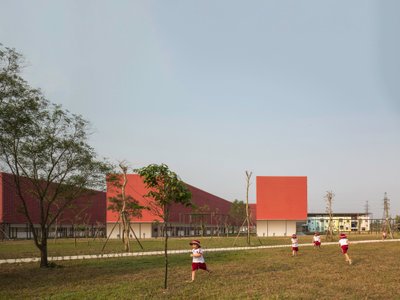
BHA Studio Wraps a 2,000-Student Campus in Terracotta Screens and Double-Layered Roofs in Central Vietnam
iSchool Quang Tri in Đông Hà uses perforated brick lattices and rainwater harvesting to keep 17,000 square meters cool and green.
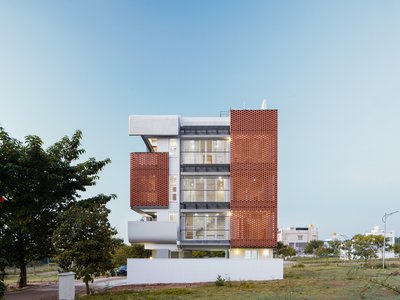
4site Architects Wrap a Bangalore Duplex in Brick Jali to Chase Every Ray of Light
House Belaku, meaning 'House of Light,' uses perforated brick screens and Vaastu principles to cool and illuminate a compact 290 m² home on the outskirts o
a2o architecten Builds a Concrete and Brick Wunderkammer in the Belgian Countryside
House Be in Flanders treats dwelling as a Romantic act, threading rooms along a central axis that opens gradually toward a restored landscape.
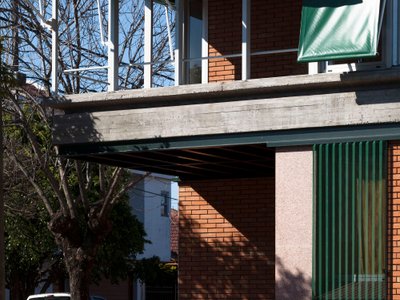
Francisco Cadau Converts a 1970s Corner House in Campana into Four Compact Dwellings
A light steel-and-timber upper volume lands on a brick base, turning a single Argentine home into a tectonic study in railroad vernacular.

Similar Reads
You might also enjoy these articles

The Rhythm of Seasons
A Farmers' Market Connecting Nature and the City

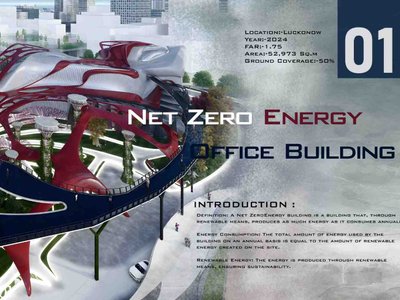
More Than a Building-Designing a Living System
More Than a Building-Designing a Living System
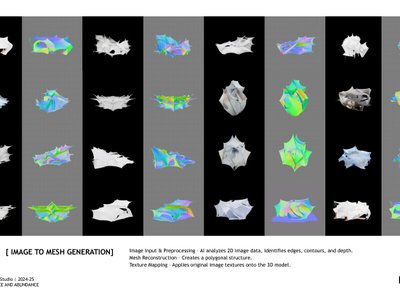
Base Beyond
DESERT COMPOUND ARID: TOURISM OF ABSENCE AND ABUNDANCE


Explore Architecture Competitions
Discover active competitions in this discipline




The International Standard for Design Portfolios


The Global Benchmark for Architecture Dissertation Awards


The Global Benchmark for Graduation Excellence


Challenge to reimagine the Iron Throne
Comments (0)
Please login or sign up to add comments
No comments yet. Be the first to comment!