Juzen Chemical Corporation Head Office: A Modern Workplace Rooted in Toyama’s Culture and Landscape
A contemporary headquarters in Toyama merging nature, culture, and collaborative workspaces with flood-resilient design, glass façades, wooden louvers, terraces, and community-connected landscaping.


Reimagining Corporate Architecture in Toyama, Japan
Designed by KEY OPERATION INC. / ARCHITECTS, the Juzen Chemical Corporation Head Office is a transformative workplace campus that bridges pharmaceutical innovation, regional identity, and employee wellness. Located between Toyama’s Jintsu River and the Fugan Canal, the 1,885-square-meter headquarters consolidates offices, meeting spaces, and social areas into a cohesive headquarters environment inspired by nature, local heritage, and collaborative culture.
Completed in 2023, the project strengthens Juzen Chemical’s presence in Japan’s renowned pharmaceutical region, while shaping a workplace that connects employees with the community and surrounding environment.
A Headquarters Designed Through Employee Participation
At the heart of the design is people-first architecture. The concept evolved through extensive employee workshops across multiple generations and departments, emphasizing:
- Spontaneous communication
- Collaborative work modes
- Quiet zones for focused tasks
- Comfortable social and refresh spaces
This feedback informed a spatial strategy that supports seamless transitions between solo work, teamwork, and relaxation, creating a dynamic work environment that responds to diverse needs.
The architectural narrative draws inspiration from Toyama’s Tateyama mountain range and the historic Kitamae merchant boats, once carriers of medicinal ingredients—a symbolic link to the company’s origins.
Contextual Form and Flood-Adaptive Architecture
Elevation for Resilience
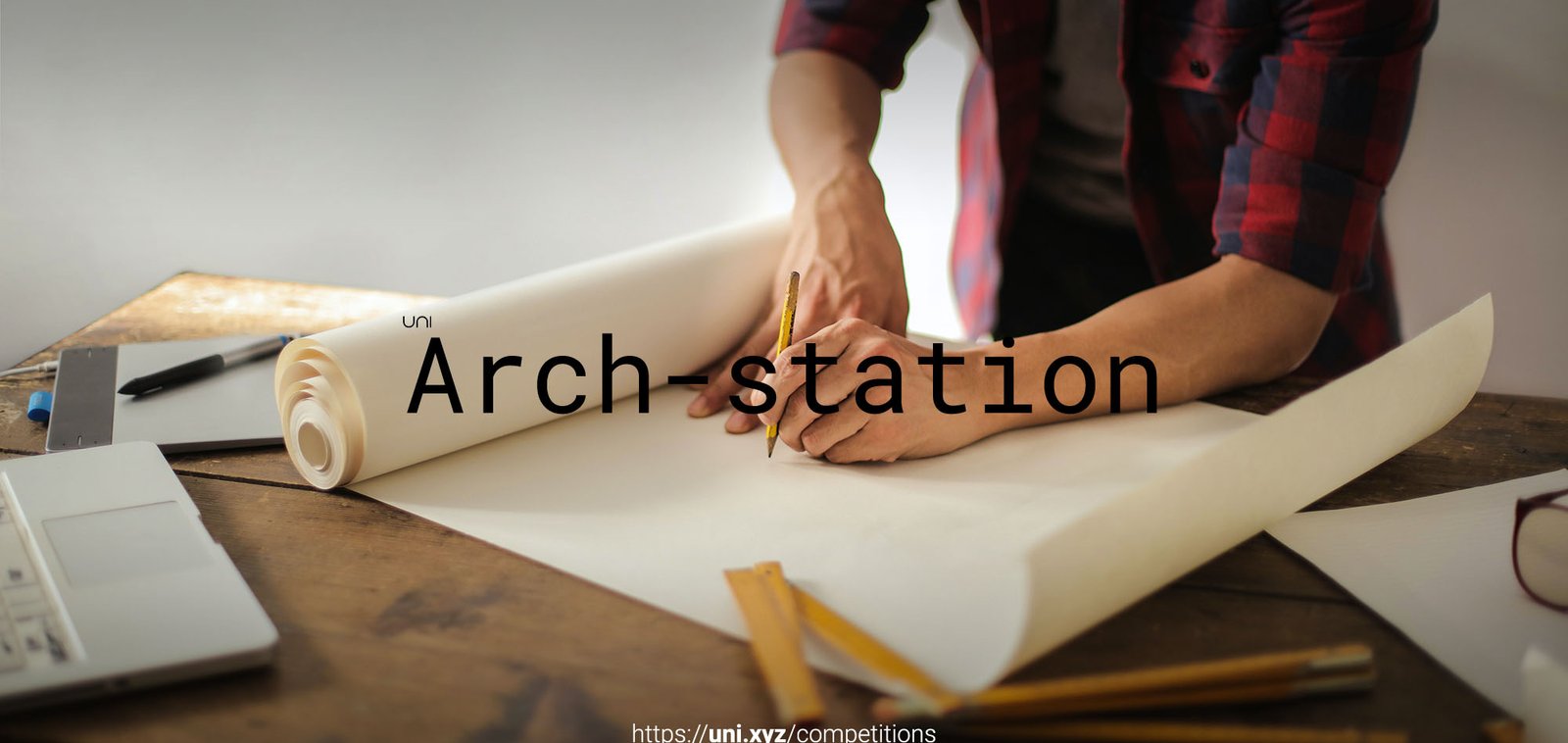
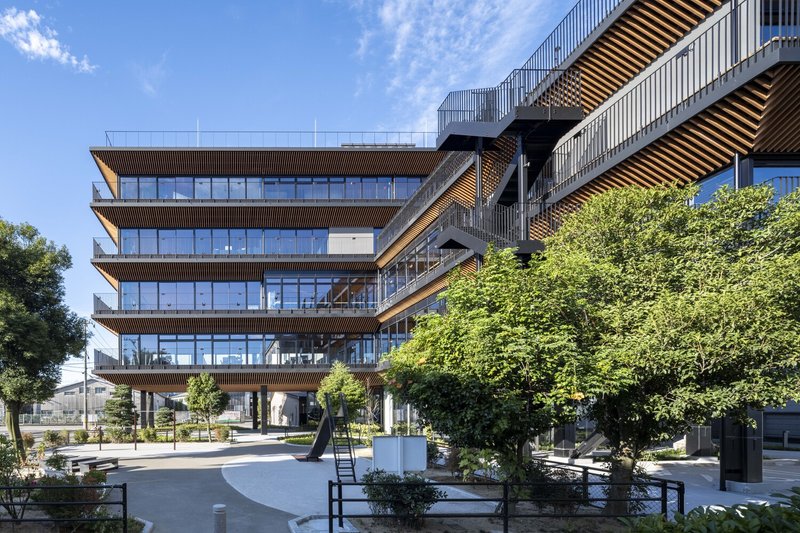
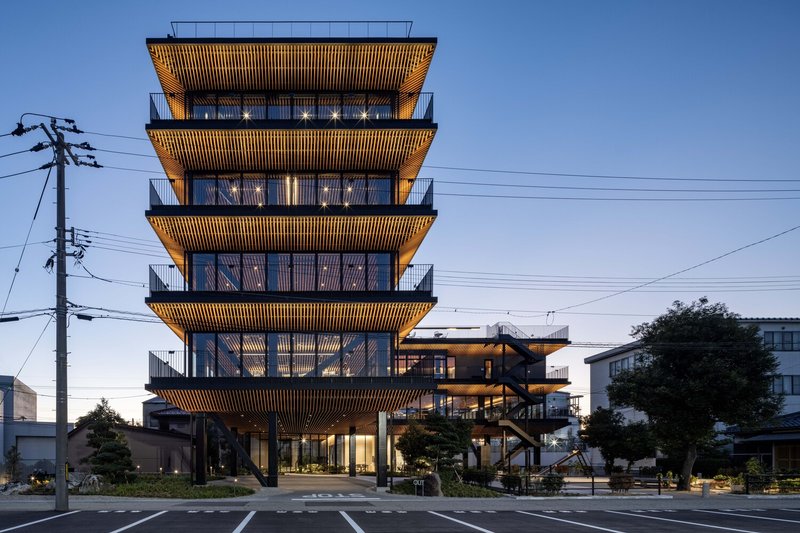
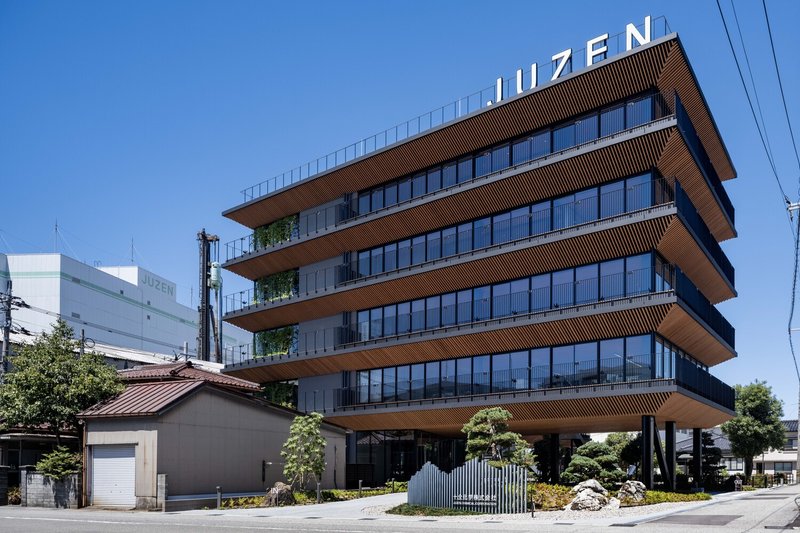
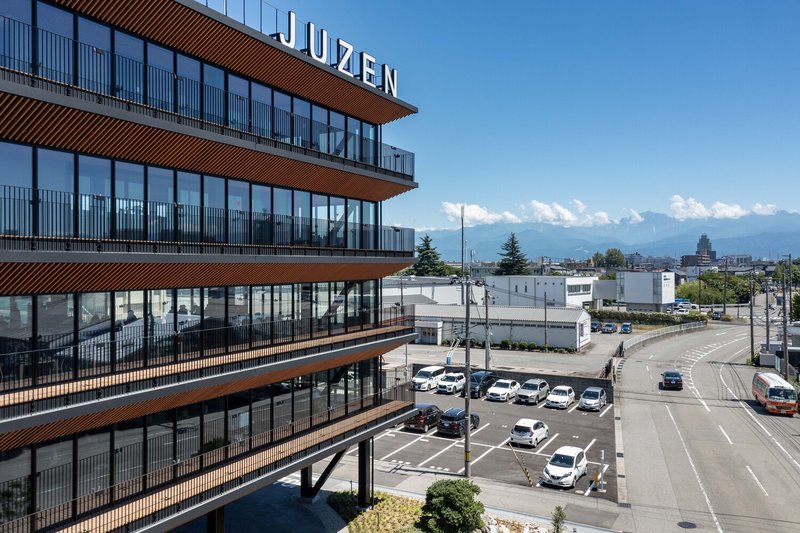
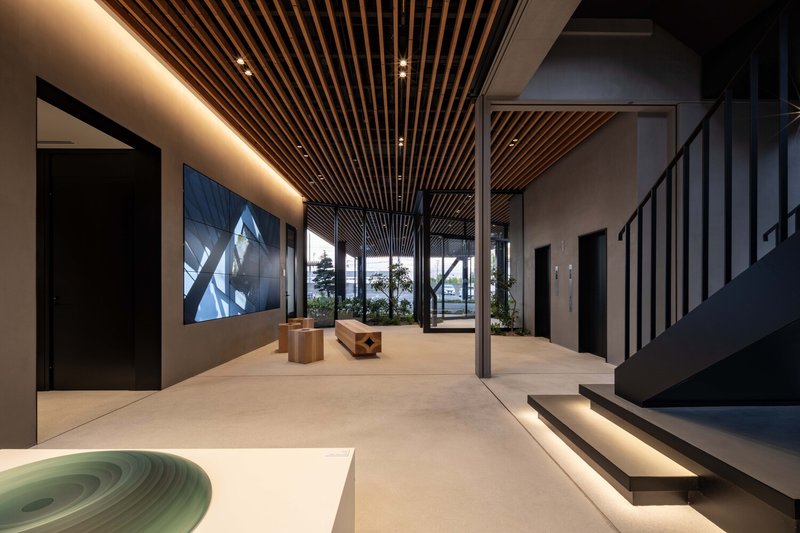
Located in a river floodplain, the building lifts principal office areas above the ground level. The piloti design creates an open ground floor accommodating reception, gallery functions, and breezeway car access—balancing resilience and openness.
Urban integration
To protect sunlight for a neighboring residence and embrace the adjacent park, the design adopts an L-shaped volume with a flat south façade. This gesture transforms the park into an extension of the workplace, fostering a shared community green space and natural visual relief.
Layered Program Across Five Levels
First Floor — Piloti & Community Interface
- Reception + company gallery
- Car breezeway access
- Public-facing arrival environment
Second Floor — Operational Core
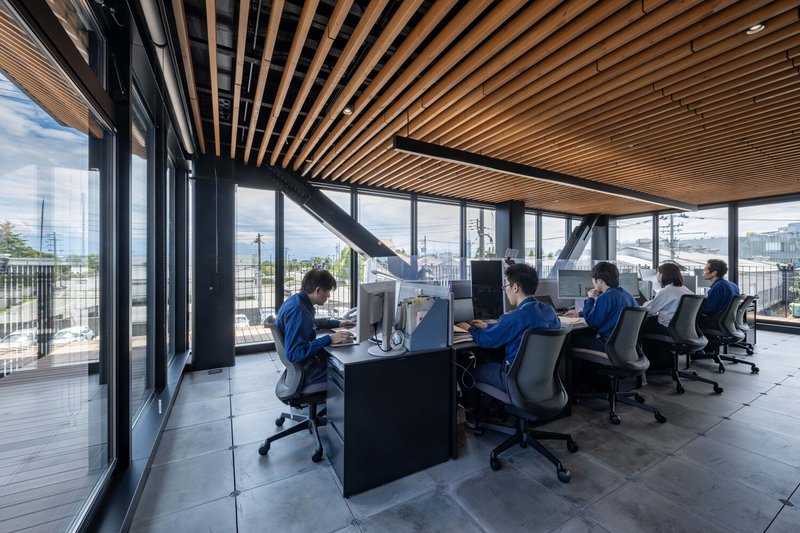
- Office suites for major departments
- Work lounge and informal meeting areas
Third Floor — Shared Social Level
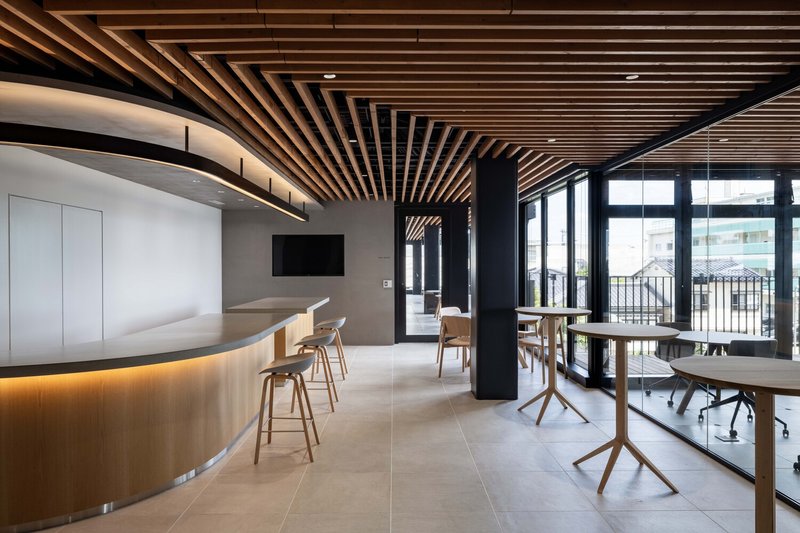
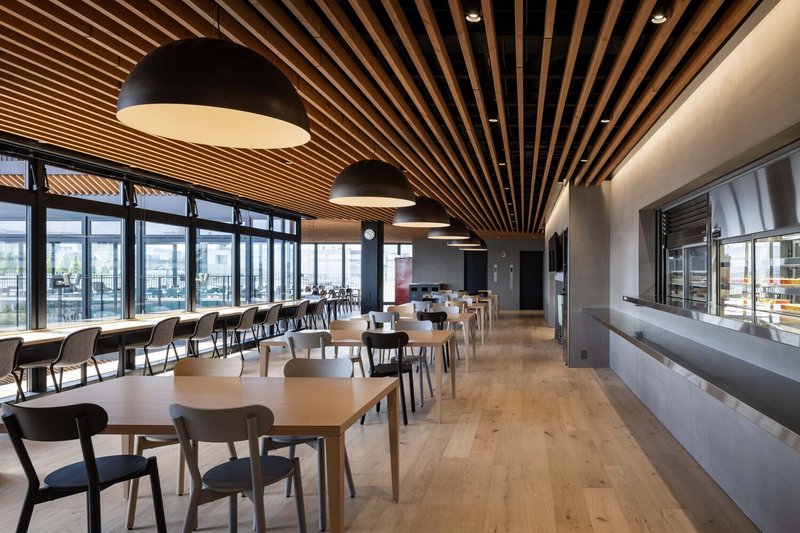
- Cafeteria connecting office and factory staff
- Social hub promoting cross-team interaction
Fourth Floor — Leadership & Well-Being
- Executive workspaces
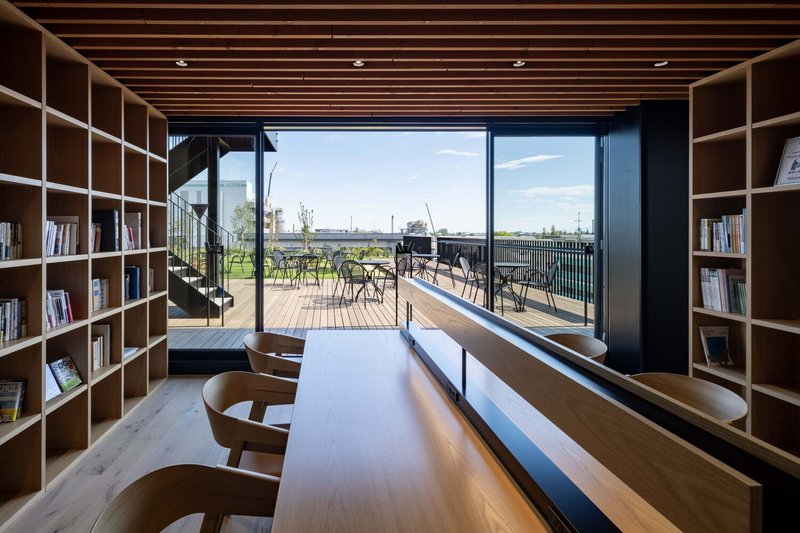
- Library & executive lounge
- Rooftop terrace with mountain views
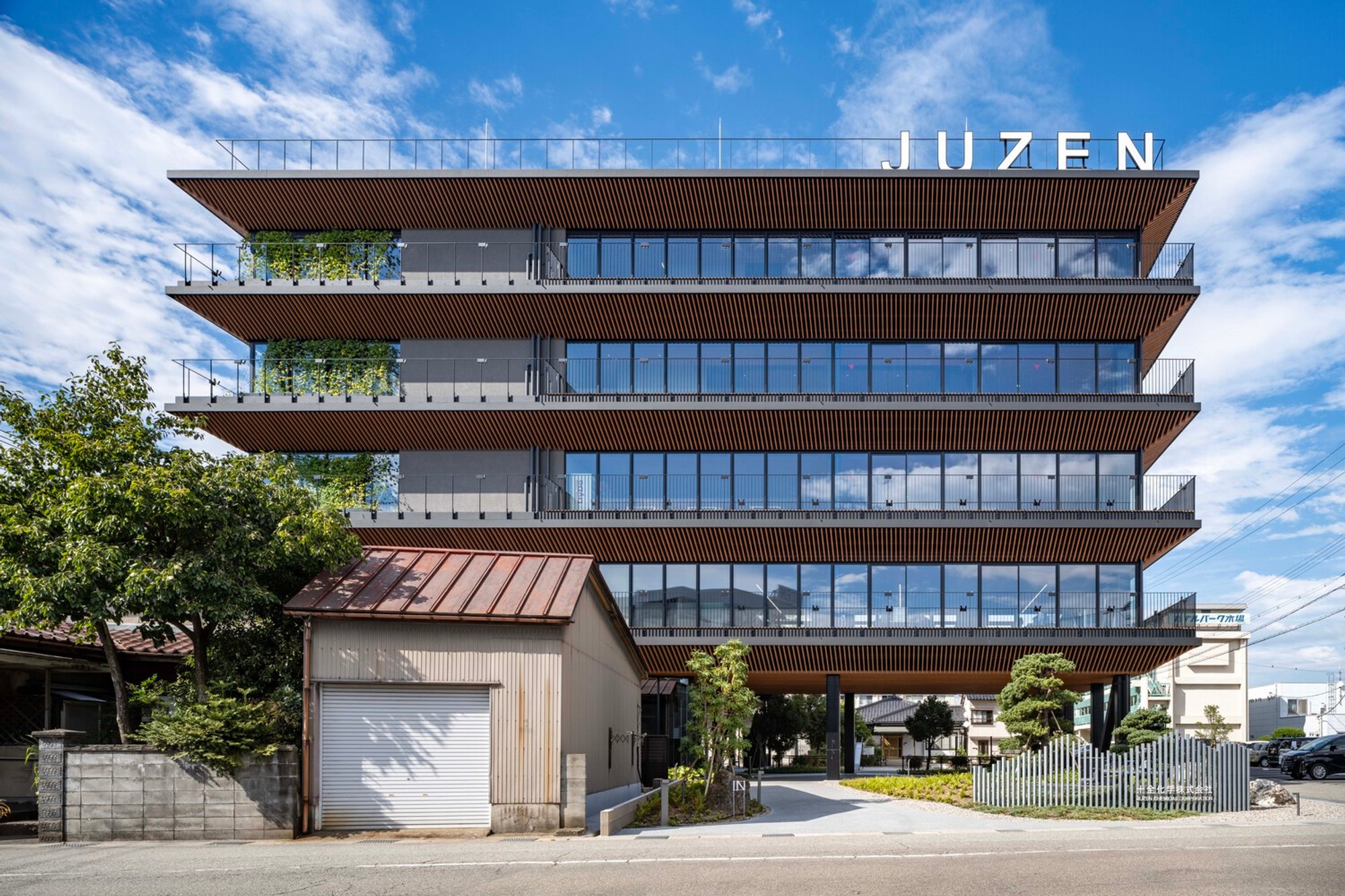
Fifth Floor — Panoramic Conference Facilities
- Meeting rooms with sweeping vistas
- Strategic positioning for corporate presentations & events
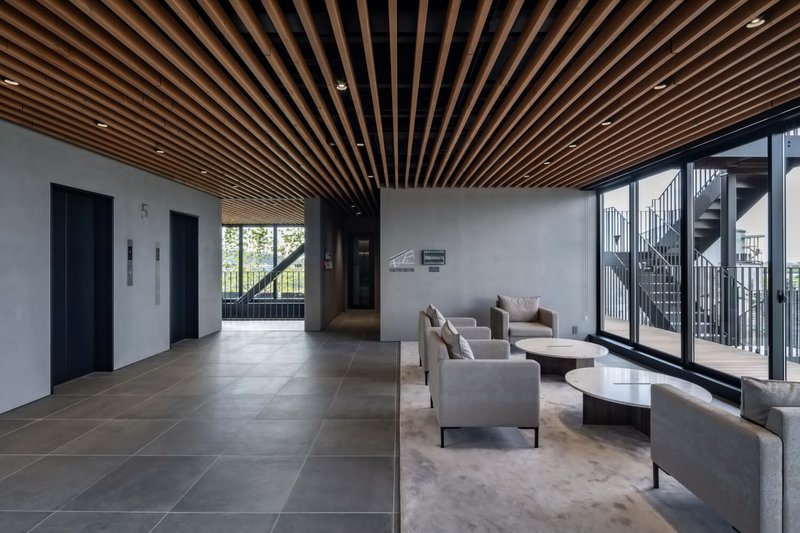
Vertical circulation is efficiently organized at the hinge of the L-plan, reinforcing clear movement and workplace clarity.
Materiality and Architectural Expression
The building’s steel frame and full-glass façade provide transparency and visual lightness, softened by natural elements:
- Wrap-around balconies for outdoor breaks & solar control
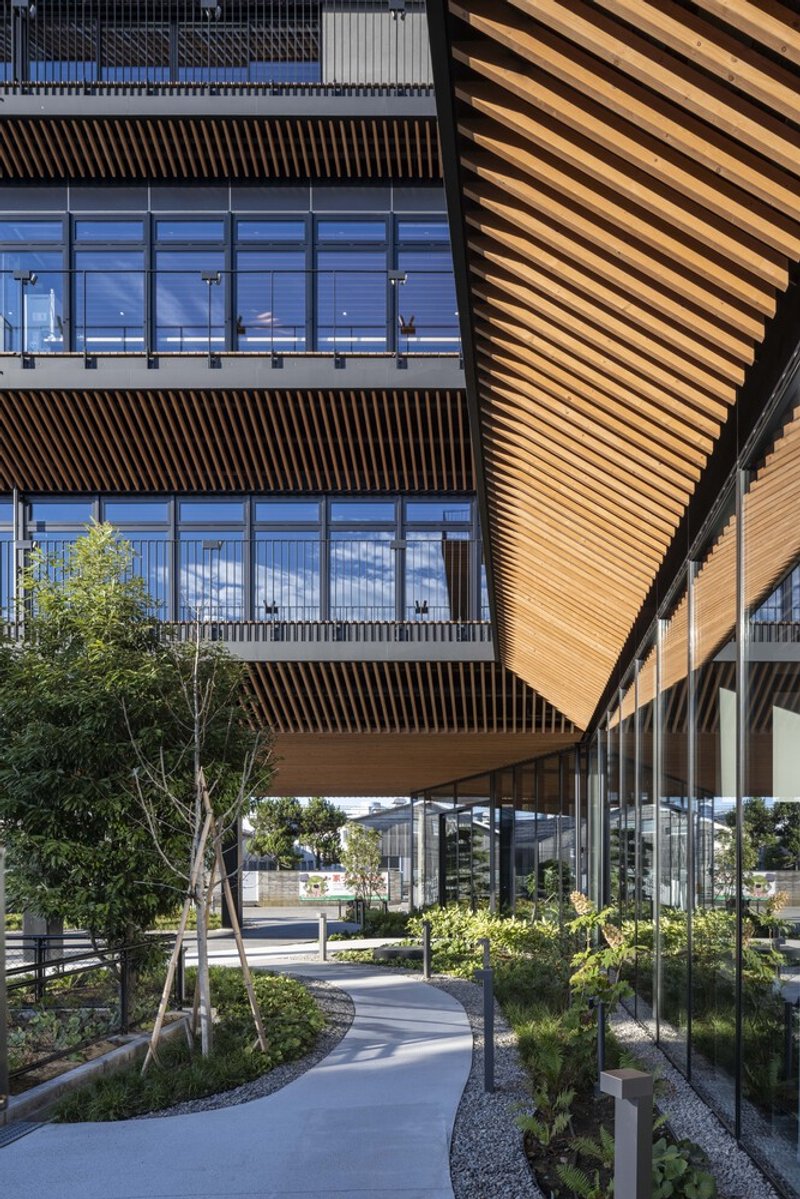
- Continuous pine louver ceilings extending indoors–outdoors
- Soft lighting highlighting wood textures at night
These louvers recall:
- Shrine roof eaves
- Kitamae ship hull forms
Merging cultural memory with a warm, modern workplace aesthetic.
Sustainable Landscape & Passive Environmental Design
Green courtyards & medicinal gardens
Beneath the lifted building, the landscape features:
- Local plant species
- Medicinal herbs referencing the company’s pharmaceutical roots
- Alpine groundwater irrigation used for snow-melting pathways
This creates a space where employees, residents, and visitors can connect with nature.
Climate-responsive strategies
Balconies and terraces support passive comfort through:
- Exterior shading for summer heat
- Daylight penetration in winter
- Natural ventilation harnessing Toyama’s breezes
By integrating ecology and engineering, the building enhances energy efficiency, comfort, and seasonal adaptability.
A Workplace Rooted in Culture, Nature, and Community
The Juzen Chemical Headquarters stands as a thoughtful example of corporate architecture that prioritizes human connection, environmental stewardship, and regional identity. It provides a calm, collaborative atmosphere while celebrating the soul of Toyama—its mountains, waterways, craft traditions, and medicinal heritage.
All photographs are works of Shigeo Ogawa