
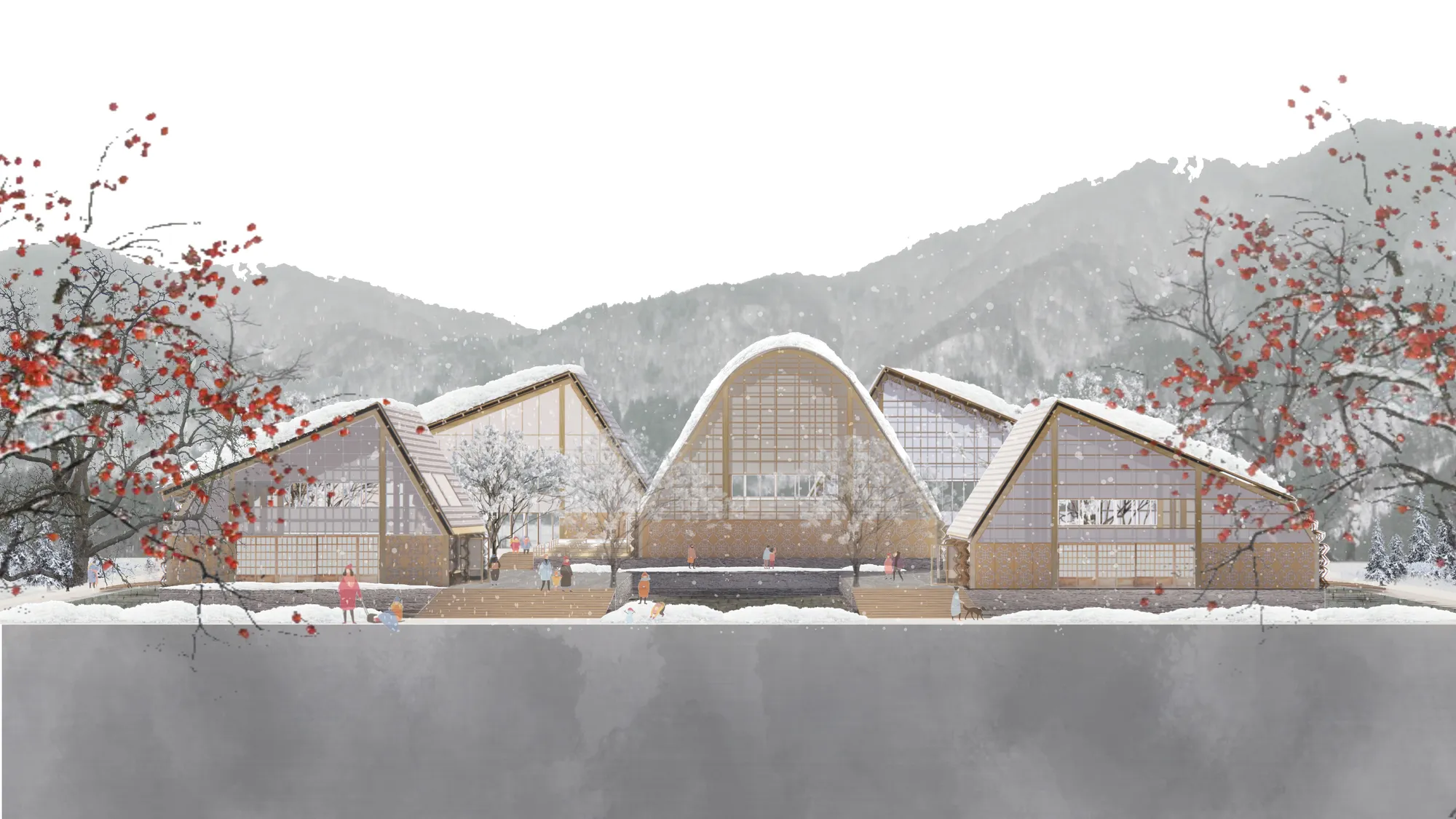
Kibo no Sakura Cultural Center
Concept and Design Process
The name of our project is Kibo no Sakura. Kibo meaning Hope and Sakura meaning Cherry Blossoms, the national flowers of Japan. Both these words really drive our project. We started our project by looking into the change of population in Shirakawa Go Village. Ever since it became a UNESCO Heritage Site there has been a decrease in population. One reason behind that is because residents are leaving as there houses are being turned into shops, hotels, restaurant in order to accommodate for the tourists. Another reason is that the younger population aren't getting enough education or job opportunities in the village. Moreover with older and younger residents leaving, the transfer in knowledge about the culture of the village has reduced greatly.
To remind the people of the culture we have created Kibo no Sakura center. It is designed in a way that it mimics the village in organization and makes the culture of the village more permanent so residents especially the younger population and the tourists are able to be more involved and are able to experience more of the beautiful culture of Shirakawa. It had also brought more job opportunities in order to increase the population.
Our goal is to keep the craftsmanship of the village as much as we can by using local materials like oak trees, ropes and thatches. Along with the traditional techniques to use silk and paper as interior decoration and sun device. Wood is our primary material to the respect of the history way of gassho houses. Its also convenient and efficient because local people are familiar with fabricating wood from the nearby forests for centuries. It’s been used for the post beam system and our tectonic system for our project. Secondary material will be mainly glass as it serves the purpose of blending landscape inside out, bring the best view at all times and maximize one’s experience with the village through out the seasons. We also used polycarbonate for the facade and roof on the south east side of the building to filter some sunlight heat. The combination of the polycarbonate and glass allows our module to cast shadows on the floor meanwhile. We played with transparent and translucent quality to align with our tertiary material. Tertiary material will be silk, paper and thatch that interchangeable through out the year depends on the weather. We also made a special roof technique. It will be made by ceramic tile that has different color to form a Japanese Sakura painting. The reason behind is that we want to keep the consistency of our tectonic module from interior to exterior. The roof being flat is to prepare for the heavy snow, however when it comes down to human eye level we can see a Sakura painting from a distance. There for even the tourists comes at winter, the roof still remains summer Sakura atmosphere to serve its best for them. To revel the traditional material and the techniques, we protect the local heritage and attracts more attention from local people willing to stay and grow their culture, as well as for tourist to directly witness it.
The different angle in roof slope is being controlled, it depends heavily on our tectonic system and the size of the foot print, so you can see they are parallel to each other. Four of them points towards cafe implies a point brings all the building together, in respect to mimic the gassho zukuri meaning "constructed like hands in prayer". As it is one of the most important characters to reflects the villagers close neighborhood.

Popular Articles
Popular articles from the community


Conexión: Biophilic Design Reimagines High-Rise Living in Hong Kong
Conexión reimagines high-rise living in Hong Kong through biophilic design, green facades, shared spaces, daylight, water and nature within.

Riyadh For All: Intergenerational Urban Design for Active Aging in Rabat
Riyadh For All reimagines urban design in Rabat with intergenerational co-living, adaptive courtyards, and Moroccan cultural exchange today.

The Musturak Paradise: Senior Living Architecture for a Connected Future in Temara, Morocco
The Musturak Paradise reimagines senior living architecture in Temara via private homes, social spaces, culture, community, and shared care.

Lunar Spiral: Space Architecture Shaped by the Mathematics of the Universe
Lunar Spiral reimagines space architecture through Fibonacci geometry, lunar regolith, levitating habitats, and self-sustaining Moon living.

Similar Reads
You might also enjoy these articles
The Rhythm of Seasons
A Farmers' Market Connecting Nature and the City
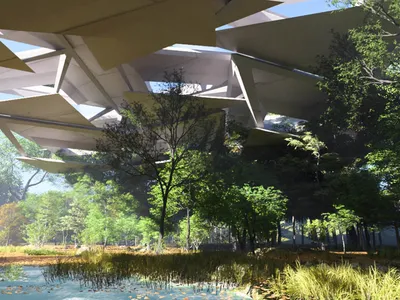

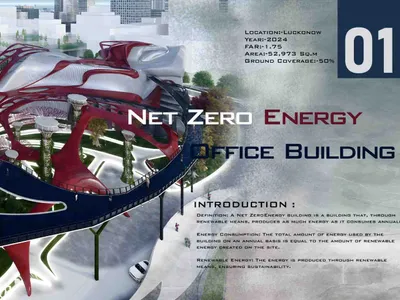
More Than a Building-Designing a Living System
More Than a Building-Designing a Living System
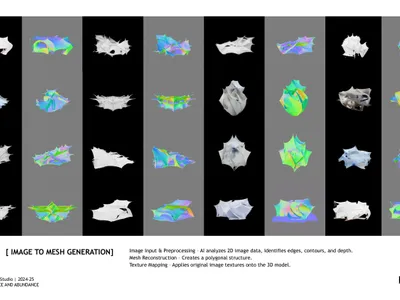
Base Beyond
DESERT COMPOUND ARID: TOURISM OF ABSENCE AND ABUNDANCE

Explore Tetsuo Kobori Architects Competitions
Discover active competitions in this discipline




Challenge to reimagine the Iron Throne


Photograph architecture without architects


Illustrate the lost glory of Angkor Wat - Render Challenge


Bring back Drive In's
Comments (0)
Please login or sign up to add comments
No comments yet. Be the first to comment!