
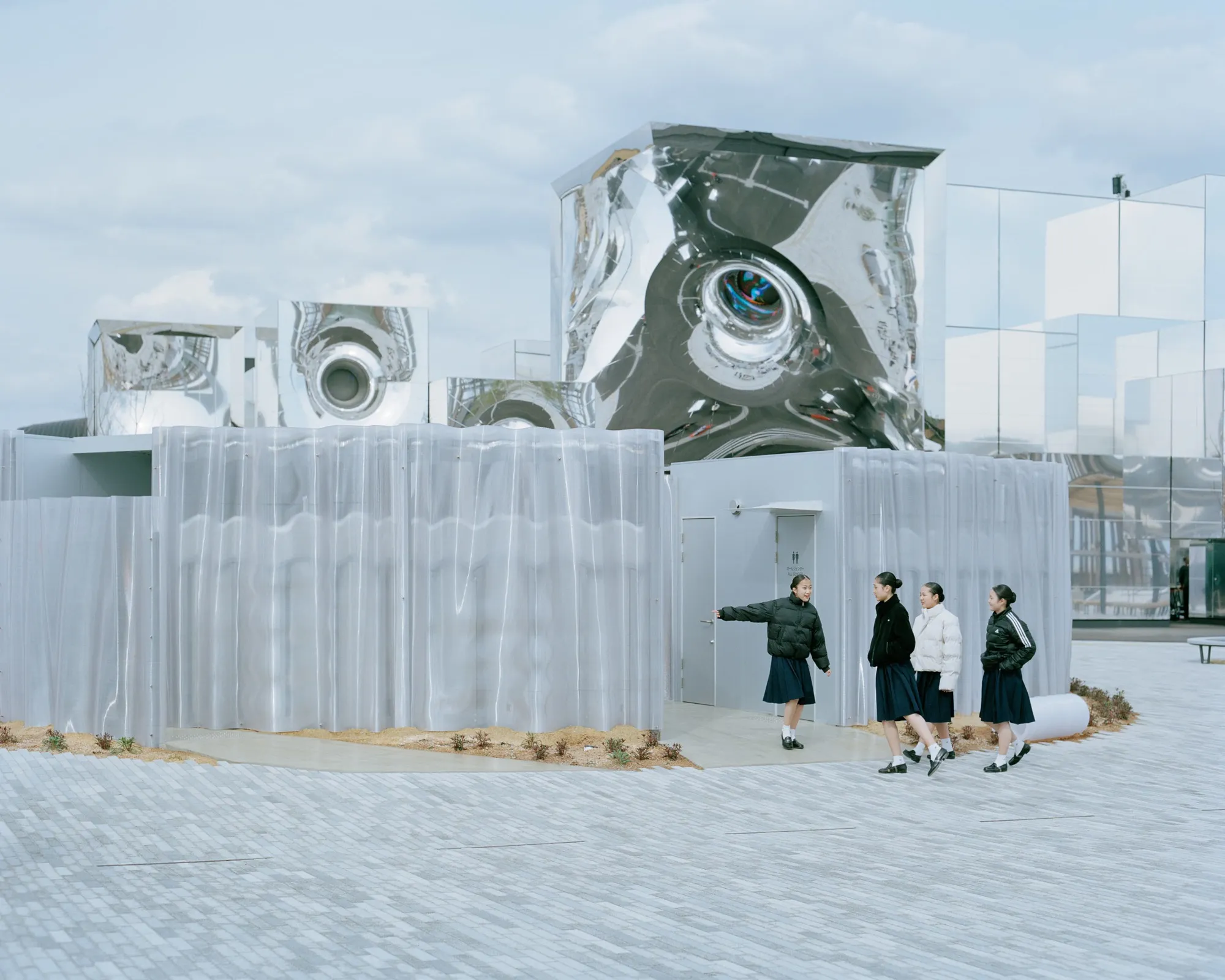
Mirage in Yumeshima by PONDEDGE + f a r m — Architectural Reflection of Light and Transience at EXPO 2025
Mirage in Yumeshima by PONDEDGE + f a r m creates a translucent, reflective pavilion blending 3D printing, light, and architecture at EXPO 2025.


A Vision of Ephemeral Architecture at EXPO 2025
Designed by PONDEDGE and f a r m, Mirage in Yumeshima redefines the concept of a public restroom by transforming it into a poetic architectural installation for the upcoming EXPO 2025 in Osaka. Conceived as a piece that “disappears” into its surroundings, the project blurs the boundary between structure and environment — offering an experience of light, reflection, and transience rather than focusing solely on built form.
Rather than competing with the iconic landmarks surrounding it, Mirage in Yumeshima takes a subtle approach — an architecture that dissolves into light and atmosphere, allowing the focus to remain on the ever-changing phenomena of its environment.
Design Concept: Architecture as a Mirage
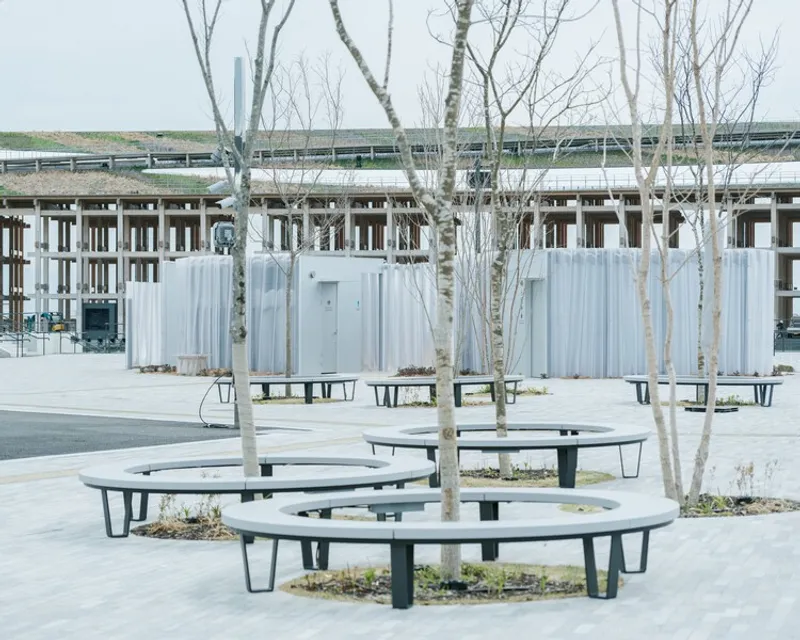
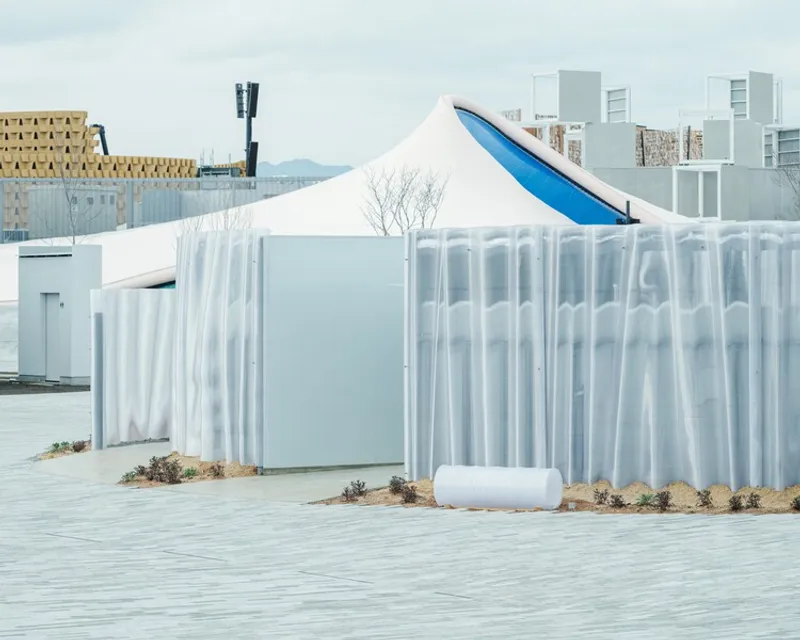
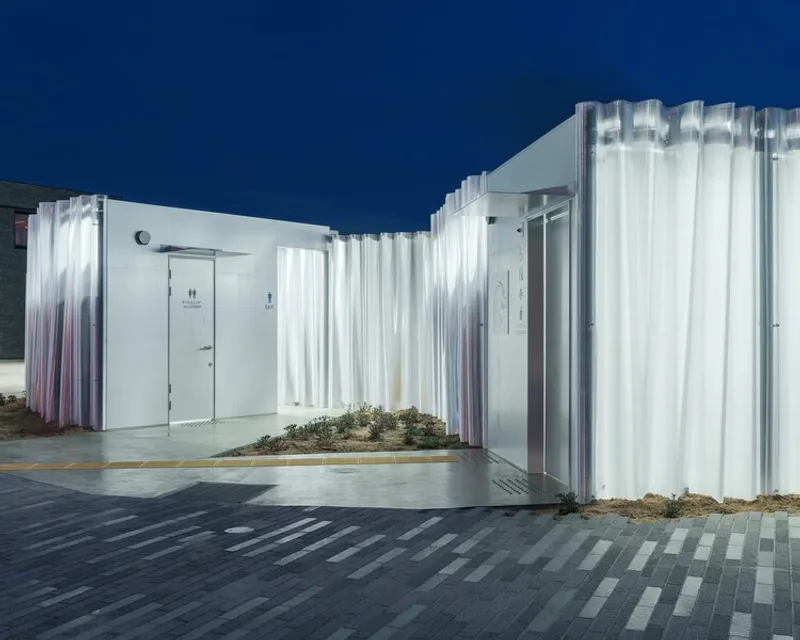
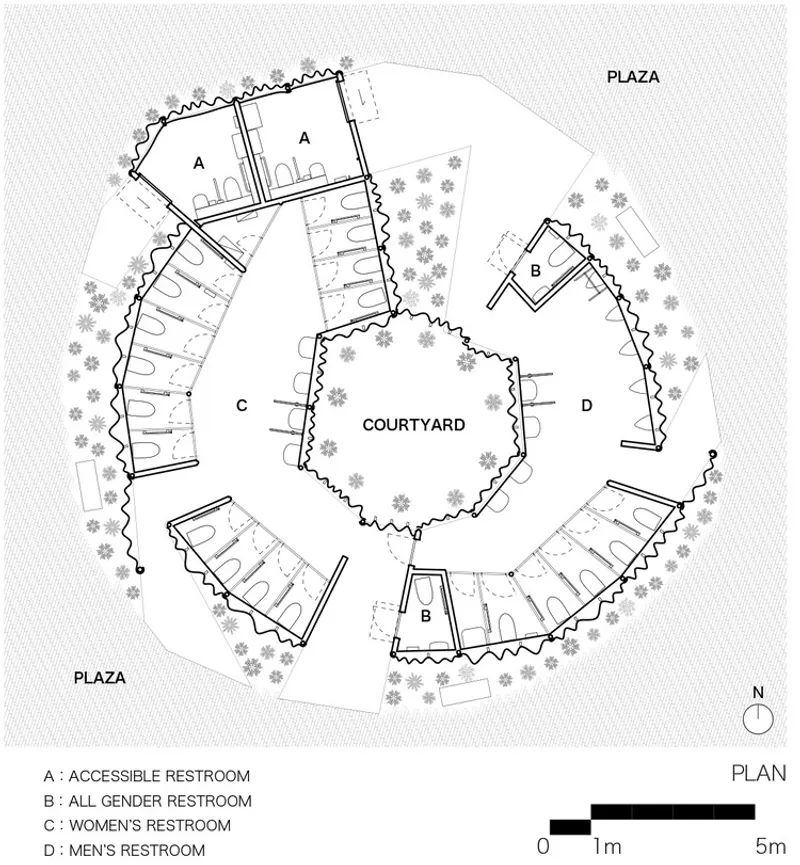
The structure unfolds in a web-like radial plan, shaped by steel framing and covered with 3D-printed polycarbonate panels. These panels flexibly adapt to the curvature of the circular layout, creating an organic, almost fluid appearance.
Unlike typical 3D-printed architecture, which often appears rigid or monolithic, the architects opted for a panelized system — merging digital fabrication with traditional construction techniques. This hybrid approach allows the form to retain both architectural integrity and craft precision, accommodating dimensional variations while maintaining elegance and lightness.
The polycarbonate skin possesses both translucency and reflectivity, transforming the restroom into a structure that captures and mirrors its surroundings — sky, light, and human movement. The result is a pavilion that shimmers, almost vanishes, and reappears like a mirage on the horizon.

Material Strategy: Reflectivity and Transparency
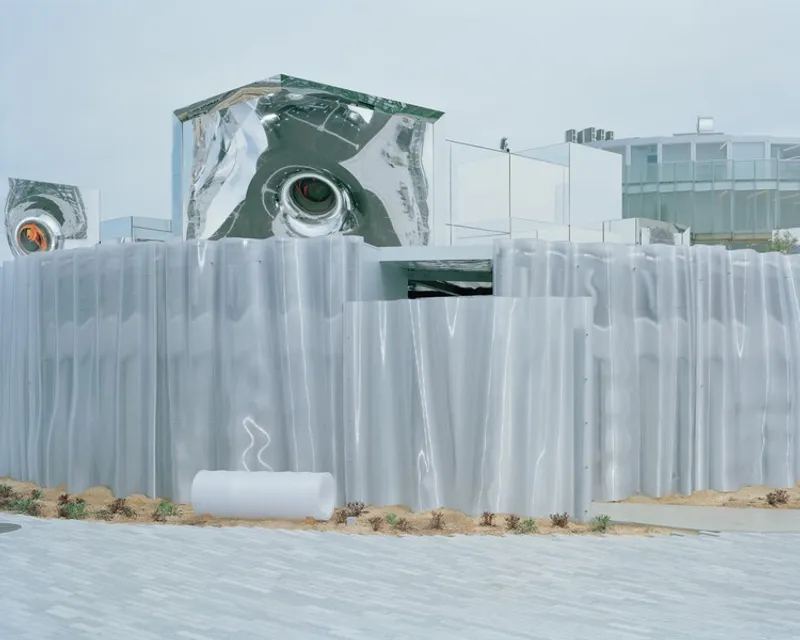
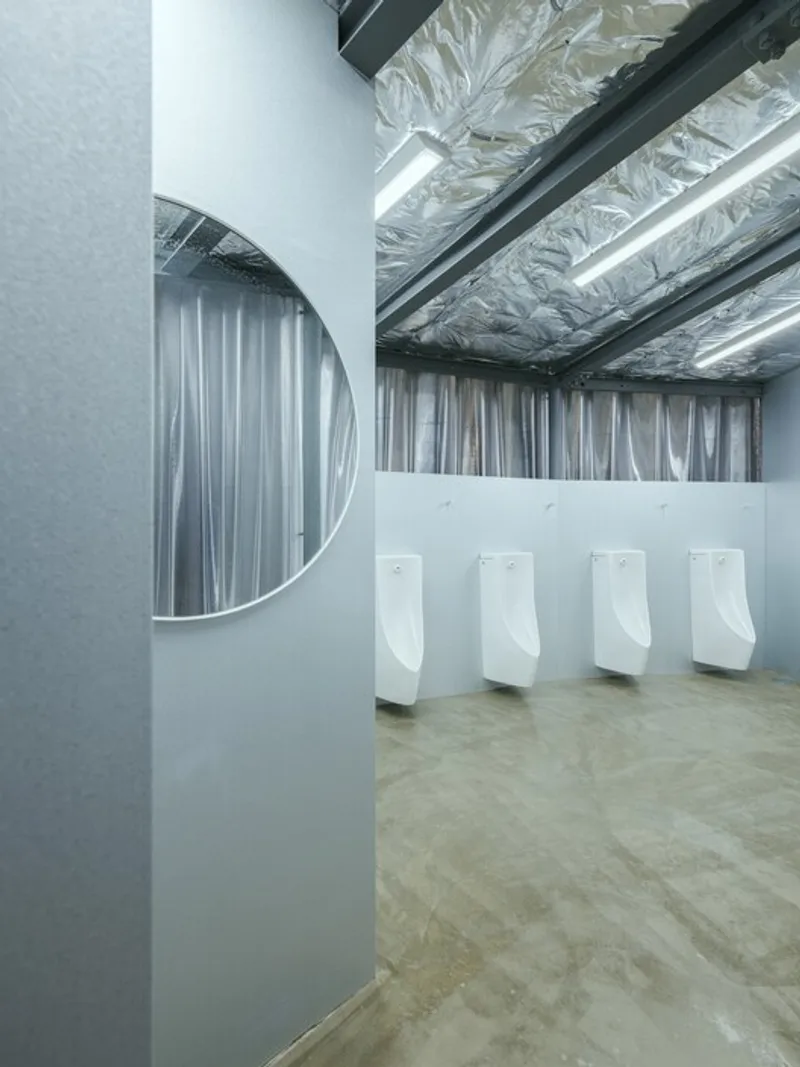
The perimeter panels were designed with an integrated coping edge, completely concealing the roofline. This detail enhances the illusion of a floating volume. The polycarbonate surfaces, oriented along the circular direction, contrast with the radial Galvalume steel panels used for interior walls and partitions.
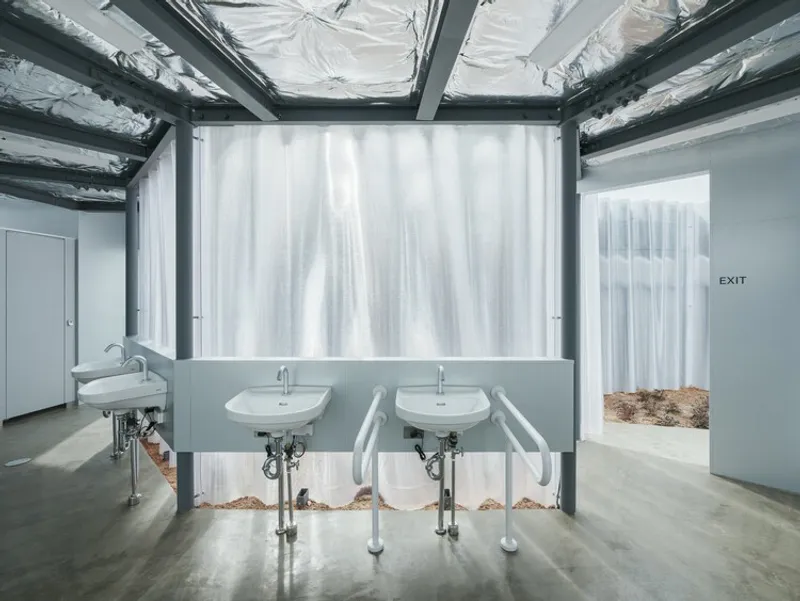
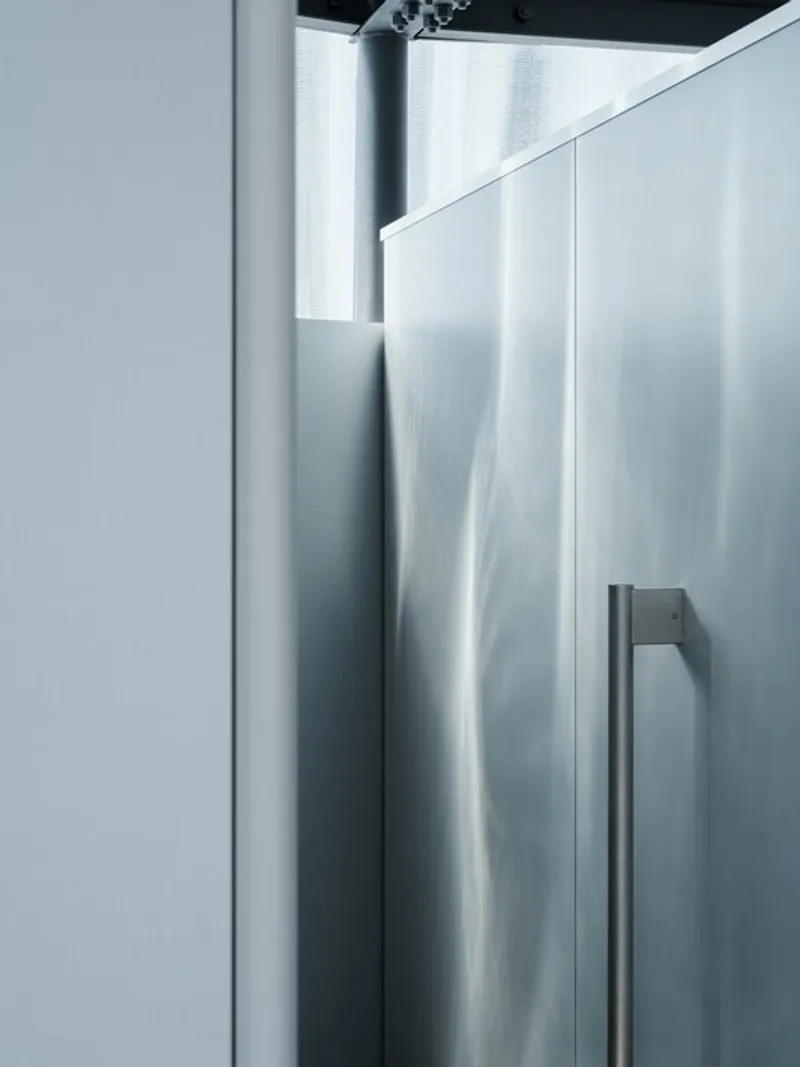
This interplay of materials produces a unified yet dynamic atmosphere — the Galvalume steel reflects diffused daylight softly, while the 3D-printed polycarbonate panels refract and scatter light across the curved geometry, creating an immersive glow throughout the day.
Inside, soft aluminum insulation forms a gentle, luminous ceiling. The accessible restroom features dual layers of 3D-printed walls, producing a fully illuminated plane of light that enhances privacy without enclosing the user in darkness.

Embracing Imperfection and Transience
One of the most remarkable aspects of Mirage in Yumeshima lies in its acceptance of fabrication irregularities. The wave-shaped panels naturally warp during the 3D printing process, but instead of correcting these imperfections, the architects celebrated them as part of the design language.
These subtle distortions catch light differently from every angle, creating a living façade that constantly changes with time, weather, and viewpoint. The pavilion thus becomes a canvas for its environment — an architecture that lives, breathes, and eventually disappears.
A Temporary Structure with Lasting Meaning
After its time at the EXPO 2025, Mirage in Yumeshima will be relocated — continuing its existence in another place and context. This mobility emphasizes the project’s central theme: architecture as a transient phenomenon, one that leaves an emotional imprint rather than a permanent mark on the land.
Floating between materiality and light, permanence and impermanence, Mirage in Yumeshima stands as an architectural poem — a delicate balance of technology, craft, and environment that redefines what a public space can be.
All the photographs are works of




Popular Articles
Popular articles from the community


AL-JANNAH: Sustainable Architecture and Permaculture for Afghan Widows
AL-JANNAH uses sustainable architecture and permaculture to create resilient oasis of housing, learning, work and renewal for Afghan widows.

Hill & Cross Opera: Sculptural Opera House Architecture Shaped by Tallinn’s Landscape and Identity
Hill & Cross Opera reimagines opera house architecture in Tallinn through its sculptural hill, civic plaza, glass wave and a luminous cross.

Riyadh For All: Intergenerational Urban Design for Active Aging in Rabat
Riyadh For All reimagines urban design in Rabat with intergenerational co-living, adaptive courtyards, and Moroccan cultural exchange today.

Conexión: Biophilic Design Reimagines High-Rise Living in Hong Kong
Conexión reimagines high-rise living in Hong Kong through biophilic design, green facades, shared spaces, daylight, water and nature within.


Similar Reads
You might also enjoy these articles


Hodi-Mandai Geram
Project Function: Preservation and revitalization of the Intangible heritage and socio-spatial identity of the Hodi by Housing, Cultural Memory Center, Sacred Grove, landscape, local tourism economy


Olio Towers: A Mid-Rise for Performers That Fuses Housing, Rehearsal, and Stage
Located blocks from Houston's Theater District, this modular tower stacks living units around a central performance atrium.

Oasis: Modular Green Housing Carved into Dhaka's Urban Fabric
A shortlisted Plugin Housing entry reclaims unauthorized settlements in Dhaka with stepped concrete volumes, green roofs, and ventilation-driven design.

Black Hole: A Floating Megastructure for the Post-Physical Era
Emiliano Mazzarotto envisions a spherical, self-scaling arena where e-sports, digital hotels, and holographic stadiums replace traditional public space.


Explore Architecture Competitions
Discover active competitions in this discipline



Challenge to design a portable theatre


Challenge to design a portable music platform


Challenge to design an open learning module for the elderly


Challenge to reimagine the Iron Throne
Comments (0)
Please login or sign up to add comments
No comments yet. Be the first to comment!