Modern Mongolian Ger Installation by Ger Atelier: Reinterpreting Nomadic Architecture in the Volcanic Landscapes of Inner Mongolia
Ger Atelier reinterprets the Mongolian ger through contemporary design, merging volcanic landscapes, nomadic wisdom, and sustainable spatial experiences in Inner Mongolia.


A Contemporary Dialogue Between Earth and Nomadic Civilization
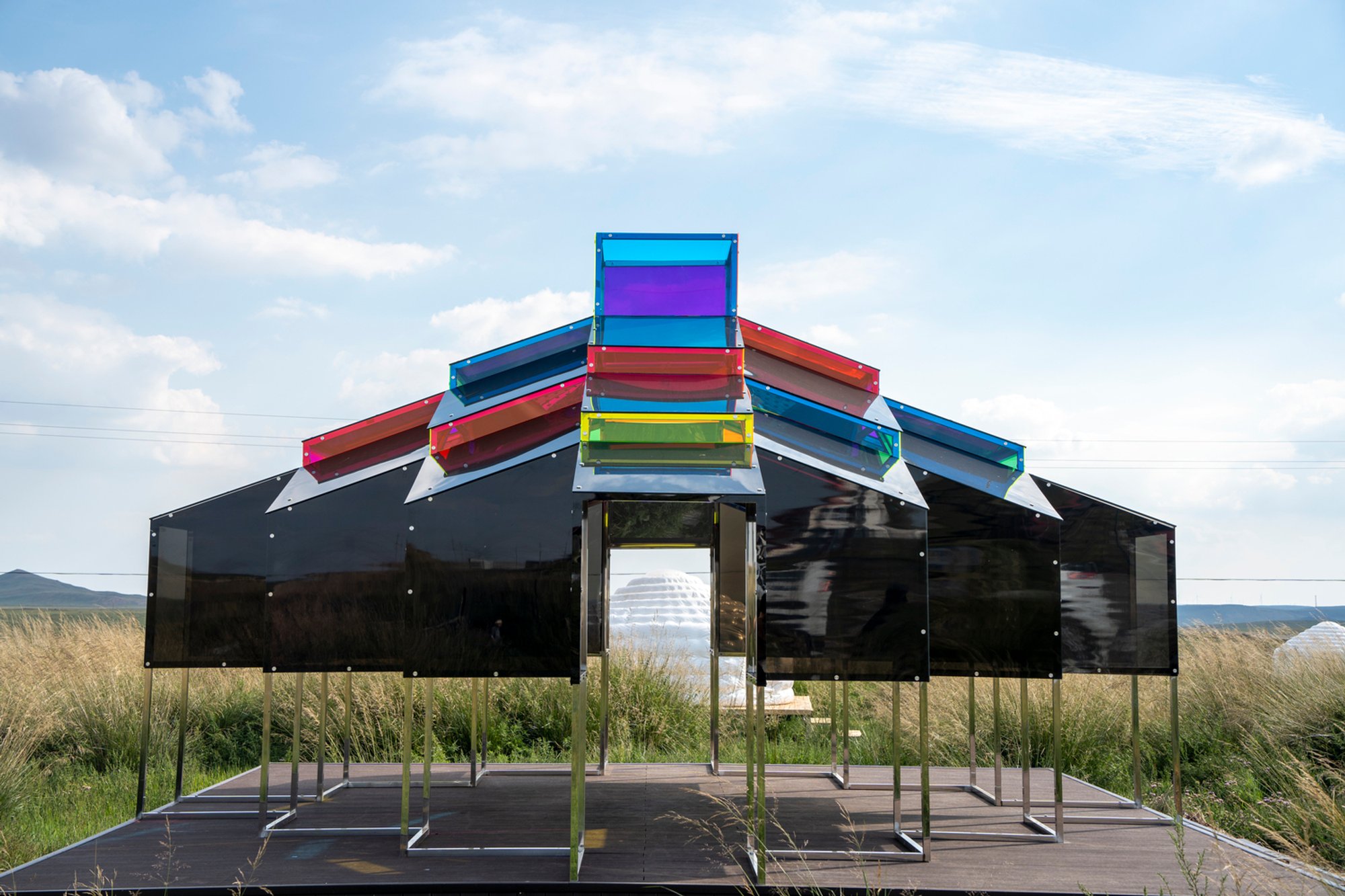
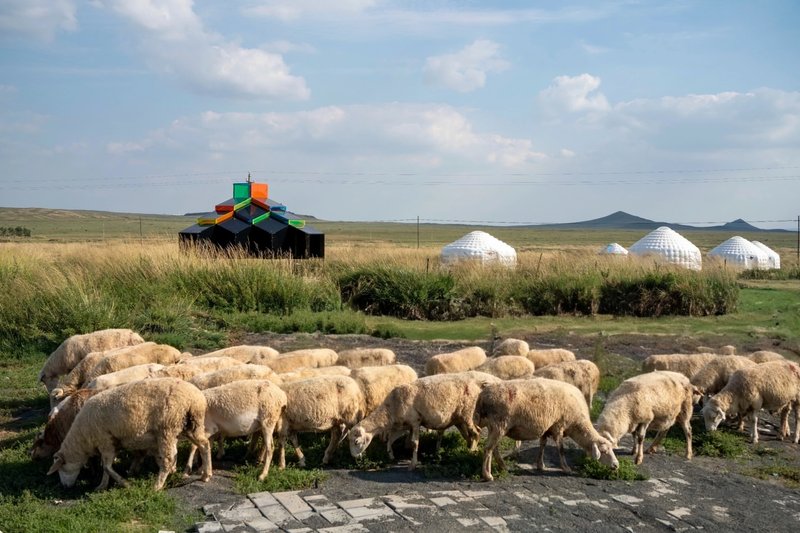
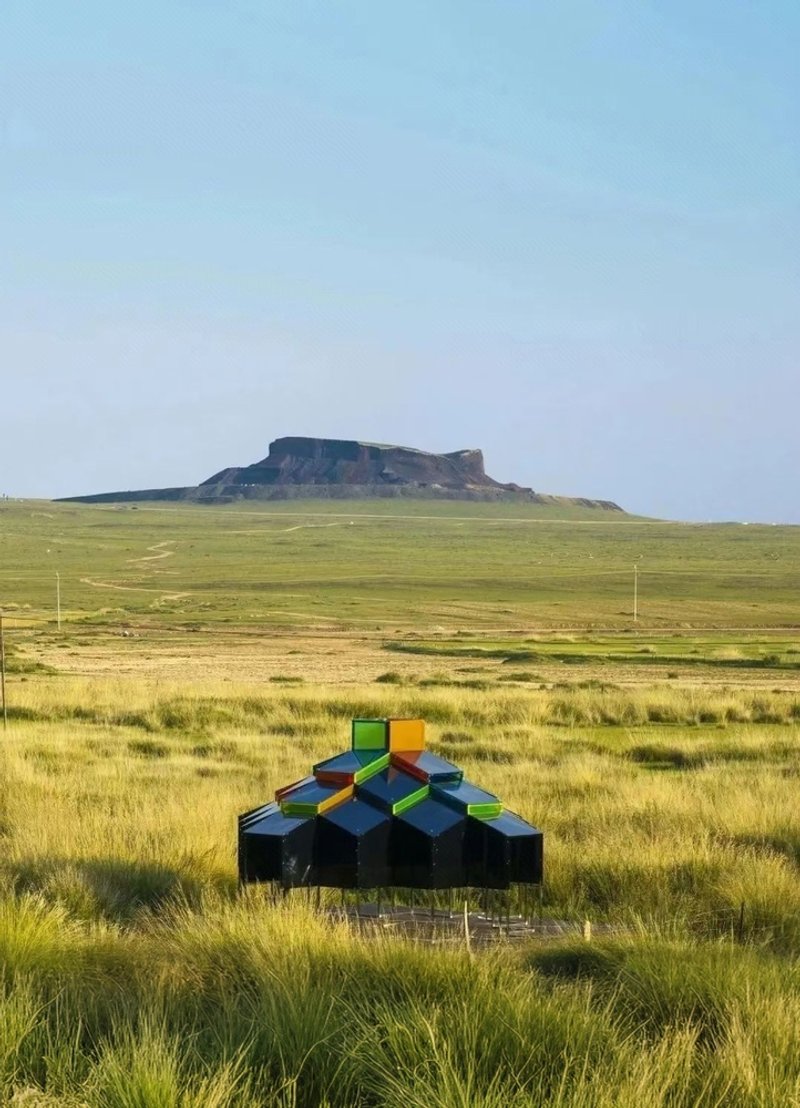
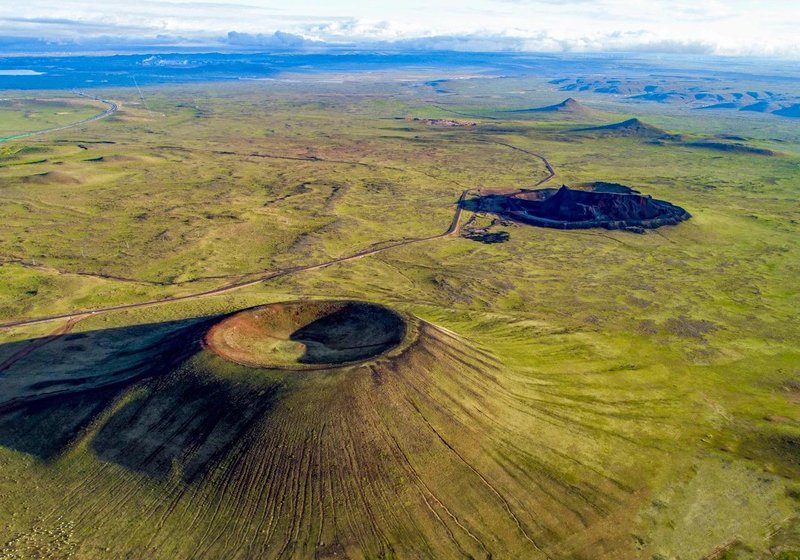
Located near the dramatic Ulanhad volcanic cluster in Chifeng, Inner Mongolia, the Modern Mongolian Ger Installation by Ger Atelier redefines the architectural expression of nomadic culture in a rapidly globalizing world. Designed in 2024 and photographed by Yujun Dou, the installation establishes a profound dialogue between geological monumentality and human adaptability, reflecting how architecture can bridge ancient traditions with modern spatial innovation.
In the context of today’s global architectural discourse—where cultural identities risk homogenization—Ger Atelier’s project revisits the Mongolian ger, the quintessential dwelling of nomadic civilization. The circular geometry, prefabricated structure, and ecological wisdom embedded in the ger become the foundation for a contemporary architectural reinterpretation that connects deeply to its site and cultural roots.
Architectural Concept: A Volcanic-Ger Dialogue
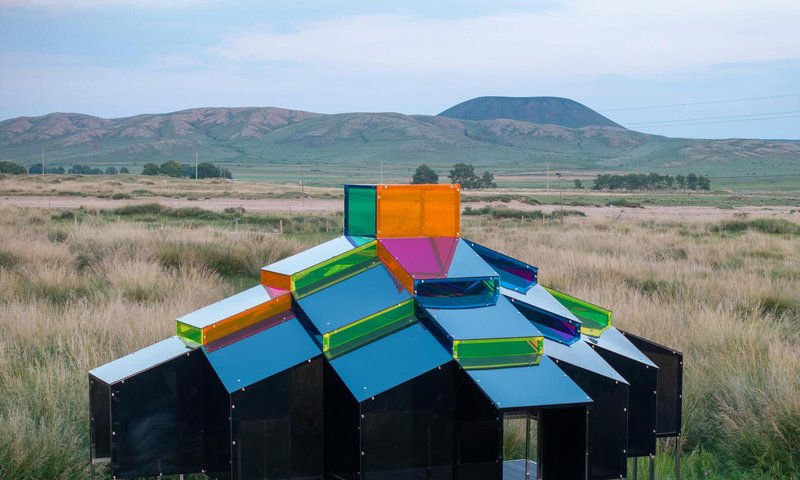
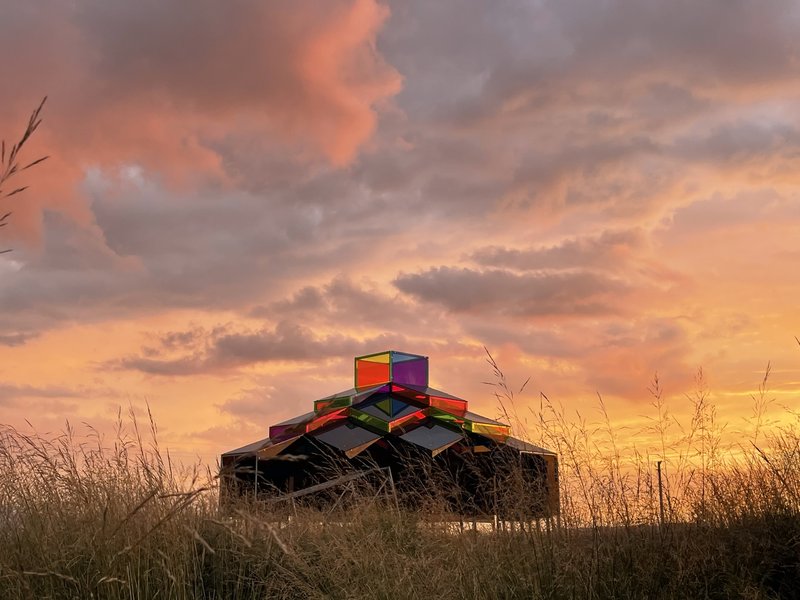
The project’s concept emerges from the morphological resonance between the volcanic cones of Ulanhad and the sectional curvature of the ger. Ger Atelier abstracts and recombines these forms to create a new architectural typology—one that echoes the natural landforms while reinventing the traditional ger’s spatial logic.
This topological transformation allows the structure to function as a microcosm of the surrounding volcanic landscape, achieving poetic harmony between geology and architecture. The installation’s geometry serves not only as a formal gesture but also as a symbolic link between the Earth’s primal forces and humanity’s adaptive ingenuity.
Cultural Translation: Modernizing Nomadic Wisdom
The Modern Mongolian Ger Installation embodies a deep cultural translation process—transforming traditional nomadic knowledge systems into contemporary environmental strategies.
Ger Atelier studied the ger’s passive climate adaptability, particularly its capacity to withstand harsh Mongolian climates through natural ventilation and thermal modulation. These features are reinterpreted using modern materials and design methods.
Strategically placed upper and lower apertures guide airflow through the structure, ensuring interior comfort without mechanical systems. The result is an energy-efficient pavilion that celebrates ecological intelligence and sustainable design, preserving the DNA of nomadic living while addressing the demands of contemporary architecture.
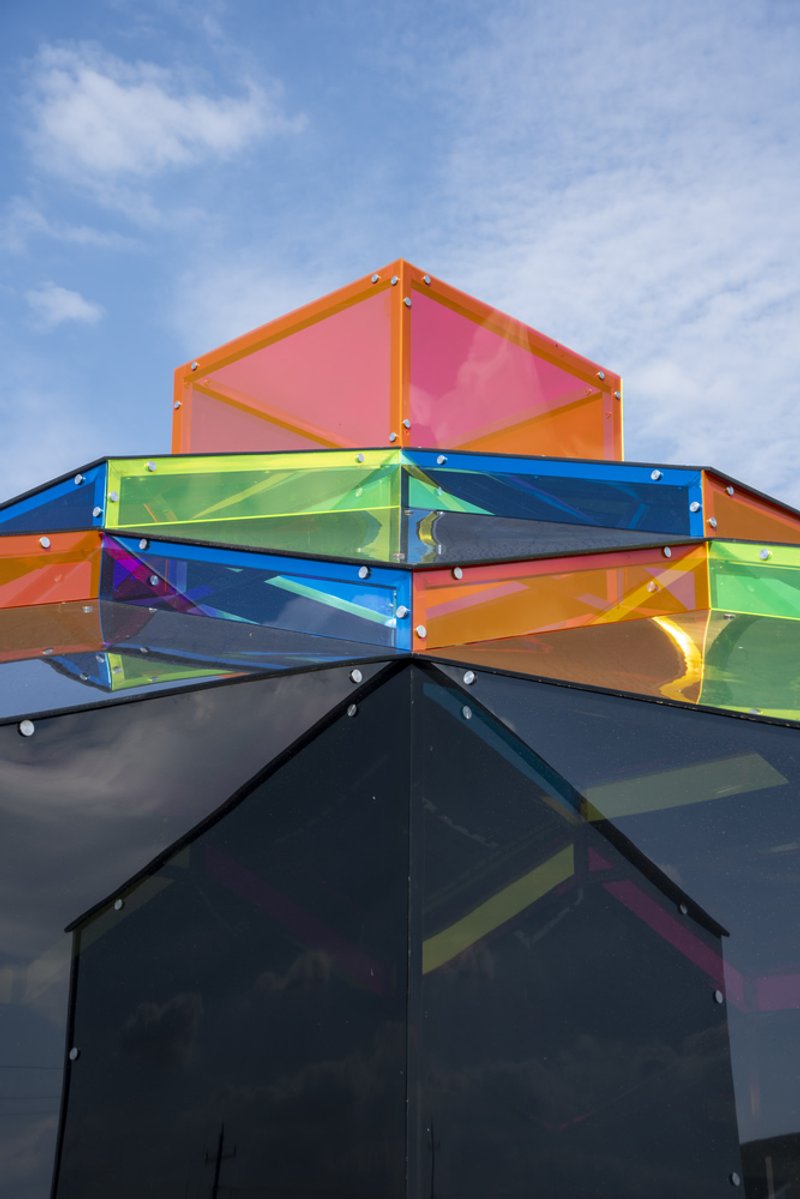
Spatial Experience: Light, Movement, and Transformation
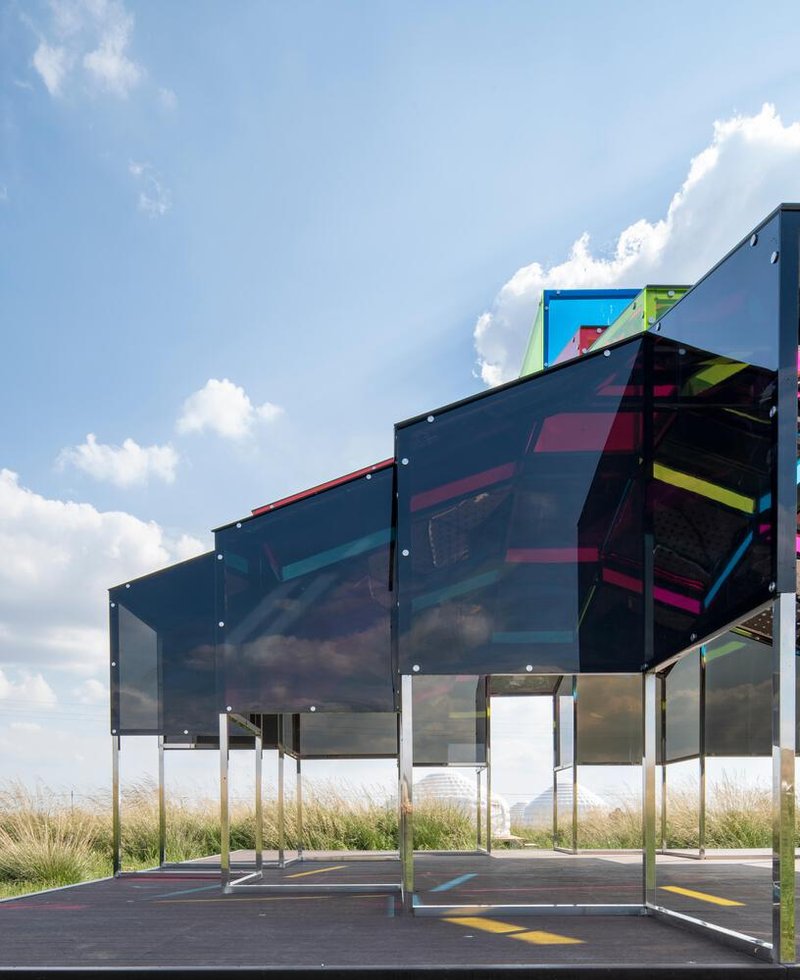
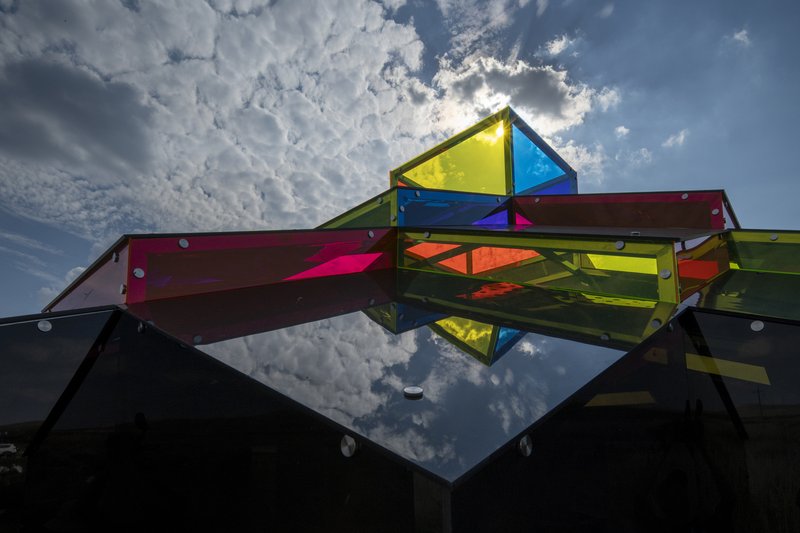
Spatial experience lies at the heart of the installation’s design. The architects use a dynamic combination of translucent and opaque acrylic panels—alternating between colored and dark surfaces—to create ever-changing patterns of light and shadow.
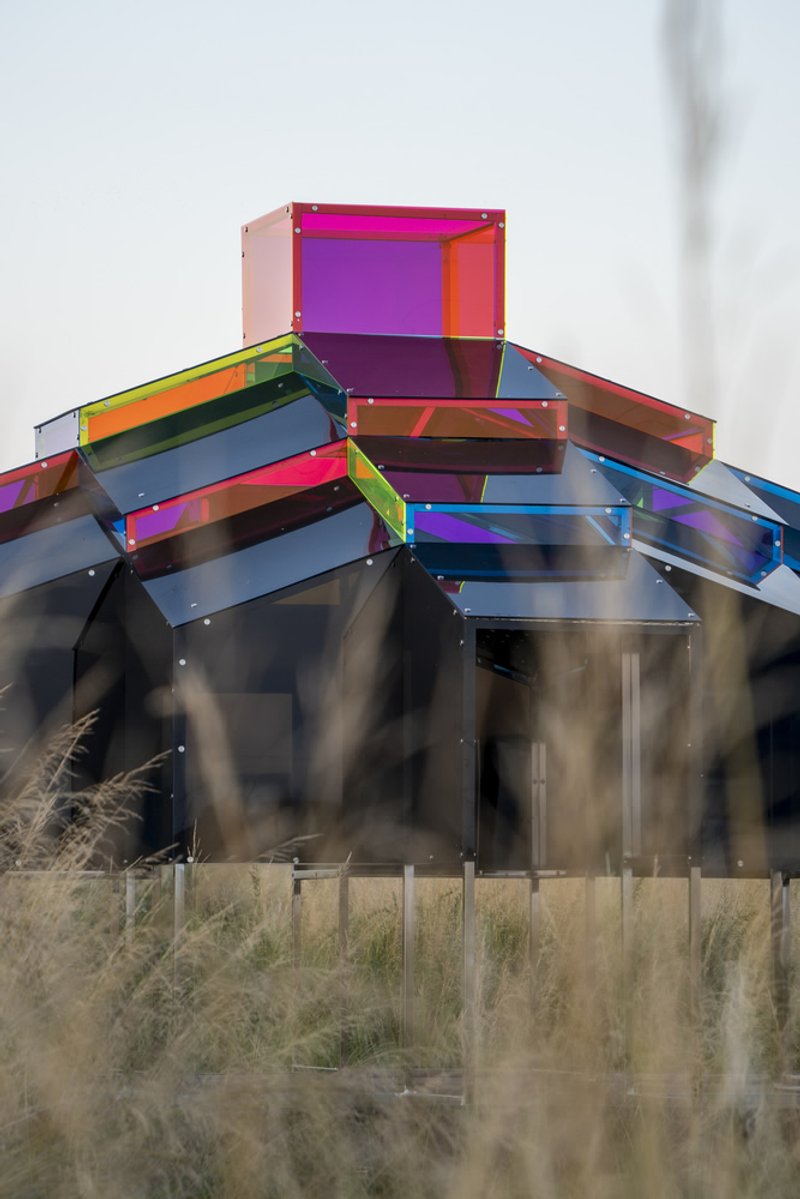
As the sun and clouds shift over the Mongolian plains, the structure’s interior transforms into a “breathing” spatial organism. The immersive chromatic projections move with time, making the space feel alive, temporal, and responsive.
This sensory design strategy not only enhances the architectural experience but also connects visitors to the temporal rhythms of nature, echoing the nomadic philosophy of coexistence with the environment.
Nomadic Futures: Elastic Spaces for a Changing World
Beyond its immediate cultural and aesthetic expression, the Modern Mongolian Ger Installation proposes a future-oriented architectural vision—one that rethinks mobility, adaptability, and identity in architecture.
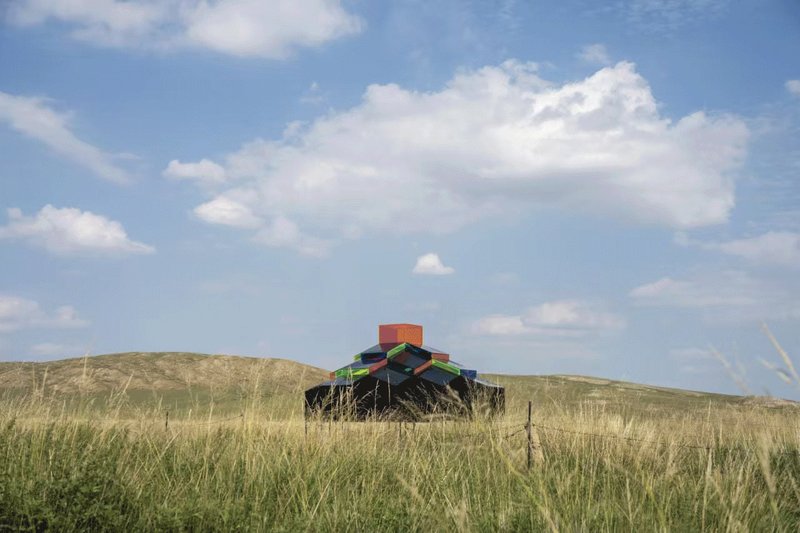
Ger Atelier describes this work as a “nomadic” design philosophy—creating flexible, adaptive, and environmentally attuned spaces that can respond to changing ecological and social contexts.
In an era of global uncertainty and rapid environmental shifts, the elastic spatial logic of nomadic civilizations may offer vital lessons for the architecture of the future. The project’s exploration of modularity, adaptability, and cultural continuity represents an inspiring model for sustainable design innovation rooted in local wisdom yet oriented toward global challenges.
Project Details
Project Title: Modern Mongolian Ger Installation Architects: Ger Atelier Location: Chifeng, Inner Mongolia, China Completion Year: 2024 Photography: Yujun Dou Typology: Installation / Pavilion / Cultural Architecture Curated by: 韩爽 (HAN Shuang)
The Modern Mongolian Ger Installation by Ger Atelier transcends the boundaries of architecture, anthropology, and art. Through the fusion of volcanic landscapes and nomadic heritage, it constructs a symbolic dialogue between nature’s permanence and humanity’s mobility. This poetic reinterpretation not only honors Mongolia’s architectural traditions but also challenges designers worldwide to rethink how cultural memory and environmental intelligence can shape the architecture of the 21st century.
All photographs are works of Yujun Dou