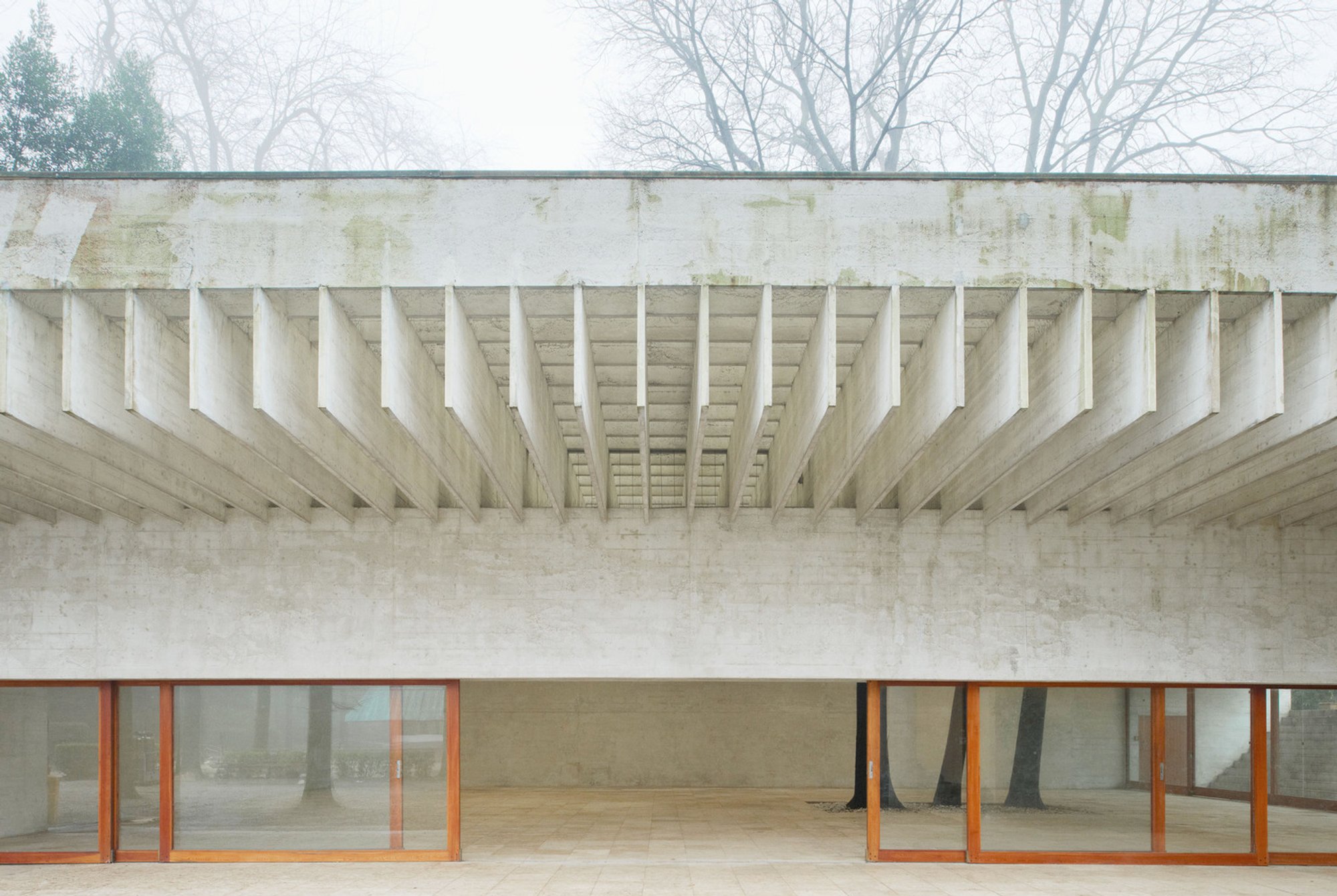
Nordic Pavilion Venice Architecture: A Masterpiece by Sverre Fehn
The Nordic Pavilion by Sverre Fehn in Venice exemplifies Scandinavian modernism, integrating nature, light, and open-plan design for exhibitions.


A Scandinavian Landmark at the Venice Biennale
The Nordic Pavilion at the Venice Biennale, designed by Norwegian architect Sverre Fehn, stands as one of the most celebrated examples of modern Scandinavian architecture. Completed in 1962, this structure represents a seamless blend of nature and built form, redefining how architecture interacts with its surroundings.
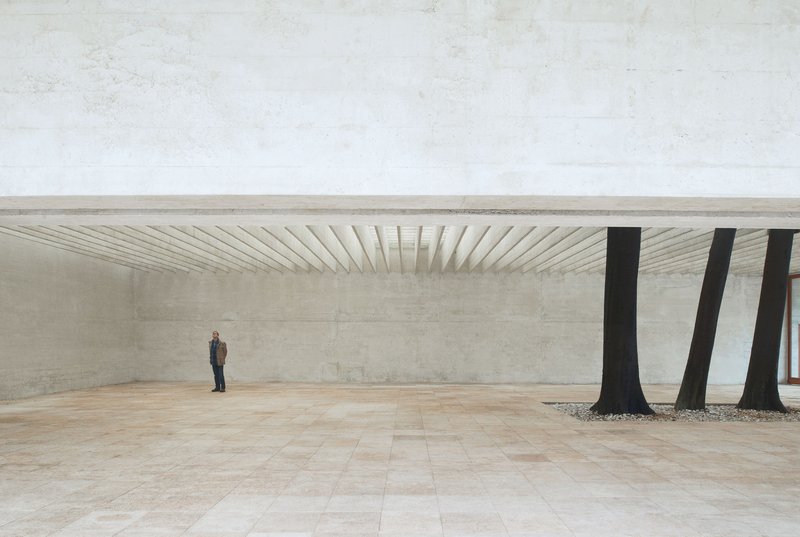
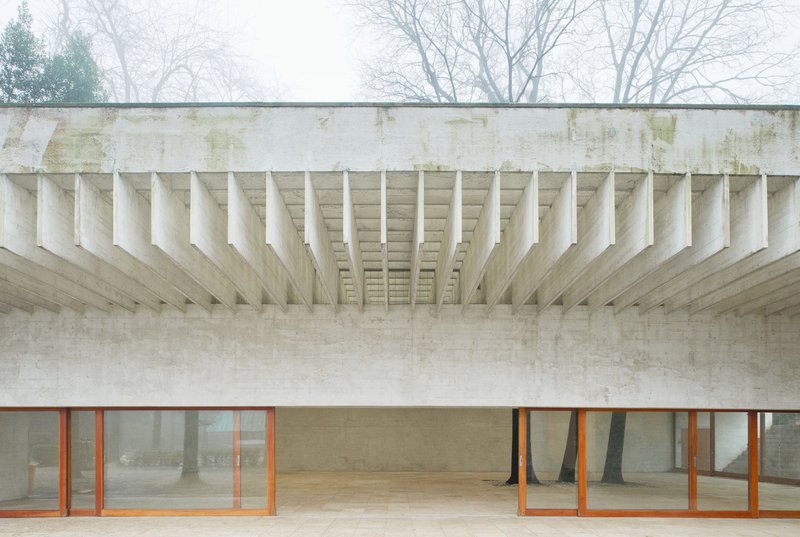
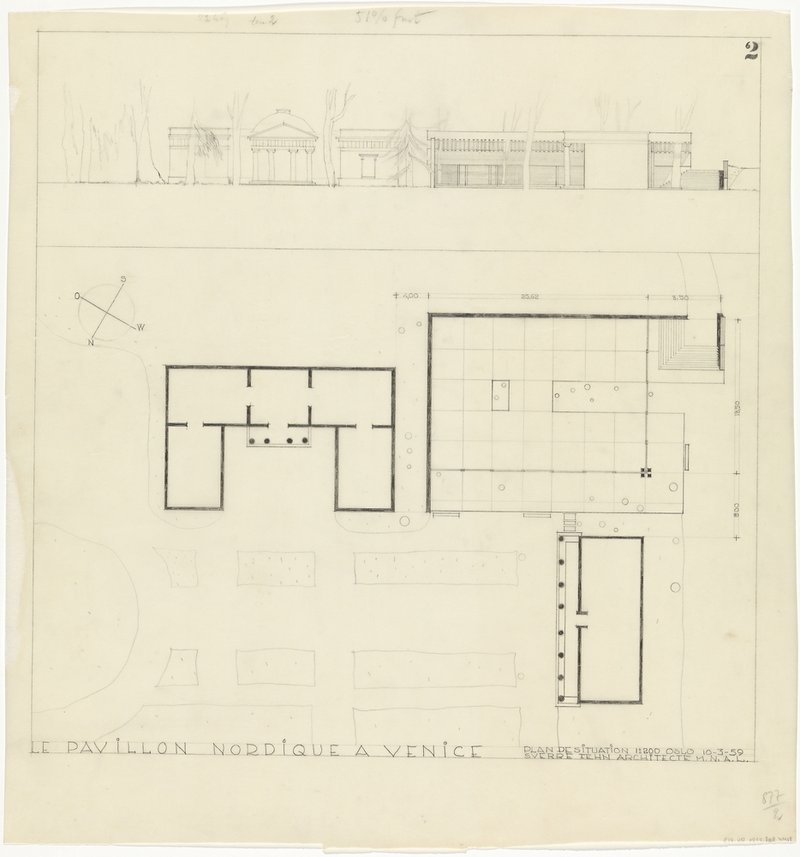
Situated in the Giardini di Castello, a lush parkland dedicated to the Venice Biennale, the pavilion is shared by Sweden, Finland, and Norway. The design was selected through a 1958 competition that sought an adaptable, light-filled exhibition space that would preserve the site's existing trees. Fehn's visionary approach set new standards for sustainable, contextual architecture, prioritizing natural light, transparency, and fluid spatial experiences.
A Design Rooted in Context and Nature
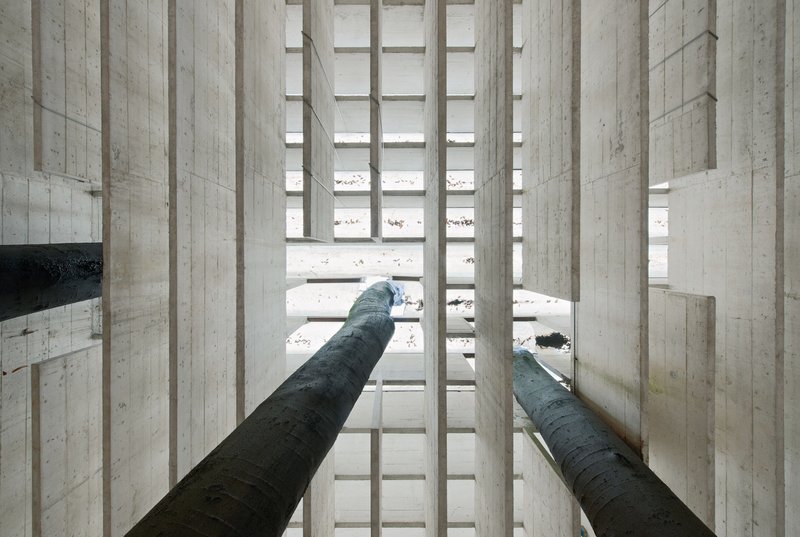
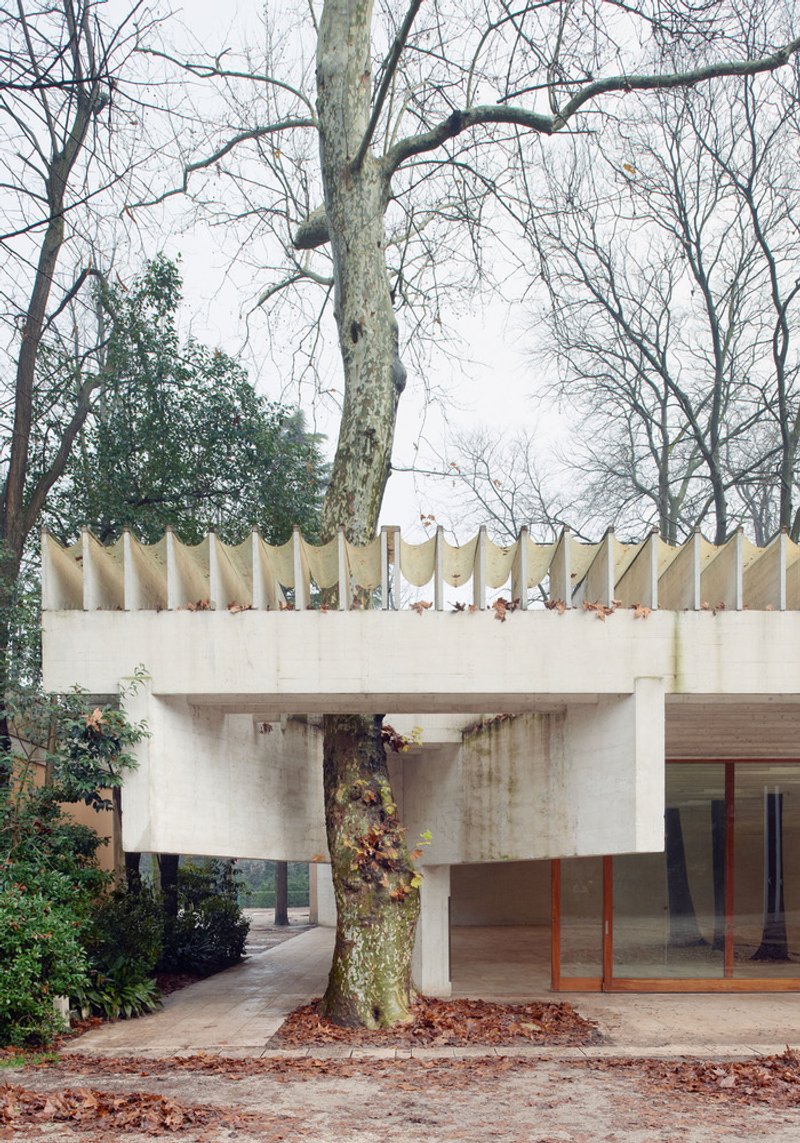
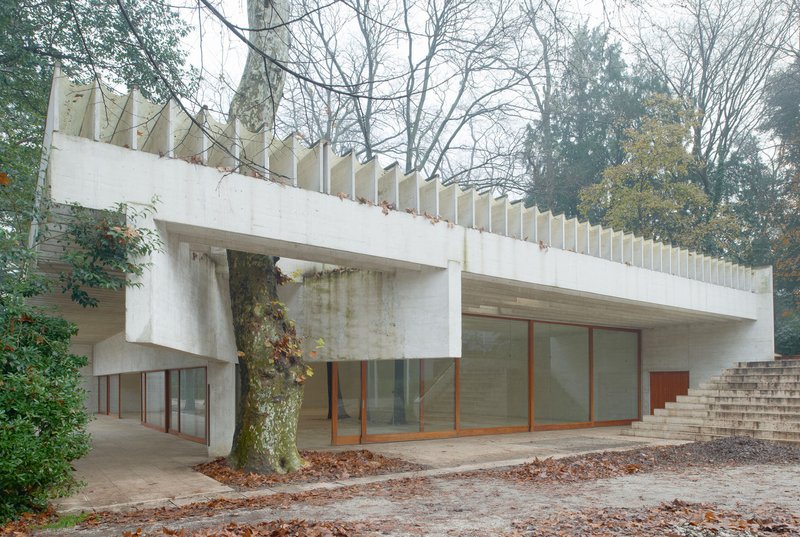
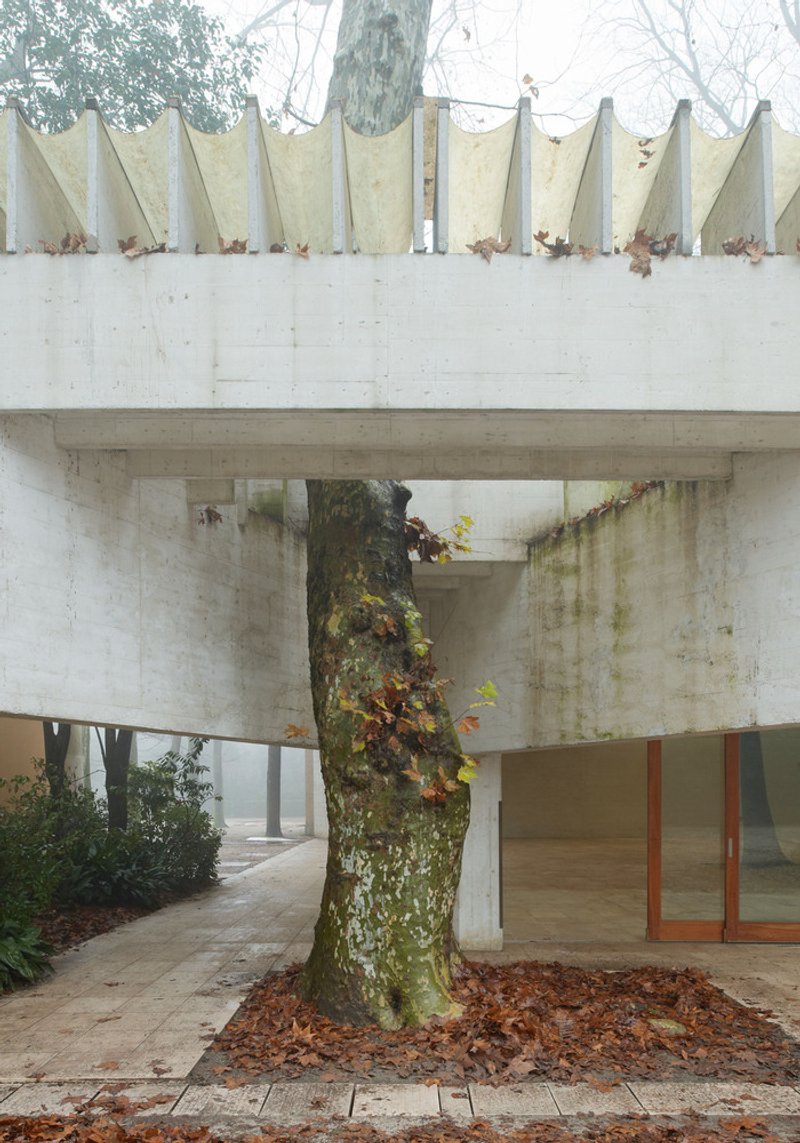
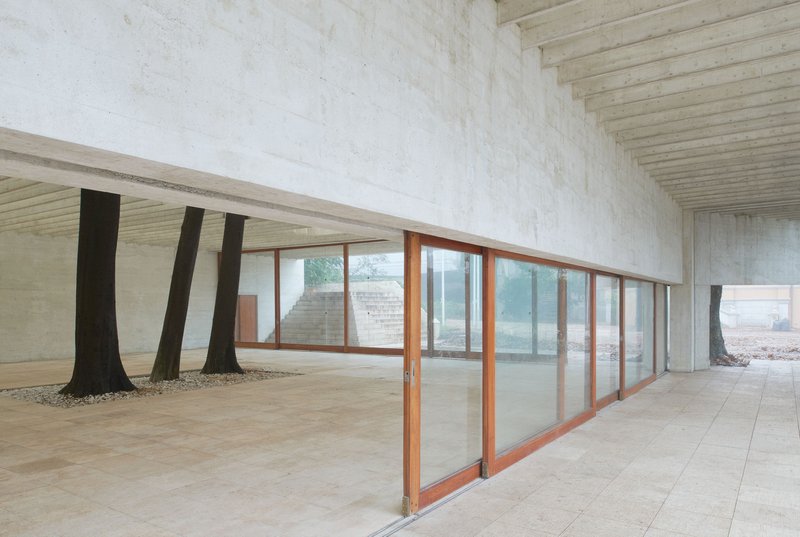
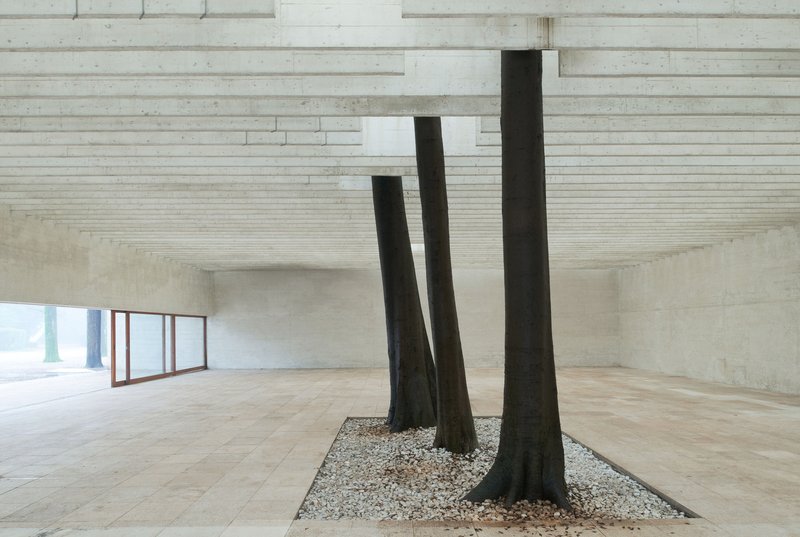
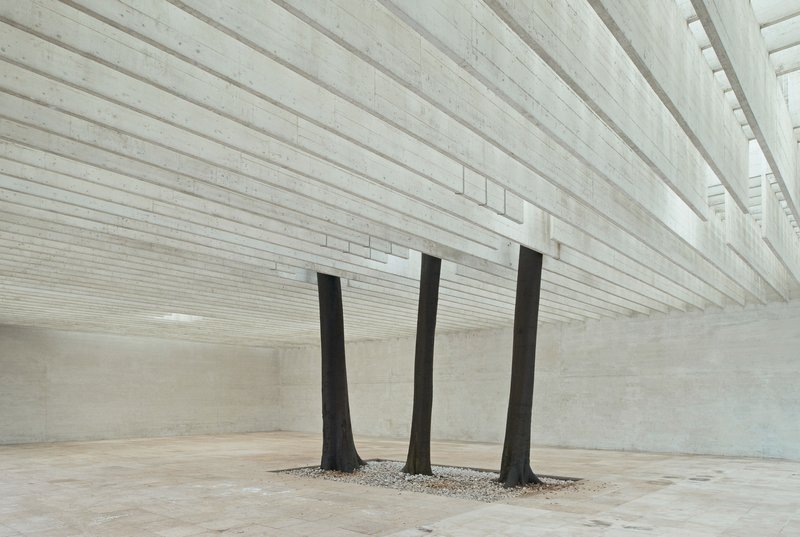
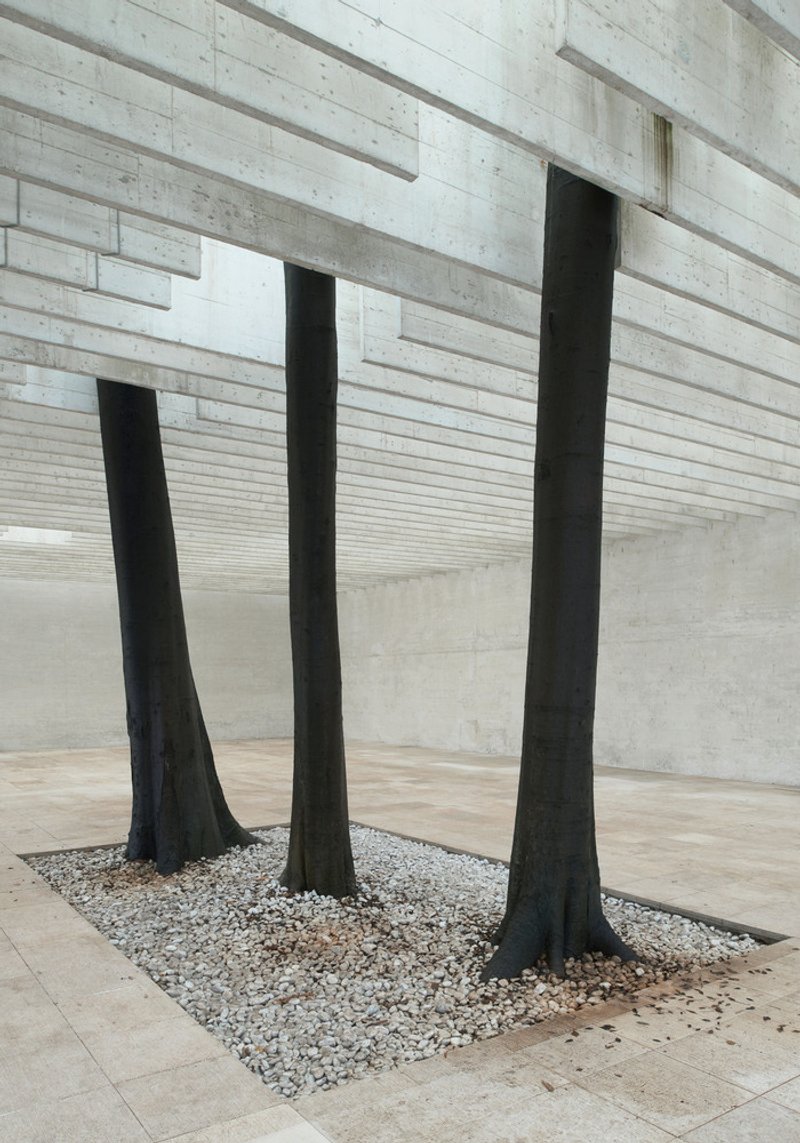
The site for the Nordic Pavilion posed unique challenges. Nestled between the Danish Pavilion and the U.S. Pavilion, the designated plot featured a natural slope and several mature trees that could not be removed. Fehn embraced these conditions, designing a structure that integrates trees into its framework, making them part of the architectural experience. The result is a dialogue between built and organic elements, where nature becomes an essential component of the pavilion’s identity.
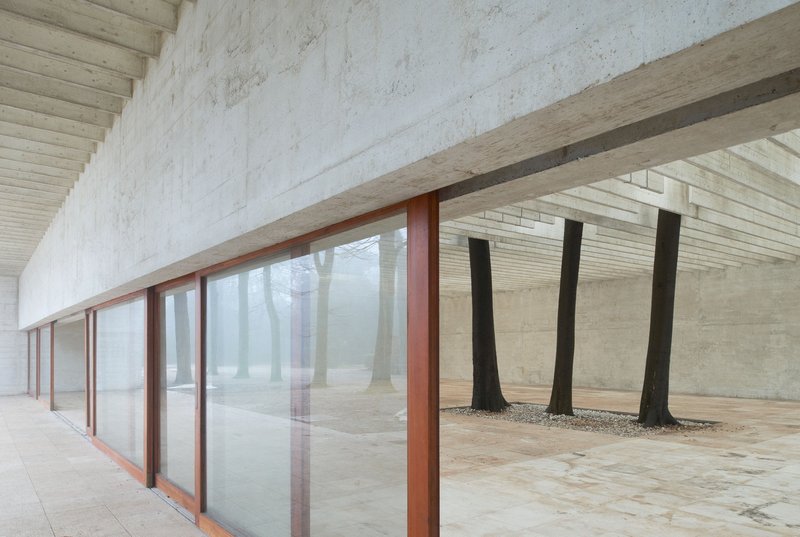
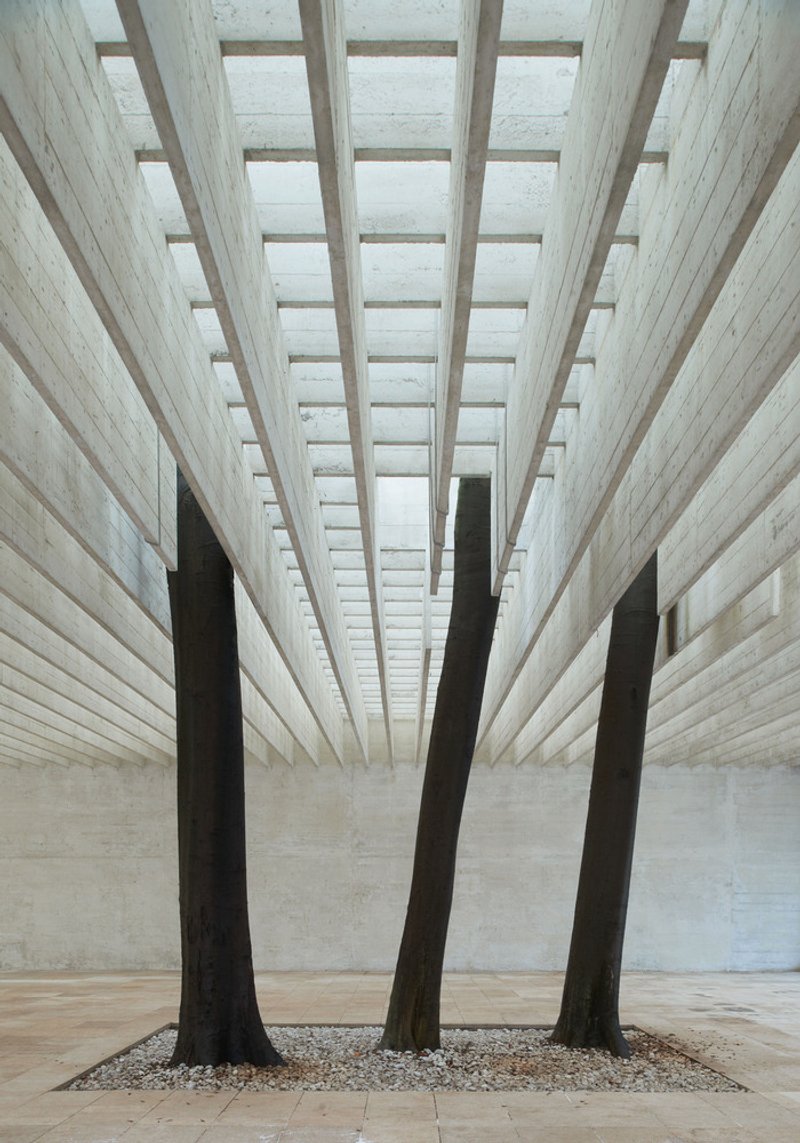
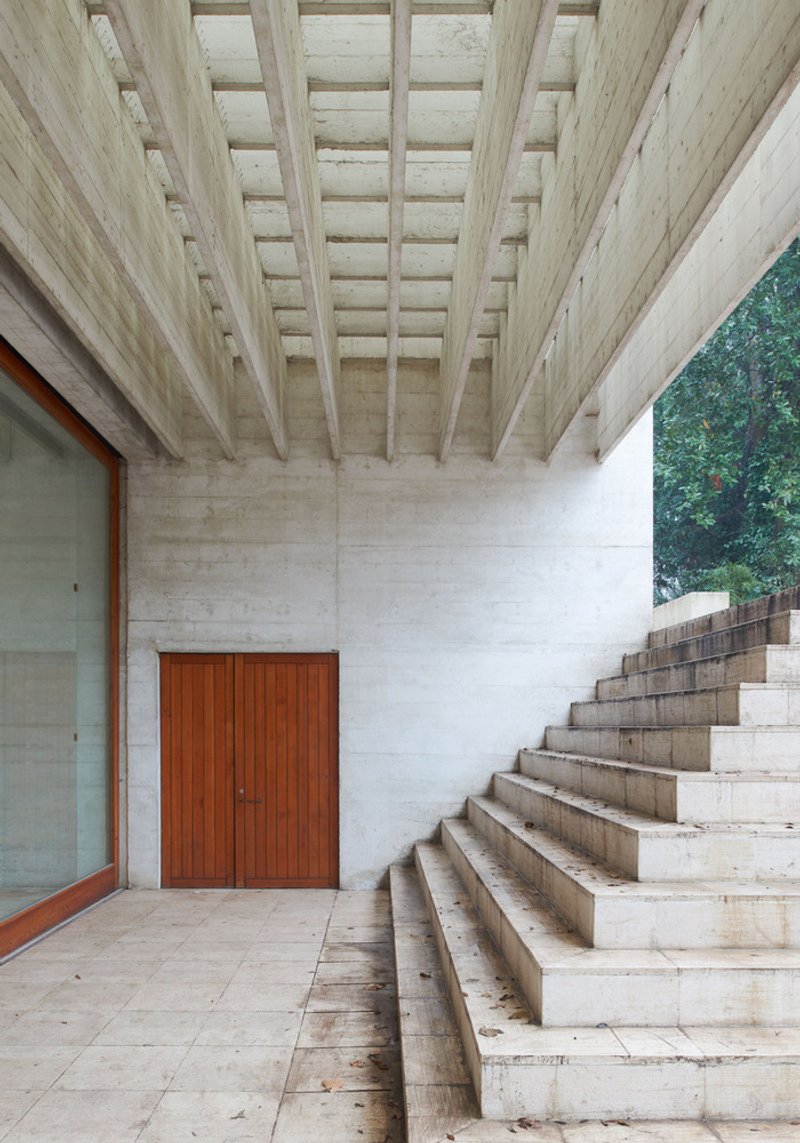
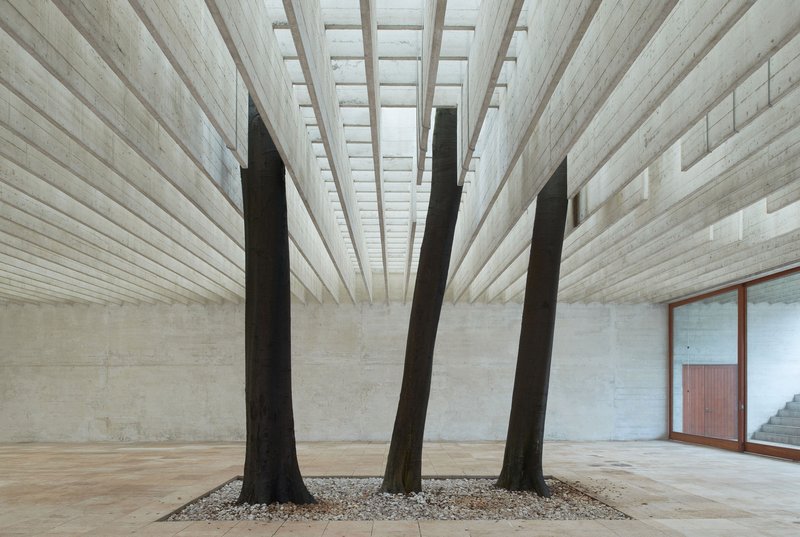
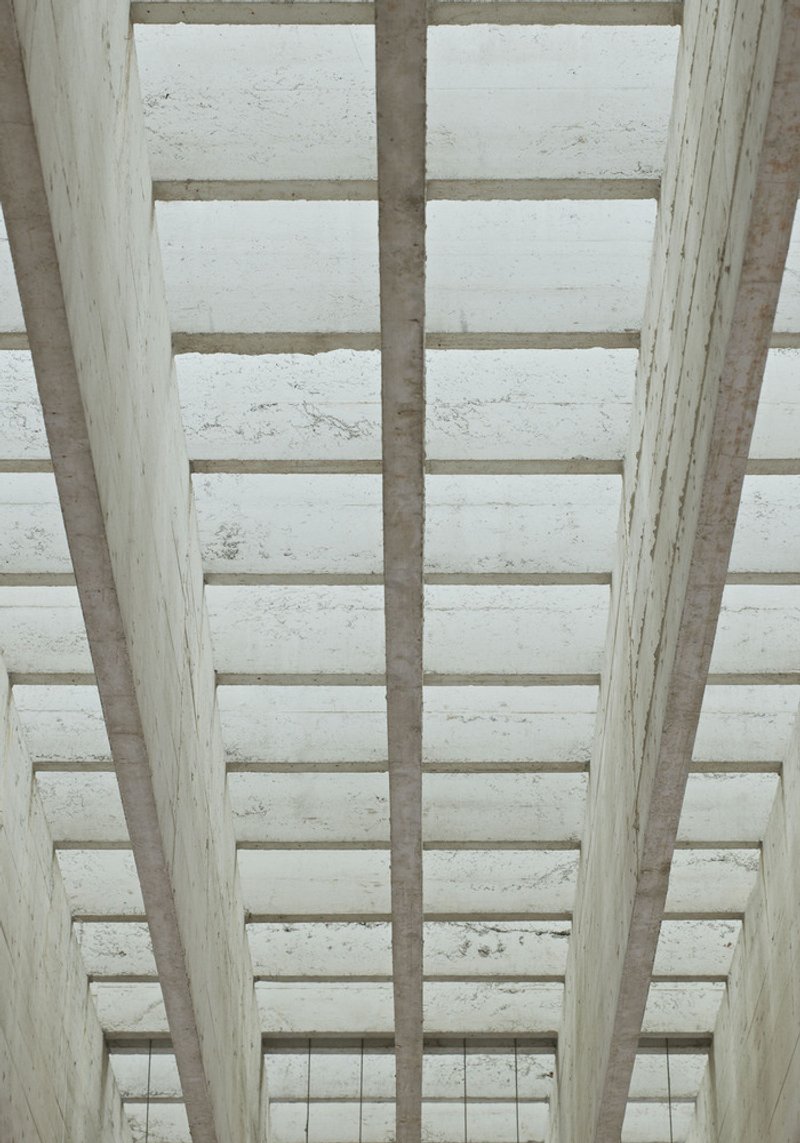
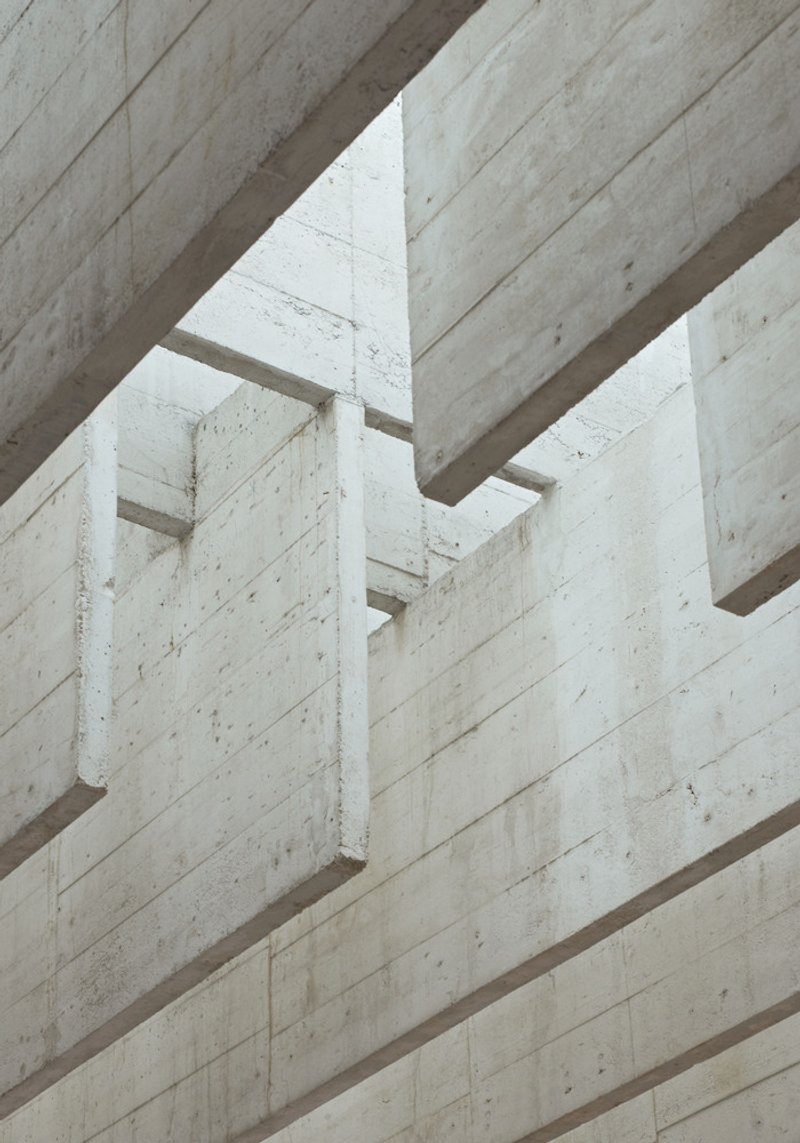
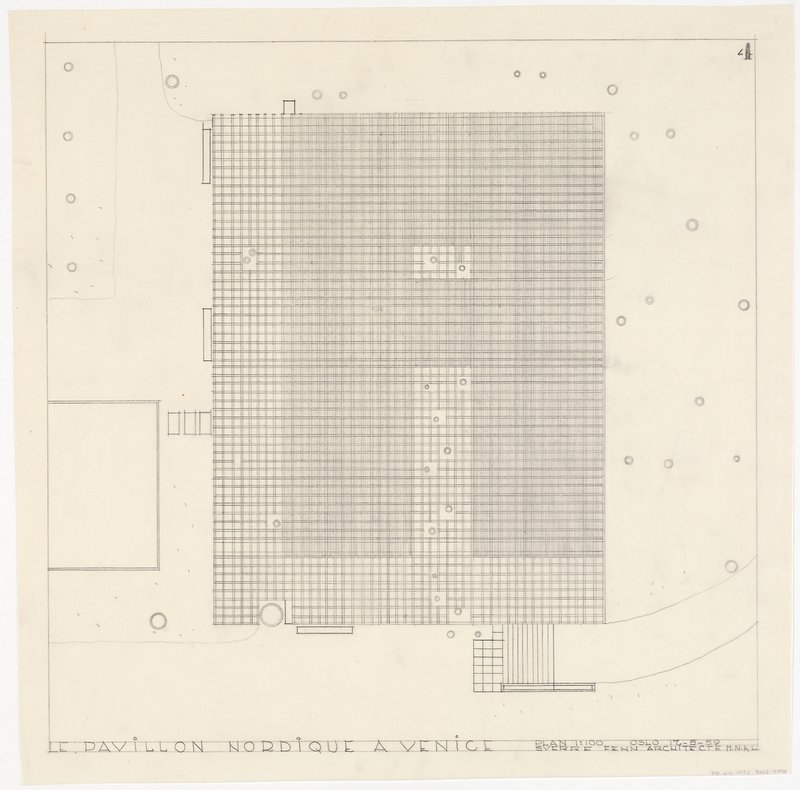
The roof structure, one of the pavilion’s defining features, is composed of concrete beams arranged in a grid-like pattern. These beams filter daylight, providing a soft, uniform illumination ideal for art exhibitions. This interplay of light and shadow enhances the visitor experience, creating a dynamic and atmospheric interior.
Spatial Flexibility and Exhibition Adaptability
Unlike traditional exhibition spaces, which often rely on rigid layouts, the Nordic Pavilion follows an open-plan concept. The structure is defined by two primary concrete walls and a single supporting pillar, allowing the space to remain unobstructed. The absence of internal partitions enables exhibitions to be configured in multiple ways, ensuring adaptability for different curatorial needs.
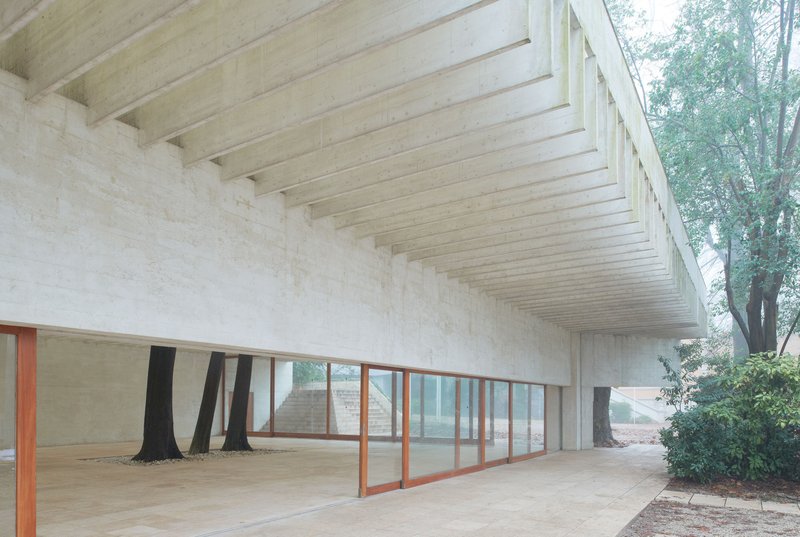
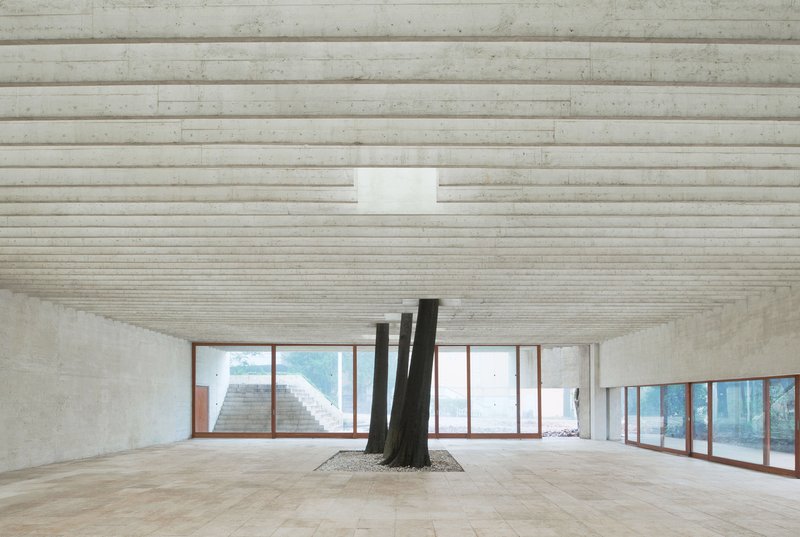
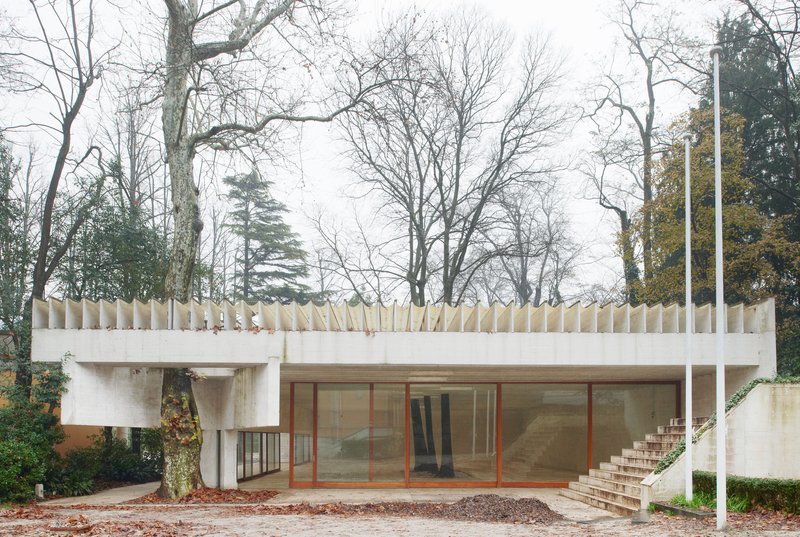
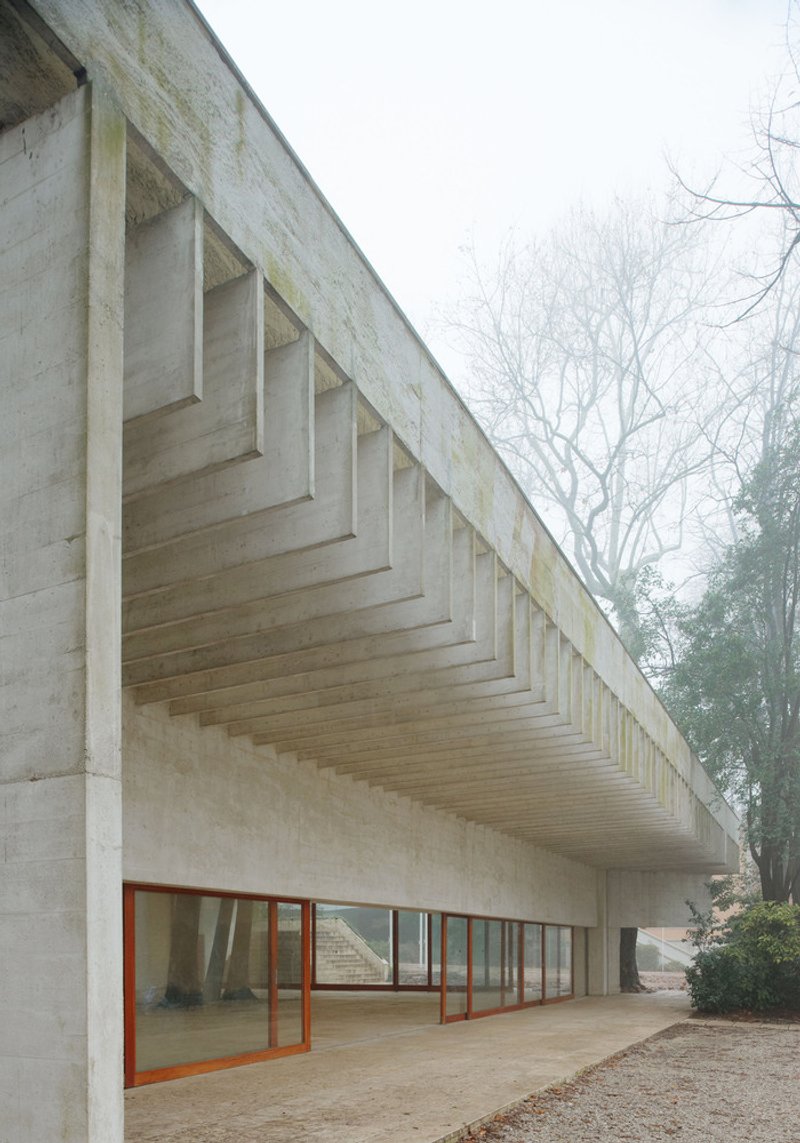
Fehn intentionally minimized visual barriers between the pavilion and the surrounding park. Large sliding glass doors open the interior to the external plaza, blurring the boundary between inside and outside. This fluidity of space aligns with Scandinavian design principles, emphasizing openness, functionality, and human connection to the environment.
A Study in Natural Light and Materiality
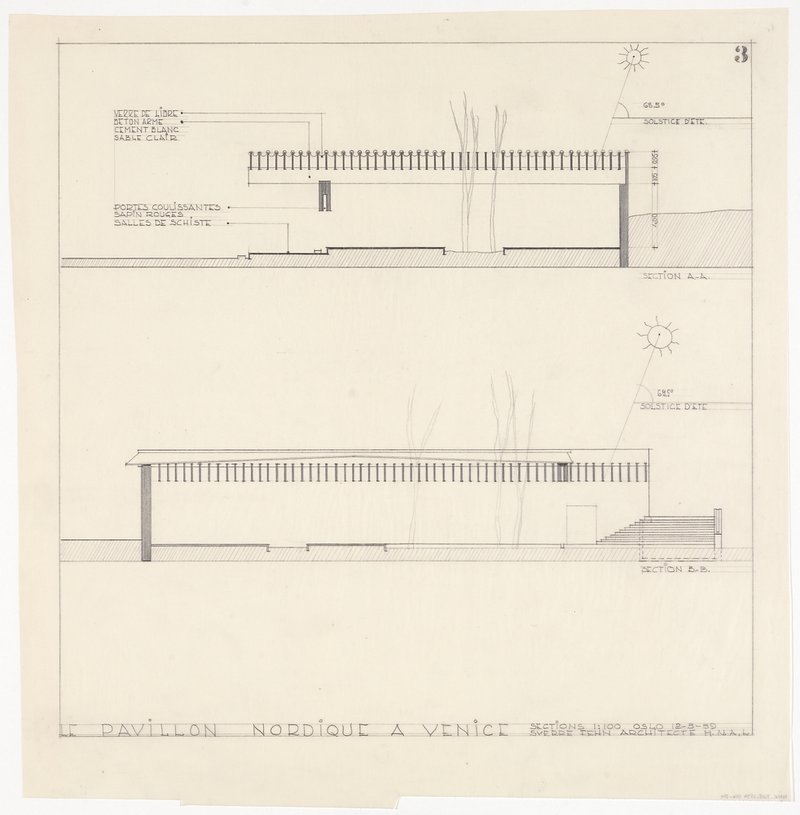
The Venetian climate played a crucial role in shaping the pavilion’s design. Fehn’s roof design mitigates harsh summer sunlight, ensuring that artworks are not exposed to direct glare. The grid of concrete beams, arranged at precise angles, acts as a natural brise-soleil, diffusing light evenly throughout the exhibition area. This technique enhances the visual perception of the space, creating a serene and contemplative environment.
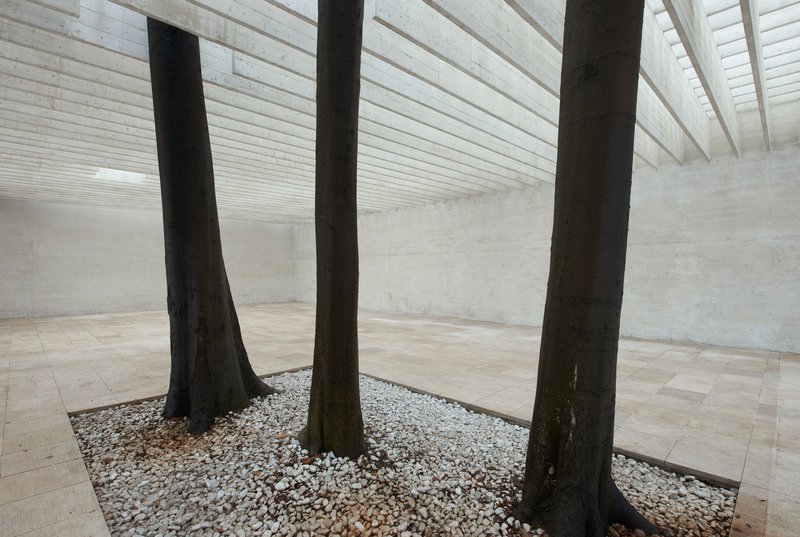
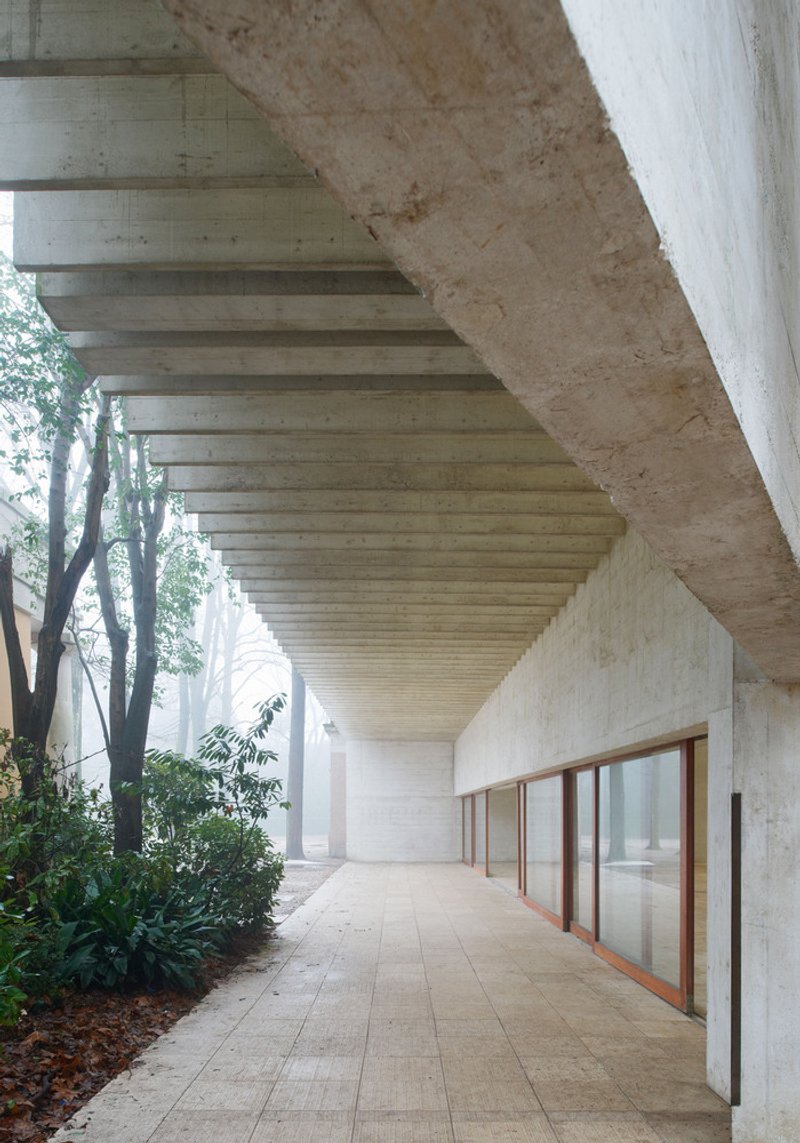
Materiality is another fundamental aspect of the pavilion. Fehn selected reinforced concrete, glass, and wood, choosing a minimalist palette that highlights the raw textures of each element. The white concrete was not artificially colored but instead achieved through carefully chosen light aggregates and white cement, enhancing the pavilion's luminous quality. The flooring, made of slate stone, provides a subtle contrast to the smooth concrete surfaces, grounding the space in natural materiality.
An Architectural Icon of the 20th Century
The Nordic Pavilion remains an exemplar of modern Scandinavian architecture, influencing generations of architects with its sensitive approach to site, light, and materiality. Fehn’s design philosophy—rooted in the balance between nature and human intervention—is evident in every aspect of the pavilion.
All Photographs are works of Åke E:son Lindman