
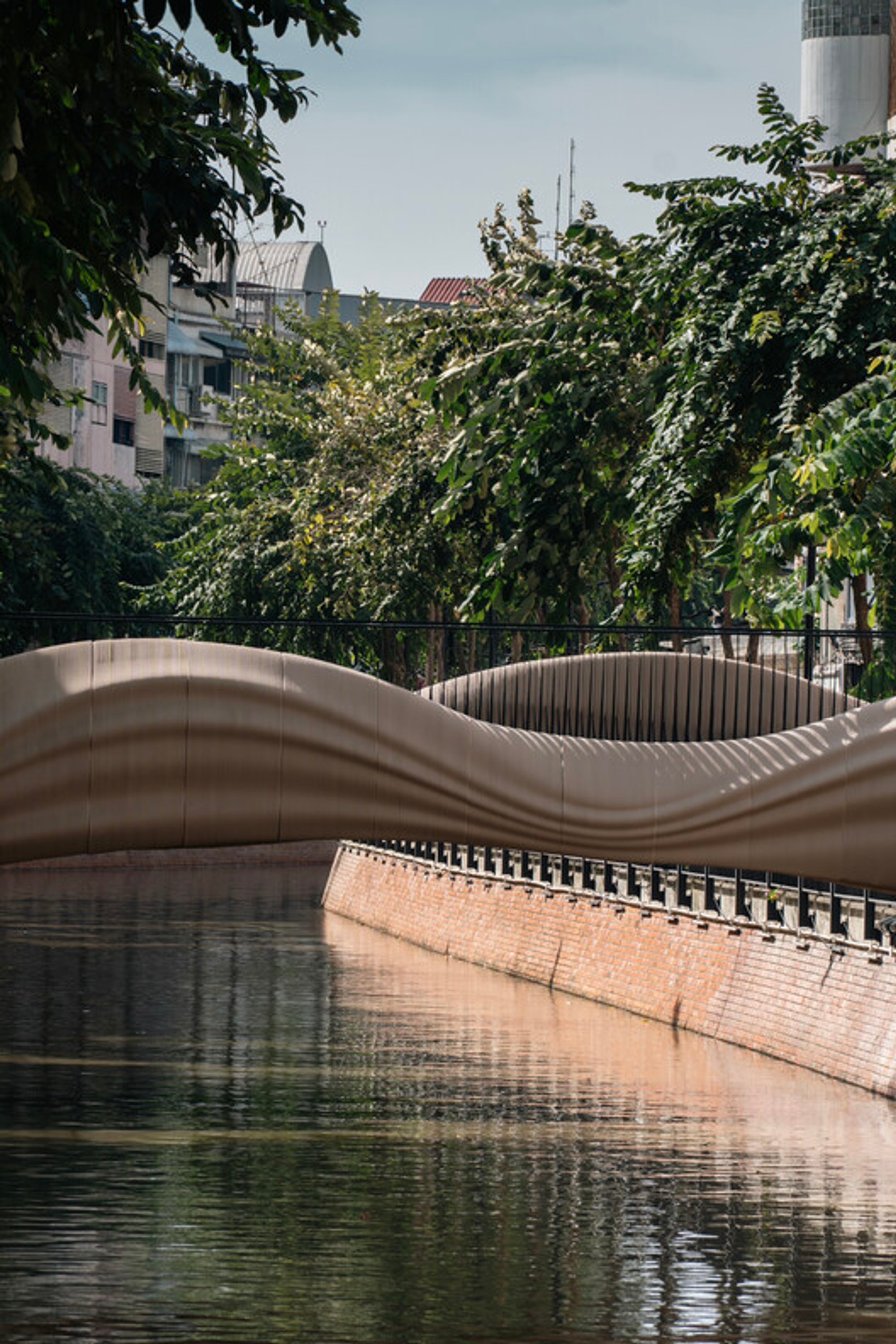
OngAng 3D Concrete Printing Bridge – A New Urban Landmark for Bangkok’s Historic Canal
A digitally fabricated pedestrian bridge combining 3D printed concrete, heritage narrative, and fluid form to reconnect Bangkok’s historic Ong Ang Canal.

The Ong Ang Canal has always been more than water. It has been boundary, artery, lifeline, and mirror of Bangkok’s evolving identity. Once part of the city's defensive moat, later a vibrant trade corridor lined with craft workshops and markets, and more recently the focus of urban revitalization, Ong Ang holds layers of history that speak to urban continuity and change. The Ong Ang 3D Concrete Printing Bridge represents a new chapter along this waterway, merging heritage with digital fabrication, and connecting past cultural memory with future-looking infrastructure.
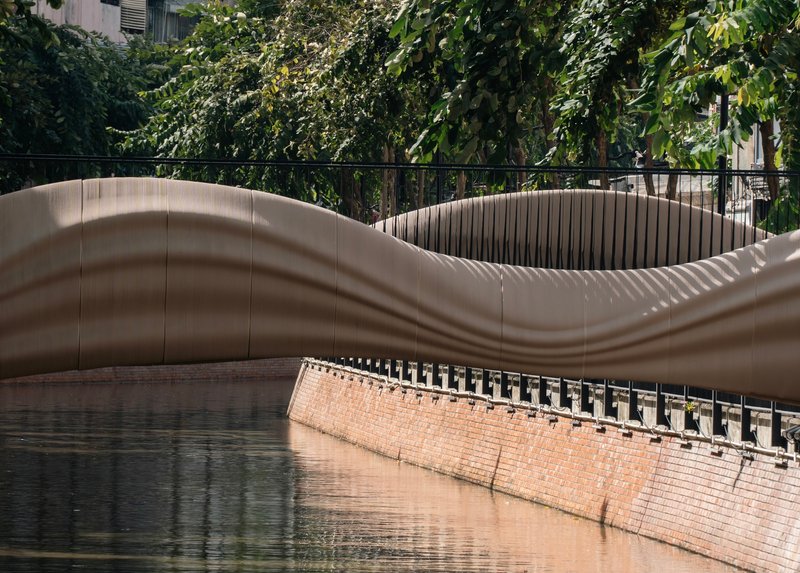
Completed in 2025 as part of the Bangkok Metropolitan Administration's river rehabilitation program, the bridge offers more than simple passage. It is a sculptural object, a public gesture, and a technical milestone in Thailand’s advancement into digitally manufactured infrastructure. Through form, process, and placement, it stands as a demonstration of how cities can innovate while respecting the identity of place.
1. A Bridge as Urban Regenerator
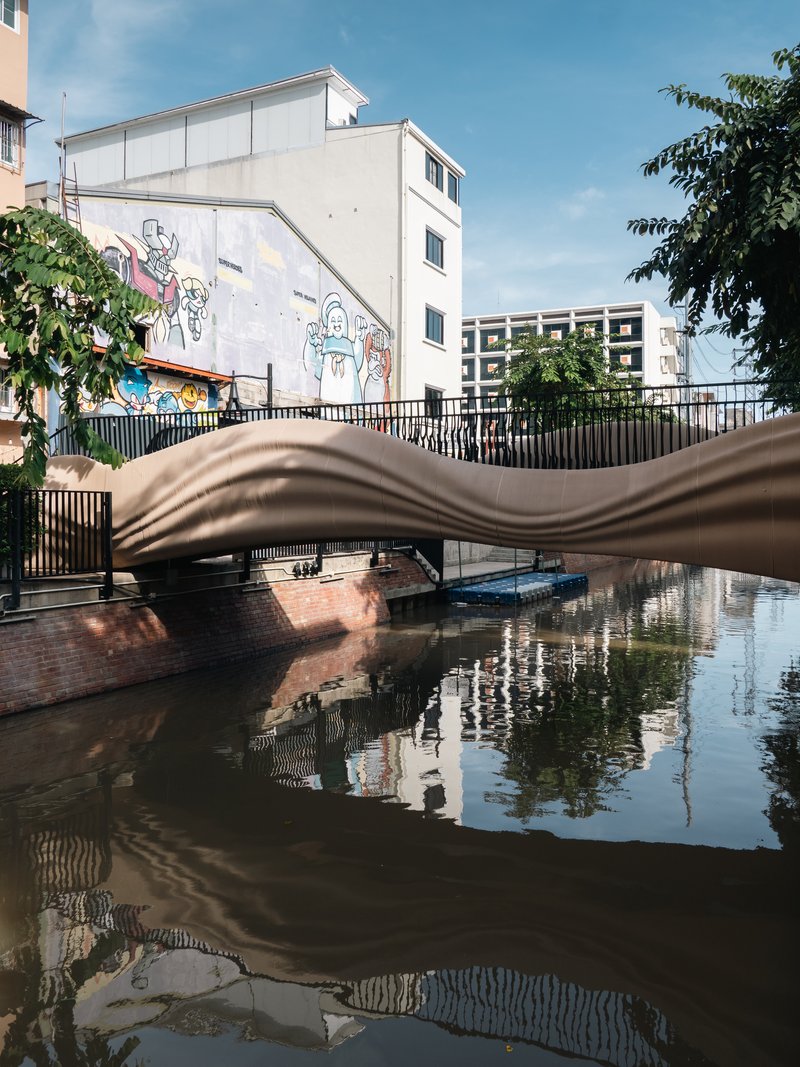
The location of the bridge within Bangkok’s dense historic core imposed both value and constraint. The Ong Ang Canal is narrow, its flanking alleys tight, and its adjacent buildings layered with generations of use and adaptation. The intention behind the project was not to overpower this urban fabric with a monumental bridge, but to insert a structure that could elevate circulation, complement revitalized pedestrian routes, and establish a new visual identity without disrupting the historic texture of the district.
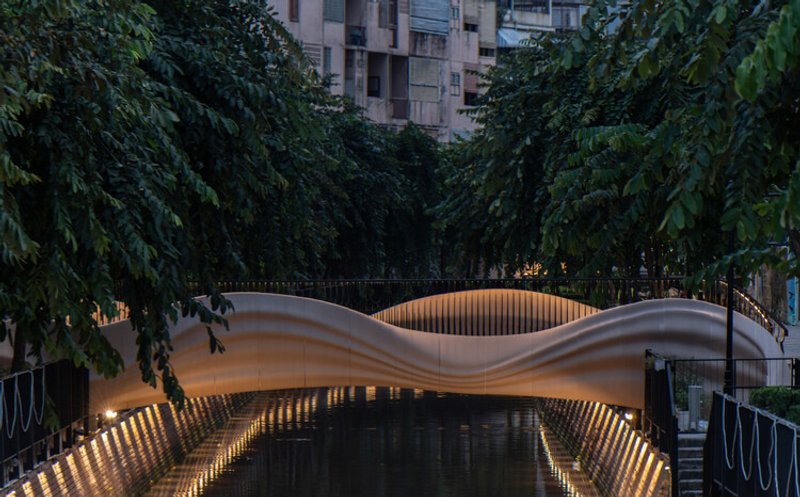
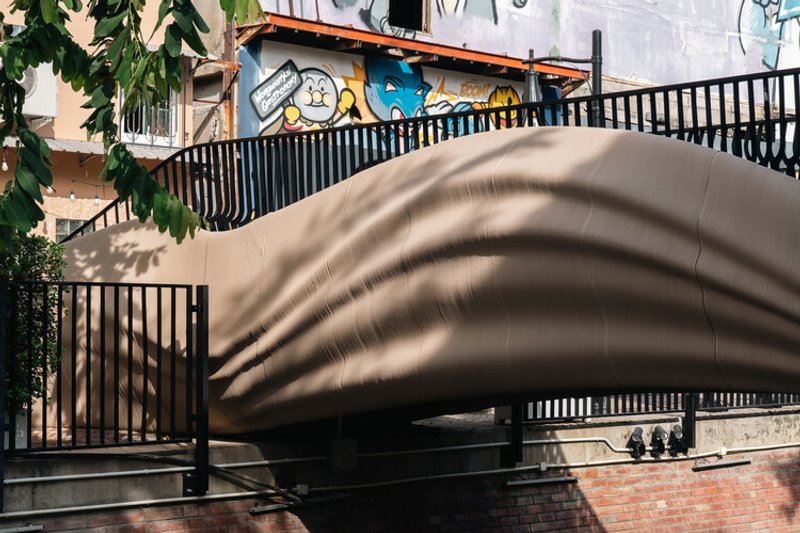
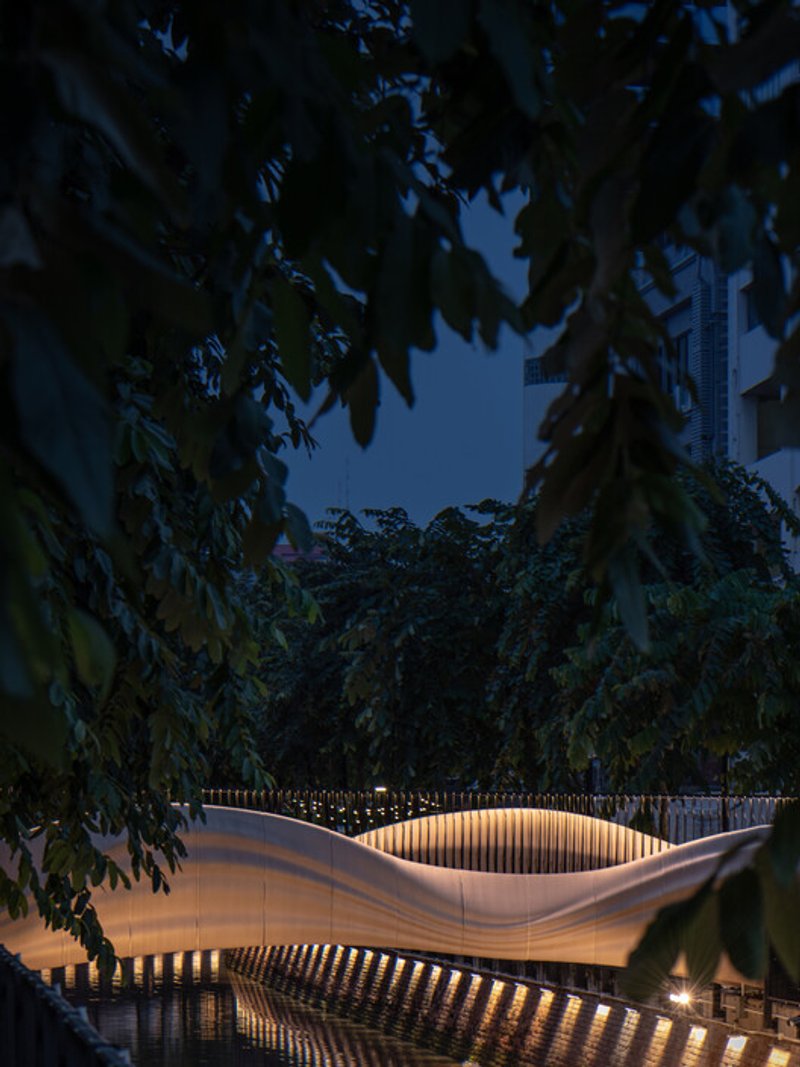
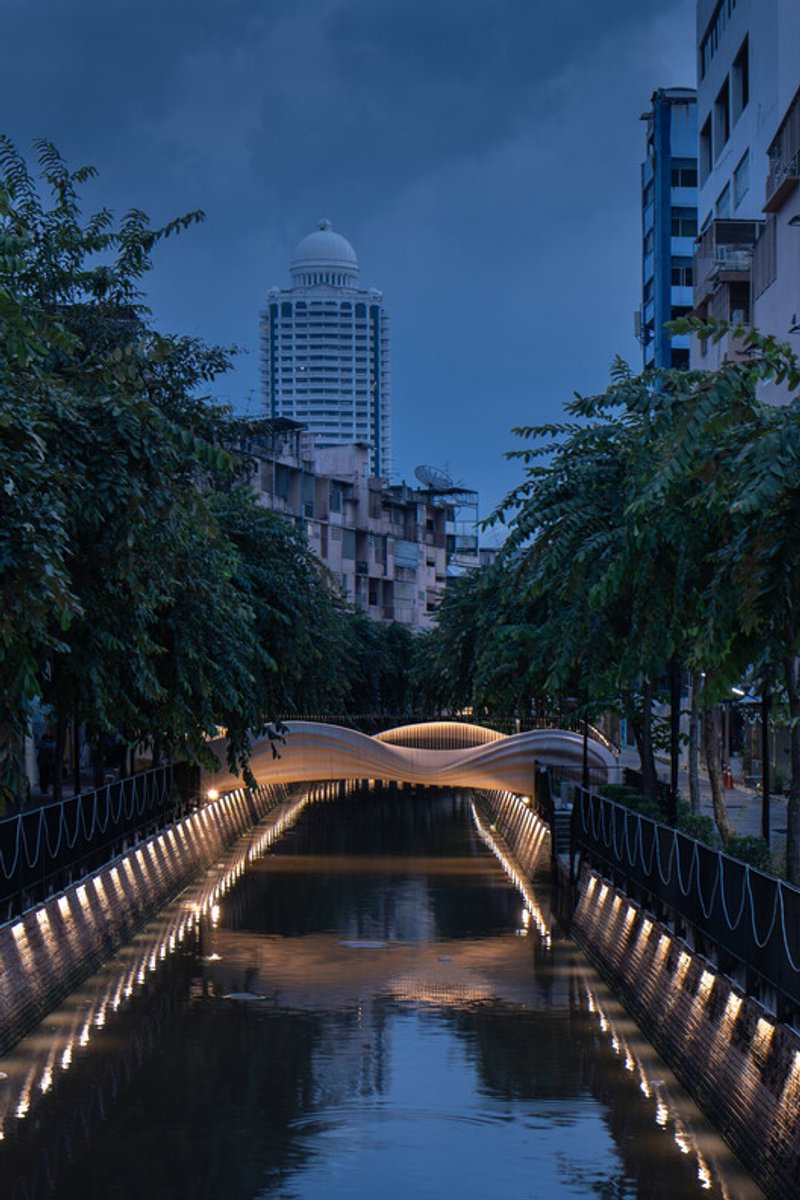
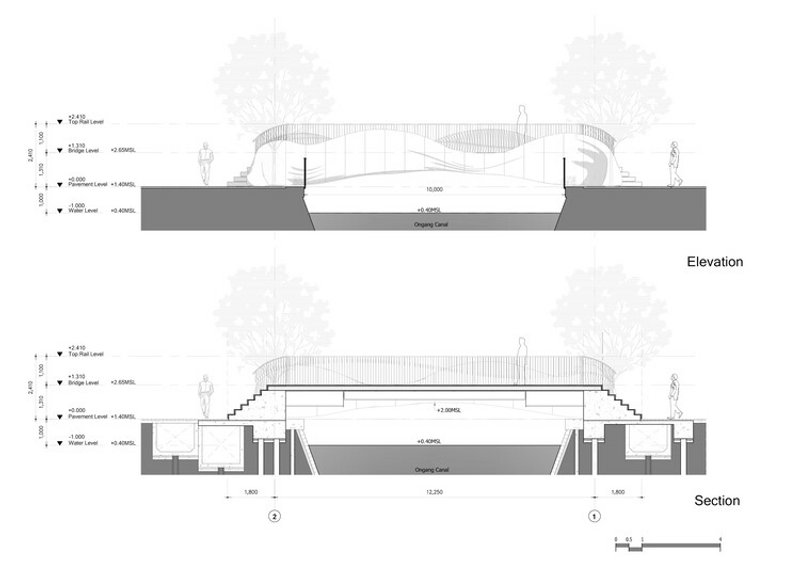
The design team’s response was to produce a compact yet highly expressive form. At only 40 square metres, the footprint is minimal, but the architectural imprint is unmistakable. It does not attempt to dominate the canal, but rather dances with it. While previous crossings along Ong Ang were conventional, this new bridge introduces a sculptural presence that gently marks its site without severing the continuity of the landscape. Soft curves echo water flow. Its crest appears to rise and fall like a wave passing through stone. Viewed from the waterfront, the bridge becomes a rippling line, a frozen moment of kinetic energy.
In this regard, the project is not only structural infrastructure—it is urban choreography. It guides movement, but also invites pause. People linger, photograph, gather at the edges. When night lighting reflects across the water, the bridge becomes a luminous threshold, extending its presence beyond function into atmosphere.
2. Form Derived from Water
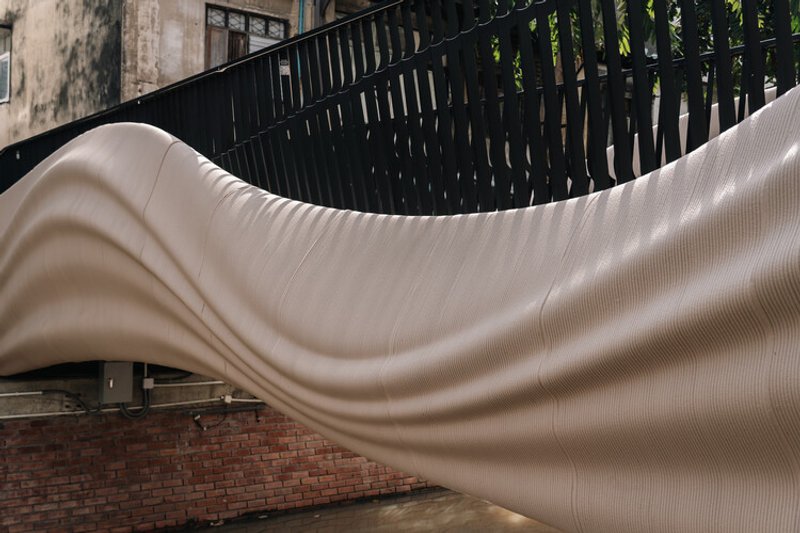
The conceptual foundation of the bridge is found in hydrodynamics—the spiraling gesture of a wave. Instead of treating the pedestrian deck as a flat beam across the canal, the architects sculpted a rising form that arcs, folds, and settles into the opposite bank. The transition between ground and central crest is smooth, flowing, without abrupt edges. This continuous profile creates a sense of walking across a moving surface even though the material is solid mineral.
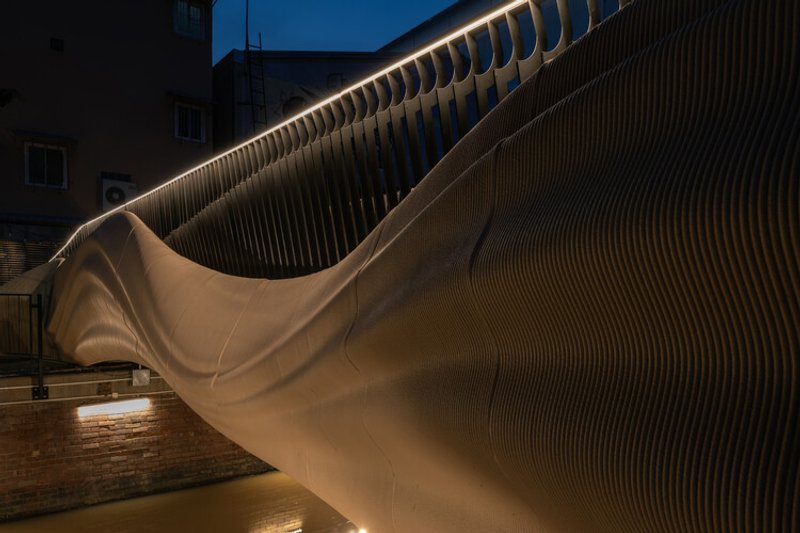
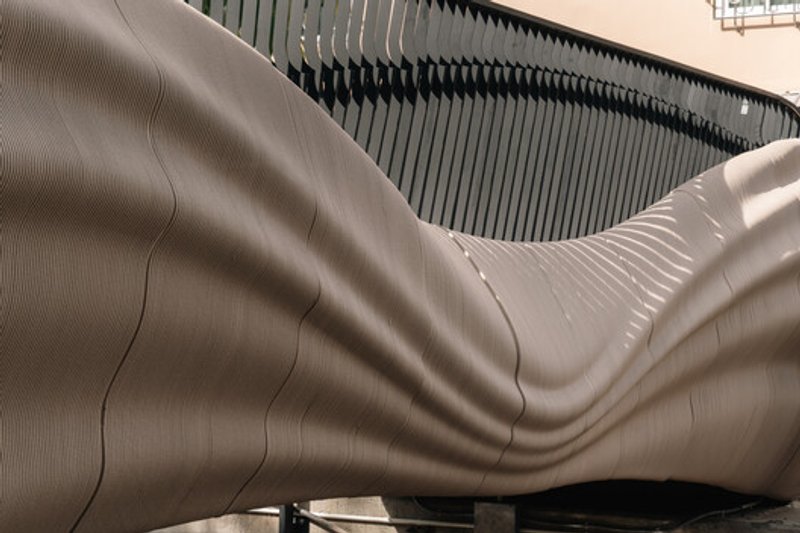
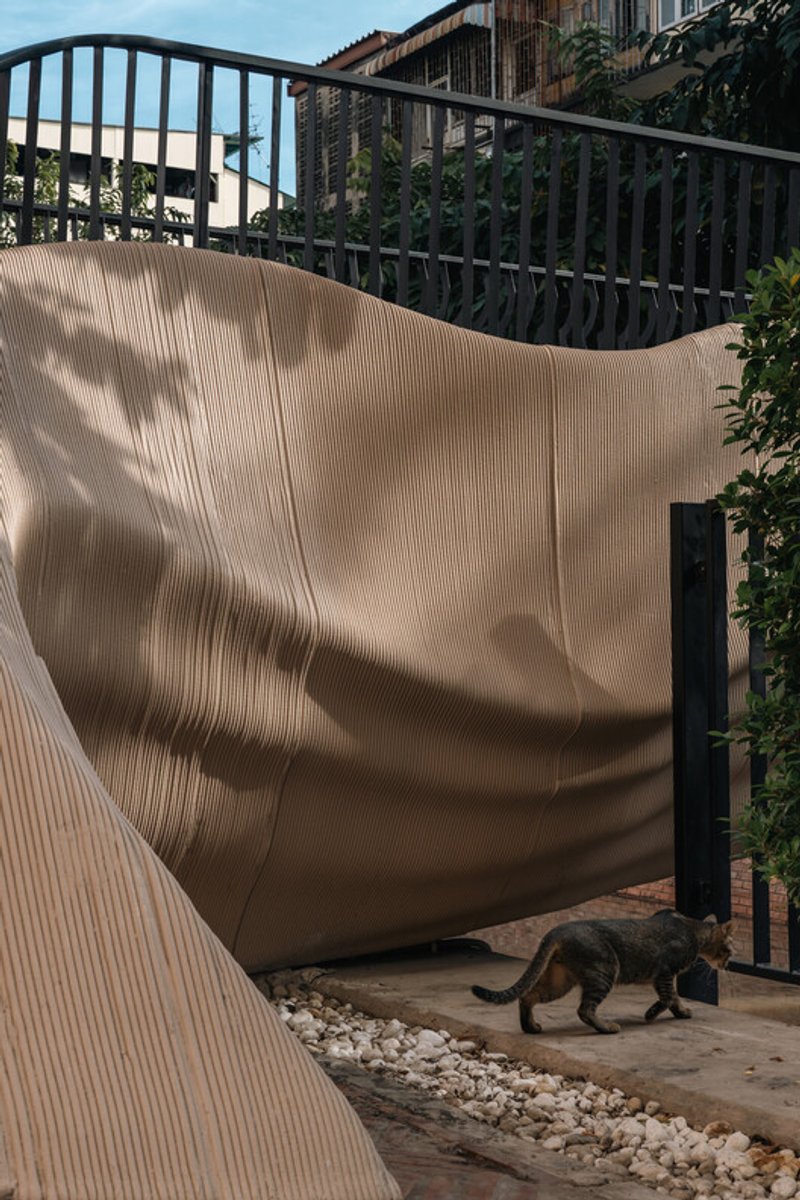
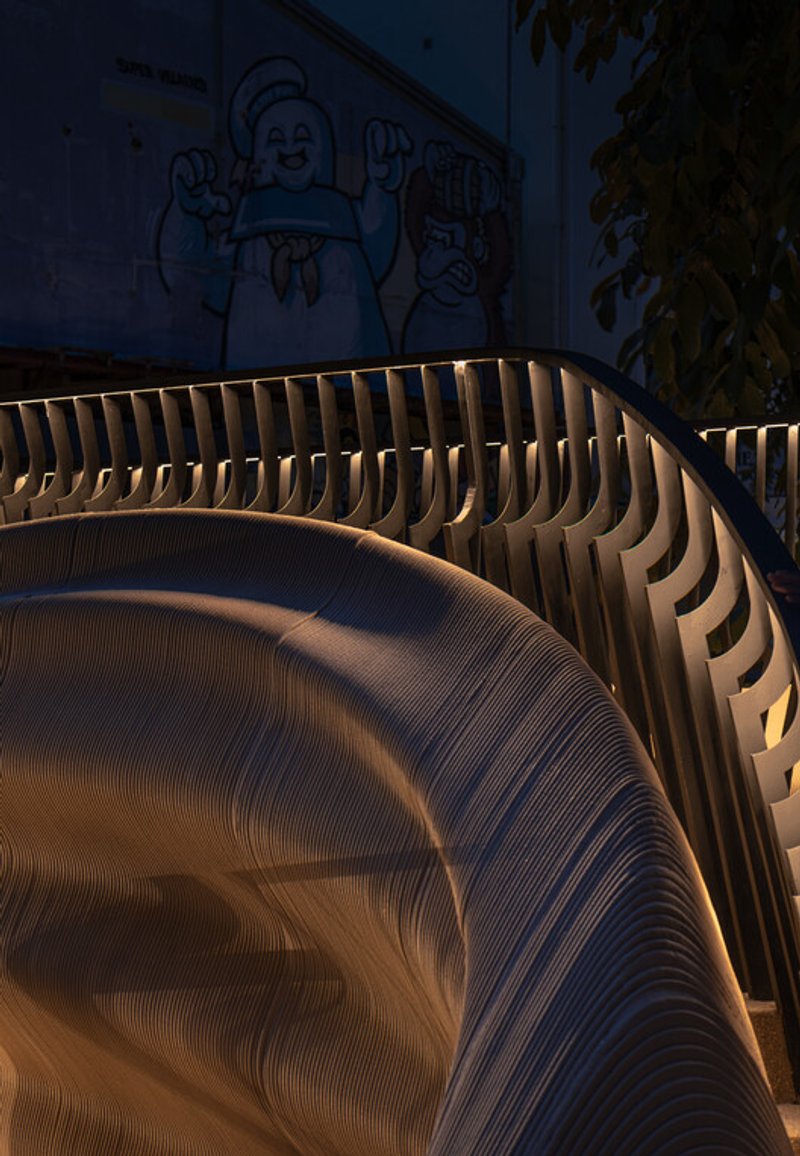
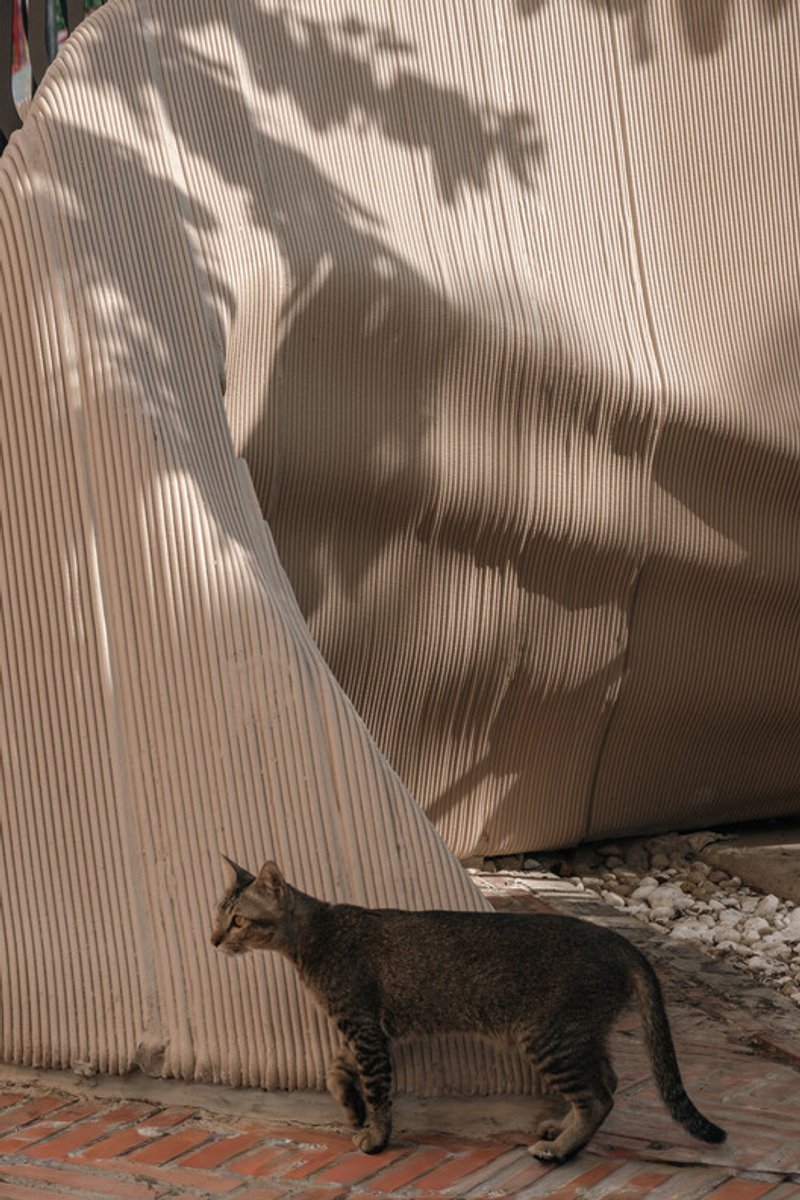
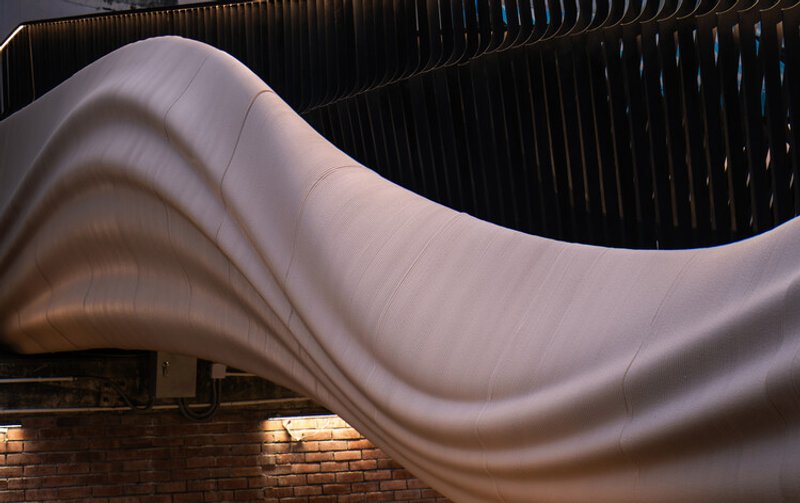
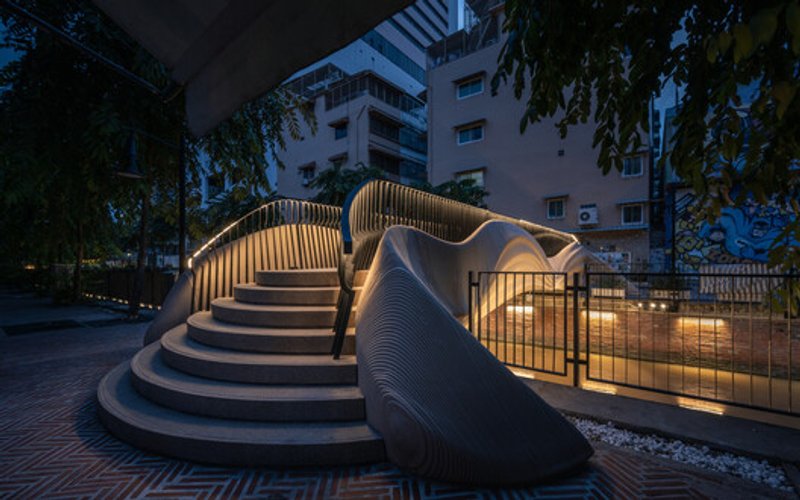
From certain angles, the underside of the bridge appears like a carved shell, its contours reflecting the ripples and refractions below. In sunlight, subtle shadows emphasize the printed layers of concrete, revealing fabrication as part of the aesthetic. Rather than conceal the process, the architects embrace it as pattern, texture, and narrative. The bridge becomes not a seamless illusion but an honest index of its making—evidence of technology, movement, and material deposition.
This fluid design approach allows the structure to feel light despite its density. The narrow canal corridor benefits from a bridge that visually lifts itself above the water rather than pressing downward into it. The expressive geometry breaks away from conventional straight spans and evokes instead a line suspended mid-movement.
3. 3D Printing as Construction Logic
What truly sets the Ong Ang Bridge apart is not only its form but how it was built. It is one of the earliest examples of large-scale 3D concrete printing infrastructure in Thailand—a milestone not just for the canal but for national building technology.
Each component was manufactured off-site using LC3 low-carbon concrete, a mix that reduces cement content through the inclusion of calcined clay. This choice was ecological, economical, and cultural. Ong Ang historically hosted a thriving pottery and earthenware market; clay shaped the identity of the district. By integrating clay-derived material into the bridge, the project embeds memory into structure, reinventing craft lineage through digital means. The bridge is, in a profound sense, an artifact of clay, a continuity of heritage transformed into infrastructure.
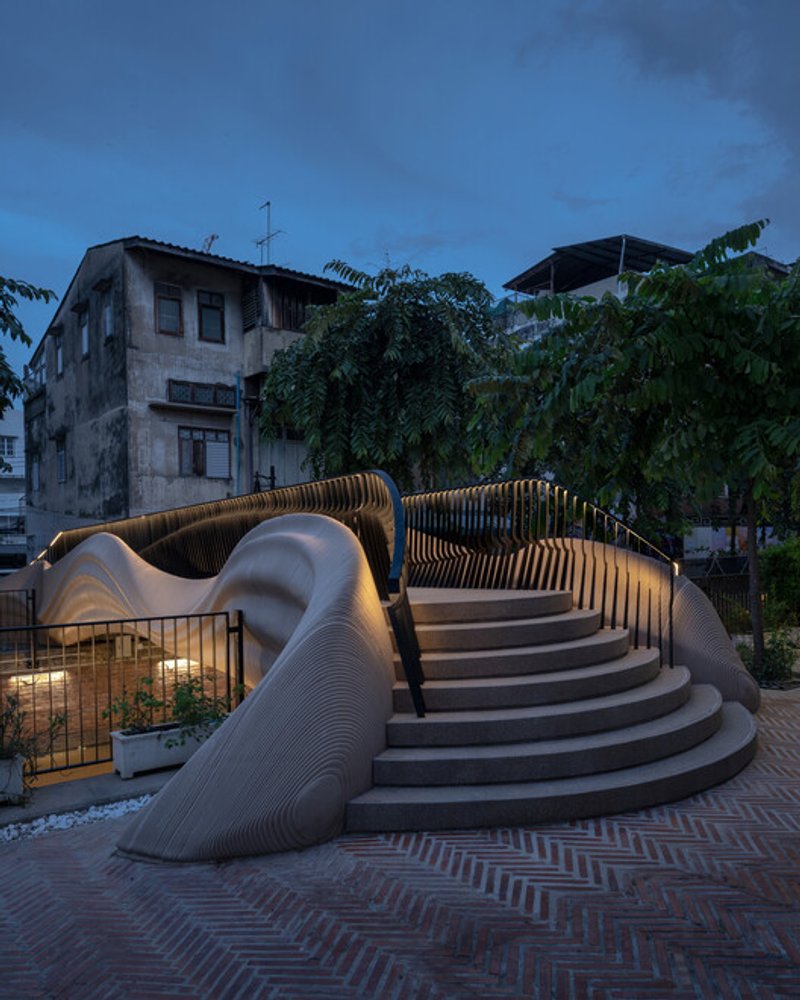
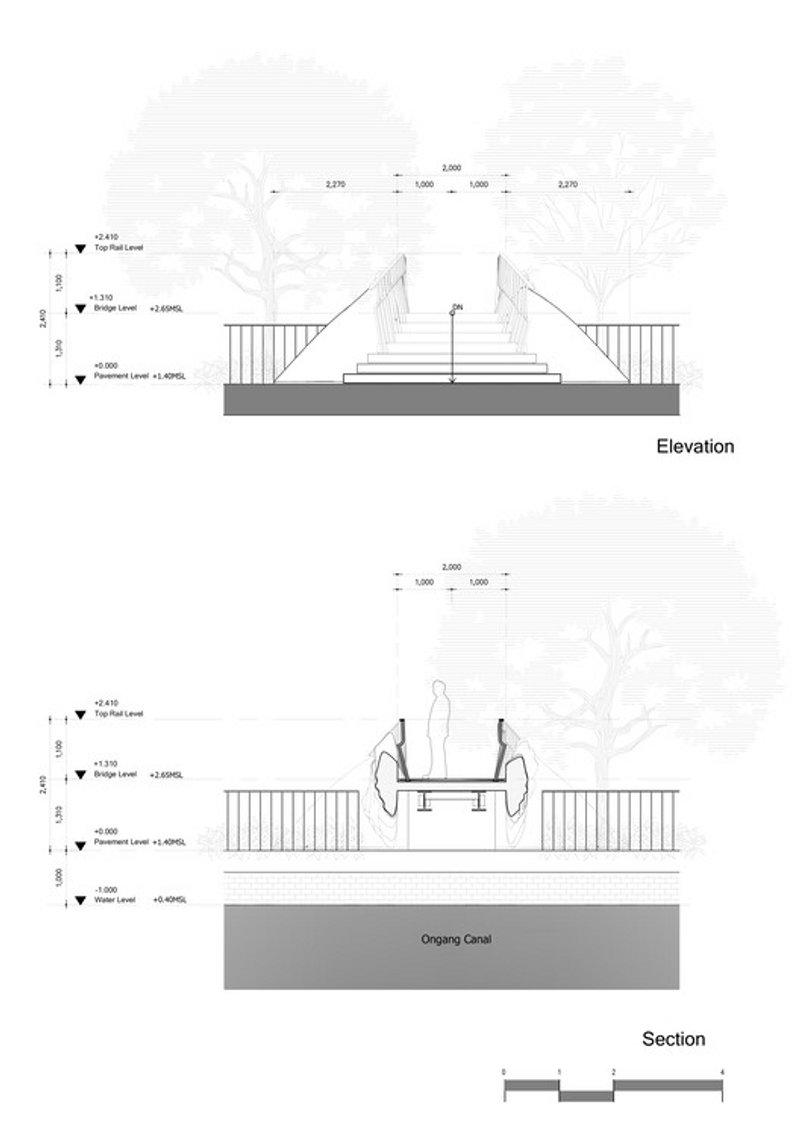
High-Performance Concrete reinforcement ensures durability and load capacity of 500 kg/m²—sufficient for heavy pedestrian flow and potential event occupation. Rather than cast monolithically, the bridge consists of 19 modules, each printed with layered precision. These segments were transported individually, lifted into place by crane, and assembled within one day. Such rapid installation minimized disruption to residents and canal-side commerce, demonstrating how future urban projects can reduce construction time, noise, and spatial obstruction.
The printing process also allowed complex geometries that traditional formwork would make costly or impossible. Curvature variations, rhythmic undulation, and expressive soffit surfaces came directly from digital modeling to physical realization with minimal waste. The modularity of production means this approach could be replicated in other cities, scaling into a new typology of lightweight printed pedestrian bridges.
4. Craft Meets Digital Fabrication
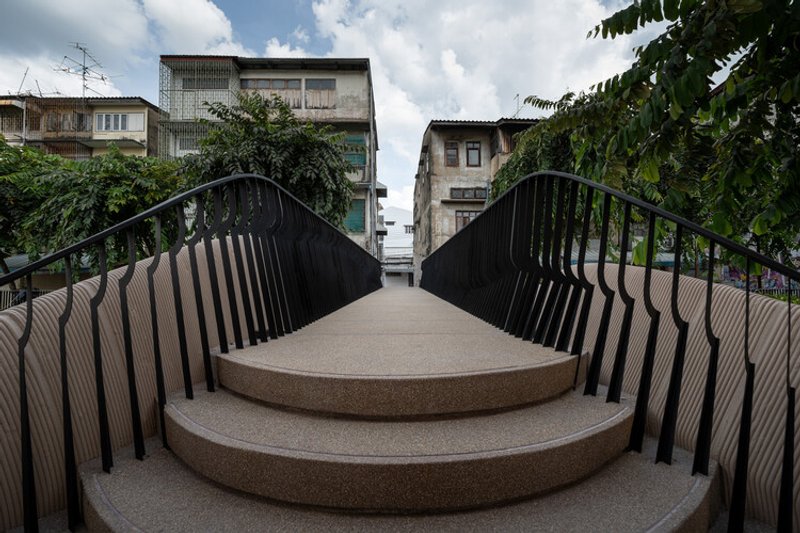
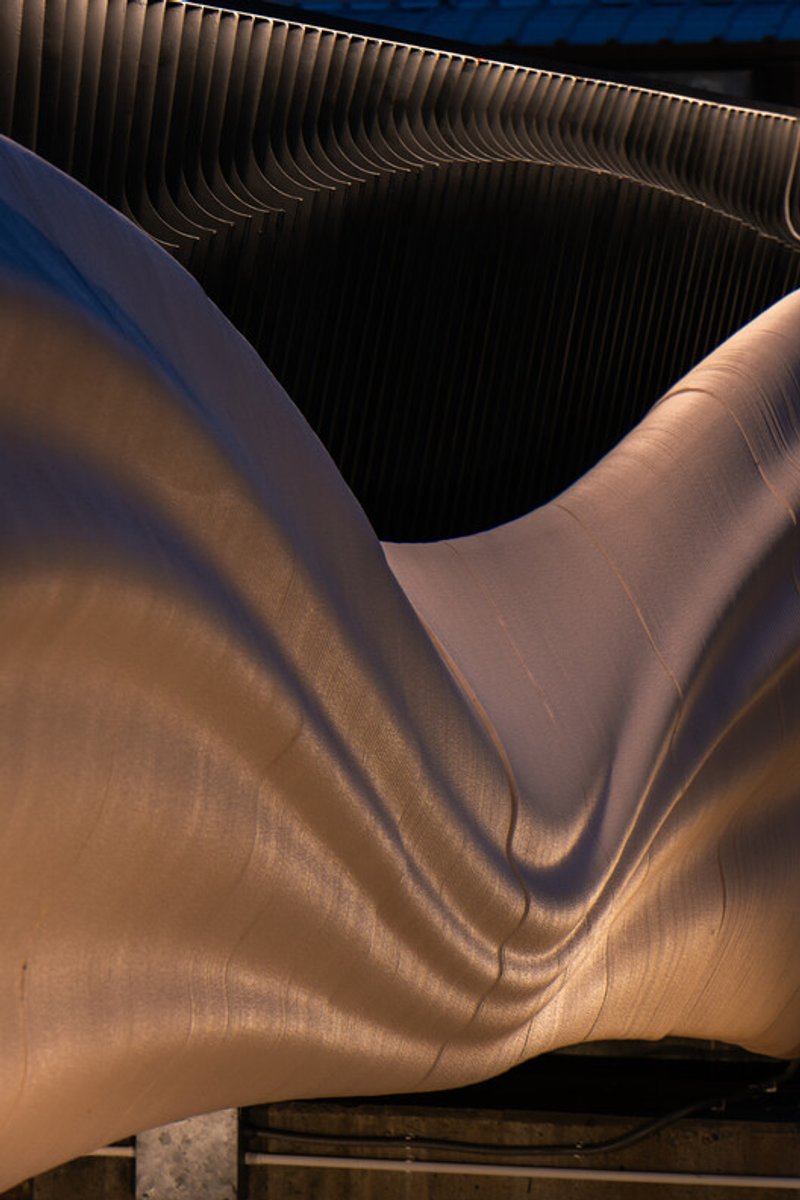
Despite the advanced equipment involved, the bridge maintains a tactile, crafted quality that resonates with local culture. The layering texture seen along the concrete surface echoes hand-thrown pottery strata. Each printed filament freezes a moment of extrusion, much like how coils in earthen vessels reveal the gestures of the maker.
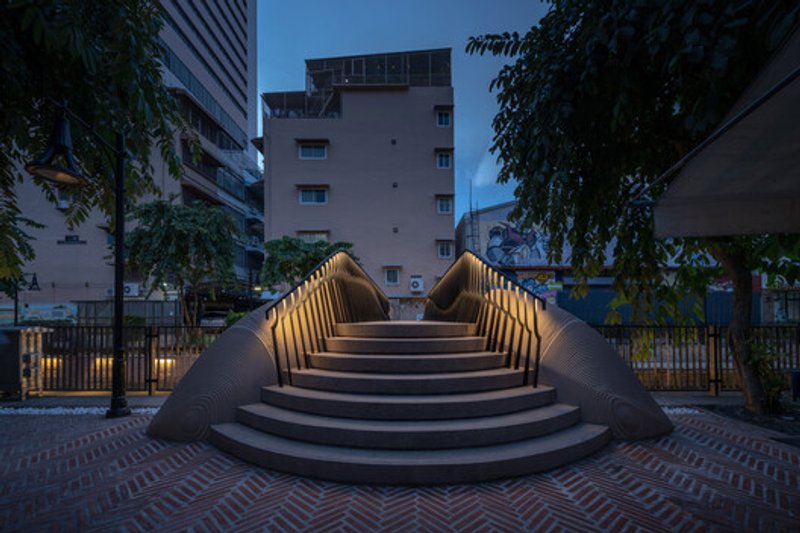
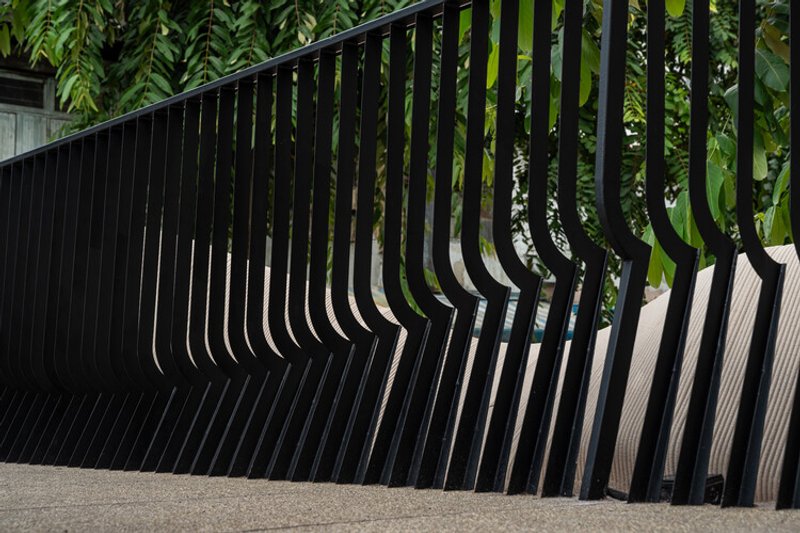
Complementing the printed mass is a steel railing that reinterprets Thai Kranok patterns into slender vertical lines. Instead of decorative excess, the motif dissolves into geometry—narrow rods rising like reeds from the deck edge, tapering lightly toward the top. From a distance, the railing disappears into shadow, making the concrete ribbon appear more prominent. Up close, its cadence leads the eye forward, guiding the pace of crossing.

Where tradition and technology meet is where the project becomes most meaningful. The bridge is not merely engineered innovation nor purely sculptural symbolism; it is the intersection of digital and vernacular DNA. Bangkok’s canals historically carried boats of clay vessels. Now, clay—transmuted—carries people across the water.
5. A Public Gesture to Revitalize the Canal
The bridge is central to the new pedestrian network along Ong Ang, which now hosts festivals, night markets, and cultural programming. Increased walkability invites activity that regenerates the waterfront, fostering small business, tourism, and local gathering. Instead of canal edges being barriers or service routes, they now function as social corridors.
The bridge serves not only those crossing, but those meeting, resting, and observing. Seating opportunities occur along the approach. Children climb the gentle incline. Photographers document the curvature against water reflection. Visitors pause not only to go somewhere, but to inhabit the view. This experience transforms a simple structure into public realm.
The success of Ong Ang Canal’s revival demonstrates that infrastructure does not need scale to make impact. Even a 40 m² bridge can redefine how an urban landscape is read, used, and valued. It exemplifies how small interventions, when designed with cultural and technological intelligence, can reshape perception at the scale of a district.
6. Toward Future Urban Fabrication
The Ong Ang 3D Concrete Printing Bridge becomes a case study for future city-building. It represents an intersection of:
– heritage-driven design– sustainable material innovation– parametric form exploration– modular off-site construction– rapid, low-disruption installation
As Thailand moves toward more climate-sensitive and digitally capable urban development, such infrastructure demonstrates a pathway forward. It is architecture calibrated to both history and future, craft and computation, material expression and public usability.
The bridge belongs to its place, yet points beyond it.
Not merely an object to cross, but a threshold to the evolving identity of Bangkok.
All the Photographs are works of DOF Sky | Ground




Popular Articles
Popular articles from the community

Driss Kettani Carves a Private World from Concrete Boxes on a Tight Casablanca Plot
Villa Polo stacks perforated concrete volumes around courtyards and a rooftop pool to shield a family home from the dense urban fabric.
BAUEN Builds Two Rammed Earth Volumes in Paraguay Inspired by the Ovenbird's Nest
In San Bernardino, a house of compacted earth channels the instinct of a constructive bird to shelter life from the Paraguayan summer.
OMCM arquitectos Builds a Summer House in Paraguay from Quarry Waste Blocks and Three Sacred Trees
In the young hillside neighborhood of Altos, a 696-square-meter concrete volume hovers on six pillars around three preserved native Yvyraju trees.
Constanti Architects Builds a Fortress of Privacy in Nicosia with House 345
A concrete and timber residence in Cyprus reinterprets the traditional introverted courtyard house for a new urban landscape.


Similar Reads
You might also enjoy these articles

Olio Towers: A Mid-Rise for Performers That Fuses Housing, Rehearsal, and Stage
Located blocks from Houston's Theater District, this modular tower stacks living units around a central performance atrium.

Oasis: Modular Green Housing Carved into Dhaka's Urban Fabric
A shortlisted Plugin Housing entry reclaims unauthorized settlements in Dhaka with stepped concrete volumes, green roofs, and ventilation-driven design.

Black Hole: A Floating Megastructure for the Post-Physical Era
Emiliano Mazzarotto envisions a spherical, self-scaling arena where e-sports, digital hotels, and holographic stadiums replace traditional public space.
Compact & Sustainable Living in Piraeus: A Four-Level Family Home Built Around Light and Air
A narrow townhouse in one of Greece's densest port cities uses a central atrium and passive strategies to house three generations under one roof.


Explore Architecture Competitions
Discover active competitions in this discipline




The International Standard for Design Portfolios


The Global Benchmark for Architecture Dissertation Awards


The Global Benchmark for Graduation Excellence


Challenge to reimagine the Iron Throne
Comments (0)
Please login or sign up to add comments
No comments yet. Be the first to comment!