
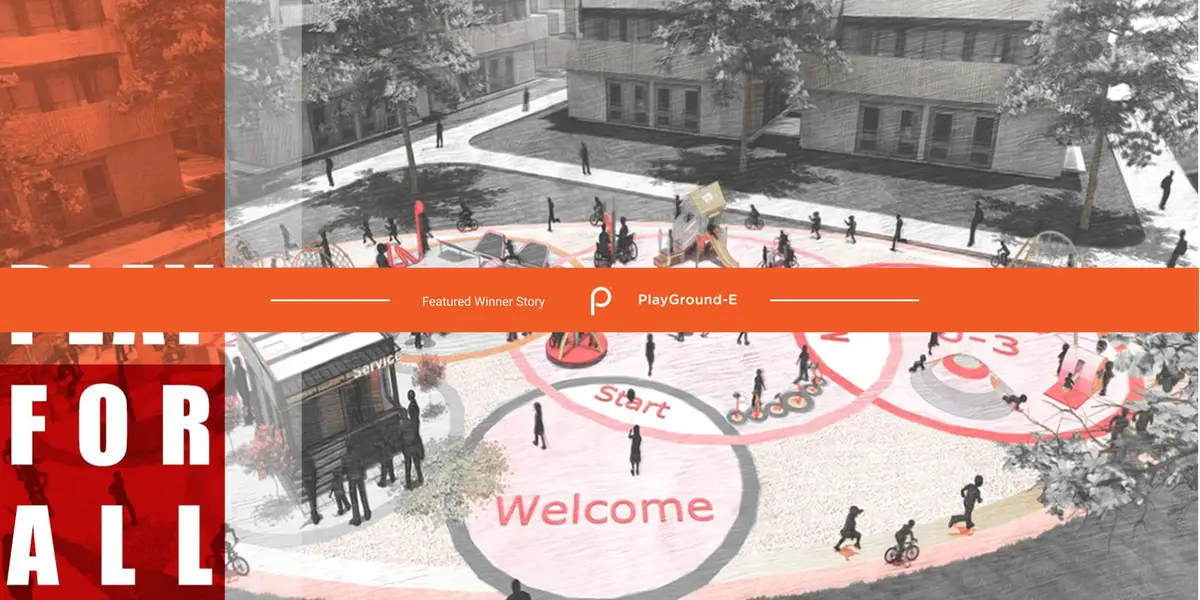
A new playground for a new generation.
Playground - E - Result Story


Playgrounds have been an integral part of our path of growth right from childhood since ages. They are the place, which allows practically no limits for a child to be themselves while offering a safe zone while they continue to be so. Where the world is entirely designed for adults the playgrounds are the social space for kids to engage with kids of their age.

This clearly is the single biggest advantage of any growing up journey, which cannot be compensated by parents, videos, or devices. A child requires a lot of activity, not only mental but physical, social-sided spheres to engage. And with passing times these spaces are losing relevance.
The problem is pretty straightforward if we see it from the perspective of evolution. Parents are always worried about children not spending time with other kids or spending time on activities that involve physical development. The culprit in this complaint is the devices that usually gobble the attention span of almost every child around the world and it continues to. Attraction to devices that are labeled harmful, is only the half-truth if we inquire about the core reason why the problem persists and is growing.
Smartphones are a high-end piece of technology that has evolved over the decades to serve content that has the ability to get not only children but even adults to get hooked. What it ignores is the fact that the amount of work put in these devices is incomparable to work put on developing great playgrounds for children to play in. How can we tip the balance again?
The design is to develop a model playground that has the ability for children to play in the times of today. The design exercise can be considered as an update to the traditional playground. This update can involve better furniture, landscape design, technologies or systems that use hybrid mediums and games to keep them engaged.
The jury for the competition consisted of esteemed designers, professionals, and academicians from around the world. The Lead Jurors for the competitions were as follows:
JOSÉ DE VILLAR MARTINEZ, Founder, DVCH DVCH DEVILLARCHACON Arquitectos, Mexico
CARLOS CHACÓN PÉREZ, Founder, DVCH DEVILLARCHACON Arquitectos, Mexico
CHRIS BOSSE, Director, LAVA, Australia

Some of the Best of competition projects are:
Winning Project: Metatopia Playground
By: Sanny Ng, Iris Lee & Sunny Wang

Cover image of project Metatopia Playground
Description: A modular system with interchangeable play elements.
-----------------
People’s Choice: PLAY FOR ALL
By: Riham Faragallah
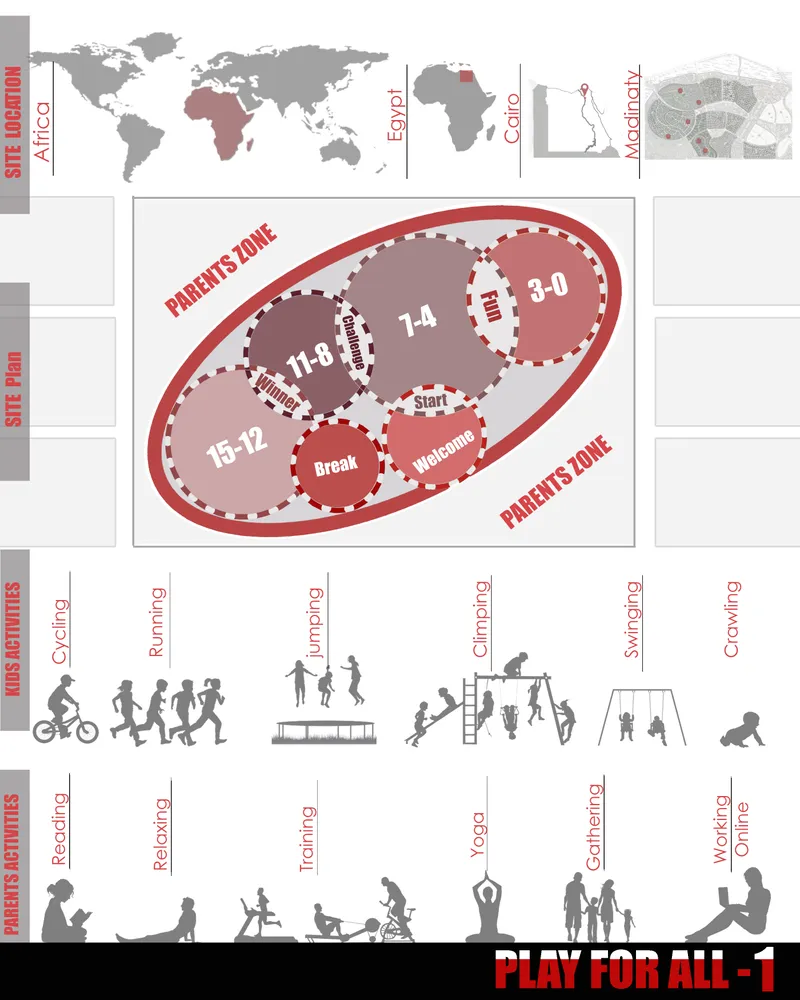
Site plan and location of project play for all
Description: Play for all concept is based on the new innovative equipments as a framework in which there is an interaction between children and parents, this helps them to understand their surrounding environment in adventurous ways.
--------------------
Editor’s Choice: Numuga
By: Chris Moore

Numuga Concept
Description: Play 8+ sports in the same space at the same time. Users can learn the basics of sport without necessarily taking part in a match format. Learning how to pass, control, catch, throw and aim are key skills that can be transferred to multiple sports. Our spaces are a gateway into the sport for beginners, as well as honing the skills of experienced players.
--------------------
Editor’s Choice: NATURE INTEGRATION PLAYGROUND
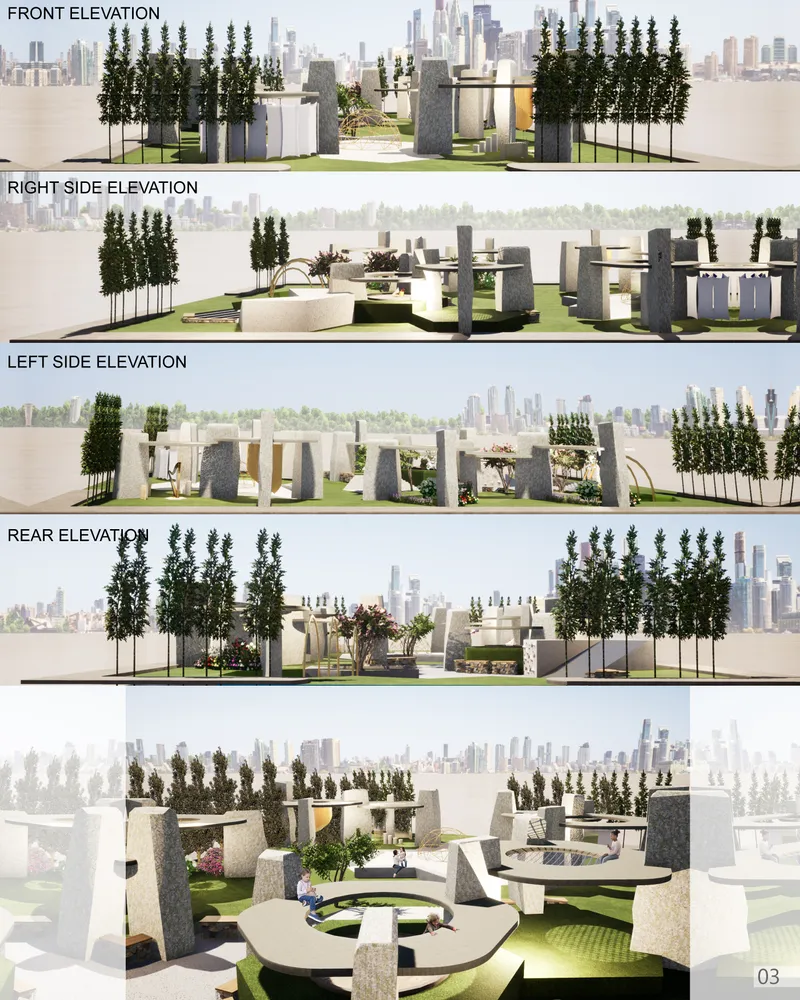
Elevation from all sides
Description: Entry for the design competition.
Follow us on social media: Facebook | Instagram | LinkedIn | Twitter | Youtube
References (3)


Popular Articles
Popular articles from the community


Cloaked Colonization: A Mobile Underwater Habitat That Moves Like a Fish
Micah Abaya's shortlisted EHC Pacific entry reimagines ocean settlement as a dispersed network of self-sustaining architectural organisms.

Opera on the Sea: Driftwood Logic Shapes a Timber Opera House on Estonia's Coast
Trevor Orgill's opera house translates the entangled drift of floating timber into a civic building where wood, water, and music converge.

Tsunami Convergenics: Turning Catastrophic Ocean Forces into Underwater Housing Infrastructure
A speculative underwater settlement off the coast of Onagawa, Japan, treats tsunamis and typhoons as energy sources rather than threats.

Faces of the Soviet Avant-Garde: Turning Moscow's Street Names into an Open-Air Museum
A network of sculptural installations across a Moscow residential district transforms forgotten architect names into spatial encounters with cultural memor

Similar Reads
You might also enjoy these articles

The Amber Palace Opera: A Geological Fiction Surfaces on Tallinn's Baltic Waterfront
Pierre Brillard reimagines a Baltic legend as a public landscape, opera house, and waterfront promenade rooted in Tallinn's coastal identity.
Dynamic Modules Shelter: A Telescopic Ring for Mountain Pilgrimage
A circular modular framework of steel, bamboo, and fabric grows vertically with demand, wrapping communal ground in adaptable shelter.

Singing Woman: Contemporary Architecture Inspired by Estonia’s Voice and the Sea
Singing Woman turns Estonia’s song culture into flowing opera house architecture, blending public life, landscape, sea, and national memory.
HYPERBLOCK: Flexible Urban Design for Barcelona’s Future City
HYPERBLOCK reimagines Barcelona as flexible urban design, layering density, daylight, public space and adaptable housing above Cerdà’s grid.

Comments (0)
Please login or sign up to add comments
No comments yet. Be the first to comment!