
Retirement Family Home Design: Creating Multigenerational Living Spaces
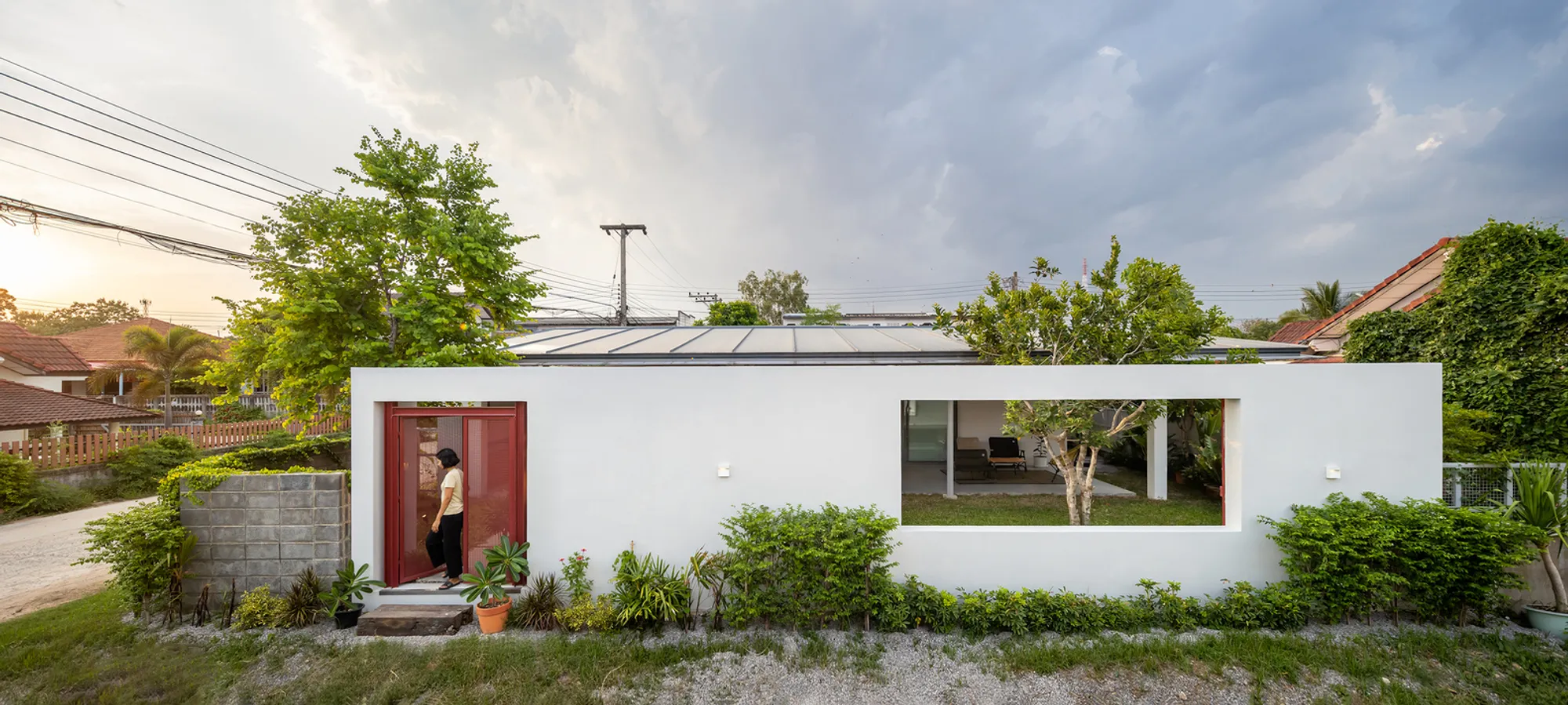
The EE House by WOS Architects creatively combines retirement and communal family living in a seamlessly integrated, accessible single-level design.


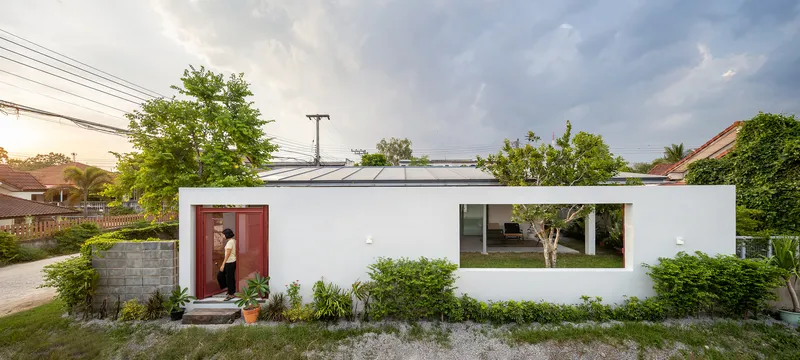
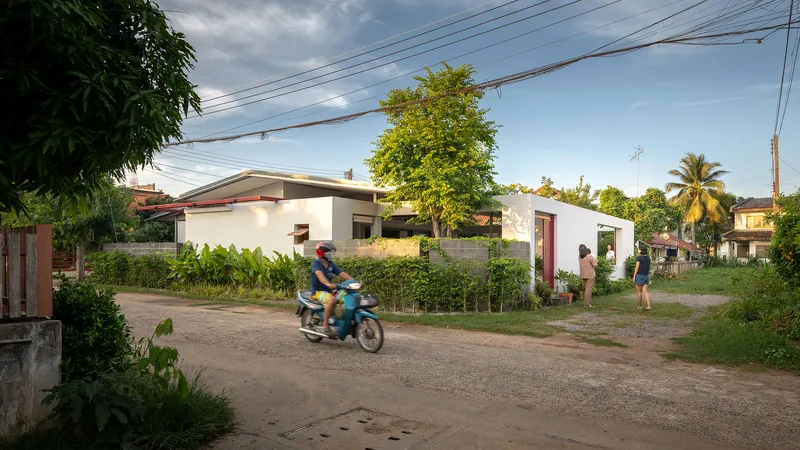
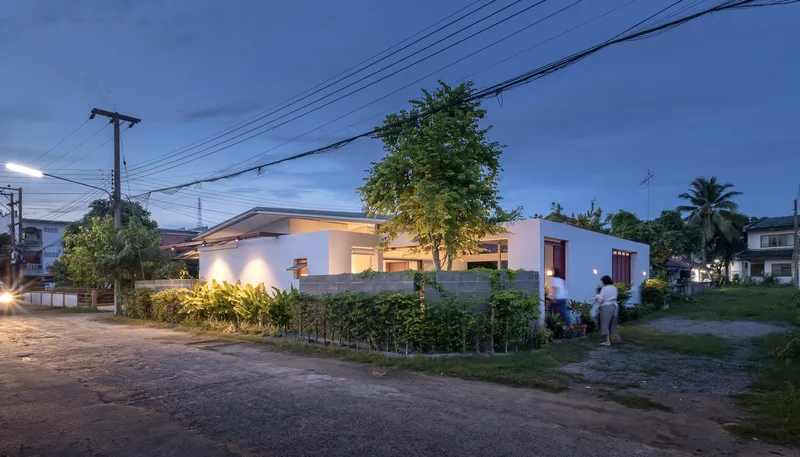
The EE House, designed by WOS Architects, is a unique architectural response to the needs of retirement and family gathering in Buriram Province, Thailand. This 160 m² structure is not just a home; it's a blend of private retreat and communal hub, specifically tailored for a retiree who values family togetherness.
Architectural Design and Functionality
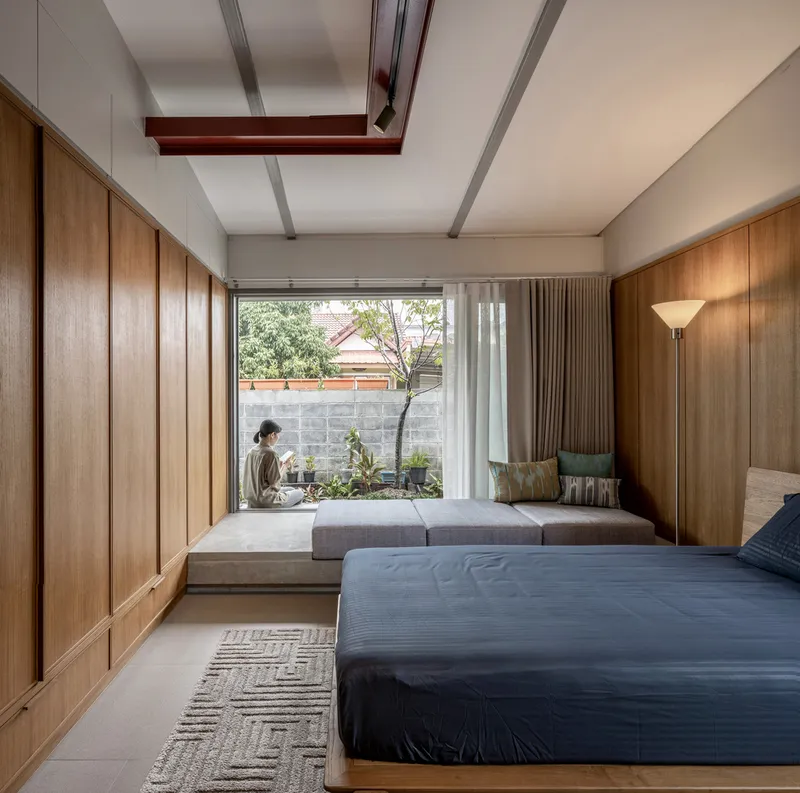
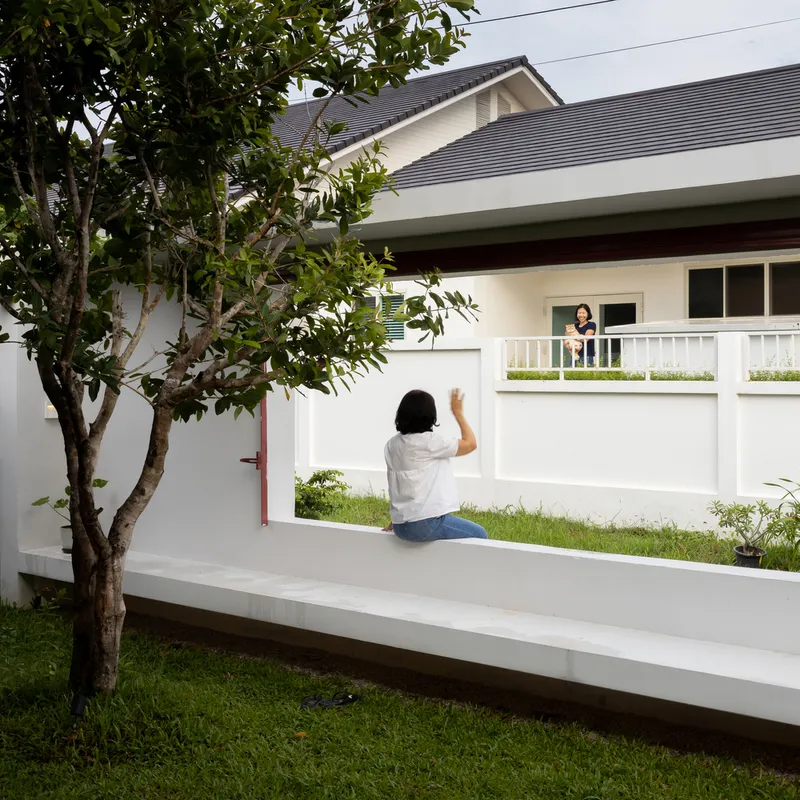
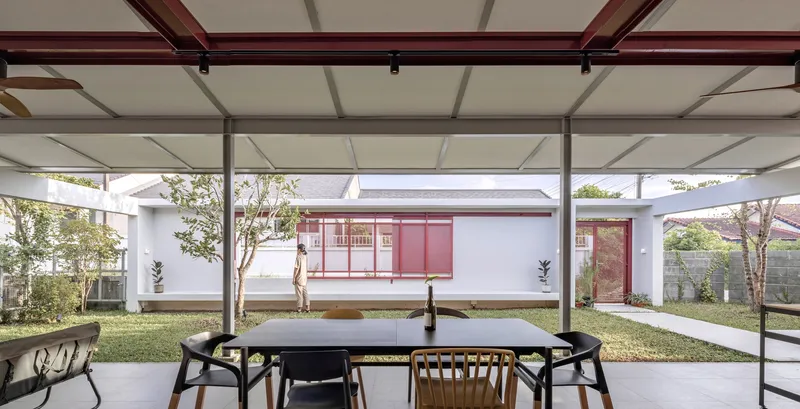
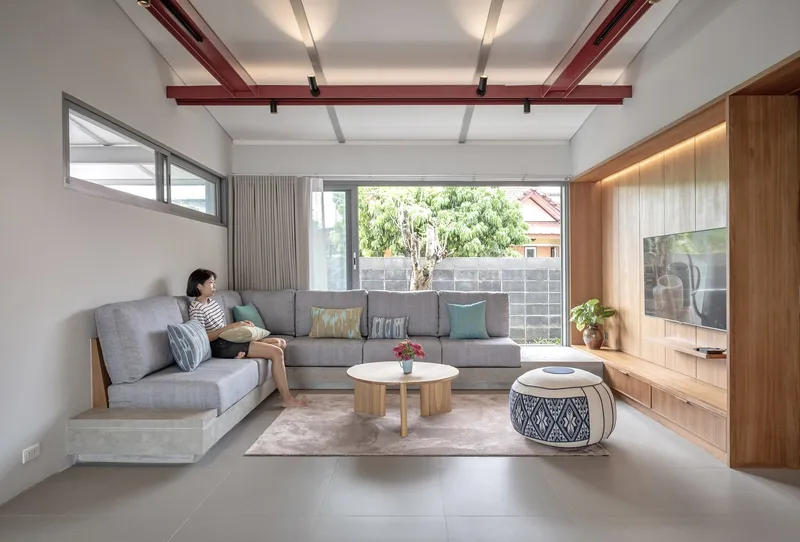
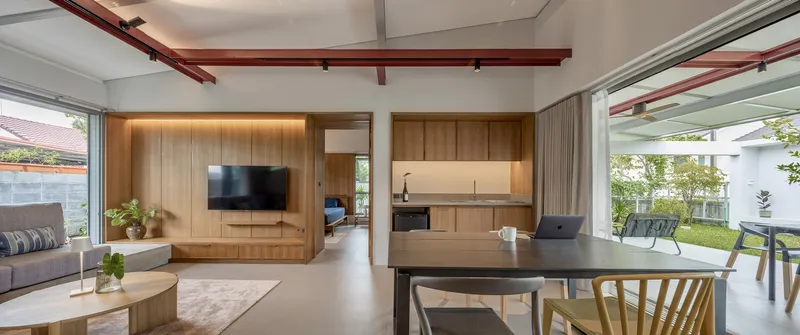
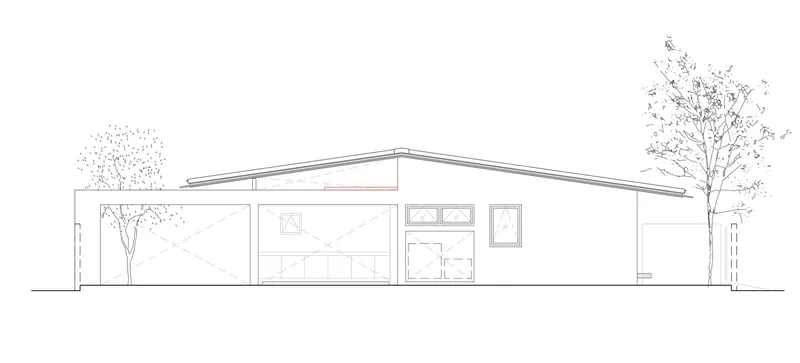
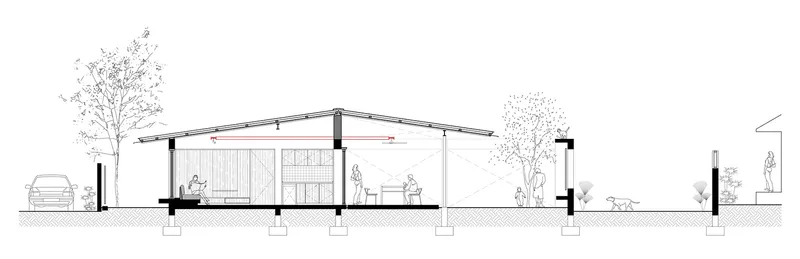
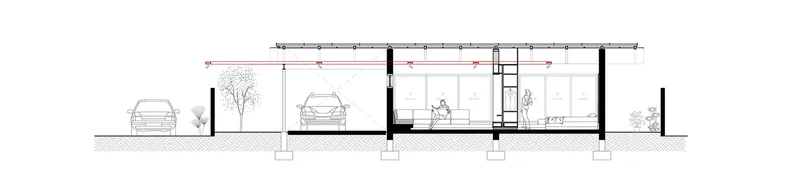
Private and Communal Spaces: The house is ingeniously divided into distinct zones. The northern section serves the personal needs of the resident with facilities including a bedroom, bathroom, and a compact living area. The southern part extends into a large communal space, featuring an expansive balcony that doubles as an outdoor kitchen and dining area, ideal for family gatherings and culinary activities.
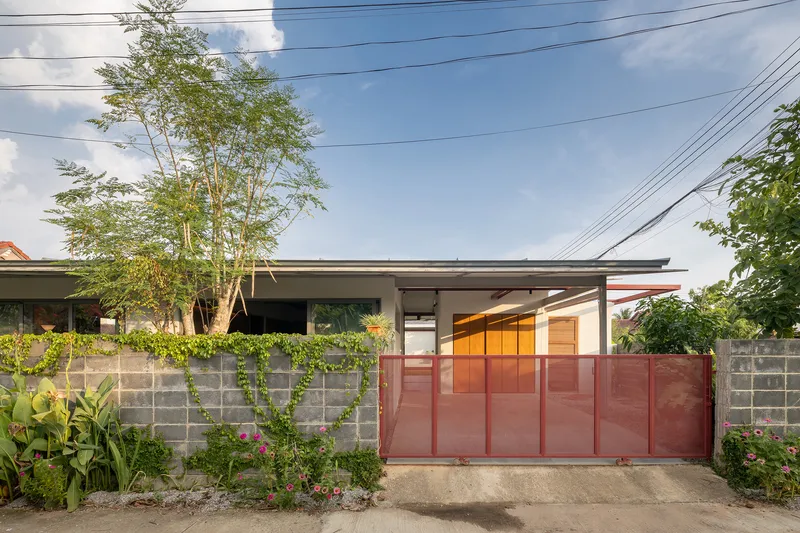
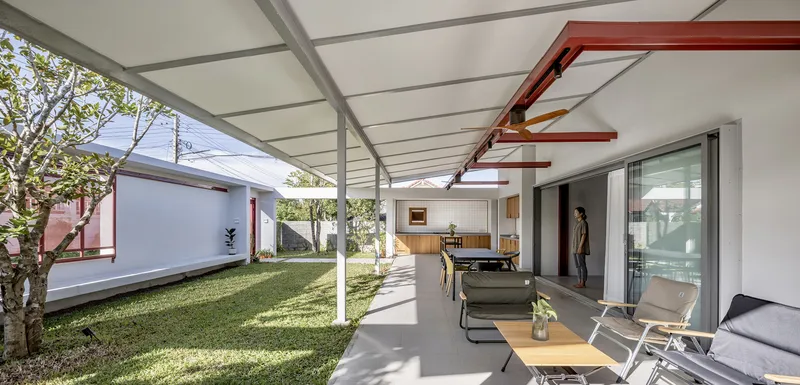
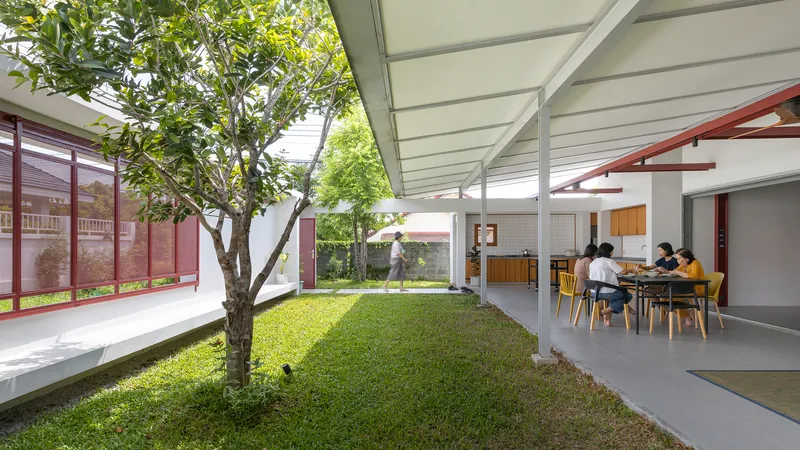
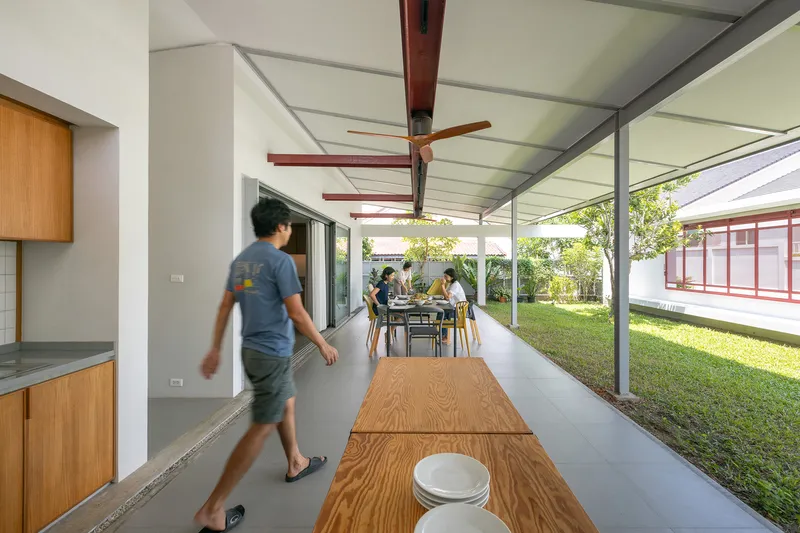
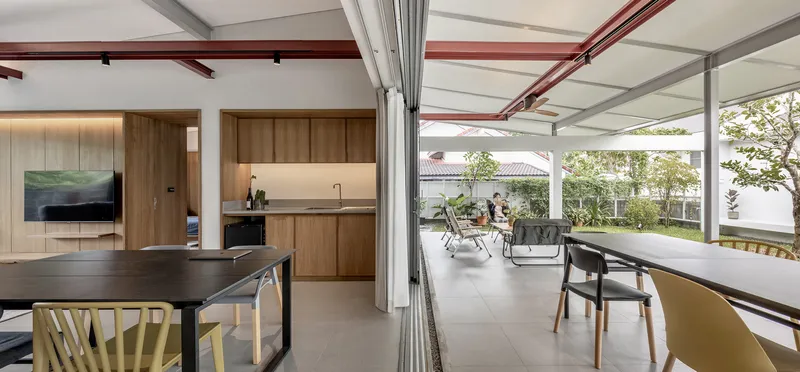
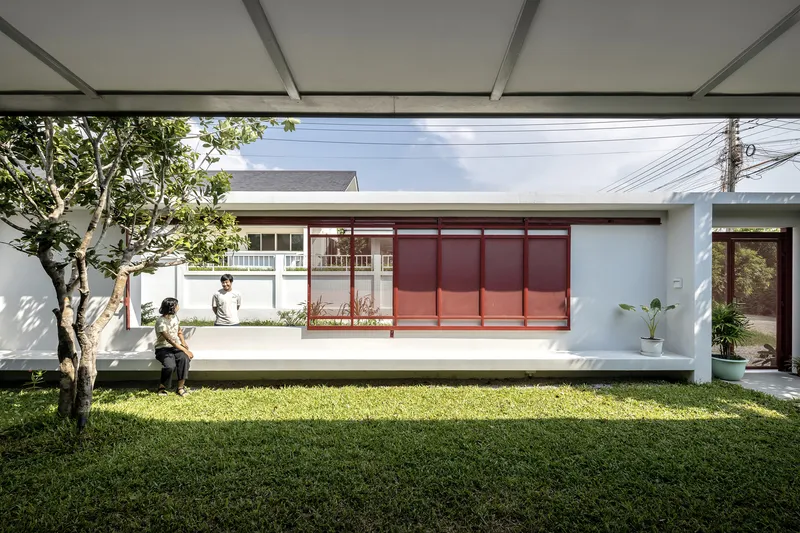
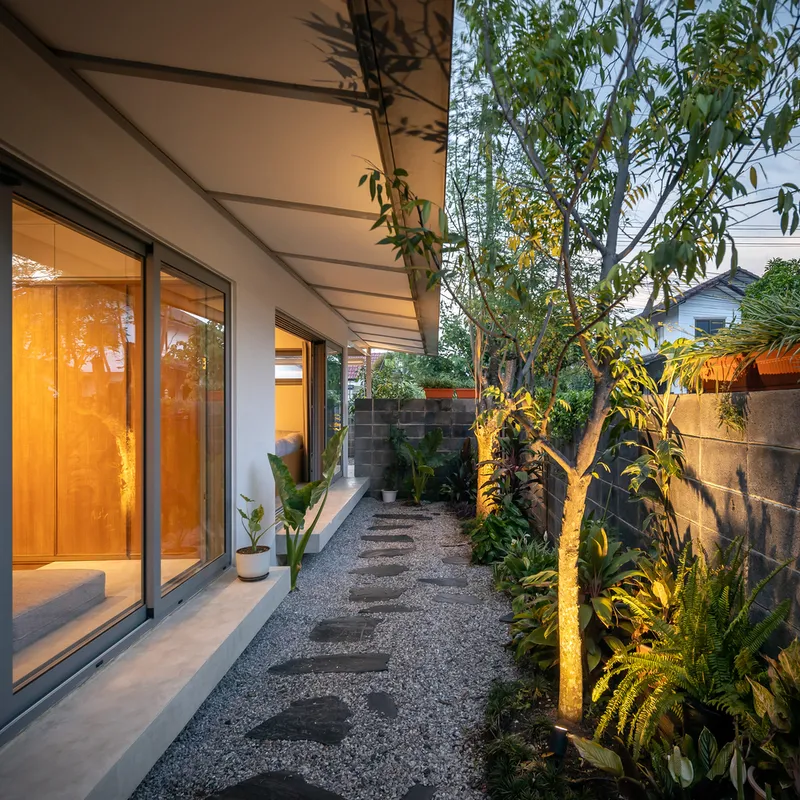
Integration with Nature: Positioned to maximize natural ventilation and shade, the architecture incorporates the surrounding landscape into its design. The garden area, situated between the balcony and the perimeter wall, acts as a natural extension of the communal living spaces, fostering a seamless flow between indoors and outdoors.
Innovative Use of Space
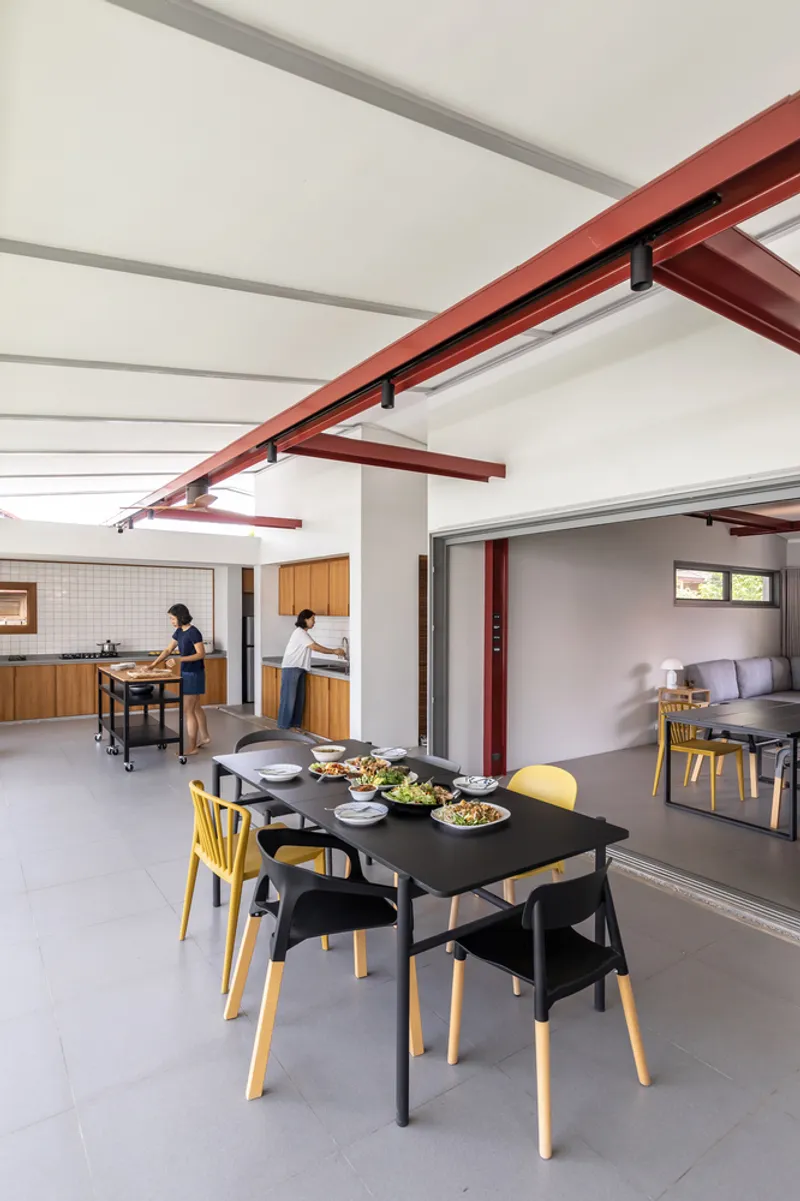
Adaptive Outdoor Areas: The design of the EE House allows for versatile use of outdoor spaces. The balcony is not just a dining area but a pivotal element that enhances the interaction between the house and its garden. This space serves as a social heart where family members can engage in various activities while enjoying the comfort of shade and cool breezes.
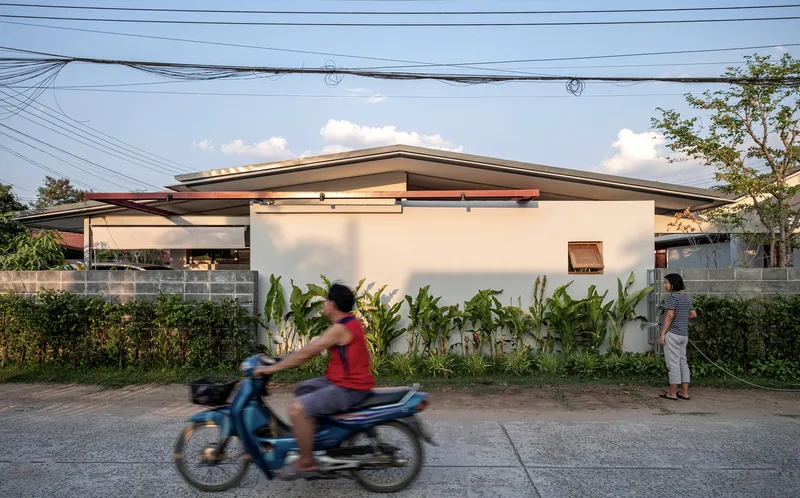
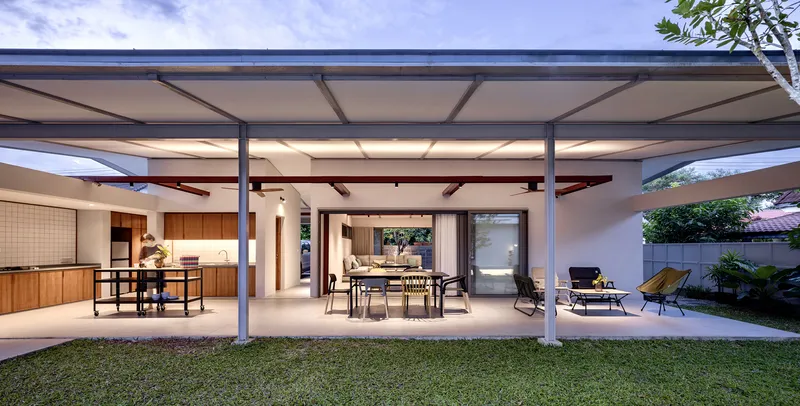
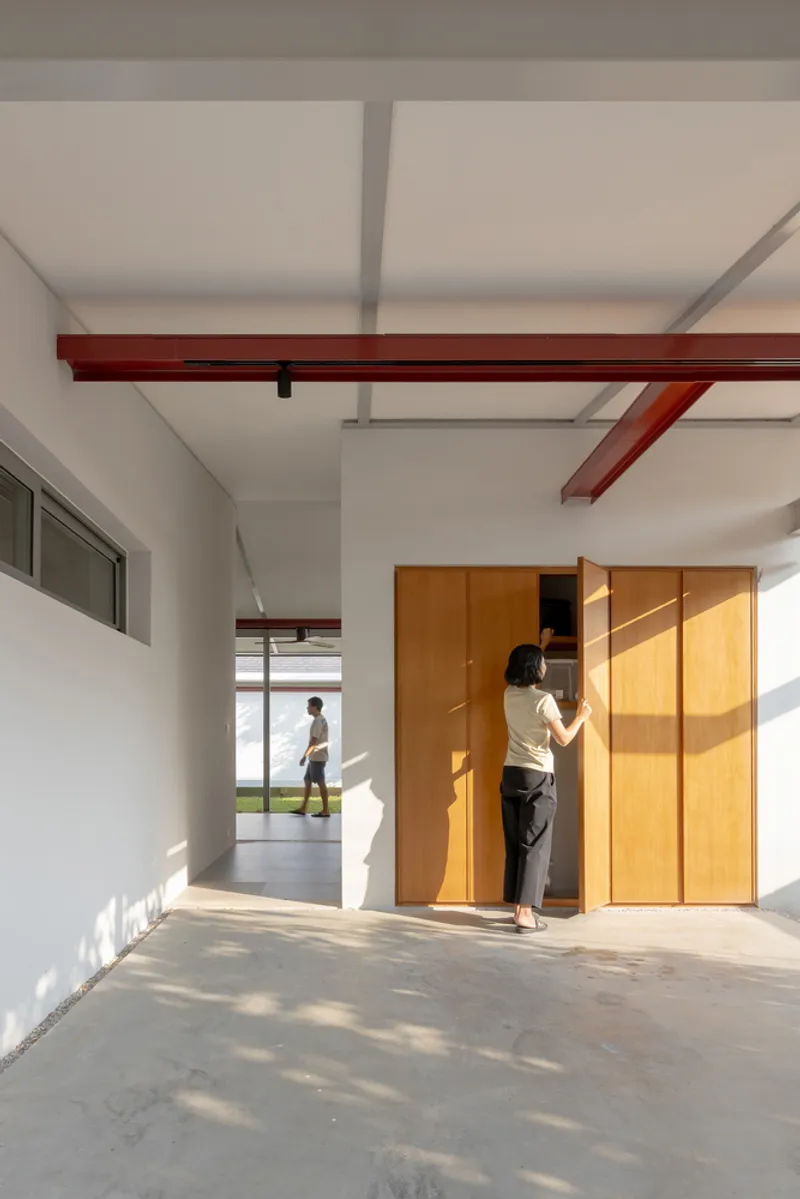
Accessibility and Convenience: Recognizing the needs of the elderly, all areas are designed on one level. This thoughtful layout eliminates the need for stairs, ensuring ease of movement throughout the home. From the parking area to the living spaces, every part is accessible, demonstrating a keen understanding of ergonomic design.
Sustainable and Aesthetic Elements
Visual and Functional Connectivity: The architectural strategy includes the use of sliding doors and continuous seating arrangements that not only optimize space but also enhance the visual connection to the garden. This design philosophy extends to the bedroom, where seating transforms into a daybed, offering views of both the garden and the living area.
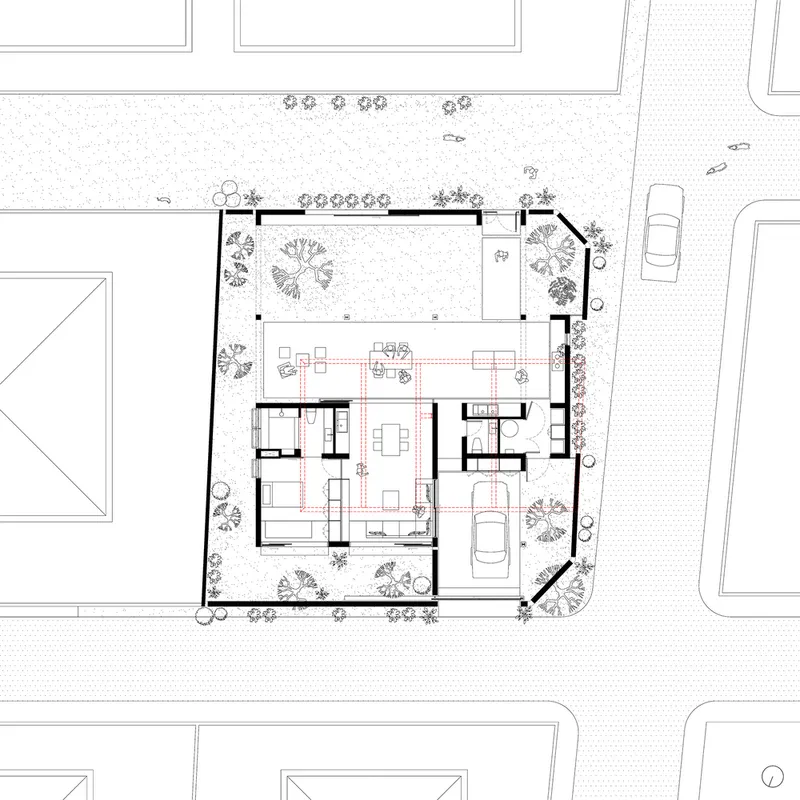
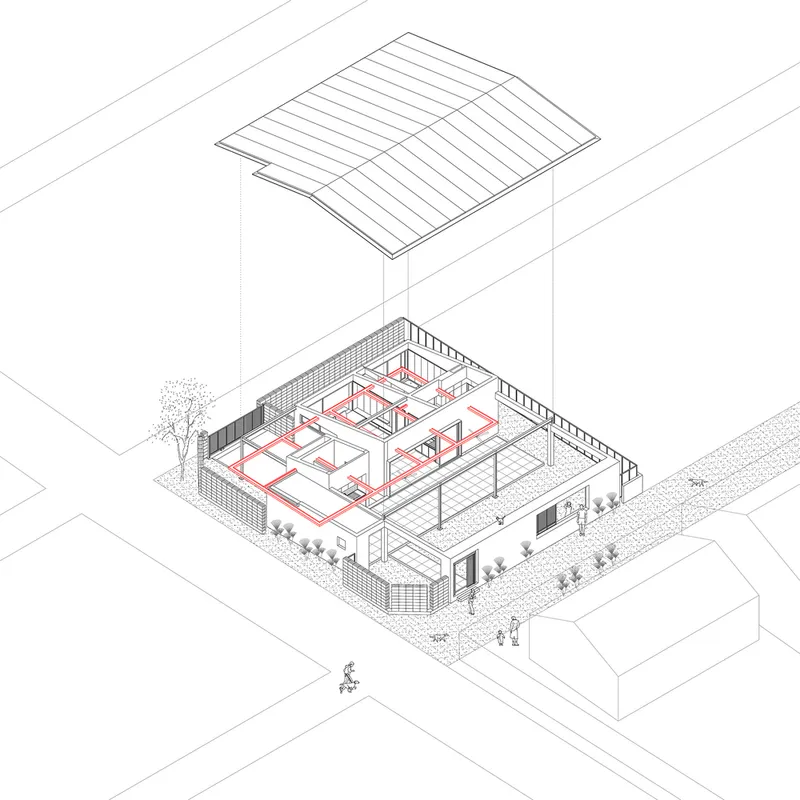
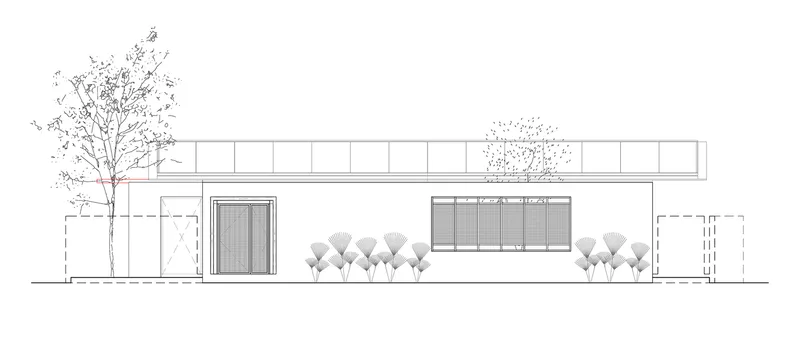
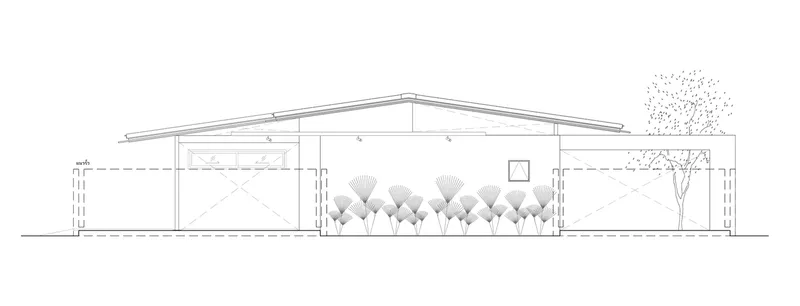
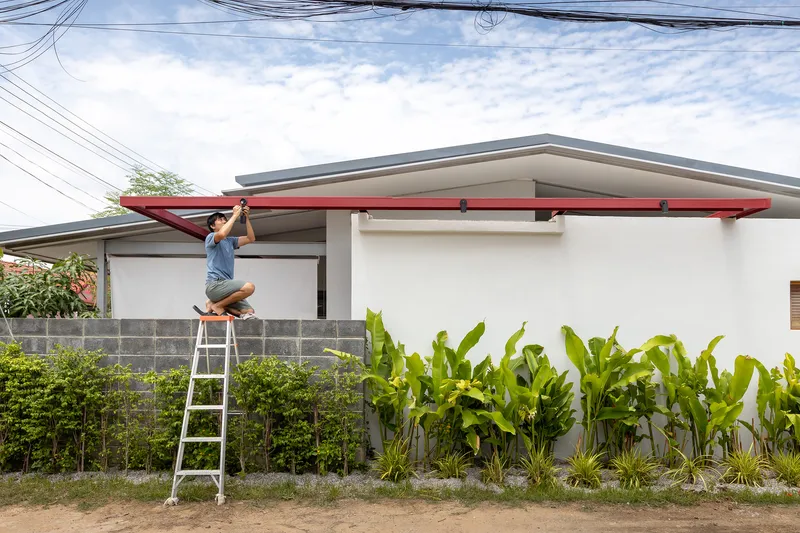
System Integration and Maintenance: Maintenance ease is a key consideration. Systems are designed for easy access and management, with visual elements like red-painted I-beams that not only serve functional purposes but also add to the aesthetic appeal of the house.
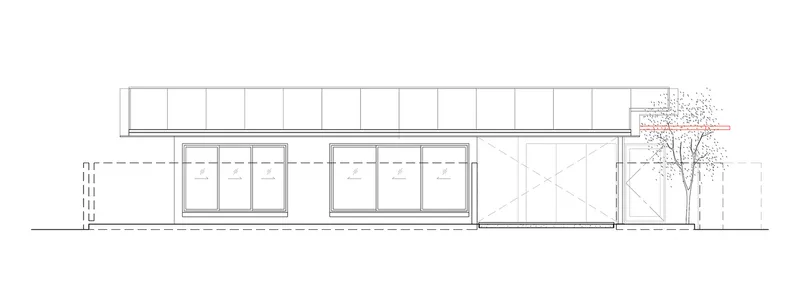
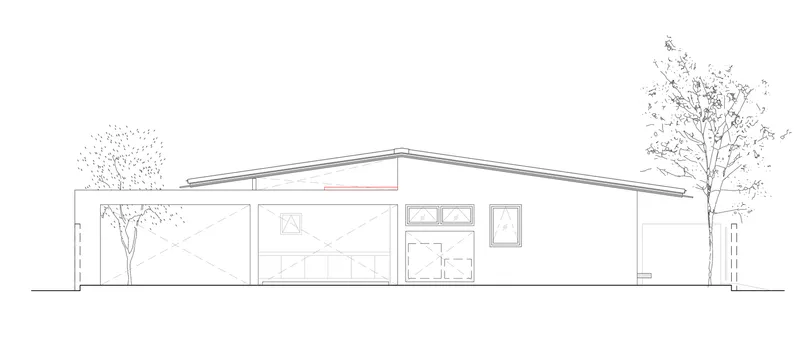
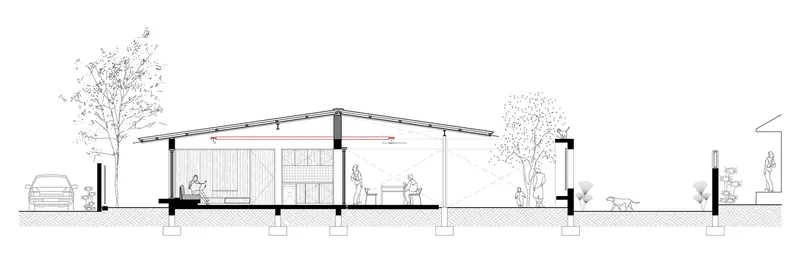
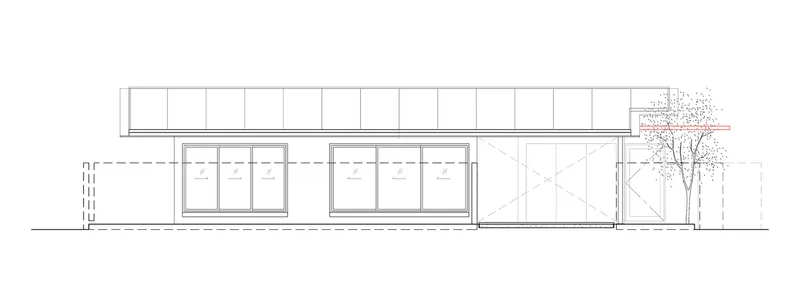
The EE House by WOS Architects exemplifies modern retirement living designed with family at its core. This project successfully marries functionality with aesthetic pleasure, creating a living space that is both a personal sanctuary and a communal paradise. As families look towards more integrated living solutions, designs like the EE House set a precedent for future developments in residential architecture.
All photographs are work of Prueksakun Kornudom, Ketsiree Wongwan




Popular Articles
Popular articles from the community


Conexión: Biophilic Design Reimagines High-Rise Living in Hong Kong
Conexión reimagines high-rise living in Hong Kong through biophilic design, green facades, shared spaces, daylight, water and nature within.

Hill & Cross Opera: Sculptural Opera House Architecture Shaped by Tallinn’s Landscape and Identity
Hill & Cross Opera reimagines opera house architecture in Tallinn through its sculptural hill, civic plaza, glass wave and a luminous cross.

The Musturak Paradise: Senior Living Architecture for a Connected Future in Temara, Morocco
The Musturak Paradise reimagines senior living architecture in Temara via private homes, social spaces, culture, community, and shared care.

Play: Fragments of Their World
Familiar architecture becomes modular playground design, creating safe spaces where displaced children can learn, connect, imagine and play.


Similar Reads
You might also enjoy these articles


Hodi-Mandai Geram
Project Function: Preservation and revitalization of the Intangible heritage and socio-spatial identity of the Hodi by Housing, Cultural Memory Center, Sacred Grove, landscape, local tourism economy


Olio Towers: A Mid-Rise for Performers That Fuses Housing, Rehearsal, and Stage
Located blocks from Houston's Theater District, this modular tower stacks living units around a central performance atrium.

Oasis: Modular Green Housing Carved into Dhaka's Urban Fabric
A shortlisted Plugin Housing entry reclaims unauthorized settlements in Dhaka with stepped concrete volumes, green roofs, and ventilation-driven design.

Black Hole: A Floating Megastructure for the Post-Physical Era
Emiliano Mazzarotto envisions a spherical, self-scaling arena where e-sports, digital hotels, and holographic stadiums replace traditional public space.


Explore Ageing-Well Design Competitions
Discover active competitions in this discipline



Challenge to reimagine the Iron Throne


Photograph architecture without architects


Illustrate the lost glory of Angkor Wat - Render Challenge


Design challenge to reuse E-waste
Comments (0)
Please login or sign up to add comments
No comments yet. Be the first to comment!