
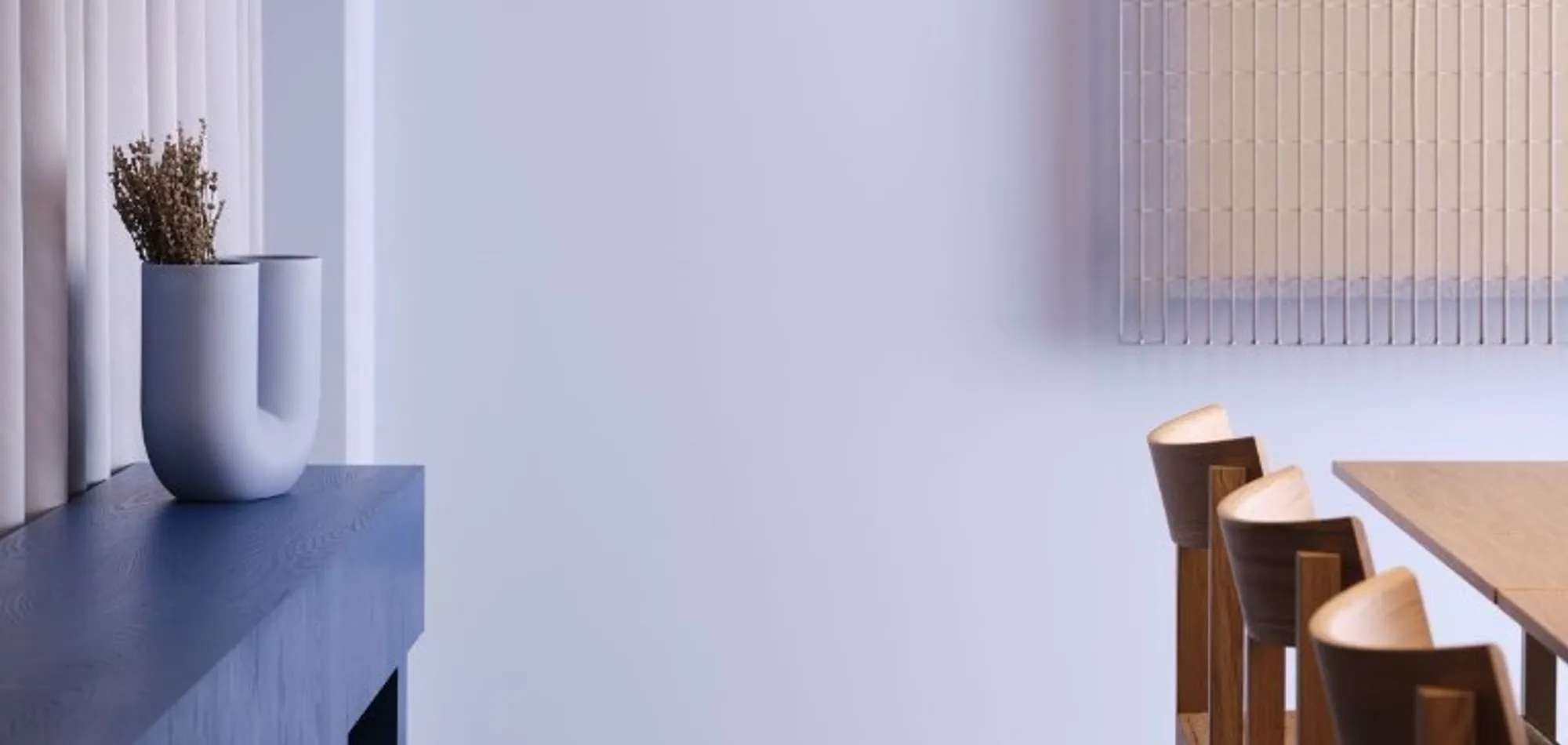
Revolutionize your Workplace with the Flexible and Human Office of the Future!
Say Goodbye to Mundane 9-5 Routines and Hello to a Productive and Empathetic Workspace

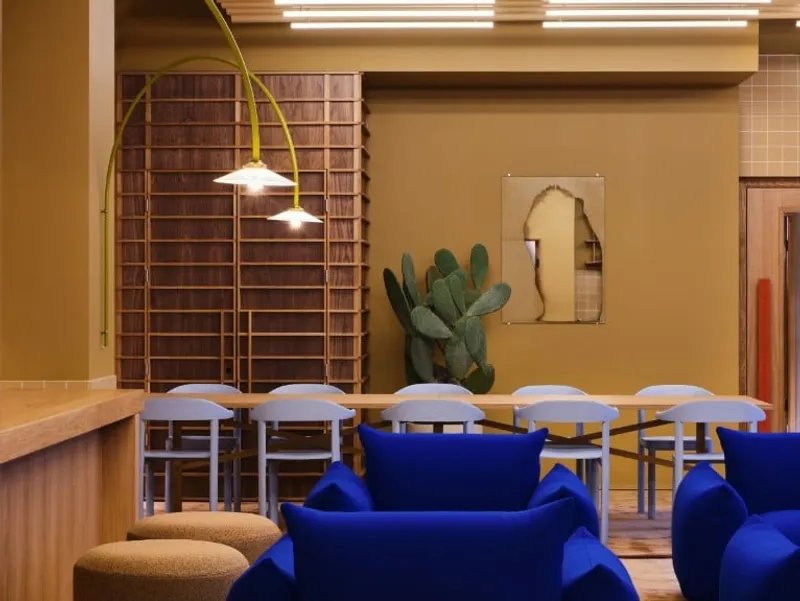
The workplace of the future is here and it's designed to be flexible and human. Note Design Studio and TOG have joined forces to reinvent the Douglas House, a six-floor office building on Great Titchfield Street. Their vision was to create an environment that stimulates creativity and productivity, with a focus on every inch of the building being filled with personality.

In today's world, we have come to understand the relationship between our environment, emotions, and productivity. This understanding played a key role in Note's design concept for Douglas House. The aim was to create a space that surprises you from the moment you enter, with unexpected touches that engage the brain and leave a lasting impact on all who enter.
Douglas House was previously a functional but uninspiring office space, but TOG saw the potential for something greater. Having previously worked with Note on the Summit House project, they knew the Swedish-based firm could deliver a high-level contemporary design that would enhance and complement the Grade II-listed building. However, with Douglas House's post-war architecture offering less creatively, the challenge was to give the building a strong identity that would enable it to hold its own against its more dramatic neighbours in Fitzrovia.
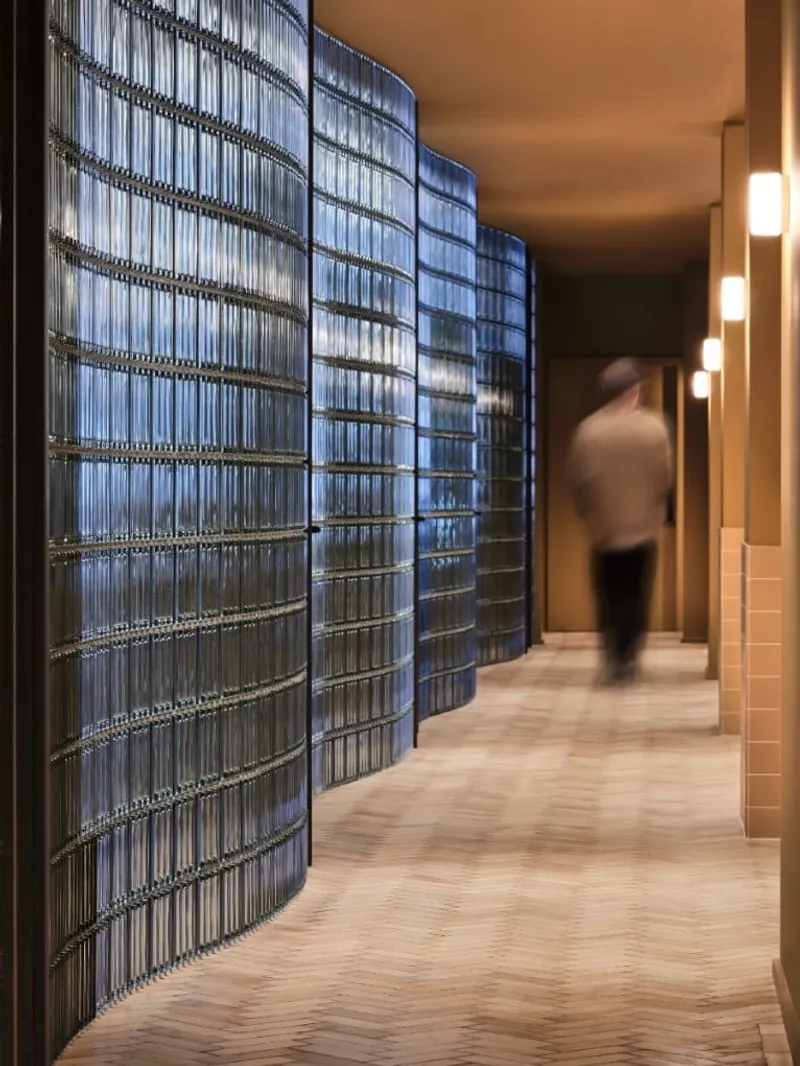
The standout feature of the design is a curvilinear wall of glass blocks that runs the entire length of the ground floor. Inspired by a hand-drawn line, the wall creates a sense of light, transparency, and openness throughout the space, which is split into three 'rooms' by the building's two stair cores. The wall not only creates a passage between the rooms but also provides a visual connection between them with material intensity and fluid wavy forms, echoed in the custom-made lighting rafts. The other side features a bank of courtyard-style meeting rooms, each with a unique layout created by the irregularity of the wall's shape.
"This was a way for us to be disruptive and to challenge the standards of an average refurbishment - to create a space within a space, a world of its own within the old building," says Johannes Carlström, co-founder of Note Design Studio.
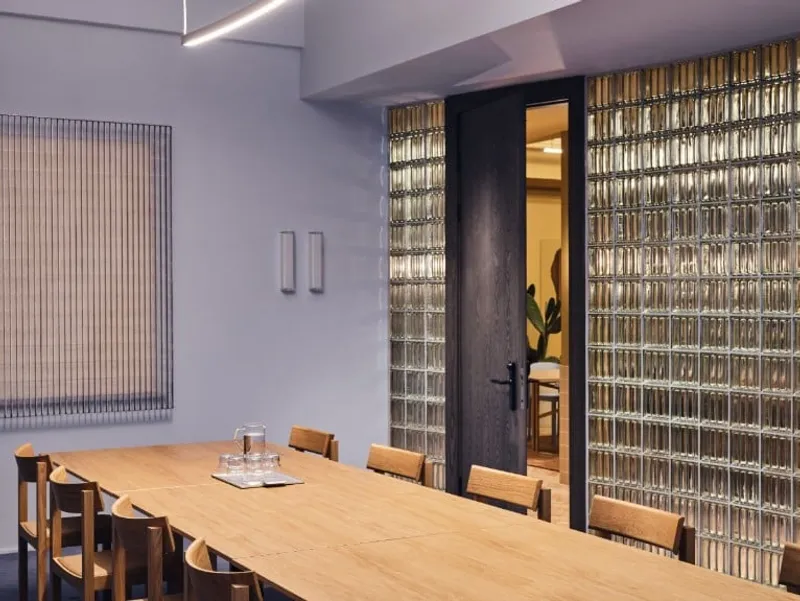
The wall also marks a shift in the interior colour palette, with warm woody neutrals and desert shades defining the communal spaces and break-out areas and cooler, softer blues used in the meeting rooms and working areas where concentration and focus are required. Pops of primary colour come in the form of vivid ultramarine Marenco armchairs and sofas by Arthrex, Muller van Severen hanging lamps and powder-coated stools in bold red and blue.

“There are some fundamentals we have to address as priorities with every building, principally being natural light, volume and openness. The architecture and fabric of this building provided us with these attributes in abundance. We then looked to play on this with elements such as the feature glass wall that is so striking and runs the full length of the ground floor, allowing natural light to flood both into the reception area and lounges and back through to the meeting rooms.” – Charlie Green, co-founder and co-CEO, TOG.
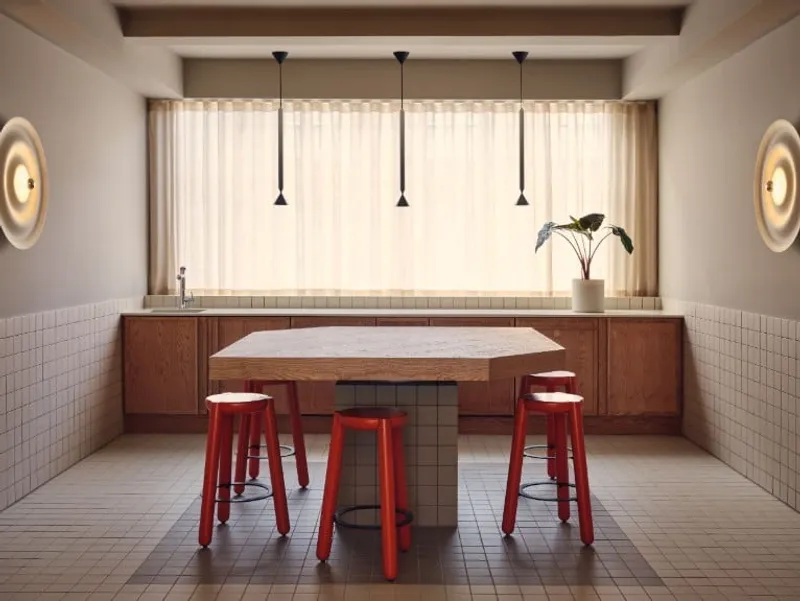
The inventive material palette draws strongly on natural finishes, incorporating ash stained in various shades, walnut and terrazzo. Designing around a building with extensive wear and tear, wherever possible, Note and TOG agreed to retain the existing materials from the original design. When this was not possible, materials that would be reusable in future (including steel, glass and ceramics) were selected. Where plastics were required, the team employed the 100% recyclable Tarkett IQ range of wall and floor coverings. Remarkably, they were able to salvage the building’s existing parquet floors in their entirety, lifting, renovating and replacing every last block. Other sustainability-led initiatives include the addition of a bank of solar panels and a green biodiverse roof.
TOG's latest workspace, Douglas House, located in London's West End, is an architectural marvel that redefines the traditional concept of an office. Designed in collaboration with Note Design Studio, the workspace offers a flexible and human-centric environment that encourages creativity and productivity.
The workspace features an inventive material palette that draws heavily on natural finishes, such as ash, walnut, and terrazzo. The building, with extensive wear and tear, has been refurbished, and wherever possible, the existing materials from the original design were retained. The team chose reusable materials, including steel, glass, and ceramics, and opted for the 100% recyclable Tarkett IQ range of wall and floor coverings wherever plastics were required. In a remarkable feat of sustainability, the team was able to salvage the building's existing parquet floors in their entirety, lifting, renovating, and replacing every last block. The workspace also features a bank of solar panels and a green biodiverse roof.
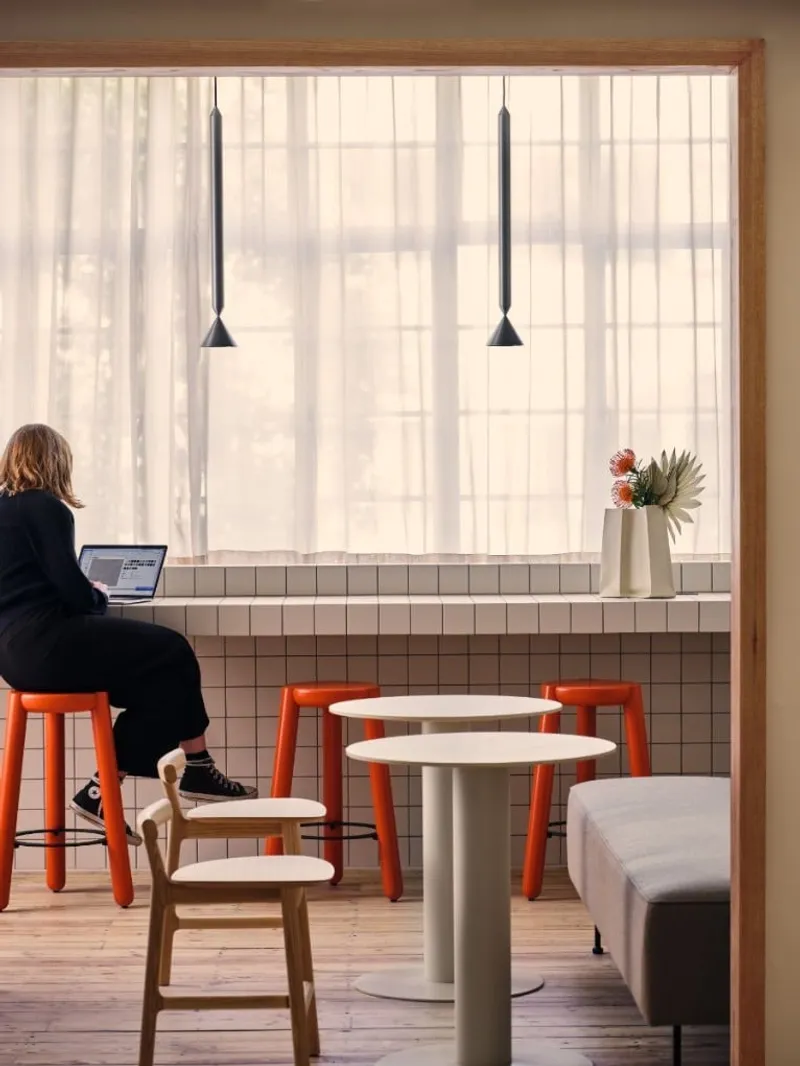
The workspace's interior offers a striking contrast to its exterior, with a rich, fluid, and less predictable experience. The reception desk, in a head-turning blue ALPI Sottsass veneer, sets the tone for the interior's artistic streak. The building's overall architecture dictates the workspace floor plan, which flows horizontally rather than the previous layout that awkwardly connected the building vertically.
Douglas House features expected modern workplace features, such as a gym, roof terrace, and 20 meeting rooms, including 10 informal, collaborative spaces and a traditional boardroom. It also offers more innovative additions, such as a 'recharge room' for breakout moments during the working day, a plant-filled 'oxygen room' on the top floor, a flexible workspace with a café, and a dedicated room for nursing mothers.
Charlie Green, co-founder and co-CEO of TOG, highlights the importance of creating a workspace that allows people to thrive. TOG's focus is on pushing the design aesthetic and exploring innovative amenities that promote physical and mental well-being. With Douglas House, the team has incorporated recharge and oxygen rooms, as well as a complete fitness studio. TOG seeks to learn from its clients what they need and are looking for, anticipating how to address the changing ways in which we are all working.
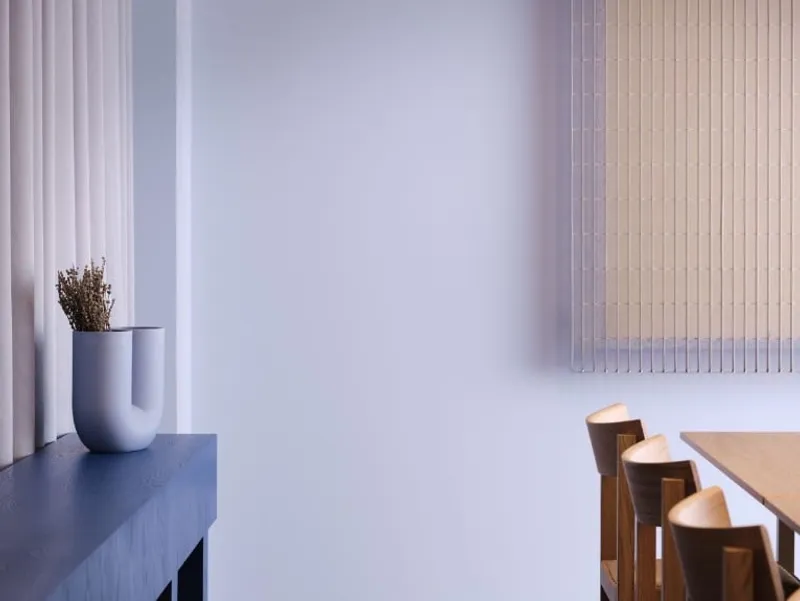
Alongside the expected features of a modern workplace – gym, roof terrace and 20 meeting rooms (including 10 informal, collaborative spaces and a traditional boardroom) – Douglas House also includes a number of more innovative additions, including a ‘recharge room' for breakout moments during the working day, a plant- filled ‘oxygen room’ on the top floor in which to recharge and reconnect with nature, a flexible workspace with a café, and a dedicated room for nursing mothers.
“We have to keep pushing the design whilst making sure we are still creating space that works so well to allow people to thrive in the space. That is about pushing the aesthetic as well as continuing to explore the amenities we can add, increasingly with a focus on wellbeing, both physical and mental. With this work space, we’ve incorporated Recharge and Oxygen rooms as well as a complete fitness studio. With every building, we’re seeking to learn from our clients what they need and are looking for, as well as anticipating how we address the changing ways in which we’re all working.” – Charlie Green, co-founder and co-CEO, TOG.

“Of course, the building fulfils the practical needs of a modern workplace, but our focus has been on the emotional qualities of the space to stimulate the users’ minds with a lot of different experiences when they move through the building, taking a big step away from the conformity of most office spaces.” – Jesper Mellgren, architect, Note Design Studio.

Douglas House opened on 5 November 2020. The building provides 700 desks for a team of over 1,000 employees, and the versatility of the space has made it relatively easy to render the office Covid-secure.
Jesper Mellgren, the architect at Note Design Studio, explains that the building fulfils the practical needs of a modern workplace but focuses on the emotional qualities of the space that stimulate the users' minds with a lot of different experiences. This move takes a significant step away from the conformity of most office spaces.
Douglas House opened on November 5th, 2020, and provides 700 desks for a team of over 1,000 employees. The versatility of the space has made it relatively easy to render the office COVID-secure. Douglas House is a perfect example of a flexible and human-centric workspace that combines sustainability, innovation, and design.
Courtesy of © Note Design Studio and TOG




Popular Articles
Popular articles from the community


The Earth Pod: 3D Printed Homes for Resilient Refugee Communities
The Earth Pod reimagines refugee housing through 3D printed homes made from clay, combining resilience, self-sufficiency, and rapid shelter.

The Musturak Paradise: Senior Living Architecture for a Connected Future in Temara, Morocco
The Musturak Paradise reimagines senior living architecture in Temara via private homes, social spaces, culture, community, and shared care.

Riyadh For All: Intergenerational Urban Design for Active Aging in Rabat
Riyadh For All reimagines urban design in Rabat with intergenerational co-living, adaptive courtyards, and Moroccan cultural exchange today.

Co-Life: Senior Housing Design That Reconnects Older Adults With the City
Co-Life reimagines senior housing design through healing gardens, shared streets, workshops, and a sustainable community across generations.

Similar Reads
You might also enjoy these articles
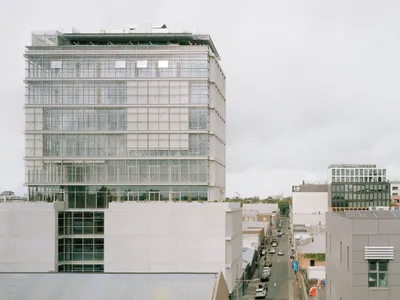
116 Rokeby Building, Collingwood
Sustainable Collingwood office building featuring double-skin façade, natural ventilation, rooftop amenities, and carbon-neutral design focused on wellbeing and longevity.
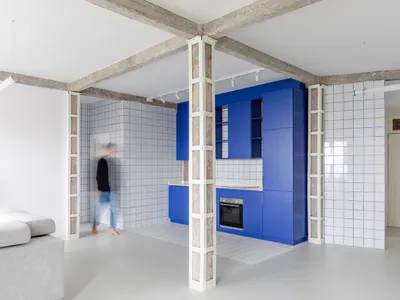
Contemporary Apartment Renovation in Spain: RV House by BIAN Opens Up to the Sea
A minimalist 1930s apartment in Santander is transformed into a flexible, sea-facing home through contemporary Spanish renovation.
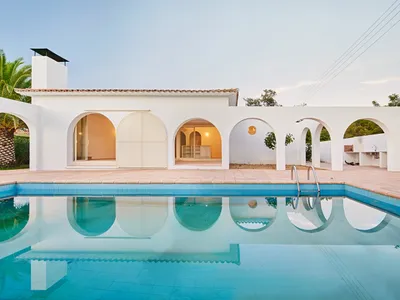
3 Marías House: A Contemporary Mediterranean Courtyard Retreat by Bajet Giramé + Burckhardt
Mediterranean courtyard home blending traditional architecture with modern design, terracotta flooring, flexible interiors, sustainable climate strategies, and garden integration.
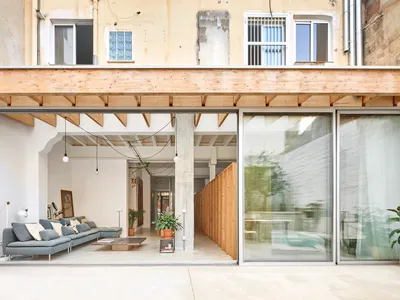
NZ10 Apartment by auba studio: Adaptive Reuse in Palma de Mallorca
Adaptive reuse apartment transforms bakery into light-filled home with patios, privacy layers, and wood interiors enhancing urban living experience.
Explore Futuristic Workspaces Competitions
Discover active competitions in this discipline




Challenge to reimagine the Iron Throne


Photograph architecture without architects


Illustrate the lost glory of Angkor Wat - Render Challenge


Design challenge to reuse E-waste
Comments (0)
Please login or sign up to add comments
No comments yet. Be the first to comment!