
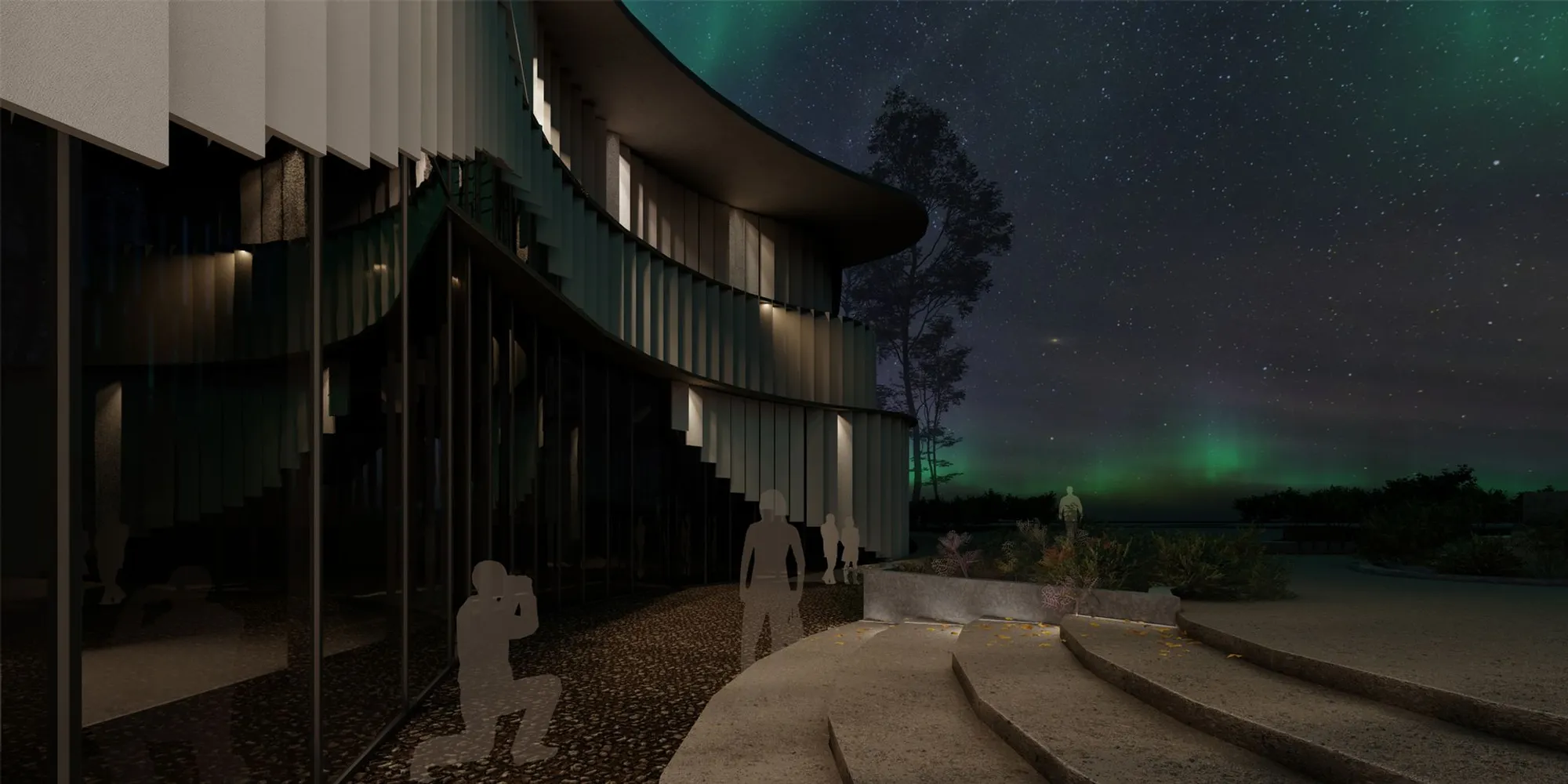
Sustainable Architecture Design: Harmonizing Nature and Humanity in Oslo’s Latest Architectural Marvel
Exploring Oslo's "Tying up the nature with human" project: a beacon of sustainable architecture that fuses nature with living spaces.


Introduction to Sustainable Architecture Design
In the heart of Oslo, a transformative architectural project known as "Tying up the nature with human" emerges, exemplifying the pinnacle of sustainable architecture design. Conceived by the visionary trio Mahsa Abdkarimi, Ali Torabi, and Elnaz Ghorbani, this marvel is not just a structure but a manifesto of health, sustainability, and adaptability, reflecting the symbiotic relationship between human well-being and the natural environment.
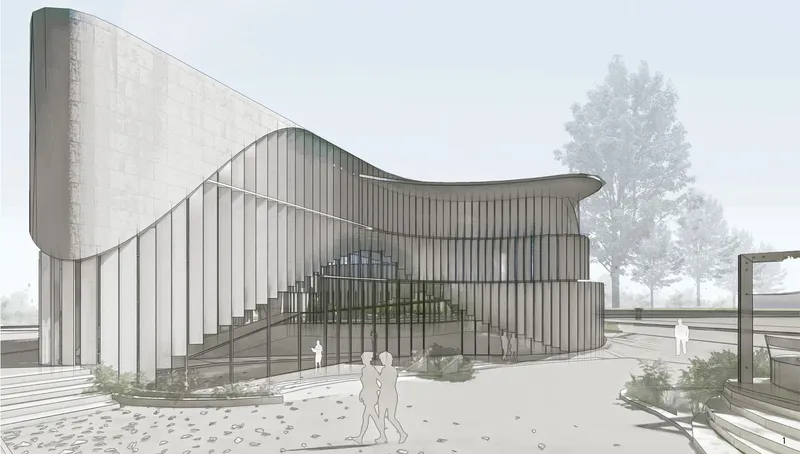
The Vision of Nature-Inclusive Spaces
Elevating Mood and Efficiency Through Design
The design of this Oslo project is a testament to the power of sustainable architecture design in enhancing human mood and productivity. By weaving natural elements seamlessly into the building's fabric, the architects have created a space that is not only inexhaustible in its offerings but also in its capacity to rejuvenate its occupants.
A Triangular Blueprint for Maximizing Natural Light
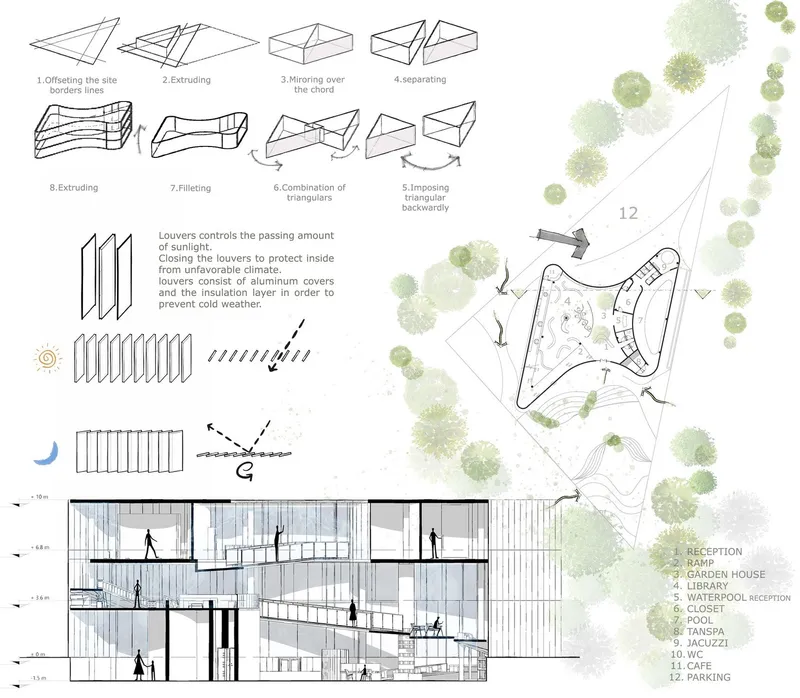
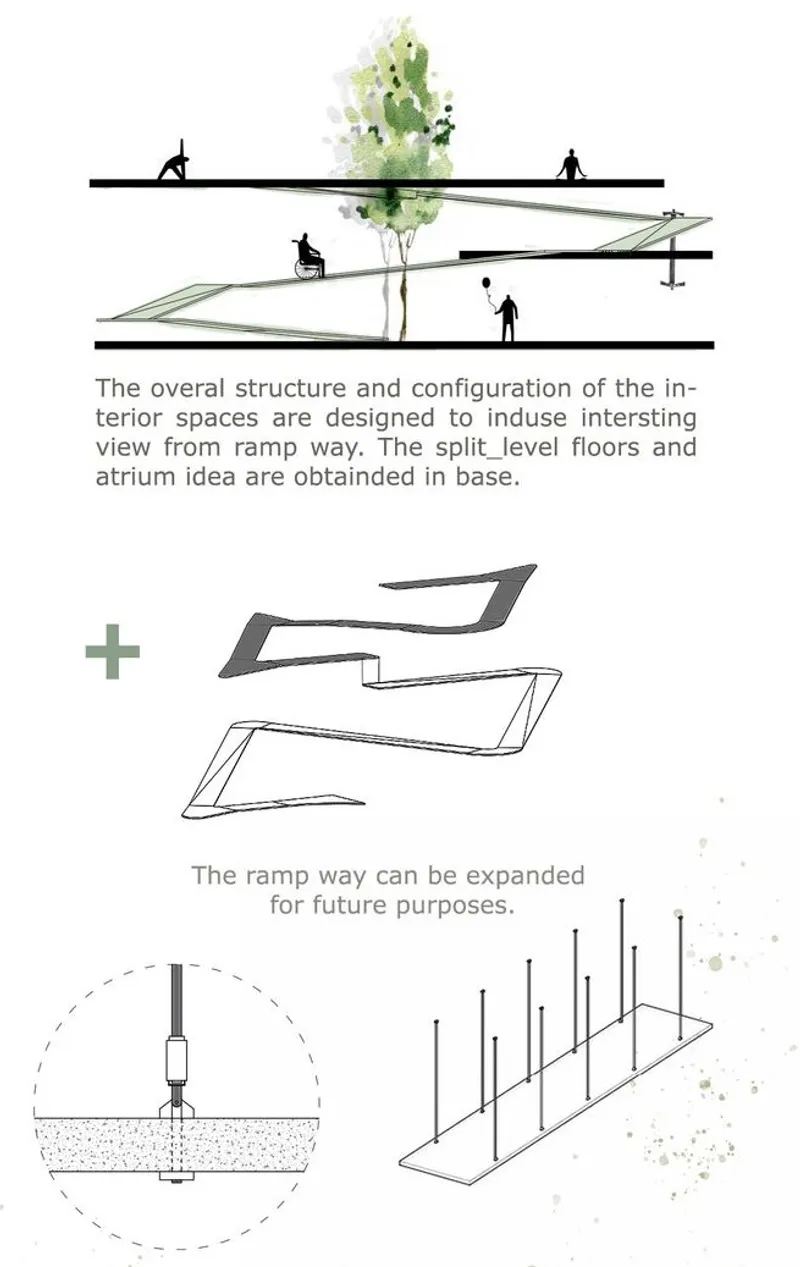
The project stands on a triangular lot, a shape that often presents design challenges. The creative solution was to mirror and offset the site's borders, resulting in a building plan that maximizes lot coverage while minimizing negative space. This strategic design allows for optimal penetration of natural light, a crucial aspect of sustainable architecture design.

The Core Elements of Design
Free Plan Concept: A Testament to Flexibility
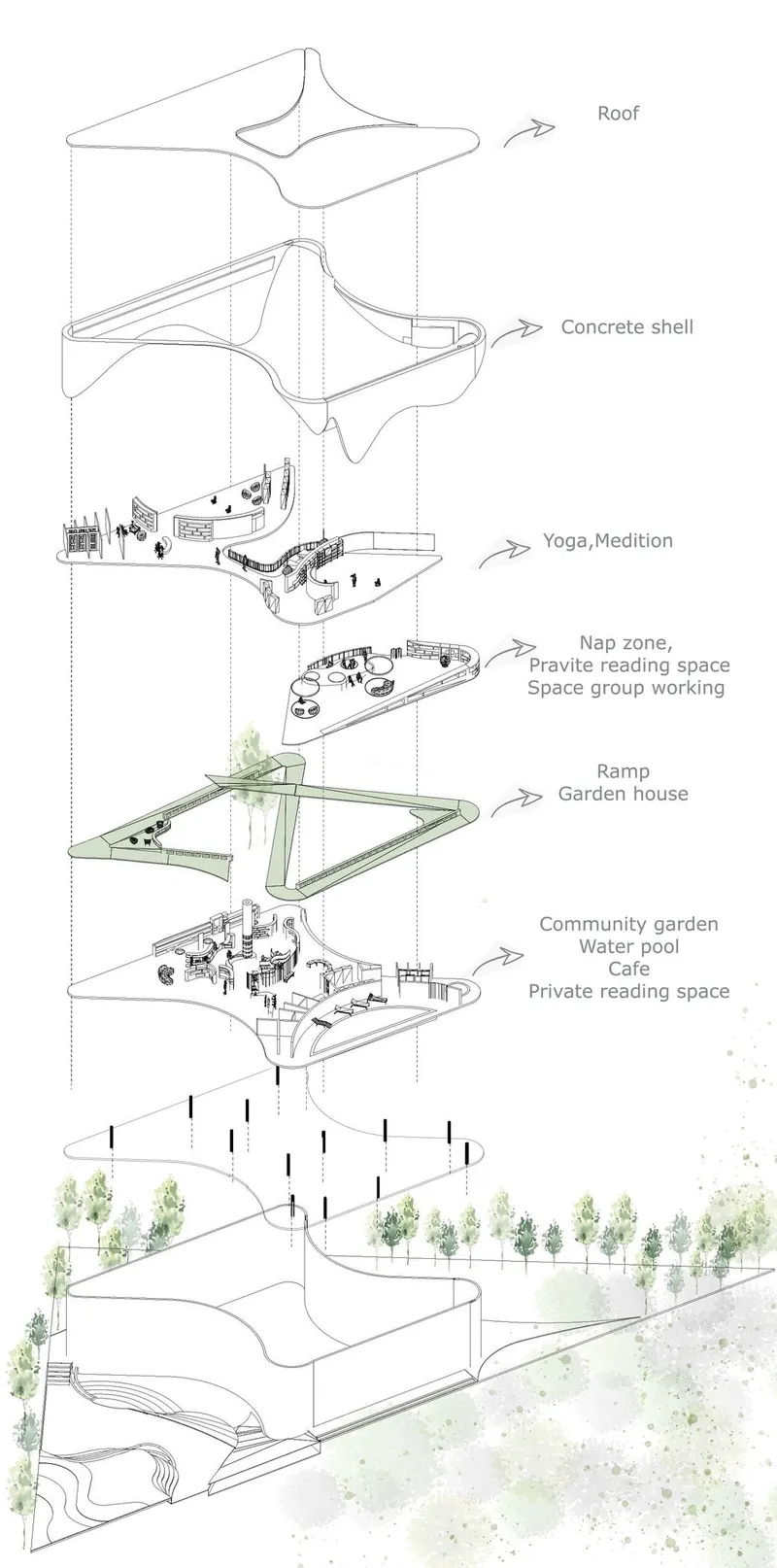
At the heart of this project's sustainable architecture design is the free plan concept. This approach champions adaptability and fluidity within the building, providing the flexibility to accommodate evolving space requirements.
Ramp Way: Integrating Accessibility and Aesthetics
The ramp is a central element, not just as a vertical pathway connecting different levels but as a dynamic space offering unique views and experiences. It embodies inclusivity, providing equitable access for all users, which is a cornerstone of sustainable architecture design.

Innovative Use of Materials
Louvers: Balancing Light and Climate Control
The building's louvers are an innovative feature of its sustainable architecture design. Made from insulated aluminum, they regulate sunlight and interior climate, ensuring comfort without compromising on the building’s energy efficiency.
Glass and Concrete: A Duo for Efficiency and Aesthetics
Double-skinned glass and strategic concrete placements underscore the project's commitment to sustainable architecture design. This combination ensures energy conservation while also protecting the interior from harsh sunlight.
Social Spaces and Community Integration
Garden House and Atrium: Bringing the Outdoors In
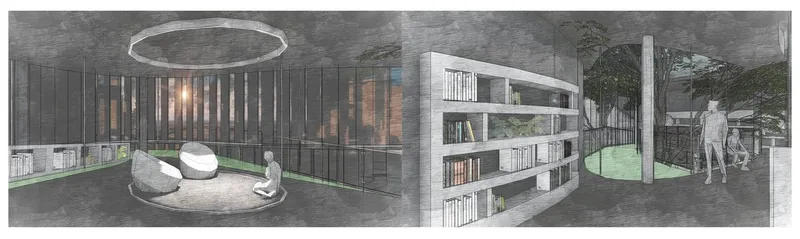
The inclusion of a garden house and atrium at the center of the plan underscores the project's dedication to sustainable architecture design. It provides a verdant, communal space that enhances social interaction and connection to nature.

Libraries and Spas: Blending Privacy with Public Interaction
By integrating private spaces like libraries and spas with public areas, the design fosters a sense of community while still respecting individual privacy, aligning with the principles of sustainable architecture design.
"Tying up the nature with human" stands as a beacon of sustainable architecture design. It is a space that beckons its users back, not just for its aesthetic and functional offerings but for the serenity and balance it brings to their lives. As we embrace a future where architecture and nature coexist in harmony, projects like this in Oslo will lead the way, inspiring a new standard for design that is both sustainable and human-centric.




Popular Articles
Popular articles from the community


The Ocean Hive: Sustainable Architecture for a Self-Sufficient Civilization at Sea
The Ocean Hive imagines sustainable architecture at sea, where modular habitats, algae, wave power and ocean waste sustain a growing colony.

Conexión: Biophilic Design Reimagines High-Rise Living in Hong Kong
Conexión reimagines high-rise living in Hong Kong through biophilic design, green facades, shared spaces, daylight, water and nature within.

Riyadh For All: Intergenerational Urban Design for Active Aging in Rabat
Riyadh For All reimagines urban design in Rabat with intergenerational co-living, adaptive courtyards, and Moroccan cultural exchange today.

Co-Life: Senior Housing Design That Reconnects Older Adults With the City
Co-Life reimagines senior housing design through healing gardens, shared streets, workshops, and a sustainable community across generations.

Similar Reads
You might also enjoy these articles

Day and Night Park: A Time-Based Urban Newsstand in Beijing
A temporary urban newsstand in Beijing blending travel, light, and reading through poetic colors, compact form, and community-focused design.

Modernist Patio Renovation in El Masnou, Barcelona by Oliver Segura Arquitectura + Cebrià Arquitectura
Modernist patio renovation blending tradition and innovation with a movable pool, leveled floors, and Catalan materials in El Masnou.

Alto Residencial Coop: Cooperative Housing Development in Santiago de Compostela by Carbajo Barrios Arquitectos
A linear cooperative housing complex blending white volumes and perforated metal façades, enhancing community living, natural light, privacy, and urban integration.

Vil Genis School by BPA ARCHITECTURE – Massy, France
Vil Genis School in Massy, France, features sustainable design, south-facing classrooms, community integration, accessible spaces, and modern educational architecture.

Explore Nordic Sustainable Architecture Competitions
Discover active competitions in this discipline



Challenge to reimagine the Iron Throne


Photograph architecture without architects


Illustrate the lost glory of Angkor Wat - Render Challenge


Design challenge to reuse E-waste
Comments (0)
Please login or sign up to add comments
No comments yet. Be the first to comment!