
Sustainable Mountain House Design - Embracing Nature in Patio Guapuruvu House
Explore the sustainable charm of Patio Guapuruvu House, uniting nature, architecture, and innovative eco-friendly design


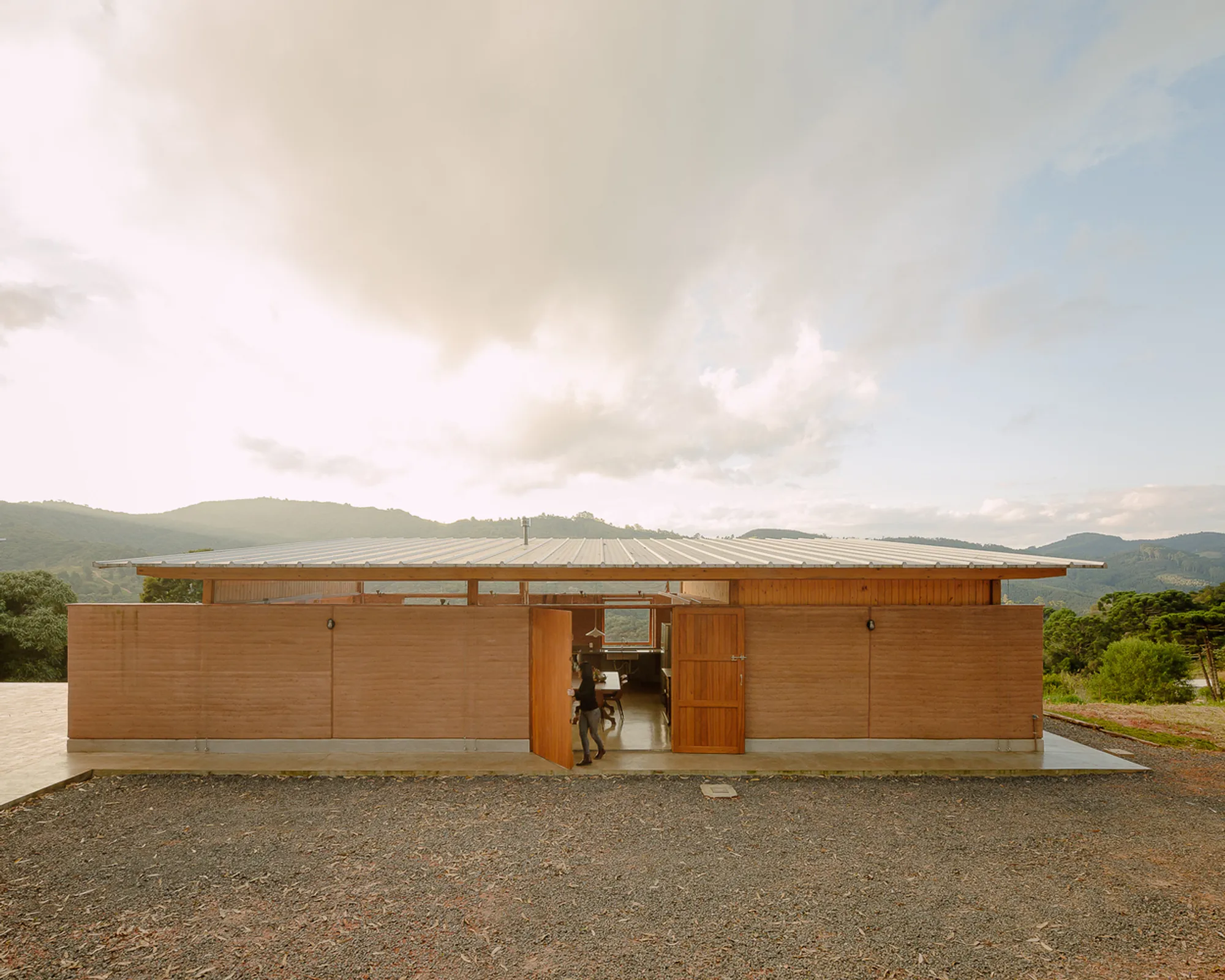
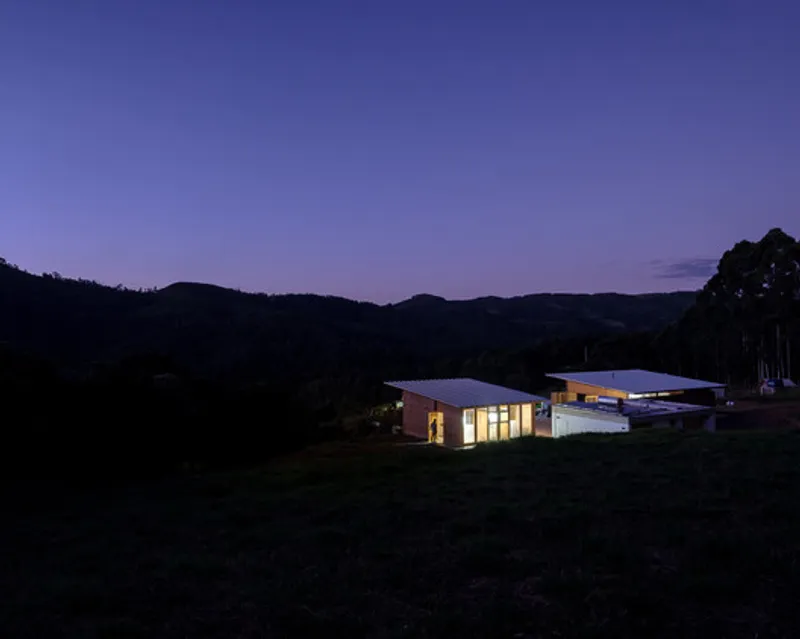
Nestled in the Mantiqueira mountain range of Camanducaia, Brazil, the Patio Guapuruvu House stands as a testament to sustainable architecture, seamlessly integrating with its natural surroundings. This article explores the innovative design by Estudio Piloti Arquitetura, emphasizing its commitment to sustainability and connection with the landscape.
A Courtyard Concept for Harmonious Living
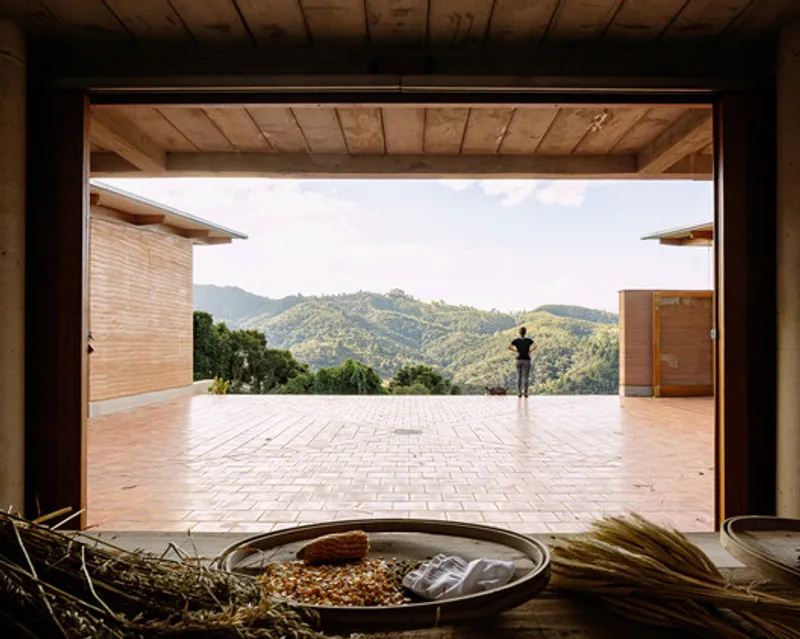
The Patio Guapuruvu House revolves around the concept of a central courtyard, providing a focal point for daily activities and a space for communal gatherings. The design comprises three distinct blocks – the main house, a shed, and a guest house with two units – each with independent access, allowing flexibility in various functions.


Embracing Altitude and Orientation
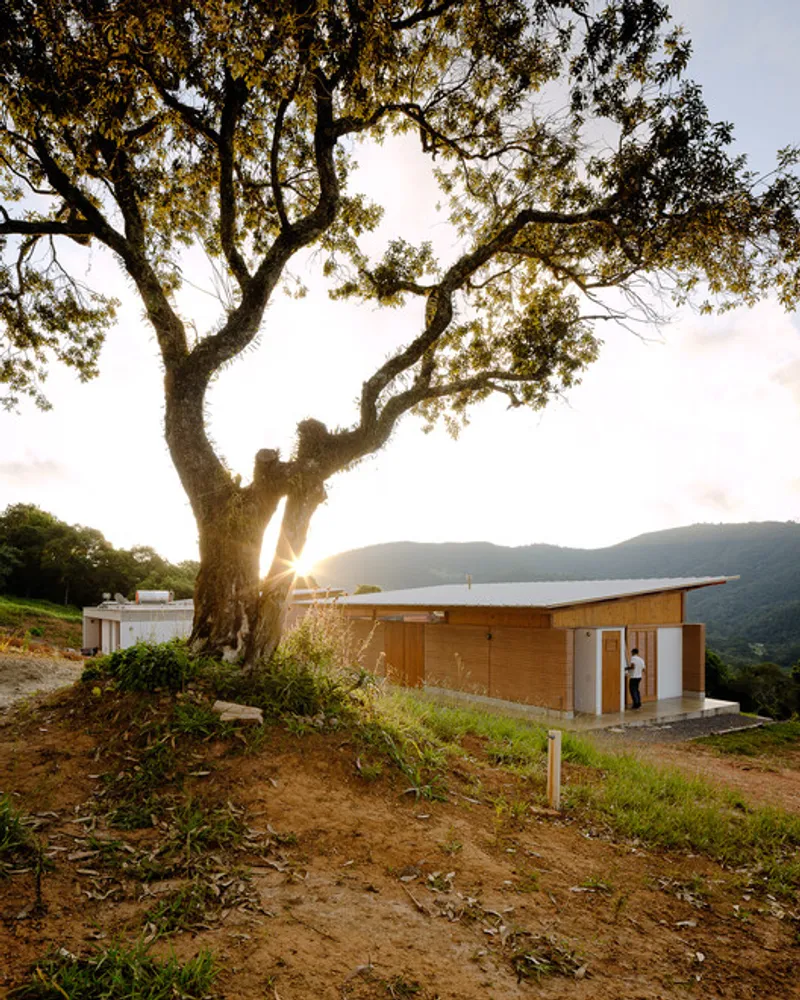
Situated at an altitude of 1250 meters, the house strategically positions itself to open up to breathtaking views of the mountains while shielding itself from the cold southern wind. This thoughtful orientation enhances the overall living experience and embraces the natural elements of the region.

Two Layers of Views
The intermediate placement of the house on the terrain creates two layers of views – one overlooking a preserved forest with wildlife and the other capturing the valley and a distant mountain. This design choice adds depth and dynamism to the living spaces.


Sustainable Construction Methods
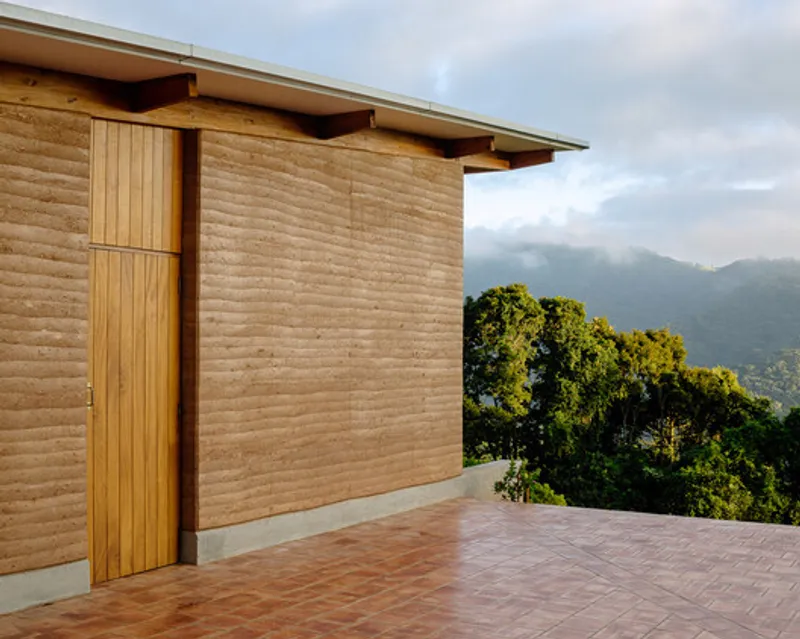
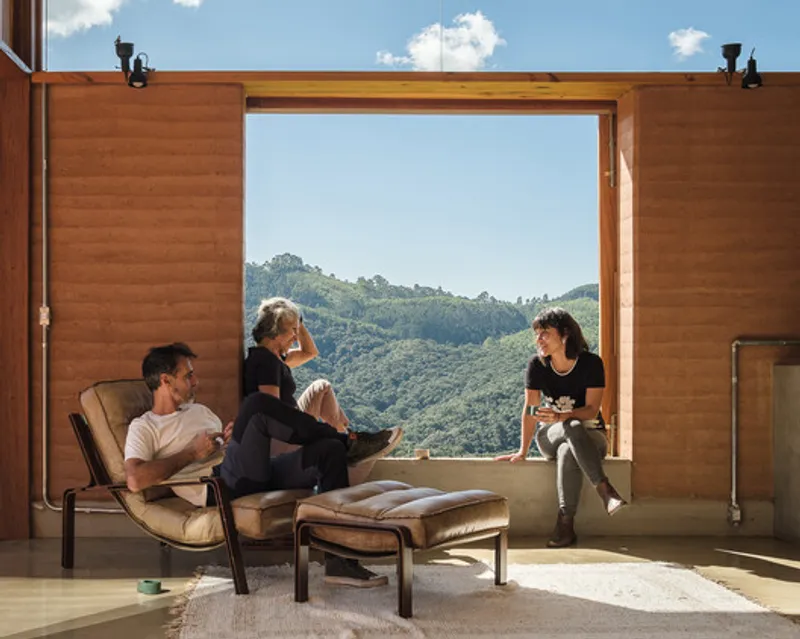
The architects prioritized a construction system that ensures speed, cost-effectiveness, and ease of implementation by local builders. Rammed earth walls, executed by specialized companies, are complemented by exposed concrete foundations, polished concrete floors with thermal insulation, and ceramic tiles in the courtyard, reminiscent of historic coffee-drying spaces.

Insulation and Thermal Inertia
Given the significant temperature variations, the construction focuses on insulation and thermal inertia. The main house and guest areas feature a metal roof with insulation, supported by laminated wooden structures and rammed earth walls. The shed, serving as a tool and laundry space, employs resource-efficient panel slabs and exposed concrete structures.

Ecological Solutions for Water Management
The Patio Guapuruvu House employs innovative ecological solutions for water management. A sewage treatment system with an evapotranspiration basin, featuring banana trees, purifies water through bacteria. Rainwater is infiltrated back into the ground, minimizing the environmental impact and contributing to sustainable water practices.

Reconnecting with Nature through Simplicity The Patio Guapuruvu House not only minimizes its impact on the landscape through the use of excavated soil and sustainably sourced wood but also embraces simplicity in its raw material state. This intentional choice aims to save resources and foster a reconnection with the natural elements that compose the living space.

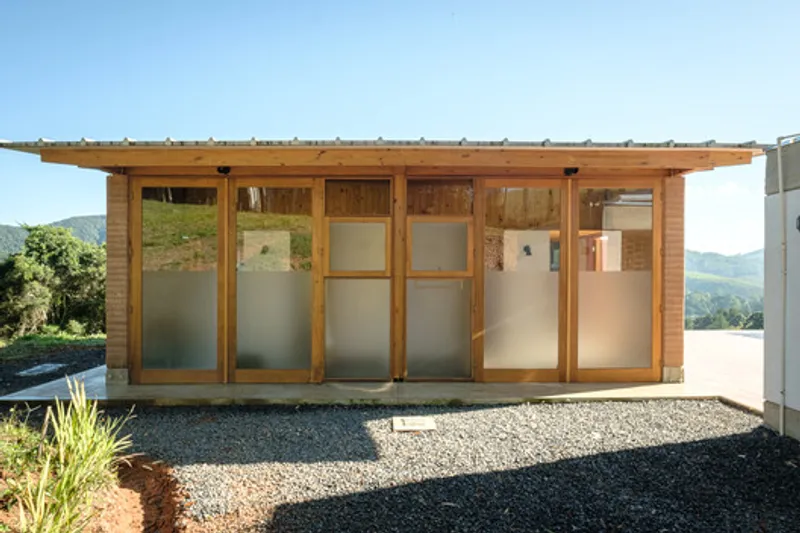
By prioritizing sustainability, embracing the landscape, and implementing innovative design solutions, the Patio Guapuruvu House stands as a shining example of architecture that harmoniously coexists with nature.
All photographs are work of Pedro Kok




Popular Articles
Popular articles from the community


Conexión: Biophilic Design Reimagines High-Rise Living in Hong Kong
Conexión reimagines high-rise living in Hong Kong through biophilic design, green facades, shared spaces, daylight, water and nature within.

The Ocean Hive: Sustainable Architecture for a Self-Sufficient Civilization at Sea
The Ocean Hive imagines sustainable architecture at sea, where modular habitats, algae, wave power and ocean waste sustain a growing colony.

Lunar Spiral: Space Architecture Shaped by the Mathematics of the Universe
Lunar Spiral reimagines space architecture through Fibonacci geometry, lunar regolith, levitating habitats, and self-sustaining Moon living.

Play: Fragments of Their World
Familiar architecture becomes modular playground design, creating safe spaces where displaced children can learn, connect, imagine and play.


Similar Reads
You might also enjoy these articles


FAMM Arquitectura Organizes Ten Villas Around Courtyards and Jungle in Nosara, Costa Rica
El Molino pairs two elongated volumes with deep overhangs and timber louvers to build a compact coastal community five minutes from the beach.

Oscar Niemeyer's Ibirapuera Park Pavilions Define São Paulo's Cultural Identity in Concrete and Curve
A constellation of modernist volumes set within São Paulo's most important urban park, conceived for the city's 400th anniversary in 1954.
How Henri Picq's 1889 Paris Pavilion Traveled 11,000 Kilometers to Become Santiago's Artequín Museum
A prefabricated iron and glass pavilion built for the Paris Universal Exposition found a second life as a children's art museum in Chile.

Sanjay Puri Architects Wraps a Jaipur Office Tower in Capsule-Shaped Green Buffers
A nine-level climate-responsive workplace near Jaipur Airport uses stacked planter terraces and aluminium screens to fight 40°C heat.


Explore Brazilian Architecture Competitions
Discover active competitions in this discipline


Challenge to design mud housing for contemporary communities


Challenge to reimagine the Iron Throne


Photograph architecture without architects


Illustrate the lost glory of Angkor Wat - Render Challenge
Comments (0)
Please login or sign up to add comments
No comments yet. Be the first to comment!