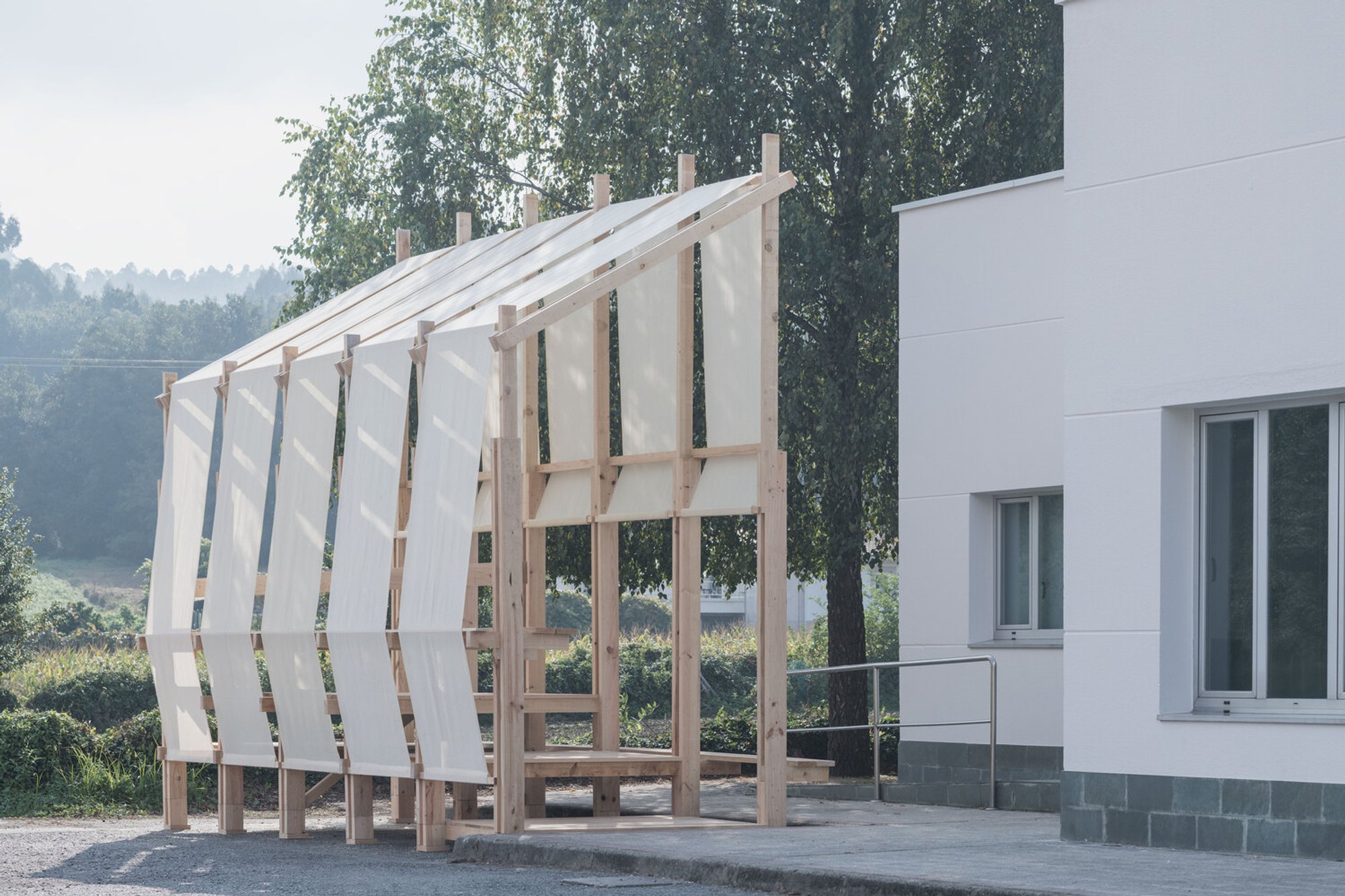
Temporary Wooden Installation Design: Alpendre by CESUGA School of Architecture and Erazo Pugliese
"Alpendre" explores temporary wooden installation design, blending innovative architecture with community engagement and sustainable materials in Galicia.


A Unique Architectural Workshop
In the heart of Galicia, Spain, the CESUGA School of Architecture, in collaboration with Erazo Pugliese, unveiled Alpendre, a temporary wooden installation that seamlessly blends innovative architectural design with the rich cultural and environmental landscape of the region. This project emerged from a design-and-build workshop during the IV Xornadas Internacionais da Madeira 2024, emphasizing wood as a sustainable and versatile building material.
Context and Site Selection
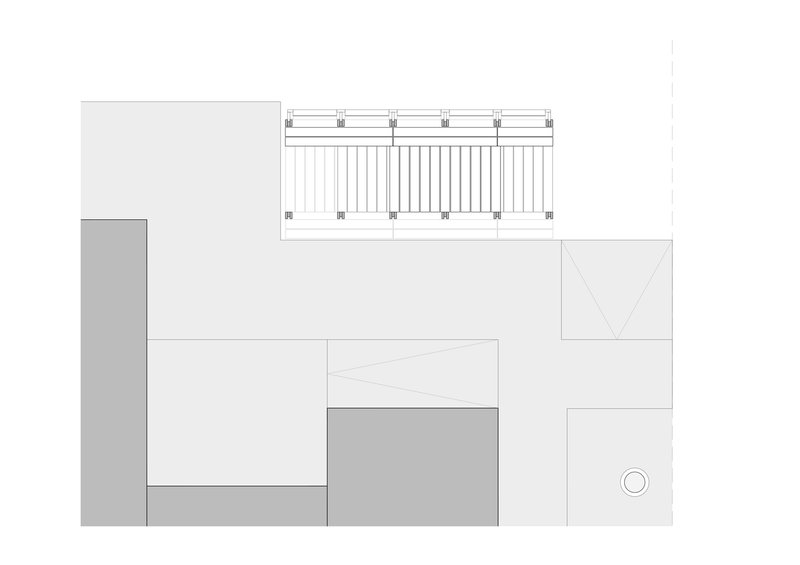
Situated within the dynamic valley near Feáns, A Coruña, the installation occupies a pivotal location. The site, characterized by its biodiversity and historical significance, lies along a rural path called Camino de Campos. This pathway connects the university campus to Castro de Elviña, a protohistoric settlement from the 3rd century BC, and weaves through agricultural plots rich in heritage.
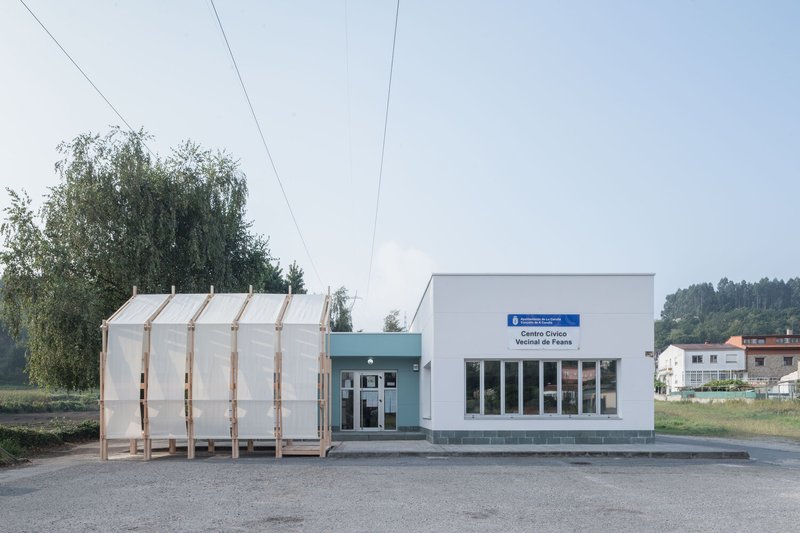
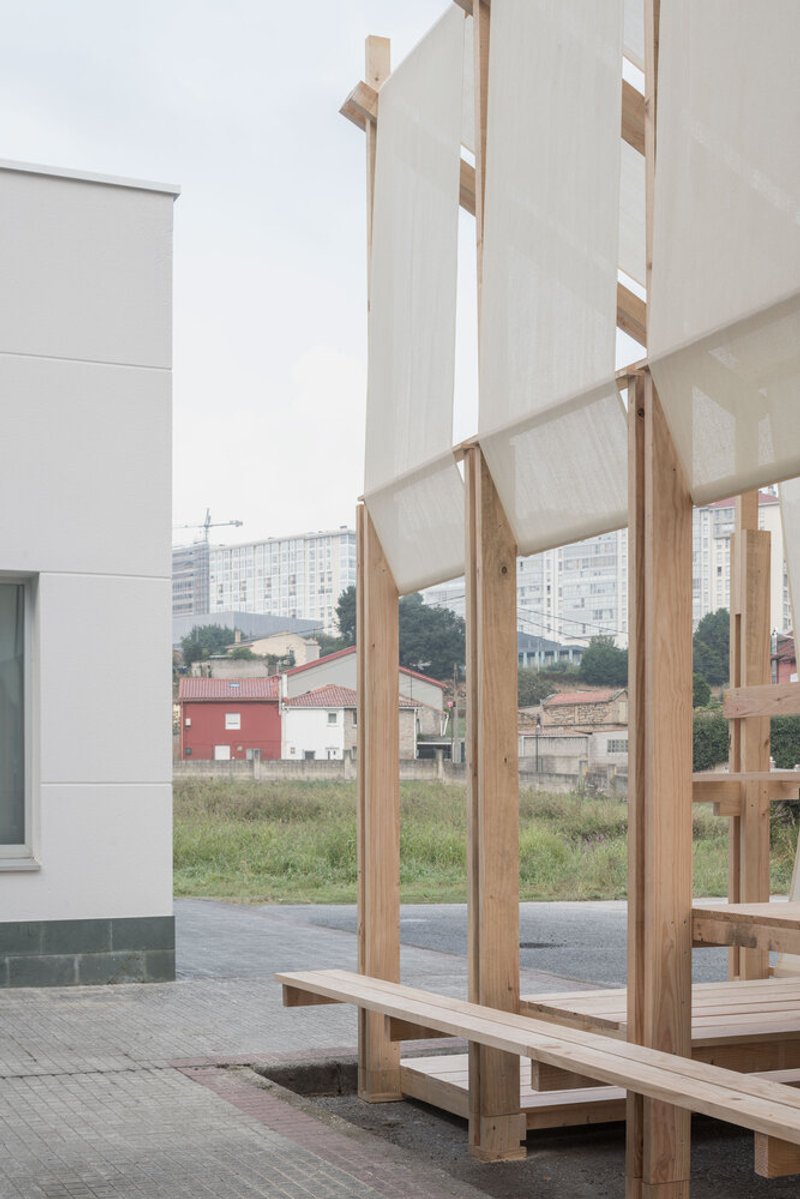
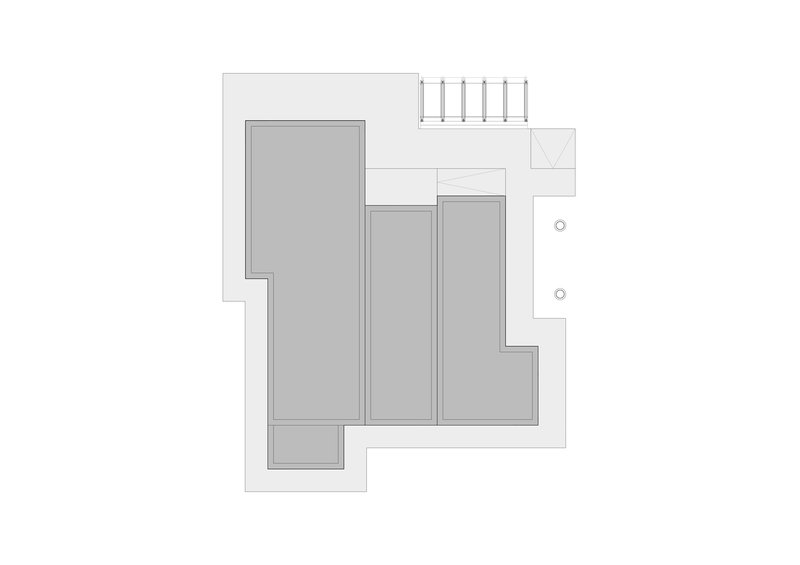
The project's primary focus was on transforming the front access sequence of an existing civic center and public park. This area, marked by a stark parking space and simple one-story structure, presented an opportunity to redefine the interaction between the site and its users.
Design Approach and Community Collaboration
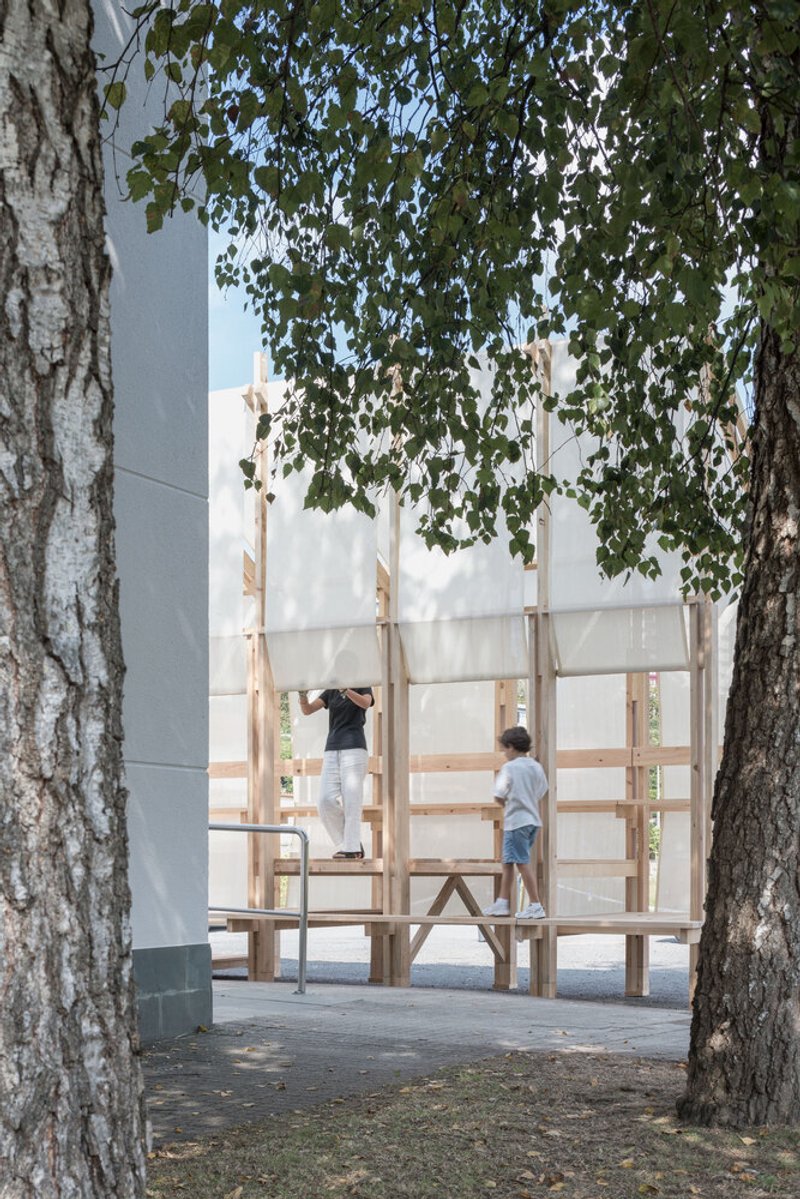
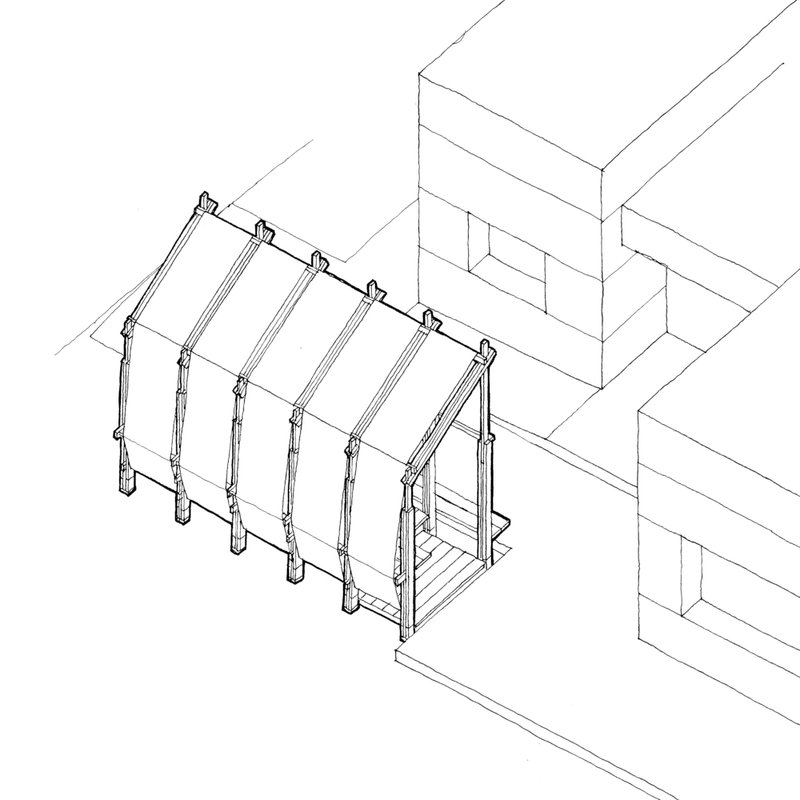
The development of Alpendre began with extensive community engagement. Neighbors' suggestions were collected and integrated into the design process through drawings, models, and on-site spatial explorations. The resulting structure—a modular installation—was designed to complement the civic center while creating an inviting, multifunctional space for the community.
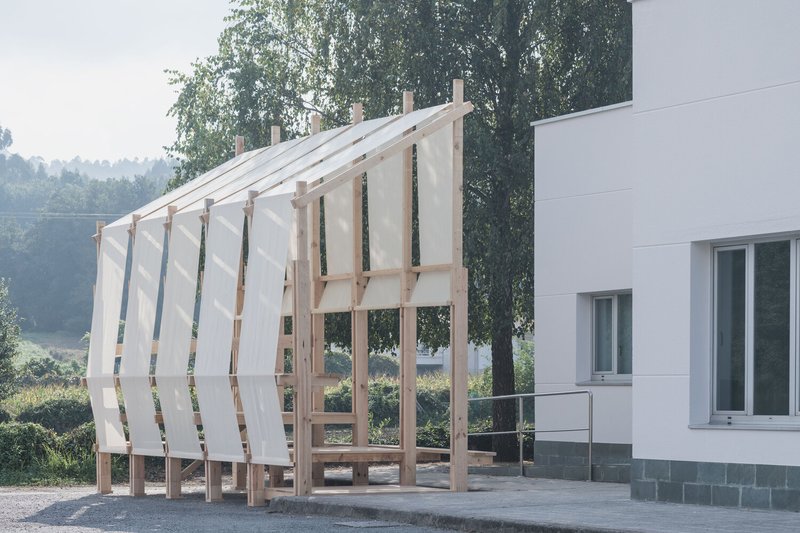
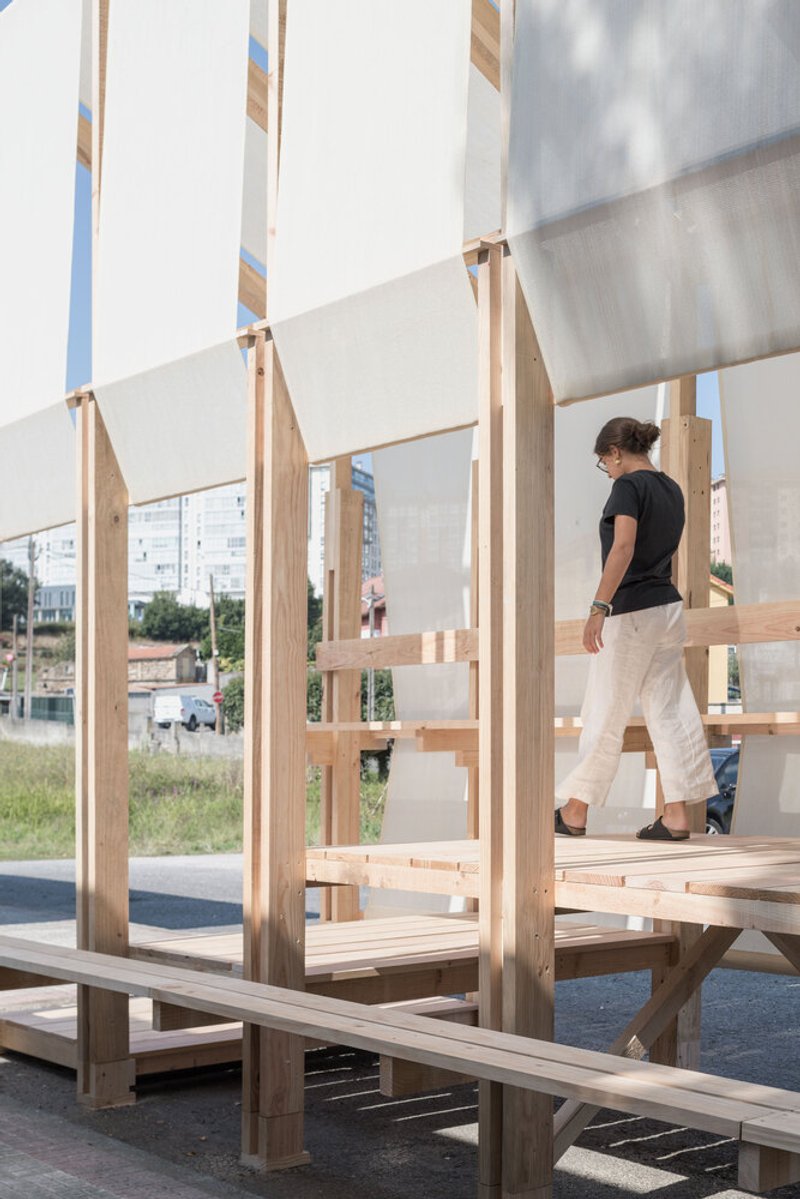
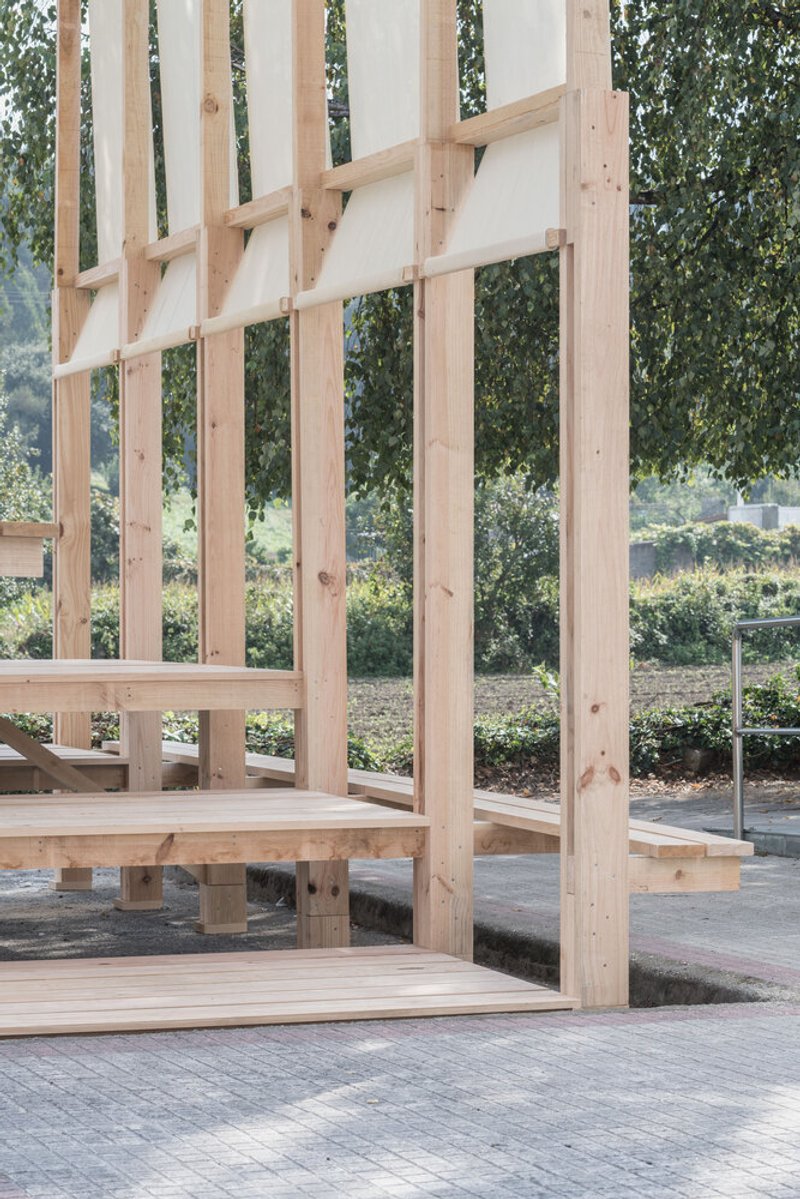
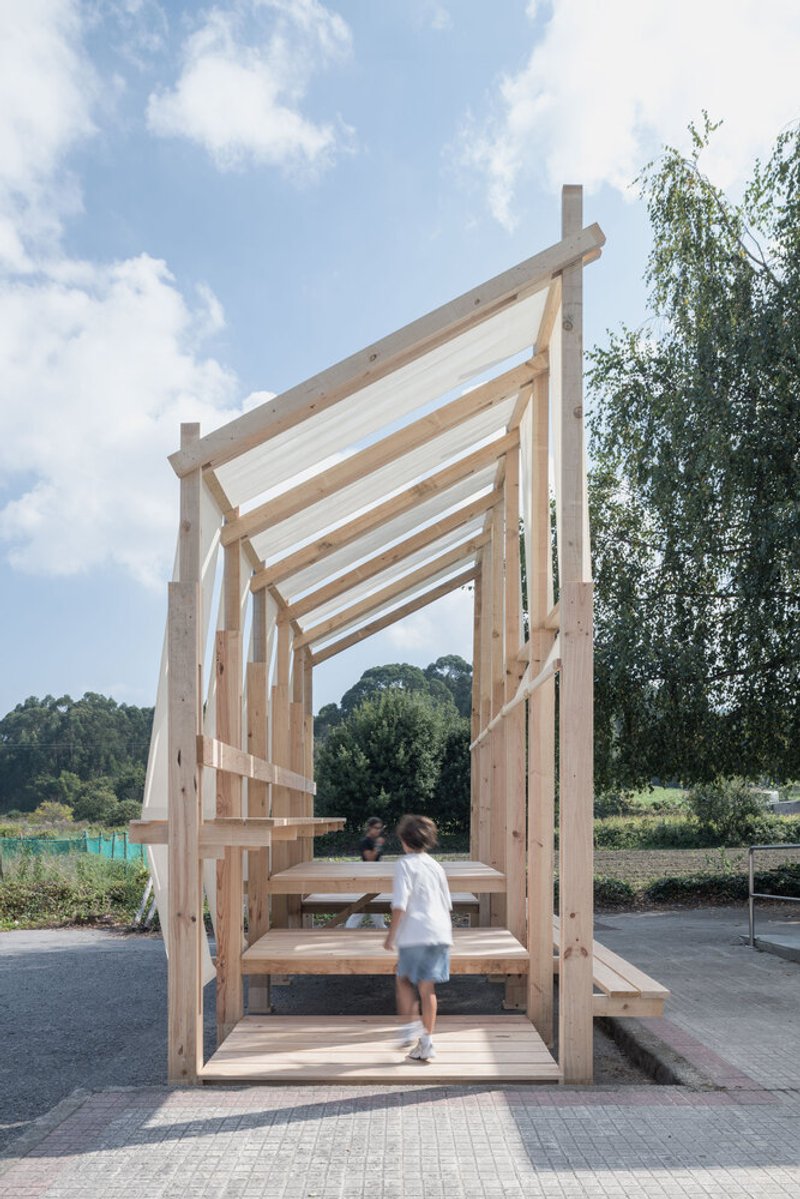
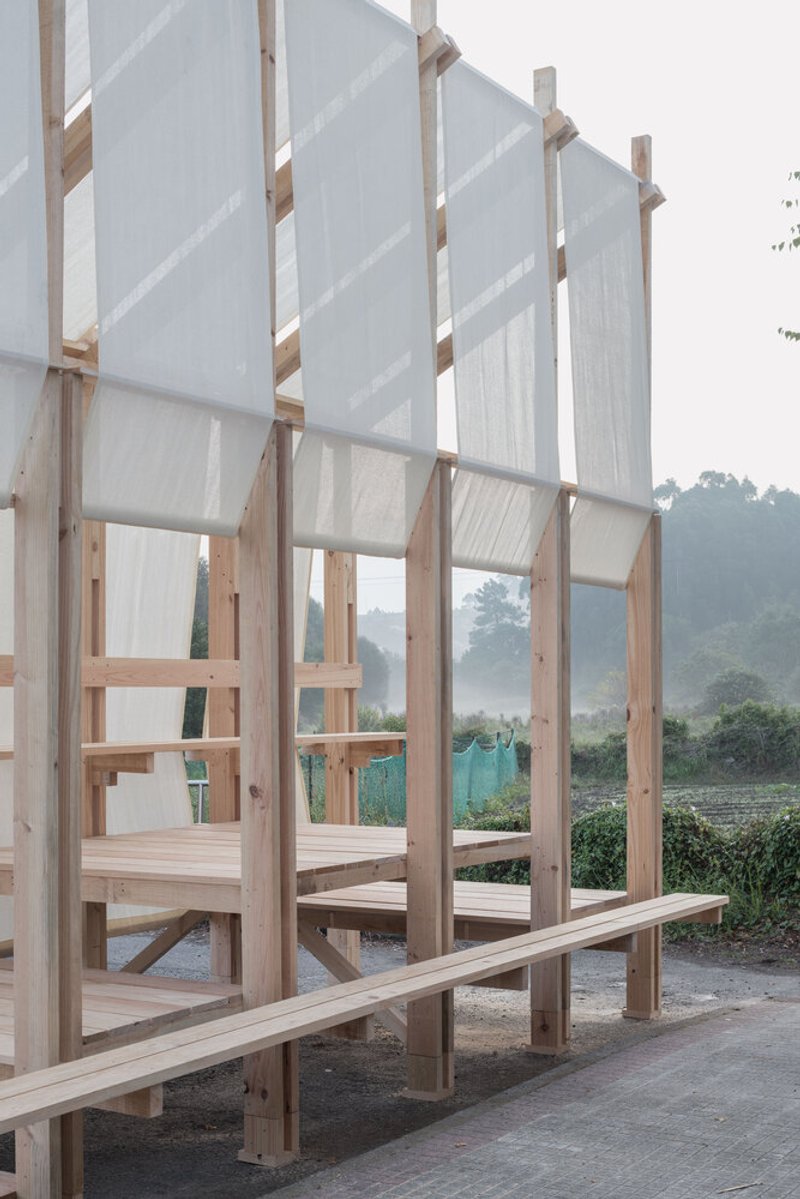
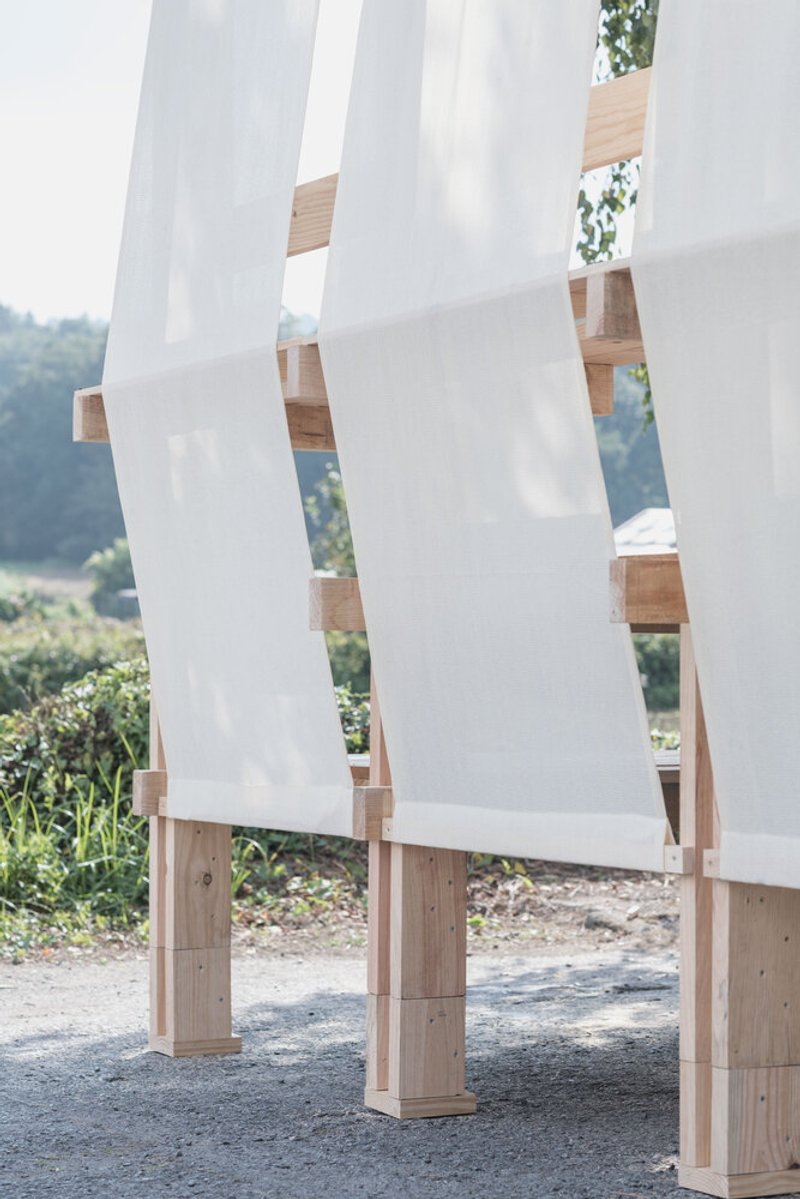
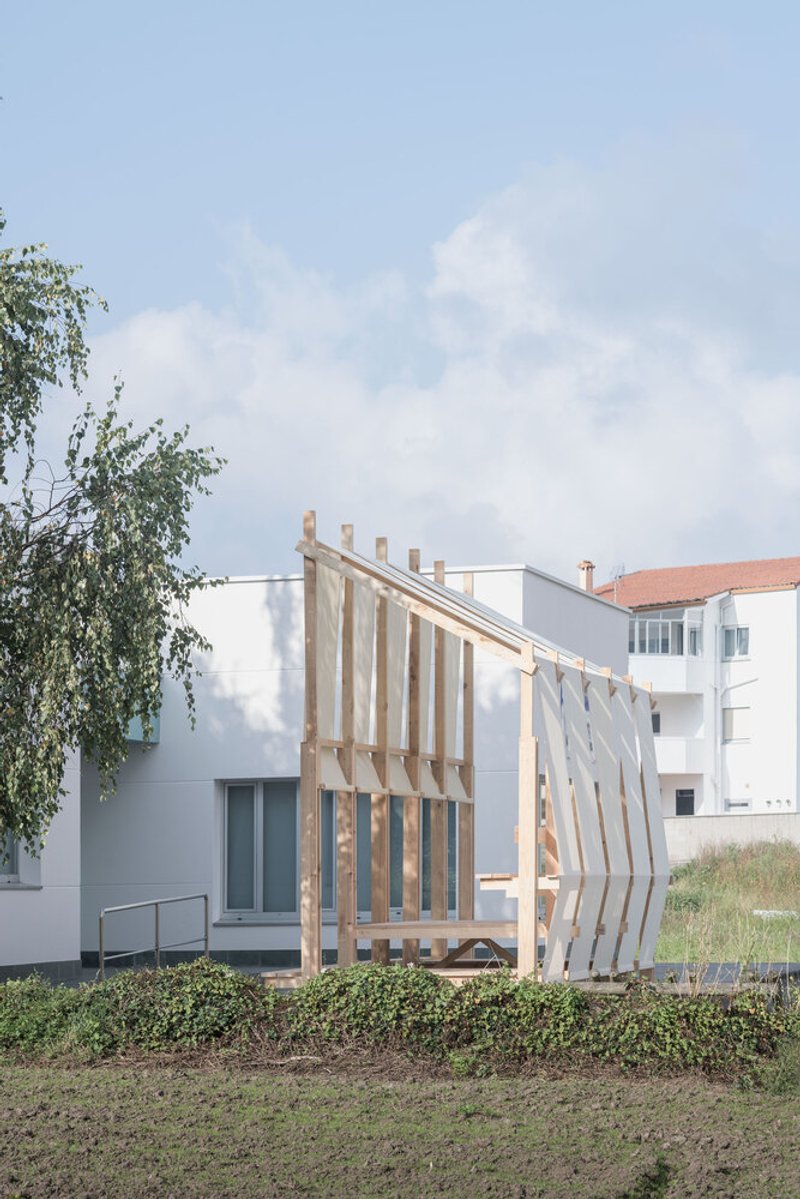
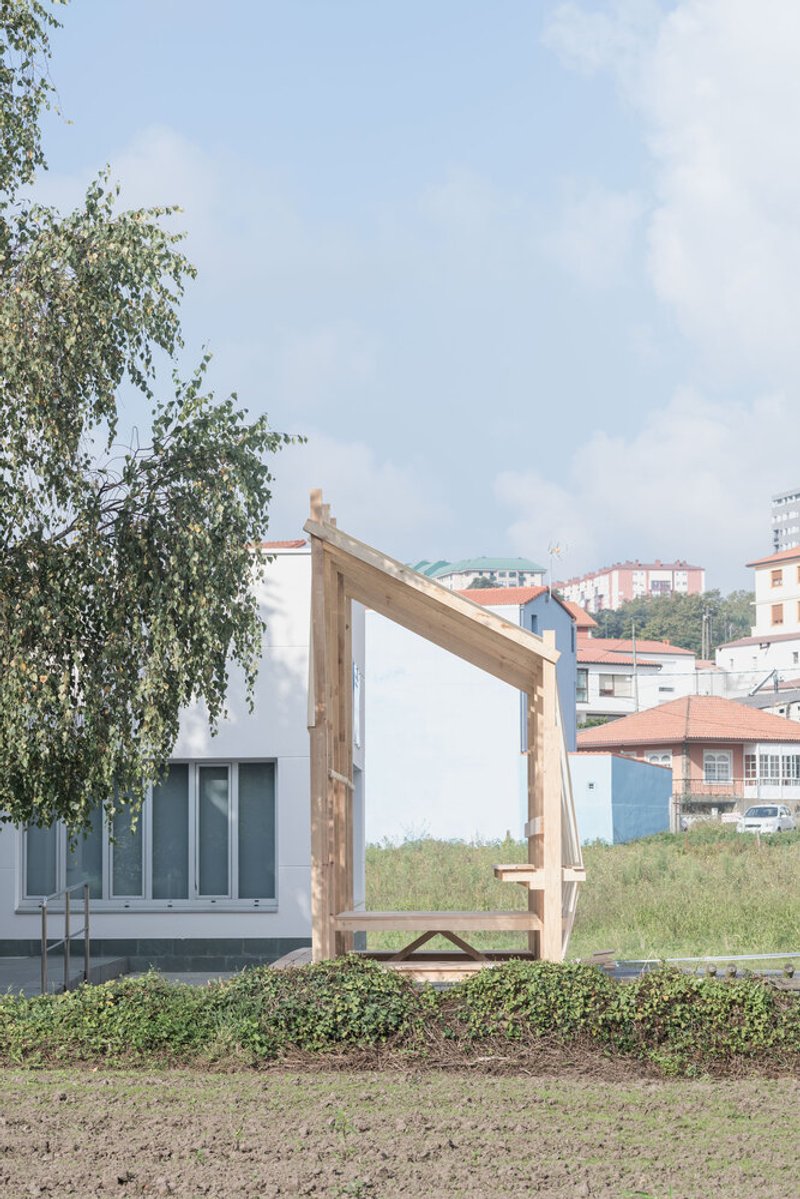
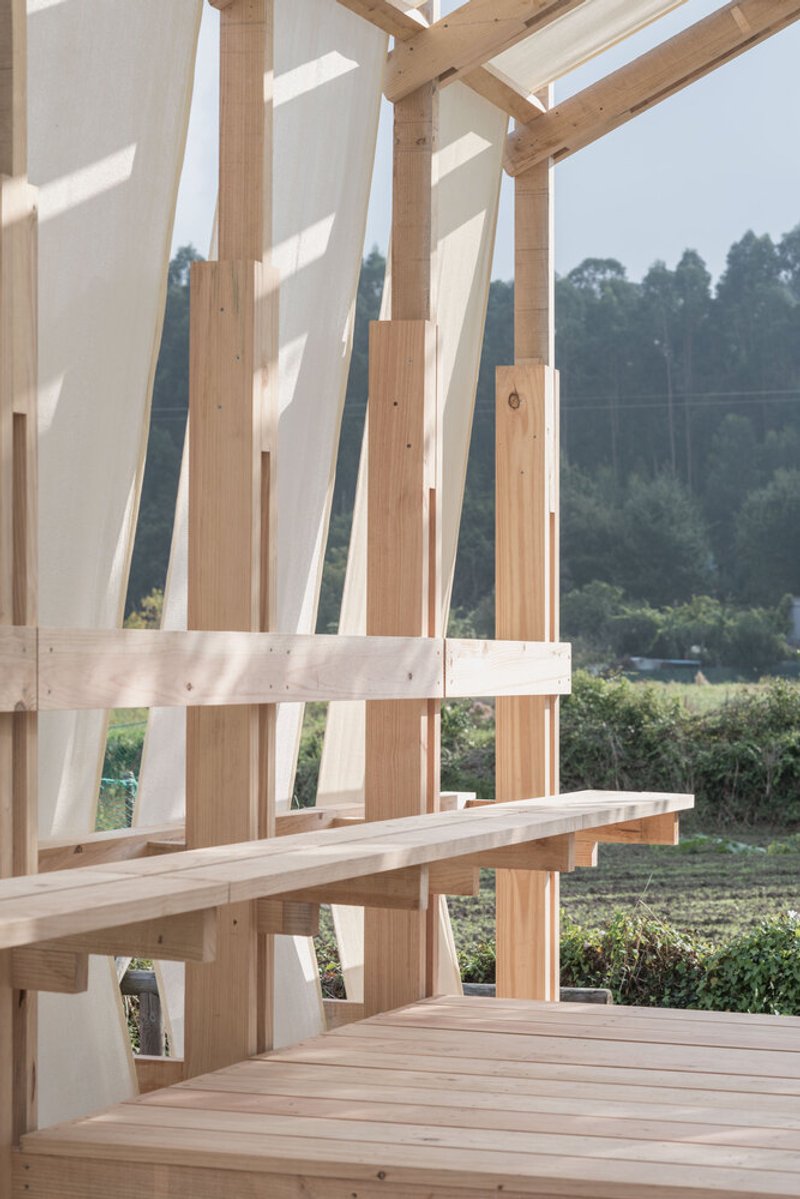
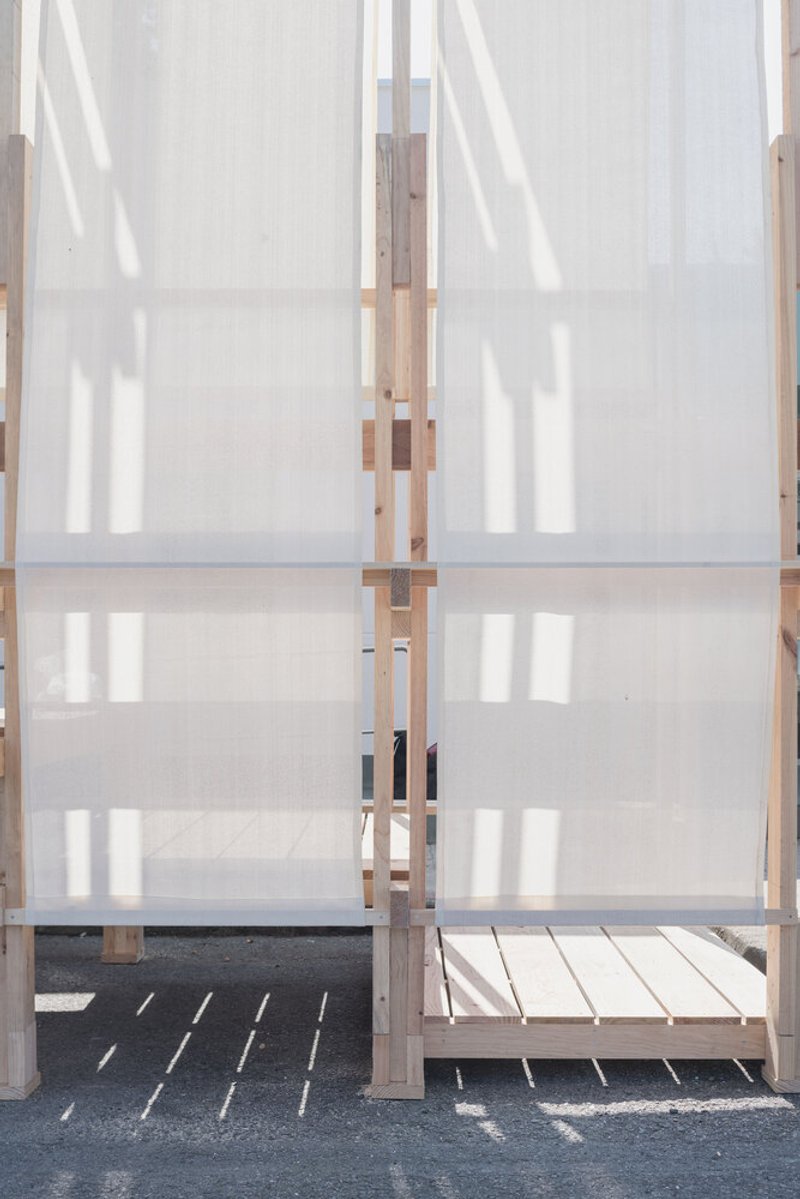
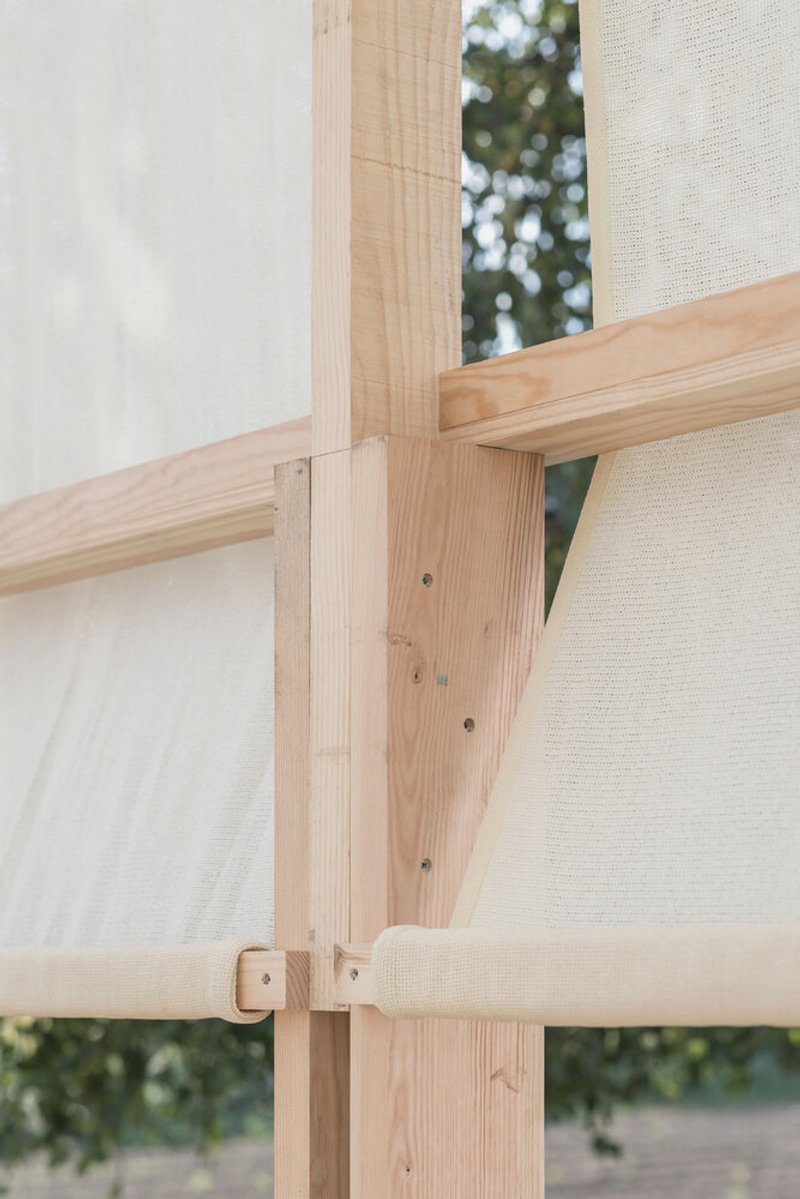
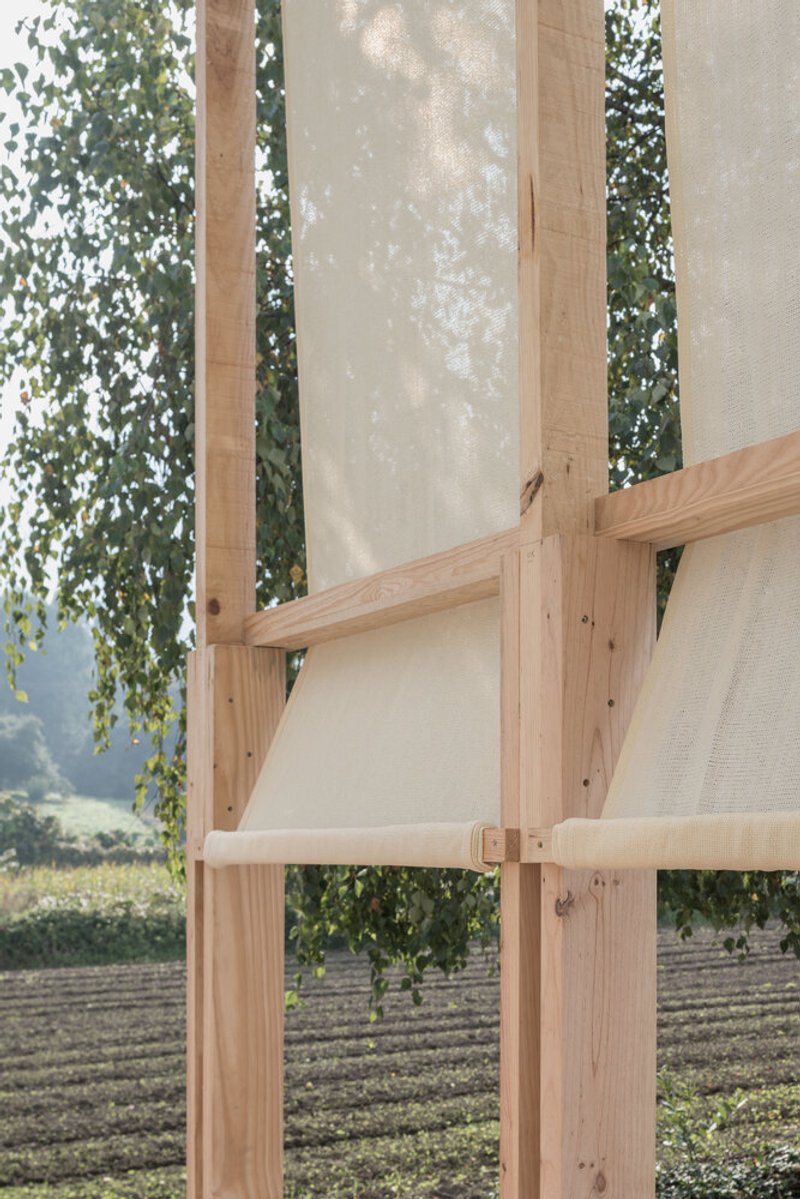
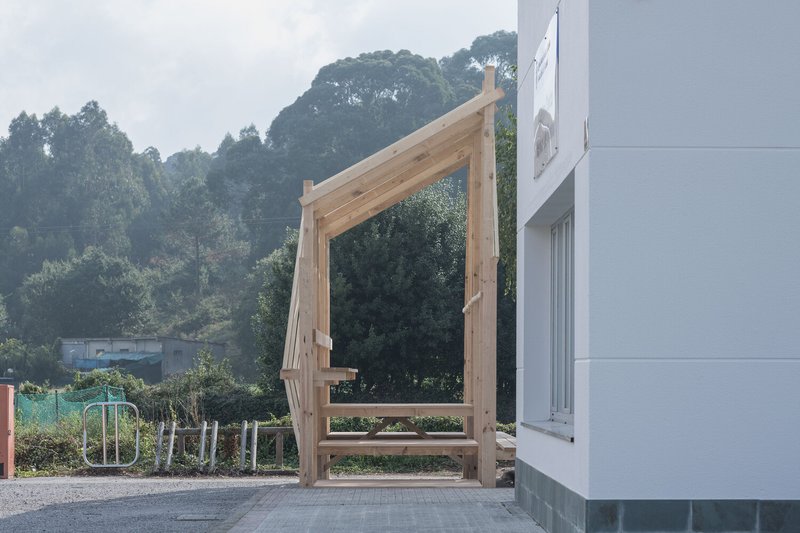
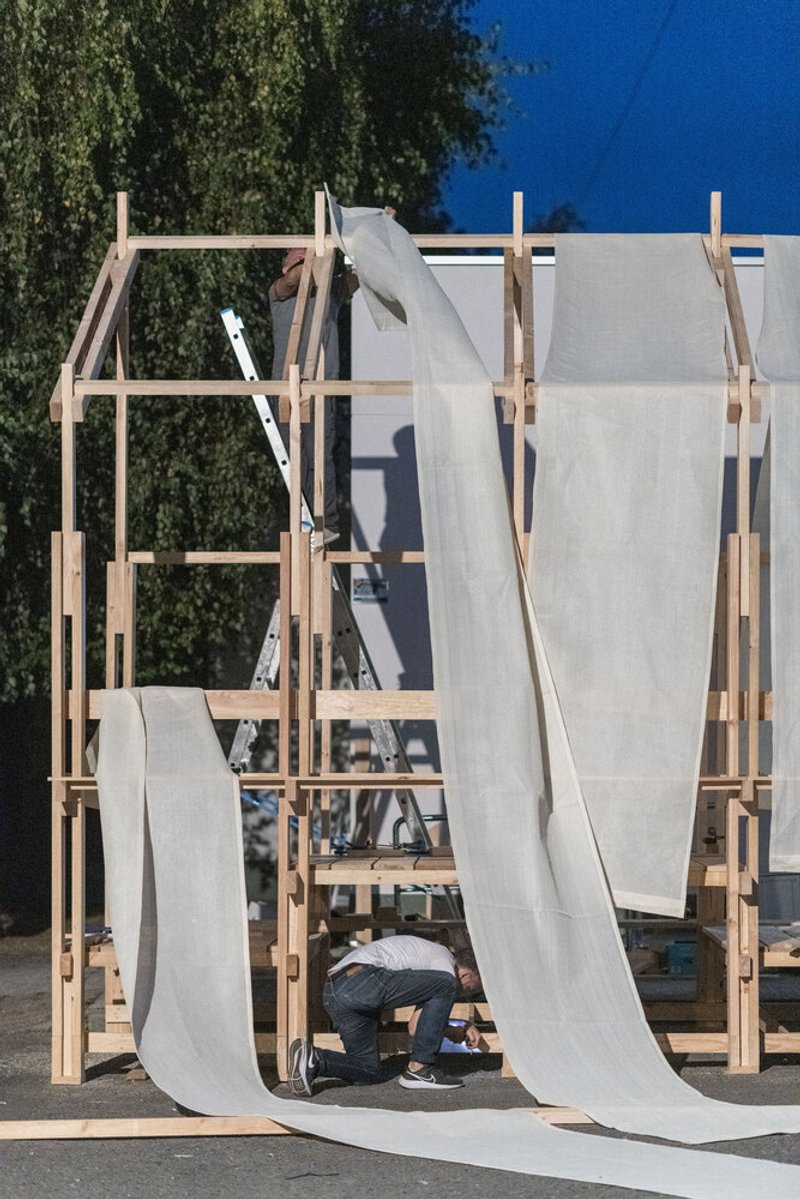
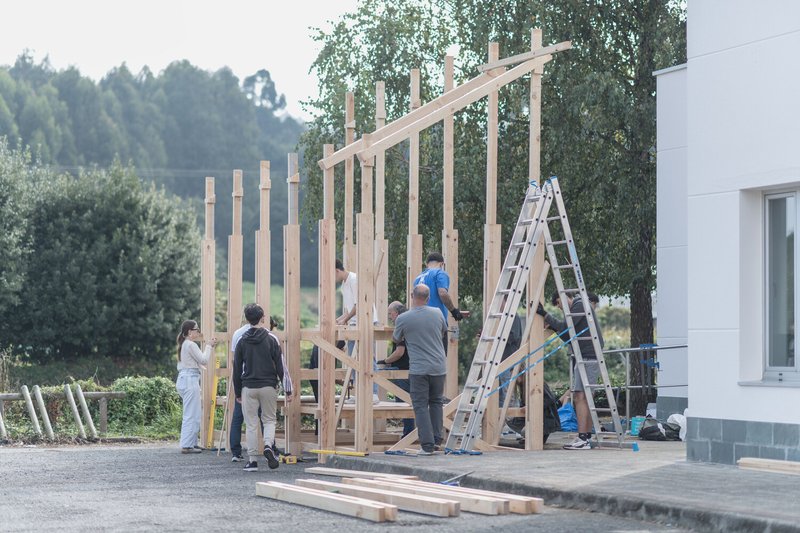
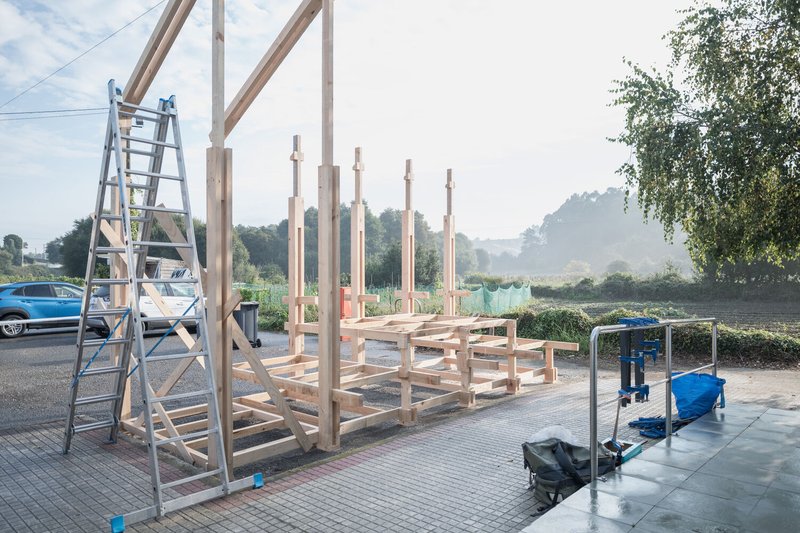
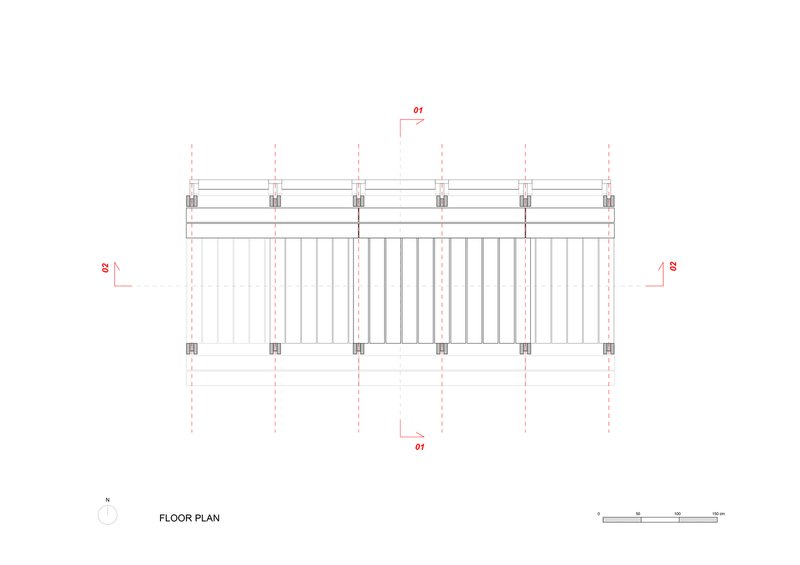
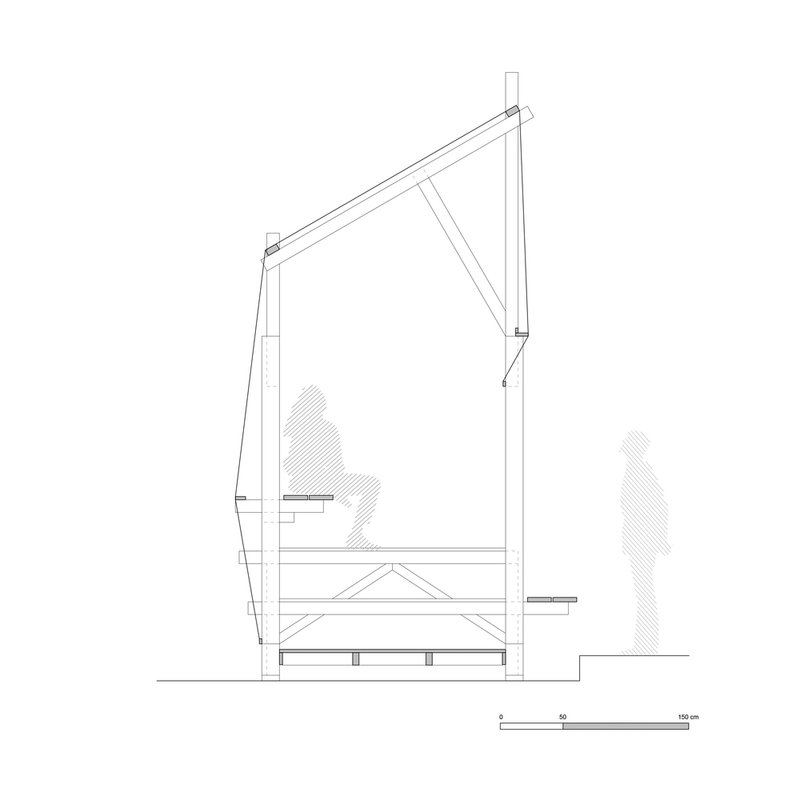
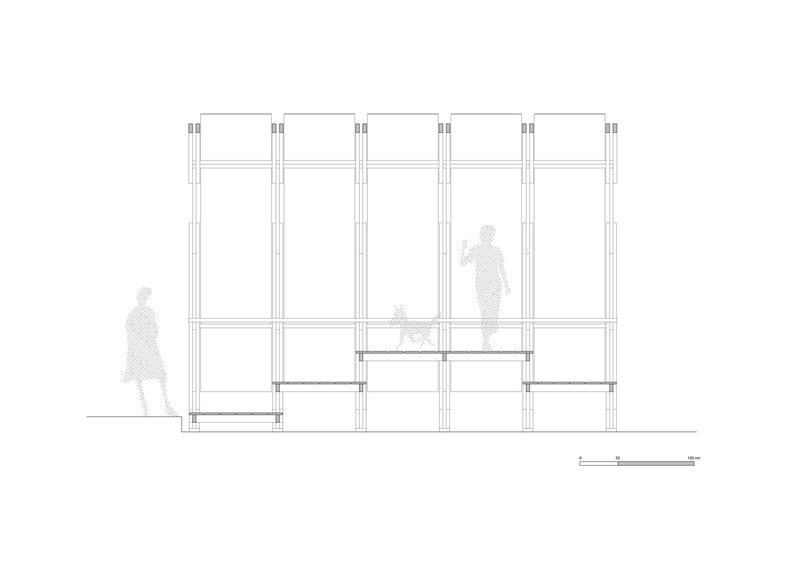
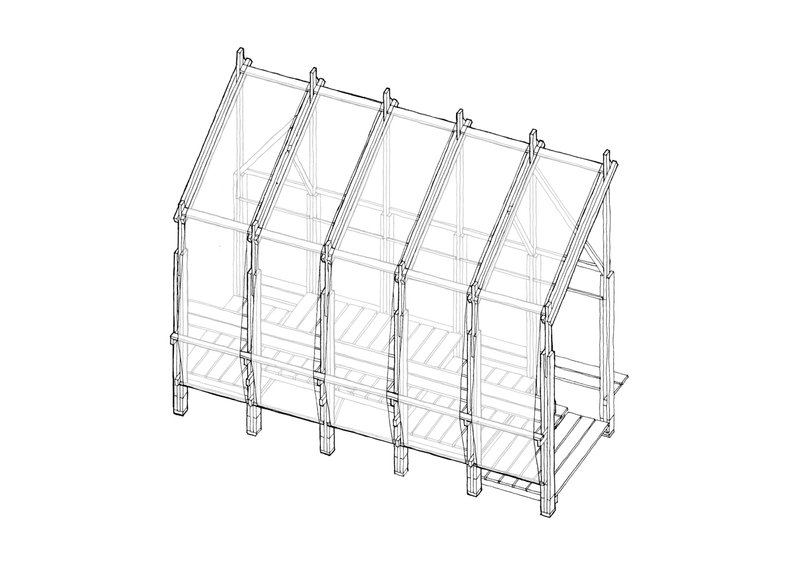
The installation consists of six modular wooden frames, extending to the height of the existing building's façade. These frames are covered with translucent fabrics, predominantly on the north façade and roof, providing both visual prominence and functional shading. The south-facing side features partial fabric coverage, allowing a blend of openness and shelter.
Structure and Material Innovation
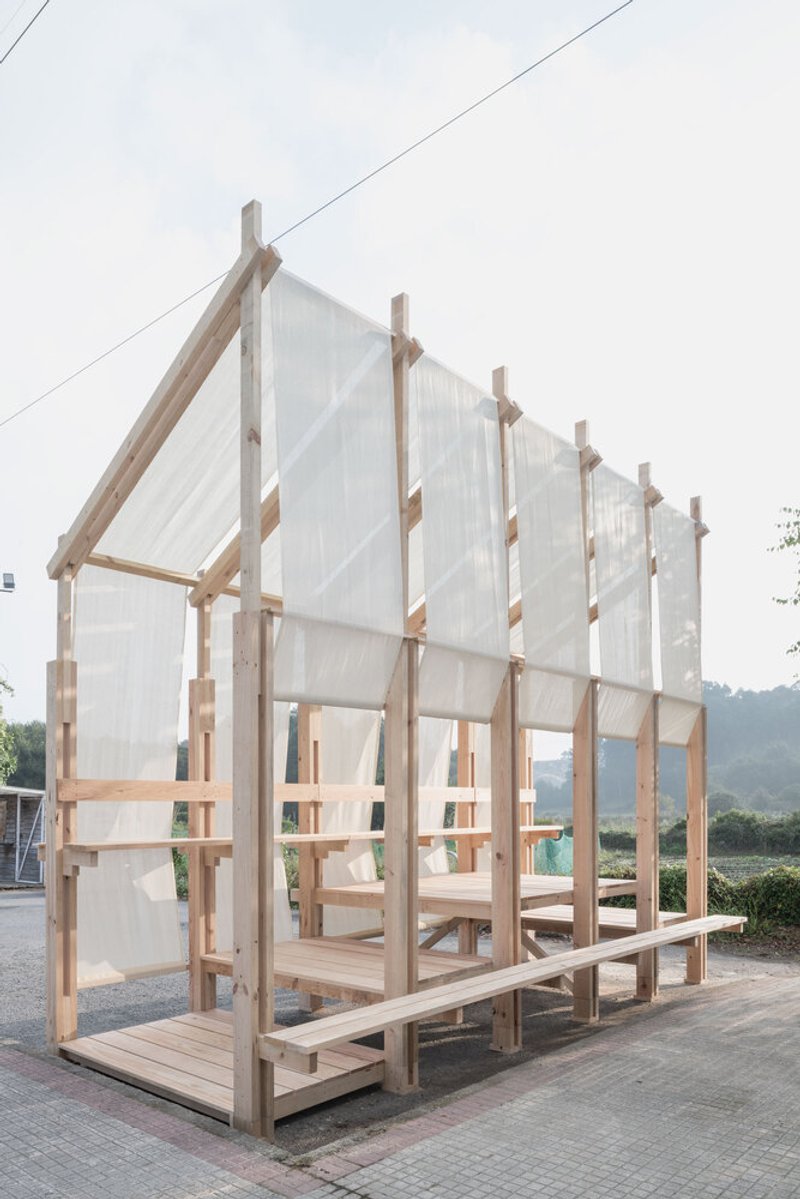
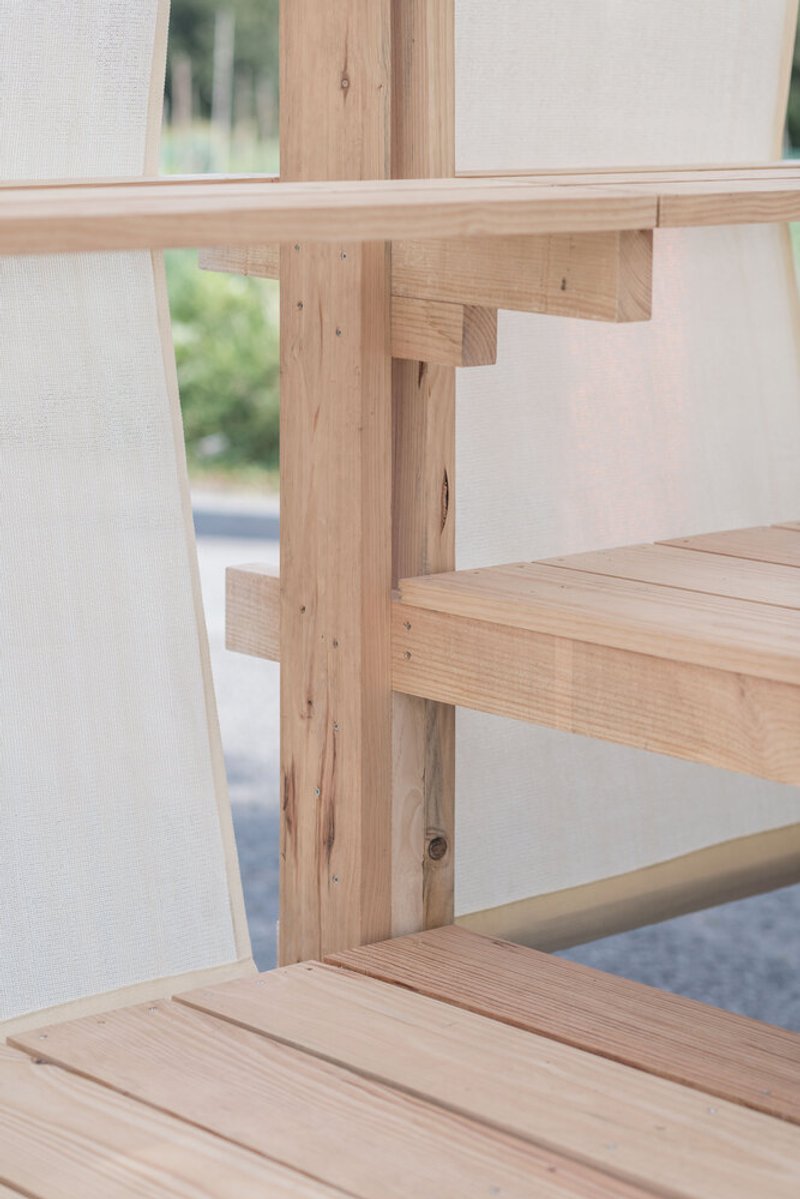
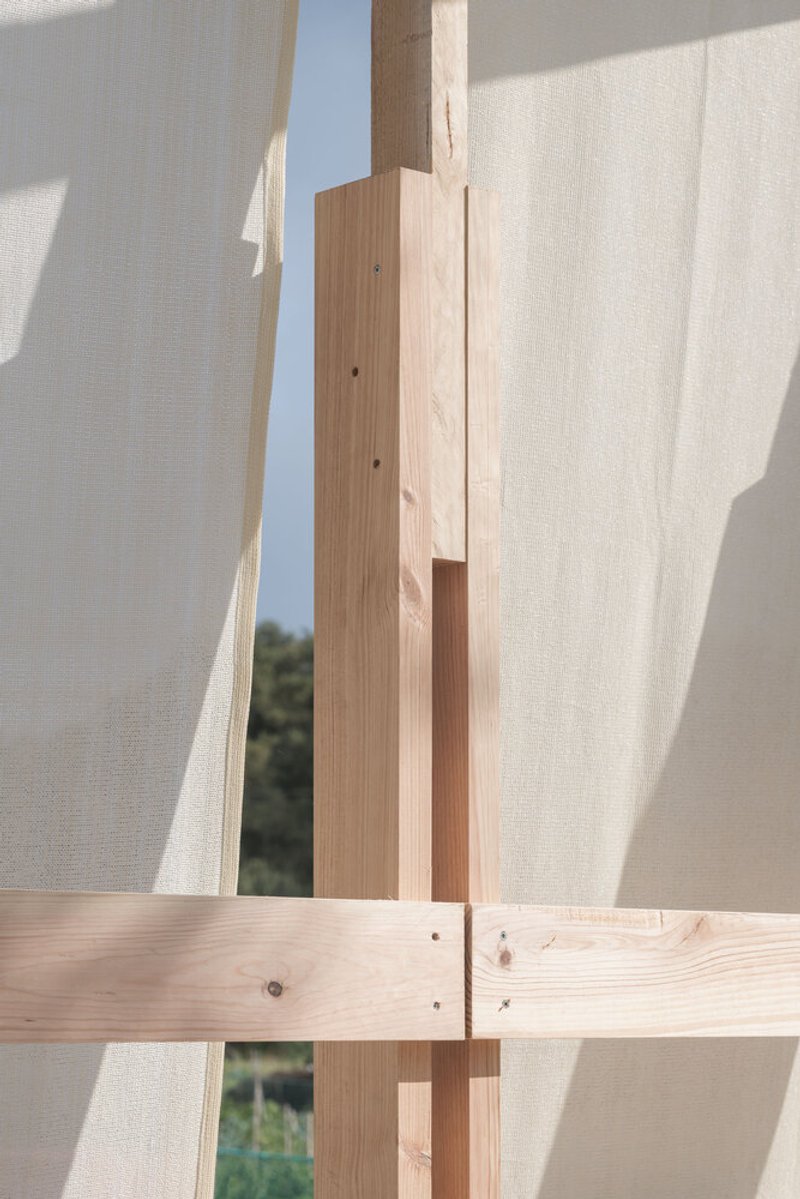
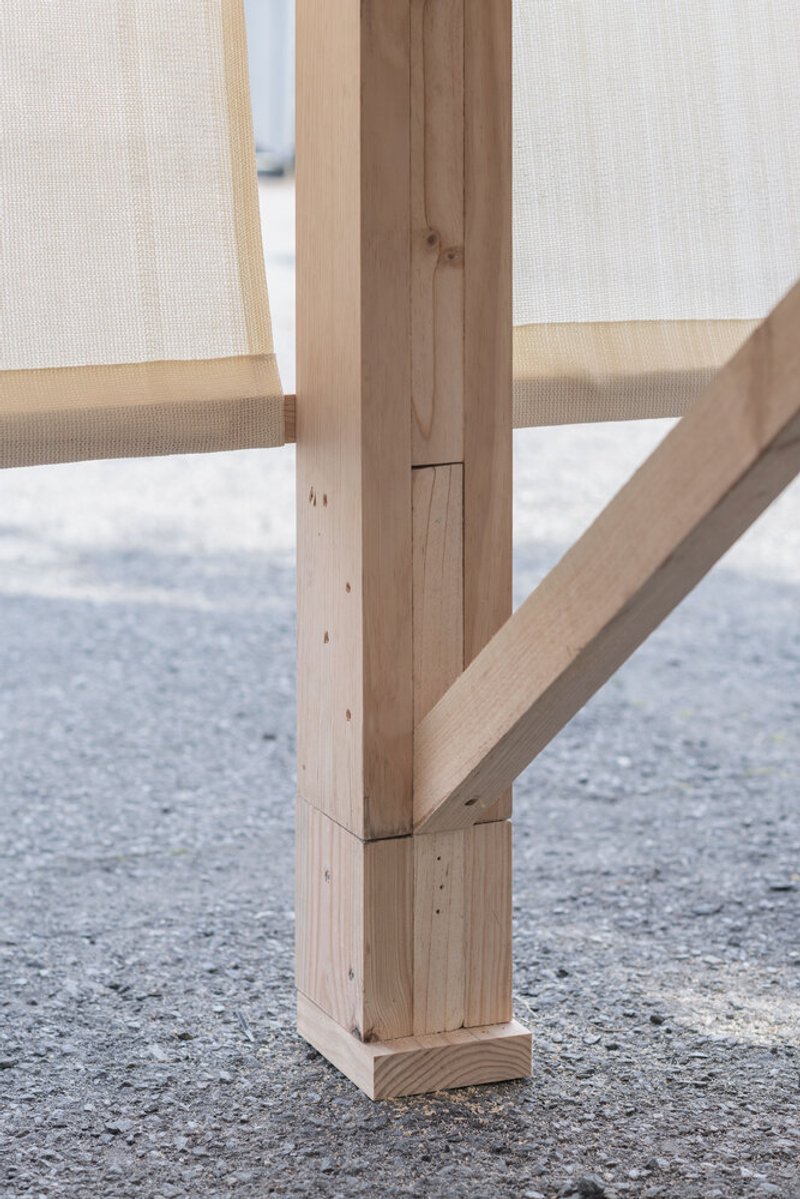
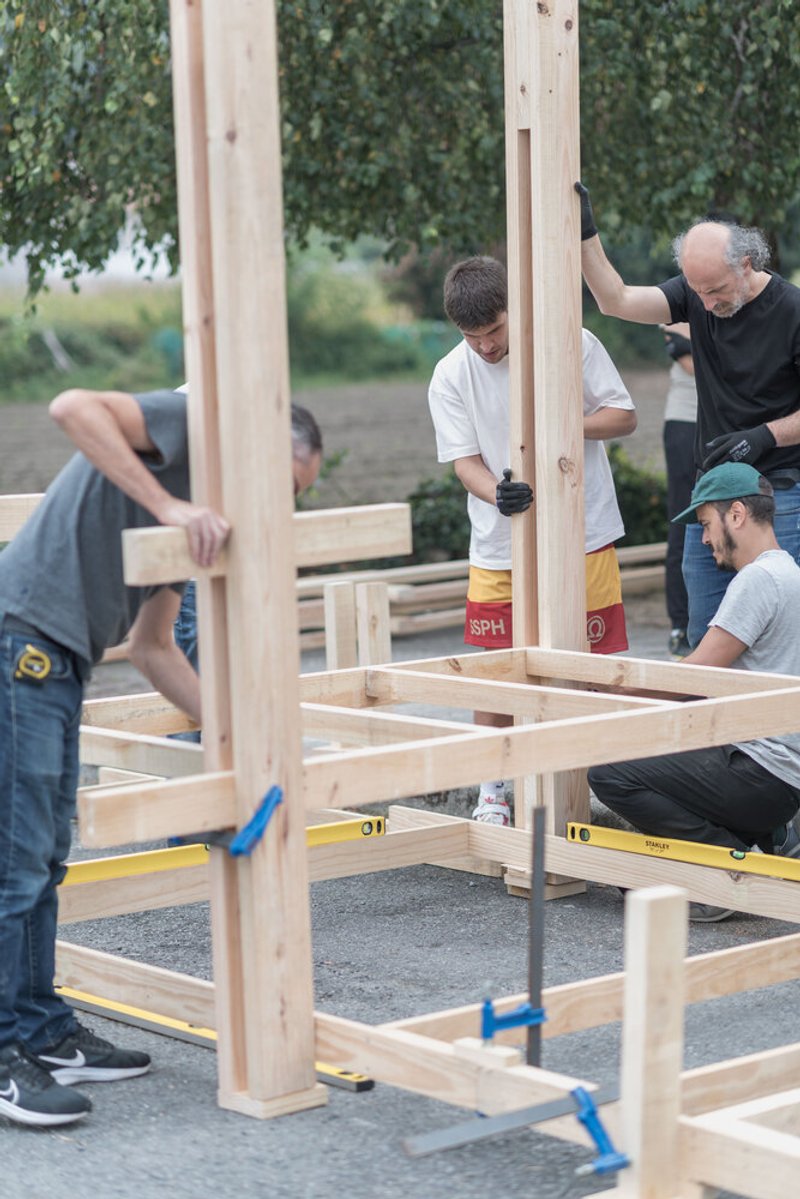
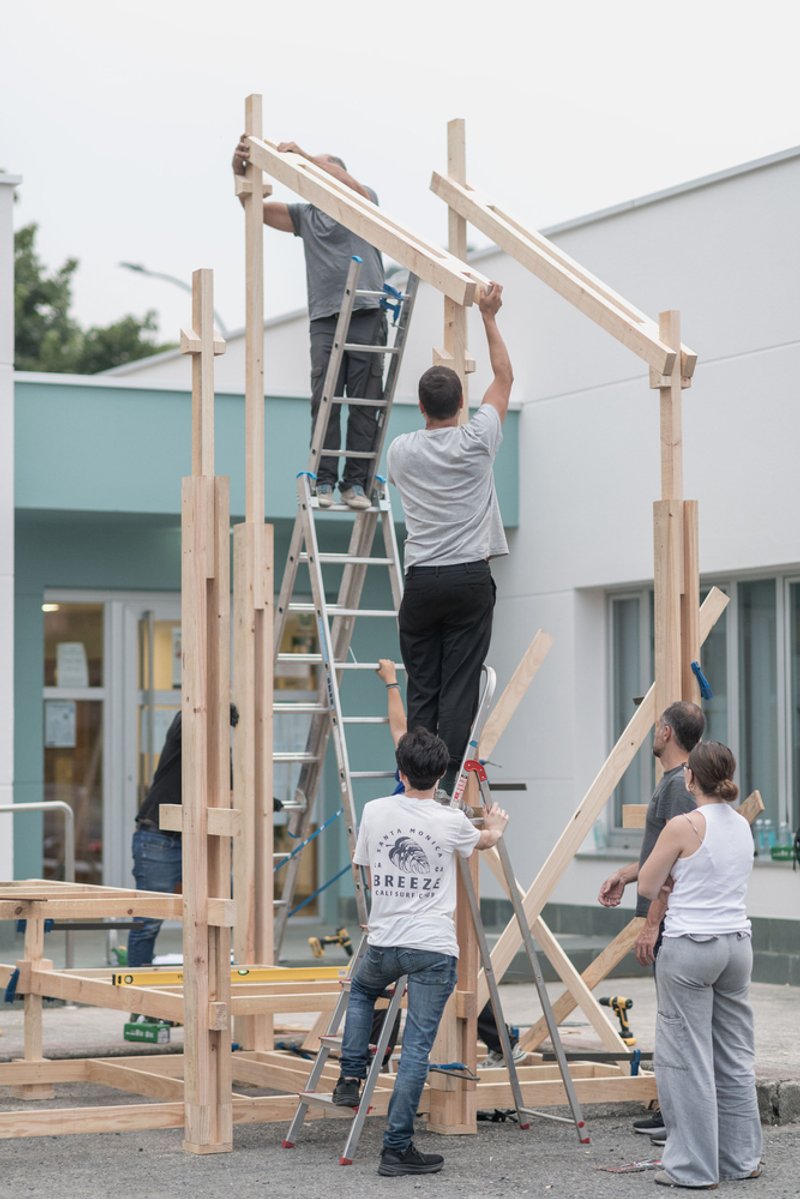
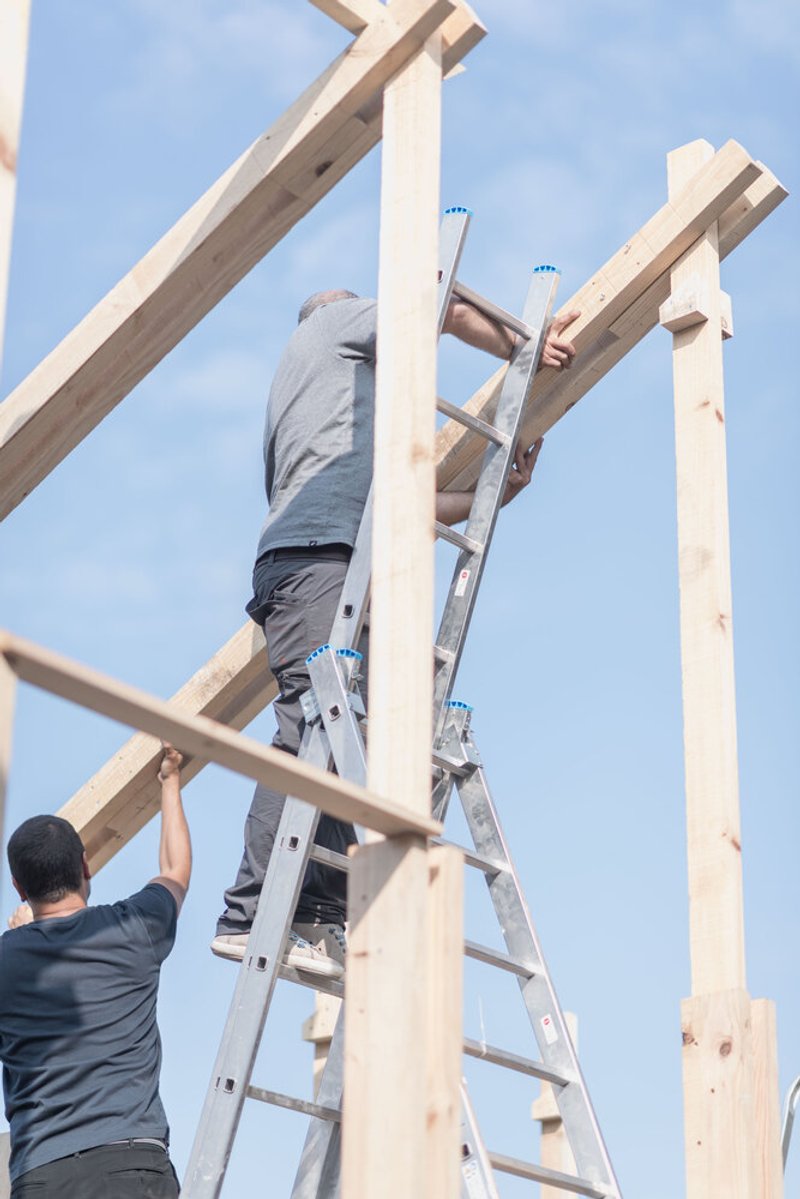
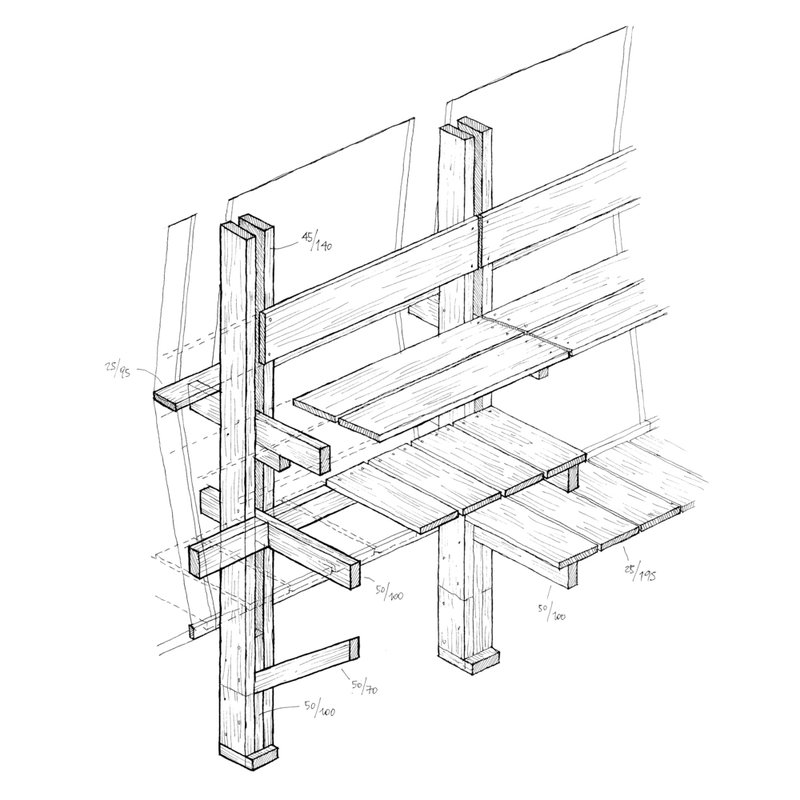
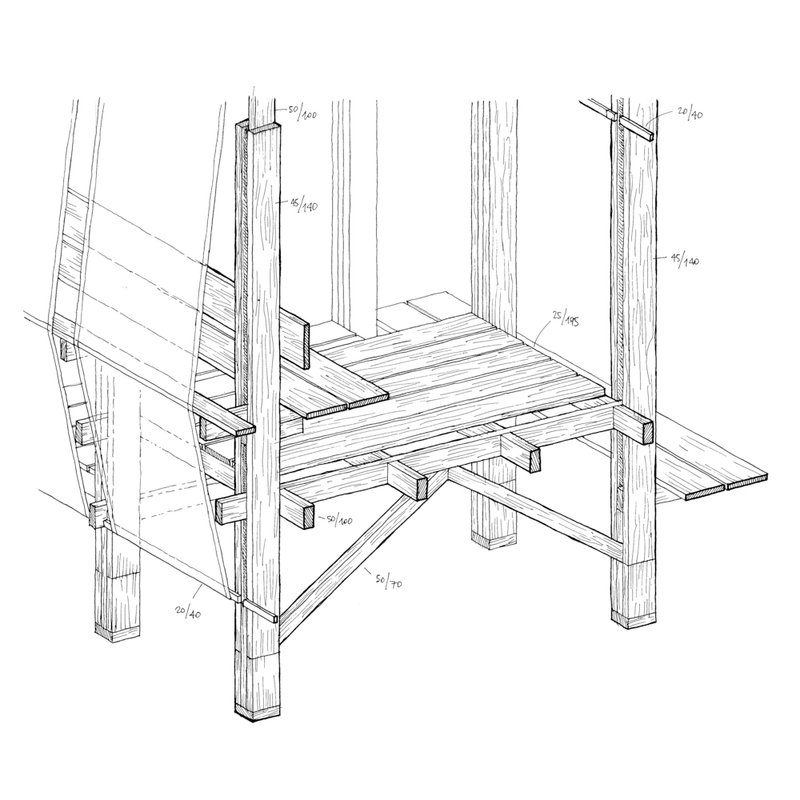
The use of wood as the primary material underscored the workshop's focus on sustainability and craftsmanship. The installation sits directly on the ground without foundations, embracing a lightweight, adaptable approach to construction. The wooden framework was assembled with a focus on rationality and modularity, showcasing the versatility of wood as a material.
Translucent fabrics were integrated into the design to enhance the installation’s visual and functional qualities. The north façade's fabric covering draws attention from a distance, while the wooden framework facing the civic center creates a shared interior space. This space features platforms at varying levels, providing seating, shade, and elevated views of the surrounding fields.
Learning Through Craft
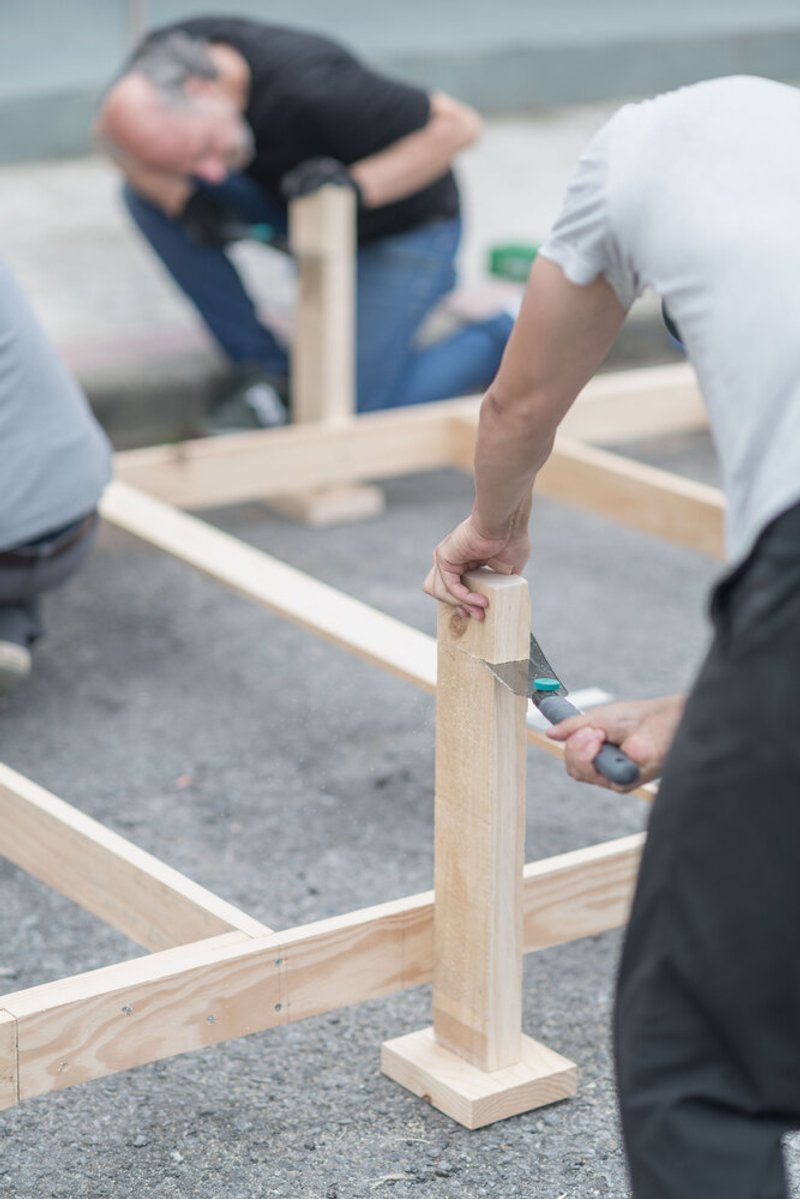
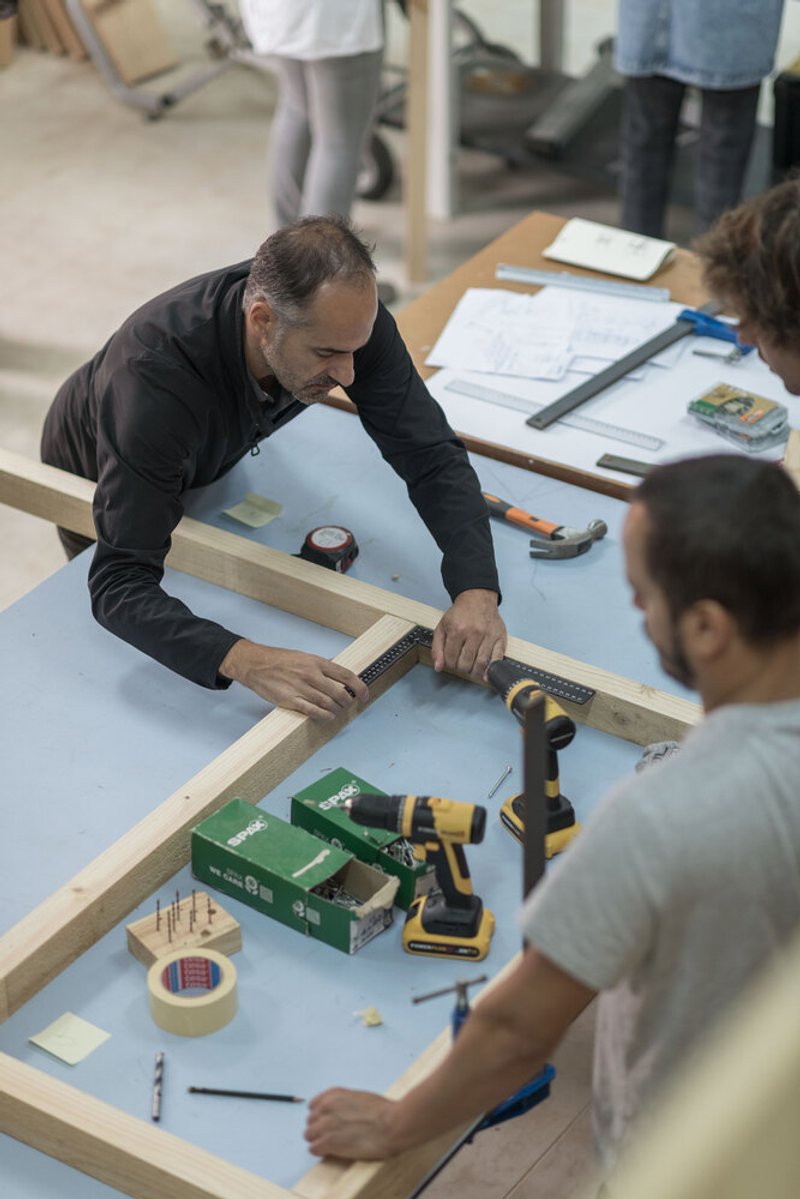
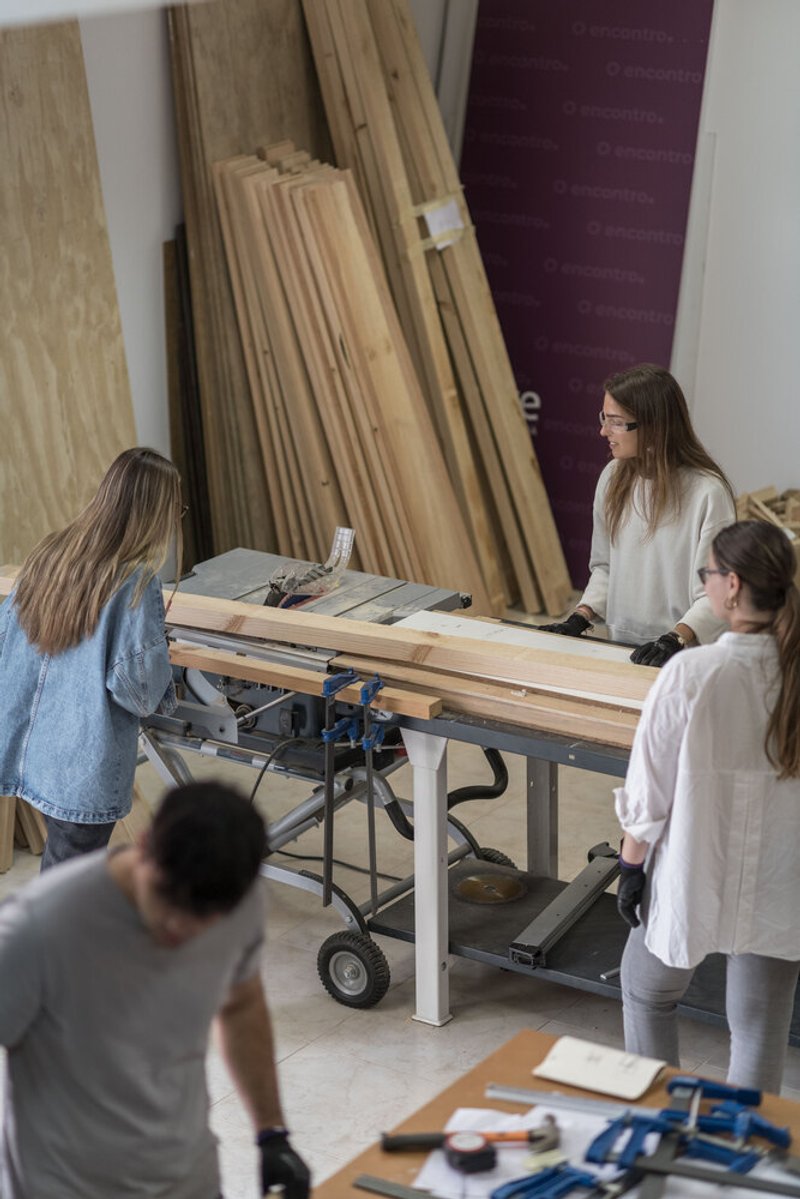
The fabrication process was as much about education as it was about construction. The workshop emphasized manual work and encouraged a degree of improvisation, allowing participants to explore the material's properties and assembly techniques. This hands-on approach fostered a deep understanding of wood's structural logic and adaptability, reinforcing its value as a sustainable architectural material.
Bridging Architecture and Community
Alpendre is more than a temporary installation; it is a prototype exploring the intersection of architecture, community, and landscape. By mediating between the civic center and its surroundings, the installation creates a dialogue that redefines the relationship between built structures and their geographical and cultural context. Its temporary nature invites reflection on the evolving role of architecture in addressing community needs while celebrating local materials and craftsmanship.
A Vision for the Future
This project highlights the potential of temporary wooden installations as functional and symbolic mediators in diverse environments. Alpendre exemplifies how architectural interventions can connect modern design practices with regional identity, offering both practical solutions and artistic expressions.
All Photographs are work of Bruno Giliberto