The Cradle Office Building by HPP Architects – Sustainable Circular Office Design in Düsseldorf
The Cradle Office Building by HPP Architects features circular design, timber hybrid construction, dynamic diamond-shaped facade, and sustainable, Cradle-to-Cradle-certified materials.


Located in the vibrant Düsseldorf Media Harbor, The Cradle Office Building, designed by HPP Architects, exemplifies a bold step toward circular architecture and sustainable office design. Completed in 2023, this 11,400 m² office complex embodies a forward-thinking approach, redefining how buildings can deliver environmental, social, and urban value.
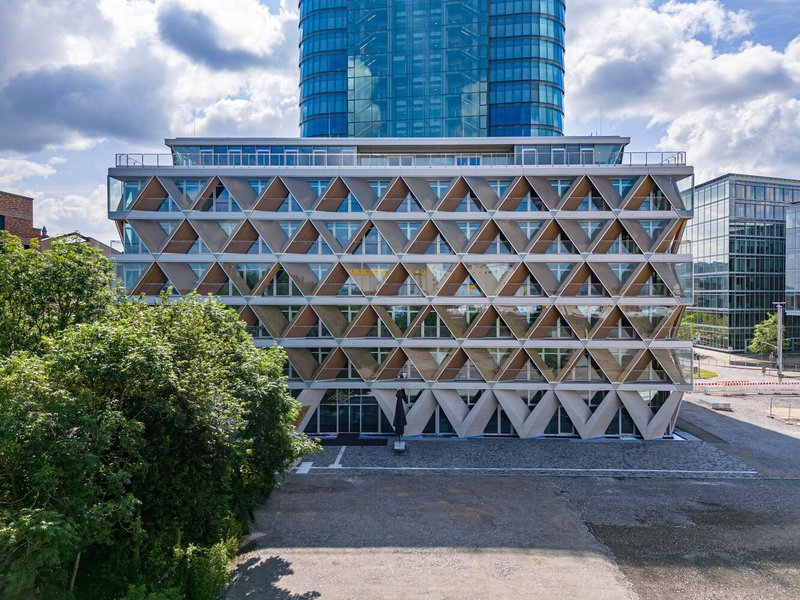
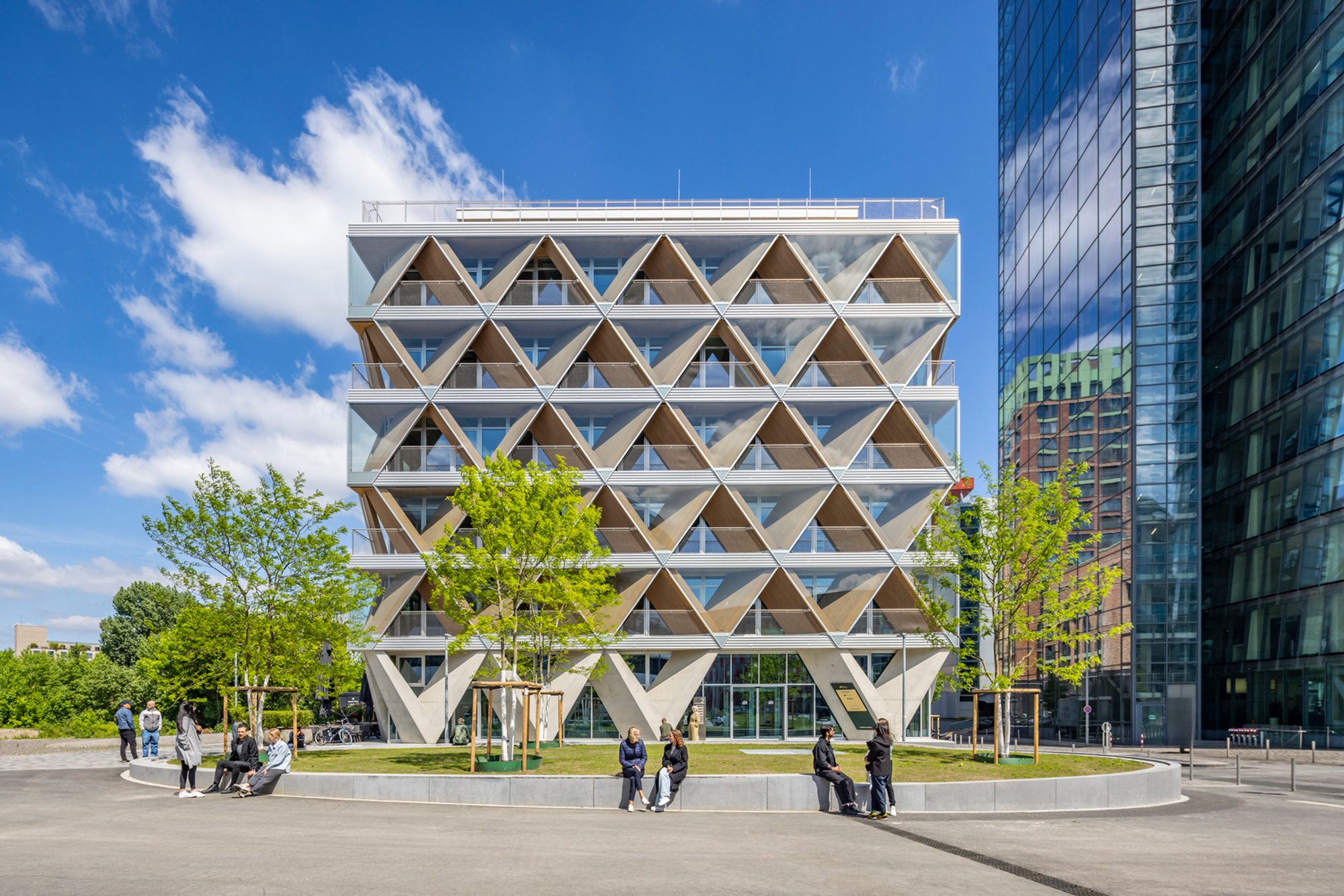
From the outset, the integral planning team at HPP Architects aimed to break traditional conventions, designing a structure that is environmentally responsible, socially valuable, and architecturally innovative. The building introduces a distinct architectural language that harmonizes with the heterogeneous urban context of the Media Harbor, yet asserts its own identity through a synergy of three core design principles: the integral timber hybrid construction, the innovative diamond-shaped facade, and the Cradle to Cradle® (C2C) concept.
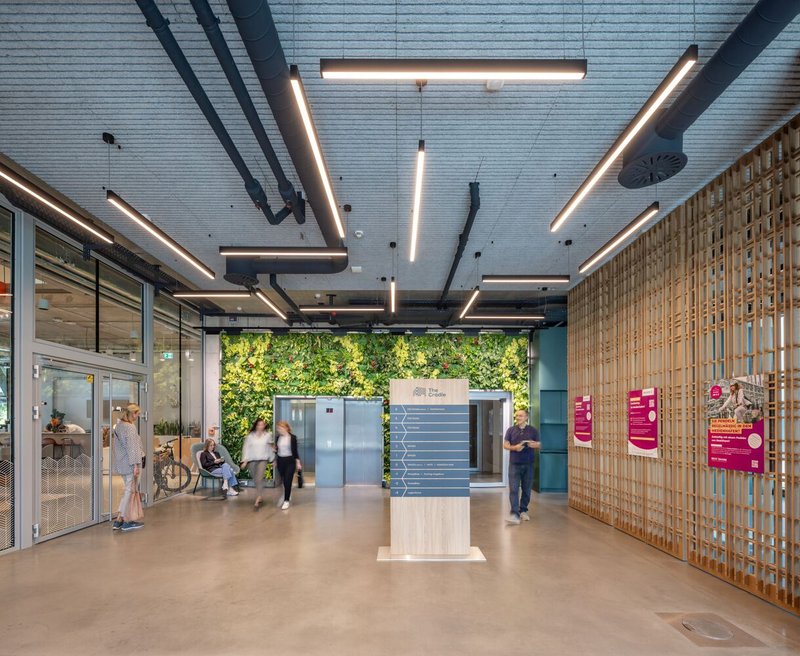
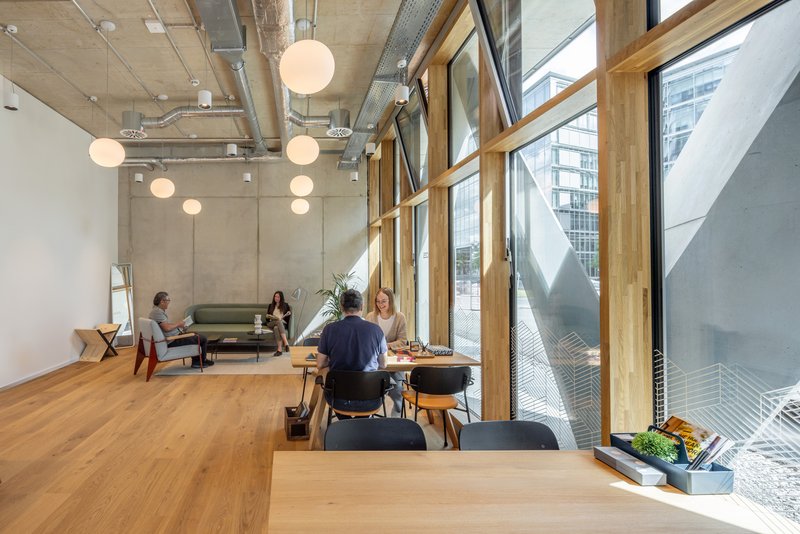
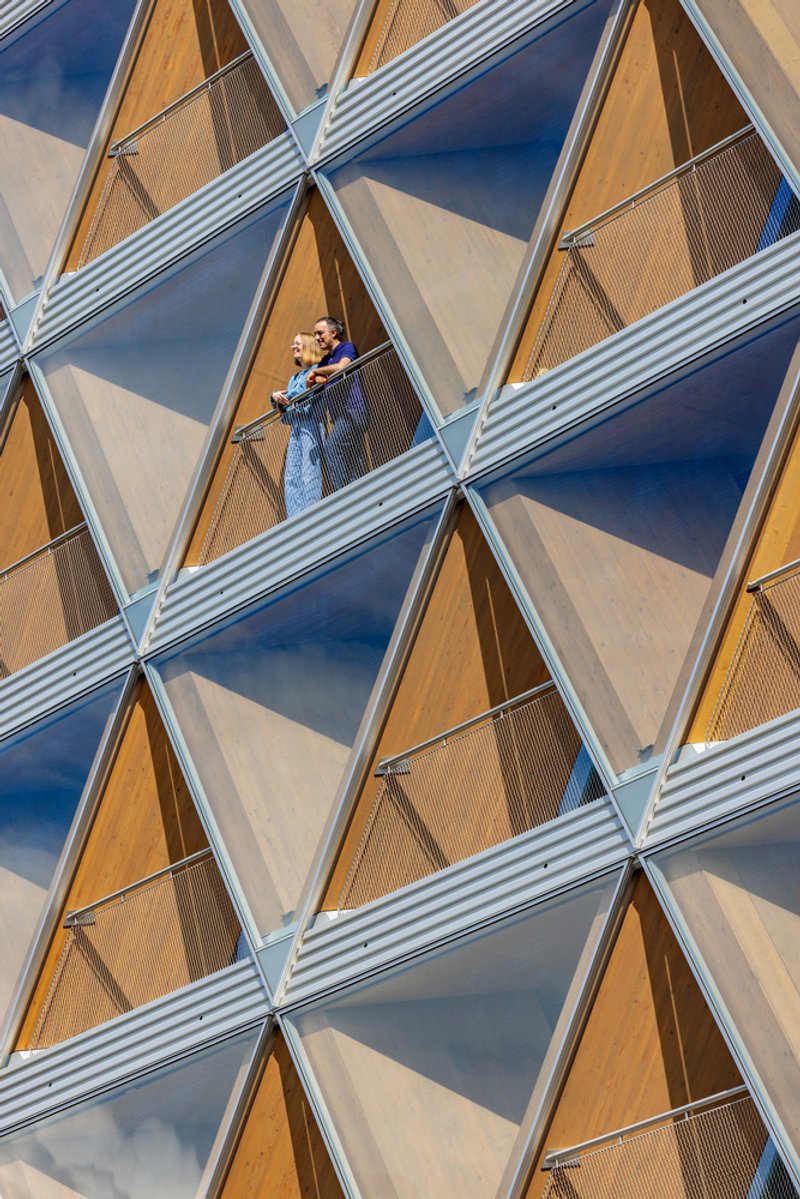
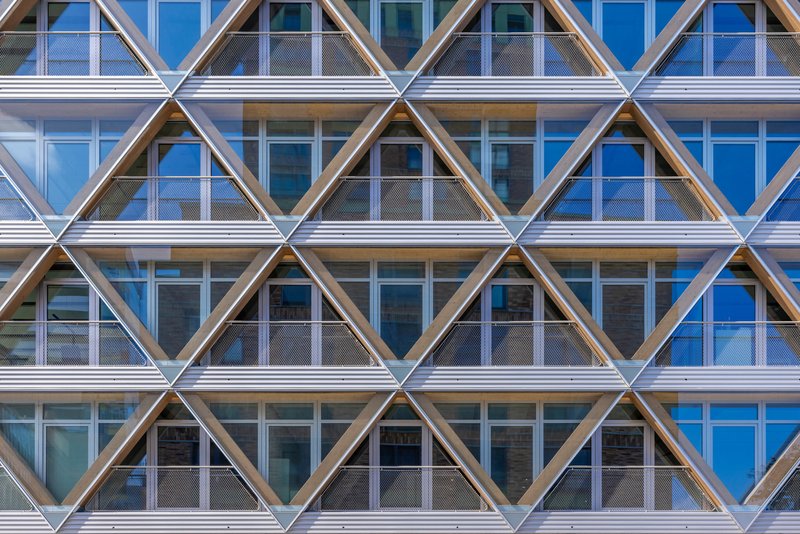
Timber Hybrid Construction & Facade Innovation Excluding basement levels, the ground floor, and the building core, all essential components are constructed from wood, embracing the principle of sustainable timber architecture. The diamond-shaped V-column facade responds to the site’s geometry while offering multiple functional benefits: it serves as a structural support, provides bracing, delivers solar protection, and forms loggias that frame striking views. The interplay of depth, orientation, and glass prism baffles creates a dynamic facade that changes perception throughout the day, combining functionality with aesthetic impact.
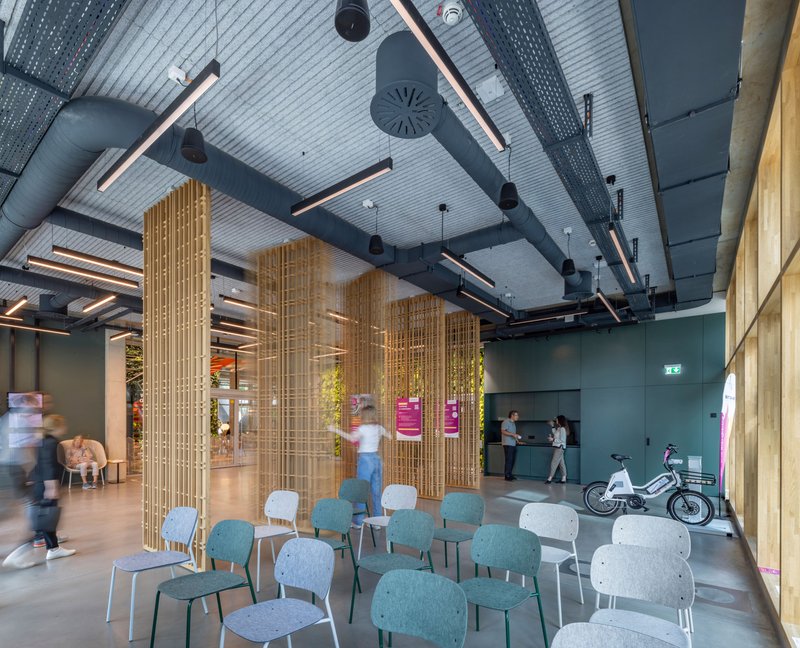
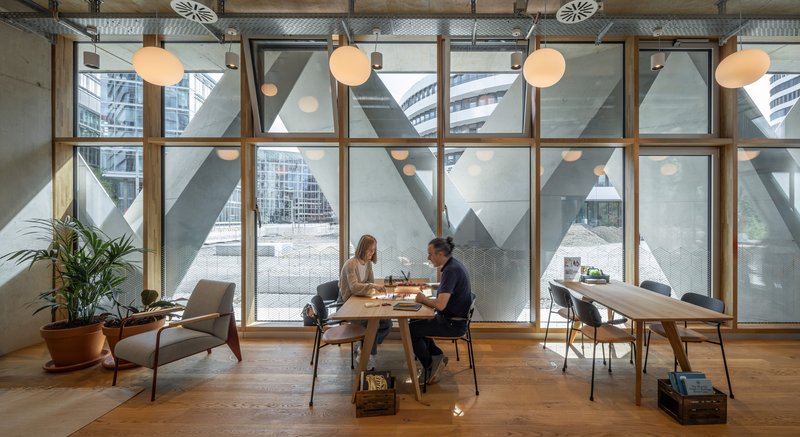
Circular Design & Material Health
The Cradle acts as a raw material depot, where a Circularity Passport® linked to its digital twin monitors parameters such as dismantlability, material purity, health, and recyclability. This approach has improved material health by 56% and reduced the building’s carbon footprint by 50%, with over 90% of materials being recyclable. Significantly, it was the first German new-build project registered on the Madaster platform, enabling the building’s materials to be monetized and tracked as valuable raw resources.
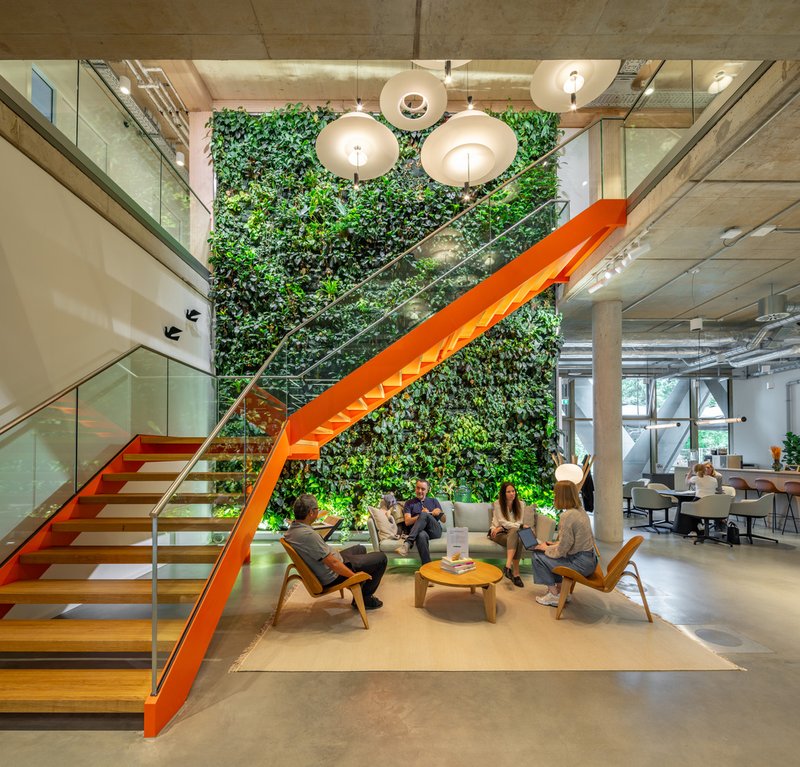
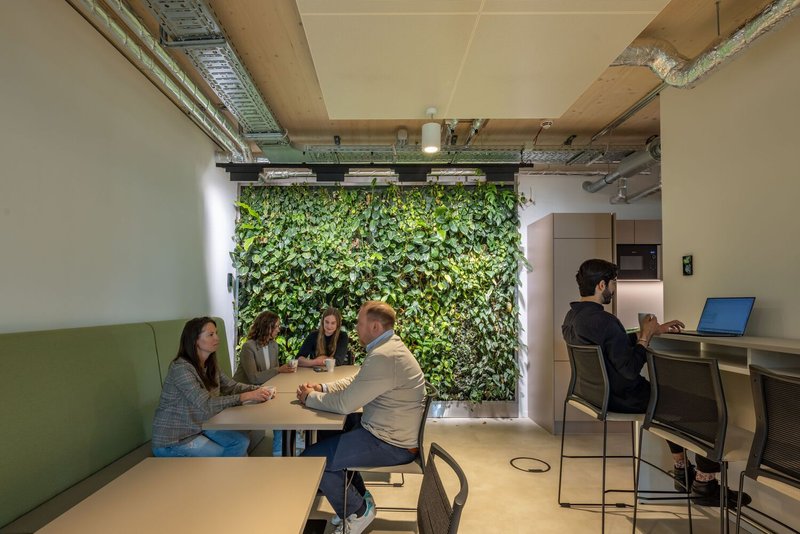
Design for Disassembly & Sustainable Interiors
The building employs plug-in and screw connections, avoids unnecessary cladding, and includes a wood take-back obligation by the timber construction company. Green lease clauses encourage tenants to use Cradle to Cradle-certified furniture and fittings, ensuring a continuous commitment to sustainability throughout the building’s lifecycle.
Holistic Sustainability & Urban Integration
Beyond material cycles, The Cradle promotes urban sustainability and enhanced human experience. Photovoltaic systems, a retention and green roof with nesting boxes and an insect hotel, a mobility hub featuring e-sharing services, and publicly accessible ground-floor areas all contribute to environmental and community well-being. Interior spaces feature green walls, clay surfaces, and abundant natural light, creating healthy, engaging work environments.
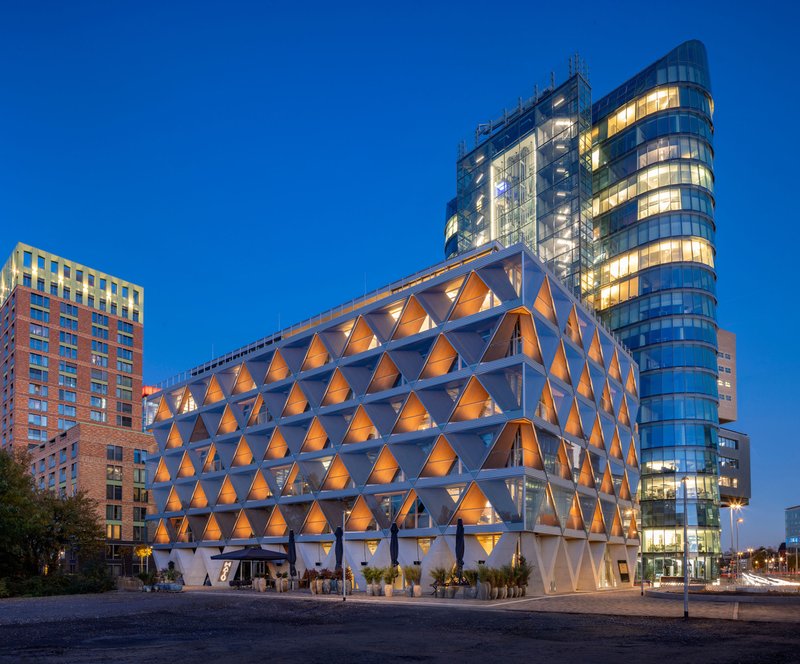
The Cradle Office Building represents a benchmark for sustainable office architecture, blending circular construction, timber innovation, and urban integration to deliver meaningful value for occupants, the environment, and the surrounding community.
All Photographs are works of Ralph Richter