WRITTEN IN STONES: A Memorial Architecture Proposal for Aleppo
A powerful memorial architecture proposal that transforms Aleppo’s rubble into collective memory, healing, and a future built from the past.


Reconstructing Memory Through Memorial Architecture
“Written in Stones” is a profound memorial architecture project situated in the war‑torn landscape of Aleppo, Syria. Designed by Paul Lieser and Nour Moazzen, the proposal transforms the rubble of destroyed homes into a collective archive—an evolving, community‑built memorial that honors the past while empowering the present to build toward a humane future.
Rooted in the symbolic power of material memory, the project asks: How can the stones of destroyed homes contribute to rebuilding identity and healing social wounds? Through a sensitive reinterpretation of gabion structures, programmatic layers, and community involvement, the memorial introduces a new way of thinking about architecture—not as a static monument, but as a living mechanism of remembrance.
A Landscape Scarred Yet Full of Meaning
The site sits at the foot of the Citadel of Aleppo, one of the oldest inhabited citadels in the world. Its presence forms a striking dialogue with the devastation in the surrounding neighborhoods. Satellite imagery reveals the intensity of destruction near the citadel, making the chosen site a symbolic threshold between resilience and ruin.
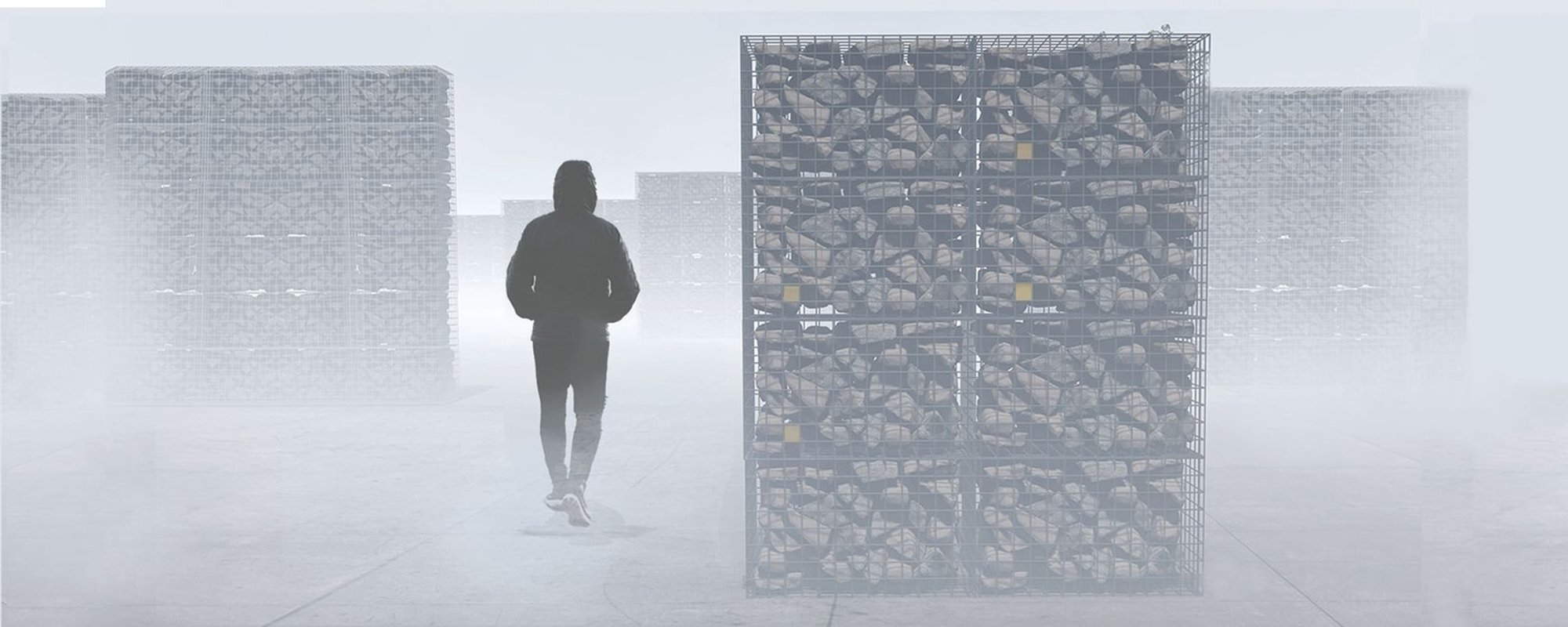
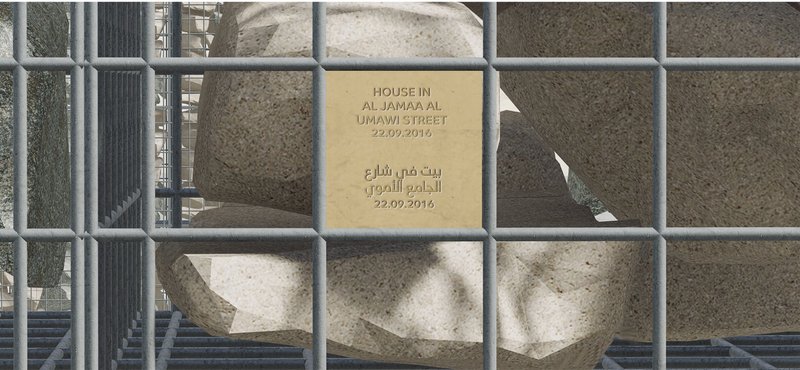
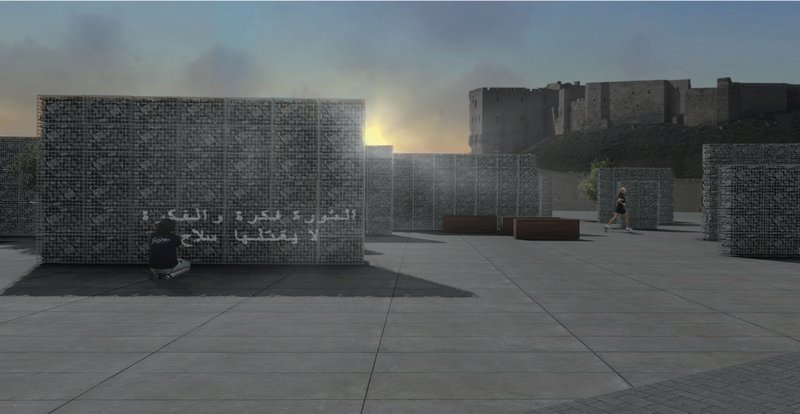
Each gabion box is filled with stones retrieved from destroyed houses across the city. These stones—once walls, rooms, and memories—now become the structural and emotional core of the memorial. A plaque engraved with the home’s location and date of destruction turns each gabion into a documented fragment of history, ensuring no loss remains anonymous.
From Home → Ruin → Memory Architecture
The project narrates a deeply human sequence:
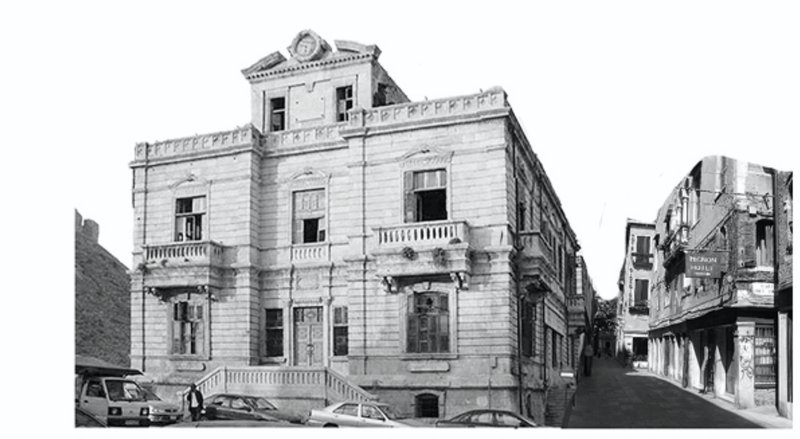
- A house in Aleppo – a place of life, culture, and everyday rituals.
- A ruin – the result of conflict, displacement, and loss.
- A gabion – a new architectural unit that carries the memory forward.
This transformation expresses the project’s belief that rebuilding Aleppo must begin with acknowledging the stories encoded in its rubble—stories that deserve preservation, not erasure.
Spatial Concept: Past, Present, Future Interwoven
A clear conceptual diagram structures the memorial around three temporal dimensions:
- Past – Archive Zone: documents the memories of destroyed homes, histories, and personal narratives.
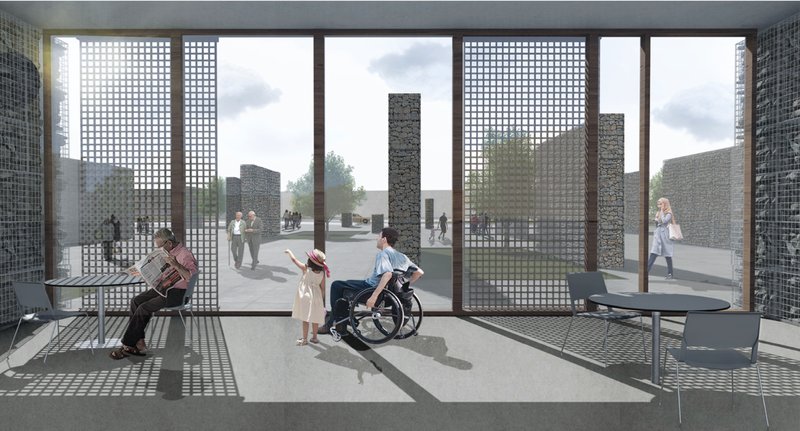
- Present – Community Center: provides open spaces, rooms, and courtyards for gatherings, educational programs, and cultural exchange.
- Future – Support Zone: hosts counseling areas, research spaces, and environments oriented toward healing, hope, and reconstruction.
These three layers overlap intentionally, symbolizing how memory, community, and future aspirations must coexist for holistic recovery.
Design Principles
1. The 2×2 Grid
The entire project sits on a 2m×2m modular grid system, ensuring human scale, clarity, and flexibility. This grid allows the gabions, rooms, and pathways to expand or contract as the memorial grows.
2. Climatic Responsiveness
Inspired by traditional Middle Eastern urbanism, the design embraces climatic intelligence. Gabions are arranged to create natural shading, air circulation, and cooling microclimates—ensuring outdoor spaces remain comfortable in Aleppo’s dry heat.
3. Alternating Dimensions
By placing gabions of varying heights and widths, the project creates a gradient of open and intimate spaces. These shifts in density define courtyards, passages, and contemplative pockets throughout the site.
Site Strategy and Masterplan
Gabion Grid
The site is draped in a diagonal grid of gabions, producing an architectural rhythm that helps visitors navigate both physically and emotionally.
Program Distribution
The room program includes:
- Archive rooms
- Research and documentation spaces
- Community halls and dining spaces
- Counseling rooms
- Service facilities
This distribution balances privacy, collectivity, and movement.
Circulation
Primary pathways align with visual axes toward the citadel, reinforcing the connection between the memorial and the historic urban landscape. Secondary paths weave between gabions to create an organic, exploratory experience.
Green Interventions
Scattered green pockets soften the site, offering spaces for reflection and comfort. These moments of nature enhance emotional healing.
Adaptive Phasing
Buildings can be added in sequential phases. New gabions can appear as more stones are collected, ensuring that the memorial evolves in tandem with the city's recovery.
Community Involvement Strategy
A defining strength of the project is that the memorial is not built for the community alone—it is built with them.
Stage 1 – Clearing Together
Residents collect stones from destroyed neighborhoods, transforming debris into new architectural meaning.
Stage 2 – Engaging the Diaspora
Gabions are sent abroad to refugee communities, symbolically reconnecting Syrians worldwide with their homeland.
Stage 3 – Learning from Aleppo
The project becomes a replicable model for memory‑driven reconstruction.
Stage 4 – Learning from Syria
Gabions serve as global reminders of conflict, democracy, and the value of freedom.
Flexible Scenarios of Use
The memorial is designed to remain alive through everyday activities:
- Movie screenings: Gabions create enclosed spaces for public projection.
- Community dinners: Open areas host shared meals and celebrations.
- Resting zones: Quiet, shaded places allow reflection.
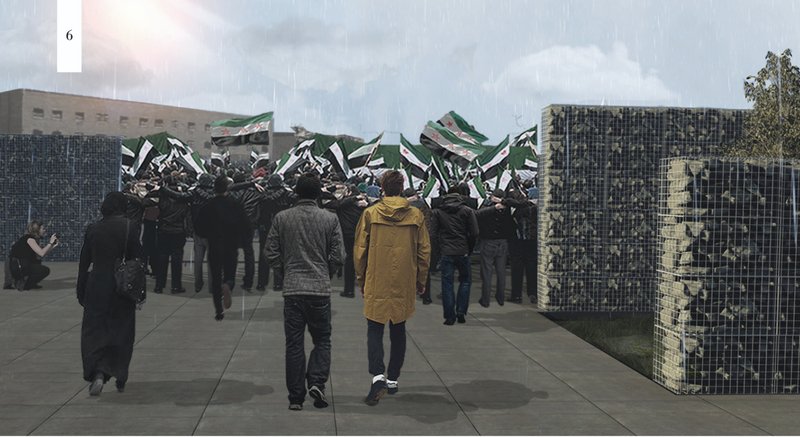
- Democratic gatherings: Large open courts accommodate public debate, protest, and collective decision‑making.
This adaptability transforms the memorial from a passive monument into an active civic landscape.
A Memorial for the Future of Aleppo
“Written in Stones” presents a new paradigm in memorial architecture—one that neither erases the scars of war nor romanticizes them. Instead, it uses architecture as a tool for storytelling, empathy, and regeneration.
By weaving together memory, community agency, and spatial intelligence, the project demonstrates how ruins can become foundations, how stones can become stories, and how architecture can become a catalyst for healing.
Designed by Paul Lieser and Nour Moazzen, this memorial stands as a promise that Aleppo’s past will never be forgotten—and that from its stones, a new collective future can emerge.