A New Chapter in Democracy: New Parliament Building of India by HCP Design, Planning and Management
Purpose-built Indian Parliament blends tradition and technology, featuring symbolic architecture, sustainable design, and modern facilities within a triangular plan.


Project Overview
- Project Title: New Parliament Building, India
- Location: Central Vista, New Delhi
- Architect: HCP Design, Planning and Management Pvt. Ltd.
- Lead Architect: Bimal Patel
- Year of Completion: 2023
- Built Area: 65,000 sqm
- Photography: Umang Shah, Kavin Kumar La Sa
Reimagining the Heart of Indian Democracy
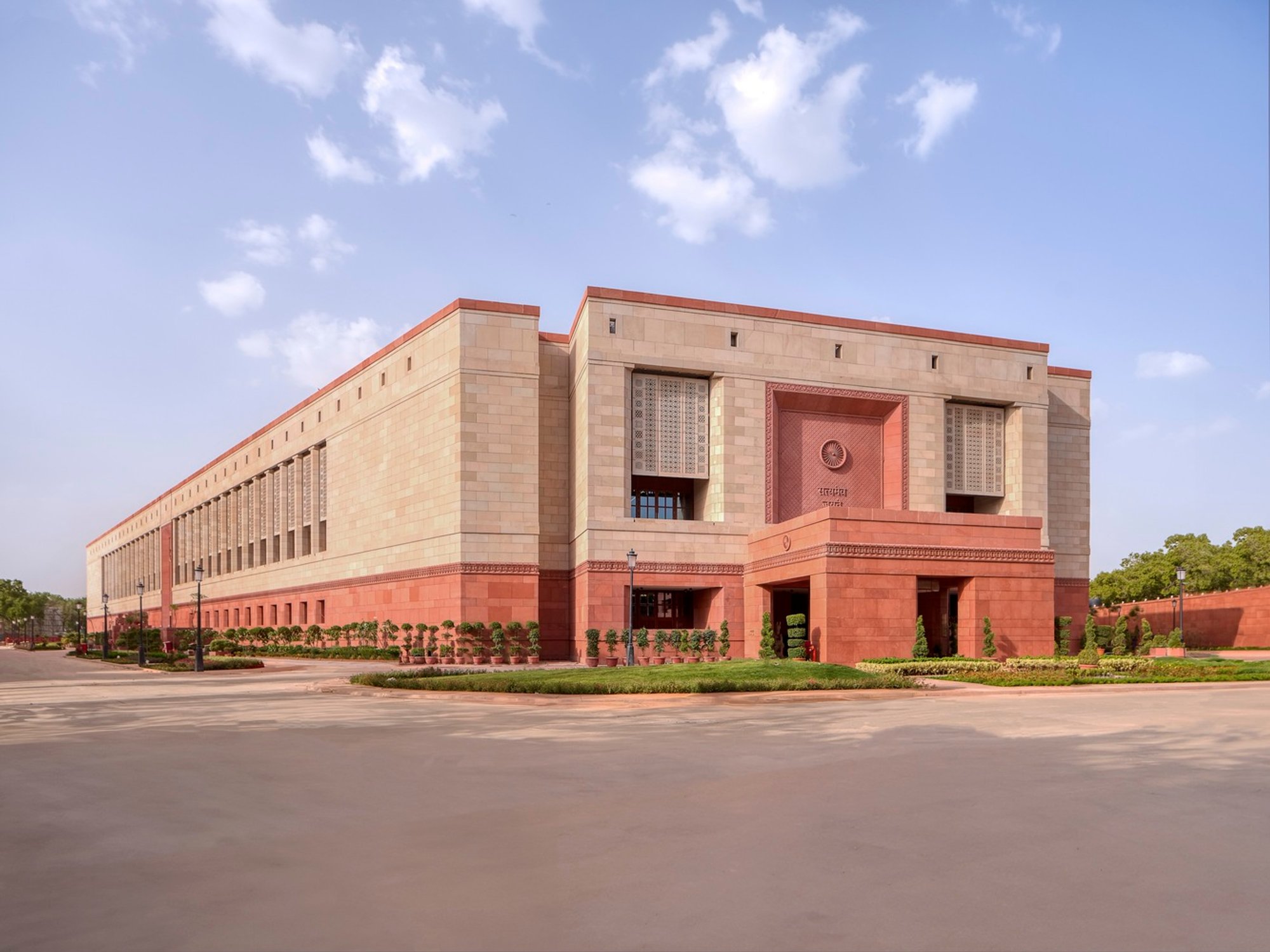
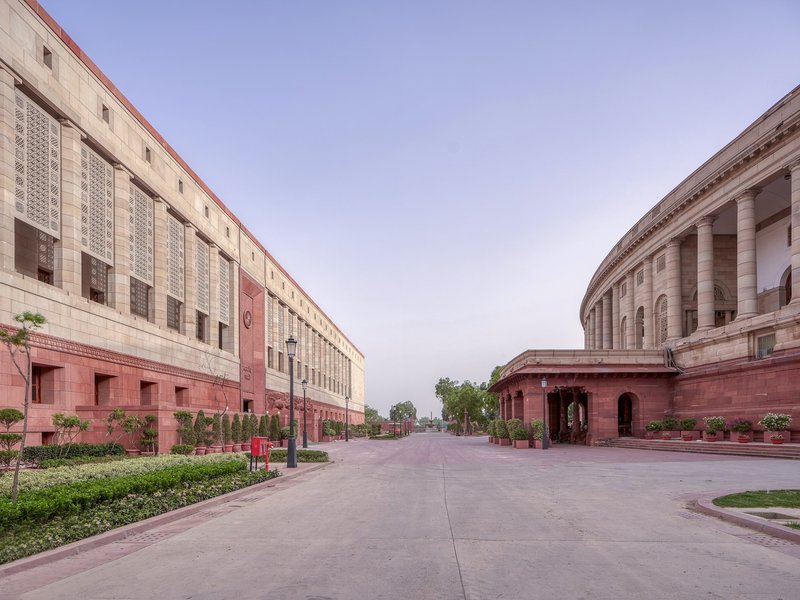
Marking a significant milestone in India’s democratic evolution, the New Parliament Building in New Delhi is a purpose-built structure designed by HCP Design, Planning and Management. Built adjacent to the historic circular Parliament House, this triangular, state-of-the-art facility symbolizes continuity, modernity, and a commitment to public governance.
The architectural concept redefines the relationship between spatial function, symbolism, and heritage. Crafted to accommodate the growing demands of the Indian Parliament, the new complex introduces modern infrastructure and seamless integration with India’s democratic ethos.
Architectural Concept: A Symbolic Triangle
The Parliament stands on a triangular site, which naturally informed the geometry of the building. This triangle is not just a spatial solution but also a metaphor for the trinity of Indian governance—Lok Sabha (Lower House), Rajya Sabha (Upper House), and the Central Lounge. The plan supports these three core functions in a balanced and interconnected layout.
Design Inspired by Indian Heritage
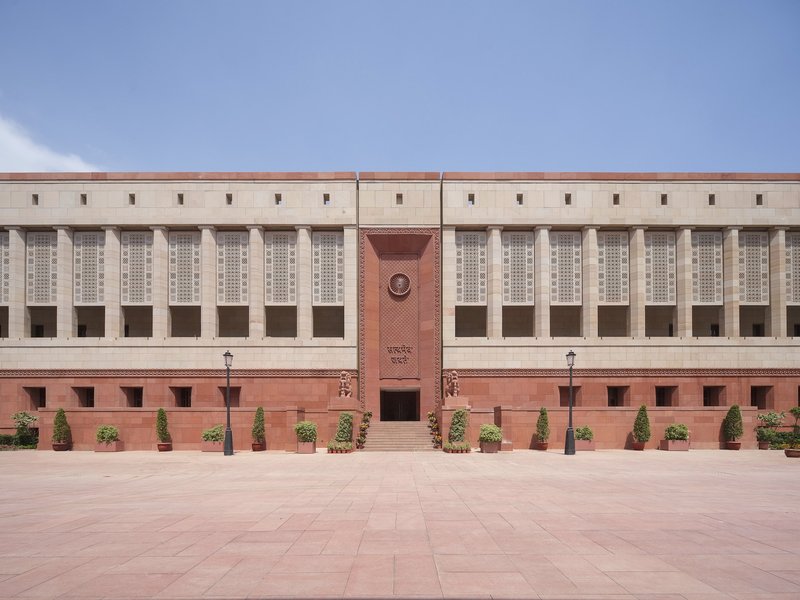
The architecture draws deeply from Indian cultural, architectural, and craft traditions. The exterior façade uses two tones of sandstone, resonating with the materials of the original Parliament building, ensuring aesthetic continuity within Central Vista. Traditional sandstone jalis (perforated screens) shade verandahs and are replicated throughout the interiors to bring filtered daylight and cultural identity into the space.
Key decorative elements—such as carved stone bands, threshold motifs, and vernacular craftsmanship—celebrate India's rich design heritage while supporting passive climate control techniques.
Interior Motifs: Unity in Diversity
The interiors represent the unity of a diverse nation.
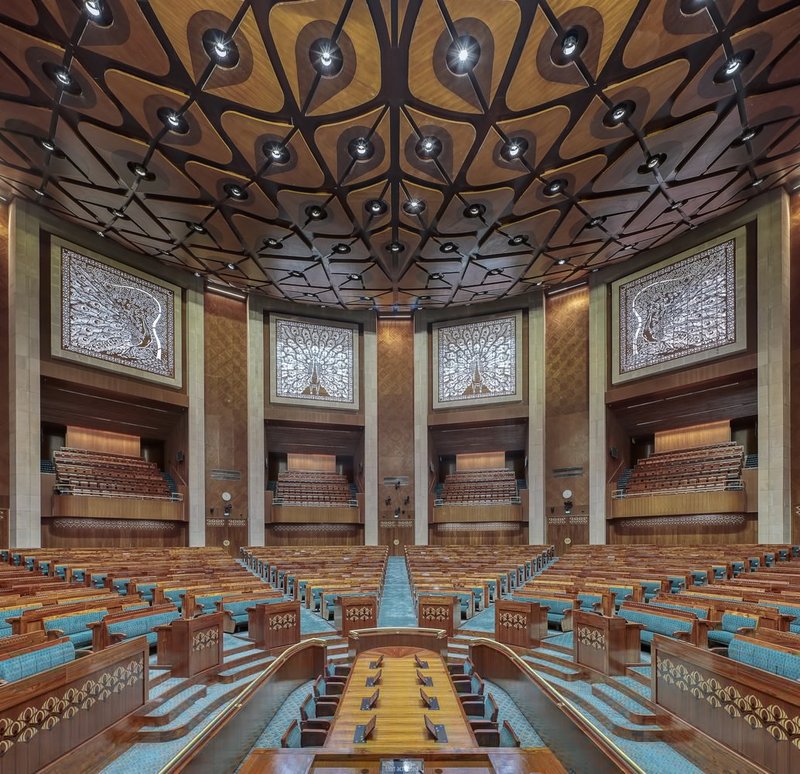
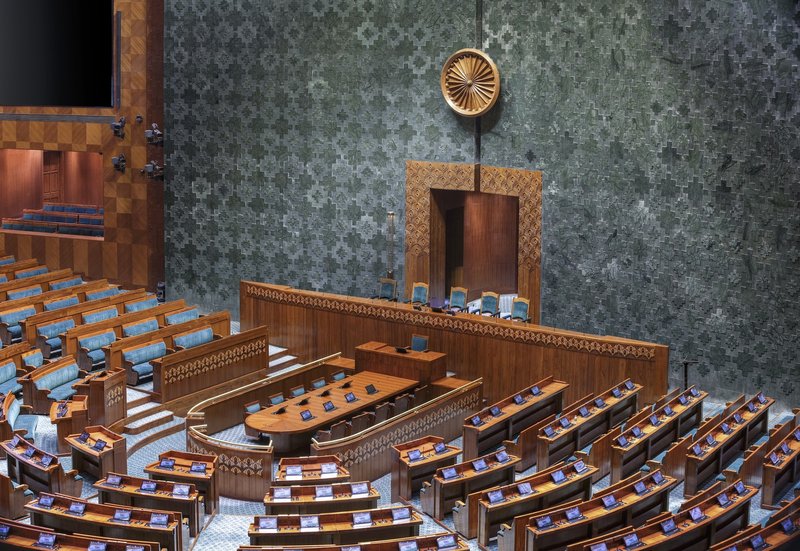
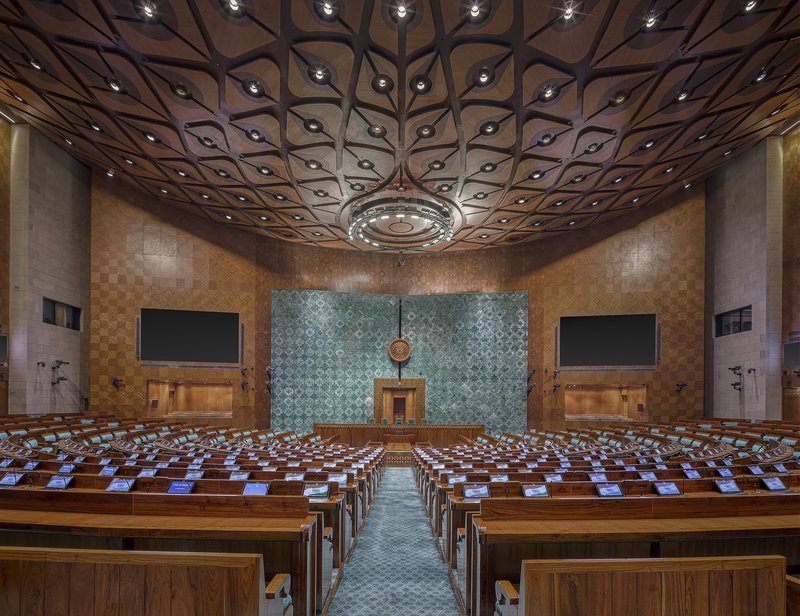
- The Lok Sabha chamber carries forward the green color scheme of the old building and features peacock motifs, inspired by India’s national bird.
- The Rajya Sabha chamber embraces a deep red palette adorned with lotus patterns, referencing the national flower.
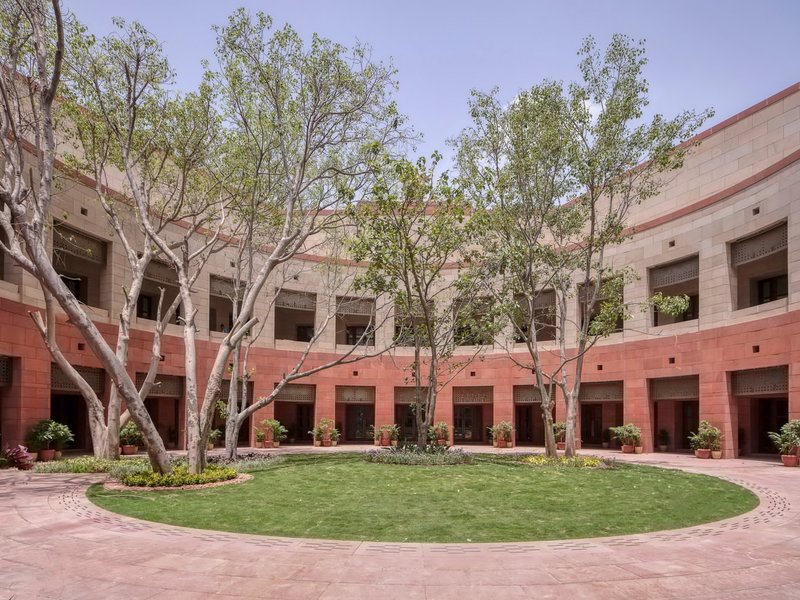
- A tranquil courtyard, featuring a Banyan tree (India’s national tree), anchors the plan both symbolically and spatially.
Corridor jalis surrounding the courtyard depict trees from different parts of India, further reinforcing the building as a symbolic microcosm of the nation.
Public Spaces and Democratic Transparency
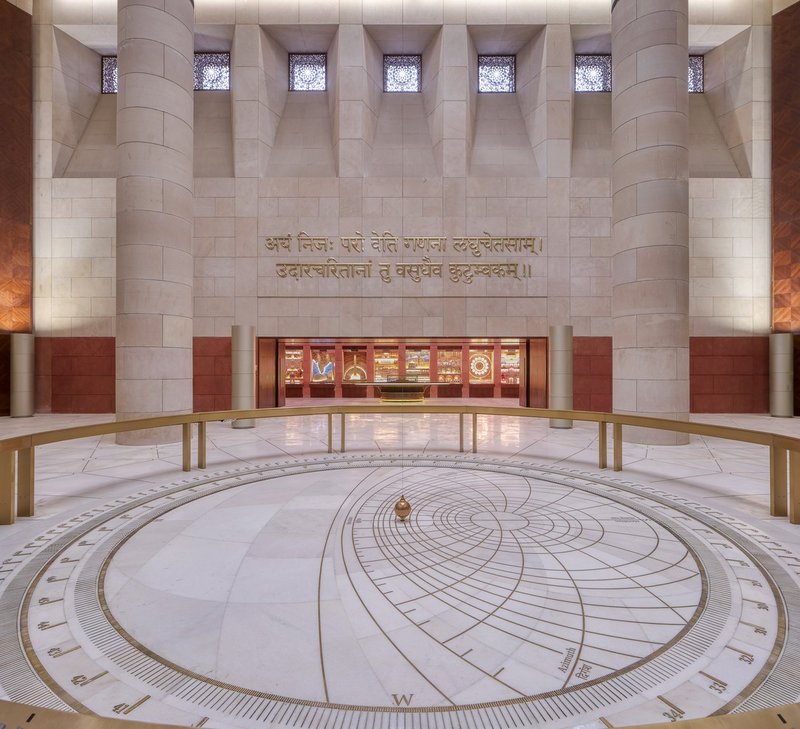
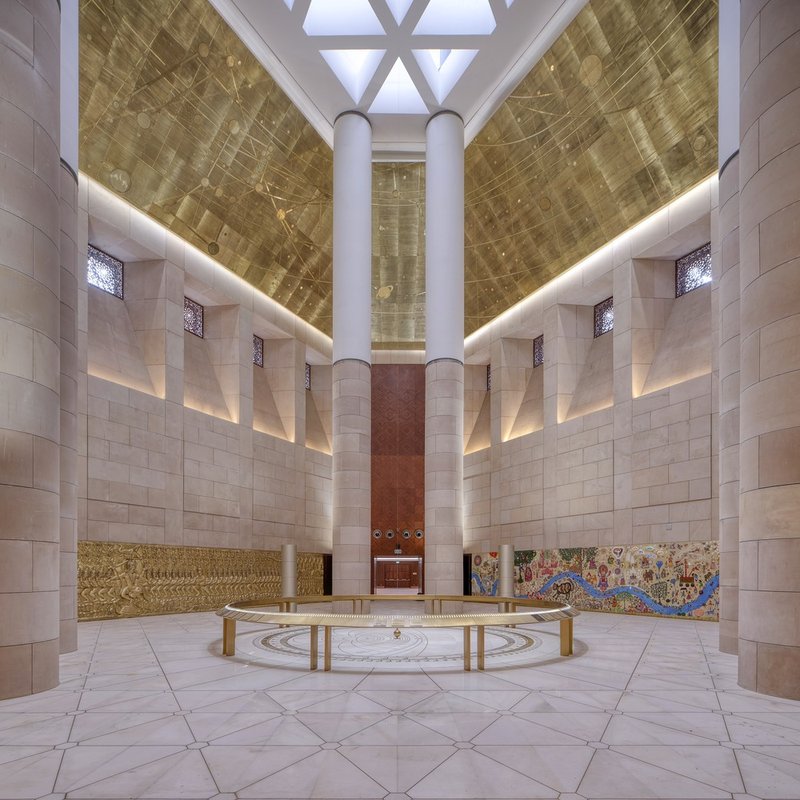
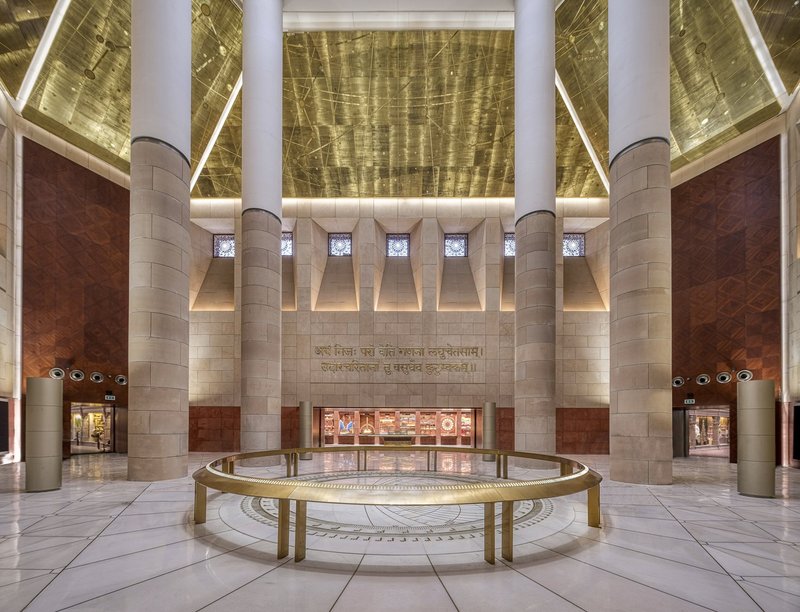
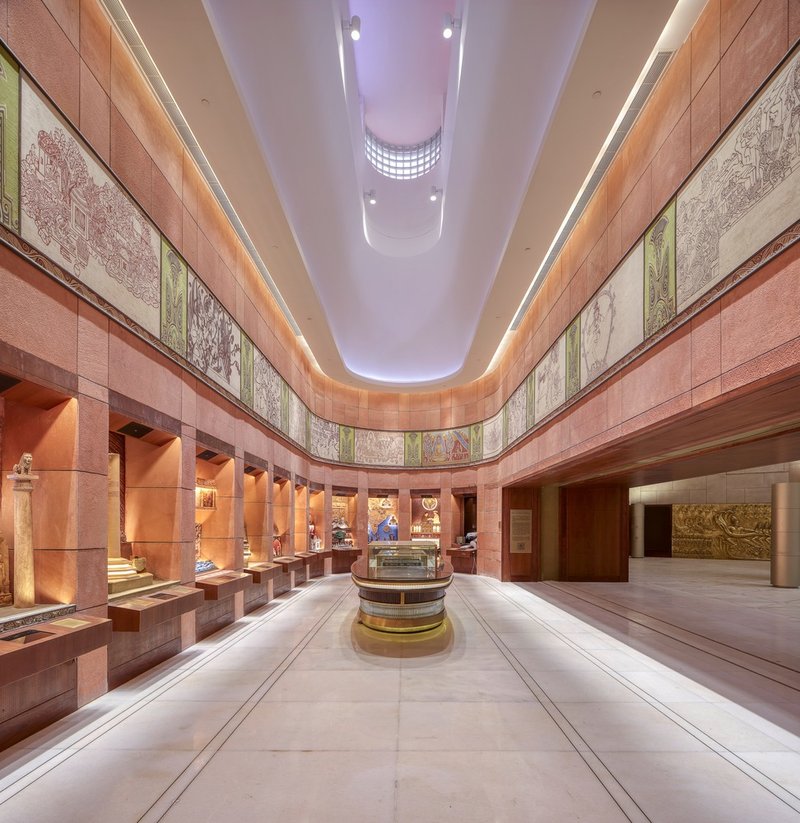
At the heart of the building is the Constitution Hall—a monumental space showcasing the original copy of the Indian Constitution and other heritage artifacts. This gallery, along with museum-grade exhibitions, is open to the public, reinforcing the idea that citizens remain central to India’s democracy.
Cosmic Alignment and the Foucault Pendulum
The Constitution Hall’s design links India’s Republic Day (26 January 1950) to cosmic time. A Foucault’s Pendulum, suspended from the ceiling, reflects the Earth’s rotation and symbolizes the eternal passage of time. The pendulum’s path is embedded in the floor using brass inlays that mark the cardinal directions and Delhi’s position in the universe on that historic day. Above, a skylight frames the night sky of 26 January 1950, and crowning it all, the National Emblem of India—adapted from the Ashokan Lion Capital—presides with quiet dignity.
Technology, Functionality, and the Future
The new Parliament is equipped with advanced digital infrastructure to facilitate efficient legislative processes:
- Biometric voting systems
- Smart screens and acoustic systems
- Optimized HVAC and lighting systems
- Sustainable building services integrated with smart design
Key administrative and functional departments—including committee rooms, the Ministry of Parliamentary Affairs, Lok Sabha Secretariat, and Rajya Sabha Secretariat—are strategically organized within the plan to ensure operational fluidity.
A Harmonious Coexistence
The building does not replace the historic Parliament but works in harmony with it. The two structures—old and new—create a dialogue between the past and the future, the symbolic and the functional.
With its blend of modern architecture, sustainable design, national symbolism, and cutting-edge technology, the New Parliament Building reaffirms India's democratic values while preparing for the nation's legislative future.
Project Credits
- Architects: HCP Design, Planning and Management Pvt. Ltd.
- Lead Architects: Bimal Patel, Bobby Desai, Kamlesh Mehta, Kahan Vyas, Ankit Mistry, Pradip Jadav, Dipak Kotecha, Niki Shah
- Interior Design: HCP ID
- Landscape Architect: Shaheer Associates
- Lighting Design: Atelier Lights
- Structural Engineering: NK Shah Consulting Engineers LLP, Structurally Integrated Design
- HVAC: Tata Consulting Engineers, MNP Consulting Engineers
- Environmental Impact: Kadam Enviro
- Geotechnical Consultant: KBM Engineering Laboratories Pvt. Ltd.