Architectural Representation - Depicting design effectively
A guide to presenting your conceptual architecture design ideas.


Throughout our Architectural Education, we hear people talking about the use of diagrams and visuals. We have all bore the brunt of jurors only looking at the drawings in a panel and conveniently skipping the description. How can we tackle this issue? After all, nobody likes to read paragraphs in an Architectural panel.
So the task is,
A. Minimising the text without missing the essential information.
B. Maximising the visuals for the ease of understanding.
The article illustrates how information on a panel can be depicted using effective visuals. The same is discussed using examples from Uni Community’s Competition Entries in a particular order. However, this is not an exhaustive list and the order is subjective to the intervention.
1. Title
The title of your project is like the first statement for your design. Hence if that doesn’t come out right, then you’re starting at a negative note already.
An effective title essentially provides the reader a brief peak about your key concept. A few examples of the same are given below.
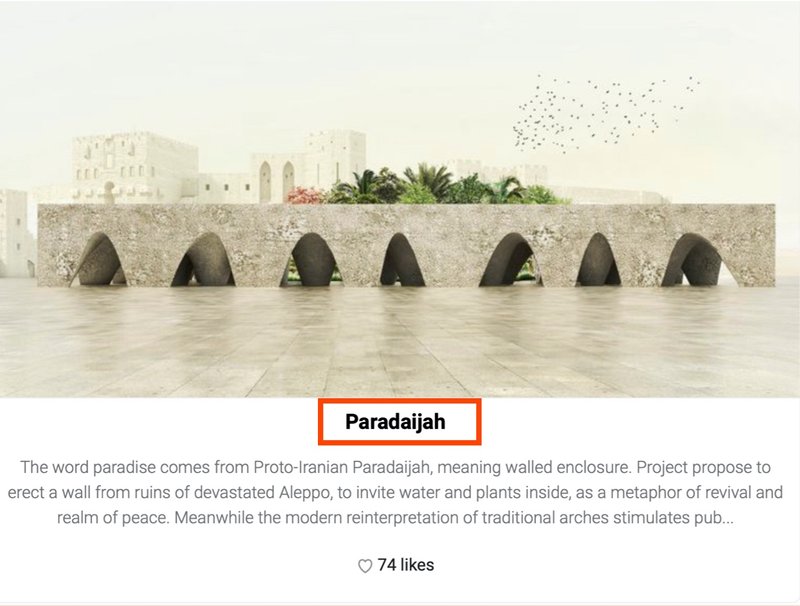
Project Title: Paradaijah
Competition Name: Memory - Regathering Syria
About: Reconstruction of a War Hit place by creating a memory alongwith function by the citizens of Syria.
Paradaijah means a walled enclosure. Here, the title of the project is an indication of the design itself. The project is conceived as a protected Walled Zone from the outside world for the people of Syria.
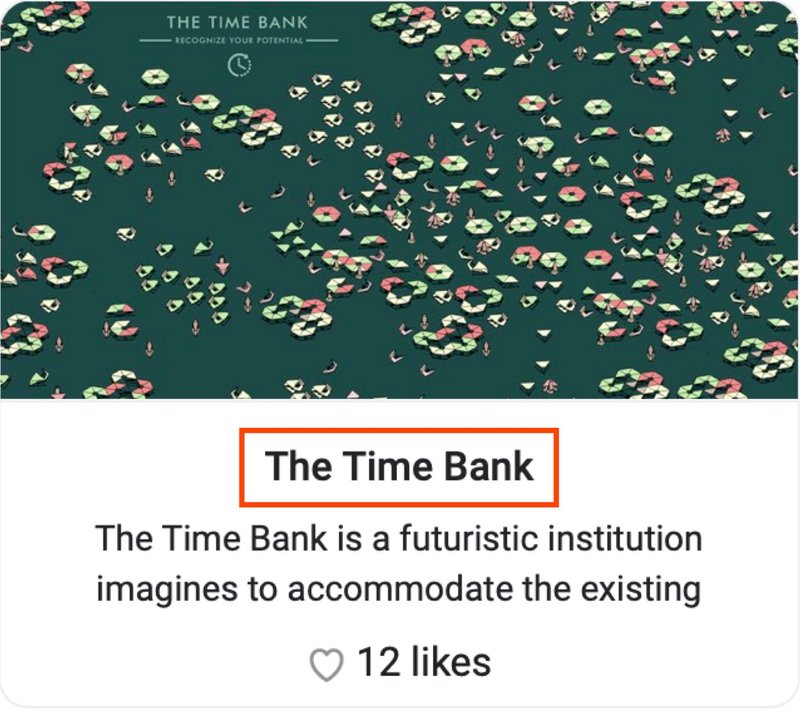
Project Title: The Time Bank
Competition Name: Breaking Work
About: Conceptualising the idea of work for the future. Proposing a Futuristic Work Hub around the same principles.
Work is conceptualised with the ideas of Time. The users of the Hub are basically those who can devote Time such as retired people, fired people etc. So in this case, the conceptual idea (programmatically) becomes the inspiration for the project title i.e. The Time Bank.
2. Depicting the Existing Scenario
This part of the narration depicts about the existing conditions of site. Instead of writing long paragraphs about the existing situation on site/the problem you are catering, try to show them through visuals like given below.
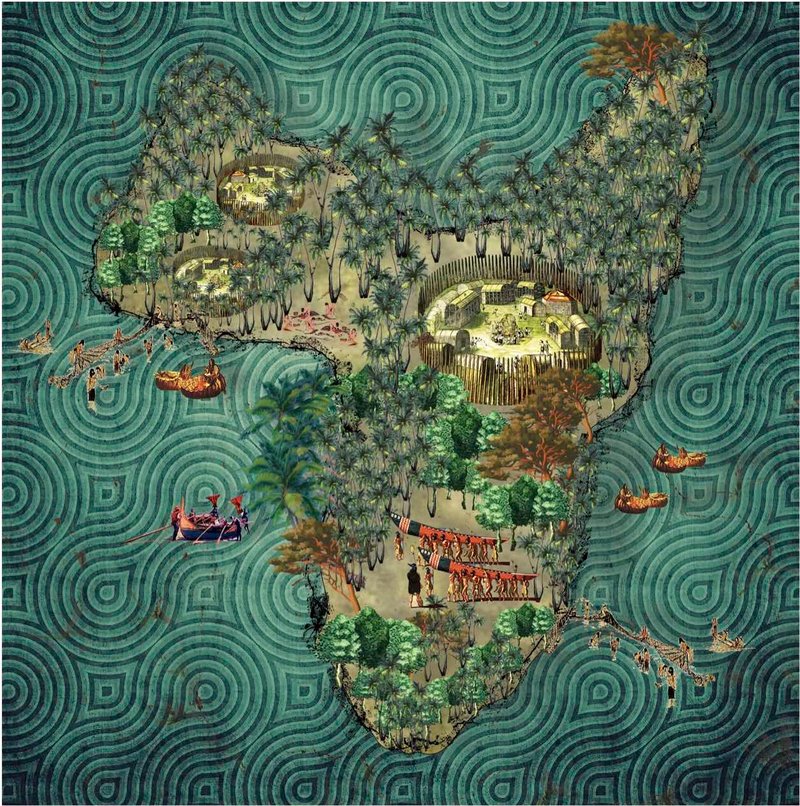
Project Title: Ross Island- A case of perishing paradise
Competition Name: UNIATA’19
The image depicts the History of the Island; tribal lifestyle and activities of the Island. Graphically, it uses the outline of the island as a base. The vegetation and activities are then highlighted in 3-d. This drawing translates all the relevant details for the project into an effective visual.
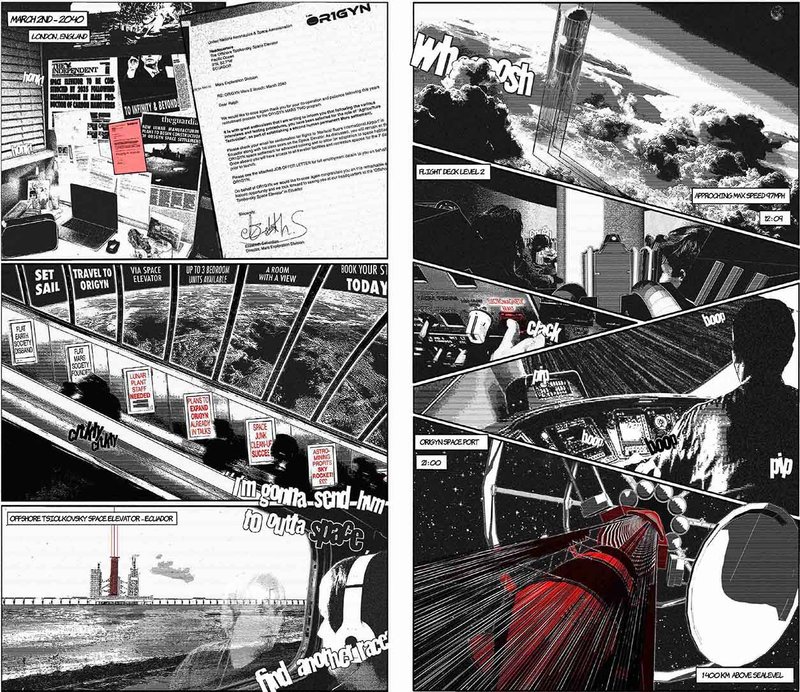
Project Title: Or1gyn Space Port
Competition Name: Origyn
About: Designing Planet Earth’s first Space Habitat
The image portrays the story behind how an imaginary character reaches the designed Space Habitat before jumping to the Design directly. Graphically, the participant depicts the story in a comic book format which makes it more engaging for the viewer. Infact, the entire panel is designed in this manner which helps in binding everything together instead of independent drawings/images.
3. Draw your site consciously
Site Plan is often seen just as a requirement to fulfil on the panel. However, it should be looked at as a more important drawing than that. Site plan is a Key drawing before one enters into your intervention details. Hence, it should be used as a tool to highlight important information that is relevant to your design. This should be very subjective for different designs on the same site.
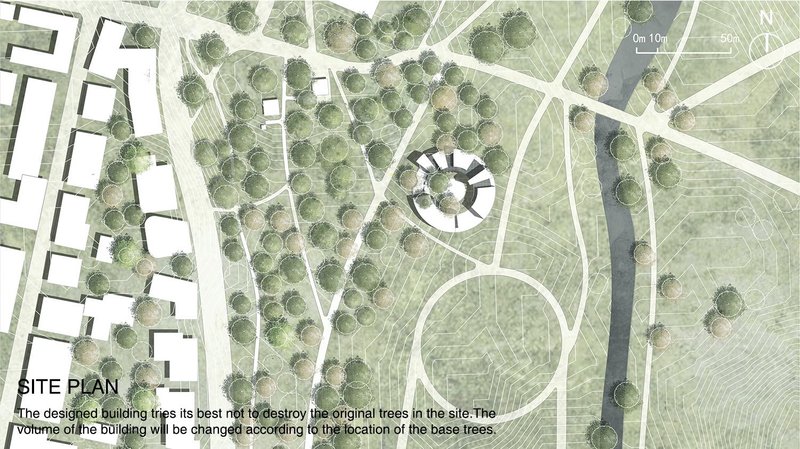
Project Title: Swap in the park
Competition Name: Huddle
About: Designing Elder Friendly Public Spaces.
This is a very simple but cleverly curated example of a Site Plan. The landscape in the site is clearly highlighted because the entire project revolves around it. All the buildings take a back step and are shown in the same colour with no details. Use of shadows give a volumetric idea. Additionally, indication of north and a graphical scale are extremely important for plans and we must never skip them. To take this strategy further, the intervention can be highlighted further in a different colour/texture/effect etc.
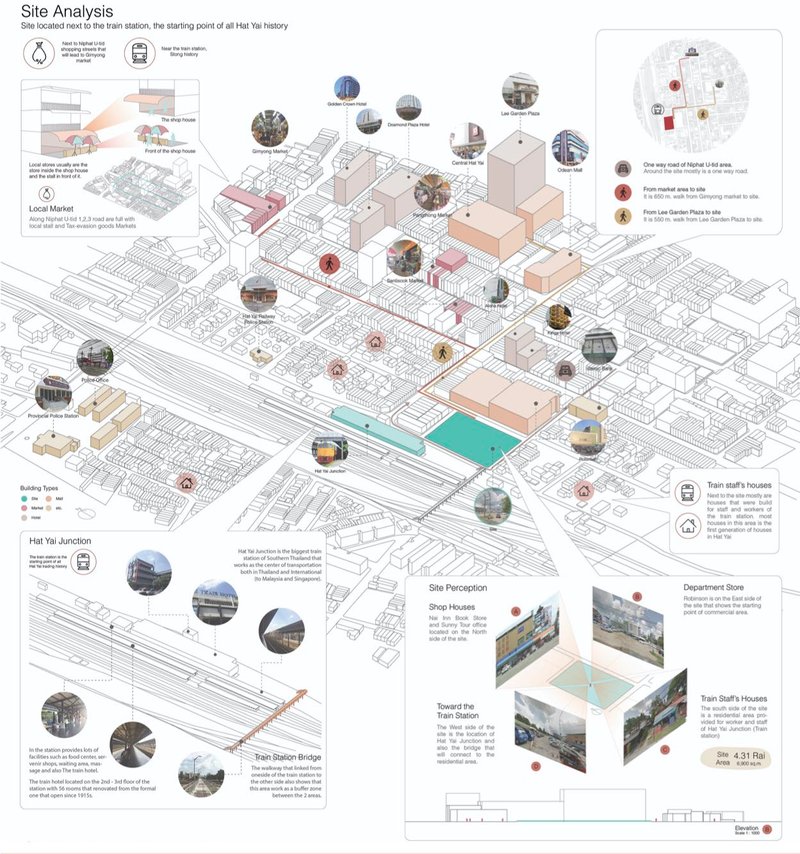
Project Title: Hat Yai Multicultural Bonding
Competition Name: UNIATA’20
About: International Architecture Thesis Awards
The Site is shown in as a 3-d graphic. Zoning in the area is done using multiple ways. The residential zones are left white with a small icon indicating so. The commercial places are shown using small images of the same. Relevant locations for the intervention are further shown as blow ups in greater detail. Instead of giving details as separate drawings, everything related to the site is put in a single drawing to convey maximum information.
4. Analysis
After the site introduction, the conclusions Site study must be illustrated. This would include clues picked up from site and how they are conceived before beginning the design development. This could also include the plan of action on site i.e. stages in which the project is seen to be built on site.
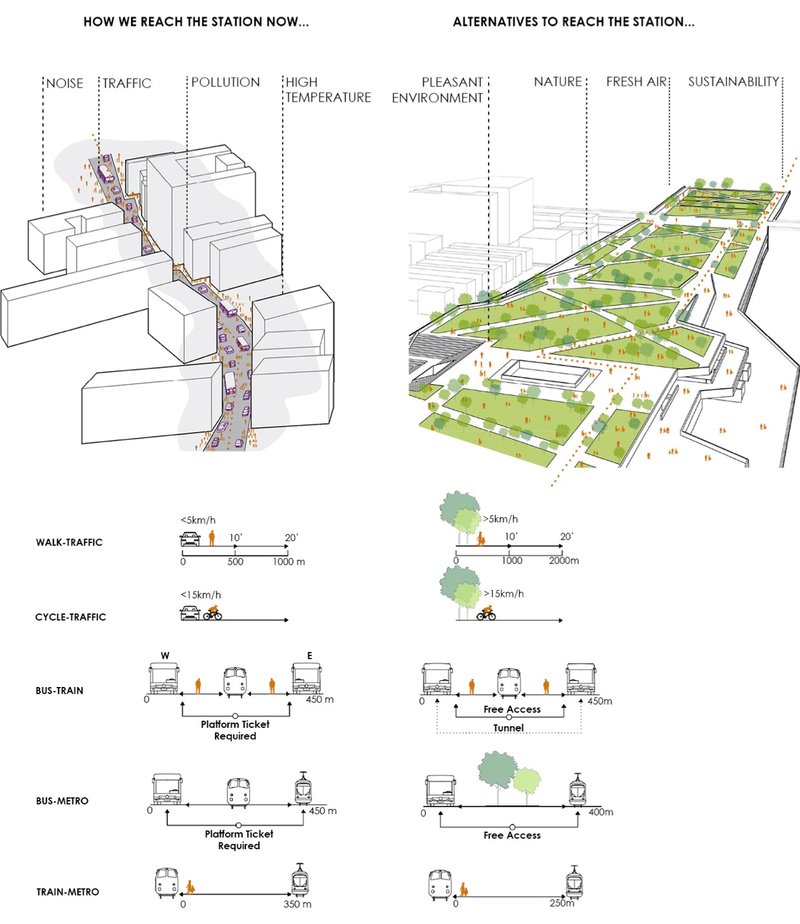
Project Title: The Green Link
Competition Name: Hyperlocal
About: Vision for Mumbai in 2030 with respect to Mumbai Local Train Networks
The existing conditions and issues about the Subject are clearly illustrated. The solutions/approach for the issues are indicated against each. There is a mix of drawings used for the same. First, the condition is depicted using a simple 3-d only highlighting the issues/solution. The second half include street sections to dictate each issue/solution in detail. This method simplifies the information by delayering it without the use of excessive text.
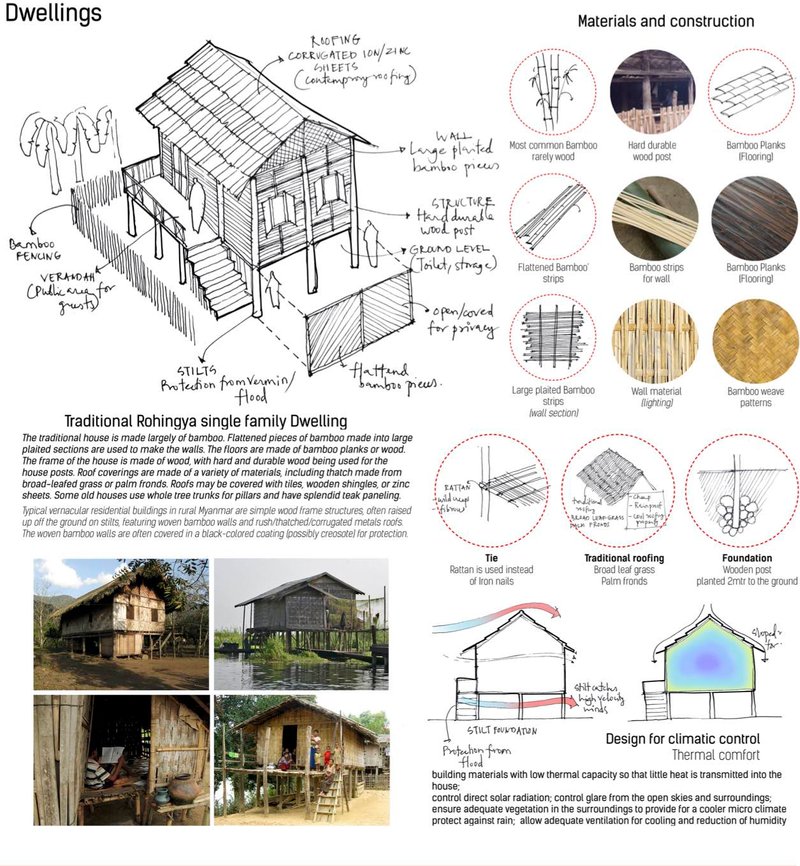
Project Title: HOME FOR THE ESCAPED - Transitional Housing for the Rohingya refugees
Competition Name: UNIATA’18
About: International Architecture Thesis Awards
The visual demonstrates the plan of action on the material strategy and climatic front. It shows through sketches and images the existing strategies used. Further, it shows how the same can be used in the intervention. This gives a depth to the project and makes it closer to reality.
5. Design Development
Now is the time to introduce the Process undertaken to reach the final outcome. Often taken for granted, but the process stage is the soul to the intervention. Never miss telling the story.
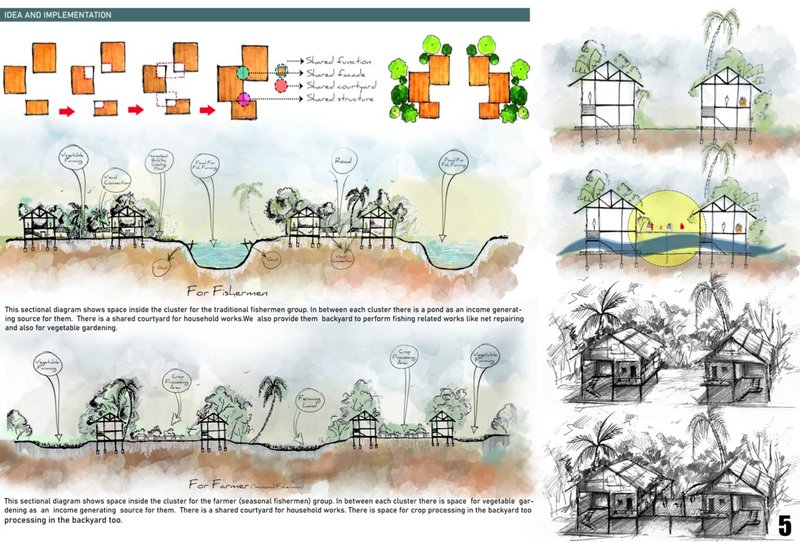
Project Title: COMMUNITY BASED Devt. FOR ANNUALLY FLOOD AFFECTED
Competition Name: UNIATA’20
About: International Architecture Thesis Awards
The image shows the development of the design from the very scratch. It does so using hand drawn sketches with a mix of plan, section and 3-d as required. This information helps a reader to understand how the design came about so that the intervention has a story to how it emerged. It makes the project richer and more meaningful for the viewer.
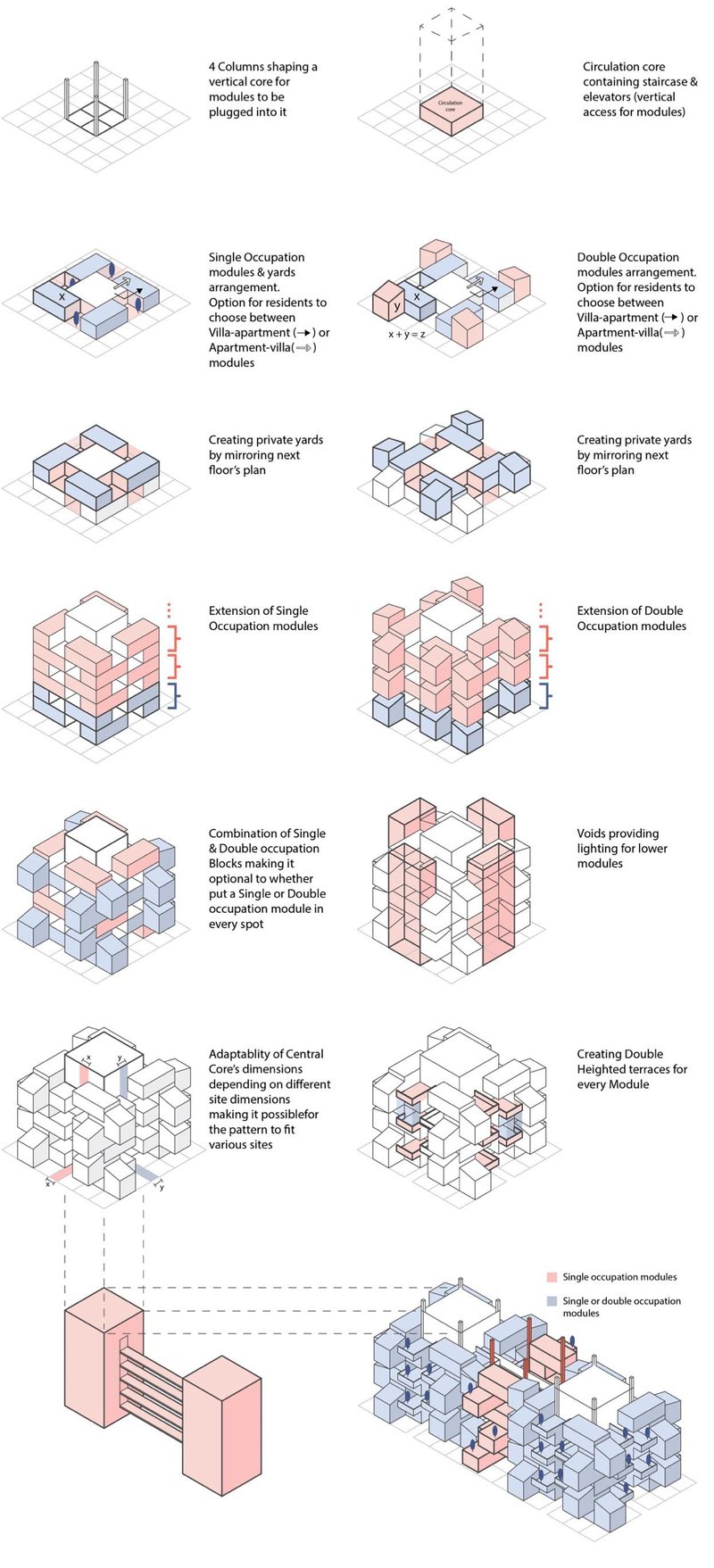
Project Title: Serendipity
Competition Name: Plugin Housing Challenge
About: Compact Housing in the form of self-sufficient Modules that can be added based on the demand
The drawing depicts the evolution from the very basic columns to unit to the entire module in a step by step format. This helps in understanding the entire module/design through one drawing instead of multiple complicated drawings.
6. Tracing the Intervention with respect to site
Building plans can be much more than just simple 2-d drawing indicating the spaces as text. It can be made richer by adding more(relevant) information such as activities, zoning, transportation etc. using graphics effectively.
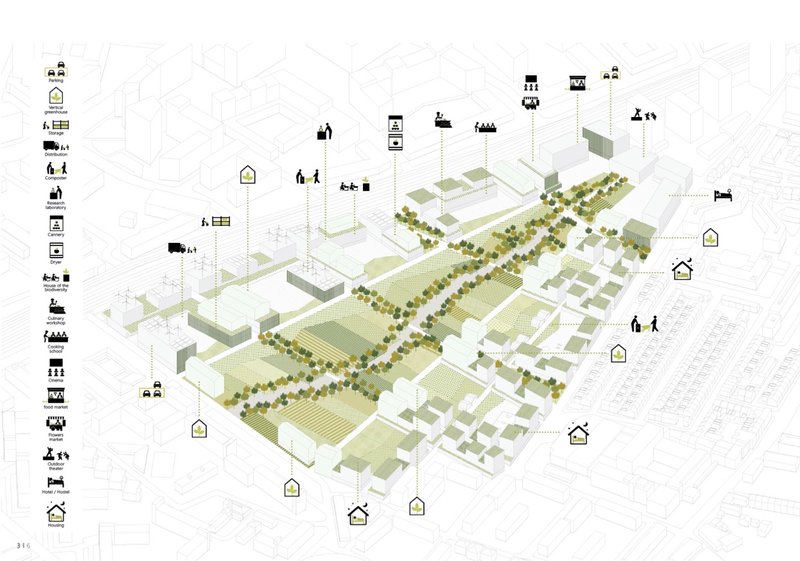
Project Title: Farming For All
Competition Name: Urban Meal Mine
About: Sustainable Farming for Megacities
It is a basic 3-d drawing of the intervention alongwith site. The Farming Setups are highlighted using colour. Instead of naming the functions, icons are used as a strategy to convey information. This makes the drawing convey more than what it would have with the use of text. Additionally, icons are used through the entire panel which binds everything together.
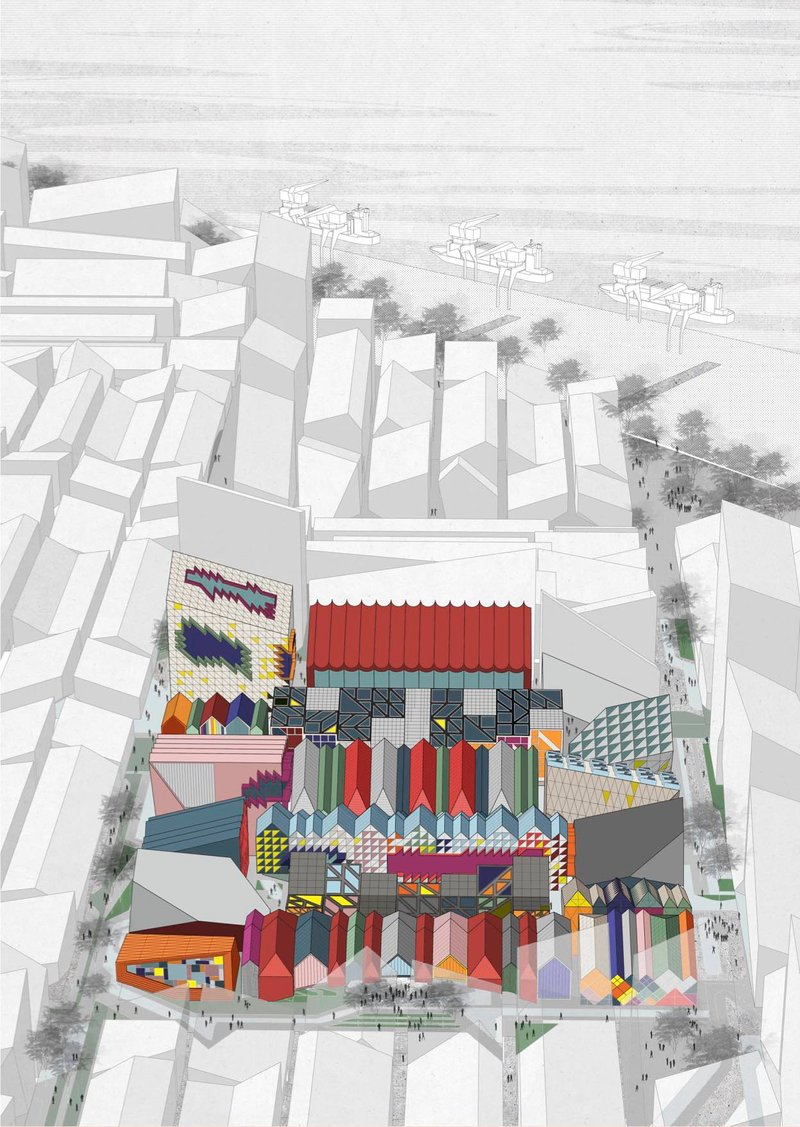
Project Title: Bank of Shanghainese
Competition Name: Di - Generic Cities: Shanghai
About: Reclaiming our city’s architecture using city specific designs and programs. While doing so, architecture then becomes an icon for the city instead of just a generic object that can be seen in every city.
The project uses material clues from the local architecture of Shanghai. The usage of these materials are then translated into other forms while adding them to the design. For example, existing roof tile pattern of the slums is converted to a wall type, existing wall ornamentation is used as landscape etc. The drawing depicts this conversion by showing each of these implementations with the right colours and textures. This makes the drawing richer by adding something specific which is a very important part of the design strategy.
7. Facade
The facade drawings must clearly demonstrate your design details such as materials used, shadows, human scale, activities, incremental changes over time/season etc. as the design demands.
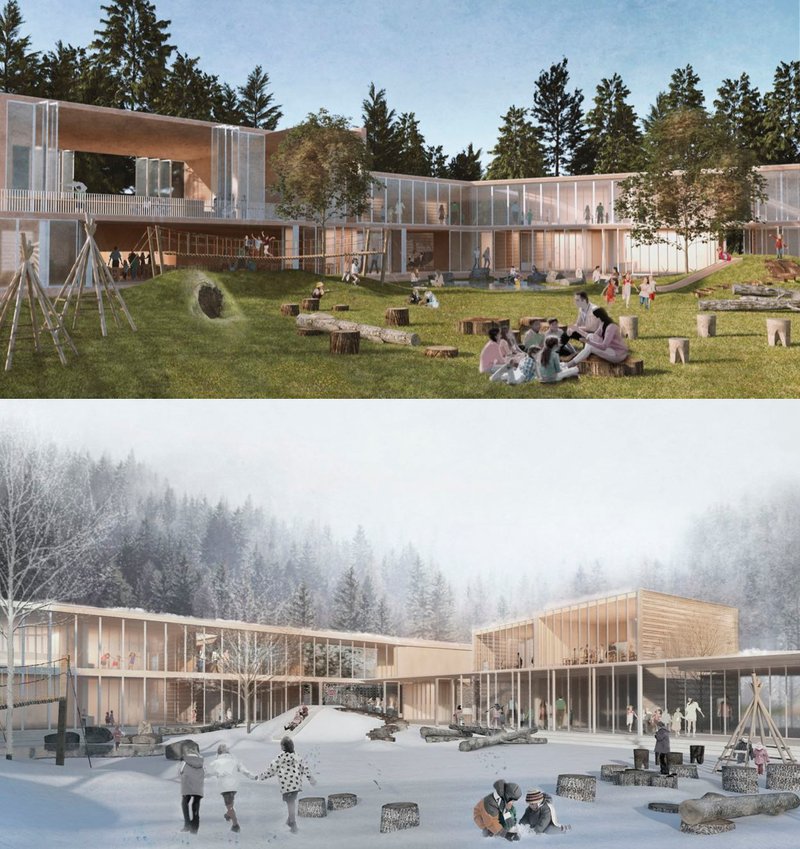
Project Title: Situations School
Competition Name: Learn Better
About: Rephrasing education through Architecture
The intervention is shown with visuals from different seasons. It enhances a building’s experience by depicting how the same spaces are used differently at different times. It is more effective to give such multiple scenarios instead of just one.
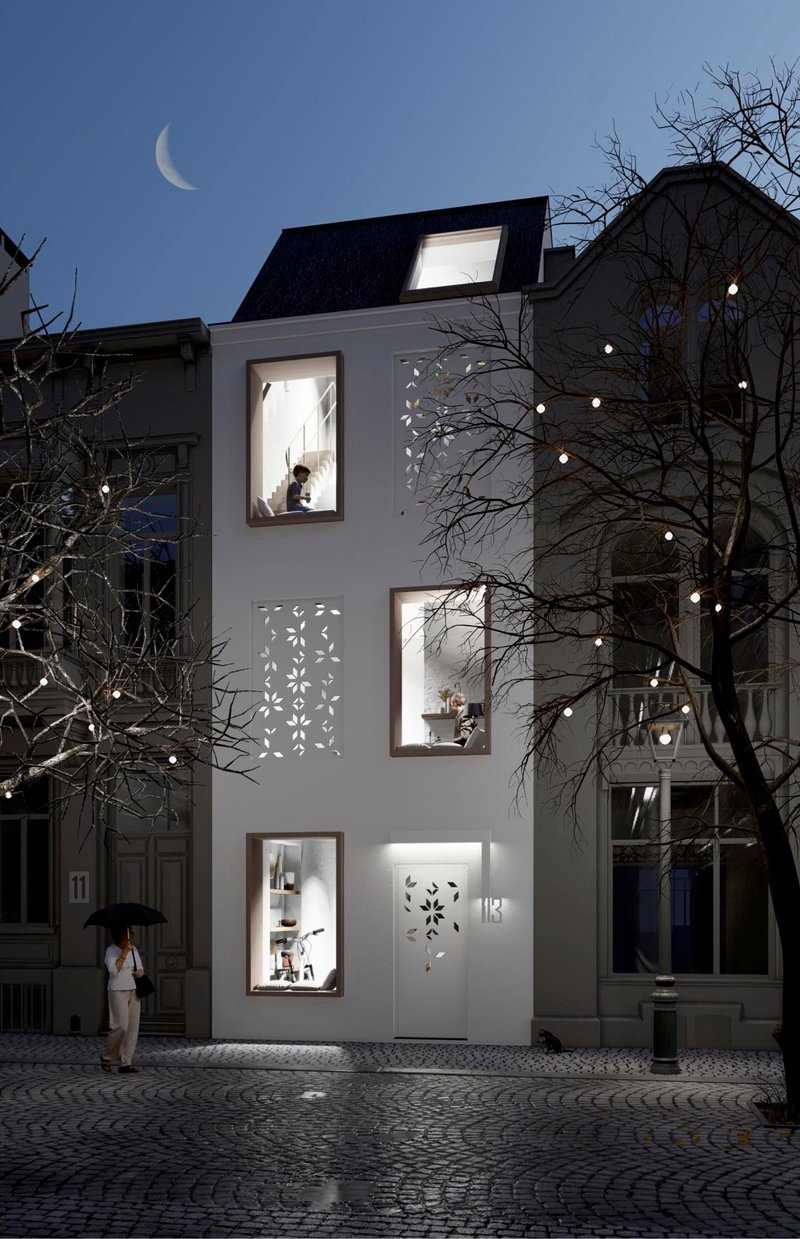
Project Title: SKRIZ` LITA [THROUGH THE YEARS]
Competition Name: Nano Nest
About: Maximising Living in Tiny Spaces
The image shows materials used own the facade alongwith the existing surroundings. (it is surrounded by landscape in this case. In case of the intervention existing in an urban area, facade details of the surrounding buildings must be shown.)This helps in understanding how the building blends in with the surrounding. Given a building elevation in isolation does not justify the placement of the building on site. Thus, it is very important to illustrate how the building facade reacts in the existing surroundings.
8. Revealing Interiors
Tools such as Sectional Perspective/Sectional Axonometric/3-D Views etc. can be easily used for this. Sectional Model can also be an interesting tool for the same.
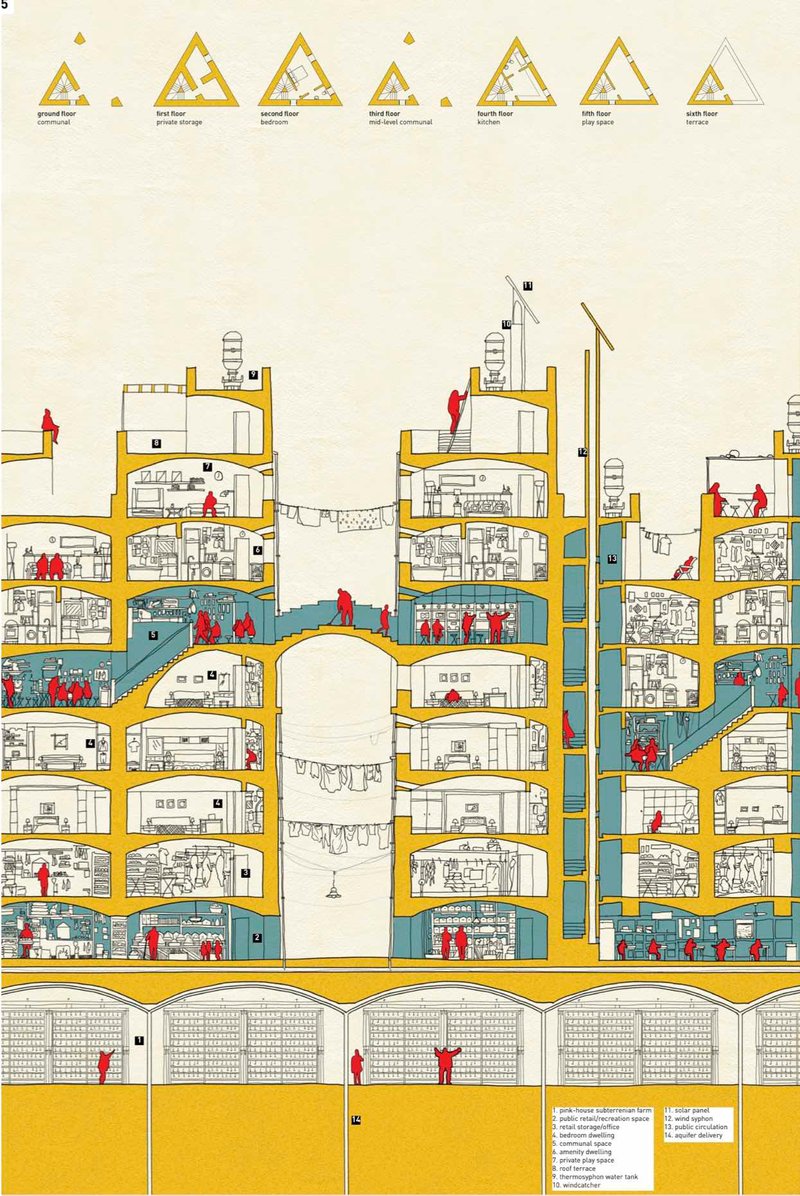
Project Title: Sandcrete City
Competition Name: Extreme habitat challenge 2019
About: Design a concept for a new version of Habitat as if colonising new Earth using the technology of today
The sectional drawing indicated more than just the building section. It shows life within building. It does so very easily by drawing humans and showing various activities in dedicated spaces. However, this simple technique makes the drawing much stronger and more descriptive at the same time.
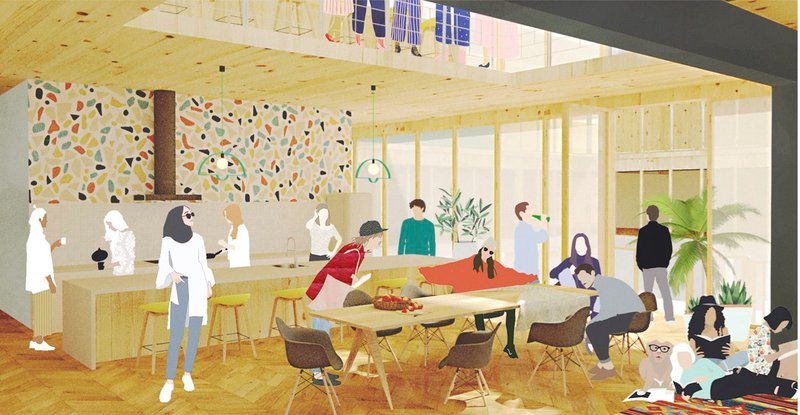
Project Title: 3-living
Competition Name: Hustle Hub
About: Affordable Youth Housing for the working population
Interior of the building can also be shown using 3-d views such as this. Apart from showing the volumetric interior with materials, it shows the usage of the space. Architecture is about creating spaces for people. If the building shows how people can use the space, it adds life to the building. And that’s why we build isn’t it? For the people.
9. Unveiling the Structure
Visuals depicting the structural understanding for the design must be given. This adds a sense of realistic possibility of the intervention.
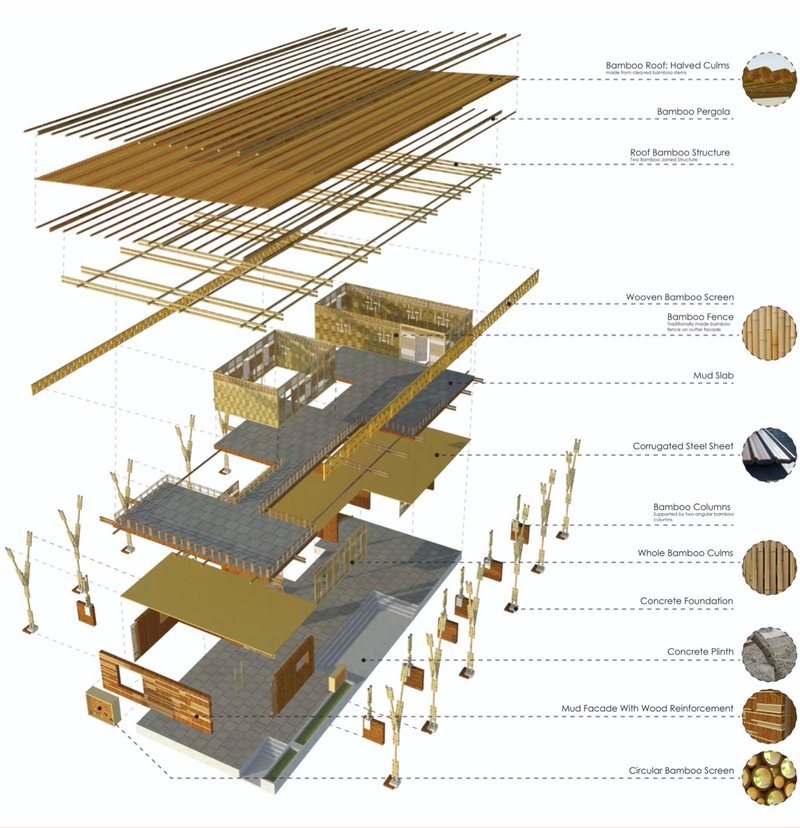
Project Title: Fight for hunger- An institution for low income farmer
Competition Name: UNIATA’18
About: International Architecture Thesis Awards
The drawing explodes the building into individual layers. These individual layers depict the structural/material aspect which in totality showcases how the building is put together. It conveys how the building would be constructed in real. Being closer to real adds a layer of richness to a project.
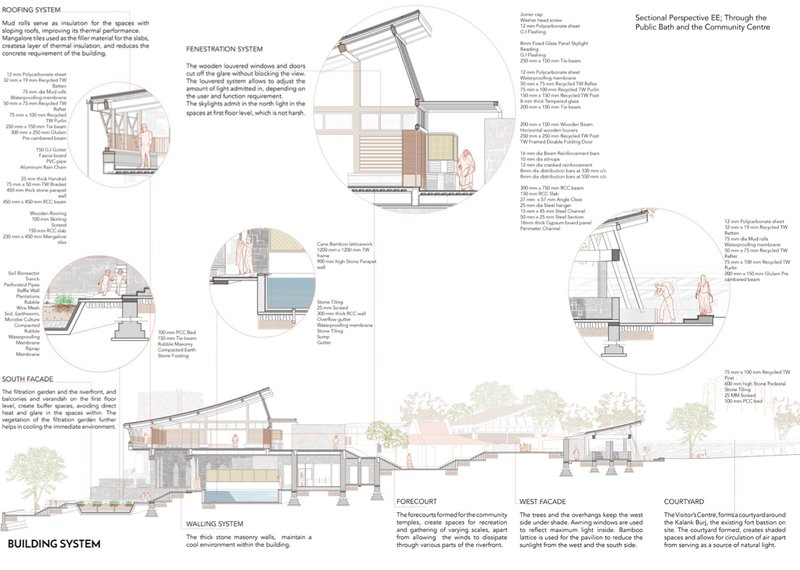
Project Title: RIVER AND THE COMMUNITY, MANDLA
Competition Name: UNIATA’19
About: International Architecture Thesis Awards
Here, the section is blown up in parts to indicate the construction details within the building. This is another way to depict the structure. The technique used for the same is highly subjective to design. However, depicting it in any format always adds an additional layer to the project.
10. Portraying Architecture
Once all the details about the Intervention are depicted in pieces, a visual should depict the entire functioning of the intervention on site. It can either be one strong visual/ multiple visuals depicting changes that the intervention is expected to deliver on site.
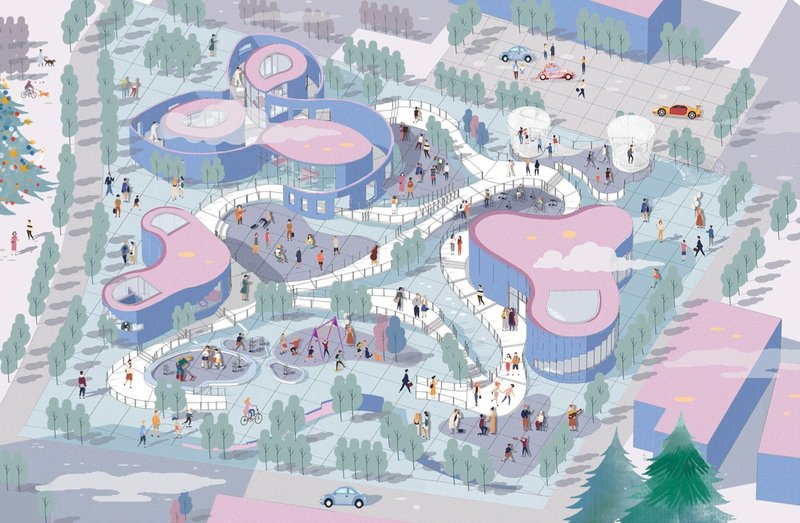
Project Title: Chess Counter
Competition Name: Live Laugh Love
About: Community Center integrating therapy and counselling to deal with mental problems.
The 3-d visual illustrates the intervention holistically alongwith the way people are imagined to be using the spaces. It gives an overall picture for the intervention. Drawings like these that convey the entire story becomes crucial in a panel to understand the gist of the building.
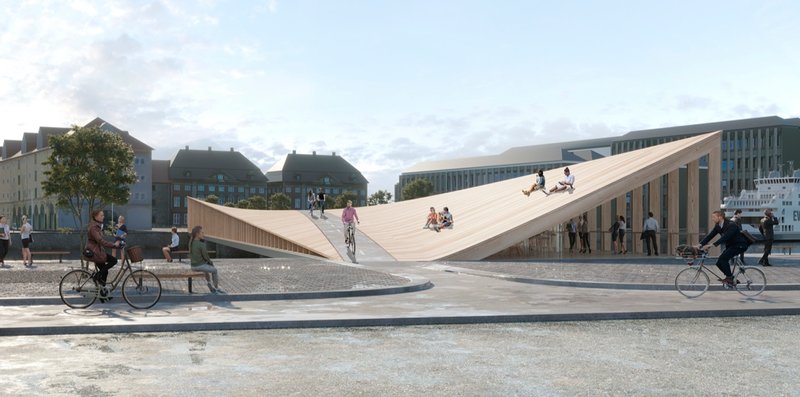
Project Title: The Nordic Link
Competition Name: The City Link
About: Discovering a public space on a cycling bridge
The view shows the final intervention realistically placed on site. There are two important things to understand from this. First, realistic depiction of the neighbourhood. Second, the final usage of the building and around by people. It essentially communicates the story of this project.
And like these; there are a plethora of techniques when it comes to Design Presentation. Every design is unique and may have its own representation technique. The choice of this technique is completely up to an individual's assessment and understanding of its own design. The aim of this article was to bring light to some obvious facts that either don't meet the eye or does not.
It is essential to keep working and upgrading the skill sets with respect to design presentation as this evolves with time and experience.
“I prefer drawing to talking. Drawing is faster and leaves less room for lies. “ - Le Corbusier
Like what you just read? The appreciation button below is a clear way to motivate our editorial team to pen useful things for you to learn.
Do you have something similar to write about? Why not reach out to us on editors@uni.xyz? Share your thoughts/appreciations and feedback. We'd love to listen!
Follow us on social media: Facebook | Instagram | LinkedIn | Twitter | Youtube
Discover other design competitions to participate here: https://uni.xyz/competitions