Architecture for Orbital Habitats
Project DRAGONFLY: a prototype.


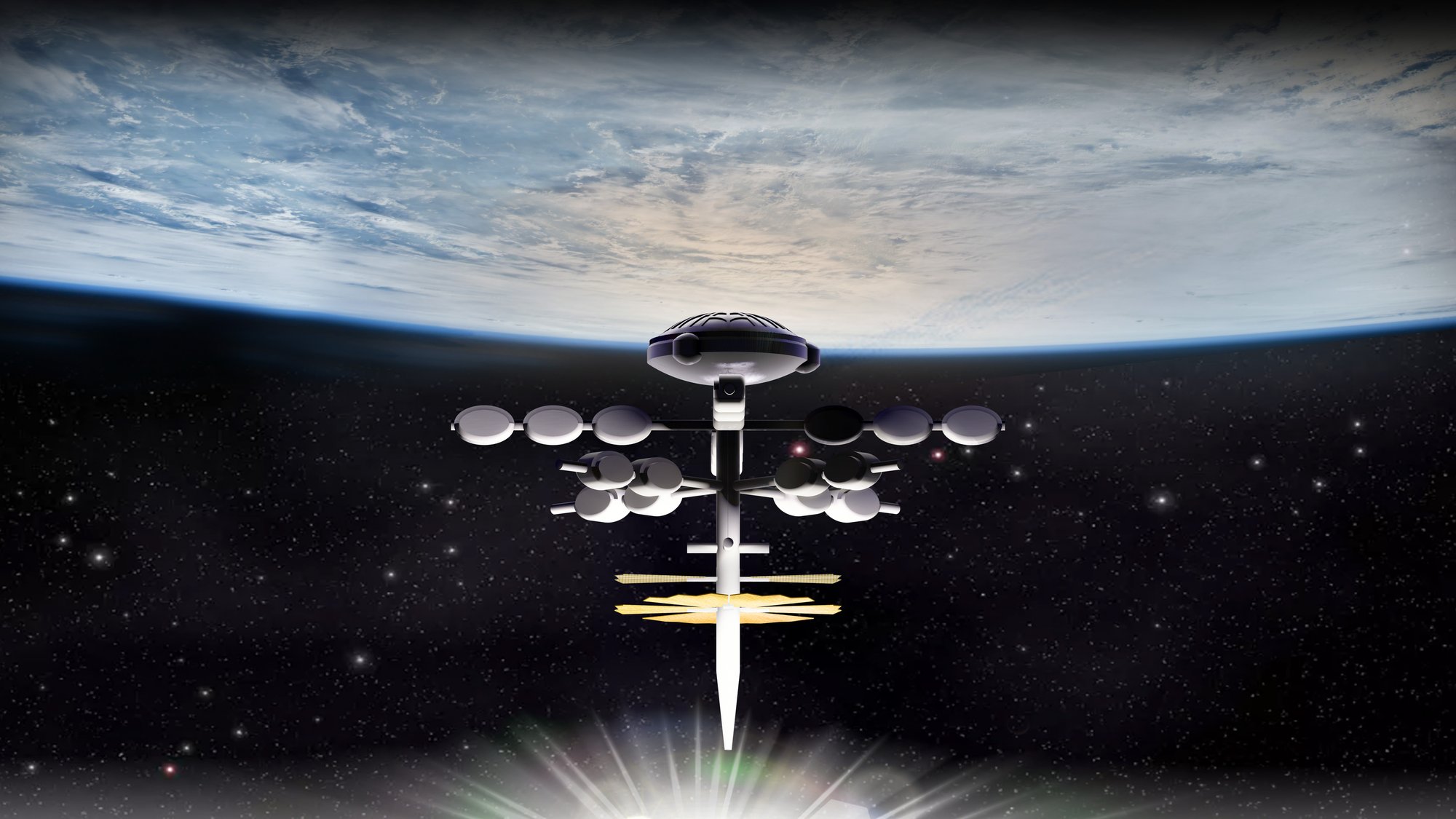
The emergence of a space-based economy is the starting point on becoming a space-faring civilization and a multi-planetary species. Far from science-fiction, self-sustaining habitats on the Moon and Mars are current collaborative projects of government agencies alongside the private sector. Hence the idea of creating orbital pit stops will allow resting and refueling on such voyages. Moreover, it will create opportunities for commerce, research, and tourism. The project DRAGONFLY is a pit stop prototype that brings together existing and emerging technologies along with fundamentals of Space Architecture to create a pleasant and sustainable environment.
Current and projected orbital habitats.
The International Space Station (ISS) is a multinational collaborative space station that orbits our planet at a speed of 4.76 miles/s and at an orbit height of 254 mi. The project started in 1998, and it is currently the main international location for outer space research. The project involves five space agencies: the United States’ NASA, Russia’s Roscosmos, Japan’s JAXA, Europe’s ESA, and Canada’s CSA. The program elements include capsules (to travel to and from the station), a large system to get power in and heat out (solar arrays for collecting power and radiators for rejecting heat), and lastly a small cluster of pressurized modules in the center (see Fig. 1). NASA (2022)
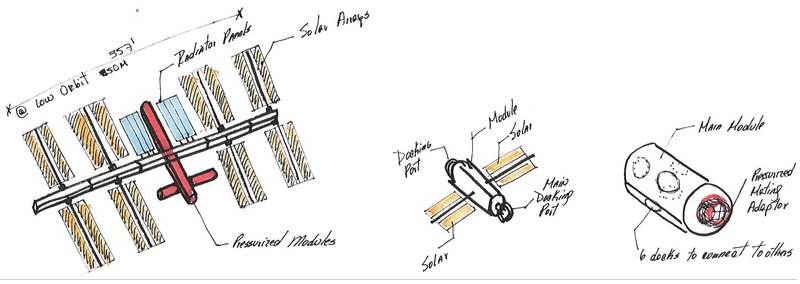
Orbital Reef is an ongoing project by Blue Origin that aims to be the first commercially owned space station to follow the ISS. As a mixed-used space station in low orbit, the project will take over research functions and provide capability for a richer array of businesses and private users. The objective is to bring people from all types of industries and share infrastructure to conduct business in space. In addition to traditional space activities such as research, utilization, and laboratories, the station will also serve as a resort hotel and will explore time shared condominium concepts. Different from the ISS, Orbital Reef is investing on aesthetics and comfort of the travelers. The project claims to provide the largest earth facing windows (see Fig. 2). Sherwood (2023)
Voyager by Orbital Assembly is another ongoing project aiming to enhance space tourism by providing luxury hospitality, business, manufacturing, and research opportunities. The most significant innovative proposal of this project is to provide artificial gravity to enhance the comfort of the guests. Influenced by the ideas of aerospace engineer Von Braun, the station has the form of wheel, aligning the hospitality program components to the outer side of the wheel. Such wheel then rotates, pushing the contents of the station out to the perimeter of the station. This action creates 1/6 the gravity of the Earth, which is equivalent to the gravity of the Moon (see Fig. 2). Alatorre (2022)
Project DRAGONFLY
Project DRAGONFLY is a response to the constructability and environmental drivers that create design challenges: exterior and interior pressure differences, encounters with orbital debris, reduced gravity and Isolated confined environmental psychological impact (ICEPI).
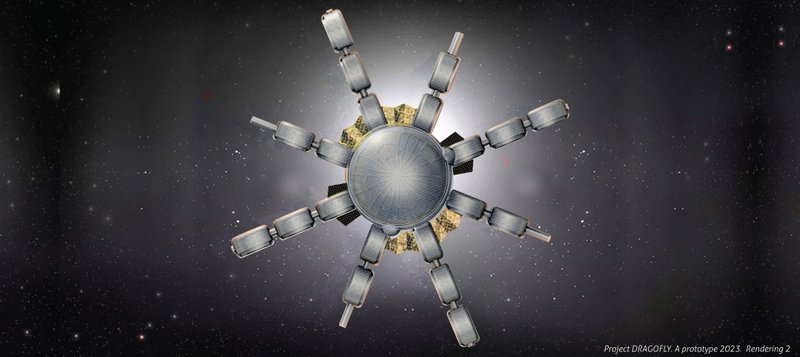
The constructability mission drivers will focus on prefabricated and pre-integrated components, pressurized modular systems, pressurized mating adaptors, as well as providing multiple docks for future expansion. As a modular architectural design, the structure must be lightweight yet strong and puncture resistant materials such as titanium, Kkvlar, and high-grade steel.
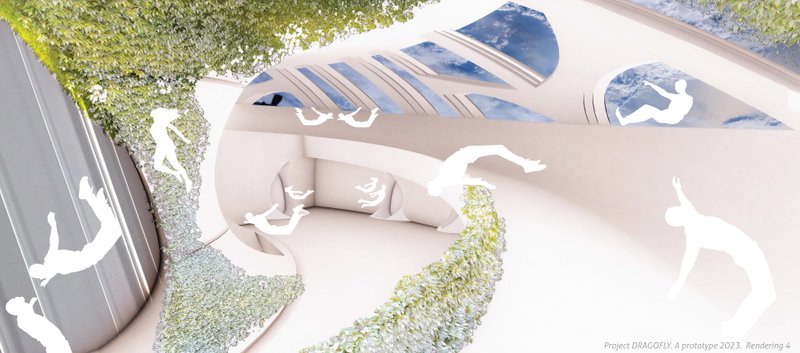
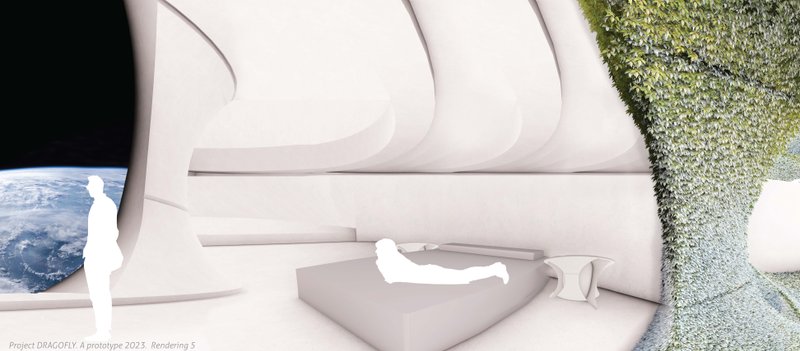
A spacecraft habitat by nature faces the limitations of the reduced overall volume and the fully enclosed isolation. Therefore, if we want to prolong the stay of the travelers while engaging the interest of new users, the constructed environment must consider the human factor: light and views, program organization, and safety. Project DRAGONFLY provides spacious rooms, light color palette, earth facing windows, spaces for large gatherings as well as intimate and private areas. Moreover, greenery beyond the laboratory will greatly enhance the mental wellbeing of individuals. Large, planted surfaces will not only serve as embellishment, but also as a self-sustaining food resource.
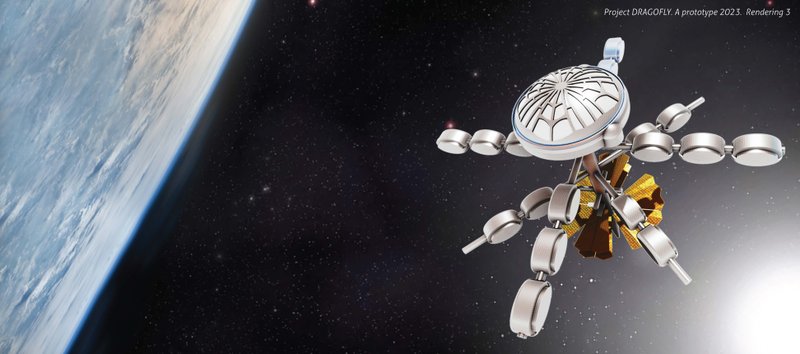
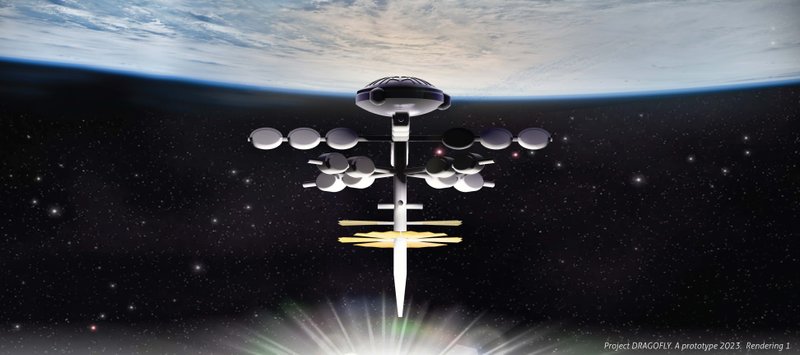
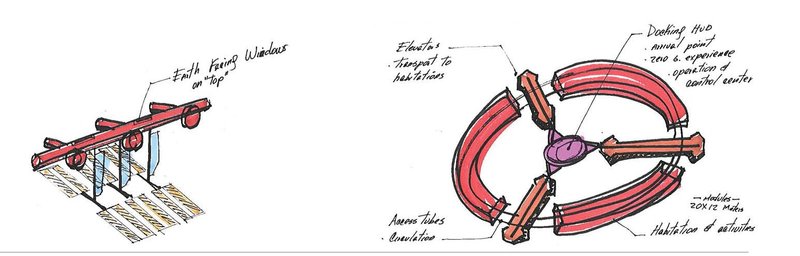
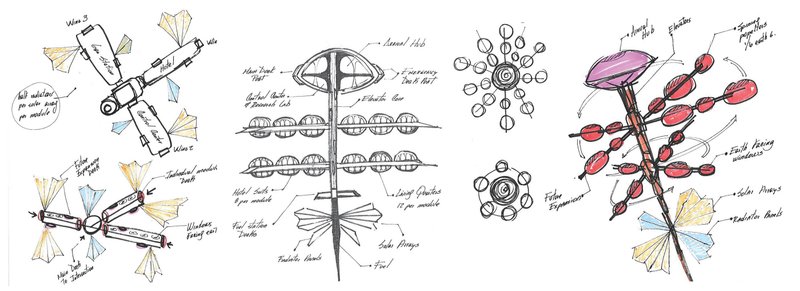
Initial studies for Project DRAGONFLY envisioned the program components grouped into three separate wings: a hotel, a control center, and a gas station. Each wing would be self-served by its own radiator panels and solar arrays. The three wings would be joined by a main dock serving as the arrival hub. However, a more integrated approach was considered in order to improve the inter-relationship of the spaces, to allow for future expansion, and to provide varying levels of artificial gravity. Project DRAGONFLY developed to become a multi-level craft with rotating propeller-type modules. One end of the craft faces Earth, while the other end faces the Sun. The main components are the Arrival Hub, the Elevator Core, the Habitation Propellers, and the Fuel Module (see Fig. 3).
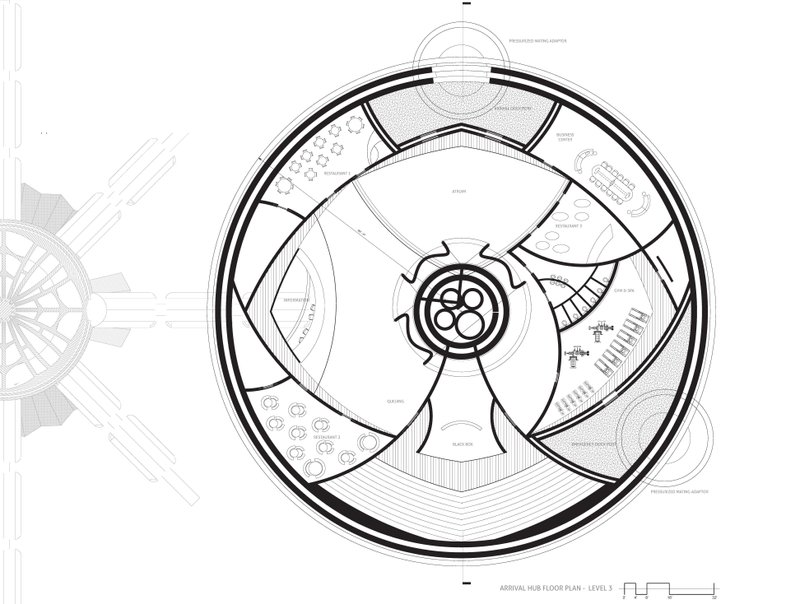
The Arrival Hub will be the docking hub for ship transportation to and from Earth and beyond. Entering the port at level 3, the users will experience the atrium, the check-in booth, the business center, the gym & spa, three different restaurants, a Black Box multi-purpose room, plus access to the elevator core and restrooms. Levels 3 and 4 will house the most dynamic and public amenities while levels 1 and 2 will house the most private and confidential activities such as the Control Center, and Research laboratories. The experience at the Arrival Hub will be of zero gravity. While the visitors will be able to experience the thrill of weightlessness, fixed furniture will create gathering opportunities and a sense of orientation.
The station will provide opportunities for cutting-edge research and testing. Wet labs, Dry labs, and gardens will create multiple confined habitats for outcomes with Earth and Space applications. Far from a strictly functional concept such as the one of the ISS, this station will provide the scientists with relaxation and access to entertainment areas. These program components will create a sense of community while keeping the crew motivated to embrace this new type of live-work environment.
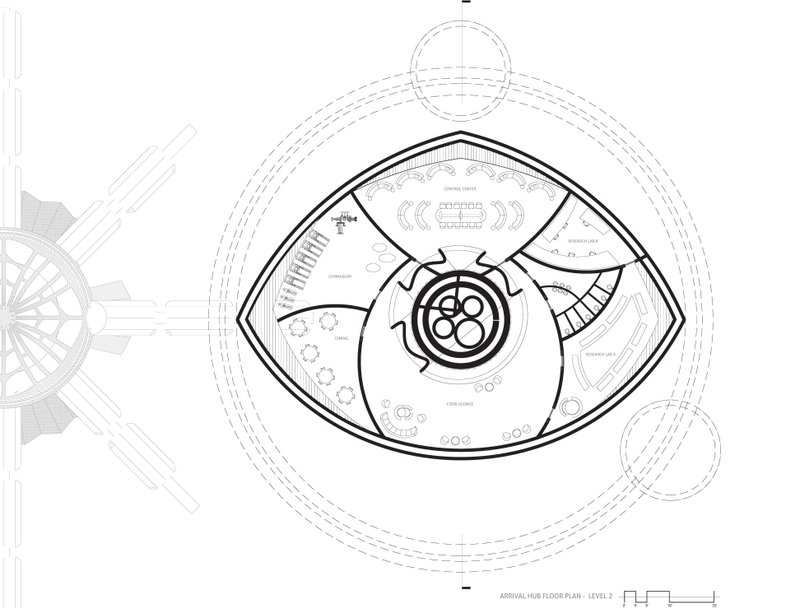
The central elevator core, including both guest and service elevators, will take the travelers to the propeller modules where the hotel suits and crew living quarters are located. These are 70 feet wide by 44 feet deep modules, housing a variety of hotel suits as well as six-bedroom crew units. The experience at these modules will be simulated gravity, enhancing the visitor’s stay and comfort.
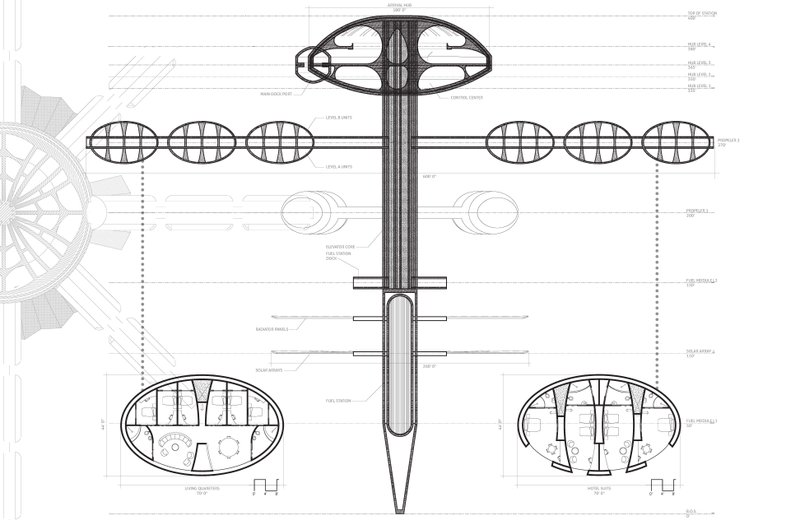
The elevators’ last stop will be at the Fuel Module for technical accessibility. This module will allow vehicles to refuel prior to their next stop. Lastly, at the opposite end of the overall structure, facing the Sun, there will be a circular array of solar panels as well as radiator panels. Such panels will have a folding nature in order to increase surface area as future expansion takes place.
References
NASA (2022) International Space Station. Available at: https://www.nasa.gov/mission_pages/station/main/index.html
Sherwood (2023) MBA Space Architecture. Available at: https://www.youtube.com/watch?v=HfBeIAyrClA&ab_channel=TUWienAcademyforContinuingEducation
Alatorre (2022) Engineering the Future of Space. Available at: https://www.youtube.com/watch?v=j3cT9dBDGuw&ab_channel=OrbitalAssembly