Space Architecture
Architecture and habitat design for space environments, orbital structures, and extraterrestrial settlements.





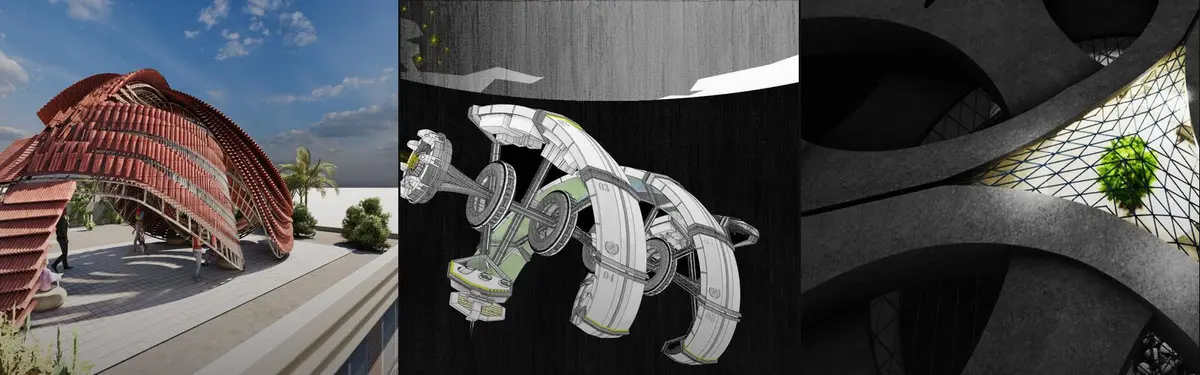
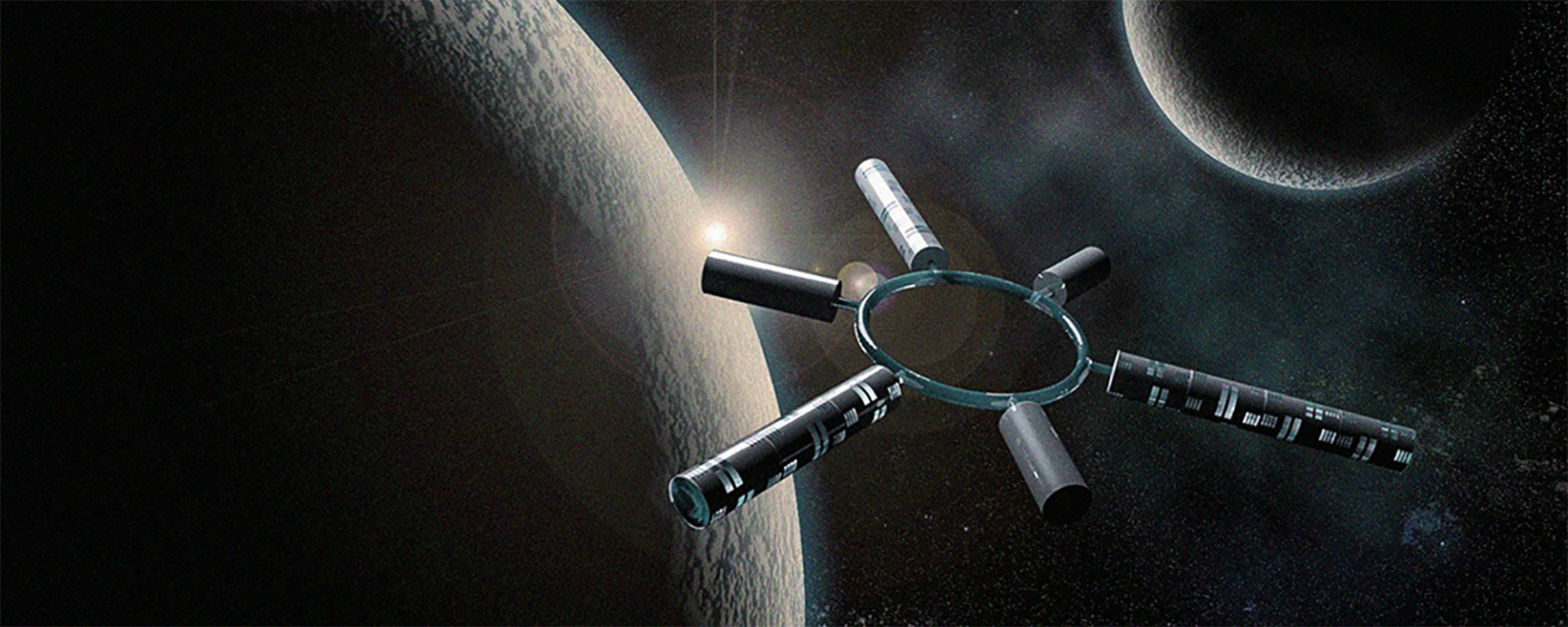
The theory and practice of creating and constructing inhabited spaces in space is known as space architecture (it encompasses the architectural design of living and working environments in space-related facilities, habitats, and vehicles). Space vehicles, stations, habitats, lunar, planetary bases and infrastructures, as well as earth-based control, experiment, launch, logistics, payload, simulation, and test facilities, are examples of these settings. What is space architecture? The complete constructed environment is considered in the architectural approach to spacecraft design. It is primarily focused on engineering (particularly aerospace engineering), but it also incorporates several disciplines such as physiology, psychology, and sociology. Antarctica, airborne, desert, high altitude, underground, submarine settings, and isolated ecological systems are all possible Earth analogues for space applications. In the context of harsh settings, designing these types of architecture poses a unique challenge in terms of ensuring and supporting safety, sustainability, habitability, reliability, crew efficiency, productivity, and comfort. Img 1: ‘The Ark of Knowledge’ competition entry for Origyn The goal, like with architecture on Earth, is to develop a broad understanding of the issues that determine design effectiveness by looking beyond the component pieces and systems. To ensure that humans can live and work in space, space architecture draws inspiration from a variety of specialist architectural styles. Tiny housing, small living apartments/houses, vehicle design, capsule hotels, and other design features fall under this category. The world's space agencies have spent a lot of time designing designs for orbiting space stations, lunar and Martian exploration spacecraft, and surface bases. The practice of incorporating architects in space programmes arose from the Space Race, but its roots can be traced back far further. The desire to prolong space mission durations and fulfill astronaut needs, including but not limited to minimal survival needs, necessitated their participation. Despite a long history of massive government-led space projects and university-level conceptual design, the rise of space tourism threatens to change the landscape for space architecture. Space innovation is not by any means a new concept for us. For the longest time humans have been fascinated to find out what’s beyond our planet and its physical bounds and this obsession has manifested itself in multiple media over the years. The fad of space design has swept over many global cultures and masses and its representation has varied in every language. Img 2: Mars colony envisioned by Elon Musk’s SpaceX (credits: SpaceX) “You want to wake up in the morning and think the future is going to be great - and that’s what being a spacefaring civilization is all about. It’s about believing in the future and thinking that the future will be better than the past. And I can’t think of anything more exciting than going out there and being among the stars.” -Elon Musk Types of buildings/interventions in space architecture Img 4: Typologies for space architecture What does it mean to be a space architect? The concept of architecture (and those who specialize in it) is rather clear and straightforward here on Earth. Humans, on the other hand, have minimal experience living and working in habitats in space. Several space stations have been deployed into Low Earth Orbit (LEO) throughout the last sixty years, including the now-defunct Salyut stations, Skylab, and Mir, as well as the current International Space Station (ISS). However, in the not-too-distant future, we plan to construct stations and commercial habitats in LEO, on the Moon's surface, and on Mars. In addition to ensuring a constant supply of food, water, and other essentials, efforts to protect the psychological well-being of their employees will be required. To ensure that humans can live and work in space, space architecture draws inspiration from a variety of specialist architectural styles. Tiny housing, small living apartments/houses, vehicle design, capsule hotels, and other design features fall under this category. “No matter what kind of architecture it is, it pursues the mission of enhancing the human experience… This is the exact same mission [when it comes] to the small architecture of tiny houses, small apartments, Arctic, or any other remote area stations and capsule hotels.” - Anastasia Prosina. How is architecture for space different and what are some challenges faced in space architecture? Another important distinction is the level of flexibility that Earth-based architects have in comparison to their space colleagues. In short, the space architecture and engineering business do not have the same creative freedom as other industries because its constructions must be functional above everything else. The fact that space architects must launch their projects into space is likely the most significant constraint. Architects on Earth are able to create nearly anything that comes to mind. Space architects, on the other hand, must adhere to the limits of prefabricated construction, a spacecraft shell. There are a few technicalities and challenges that an architect designing for space should tentatively look into: • Radiation protection: Cosmic rays and solar flares create a lethal radiation environment in space but settlements in Equatorial Low Earth Orbit (ELEO) are protected from most space radiation by the Earth itself and Earth’s magnetic field. Further out, beyond Earth’s magnetic field, settlements must be surrounded by sufficient mass to absorb most incoming radiation, about 7-11 tons per square meter depending on the material. • Materials: Launching materials from Earth is expensive, so for faraway settlements bulk materials such as radiation shielding should come from the Moon or Near-Earth Objects (NEOs - asteroids and comets with orbits near Earth) where gravitational forces are much less, there is no atmosphere, and there is no biosphere to damage. Our moon has large amounts of oxygen, silicon and metals, but little hydrogen, carbon, or nitrogen. NEOs contain substantial amounts of metals, oxygen, hydrogen, carbon, and at least some nitrogen. • Energy: Solar energy is abundant, reliable and is commonly used to power satellites today. Massive structures will be needed to convert sunlight into large amounts of electrical power for settlement use. Energy may be an export item for space settlements, using microwave beams to send power to Earth. • Transportation: This is the key to any space endeavour. Present launch costs are very high which are decreasing thanks to reusable launch vehicles being developed as a priority. You can make reference to these launch vehicles to design the habitat. We also have to avoid serious damage to the atmosphere from the thousands, perhaps millions, of launches required. Transport for millions of tons of materials from the Moon and asteroids to settlement construction sites is also necessary once settlements expand beyond Earth’s magnetic field. One possibility is to build electronic catapults on the moon to launch bulk materials to waiting settlements. • Communication: Compared to the other requirements, communication is relatively easy. Much of the current terrestrial communications already pass through satellites. Early space habitats in the orbit close to Earth can plug into Earth’s communication system. • Life support: People need air, water, food and reasonable temperatures to survive. On Earth, a large complex biosphere provides these. In space settlements, a relatively small, closed system must recycle all the nutrients (including CO2 and waste) without “crashing.” The Biosphere II project in Arizona has shown that a complex, small, enclosed, man-made biosphere can support eight people for at least a year, although there were many problems. A year or so into the two-year mission oxygen. Img 3: ‘MANHATTAN n.2’ competition entry for Origyn Technology in space Space is a near-perfect vacuum, devoid of substance and characterized by extremely low pressure. Sound does not travel over space because there aren't enough molecules near enough together to convey sound. Bits of gas, dust and other matter floating around in "emptier" sections of the universe, while planets, stars, and galaxies can be found in more congested locations. Because of the dangers of vacuum and radiation, outer space poses a difficult environment for human exploration. Microgravity has an adverse effect on human physiology, resulting in muscular atrophy and bone loss. In addition to these health and environmental concerns, the cost of sending items into space, including humans, is quite costly. Img 4: Automated robotic building and 3D printing will be the main delivery systems of habitats in space. (Credits: AI SpaceFactory) Brilliant projects in space tech Living off-planet has always been a fantasy, but it may be closer than we think. Is it, however, conceivable to create a home on Mars? And what about on the moon? When it comes to providing solutions, some architects have no reservations. The greater the task, the more magnificent the solution for professionals like Norman Foster, SOM, or Amey Kandalgaonkar. All three have created magnificent and fantastic creations. Space architecture isn't just for orbital space stations anymore. Professionals are now faced with a new challenge: designing designs for extraterrestrial surroundings. Foster + Partners has been working on a NASA-backed competition for a 3D-printed modular habitat on Mars, continuing the practice's prior design explorations for constructing in severe settings and extra-terrestrial habitats with the Lunar Habitation project. Prior to the arrival of humans, the Mars Habitat concept includes ideas for a community built by an array of pre-programmed, semi-autonomous robots. The habitat, which was developed in partnership with industry and academic partners, envisions a sturdy 3D-printed home for up to four astronauts made of regolith, which is the loose soil and pebbles present on Mars' surface. Img 5: The Mars Habitat design proposes inflatable modules which will sit within the dug crater to form the core of the settlement. (Credits: Foster+Partners) Skidmore, Owings & Merrill, an architecture firm, has proposed a permanent settlement on the moon made up of inflated pods that expand to accommodate more people as the population expands. Moon Village is planned for the rim of Shackleton Crater, which receives continuous daylight throughout the lunar year and lies close to the moon's South Pole. The community's infrastructure and living structures are designed to allow it to harvest sunlight for energy. A series of inflatable, pressurized pods would populate the community, housing workstations, apartments, environmental control, and life support systems. Each is wrapped in a protective shell that protects them from severe temperatures, projectiles, dust, and sunlight. Img 6: Structures would be arranged in settlements, clustered close to the crater's water supply, and feature connections for movement between them.(Credits: Slashcube GmbH) Architecture Competitions Architecture competitions have been a big part of historic construction innovation. For centuries, architecture competitions have helped source the best and most unique designs for projects, spurred community development (think: urban planning), and created huge publicity around new projects. The interaction and interrelationship between many various project requirements results in high-quality design for space architecture (technological, environmental, human factors, transportation, costs, etc.). Each of these requirements is intertwined in the design process and cannot be assessed separately. As a result, the design process necessitates regular inspections in order to select the optimum solution for the whole situation. Architectural design for space, like the other major disciplines centered on human considerations, must be thoroughly tested in order to achieve scientific advancement. Architecture competitions thus provide opportunities to experiment with varied issues with respect to space architecture. Competitions are a great way to try out new things, make mistakes and learn from them. They're also a great opportunity for portfolio building because everything you submit gets contextualized based on where it ranks against everyone else's work. And perhaps most importantly, they give you extra insight into what the judges see in your submitted work as well as how they don't see it - which is yet another fantastic way to improve your designs in unexpected ways! Some of the competitions for space architecture being hosted all over the world are Outer Space 2020 by Blank Space, Spacecraft Design - one axonometry competition, Space Settlement Contest, International Space Settlement Design Competition by National Space Society, and so on. Explore projects of space architecture published on UNI website: UNI Design Competitions UNI is a global network of architects and designers who are solving some of the most challenging problems around the globe. UNI brings together the world's largest pool of design challenges that are curated by the finest architecture academicians and professionals globally. With over 200,000+ registered members, UNI brings academia and the professional spheres of architecture together through a unique knowledge-sharing web platform. Since 2017, UNI has hosted more than 200+ architecture competitions for various idea level to realization level briefs. In the past, UNI has helped 50+ organizations, universities, and government bodies to use our platform to generate architecture and design solutions through competitions. There are many competitions hosted by UNI on our website for space architecture disciplines such as Origyn, Colony on Mars, Spacestop, Leap, Martian hub, Overhaul, Moon base 2124, architecture of the apocalypse, and so on. Discover other competitions: https://uni.xyz/competitions