Automatic City: Vertical Solutions for Urban Growth
Redefining urban living with smart vertical cities designed for growth, sustainability, and connected communities.


With urban populations rapidly increasing, land-use challenges have become a critical issue. By 2050, cities like the one envisioned in this "Automatic city" project will host populations of 1,000,000 within just a 2.5x2.5-mile area. This concept, designed by architects Siming Chen and Jieyu Zhou, addresses these challenges with innovative vertical strategies, creating sustainable and efficient living spaces for the future.
Core Features of the Automatic City
1. Vertical Growth to Combat Land Shortage
Traditional urban sprawl is no longer sustainable. Vertical city development maximizes land use, allowing high-density populations to coexist within compact areas. The structure utilizes modular design, ensuring efficient distribution of residential, commercial, and recreational spaces.
2. Automatic-Driven Elevators
Traffic congestion is a growing problem in urban areas. This city integrates automatic-driven elevators to enhance connectivity and eliminate bottlenecks, offering a seamless commuting experience within skyscrapers.
3. Community Reimagined
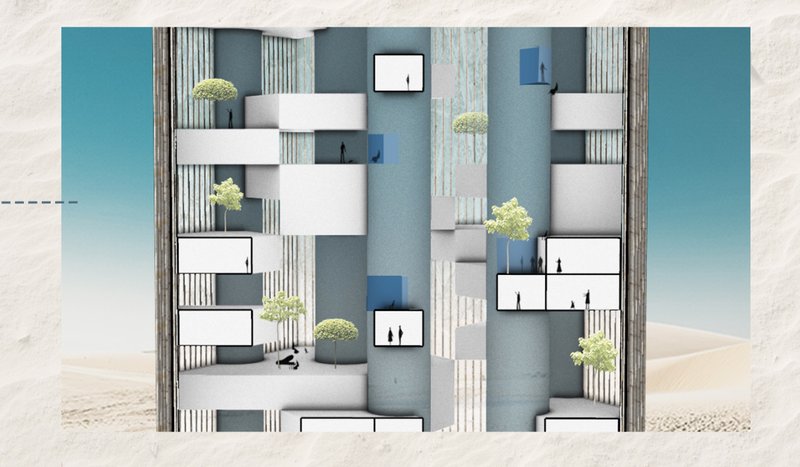
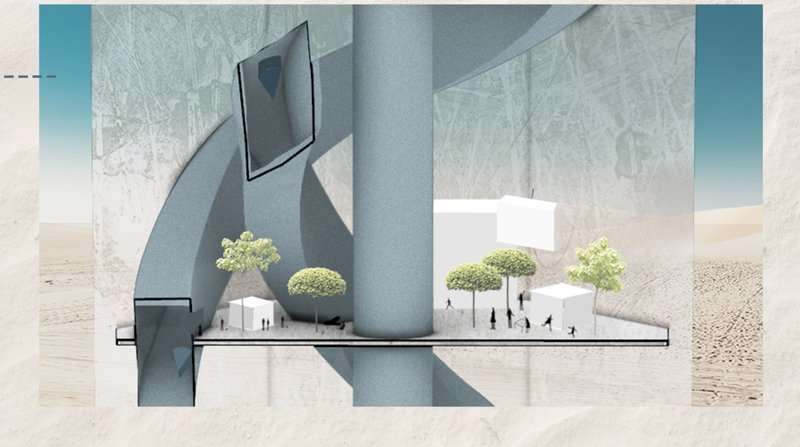
The design redefines how communities interact by merging living, working, and recreational spaces into shared vertical neighborhoods. Public terraces, green spaces, and collaborative hubs foster stronger social ties and enhance quality of life.
4. Sustainable Building Strategies
The structures use advanced sustainable techniques:
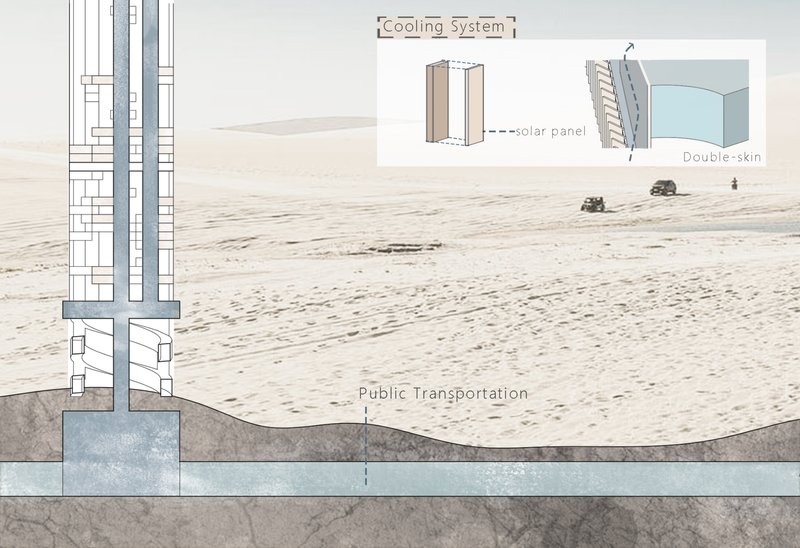
- Building Materials: Sand and Bacillus pasteurii are utilized to form eco-friendly construction materials.
- Cooling System: Double-skin facades paired with solar panels ensure energy-efficient temperature regulation.
- Automatic Facades: Dynamic systems adjust based on sunlight and wind, optimizing indoor comfort and energy use.
The Architecture Behind the Concept
Modular Hexagonal Design
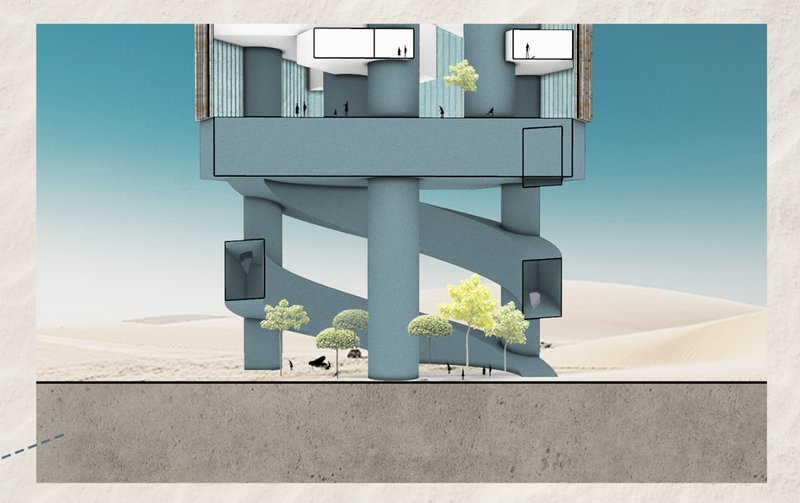
The hexagonal floor plan creates a flexible and interconnected space layout, allowing seamless expansion as population density increases. Each module serves a specific purpose, such as housing, offices, or community areas, while integrating vertical gardens to maintain environmental balance.
Integrated Transportation Network
A comprehensive underground transportation system, including hyperloop stations, supports efficient interconnectivity between city modules. Additionally, elevated "highways" and pathways connect buildings for pedestrian flow.
Sky Bridges and Aesthetic Appeal
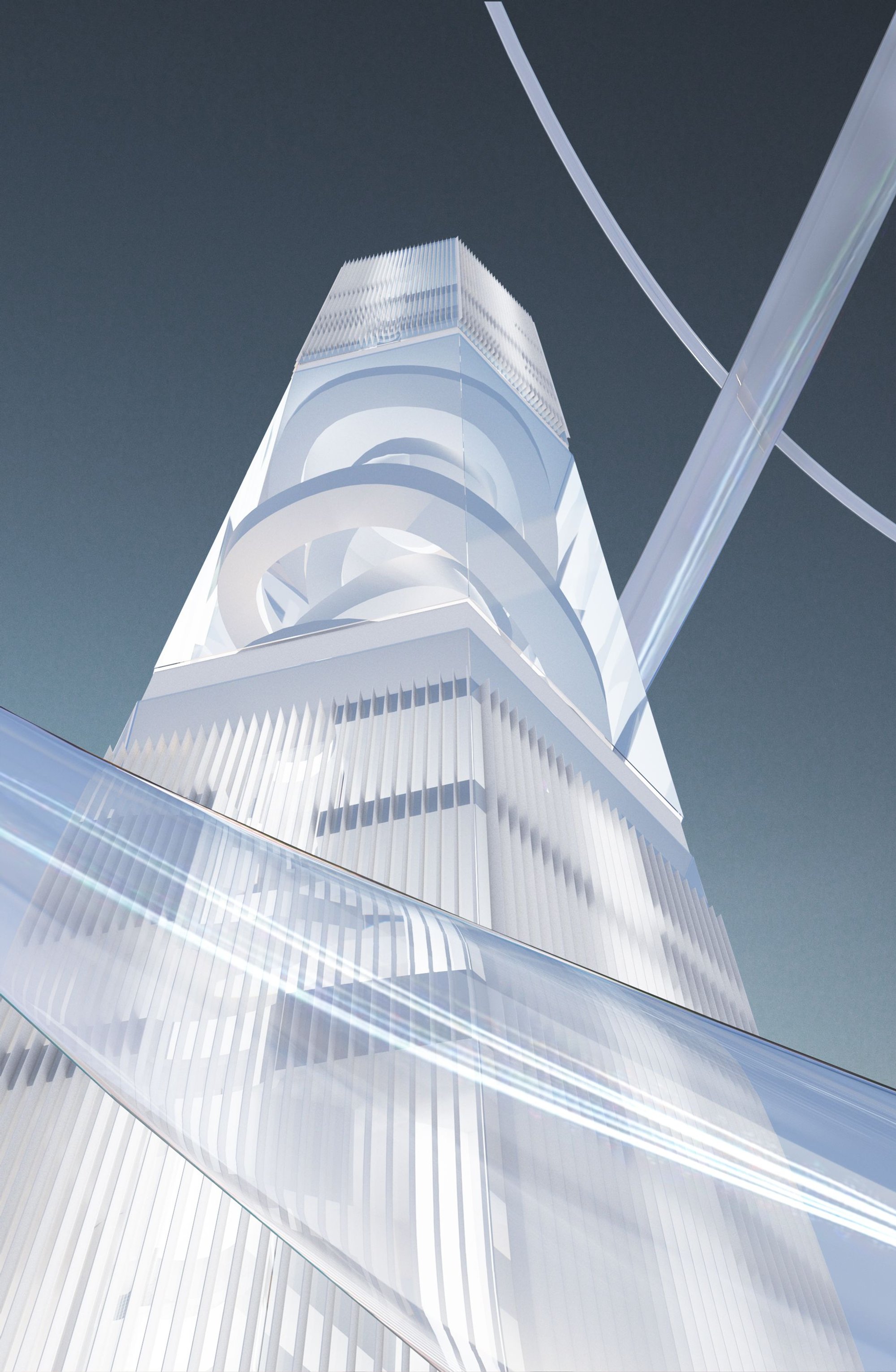
Sky bridges link towers, creating a network of elevated pathways for leisure and functionality. The cityscape emphasizes futuristic aesthetics, with reflective facades harmonizing with the desert landscape.
City Growing Strategy
- Phase 1: Establish initial framework and build core modules to accommodate 10,000 residents.
- Phase 2: Expand vertically and horizontally, integrating additional modules for 100,000 residents.
- Phase 3: Connect buildings with elevated pathways and underground transit, supporting a fully developed city for 1,000,000 residents.
This futuristic concept by Siming Chen and Jieyu Zhou represents a bold step forward in addressing urban population challenges. By combining vertical growth, sustainable strategies, and innovative design, the Automatic City redefines how we think about urban living.