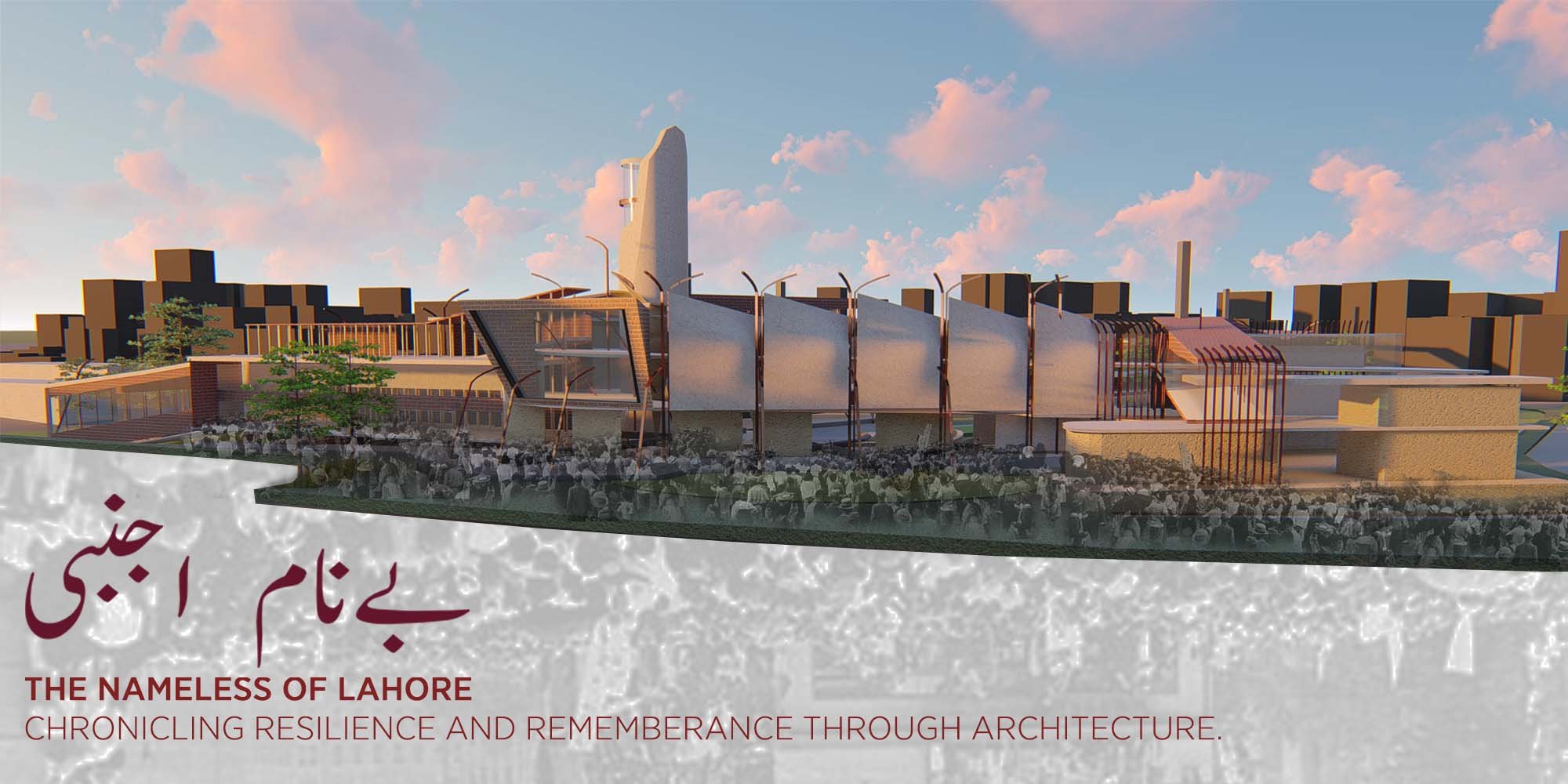
BENAAM AJNABI-The Unnamed Strangers of Lahore
What's in a name? Exploring the Identity of a Community through the Narrative of protest.


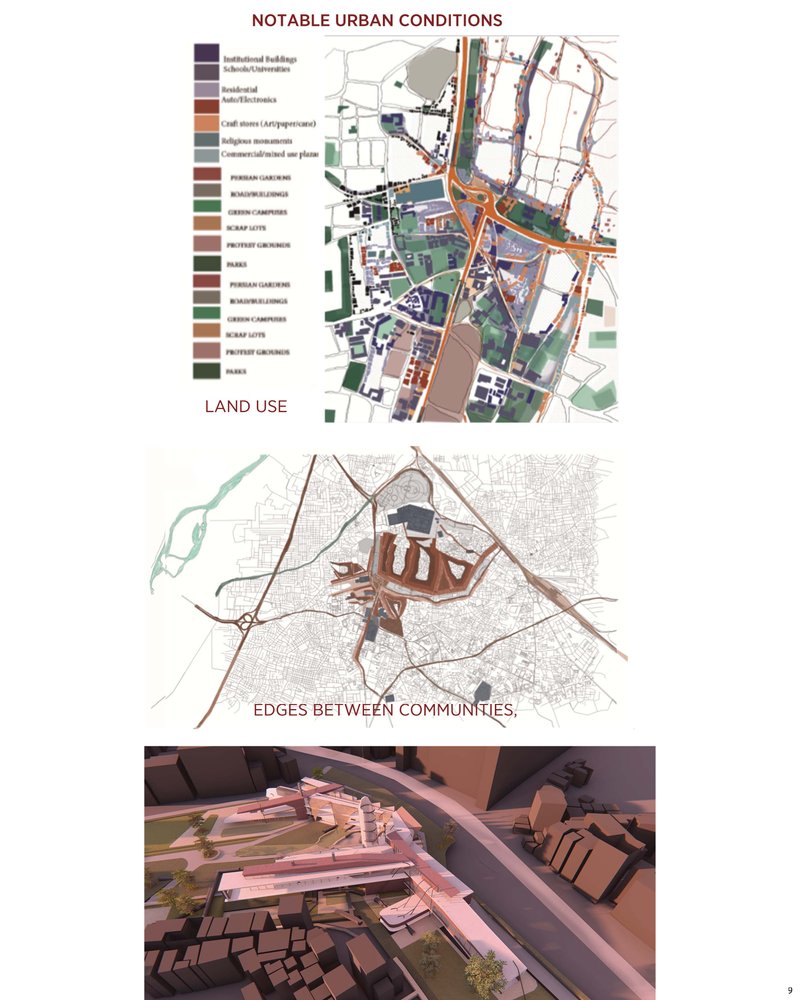
The City of Lahore has a visiccitudinal history of resistance and liminal space. It dates back to the eight hundredth Century, having been ruled by various decentralized Hindu dynasties, Ghaznavids and then the Turkic conquerors, Mughal Rule and British colonization. The British colonization led to a major shift in the identity of the region, with more subcultural tensions blossoming leading to what we now know in the modern day as civil unrest. Dating back to 2000 BC, it is a city that has seen many layers of developments and has been colonized and conquered frequently, leading to intricate cultural and social traditions. These conflicts create 3rd spaces- between the conquerors and conquered, from where emerges the long history of activism and resistance that has been observed in the subcontinent.
The diversity of Lahore has led to an intense and complicated panorama of identities that often clash with each other and create hierarchies of social systems within society. Colonialism has further split this diorama of different peoples and created intense tiers of inequality of otherization of people. Even prior to the British intervention, the Mughals also lived in a vastly unequal society. In which the outcasts such as lower caste Hindus, people lacking in financial wealth, travelers merchants, working women, courtesans, musicians, poets and anyone else who did not fit in to the mainstream mold were flung to the outer edges of the city (in this case it is the original Mughal walled city)), where infrastructure, food, entertainment, social capital and other supplies needed to live a fulfilling life were quite lacking. However, in doing so, these social hierarches would create a very diverse environment on the edge of city, and the creativity of these unnamed people would be unmatched, today, despite the British colonialism, the Pakistan-India partition, decades of corruption, climate change, gentrification and overall depletion of resources, these communities have persevered and the walled city remains a frontrunner in cultural production but also political and critical modern thought. However, in the forever changing political landscape these communities remained unnamed in legislation, unacknowledged and unsupported by the government and left without any infrastructure or architectural moment that gives them structure and visibility. These communities remain resilient but estranged from Lahore, dissonant and jaded. In resistance, in conflict there is proof of life; therefore, to fight, to shout, and to have a voice is quintessential to being.
Throughout history, the exchange of power has oscillated between minority bodies and more powerful institutions such as emperors, colonizers and then military governments. The narrative of protests in Lahore as observed in the time line has seen both periods of violent and non-violent protests. Protests have a tendency to turn violent or underproductive when a community gets stuck in the protest-conflict cycle. Each space of protests/resistance in Lahore seems to follow a certain pattern. Each space has generally some kind of green area that can hold large amounts of people. It is also connected to some major infrastructure such as a highway or metro, for greater mobility and visibility of the movement and is near some kind of institutional or historic building to inspire a sense of community. When discussing protests and the significance of urban movement within them we cannot ignore the influence of British colonialism on Lahore. Towards the end of the Mughal Empire, in terms of military strategy, Lahore was perhaps one of the most important cities, bridging a cultural gap between the Persian, Turkic and Indian cultures. To truly assert political power and influence over their colonies the British sought to decentralize Lahore. This was done in two primary ways; first by the physical demolition of politically significant artefacts in the old city. Secondly, the British established a separate city center towards the south of the city, drawing away the affluent population away from the Havelis(Traditional Mughal/Subcontinental Houses) of old Lahore-which led to the further decline of the city center. This project aims to examine these spaces of resistance and provide a safe 3rd space to the outsiders of the Lahori social and urban fabric. Today, as per the site analysis, the main demographics include religious minorities, sexual minorities, women, the labor force and students. Lahore’s population has become dominated by the Muslim demographic and has seen a rise in the hetero-patriarchal value system, resulting in the further marginalization of these groups. Part of the revival of the site in this project is to renew and give the downtrodden demographics of the site such as trans-people, blue collar workers, sex workers to voice their opinions and deconstruct structural oppression. Each of these groups does not have space in the built environment of Lahore-once a city flourishing with diversity. Very often, built environment frames the quality of life of such minorities and has the capacity to either empower them, or to ensure their oppression. There are two core issues. The first is the Social Conflict involving the protection and visibility of minorities. The second is the Architectural Conflict related to protection and visibility of reclaimed urban/architectural fabric.
Each of these micro communities is actively ostracized from the democratic right to protest, therefore creating a space on this particular axis cutting through Bhatti gate, with the procession slowly approaching the intimidating figure cut by the density of the ancient city and its hulking walled fort at the very helm. In a way, through protest, not only is political and democratic identity reclaimed but also the indigenous identity that was compromised through colonialism and its continual effects. The city today, despite its rich texture, history and important role in thwarting invaders has become quite decrepit. Due to rapid urbanization, globalization and the industrial era the infrastructure is deeply neglected. A lot of these minorities have moved to the south of the city, to the “modern” urban nodes established by the British, to very physically shift the nexus of power from the walled city (a symbol of the native culture) to newly built communities such as model town and Lahore Cantonment. Furthermore, after the partition in 1947, a lot of the religious diversity diminished from the old Lahore due to out migration to India. Revitalizing this area by creating an architectural/urban moment here will draw back some of its diminishing political significance and also give the aforementioned communities more visibility.
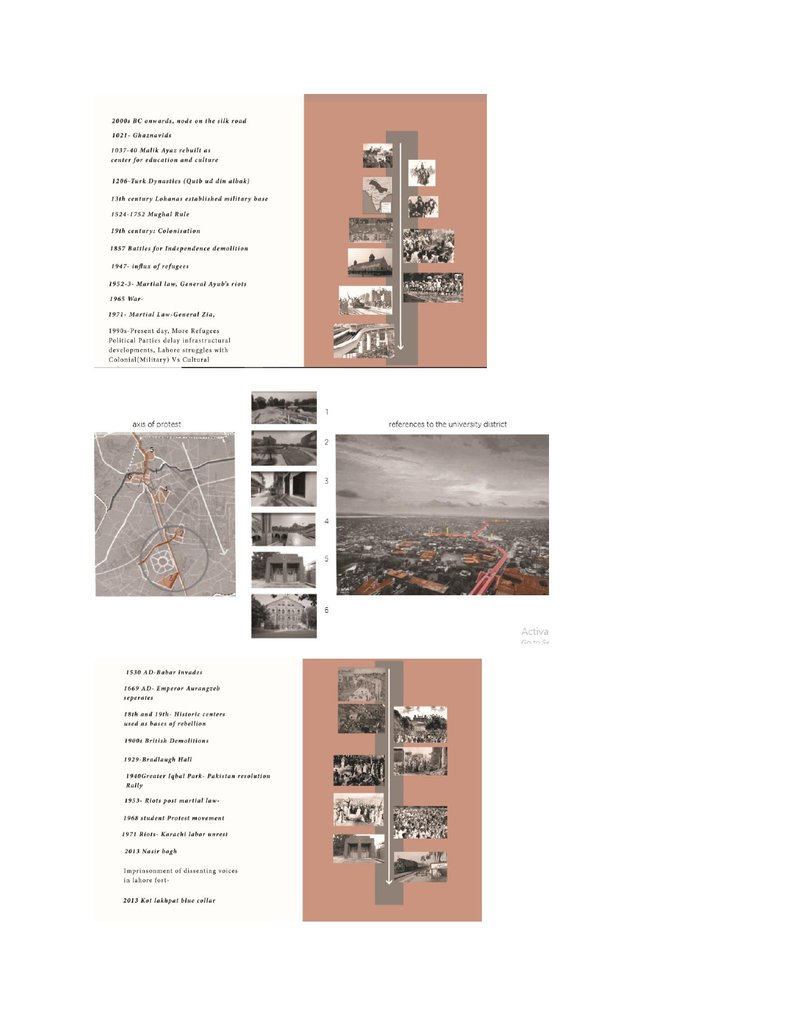
The narrative of protests in Lahore as seen in the time line has seen both periods of violent and non- Violent Protests. Peaceful protests are usually born from the process indicated in the above figure where a certain demographic in conflict will stand up for its needs. Protests have a tendency to turn violent or underproductive when a community gets stuck in the protest-conflict cycle. In Pakistan, periods of bans or military dictatorship seem to result
This structure is ephemeral in its functions, serving as a community center in its down time, reviving, through cultural and social activities the impacted communities. Giving new value to diversity in cultural practice will lead to a form of cultural jamming.
The tower pins everything in place giving the users an ambulatory element to circulate around but also create visual interest when the system is being viewed from a distance
As discussed previously in the site context, this particular area is very richly connected to the notion of resistance and resilience. For these two seemingly contrary concepts to coexist, liminal spaces play a critical role in blending safe spaces and then spaces of protest, for conflict to occur, peace must exist at the same time, therefore haven spaces, conflict spaces AKA the spaces of protest must coexist with introspective in between spaces provided to the user to allow them to remove themselves from either extreme.
Therefore the functions in this project vary vastly allowing for this tripartite concept (resistance, liminality and resilience) to manifest. As you go higher and higher, the functions become more and more somber, with the spatial climax being the sensory semi open space for people to March on, gain volume and visibility. The functions also become more communal encouraging the gathering and interaction of people; individual workshops etc. are closest to the ground
One of the most critical features of this project is the secret tunnels that were recently found during some an archaeological dig in the walled city. Previously the network of tunnels had existed only in myth and folklore, today some of it is known to exist, sprawling under the city, however the extent of it remains unclear. Due to poor maintenance, a lot of possible entries in to the network are now logged with sewage and waste and inaccessible. In their heyday, these tunnels were famed stretch all the way to the twin Mughal capital of Shajahanabad in Delhi. These tunnels have never existed passively, initially they were used by emperors and their families during invasions to escape, during the colonization of India, with the rising of insurgence and the creation of a new political India/Pakistan, these tunnels played a key role in allowing people to move about and plot for more political mobility freely without being detected. In this project, with this notion of idea exchange in mind, they are extrapolated toward the universities and labor district (law offices, district courts, union office and garden designated for political gathering) to maintain the idea of movement without arrest or detection.
Technology also plays a very critical role in this subject, the use of social media to spread messages remain limited to a certain financial class in Pakistan, therefore this center for protest would also serve as a place where people, regardless of community background can come and use devices and apps aimed towards bridging social gaps and aiding people in nonviolent verbal protests, people can connect through QR codes, instead of printing out signs, imagery and symbolism supporting the cause can be projected. The waste and strain of a protest on the environment is also a very important consideration. Such demonstration have often turned violent in the past, with people turning to burning tires, looting and destroying private properties, creating a space that caters to a protest on all level, city, neighborhood and location/monument level, reduces the need for such practice, which come only from the need to be seen and heard. The project also attempts to revive the spaces connection to the now lost ancient water channels of the ancient city, to enhance the sustainability of the design these are used for passive cooling so the carbon footprint of the building is minimized.
The juxtaposition of all the historical, social and political features, leads to an image of a community in need, but with potential of mobilization and cultural welfare which makes ideal for the envisioning of a space of protest. Not only this but also, the narrative of protest and its relationship to space, context and social environment directly leads the user to the question of defining a political identity in a globalized and post-colonial world. An identity which is critical in a time with diminishing welfare, protections for minorities and freedom of speech. By providing a safe space for a conversation between two parties in conflict, be it the government and its people, the self vs the collective, or the indigenous vs the colonial, by establishing a spatial baseline, conflict resolution and representation in circles of thought and power becomes much more possible.
In this project, the aim is to provide a haven for these communities and establish a dialogue through the 3rd space between two parties of tension-space for the “Be-naam Ajnabi” (unnamed strangers) of Lahore, for whom simply existing is often protesting. What’s in a name? to a person who has never had a tongue to speak with, a place to speak from, it is only everything.