
Blank Canvas
Radicalizing public performance by taking back the streets

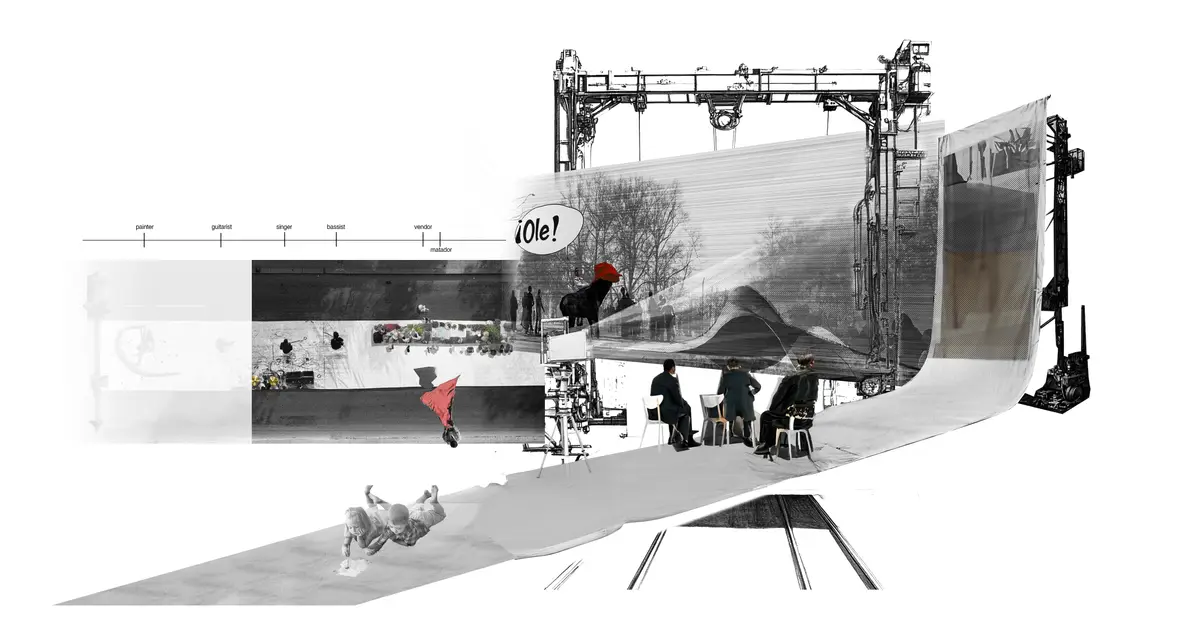
Blank Canvas operates within multiple layers of symbolic representation, offering artists a platform to reclaim the streets as truly "public" spaces.
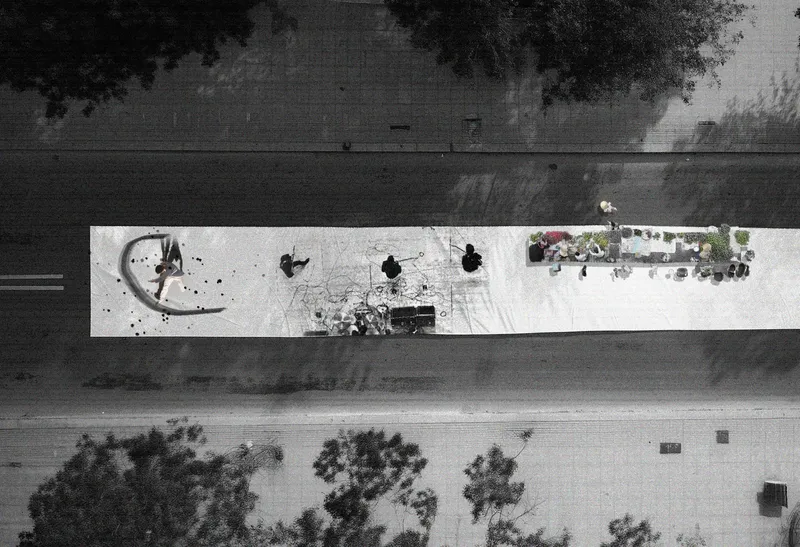
While streets are traditionally viewed as belonging to and funded by the people who live there, they are often subject to restrictive permits and regulations that curtail the organic public nature of these environments—spaces where some of the most vibrant cultural expressions emerge. Blank Canvas challenges the governmental control that often stifles street artists, who are paradoxically celebrated by the same systems for tourism and economic gain. Governments, on one hand, seek to control or criminalize these expressions, while on the other, commodify the resulting culture for profit.
Blank Canvas empowers street performers by establishing a bold claim on public spaces and transforming the streets into dynamic stages. The canvas, draped across the streets, evokes familiar theatrical symbols like the red carpet, the drawing of curtains, and the unrolling of a screen—each element reinforcing the power of the street as a performance space.
In terms of mechanics, the design is intentionally minimal, allowing the symbolic power of the canvas to take precedence over architectural complexity. Its functional components resemble a cart or wheelbarrow, enabling ease of transportation and transformation through extendable rails and a pulley system. These elements allow the canvas to shift from a horizontal orientation, serving as a stage floor, to a vertical plane for projections or a curtain backdrop.
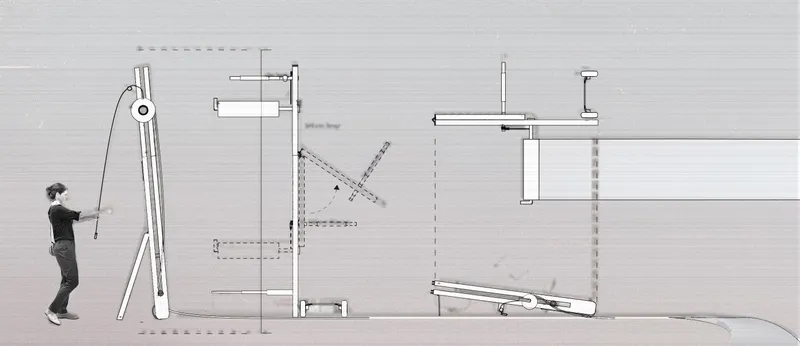
By providing a flexible and adaptable infrastructure—canvas, stage, curtain, and screen—Blank Canvas creates a versatile environment for any type of performance. Its symbolic gesture of reclaiming the streets for festivals and large-scale cultural events enriches the city’s cultural fabric, offering a full return of public spaces to the communities that sustain them.

Popular Articles
Popular articles from the community


Jaramillo Van Sluys Arquitectura and Urbanismo Turn a Demolished Registry Lot in Quito into an Orchard Plaza
In Quito's Centro Histórico, a 2,800 m² plaza exposes the San Agustín convent wall and redraws its lost Augustinian orchard in volcanic stone.

GROUP A Strips a 1969 Rotterdam Harbor Headquarters to Its Frame and Wraps It in Timber Louvers
In Rotterdam's M4H harbor district, Ferro Offices reuses a 1969 frame, adds one timber storey and reaches BREEAM-NL Outstanding.

longwave studio Reorganizes a 112 m² Tainan Apartment Around the Daily Routines of a Family and Two Cats
In Tainan, Taiwan, birch plywood, rust-red furniture and a freestanding plaster wall link arrival, storage, work and family life in one apartment.

David Macias Steps a Doorless Stone and Plaster House Down a Tropical Colombian Hillside
In the humid hills of Colombia, Threshold House replaces the front door with an open void and terraces its 850 m² down the slope instead of fighting it.

Similar Reads
You might also enjoy these articles


Vereda Arquitetos Renovates a 40-Square-Meter Apartment Inside Niemeyer's Copan Building
A compact unit in São Paulo's most iconic residential tower gets a material overhaul that pairs exposed concrete with bold blue Formica.

Shakur's House: Exposed Brick as an Interior Organiser in a 168 m² Mashhad Residence
Brick moves indoors in this Mashhad residence, where masonry walls, glass partitions and teal planes sequence a compact home without closing it off.

Day and Night Park: A Time-Based Urban Newsstand in Beijing
A temporary urban newsstand in Beijing blending travel, light, and reading through poetic colors, compact form, and community-focused design.

Modernist Patio Renovation in El Masnou, Barcelona by Oliver Segura Arquitectura + Cebrià Arquitectura
Modernist patio renovation blending tradition and innovation with a movable pool, leveled floors, and Catalan materials in El Masnou.


Comments (0)
Please login or sign up to add comments
No comments yet. Be the first to comment!