Blob Effect: Experiential Architecture That Engages Emotion Through Water
A sensory architecture that makes water a medium for emotional transition and awareness of overuse in the modern world.


Project by Sujeen | Editor's Choice entry of Ripple
Water has long been associated with purity, life, and emotion. In the architectural installation titled Blob Effect, water is reimagined not just as a material but as a medium for emotional transformation. The project engages users through an experiential architectural journey, demonstrating the vital significance of water and the consequences of its misuse.
The design is built around a one-way path—metaphorically and physically—inviting users to pass through a series of interconnected, sensory spaces without the possibility of return. This linearity is key to the project’s message: once natural resources like water are misused or lost, there is often no turning back.
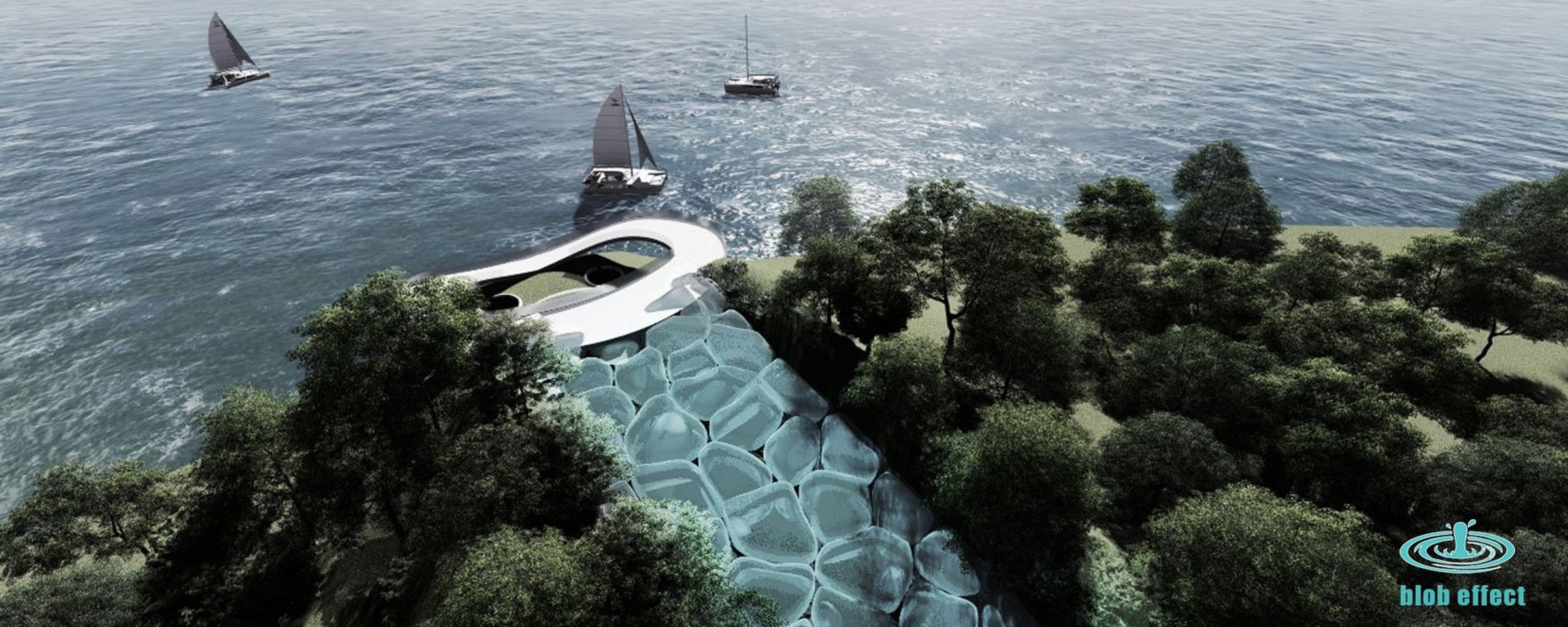
At its core, the installation is composed of an undulating terrain of water-filled rubber sacs that shift under the users’ weight. These blobs act as an architectural landscape that is not static but reactive—responding to motion, weight, and interaction. This instability adds a tactile sense of immersion and unpredictability.
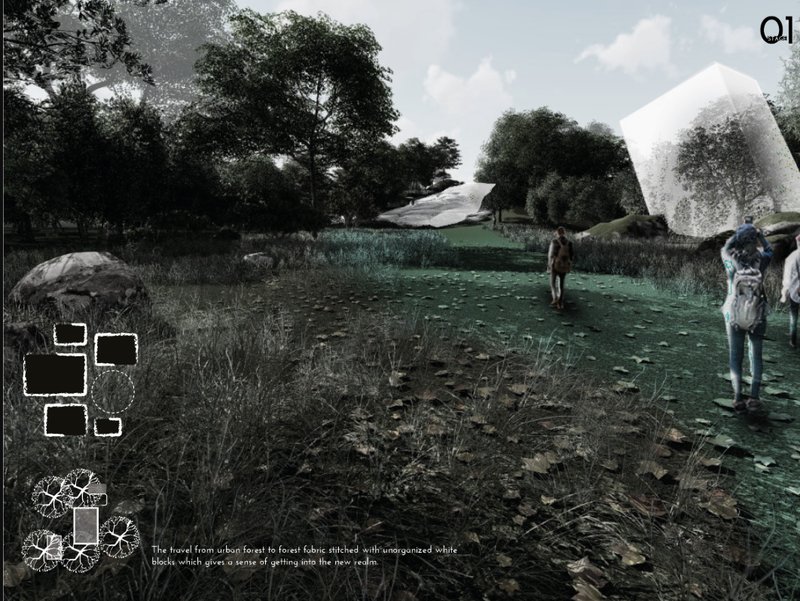
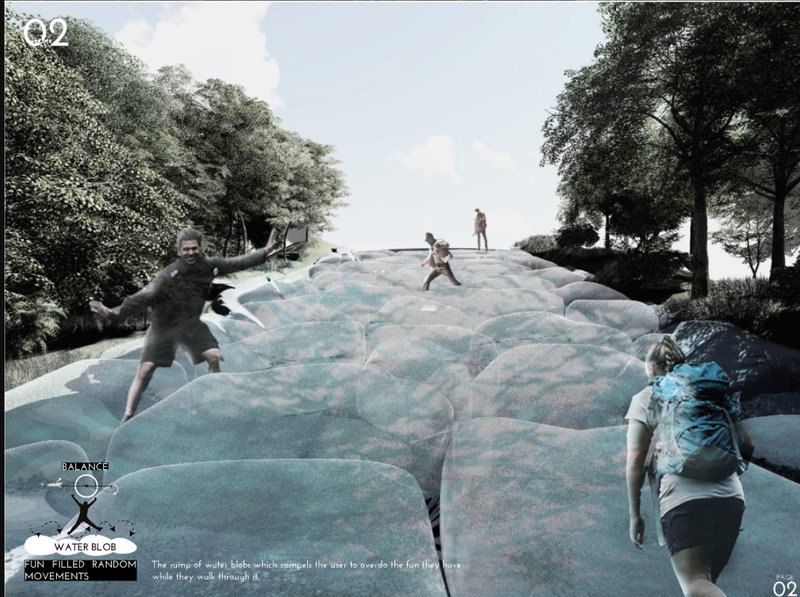
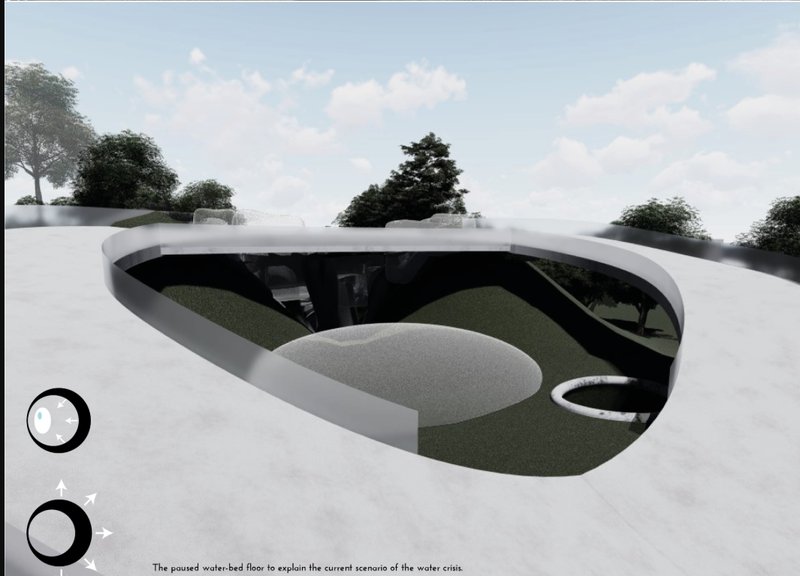
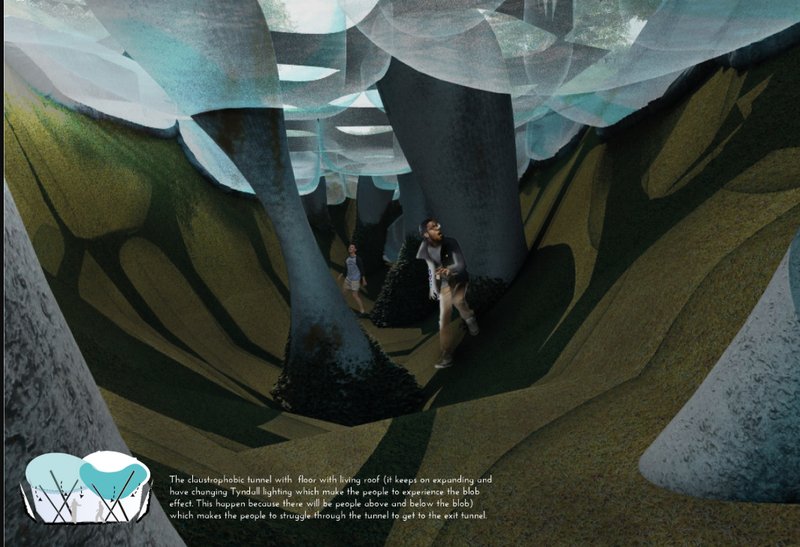
The experiential sequence begins with users transitioning from the familiar urban forest to a surreal water-blurred environment. As they walk across the massive waterbed, users experience physical tension and playful imbalance. The architecture prompts fun yet reveals deeper insights through its sequencing. As they proceed, they enter a claustrophobic tunnel where the ceiling and ground constantly expand and contract, creating spatial anxiety. This emotional turbulence is heightened by Tyndall lighting effects, enhancing visual and psychological stress.
The tunnel culminates in an intense exit passage, where spatial compression and disorientation force users into a hurried escape. This final release opens into a serene sparse forest—symbolizing realization, relief, and reflection.
This experiential architecture does not rely on technological spectacle but instead uses water as a live, responsive material. Water punishes, supports, blinds, and liberates. Users don’t merely observe water—they feel it, are transformed by it, and ultimately reflect on its value.
The Blob Effect is not just a physical installation—it is a philosophical journey, educating participants through spatial strategy rather than mechanical didacticism. Sujeen’s work encourages users to move beyond intellectual understanding into emotional confrontation, driving home the idea that the misuse of water will lead to irreversible transitions—both ecological and human.