Bring the street inside
Let the dance begin.

A new design proposal for the Grace Dance Center in Buenos Aires presents an opportunity to blend the best of the past and the present, while preparing for the future. Through historical, cultural, and urban analyses, I have identified three essential prerequisites for the ideal concept solution: the principle of surrounding development, the cultural significance of tango, and the historical reference to the architecture of the La Boca district where tango originated.
1. The Principle of Surrounding Development:
The proposed solution strictly adheres to the building lines and pushes the mass to the edge of the plot, creating a distinctive block that aligns with the urbanist principles of Buenos Aires. The resulting inner courtyard serves as a public space and connects strategically to all surrounding pathways: a bustling street with public transportation on the eastern side, an adjacent park on the southern side, and a narrow passage from the west.
All functions within the dance center are accessible from the inner courtyard, which itself becomes a vibrant public space where culture thrives once again. We employ a balcony system for internal circulation, inspired by the living spaces in conventillos residential buildings.
Furthermore, the varying heights of the individual smaller masses reflect local urban principles, while adhering to the prescribed height limit of 9 meters. As a result, the proposed solution naturally integrates into the surrounding urban fabric.
2. The Cultural Significance of Tango:
The idea of bringing the street inside originates from tango itself. This dance style was born on the streets and continues to thrive there today, which is why I provide an opportunity for it to come alive in the new dance center through the creation of new alleyways.
I have translated the typical characteristics of tango into the spatial design by dividing the original block with interstitial spaces that represent pauses. These alleyways have been precisely designed to be four meters wide, allowing the community to live spontaneously within them and creating the intimate contact that is typical of tango.
3. Historical Reference:
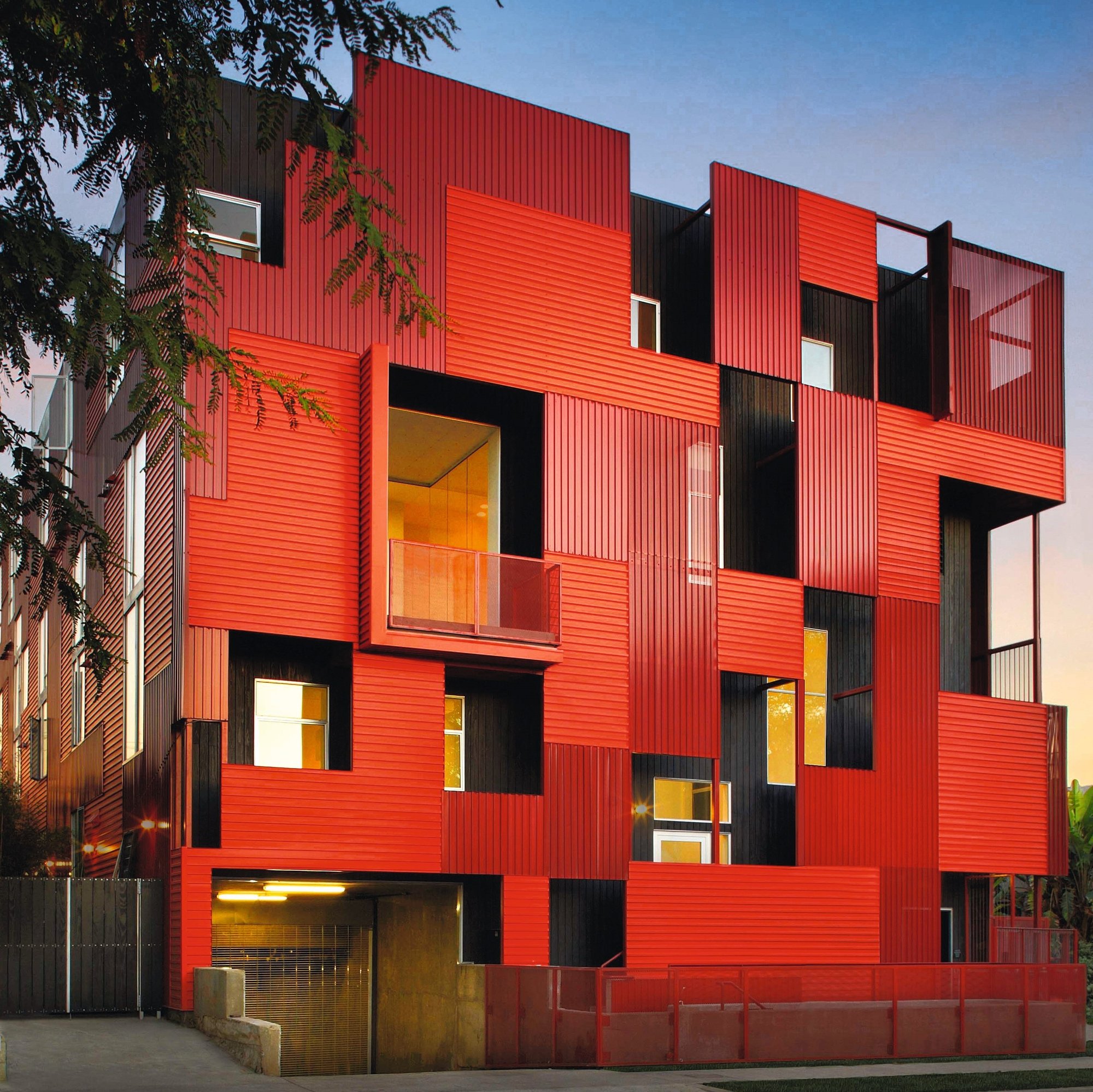
The architectural expression in the design pays homage to the materiality of the original residential buildings, conventillos, by incorporating corrugated metal. This material is used as the outer layer of a double facade on the buildings directly related to dance. In this case, perforated corrugated metal is utilized, providing partial transparency from the street to the interior. This allows the building to engage with the outside world, inviting visitors inside, while also providing sufficient shading for the dancers.
Panels of perforated metal are also used for shading the balconies in the proposed hostel located in the western part of the site, although in this case, the panels are flat rather than corrugated. The folding glass systems designed for the dance halls and auditoriums on the ground floor reflect the cultural influence and enable the integration of interior and exterior spaces, facilitating various events, dance lessons, and public performances.
Instead of directly depicting the colorfulness of the original residential buildings on the facades, we pay tribute to them through accents throughout the space, such as various elements in the interior, residential balconies, and staircases.
How to spend a day in the new Grace Dance Center
The design of the dance center consists of multiple buildings, including two buildings primarily dedicated to dance, a gallery with a media library, an auditorium, a restaurant with administration, and a hostel connected to a fitness and wellness area. Due to the sloping terrain, the dance center is divided into several levels. The total floor area of the design is 5,642 m2.
In the eastern part of the site, the ground floor provides dance spaces, a dance supplies shop, a gallery with a media library that enhances the entrance pathway into the site with its transparency, and a café that serves as a central element of the space. The arrangement of these functions creates a vibrant inner courtyard where dance can merge with the exterior and provides leisure areas with greenery.
On the second floor, visitors will find an auditorium in contact with the terrain, allowing performances to extend to the exterior. Opposite the auditorium, there is a large restaurant with a dance floor where traditional dance events called "milongas" can take place. The eastern side features the second-floor section of the café. The space between these masses creates a public area that leads to a residential staircase on the western side, forming a natural outdoor auditorium. Access to the second floor is possible directly from the southern street, which leads to the auditorium.
The third floor has a separate entrance from the southern street, continuing onto a balcony and serving as the entrance to the administration area. In the northern part, there is a secondary entrance to the hostel with a fitness center, inviting people to the social room with a café and study area. The exterior is enriched by a green public space between the hostel and the secondary entrance to the auditorium, primarily used by performers.
The western street provides access to the fourth floor, where the main entrance to the fitness and wellness area, as well as the hostel, is located. Along the street, there is a laundry room serving both the hostel and the public, along with additional commercial spaces. On the fifth floor, there are hostel rooms and apartments for choreographers from the dance center.