Brutalist House Design: The House of Material and Character by SHROFFLEóN
A reimagined family home in Lonavala fuses brutalist house design with emotional memory, material richness, and modern living.


Reimagining a Legacy Home Through Contemporary Brutalism
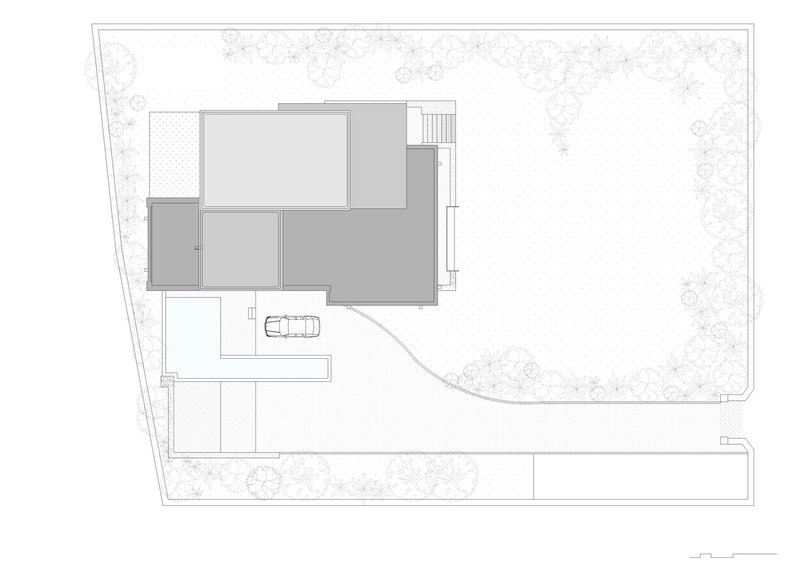
The House of Material and Character by SHROFFLEóN is a powerful example of brutalist house design rooted in heritage and transformed for modern living. Situated in the lush hill town of Lonavala, India, this 7000-square-foot residence is a striking reinterpretation of a family home. Rather than demolishing the existing structure, the architects embraced adaptive reuse, preserving its spatial legacy while redefining its identity through an architectural language grounded in raw materiality and emotional resonance.
Honoring Memory Through Architectural Integrity
The house carries with it the memory of the client’s family and past occupants. Instead of a complete teardown, the design approach honored this emotional and historical value. SHROFFLEóN took on the challenge of blending nostalgia with modernity. The architectural goal was not to replicate the past, but to reinterpret it—infusing a new soul into the structure while allowing its foundational character to remain visible.
Adaptive Reuse in Brutalist Form
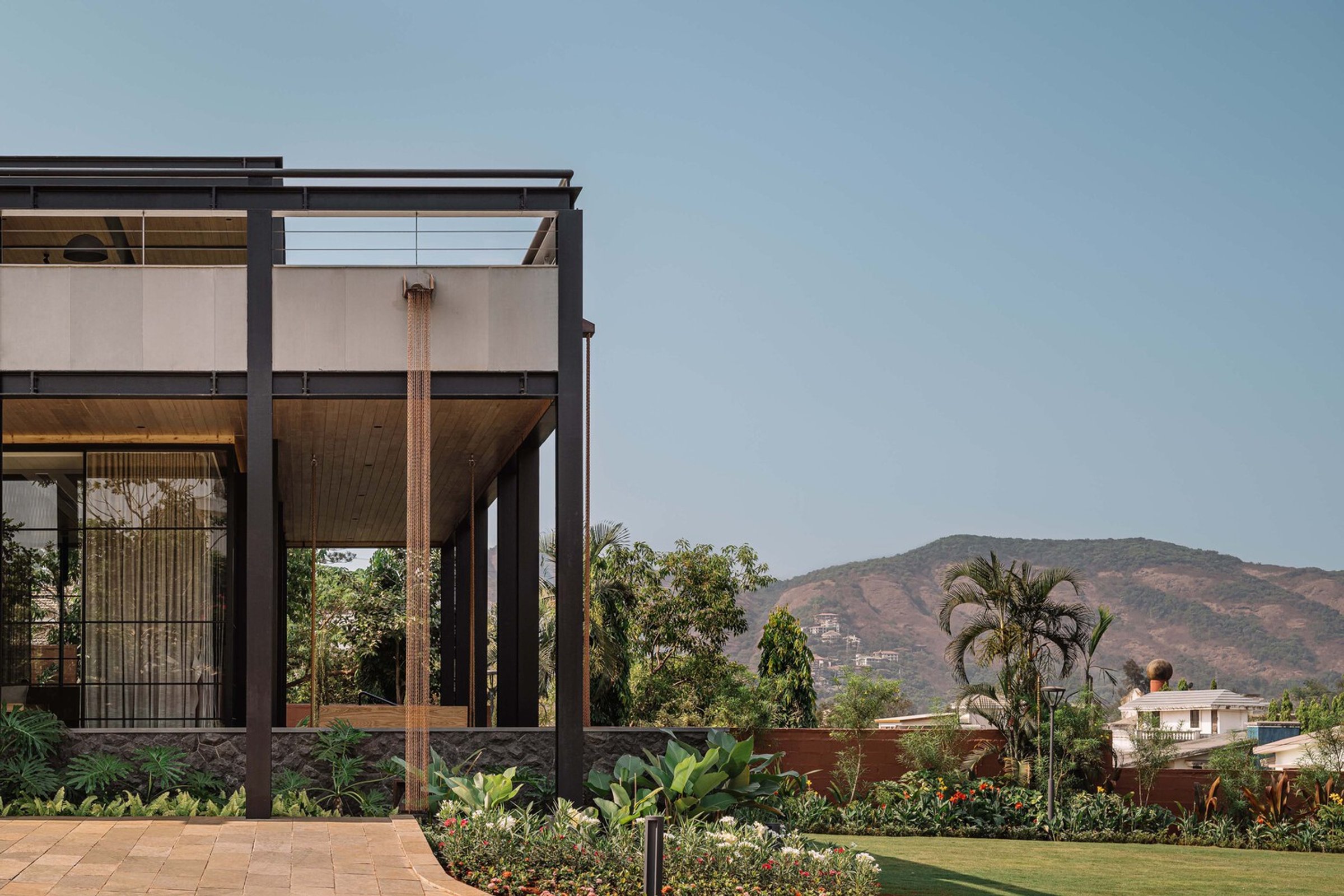
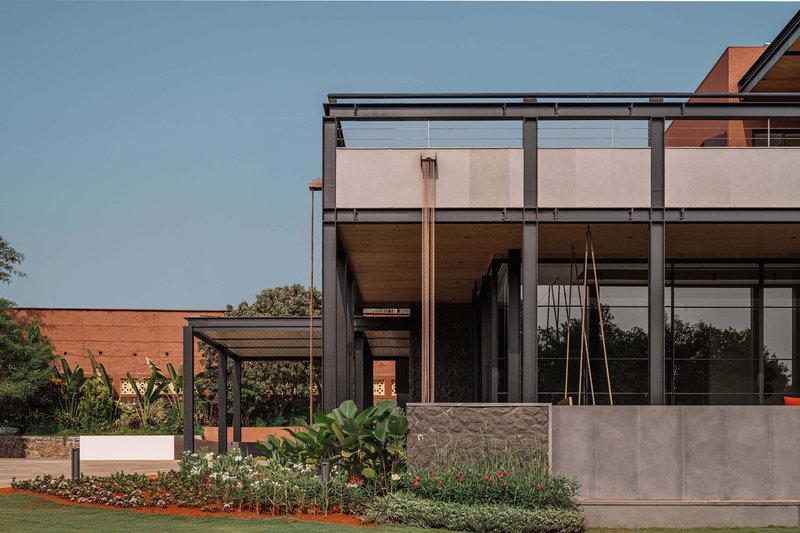
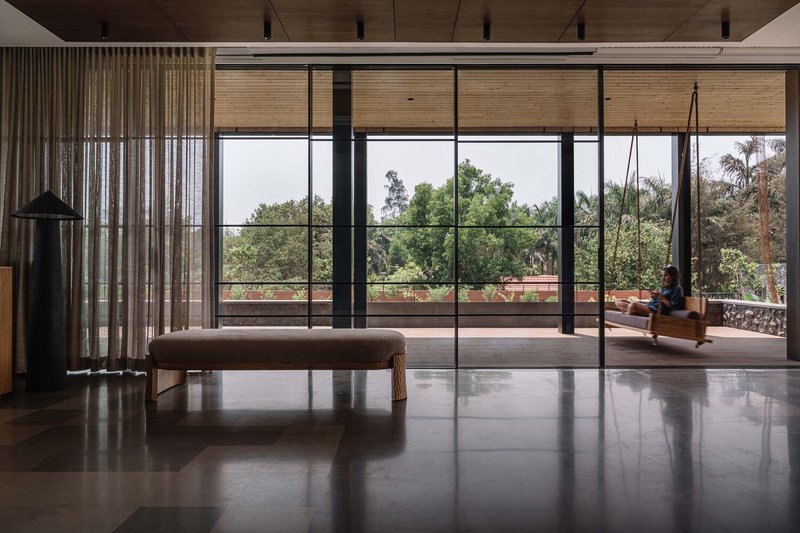
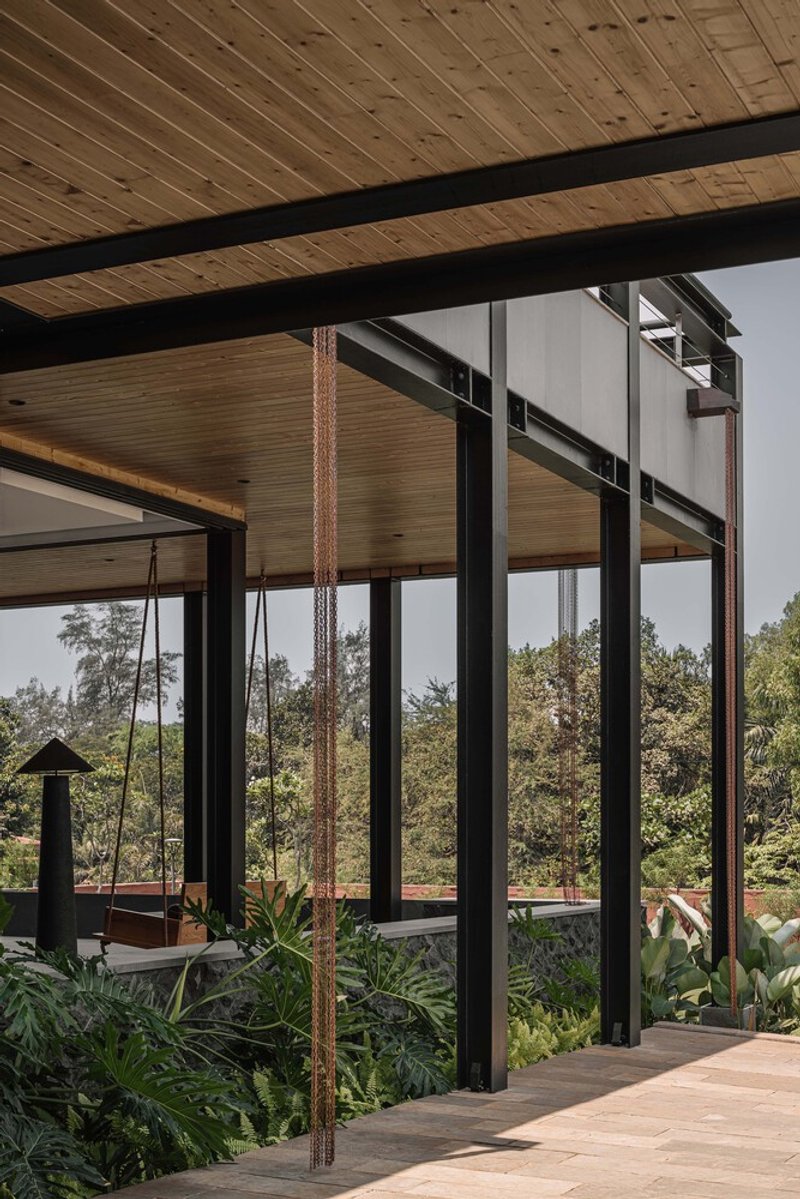
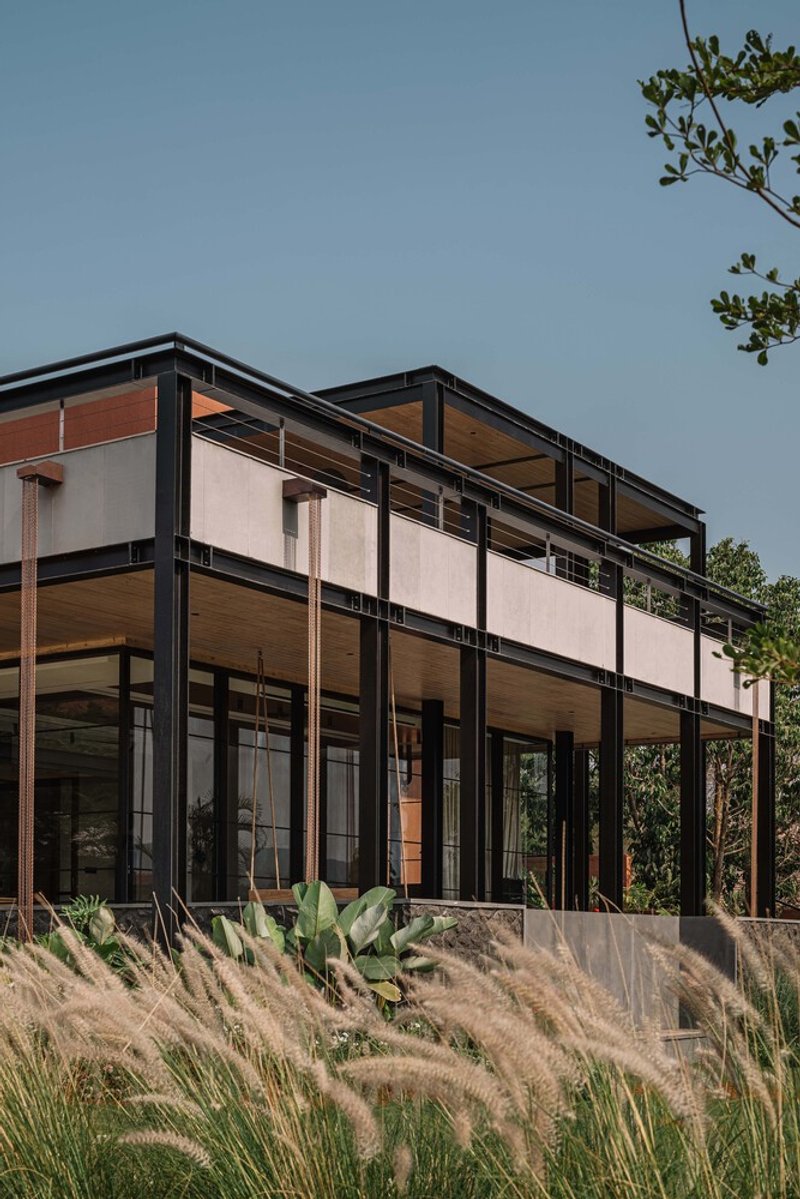
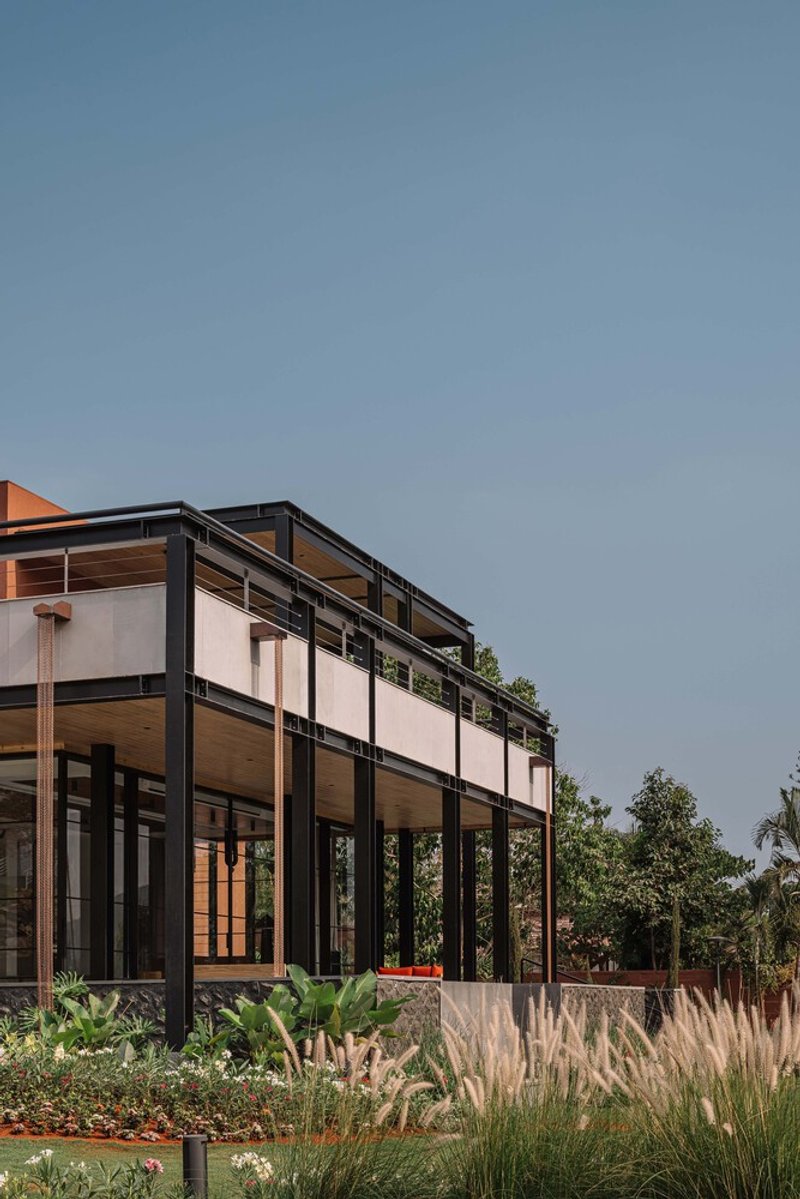
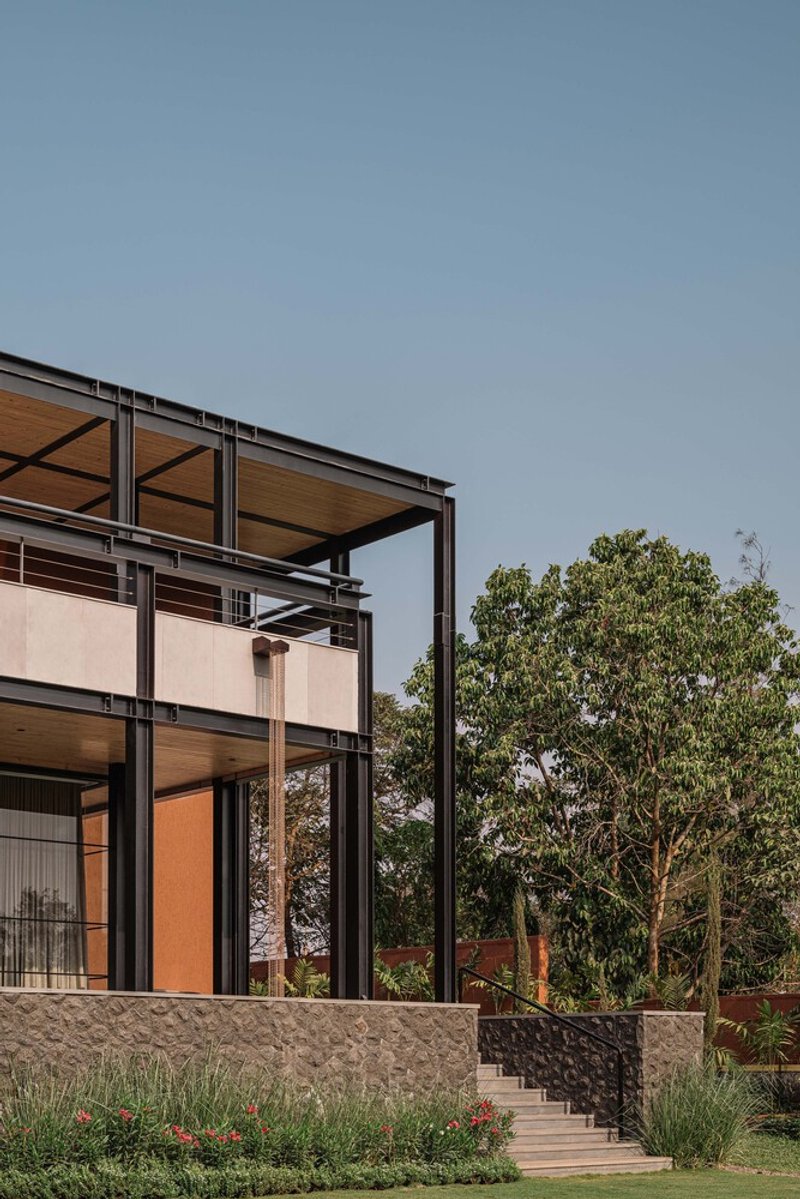
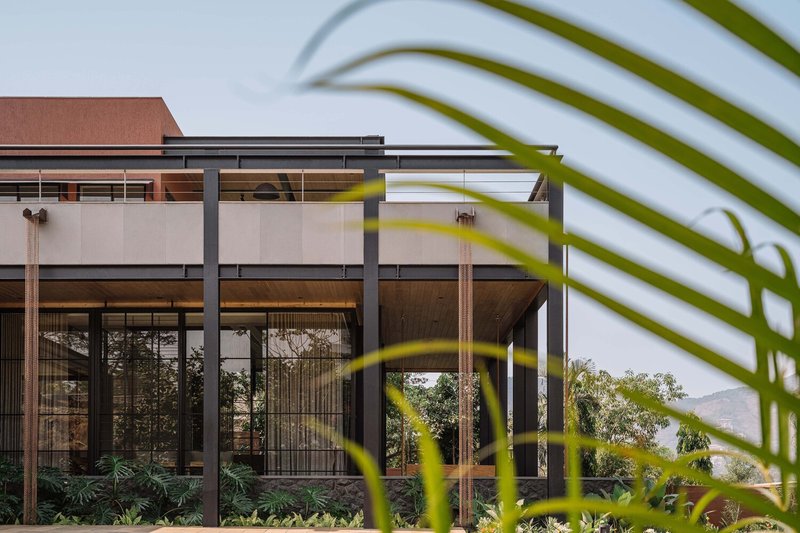
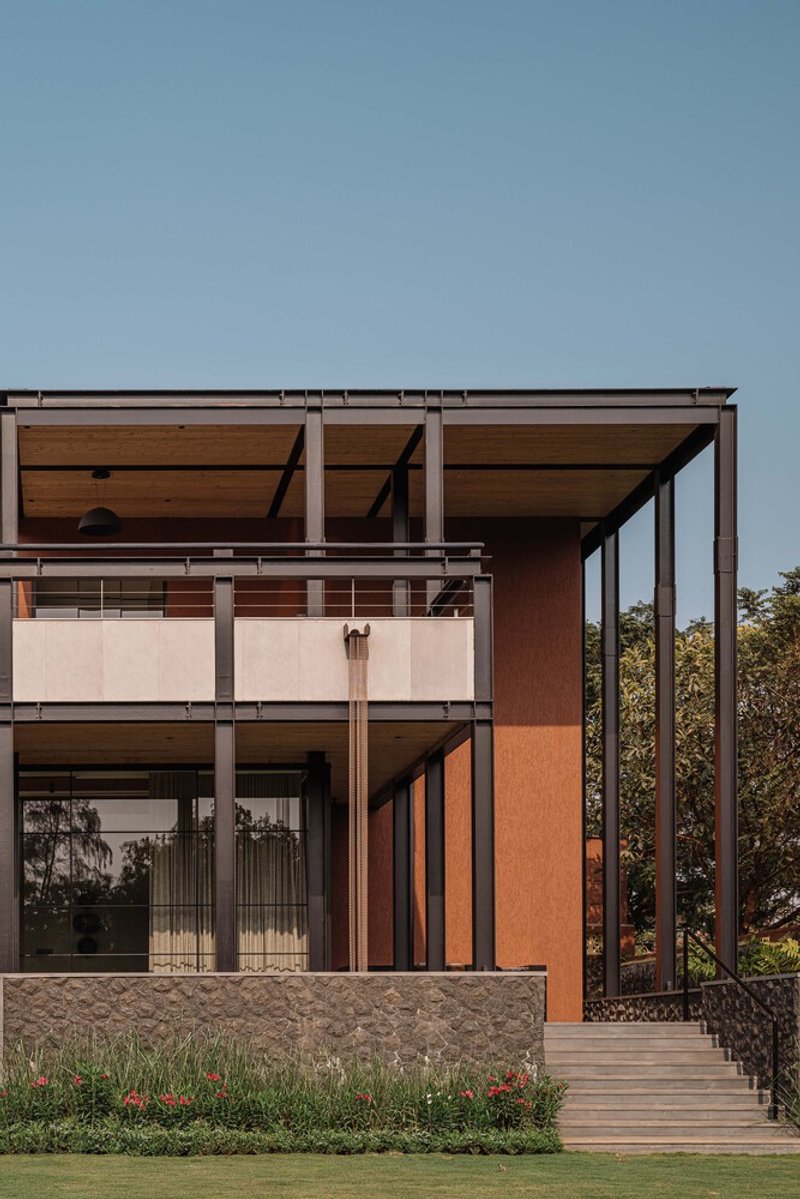
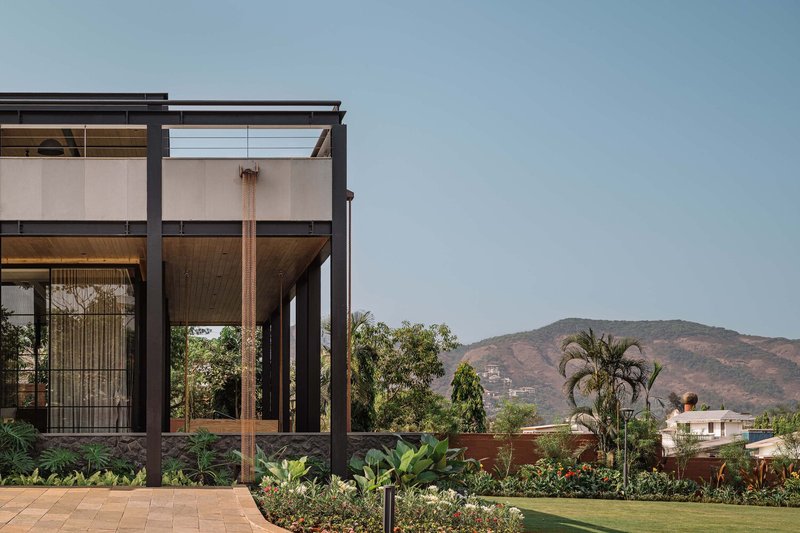
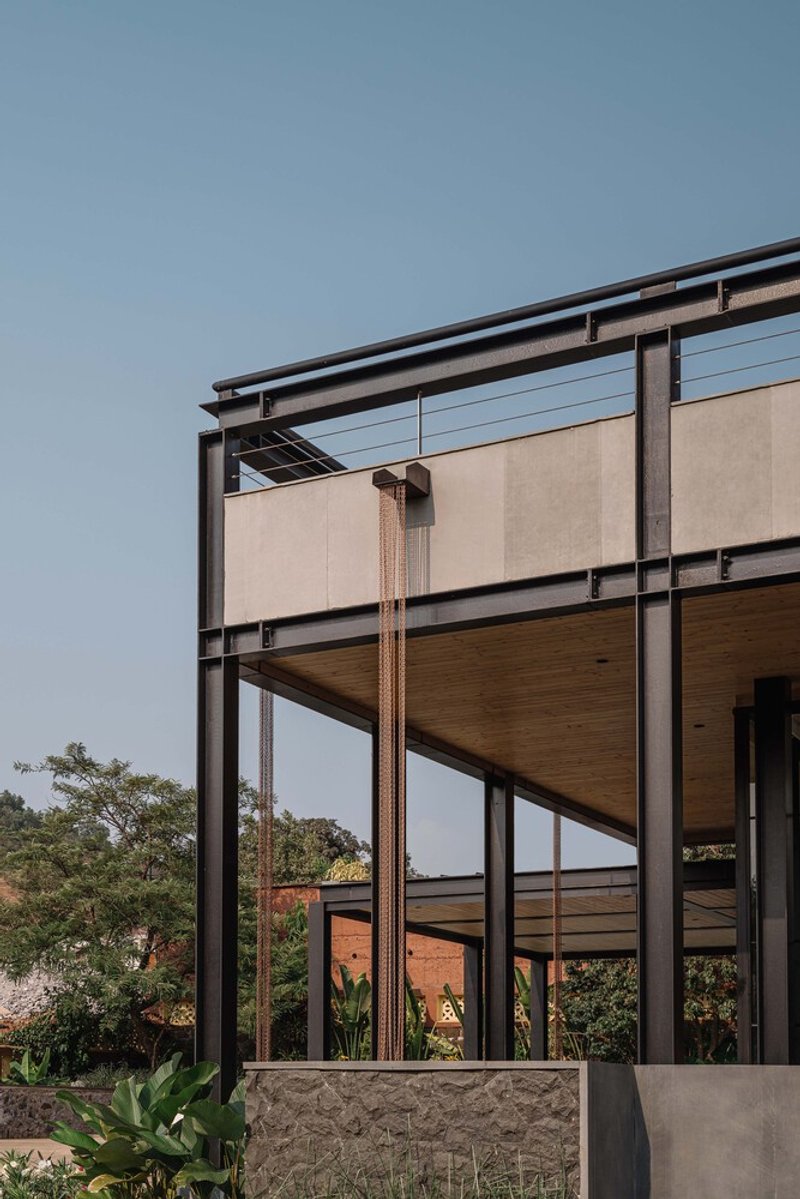
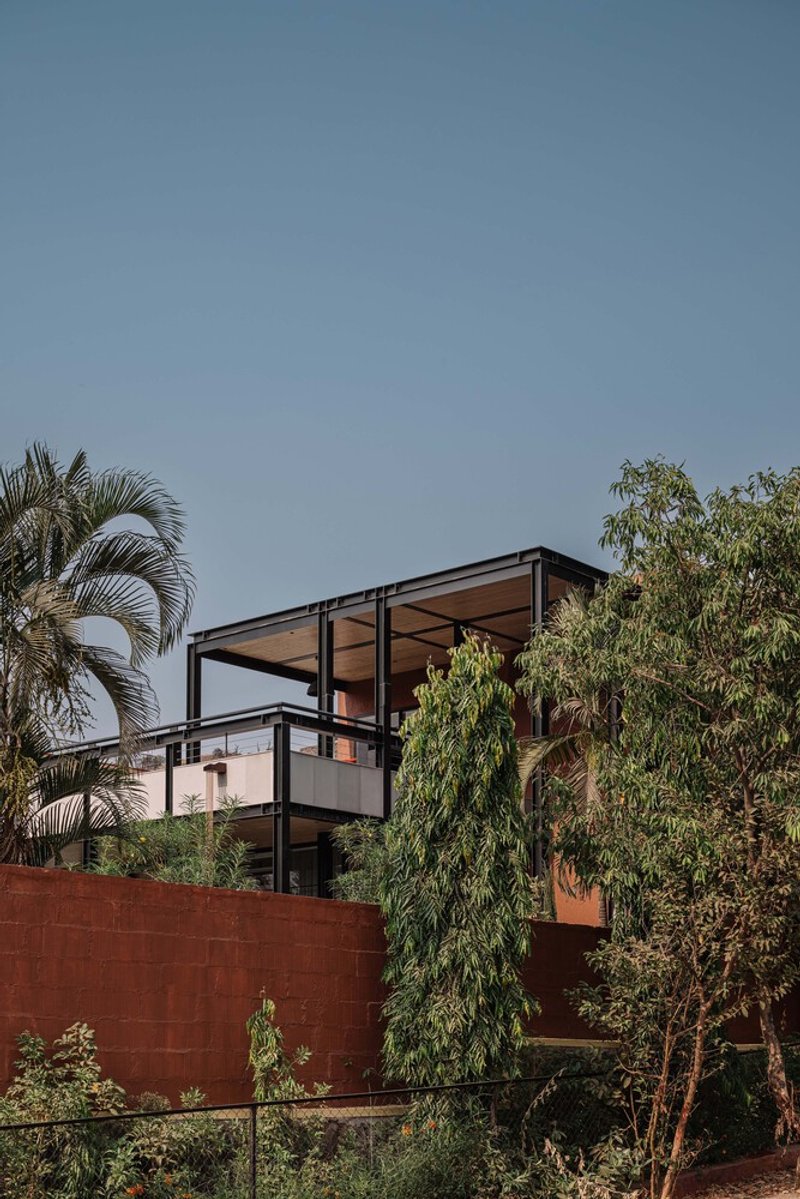
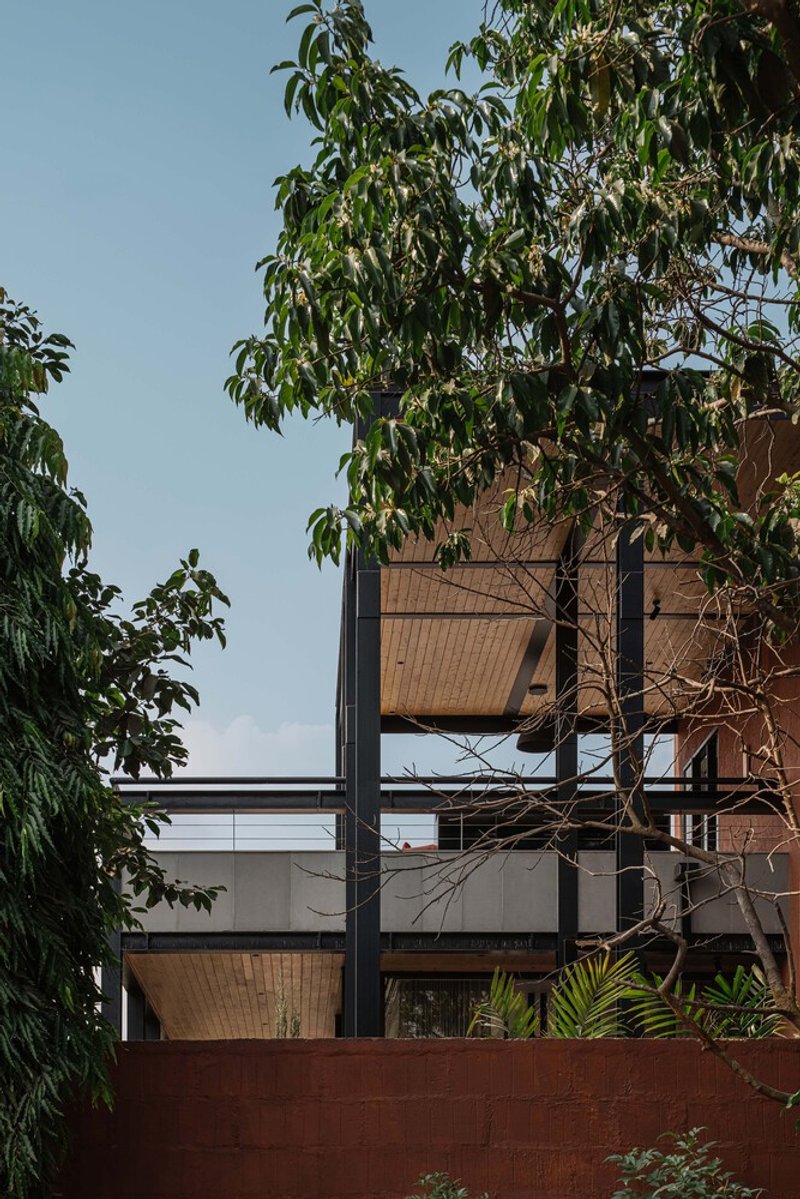
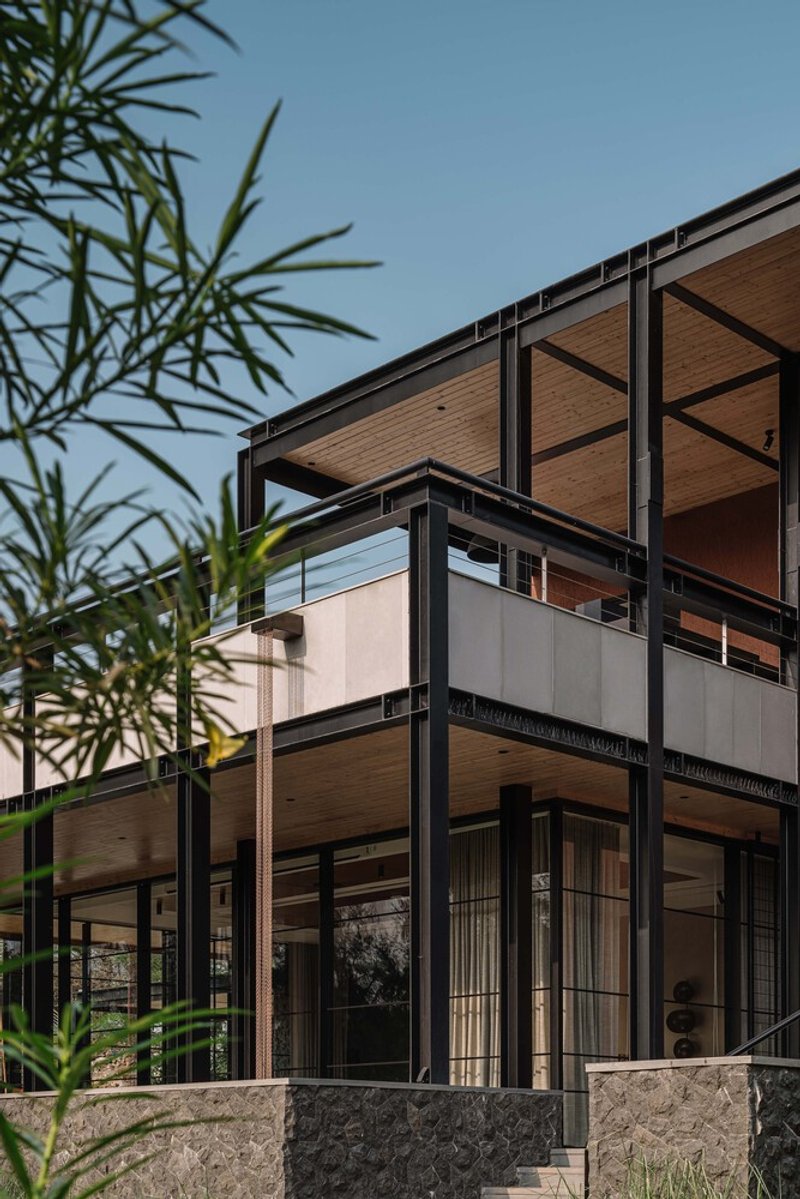
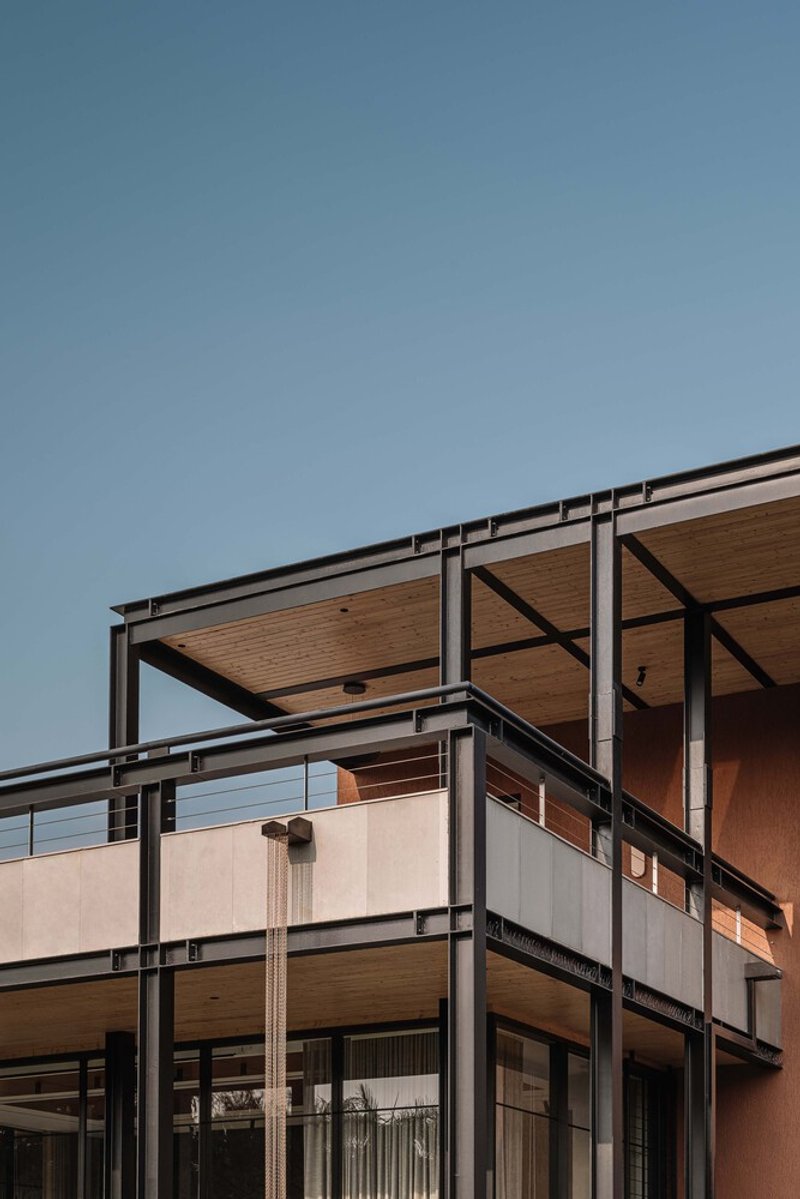
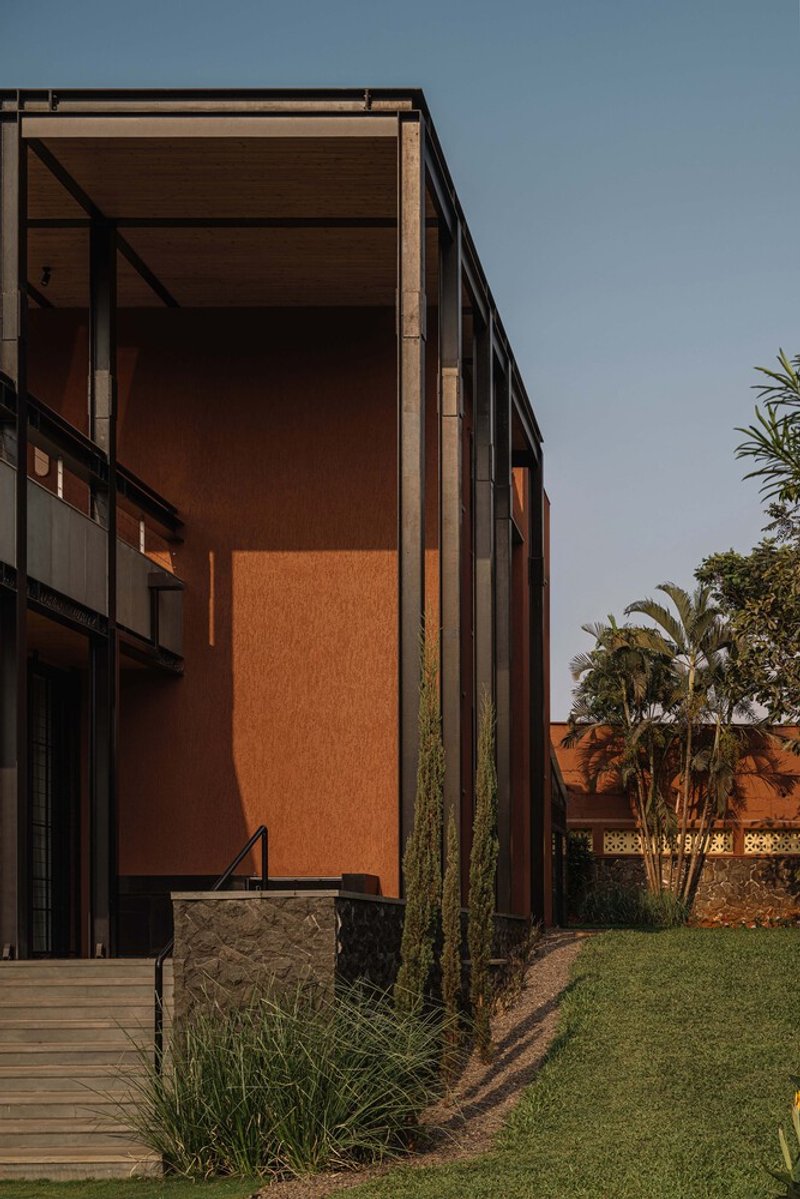
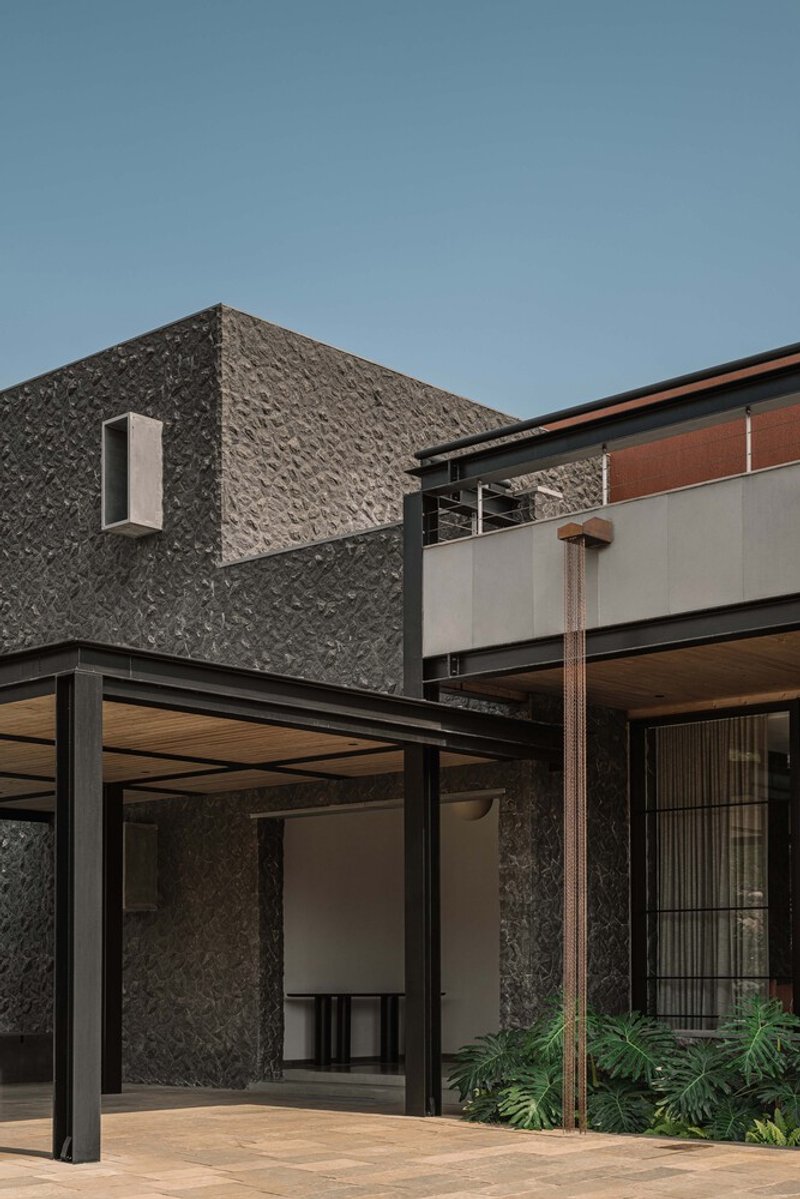
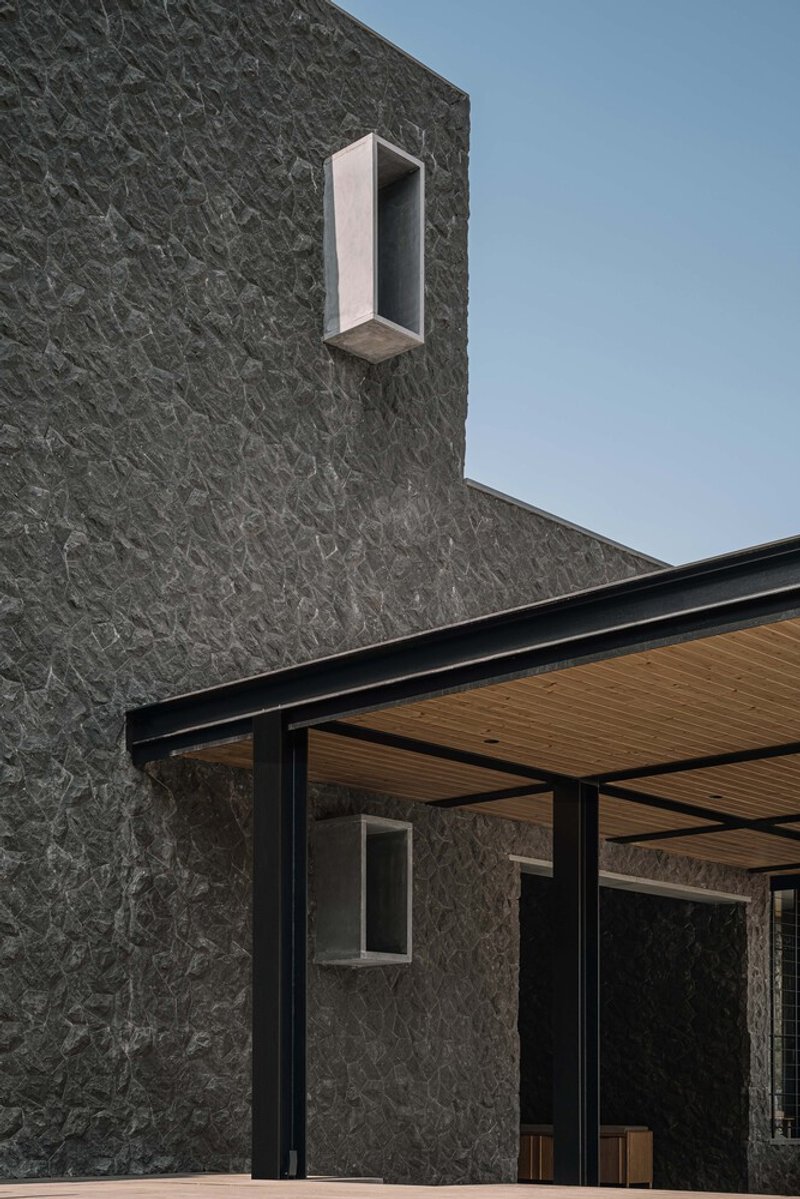
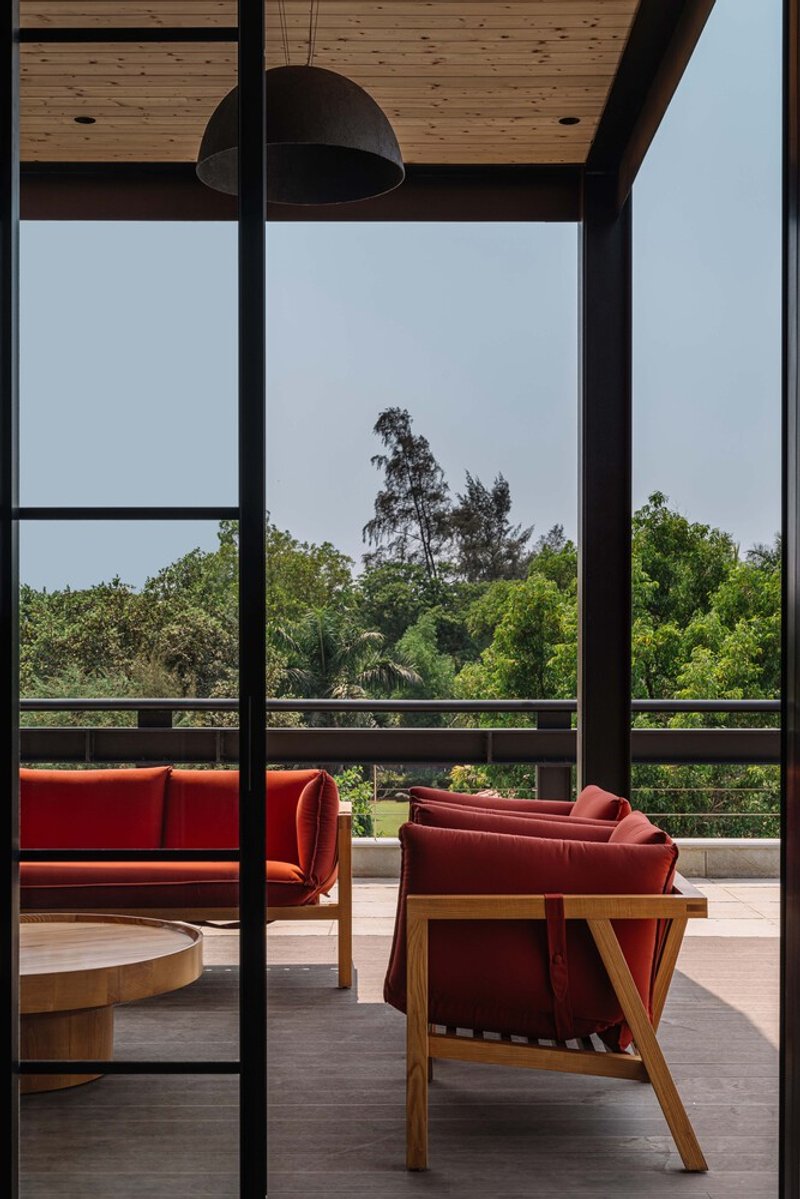
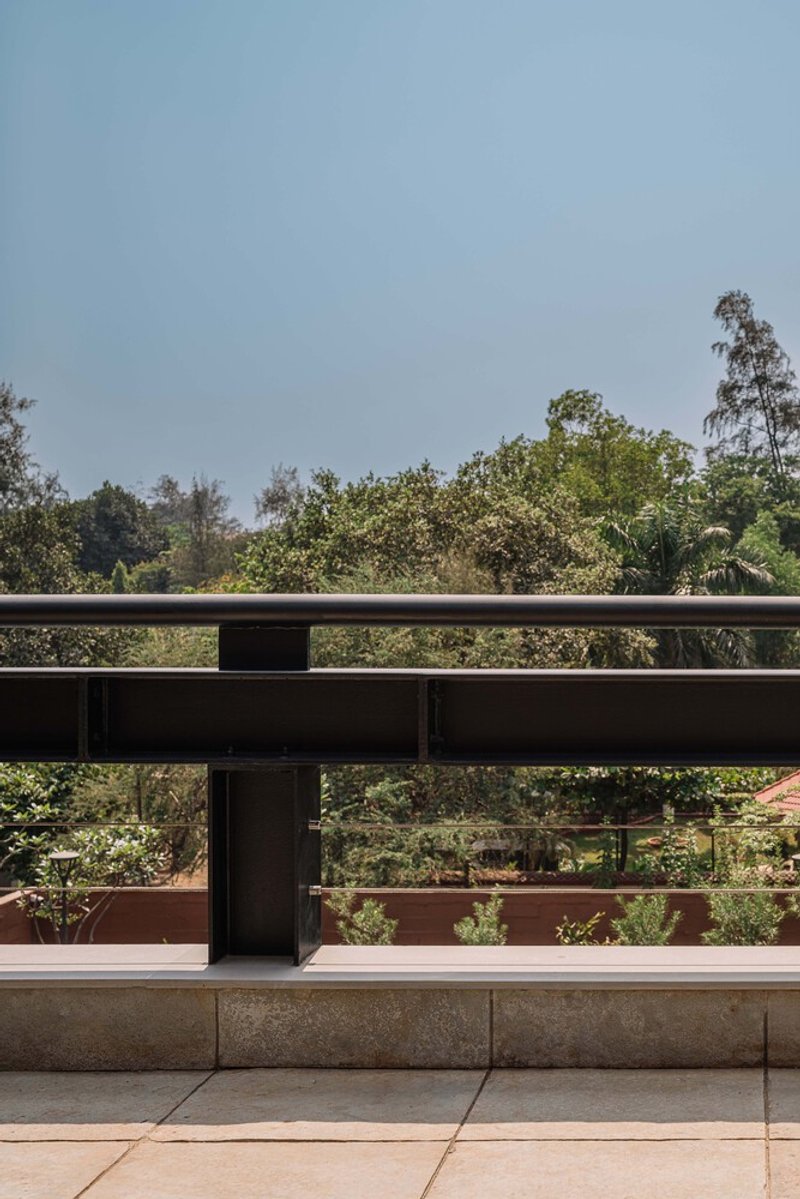
The transformation employed brutalist design principles, emphasizing structure, function, and unadorned material beauty. Concrete, steel, raw stone, and glass come together in deliberate contrast, offering a cohesive, textural experience. The exterior showcases a visible steel frame paired with stone-clad walls and expansive glass windows. Full-height sliding doors and terraces allow the house to remain open and airy, balancing its bold structural language with human-scale comfort and openness to the outdoors.
Spatial Transformation with Material Synergy
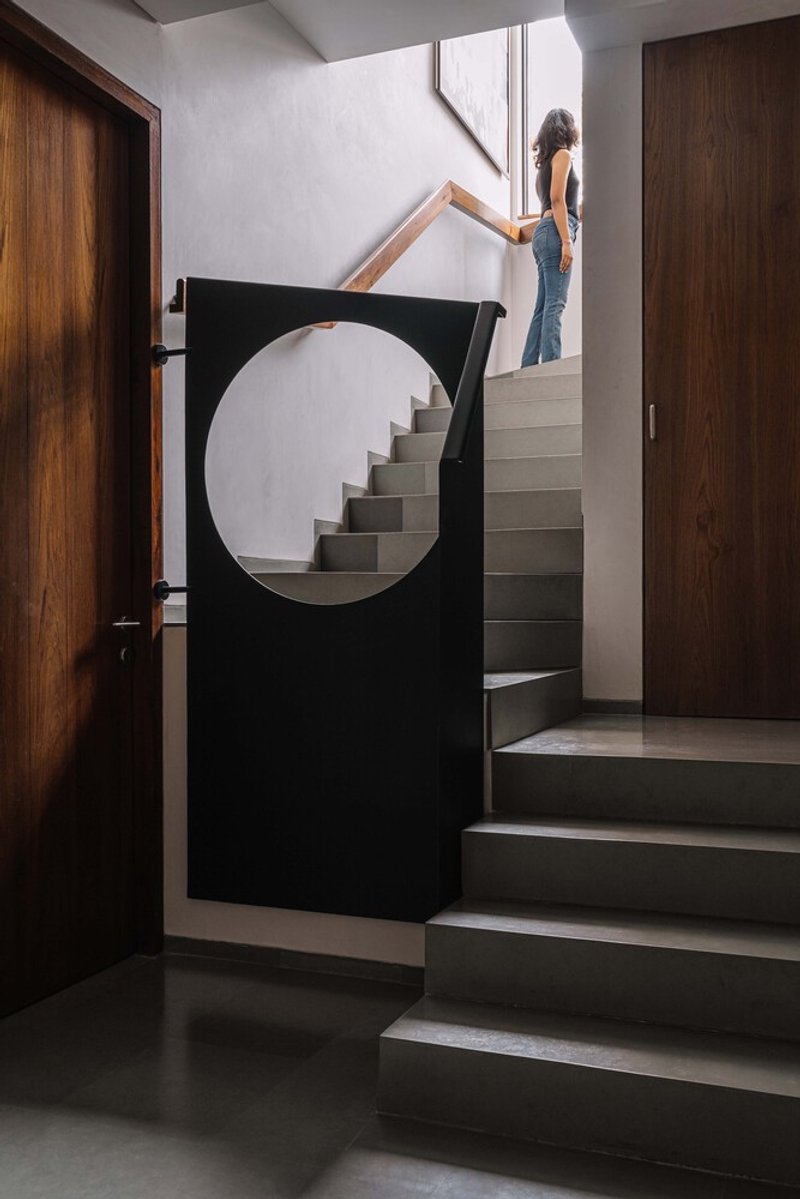
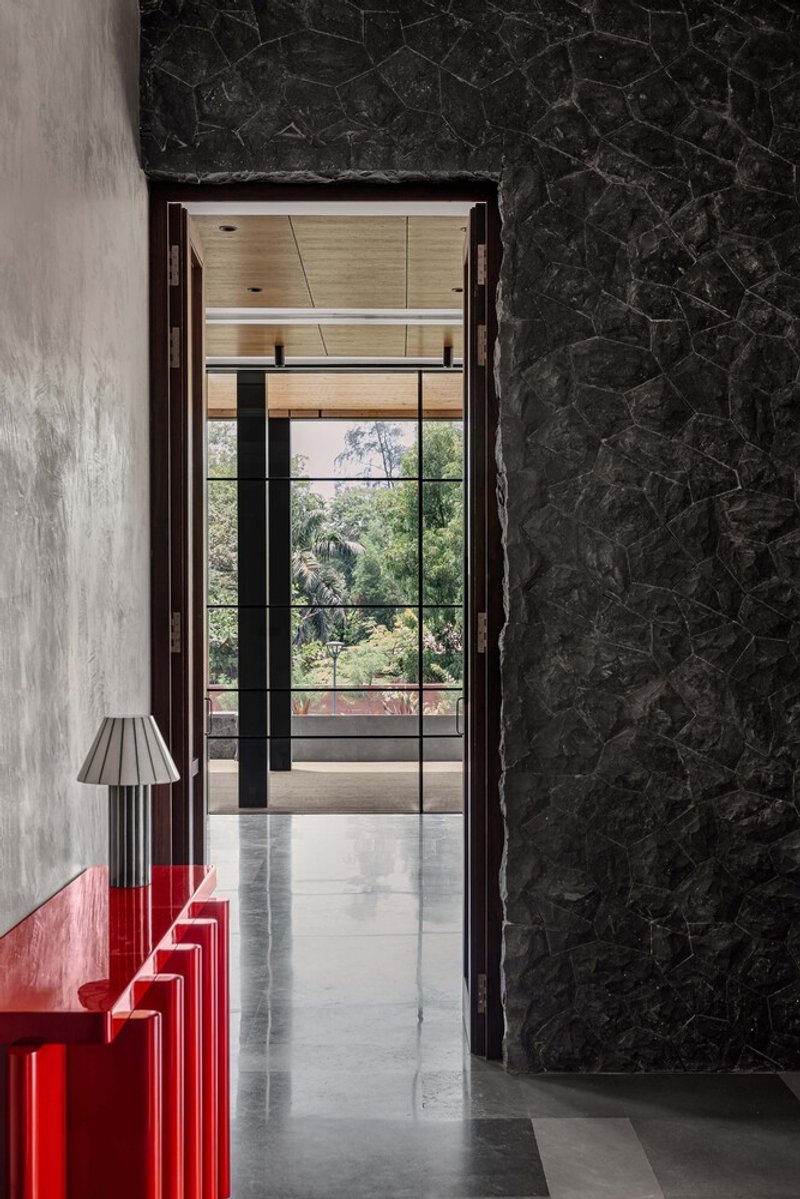
Internally, all core functional zones—bedrooms, living spaces, kitchen, and bathrooms—retain their original positions but are entirely reimagined in spatial flow and visual language. The interiors speak in a vocabulary of refined brutalism, where exposed materials are not hidden but celebrated. Wood, stone, and steel articulate each zone, assigning specific material characteristics to architectural elements such as walls, floors, ceilings, and openings. This deliberate material narrative enhances both individual expression and holistic coherence.
Seamless Indoor-Outdoor Living
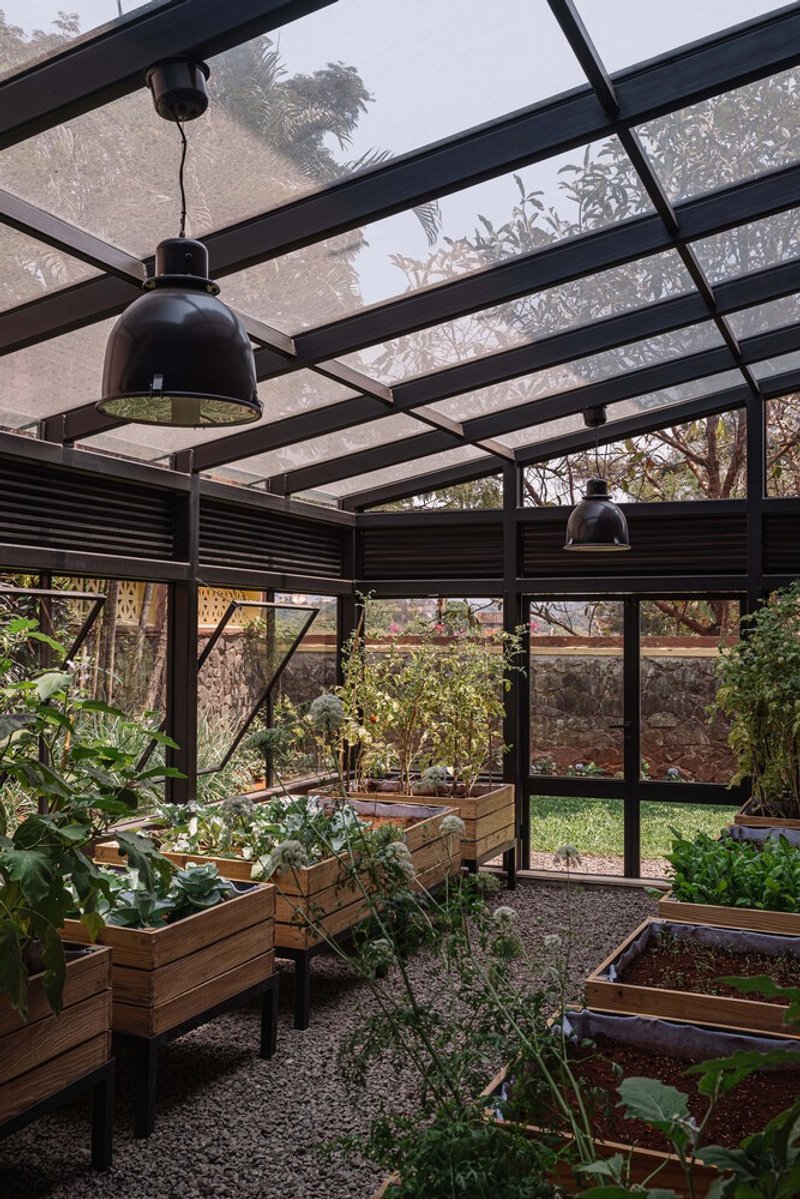
The addition of a greenhouse at the rear of the house creates a tranquil transition between indoors and outdoors. This glass volume introduces abundant natural light, enriching the internal ambiance and allowing passive cooling breezes to flow through. On the opposite end, the verandah and porch dissolve the boundary between the living room and garden, a nod to tropical architecture while remaining loyal to brutalist clarity.
Layered Design with Emotional Depth
Windows protrude from the facade in a rhythmic gesture, reinforcing the boldness of the house’s geometric form while adding moments of surprise and interaction. The composition plays with light, mass, and void, encouraging the inhabitants to engage with the spaces beyond their utilitarian use. Each architectural gesture holds dual meaning—practical and poetic—underscoring the house’s dual identity as both a personal memoryscape and a statement of material expression.
A Dining Space Framed by Water and Greenery
Perhaps the most serene space is the dining area, nestled between the pool and the greenhouse. This positioning creates a luminous, meditative zone where views, reflections, and nature intersect. The architects describe it as a “surprising delight,” a space that fully came alive only once the house was complete. It epitomizes the potential of brutalist house design to not only create powerful forms but also evoke nuanced emotional and sensory experiences.
Crafting a Brutalist Home for the Future
The House of Material and Character is not merely an architectural redesign—it is an act of storytelling through structure, a deeply personal exploration of how materials, light, and space can define modern domestic life. SHROFFLEóN’s intervention reveals that brutalism, often seen as cold or rigid, can be warm, inviting, and intimately tied to memory and meaning. The result is a brutalist home that is both timeless and deeply human.