
Tectonic Variation -Report
The ideas that we attempted to represent through the drawings of our project
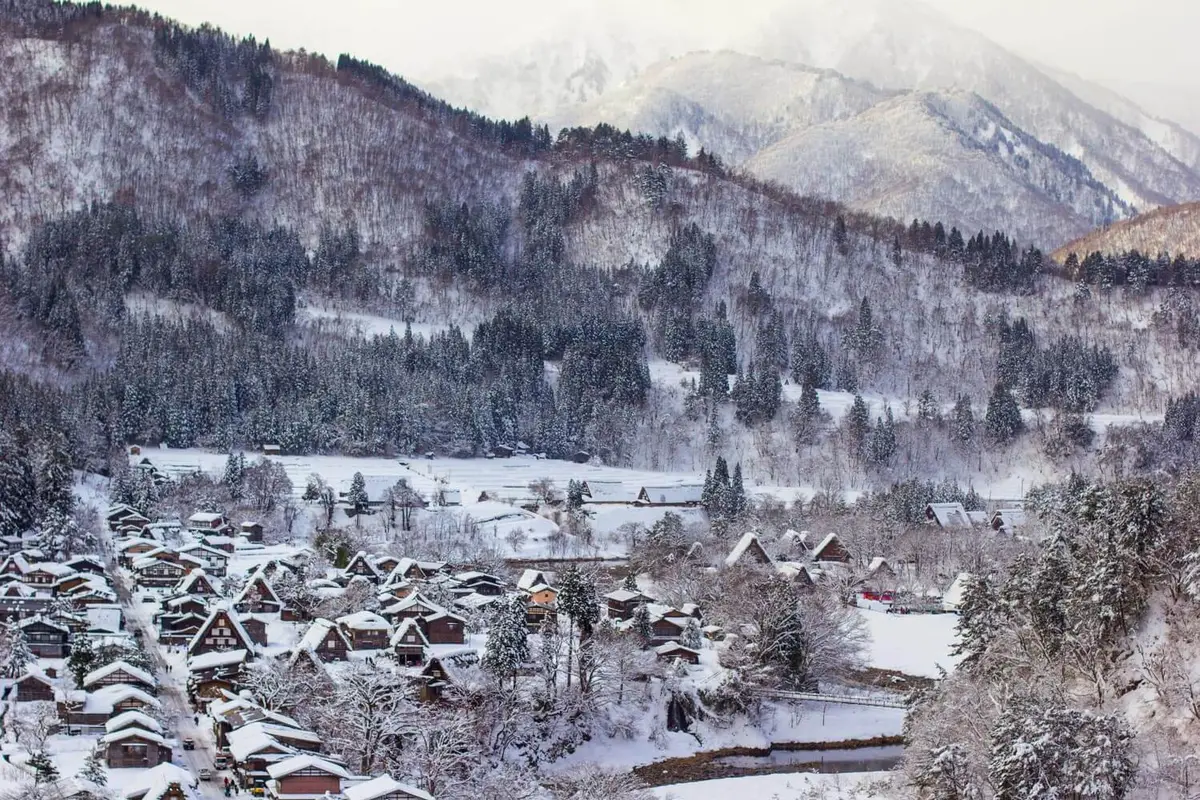
This site is representative of a mixture and combination of many things. It is a point of connection between the secluded village of Shirakawa Go with the UNESCO-protected site, then with the rest of Japan, and finally the rest of the world in the form of international tourists that come to visit alongside the Japanese tourists. Coming into this cultural center one will experience the culture that has persisted in this village through its isolation from the world. We have attempted to show the various traditional skills of the craftsmen from the village on the infill of our wall system arranged across the project. This project shows tectonic variation in materiality by displaying strips of interchanging materials on the interior and exterior walls of the cultural center. The villagers will be encouraged to display their crafts of weaving fabric, shoji paper, lattice woodwork, and wood joinery in the system. Parts of the system will also captivate the silhouette of these intricate modules through on-site cast concrete that will be used both for structure and the areas in the program that need completely enclosed walls. This building boasts Shirakawa Go’s materiality and traditional professions, due to this the construction of this project will increase the job opportunities for the villagers, both old and young, this will therefore encourage the younger population to stay in the village rather than leave to find jobs in the city. Although the basis of the system is repetitive in its base shape across the project there is a tectonic variation in the strips that will stretch and shrink vertically depending on the amount of sun and the views needed for the functions in the different areas, for example, the need to show views in gathering areas like the workshop space and the café, the system stretches and has openings to show off the beautiful scenes of the mountains surrounding the site
The design also displays high permeability, therefore, allowing for the people to have a variety of different interactions with the project as they are able to go in and out of the site from three of the four elevations, this gives a variation in circulation depending on the needs of the person experiencing the project, the employee will be able to go directly to their workplace without needing to pass through the main entrance and needing to navigate through the tourists. The varying sizes of the corridors in the outdoor deck allow for community spaces in between the buildings where one can be in a more open space with many people around on the viewing deck or be in a tighter space that allows for more privacy and seclusion from others exploring the project. Saori weaving was an inspiration to this building due to the amount of variation seen throughout a woven fabric and also for the celebration of the mistakes done throughout, this can be seen through the different colors of the wood used in the outer deck, the folds that allow it to emerge from the rice paddies, and the different materials exhibited on the walls of the project, as well as displaying the work of the villagers no matter the level of craftsmanship shown.
We went through an iterative process to create this project, we started by first creating a tectonic system that is inspired by Shirakawa-Go as a village in the triangular shape and in its materiality and integration of the village’s traditional crafts, therefore this project aims to use locally sourced wood and other materials to keep it relevant to the villagers and to start the process of introducing the tourists to the village.
The program in this cultural center aimed to introduce visitors to Shirakawa-Go by using various exhibitions showing off beautiful arts that represent what the village is, then a library that would be easily accessible for anyone looking to learn more, then finally visitors will arrive at the workshop and café area, where they can spend more time to learn the crafts in the workshop, attend educational presentations, or to simply pause to enjoy the views. The admin building is located in the center of all of this to allow the employees easy access to anything they need in the cultural center rather than forcing them to walk across the entire site simply to complete a task. Similarly, the bathrooms are also located towards the middle of the project for ease of access by everyone.
This project plans to integrate the villagers both old and young into its future developments as it will allow the villagers to build their identity in the crafts that they show in the façade as well as in the knowledge that they show to visitors eager to learn about the beauty that is Shirakawa-go.

Popular Articles
Popular articles from the community


Lunar Spiral: Space Architecture Shaped by the Mathematics of the Universe
Lunar Spiral reimagines space architecture through Fibonacci geometry, lunar regolith, levitating habitats, and self-sustaining Moon living.

The Musturak Paradise: Senior Living Architecture for a Connected Future in Temara, Morocco
The Musturak Paradise reimagines senior living architecture in Temara via private homes, social spaces, culture, community, and shared care.

Play: Fragments of Their World
Familiar architecture becomes modular playground design, creating safe spaces where displaced children can learn, connect, imagine and play.

Hill & Cross Opera: Sculptural Opera House Architecture Shaped by Tallinn’s Landscape and Identity
Hill & Cross Opera reimagines opera house architecture in Tallinn through its sculptural hill, civic plaza, glass wave and a luminous cross.

Similar Reads
You might also enjoy these articles
The Rhythm of Seasons
A Farmers' Market Connecting Nature and the City

More Than a Building-Designing a Living System
More Than a Building-Designing a Living System
Base Beyond
DESERT COMPOUND ARID: TOURISM OF ABSENCE AND ABUNDANCE

Explore Architectural Experience Competitions
Discover active competitions in this discipline


Challenge to reimagine the Iron Throne

Photograph architecture without architects

Illustrate the lost glory of Angkor Wat - Render Challenge

Design challenge to reuse E-waste
Comments (0)
Please login or sign up to add comments
No comments yet. Be the first to comment!