
CORA Installation: Sustainable Digital Fabrication in Architecture at IAAC
CORA Installation at IAAC showcases sustainable digital fabrication in architecture, merging historic brickwork with robotic manufacturing and ecological design.


A Fusion of Tradition and Technology
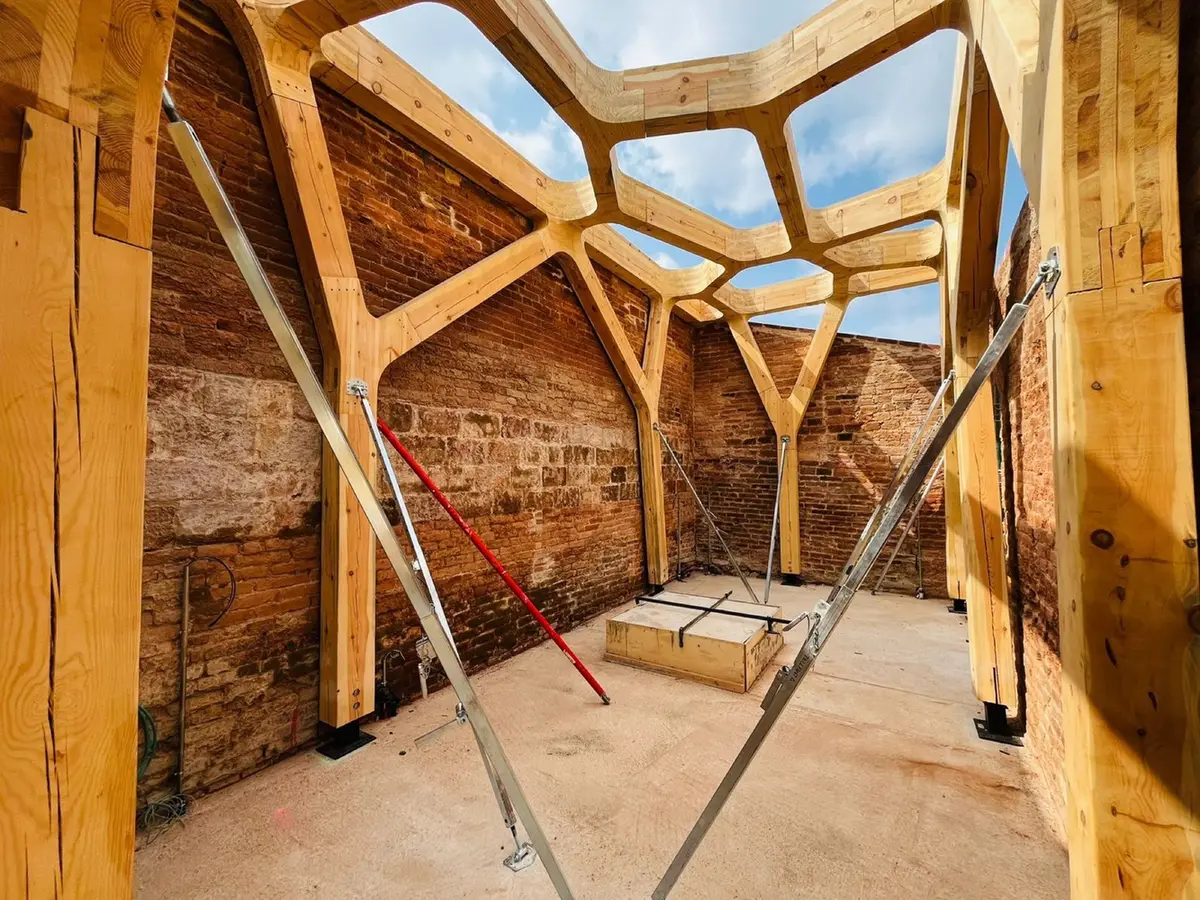
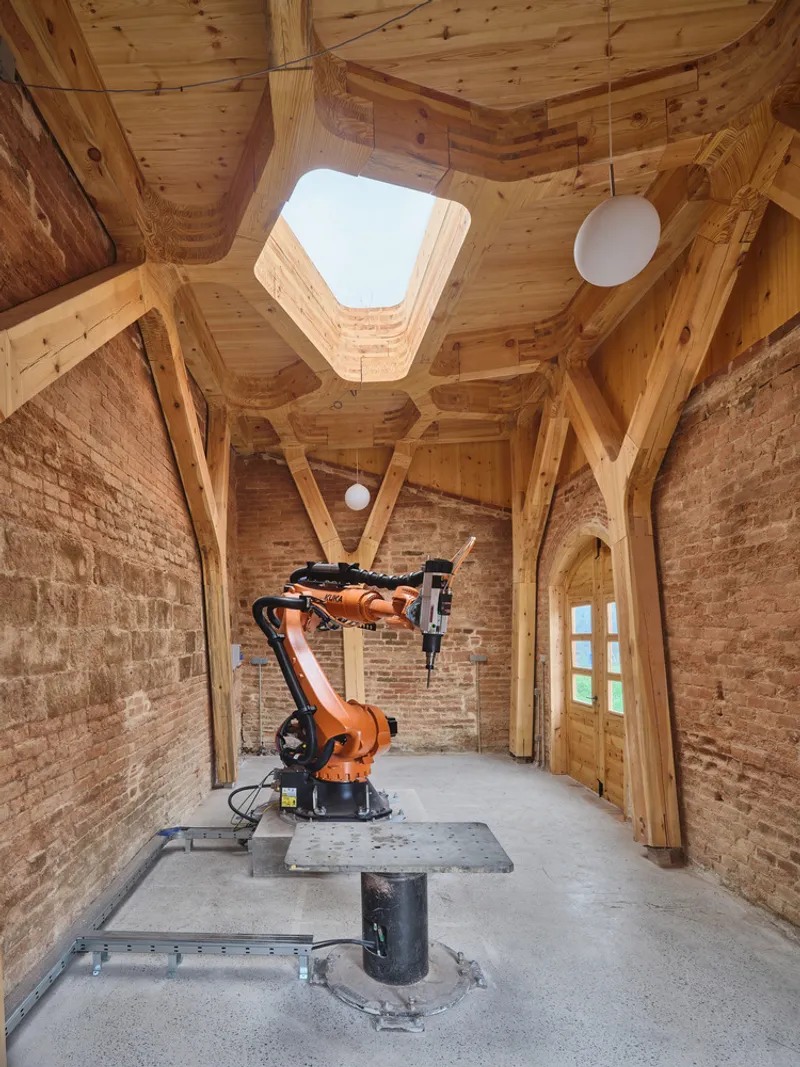
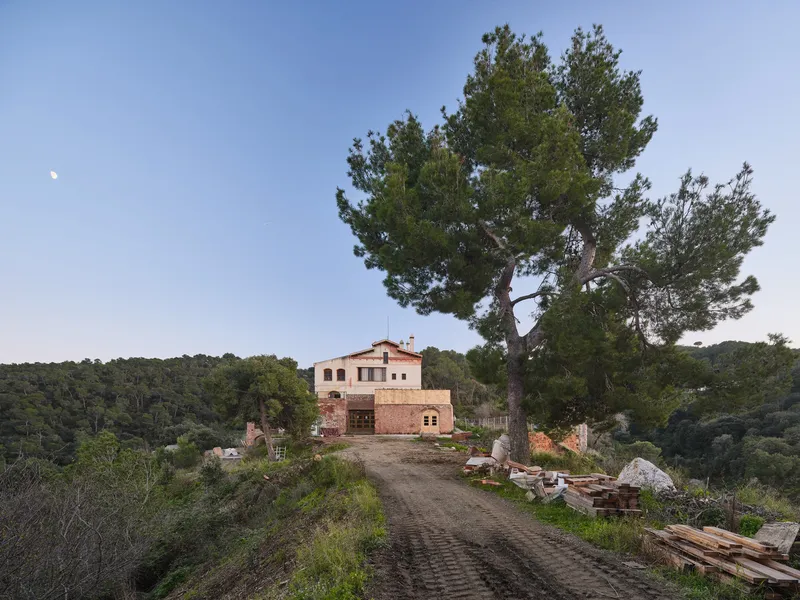
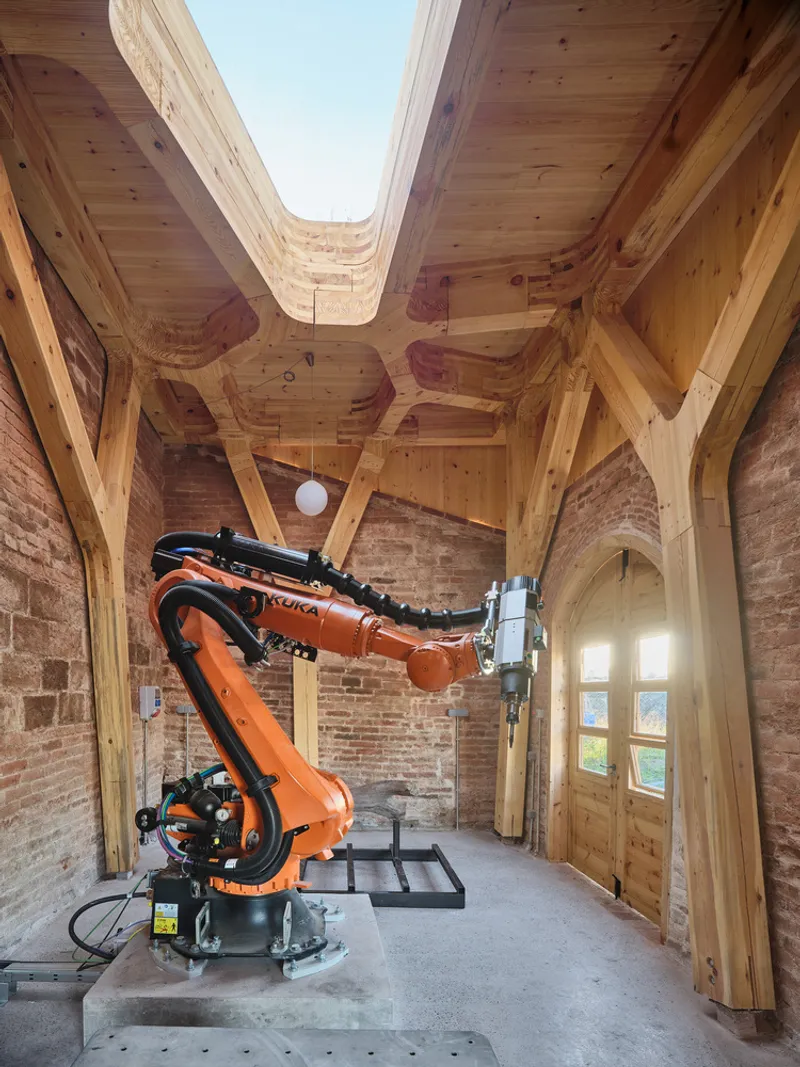
The CORA Installation, developed by the Institute for Advanced Architecture of Catalonia (IAAC) at the Valldaura Labs Campus, represents a groundbreaking approach to sustainable digital fabrication in architecture. Situated in the Collserola Natural Park near Barcelona, the project merges 19th-century brick architecture with cutting-edge robotic construction techniques. Designed to house and operate a KUKA industrial milling robot, the structure serves as a functional laboratory and a symbol of the synergy between craftsmanship and automation.
Context and Site Integration
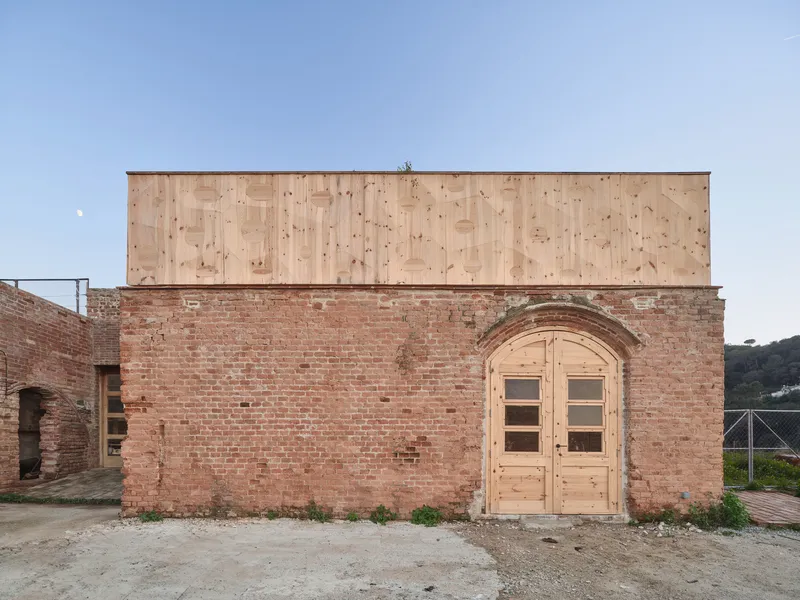
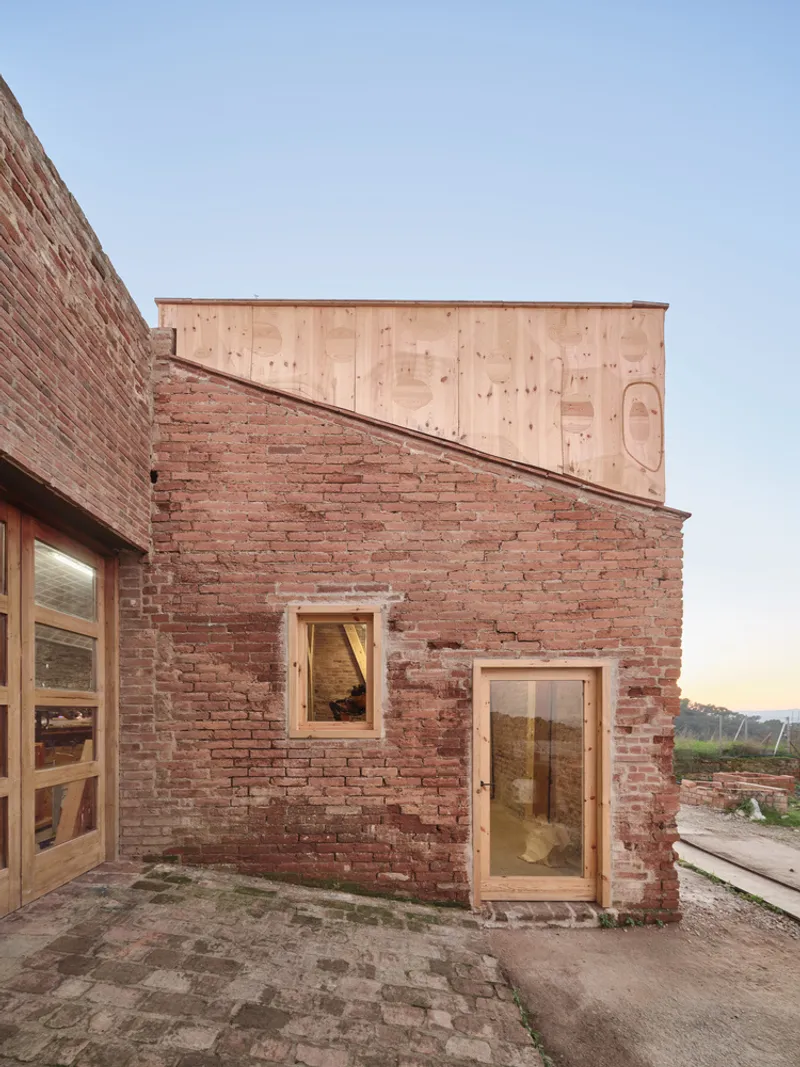
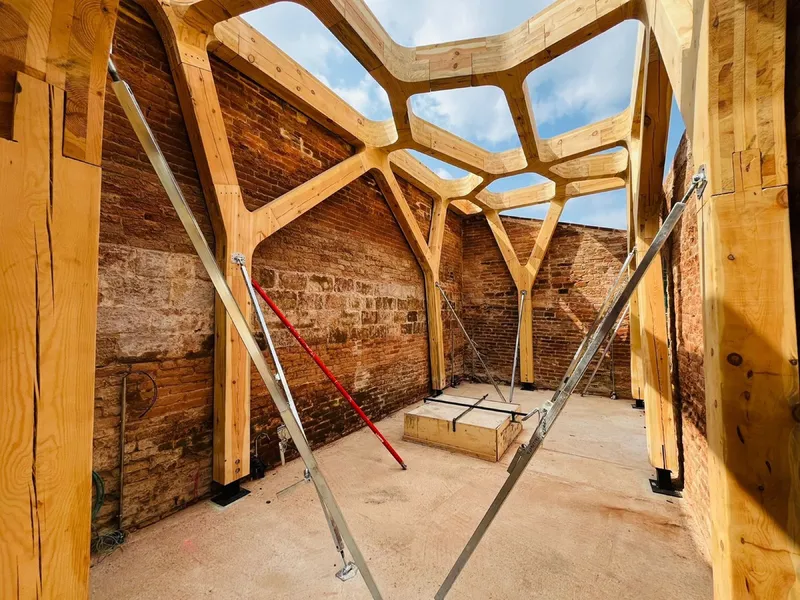
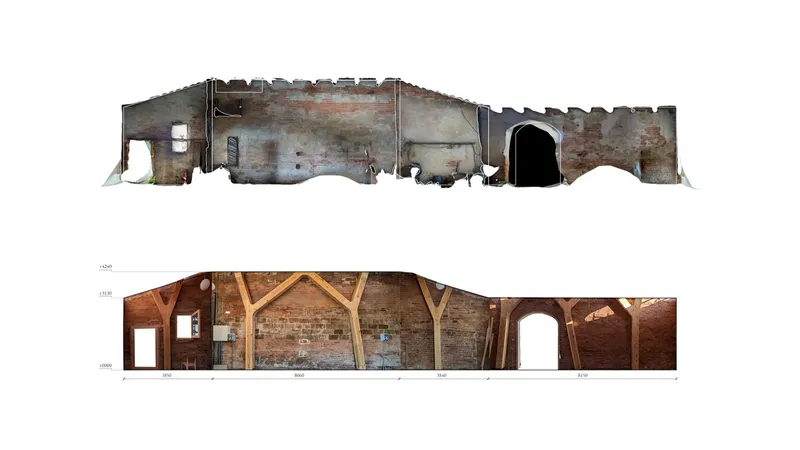
Located within a 135-hectare research campus, the installation repurposes an old brick stable while introducing a contemporary wooden framework. This balance between historical preservation and modern intervention ensures that the structure remains contextually relevant while embracing sustainable design. The existing brick walls were carefully restored, while a new timber volume was inserted to support robotic operations and human interaction.
Architectural Concept: The Cathedral of Robotic Artisans
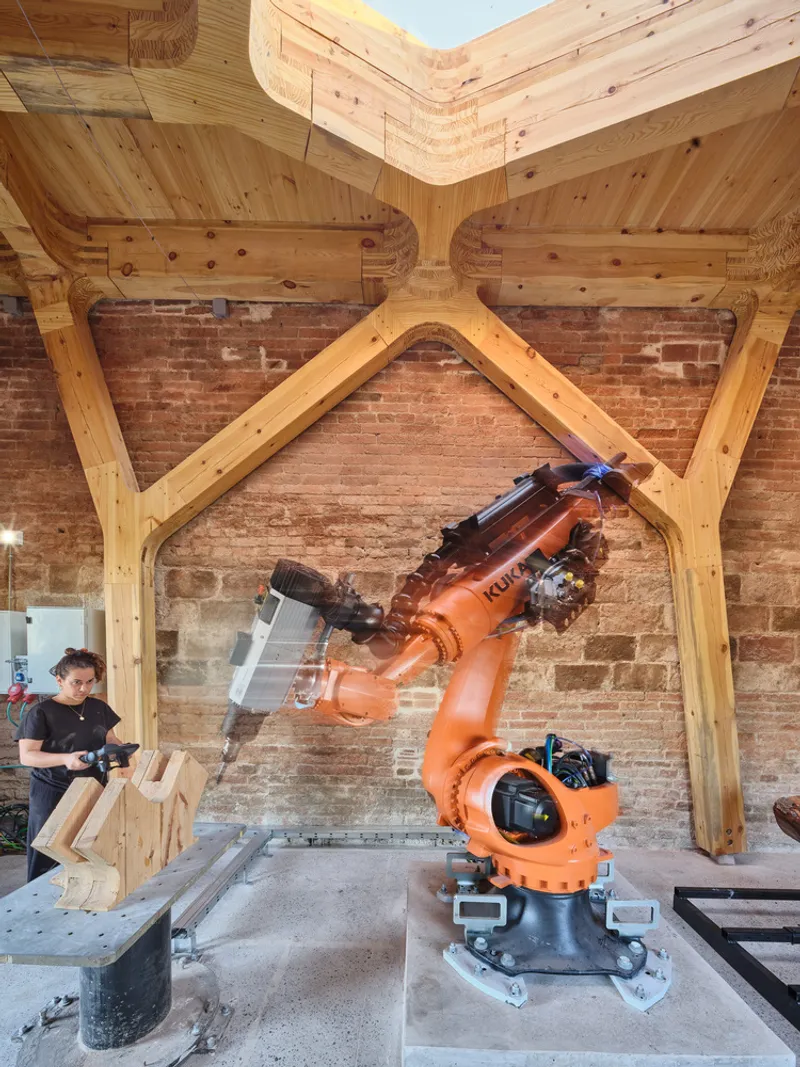
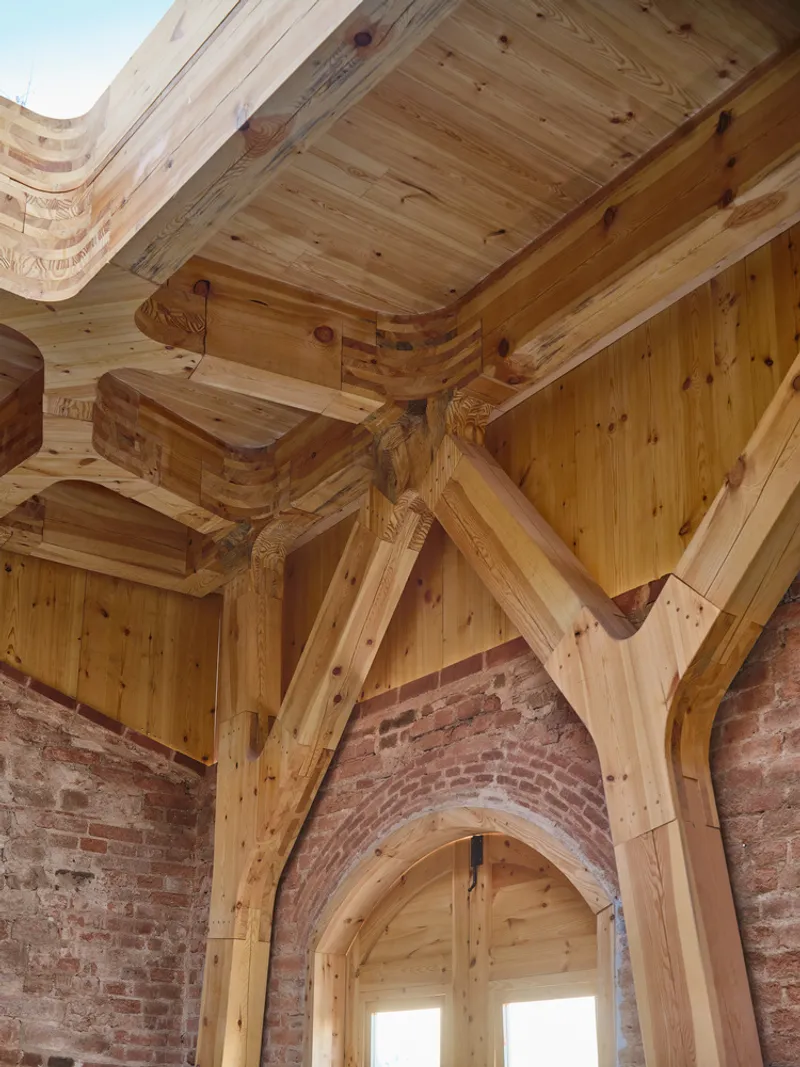
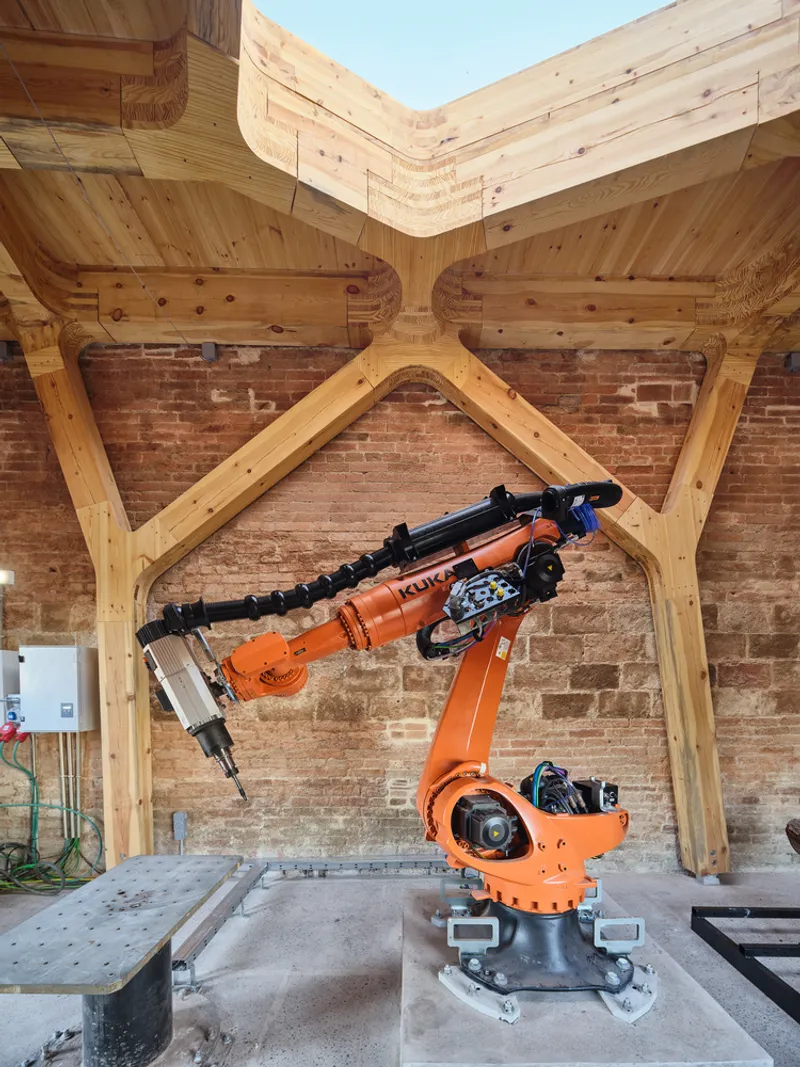
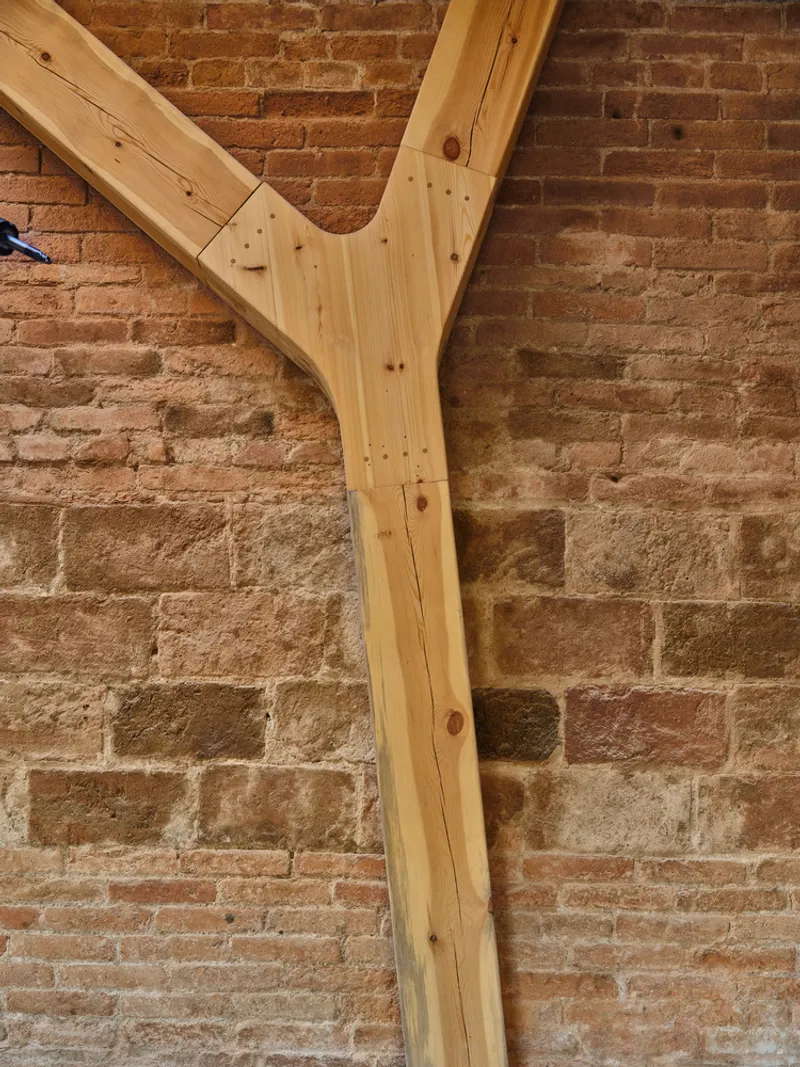
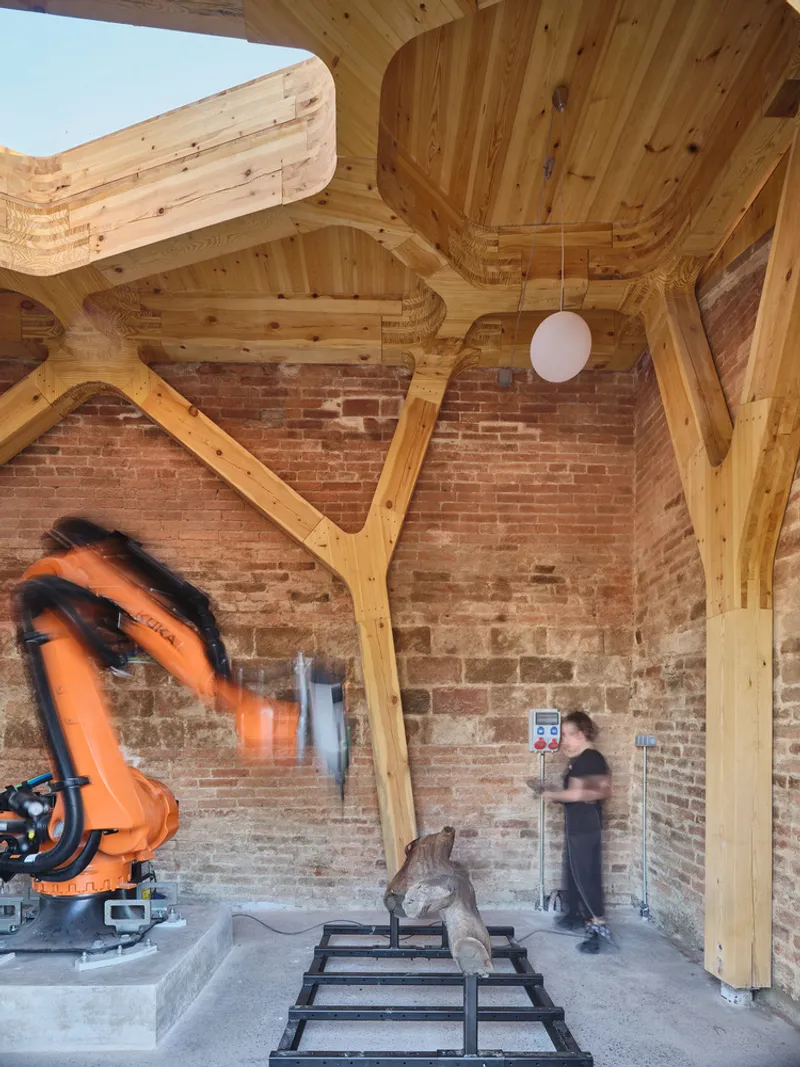
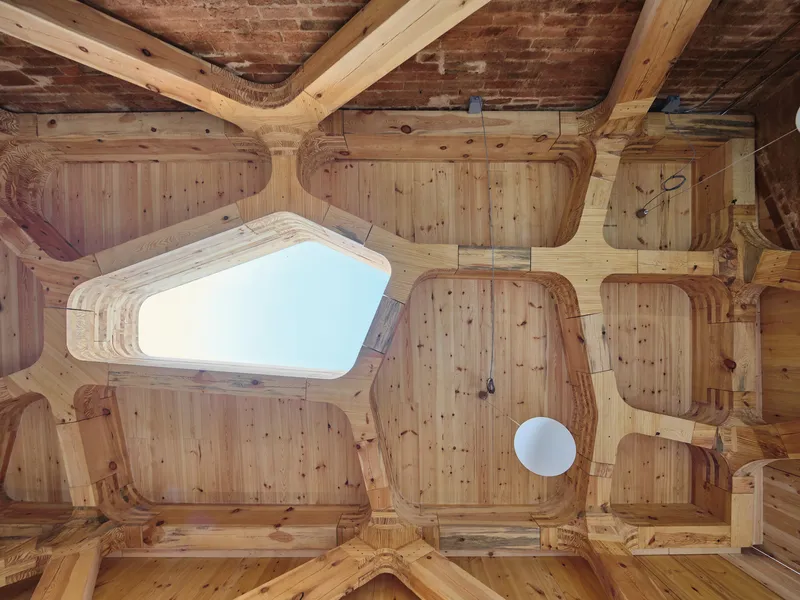
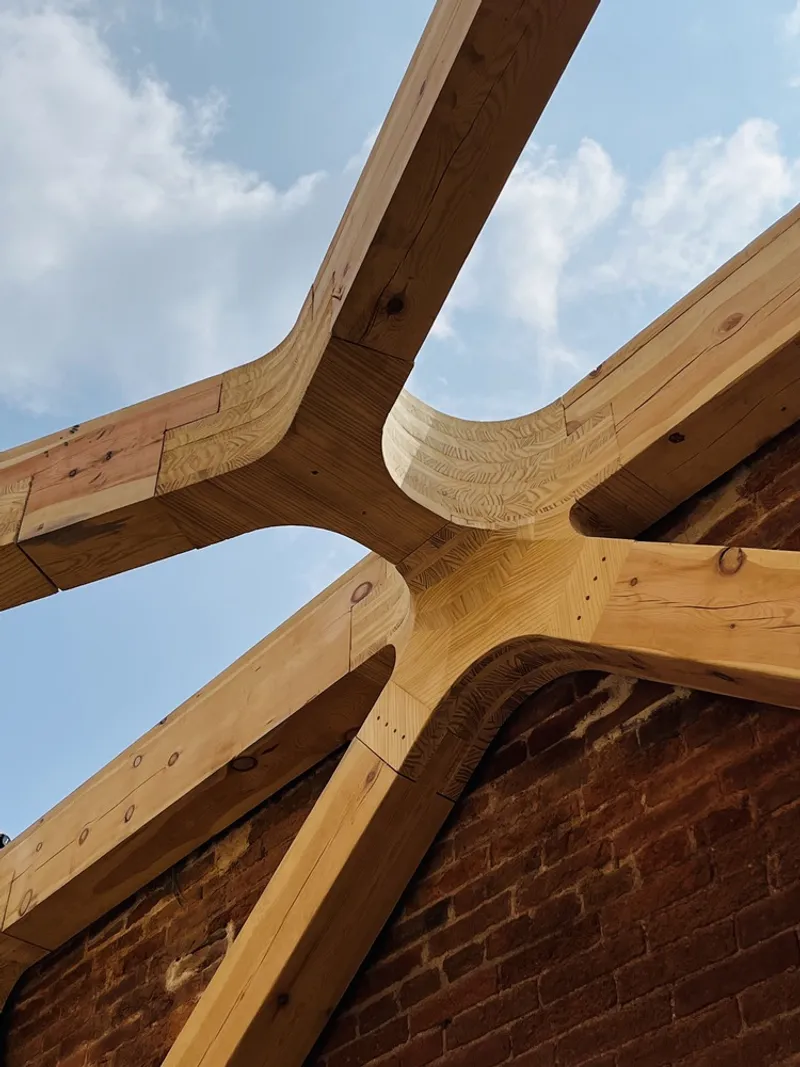
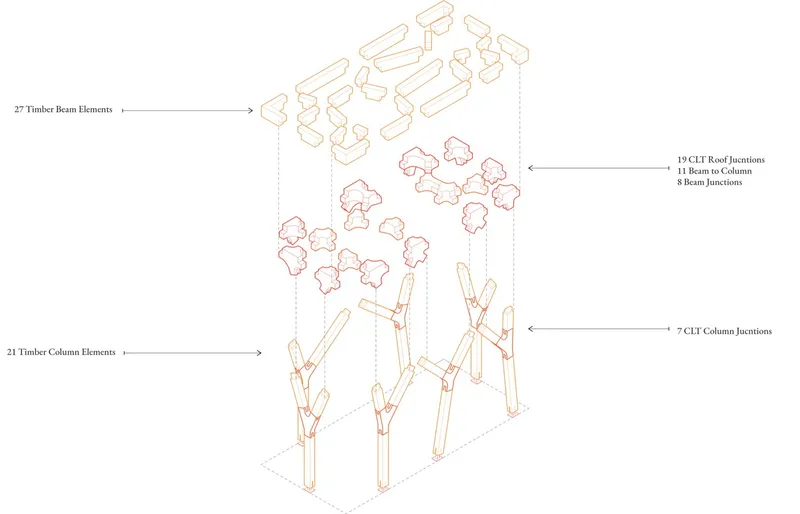
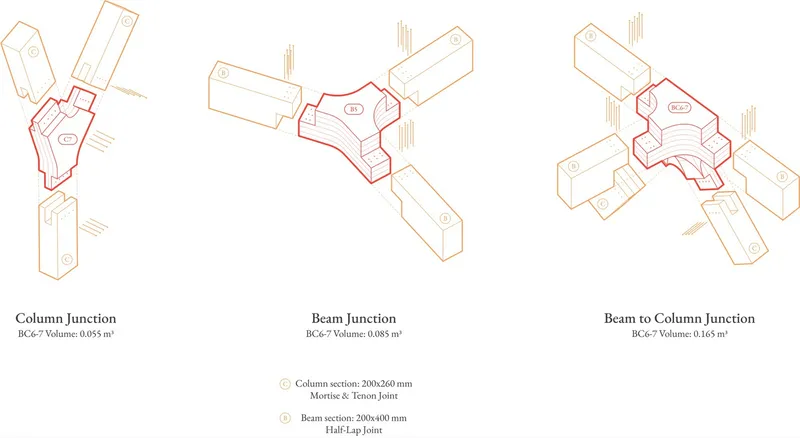
The design concept pays homage to traditional woodworking and digital fabrication, leading to its name—CORA, an acronym for the "Cathedral of Robotic Artisans." The building’s interior evokes the grandeur of a cathedral, with towering wooden columns and a geometric roof structure. Seven tree-like columns, constructed from solid wood and cross-laminated timber (CLT), rise to support an intricate Voronoi-patterned ceiling. This organic structural system highlights the project’s biomimetic inspiration while demonstrating the potential of computational design in sustainable construction.
Digital Fabrication and Construction Methods
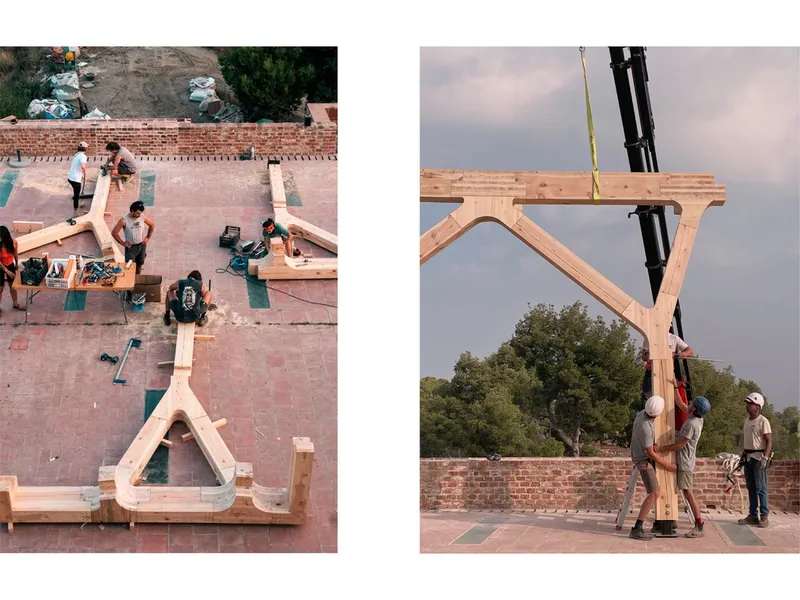
The construction process relied heavily on digital fabrication techniques, including computer numerical control (CNC) machining. Due to the depth limitations of CNC milling, complex joints were fabricated using multiple layers of precisely cut wood, which were then assembled to form seamless structural elements. The prefabricated wooden components were transported to the site and assembled within the existing brick walls, emphasizing efficiency and sustainability in material use.
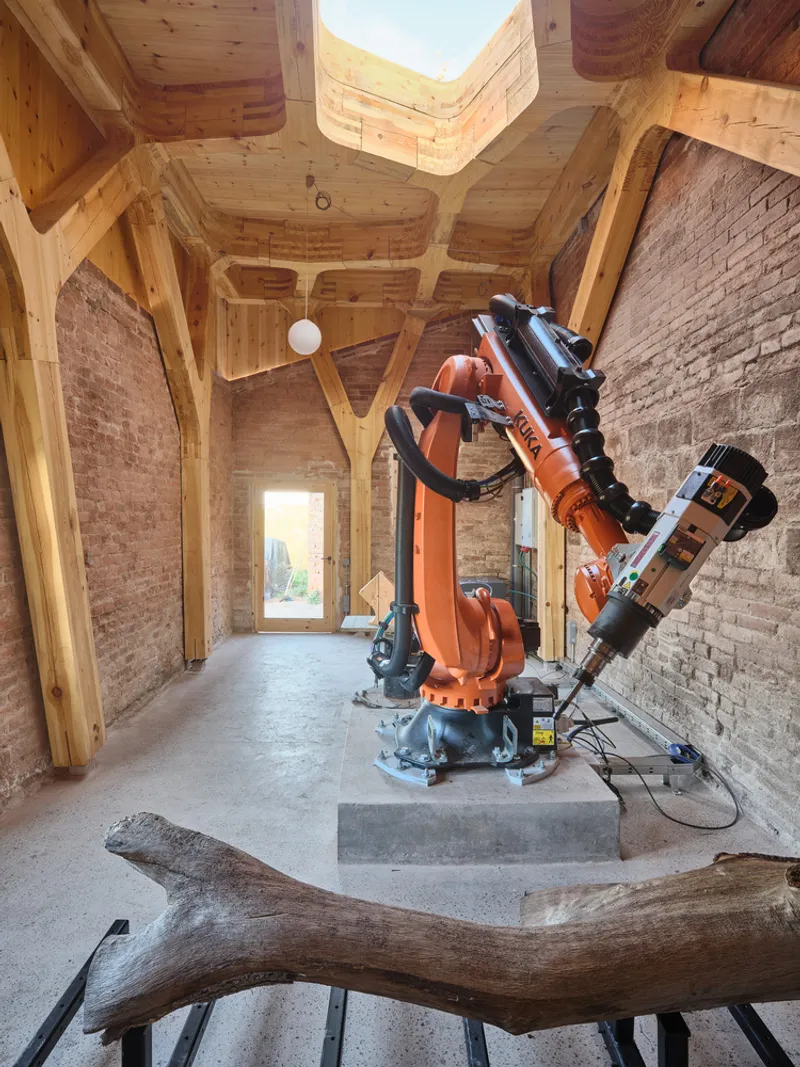
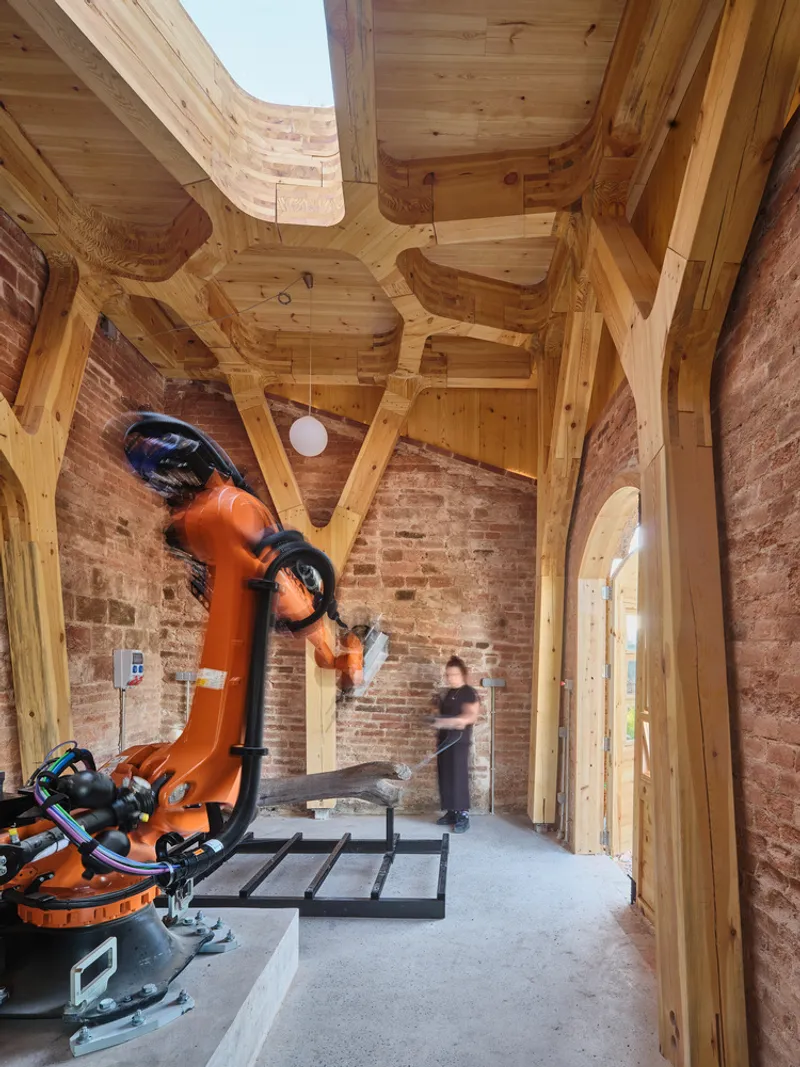
To support the high precision required for robotic milling, a reinforced concrete pedestal was integrated into the design, providing a stable base for the KUKA industrial robot. The façade, made of CLT panels, was parametric-milled to create a textured surface that visually connects the modern intervention with the historical character of the site.
Sustainability and Biophilic Design
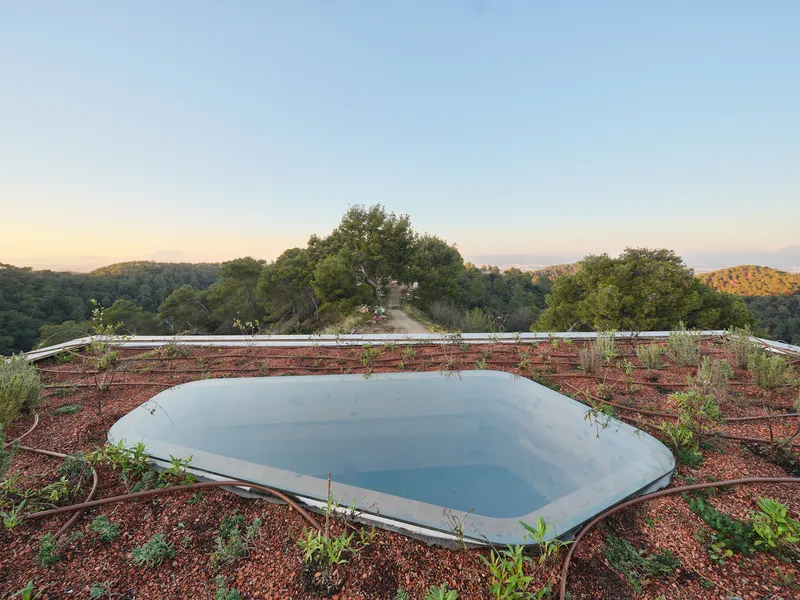
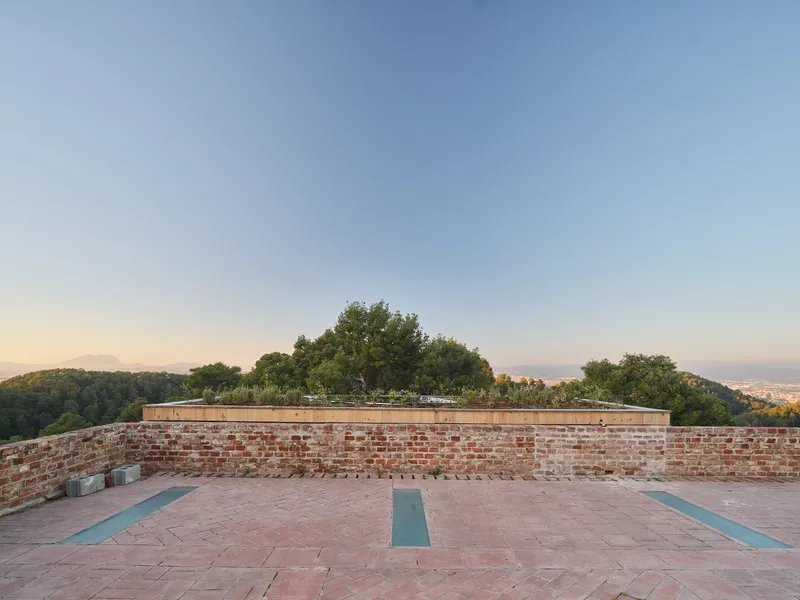
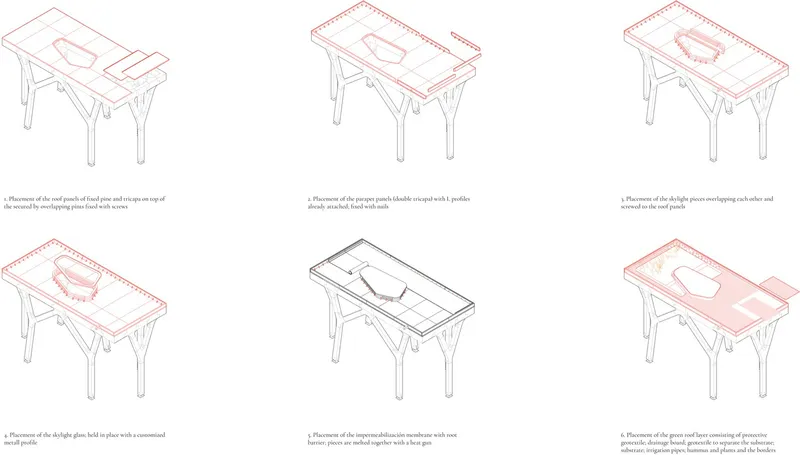
A key aspect of the project is its commitment to environmental sustainability. The wooden structure minimizes carbon emissions compared to conventional construction materials, while the integration of a Mediterranean green roof enhances energy efficiency. The roof system consists of multiple layers, including a waterproof membrane, geotextile fabric, drainage board, and humus to support native plant species.
Selected vegetation includes common honeysuckle, sweet clematis, creeping sedum, and French lavender, chosen for their resilience and ecological benefits. An integrated irrigation system ensures the sustainability of the roof, contributing to thermal insulation and biodiversity while reinforcing the project's alignment with ecological principles.
Lighting and Spatial Experience
The architectural composition prioritizes natural light to create an inspiring workspace for both humans and machines. A strategically placed skylight above the robot floods the interior with daylight, reducing reliance on artificial lighting while enhancing the immersive quality of the space. The combination of warm wooden surfaces and diffused natural light fosters an environment that merges technology with a sense of artisanal craftsmanship.
CORA as a Prototype for Future Sustainable Architecture
Beyond its immediate function as a robotic fabrication lab, CORA serves as a prototype for future sustainable architecture. The integration of historical materials, digital fabrication, and ecological design principles demonstrates how adaptive reuse can coexist with advanced manufacturing. This project exemplifies how computational design and traditional craftsmanship can work in harmony, paving the way for more sustainable and innovative construction methods.
As an active part of the Valldaura Labs research initiatives, the installation continues to evolve as a testing ground for new architectural and technological advancements. By blending sustainable digital fabrication with natural materials and biophilic strategies, CORA stands as a forward-thinking model for architectural innovation.
All Photographs are works of Adrià Goula


Popular Articles
Popular articles from the community


Cloaked Colonization: A Mobile Underwater Habitat That Moves Like a Fish
Micah Abaya's shortlisted EHC Pacific entry reimagines ocean settlement as a dispersed network of self-sustaining architectural organisms.

Opera on the Sea: Driftwood Logic Shapes a Timber Opera House on Estonia's Coast
Trevor Orgill's opera house translates the entangled drift of floating timber into a civic building where wood, water, and music converge.
Temporary Home for Dogs: A Reversed Zoo Rethinks Animal Shelter Architecture
In Bucharest, a sinuous corridor and freed landscape flip the logic of containment, designing a shelter that works to make itself unnecessary.
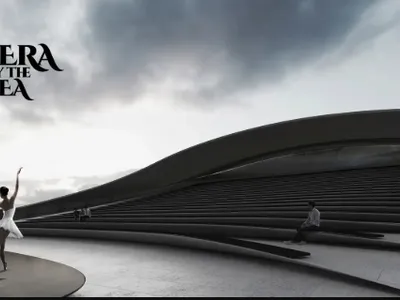
Opera by the Sea Estonia: Three Shells Dissolving Architecture into Tallinn's Coastline
A winning opera house proposal replaces monumental form with interconnected shells that blur the boundary between building, park and Baltic Sea.

Similar Reads
You might also enjoy these articles


Hodi-Mandai Geram
Project Function: Preservation and revitalization of the Intangible heritage and socio-spatial identity of the Hodi by Housing, Cultural Memory Center, Sacred Grove, landscape, local tourism economy


Olio Towers: A Mid-Rise for Performers That Fuses Housing, Rehearsal, and Stage
Located blocks from Houston's Theater District, this modular tower stacks living units around a central performance atrium.

Oasis: Modular Green Housing Carved into Dhaka's Urban Fabric
A shortlisted Plugin Housing entry reclaims unauthorized settlements in Dhaka with stepped concrete volumes, green roofs, and ventilation-driven design.

Black Hole: A Floating Megastructure for the Post-Physical Era
Emiliano Mazzarotto envisions a spherical, self-scaling arena where e-sports, digital hotels, and holographic stadiums replace traditional public space.

Explore Robotic Fabrication Competitions
Discover active competitions in this discipline

Challenge to reimagine the Iron Throne

Photograph architecture without architects

Illustrate the lost glory of Angkor Wat - Render Challenge

Design challenge to reuse E-waste
Comments (0)
Please login or sign up to add comments
No comments yet. Be the first to comment!