
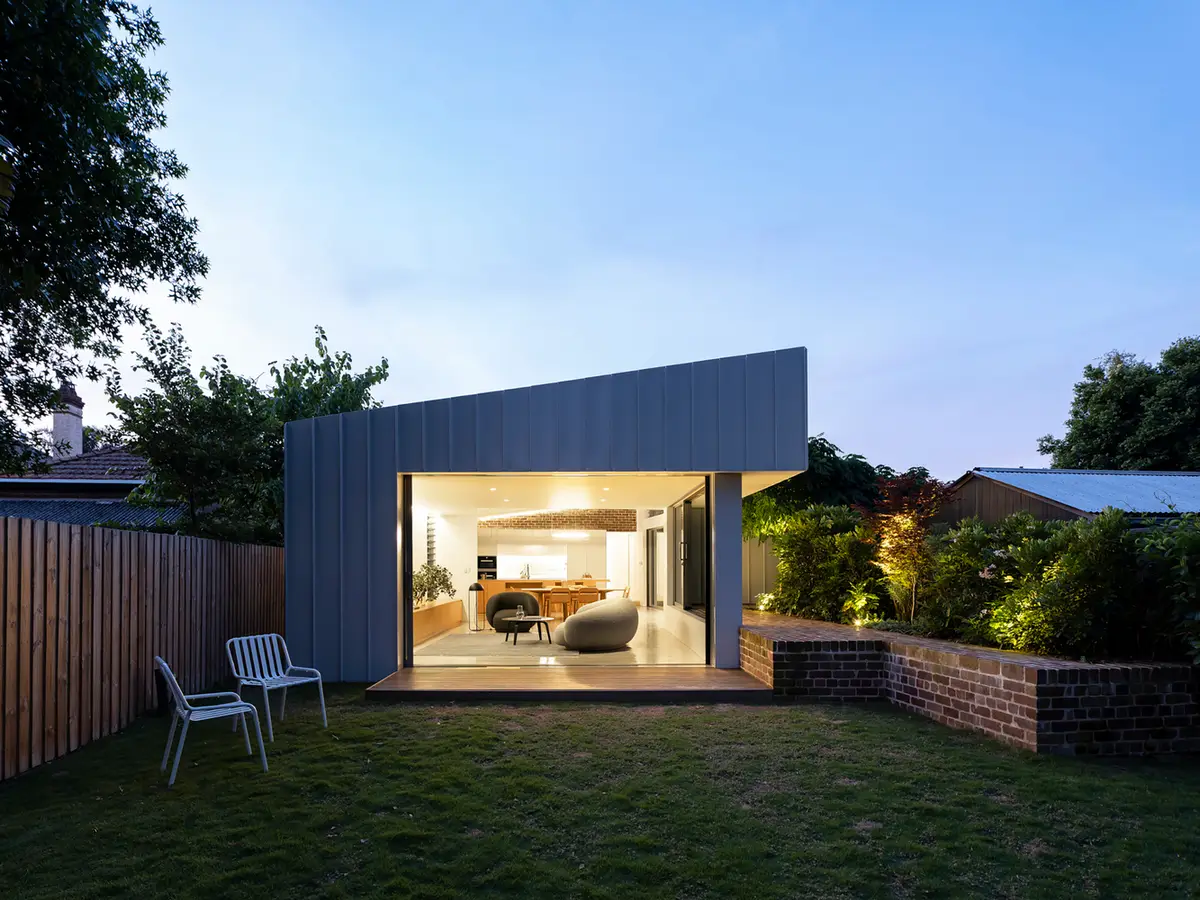
Cut and Morph House by Ahron Best Architects: A Fusion of Historical Charm and Modern Elegance
This article explores the transformation of a historic brick cottage into a modern sanctuary by Ahron Best Architects in Croydon, Australia


The "Cut and Morph House" designed by Ahron Best Architects in Croydon, Australia, is an exemplary project that showcases the harmonious blend of historical restoration and contemporary design. This article delves into the architectural strategies employed to transform a dilapidated brick workers' cottage into a modern sanctuary for a young couple, emphasizing both aesthetic appeal and functional excellence.
Project Overview
Architects: Ahron Best Architects
Location: Croydon, Australia
Area: 190 m²
Year: 2021
Design Concept
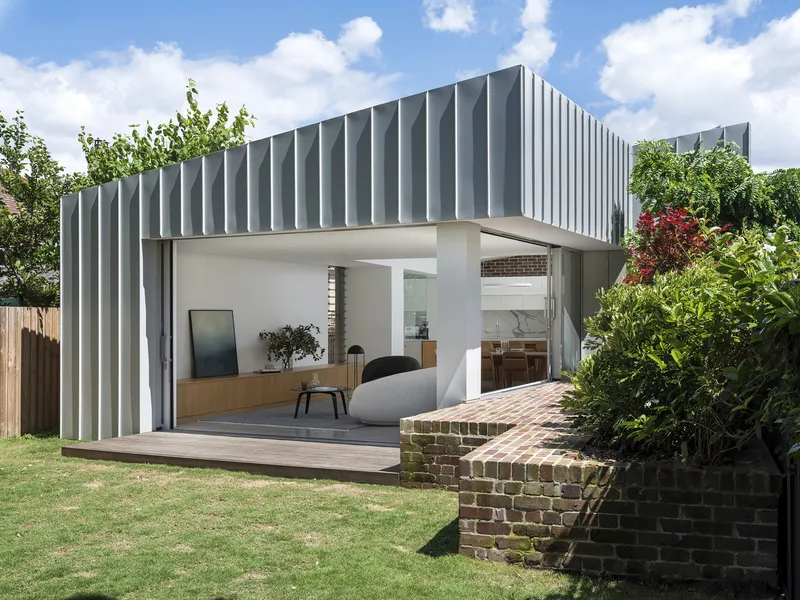
The primary objective was to restore the original brick building to its former glory while creating a new addition that seamlessly integrates with the old structure. The design brief included reconfiguring the existing layout to suit a modern family and adding a rear extension to house a spacious living, dining, and kitchen area suitable for entertaining.
Restoring Historical Proportions
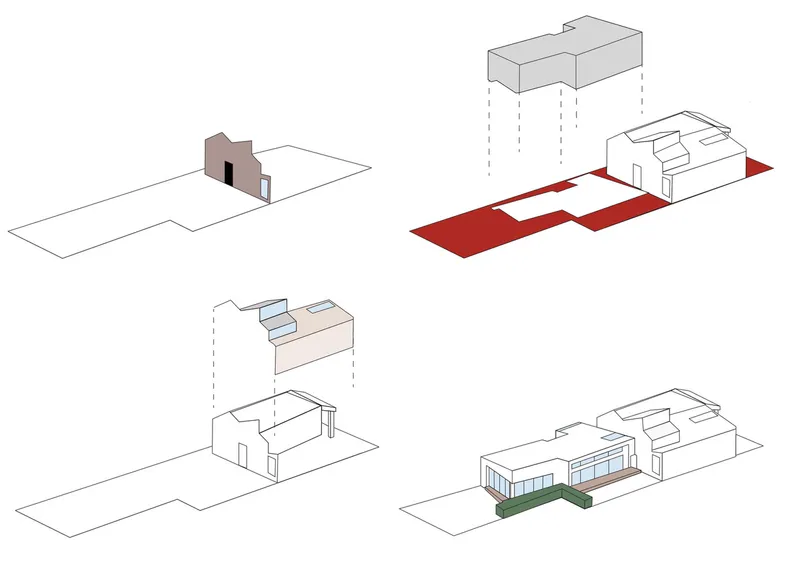
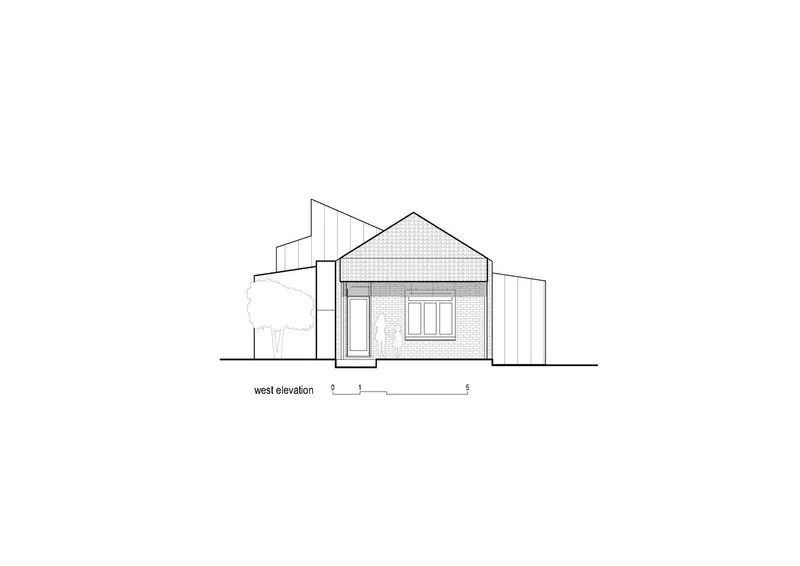
The original brick cottage had undergone several unattractive modifications, including an unbalanced side addition that disrupted the street-facing elevation's proportional integrity. Ahron Best Architects aimed to strip back these unsightly alterations, restoring the building's original silhouette as viewed from the street.
Innovative Use of Space
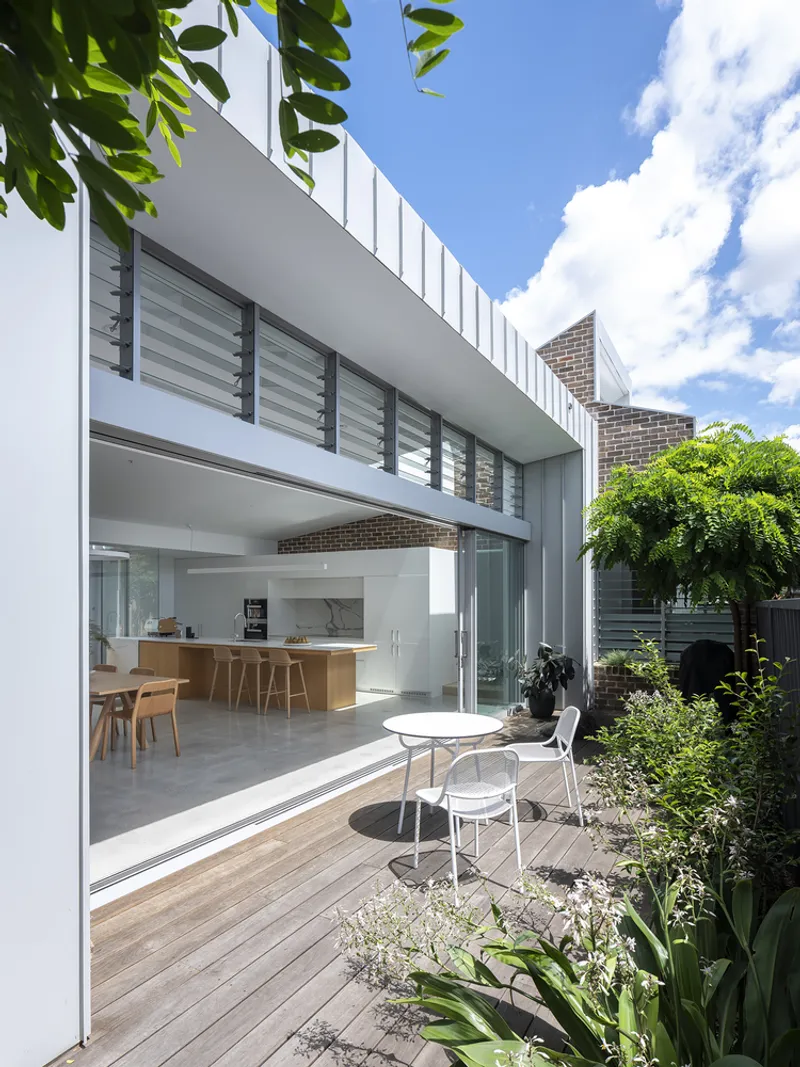
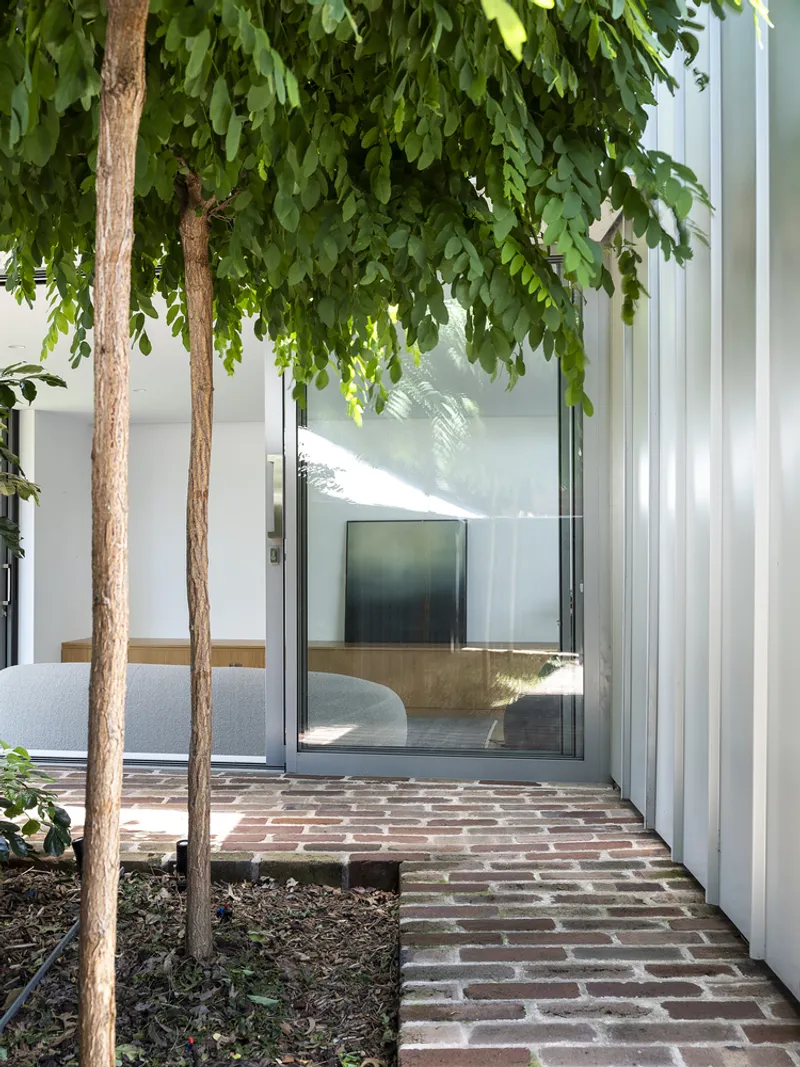
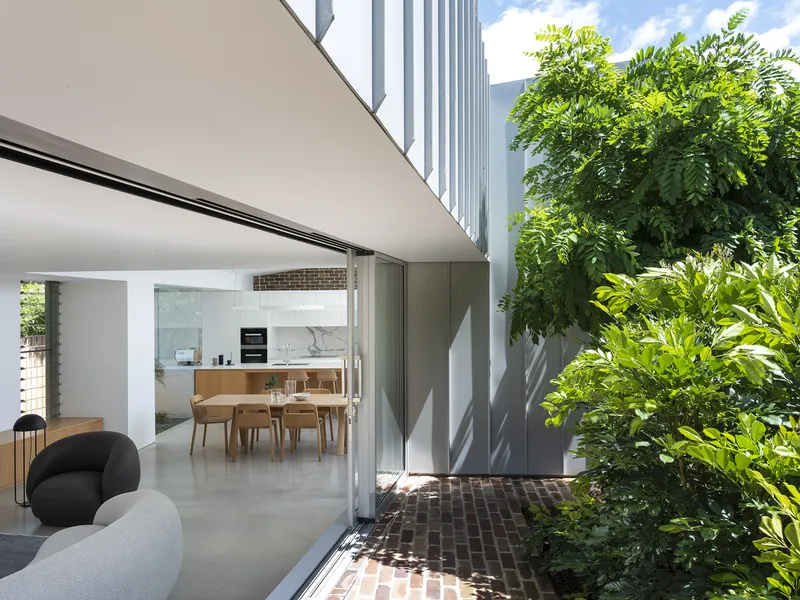
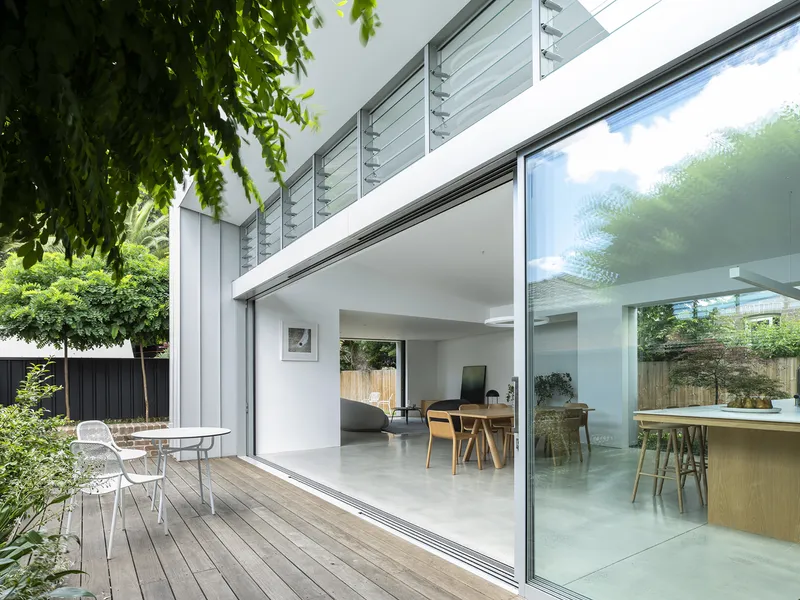
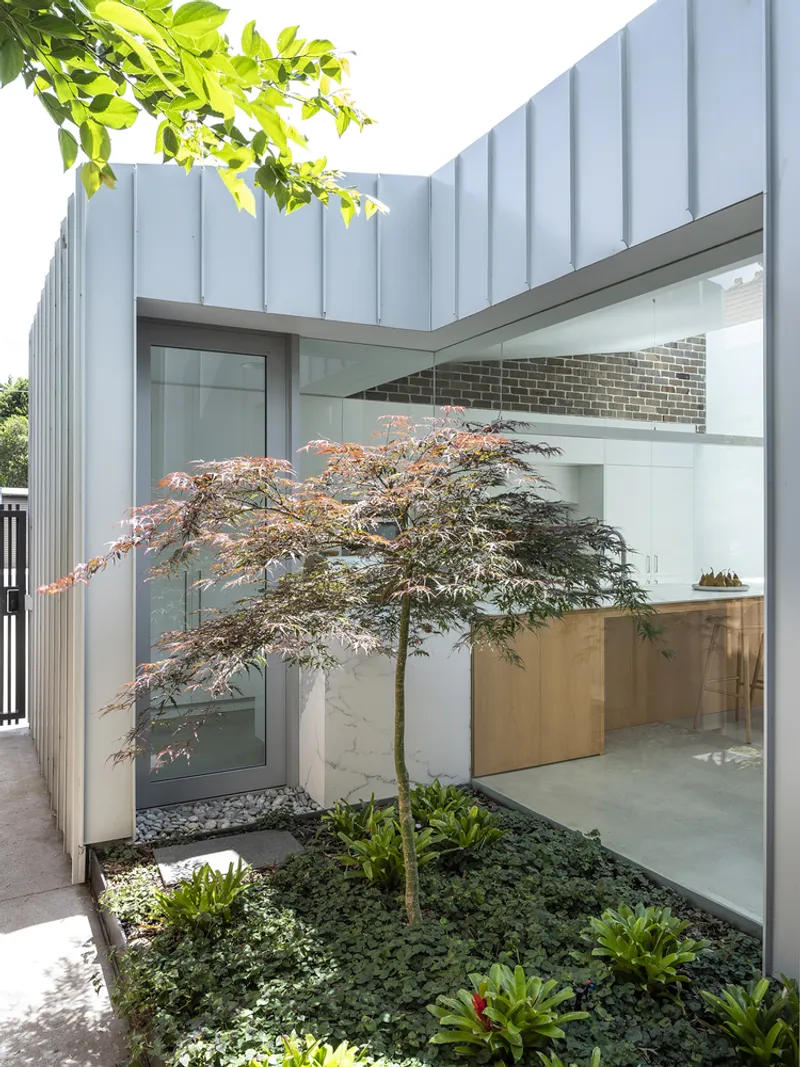
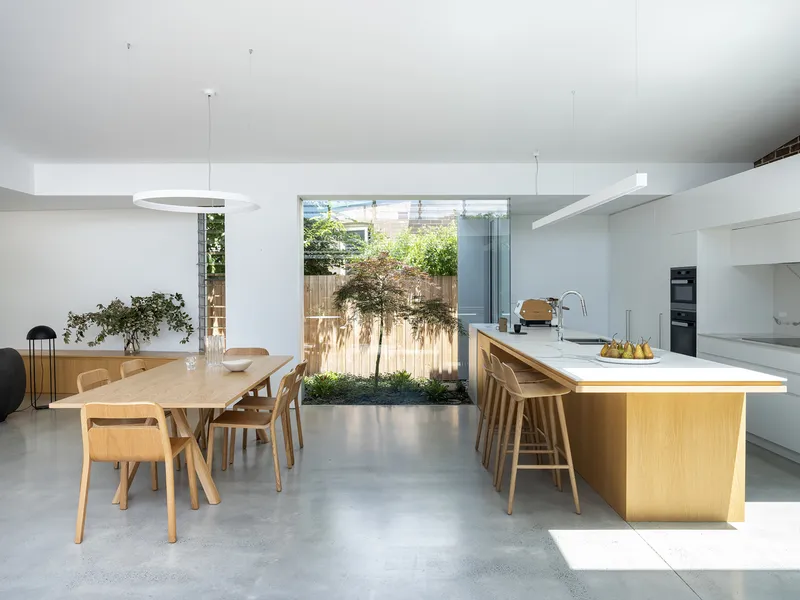
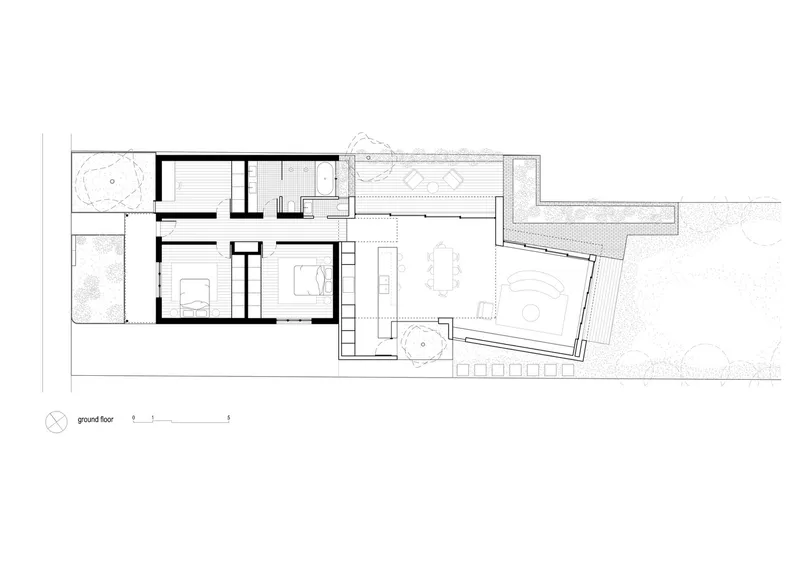
One of the standout features of the Cut and Morph House is its innovative spatial configuration. The architects utilized negative and positive space to create a series of courtyards and usable areas around the perimeter of the living addition. This design approach not only maximizes the use of the site but also enhances the indoor-outdoor connection.
Defining Spaces within an Open Plan
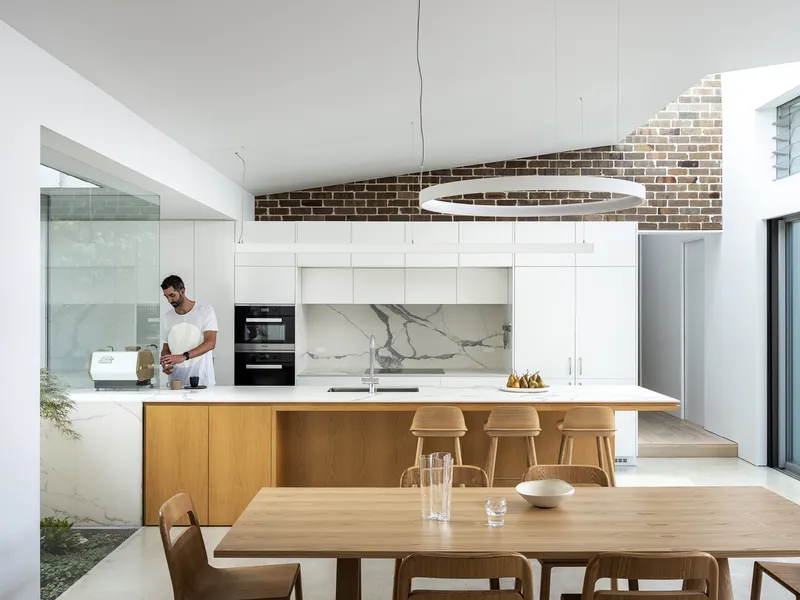
While the living, kitchen, and dining areas are designed to be open plan, subtle distinctions between each space are maintained. This is achieved through the strategic placement of furniture, materials, and slight shifts in spatial orientation. For instance, the living/lounge area is slightly rotated away from the other spaces, creating a more intimate setting for relaxation and providing a discrete entry into the yard.
Materiality and Window Placement
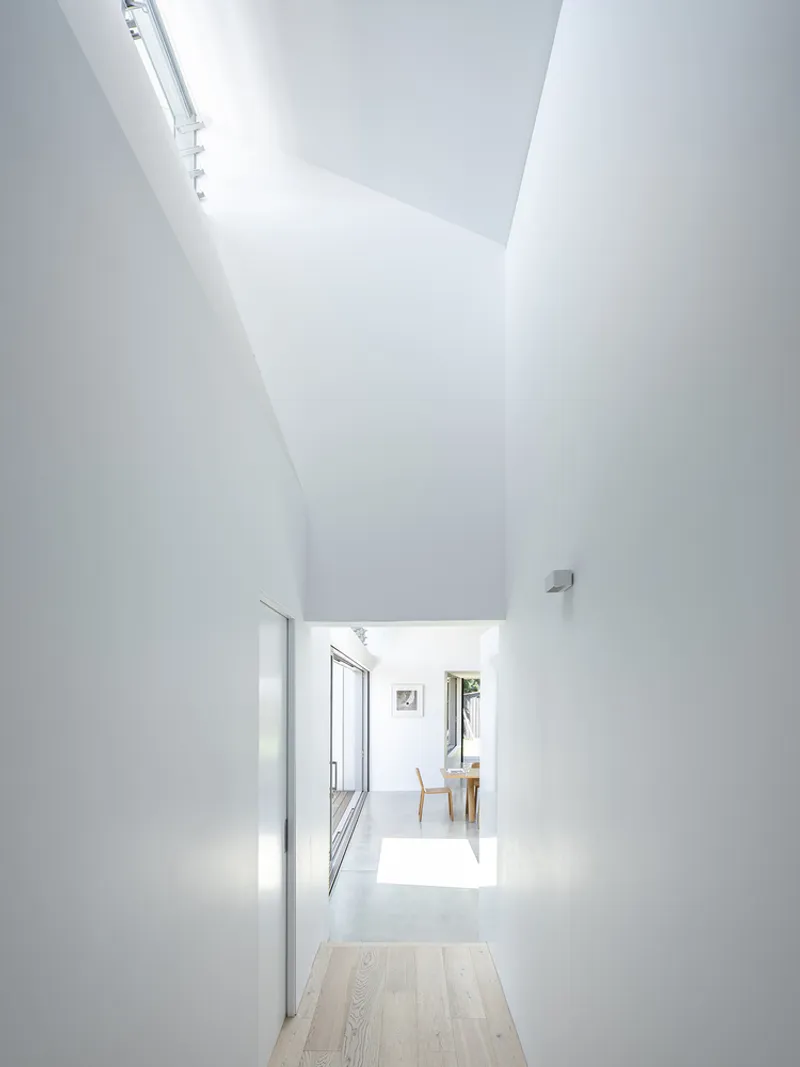
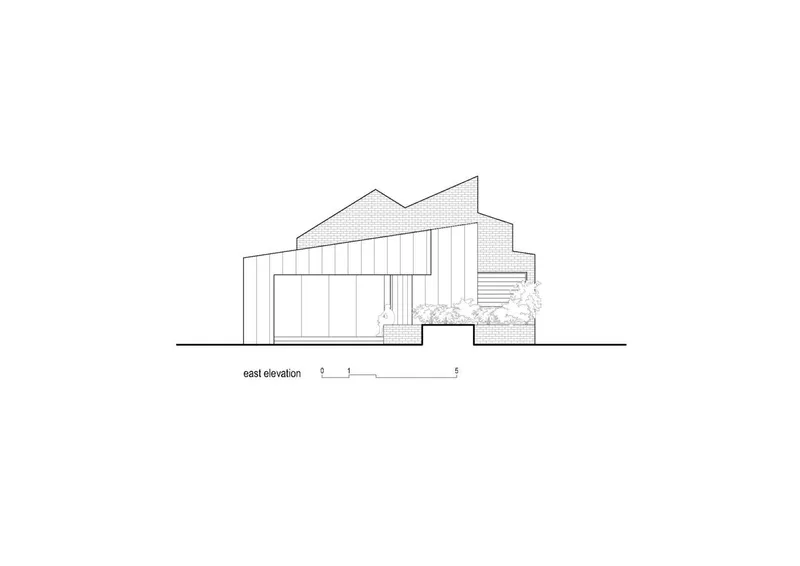
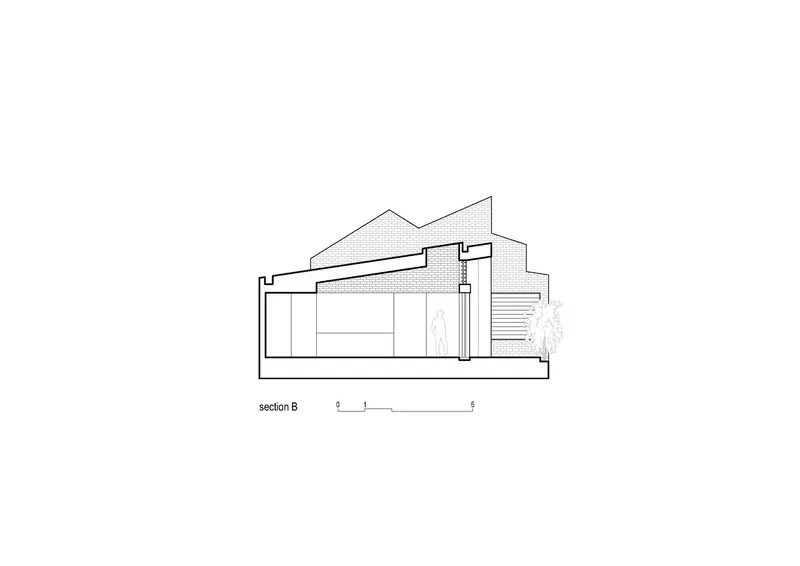
Material treatment and window placement play crucial roles in defining the relationship between the old and new parts of the house. The existing building was physically cut at a strategic point and reconstructed using recycled bricks from the site, forming a large sculptural wall that bridges the historical and contemporary elements. This wall is not only a visual anchor but also a functional one, housing a large skylight that introduces natural light into the space.
Celestial Windows and Skylights
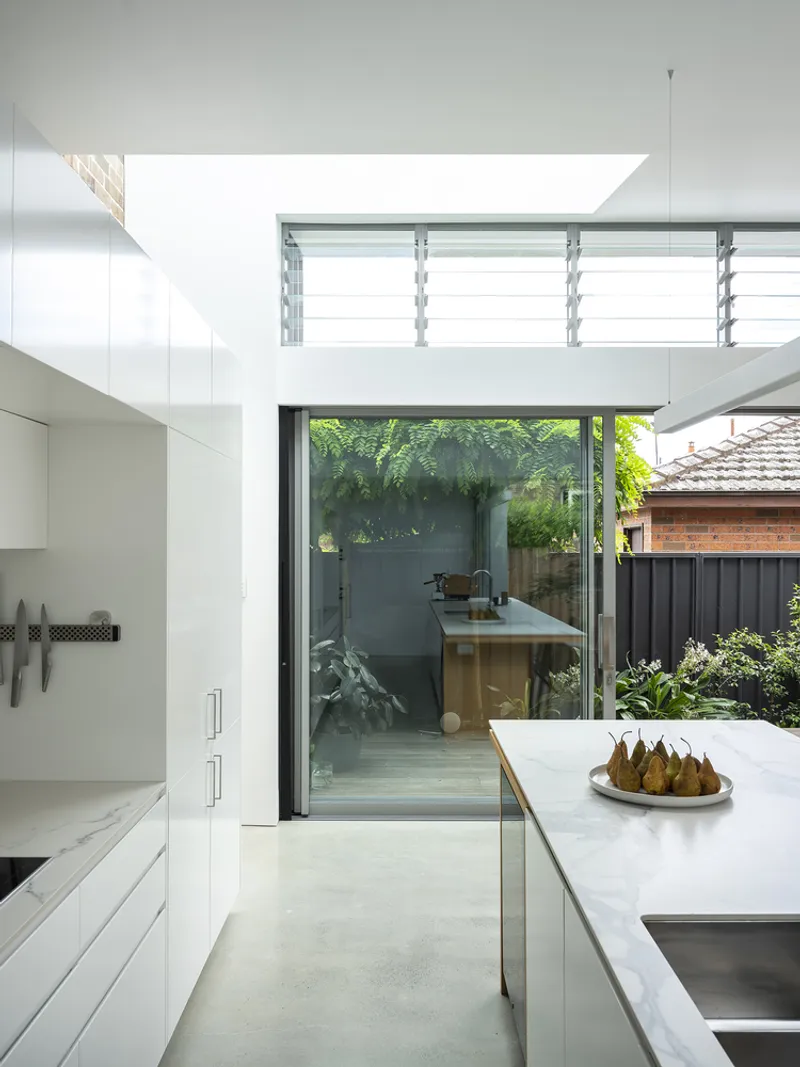
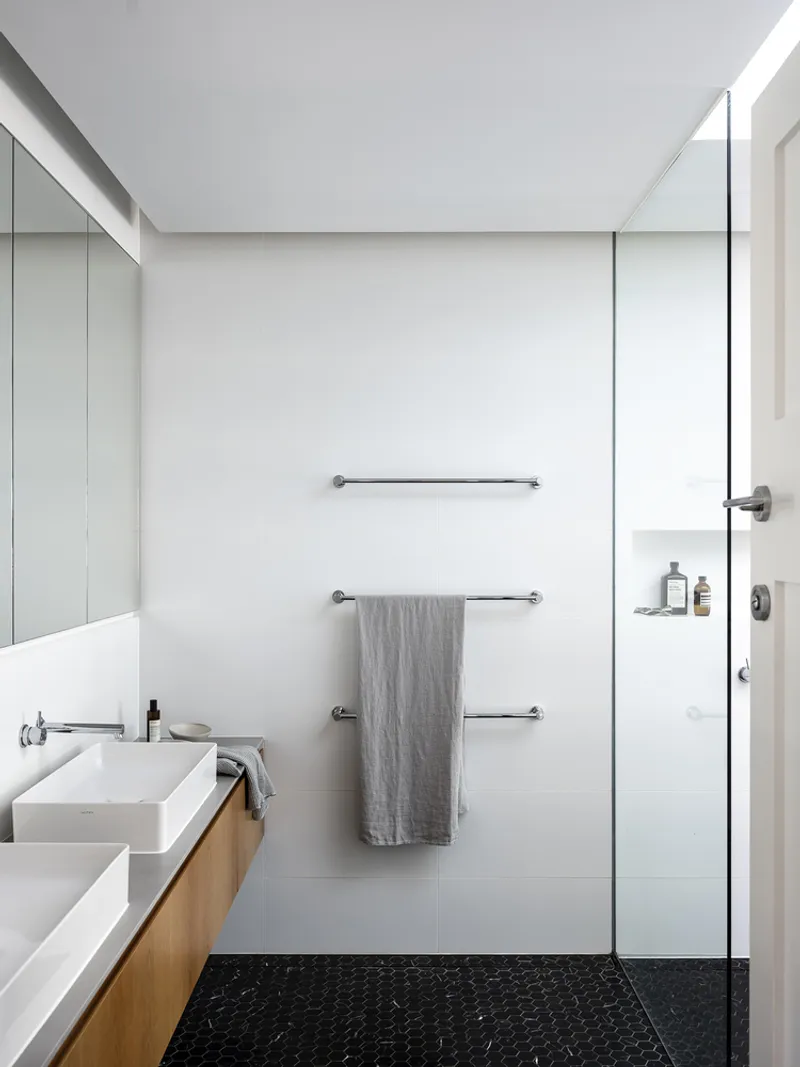
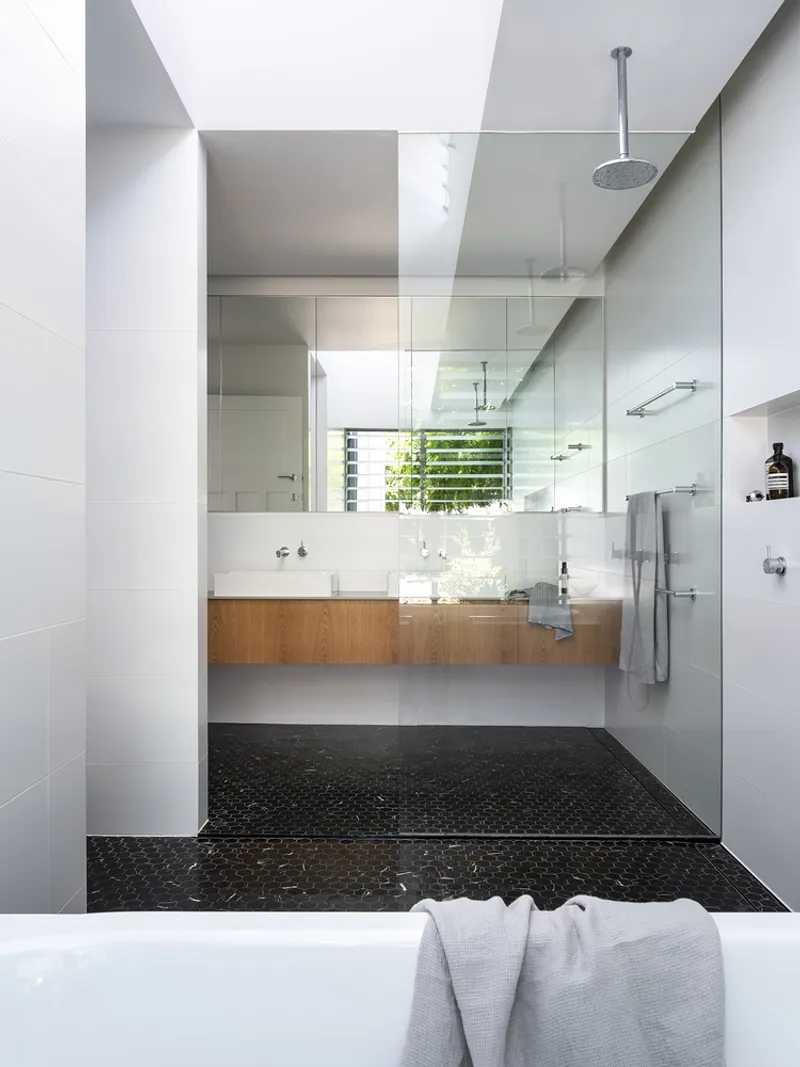
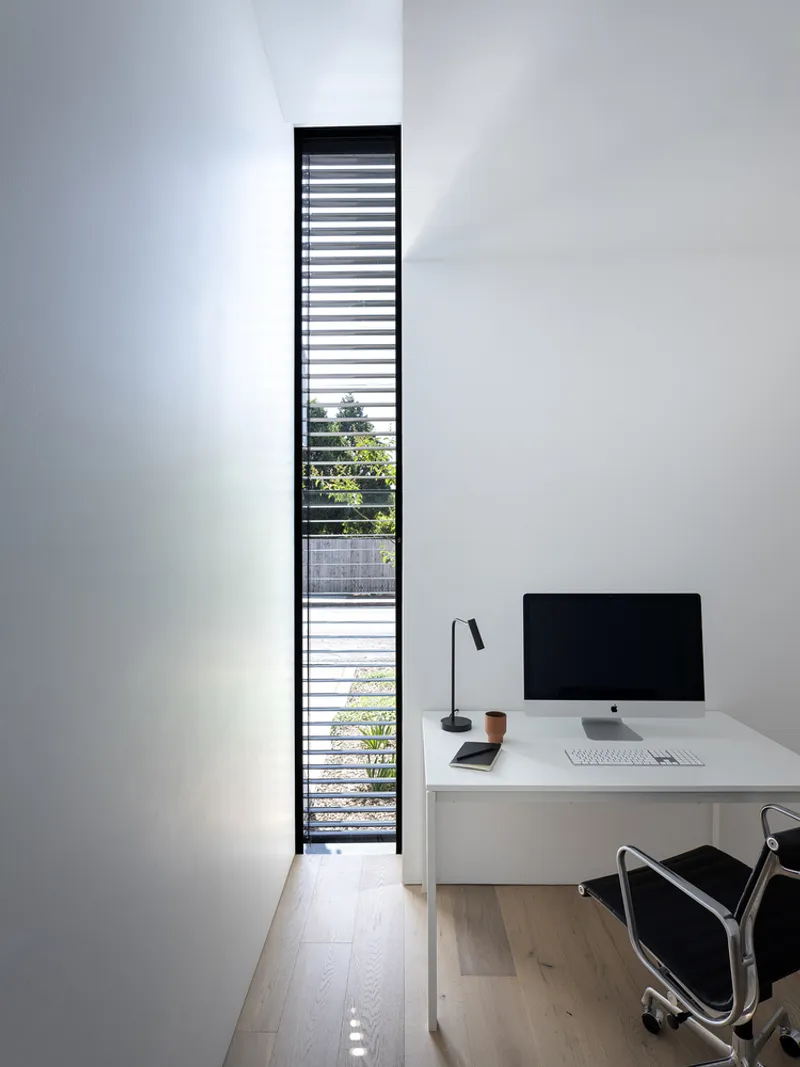
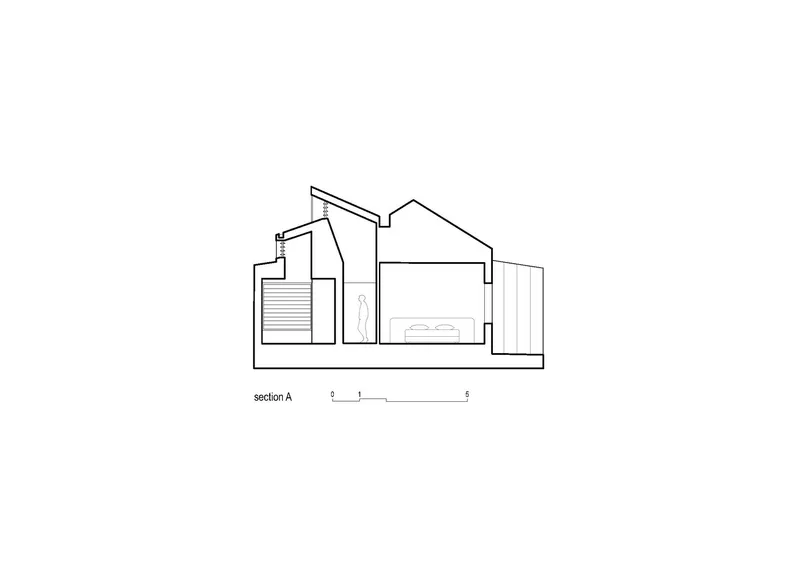
The integration of celestial windows and skylights is a key feature of the design. These elements create large voids over the hallway and bathroom, flooding the interior with natural light and enhancing the sense of space. The carefully detailed skylight at the junction of the old and new structures creates an impression of glass floating into the brick wall, blurring the boundary between inside and outside.
Environmental and Contextual Sensitivity
Ahron Best Architects paid careful attention to the environmental and contextual aspects of the site. The new living spaces are oriented to take advantage of the north-facing boundary, ensuring ample natural light and creating opportunities for energy-efficient living.
Natural Ventilation
The design incorporates natural ventilation strategies, with windows positioned to facilitate airflow through the hallway void. This not only enhances indoor air quality but also contributes to the overall comfort of the living spaces.
The Cut and Morph House by Ahron Best Architects is a masterful example of how historical restoration and modern design can coexist harmoniously. By respecting the original structure and thoughtfully integrating new elements, the architects have created a home that is both aesthetically pleasing and functionally superior. This project underscores the potential of architecture to transform spaces while honoring their historical context.


Popular Articles
Popular articles from the community


GROUP A Strips a 1969 Rotterdam Harbor Headquarters to Its Frame and Wraps It in Timber Louvers
In Rotterdam's M4H harbor district, Ferro Offices reuses a 1969 frame, adds one timber storey and reaches BREEAM-NL Outstanding.

Juan García Correa, John González and Claudia Rueda Sink a Circular Amphitheater into a Manizales Engineering Building
On the La Nubia campus in Manizales, Colombia, the S1 Building folds labs and offices into a hillside of ramped lawns that double as a campus route.

Jaramillo Van Sluys Arquitectura and Urbanismo Turn a Demolished Registry Lot in Quito into an Orchard Plaza
In Quito's Centro Histórico, a 2,800 m² plaza exposes the San Agustín convent wall and redraws its lost Augustinian orchard in volcanic stone.

Architekt Andreas Gruber Scatters 23 Dark Timber Chalets Across a South Tyrolean Forest Edge
In Molini di Tures, Amonti Chalets breaks a resort into a hamlet of gabled timber houses, with parking, storage and services pushed into the slope.

Similar Reads
You might also enjoy these articles

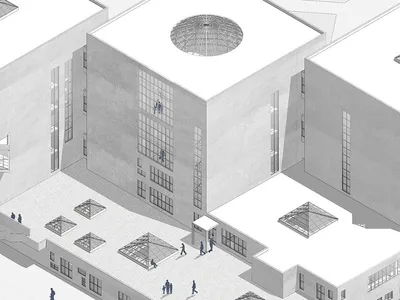
Yenisei Monitoring Center: A Sun-and-Moon Sphere Anchors a Research Campus on Siberia's Great River
In Krasnoyarsk, shifting square blocks, a glazed central sphere and descending window rhythms turn river science into a public spectacle on the Yenisei.
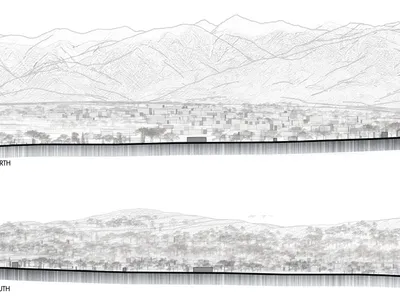
Andretta Artist's Village: A Node-Based Masterplan That Lets the Hills Write the Plan
A cultural landscape strategy for Palampur's artist colony threads studios, residences and stages along a porous spine shaped by the Dhauladhar terrain.
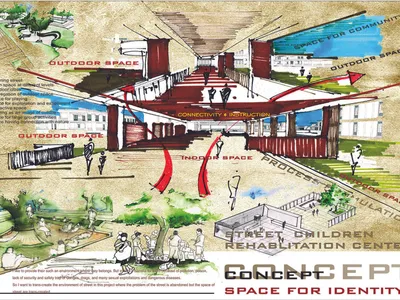
Street Children Rehabilitation Center: A Brick Campus That Eases Children From Street to Safety
A low-rise courtyard campus where learning streets, uthans and shaded verandahs stage a gradual passage from street into protective, family-scale life.
The NEON Culture: A Field of Pavilions Built for the 24-Hour City
Smaran Alva spreads galleries, stages, clubs and markets across a varied site, treating light, sound and ramped movement as the real building materials.

Explore Residential Building Competitions
Discover active competitions in this discipline

Comments (0)
Please login or sign up to add comments
No comments yet. Be the first to comment!