
Dance center Grace
Culture and architecture

ABSTRACT
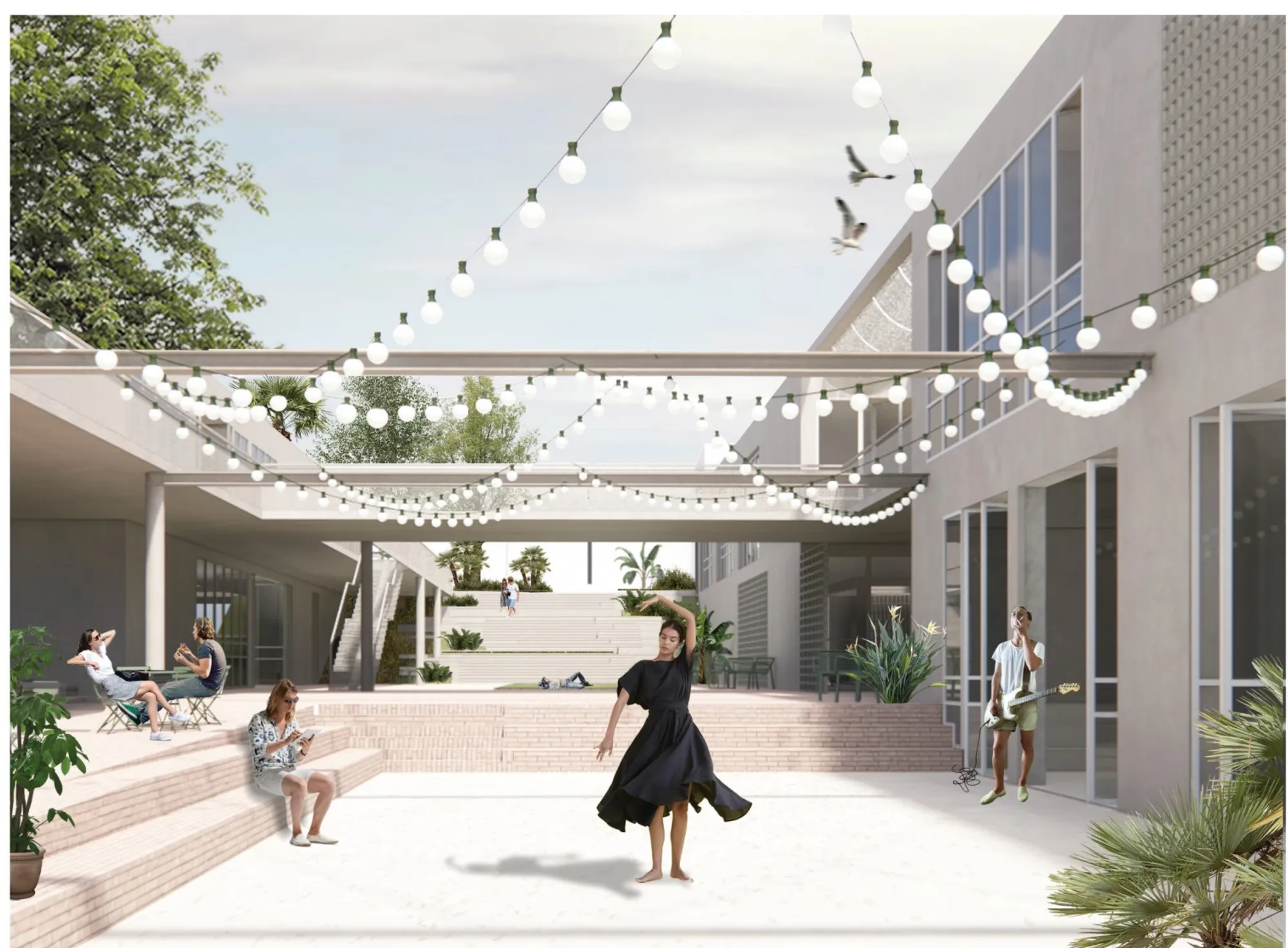
The task of the competition is to design a cultural dance center that will be used by local residents as well as other visitors as a space for learning and performance. Spaces should be designed to accommodate all dance-related activities. The aim of this space is to promote local dance forms endemic to this region. The proposal is not only about creating a building as such, but mainly about strengthening the community of people who are dedicated to dance.
It is the strengthening of the community that motivates people to spend time there and thereby contribute to the colorful life in this location. A cultural center should revitalize the neighborhood and promote social engagement. It should be accessible to all users, and the spatial solution should provide comfort and convenience for professionals, spectators, or random passers-by.
Architecture as a form of local culture. It is perhaps one of the most difficult and essential tasks in architecture. The generalization of modern buildings is caused precisely by a kind of forgetting about culture.
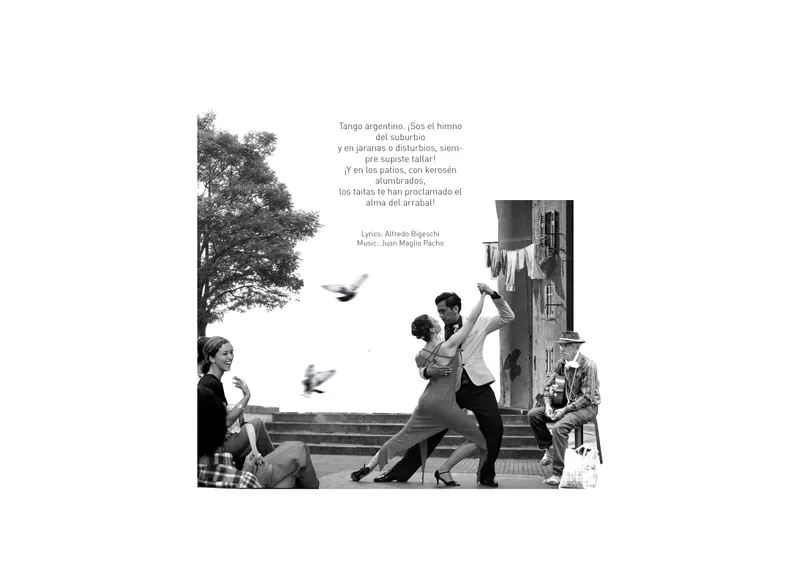
The proposal should be closely related to the existing local culture. It is supposed to ensure its development, in a new and more modern version that works over time. To bring the old culture back to life, to understand the given territory, to look around it. To sense the local spirit and work with it.
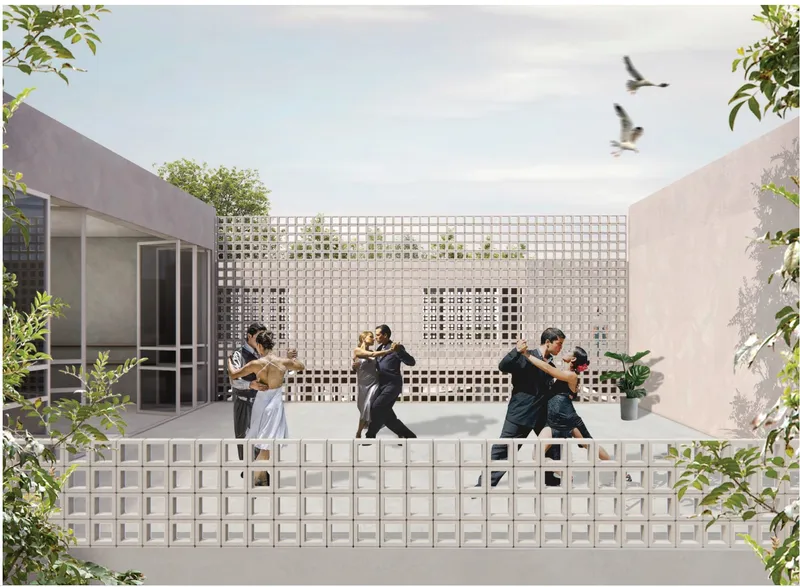
Argentine street life became my main inspiration for the design of the project.
URBAN CONCEPT
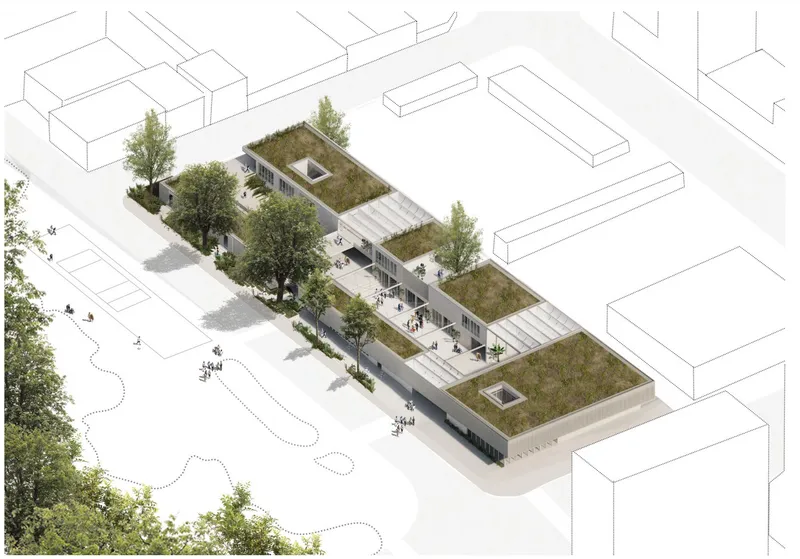
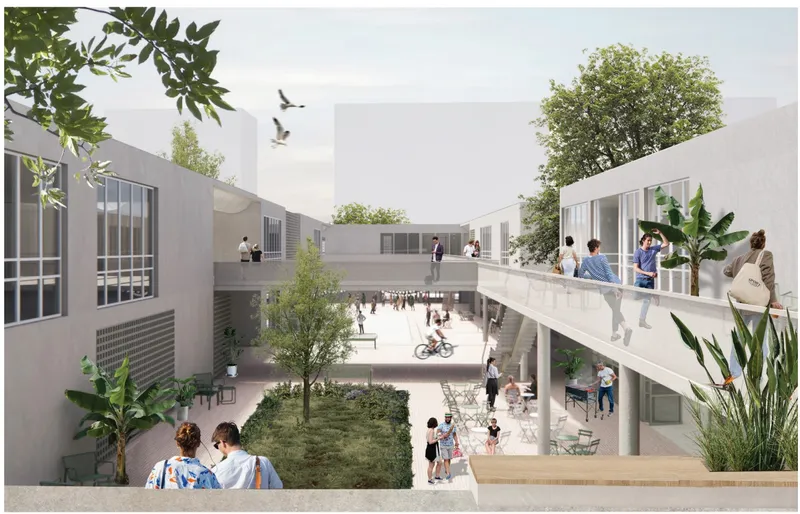
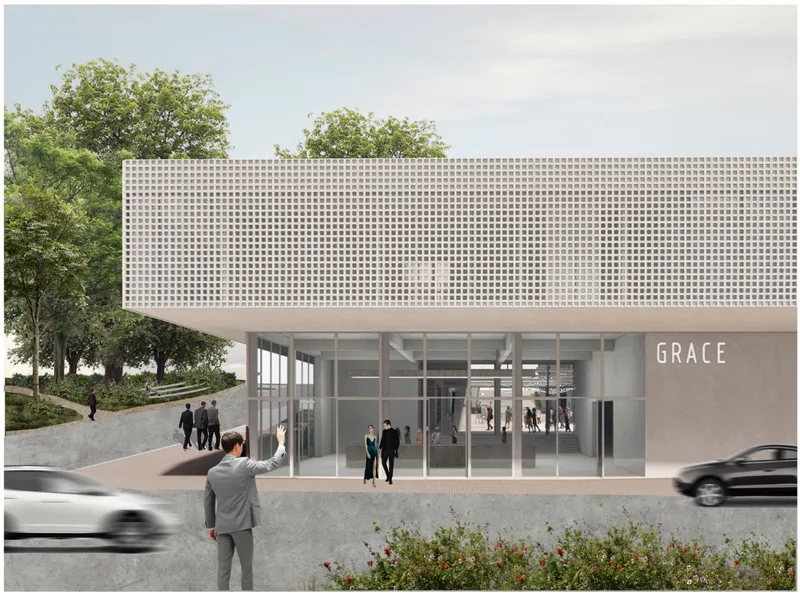
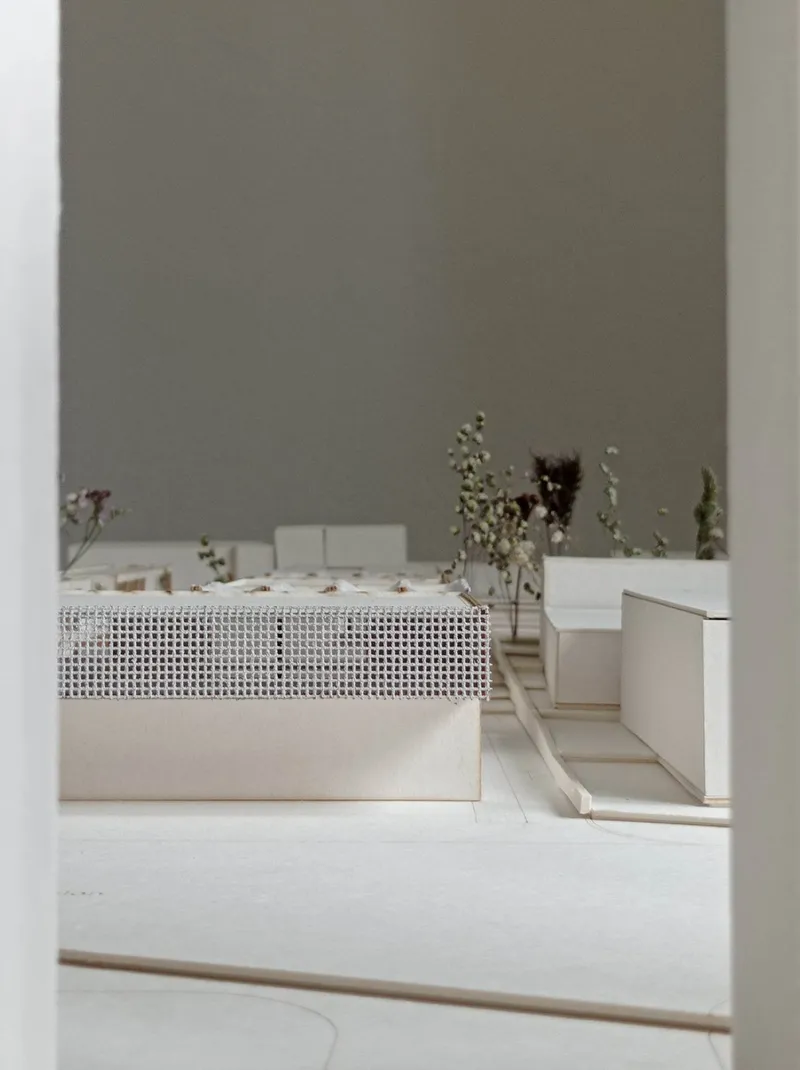
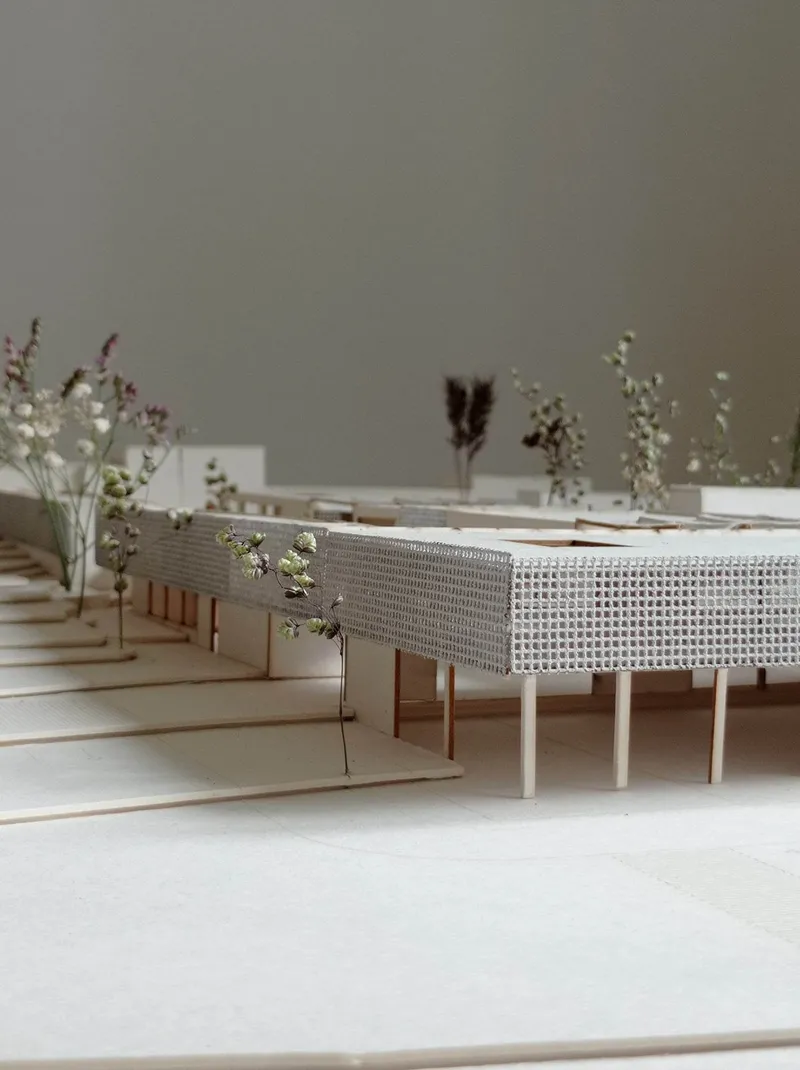
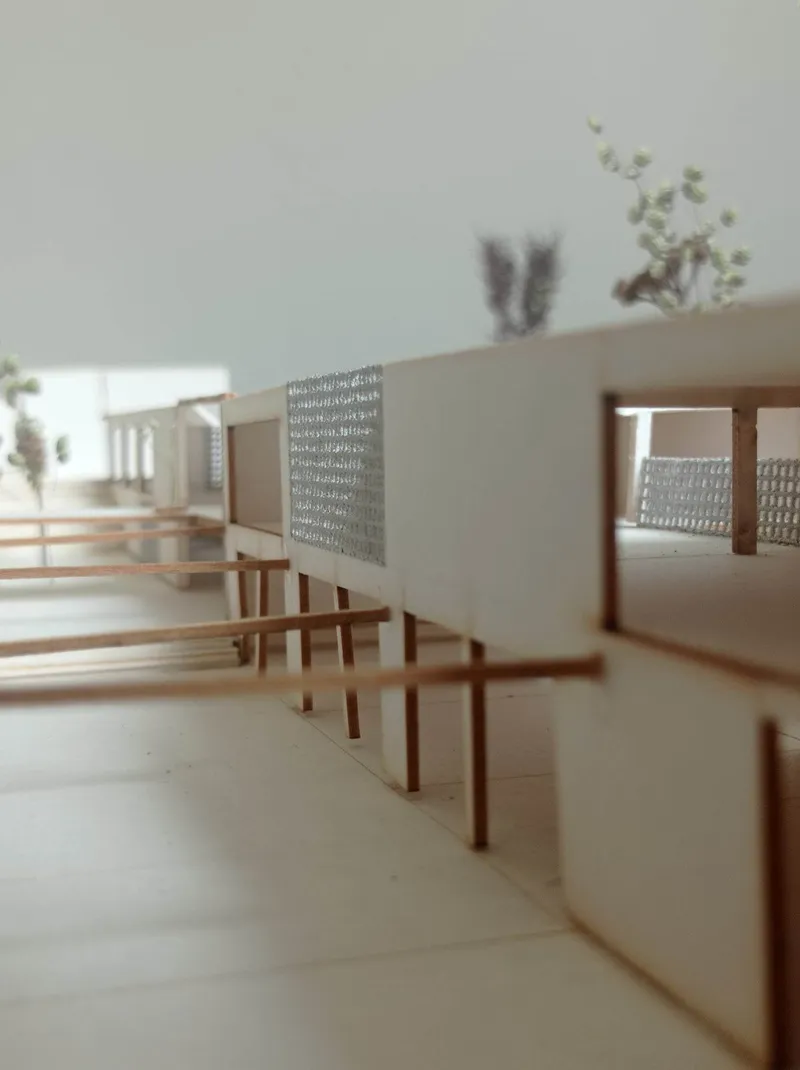
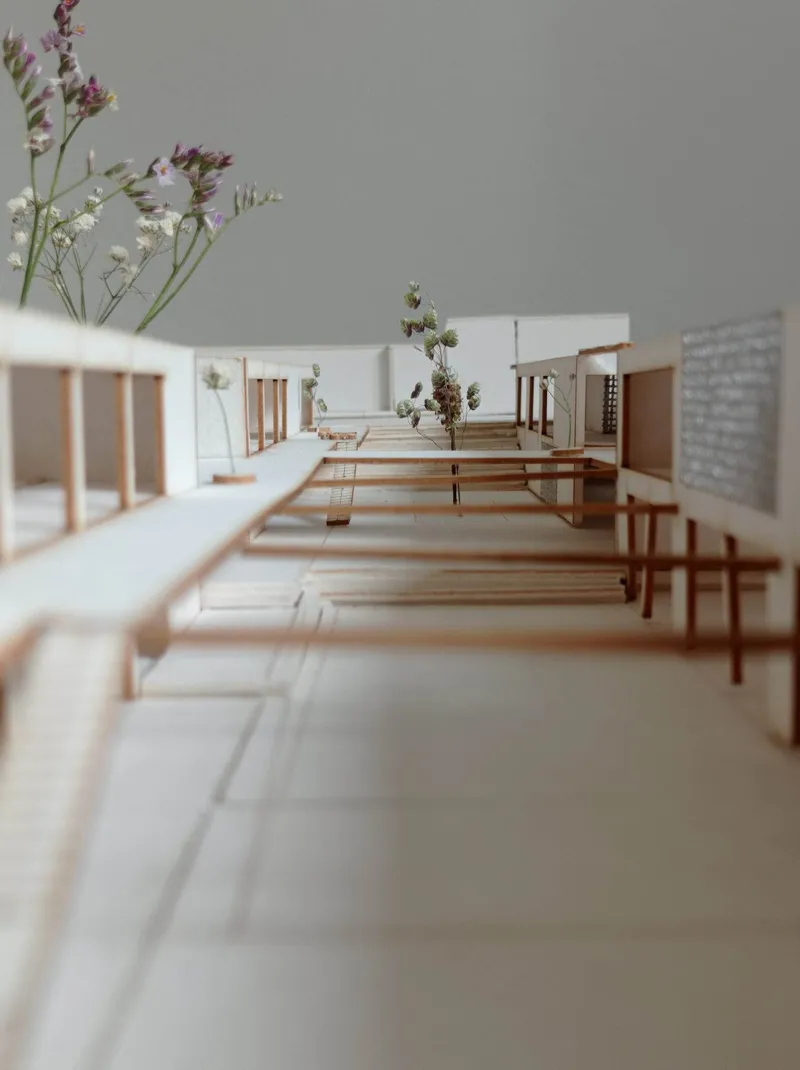
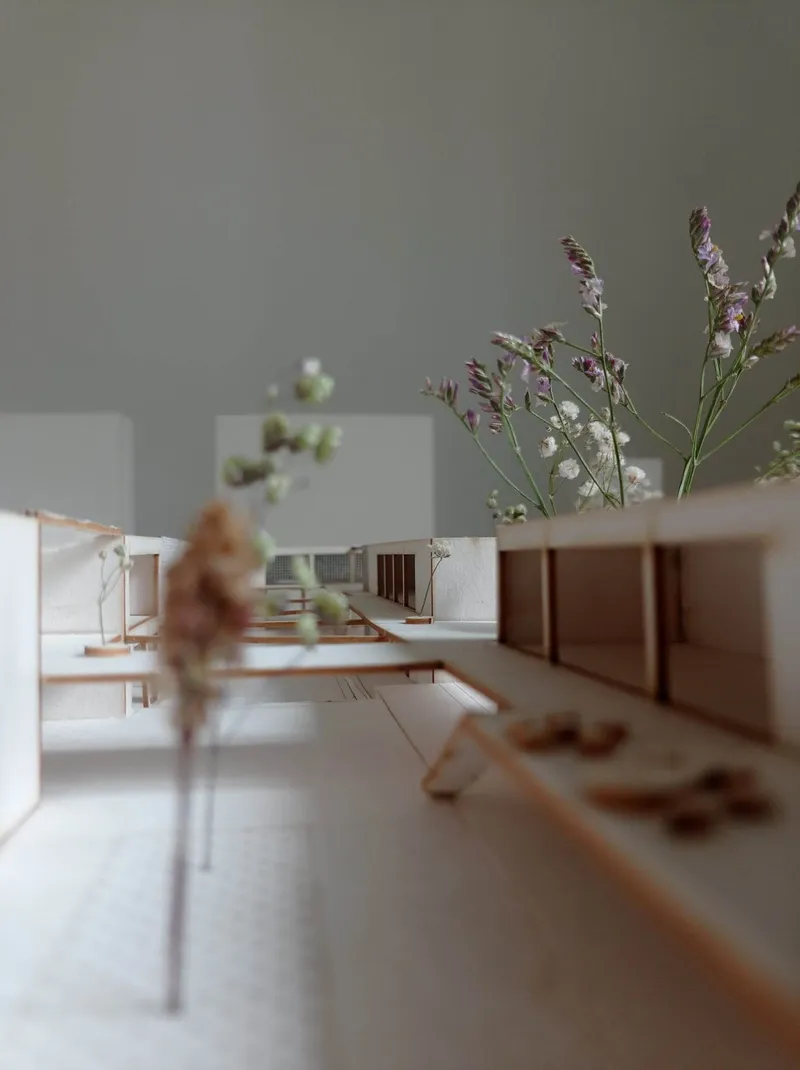
The urban concept is based precisely on the given situation of the plot. I decided to respect the surrounding urbanism and continue to complete the block. The height of the building is limited by the conditions of the competition to 9m, not specified. I decided to create a horizontal mass that naturally transitions from one to two floors thanks to terrain elevations. The upper line of the building flows smoothly through the entire plot, which is in marked contrast to the surrounding buildings. I consider the horizontality of this building to be an element that distinguishes it from its surroundings and thus becomes a kind of orientation point in an otherwise difficult to understand area. Based on the knowledge of Argentine culture and also the conditions provided by the climate in this country, I focused on the contact of man with the exterior. During the design, I took into account the opinion that every part of the building should have direct access to the exterior. So I see the possibility of supporting street life, which is very typical in this country. I therefore decided not to combine all the functions in one building, but to segment them into smaller houses, each of which has its own access to the exterior. Field b ariers offered me the possibility to segment the building into two longitudinal strips at the edges of the plot, which avoids unnecessary backfilling of the soil. In the middle, I create a long residential street full of life. This street leads to the center's main building, which also soundproofs the interior space. Further segmentation of these masses plays with the idea of respecting the original trees on the plot and also with a smooth connection with the neighboring park. The original longitudinal strips thus become two separate buildings in the north and two in the south. I subsequently connect all these objects with a walkway that is accessed directly from the terrain in the western (higher) part of the property.

ARCHITECTURE
The specifications specified the functions that the dance center should contain. I decided to divide them into five groups, each of them has its own building.
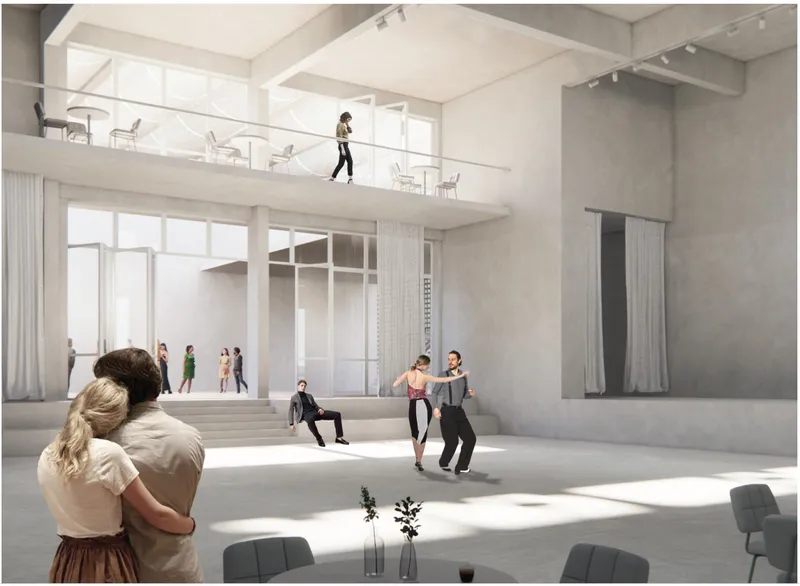
The main building, serving as a filter between the main street and the residential street, has the function of the main auditorium going through two floors in the northern part, and the administrative function on the second floor.
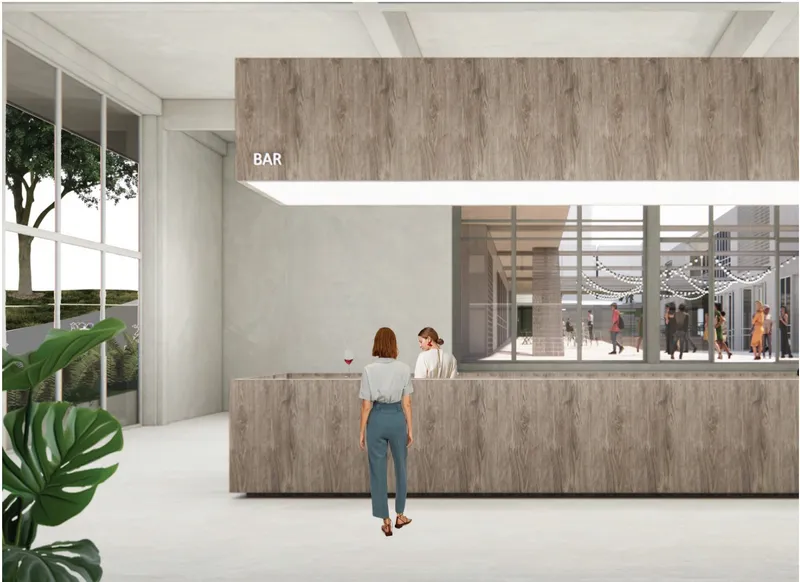
The buildings in the southern part in contact with the Lezama park serve as gastro establishments. The corner building in contact with the western street serves as a food establishment. On the upper floor, there are fast food options, either in a bistro or in a bakery, which quickly tempt random passers-by and also save the dancers during their lunch break. On the lower floor, I create a more park-like character, therefore there is a function of a restaurant with longer seating.
The cafe is located in the second building of the "southern strip". It opens on one side to the residential street with a view of the outdoor dance stages, on the other side it opens to the street between our plot and the Lezama park.
Both of these buildings together form a contact line between Lezam Park and the proposed object. The softness of this line is supported by the intertwining of cafe terraces with park arrangements, which visually convey the atmosphere of Lezama Park.
The other two buildings in the northern part are filled with movement activities. The building in contact with the western street has the function of a fitness center on the upper floor (thanks to the terrain accessible from the public street) and on the lower floor it is a wellness center, mostly buried underground. With the creation of an additional atrium to ensure an intimate exterior space.
The last object, protected from all sides, is the object of the dance school. this position was the center of gravity mainly due to the contact of the dance halls with the residential street and thereby ensuring a specific atmosphere, thanks to a special space reserved for dancers. On the second floor of this building, in addition to other dance halls, there is also the choreographer's apartment, which is separated from the dance halls by an exterior stage.
CONSTRUCTION AND MATERIAL SOLUTION
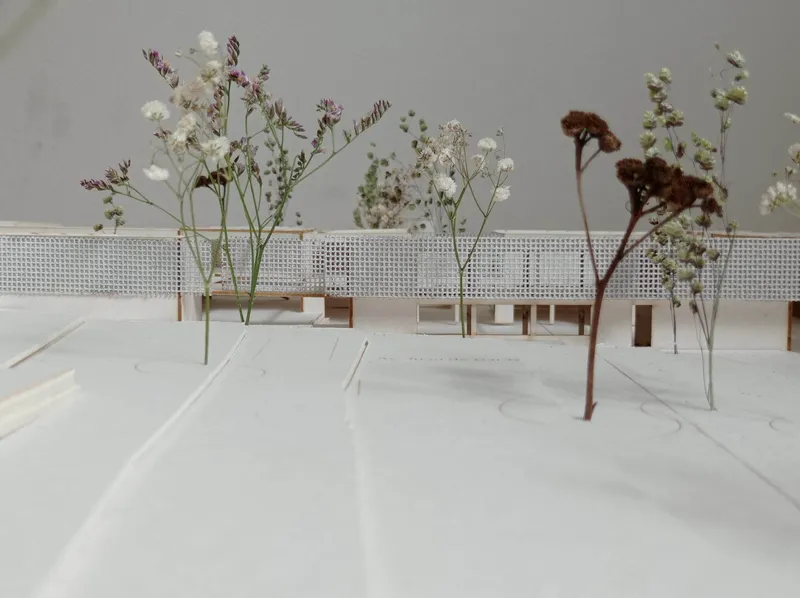
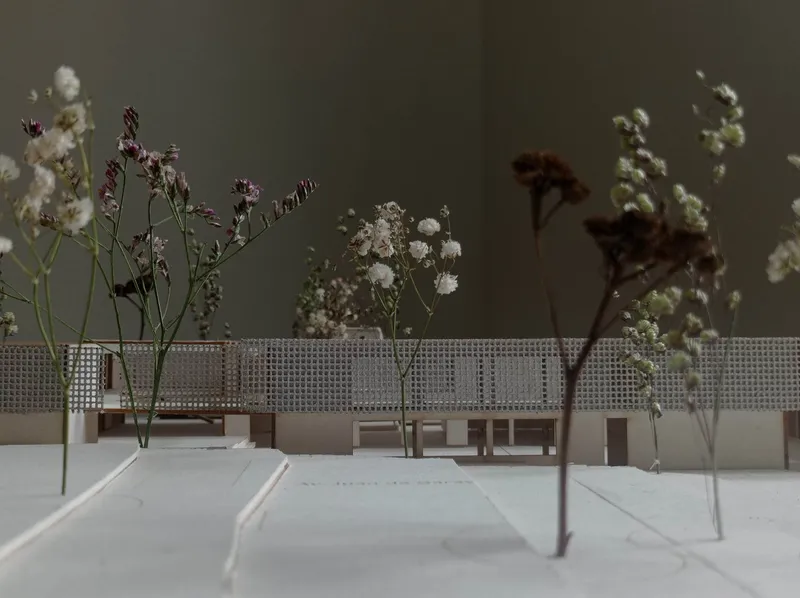
Individual buildings are designed with the use of a reinforced concrete skeleton support system, which allows parking in the underground floor of the building. The walls are made of bricks, which are a typical material used in the area. A distinctive element used in this architecture is the element of hollow bricks, which unifies the southern facade and stretches like a belt around these objects. It supports the object's horizontality. The element is used in several parts of the building as a clever compromise between a glazed and solid wall. It allows pleasant ventilation of the buildings, which is welcome in the given location, as we are located very close to the ocean and it is humid all year round. The walls are plastered with beige rough plaster to create a softer and more pleasant environment. Hollow bricks are in a slightly lighter shade. Building openings for windows are designed as areas, due to the individual functions of the building. Most of them are designed with an accordion opening for a feeling of unity with the exterior when they are opened. In parts where access to the walkway or terrace is not possible, the windows open only in the upper half. All roofs are designed as green for ecological reasons.
CONCLUSION
I believe that with my proposal I managed to fulfill the requirements that were required from the project. To bring a new spirit to the old traditions of dance in Argentina. To attract many people who together will support the creation of a new community with an old, respected culture. The spaces are designed so that everyone can find their place in the complex. I believe that during the semester I successfully managed to understand the culture of the local people. It is our task as architects not only to respect the original culture but also to design in accordance with it and thereby let it continue to grow.


Popular Articles
Popular articles from the community


Conexión: Biophilic Design Reimagines High-Rise Living in Hong Kong
Conexión reimagines high-rise living in Hong Kong through biophilic design, green facades, shared spaces, daylight, water and nature within.

The Earth Pod: 3D Printed Homes for Resilient Refugee Communities
The Earth Pod reimagines refugee housing through 3D printed homes made from clay, combining resilience, self-sufficiency, and rapid shelter.

Riyadh For All: Intergenerational Urban Design for Active Aging in Rabat
Riyadh For All reimagines urban design in Rabat with intergenerational co-living, adaptive courtyards, and Moroccan cultural exchange today.

Co-life: Sustainable Architecture for Age-Friendly Community Living
Co-life reimagines sustainable architecture for seniors through courtyards, rammed earth, shared gardens, and spaces designed for belonging.

Similar Reads
You might also enjoy these articles

Day and Night Park: A Time-Based Urban Newsstand in Beijing
A temporary urban newsstand in Beijing blending travel, light, and reading through poetic colors, compact form, and community-focused design.

Modernist Patio Renovation in El Masnou, Barcelona by Oliver Segura Arquitectura + Cebrià Arquitectura
Modernist patio renovation blending tradition and innovation with a movable pool, leveled floors, and Catalan materials in El Masnou.

Alto Residencial Coop: Cooperative Housing Development in Santiago de Compostela by Carbajo Barrios Arquitectos
A linear cooperative housing complex blending white volumes and perforated metal façades, enhancing community living, natural light, privacy, and urban integration.

Vil Genis School by BPA ARCHITECTURE – Massy, France
Vil Genis School in Massy, France, features sustainable design, south-facing classrooms, community integration, accessible spaces, and modern educational architecture.
Explore Cultural Center Competitions
Discover active competitions in this discipline




Challenge to reimagine the Iron Throne


Photograph architecture without architects


Illustrate the lost glory of Angkor Wat - Render Challenge


Design challenge to reuse E-waste
Comments (0)
Please login or sign up to add comments
No comments yet. Be the first to comment!