Exhibition Scenography in Architecture: OMA’s Design for the 2025 Islamic Arts Biennale
OMA’s scenography for the 2025 Islamic Arts Biennale redefines exhibition architecture, merging spatial abstraction with cultural storytelling for an immersive experience.


The 2025 Islamic Arts Biennale, designed by OMA, presents a groundbreaking approach to exhibition scenography in architecture. Held in Jeddah, Saudi Arabia, within the vast Hajj Terminal canopy, this large-scale event showcases over 500 historical artifacts and 30 contemporary art commissions, creating a dialogue between tradition and modernity. With a design that integrates abstract spatial forms, restrained material palettes, and immersive lighting, OMA’s scenography redefines how architectural elements can shape exhibition experiences.
A Monumental Exhibition Space
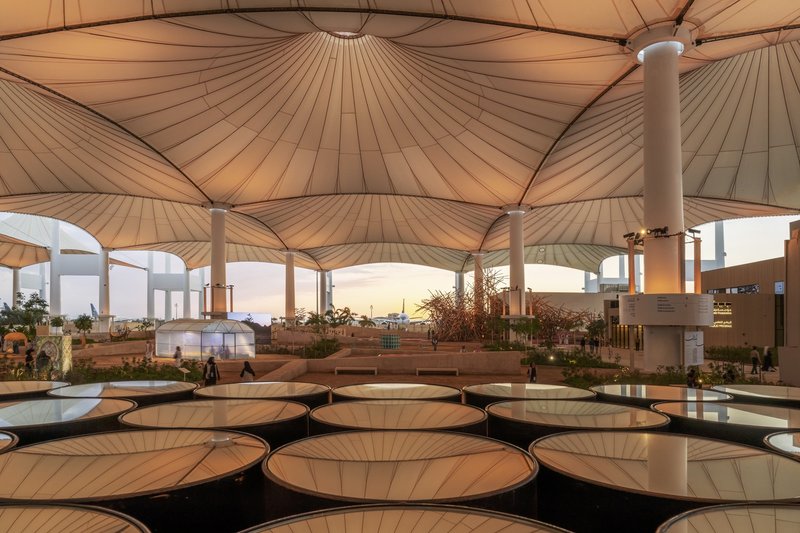
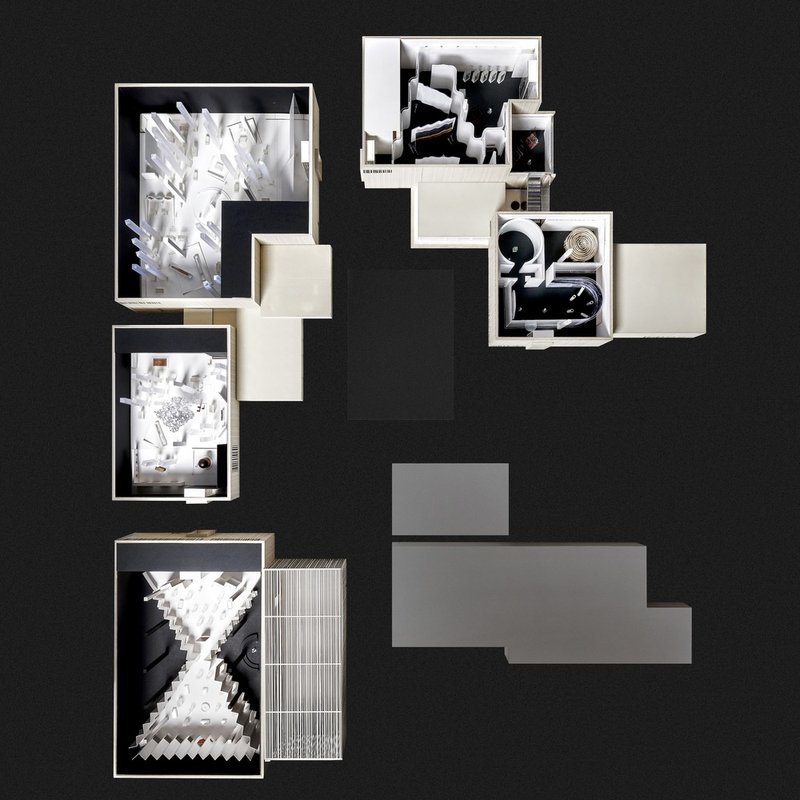
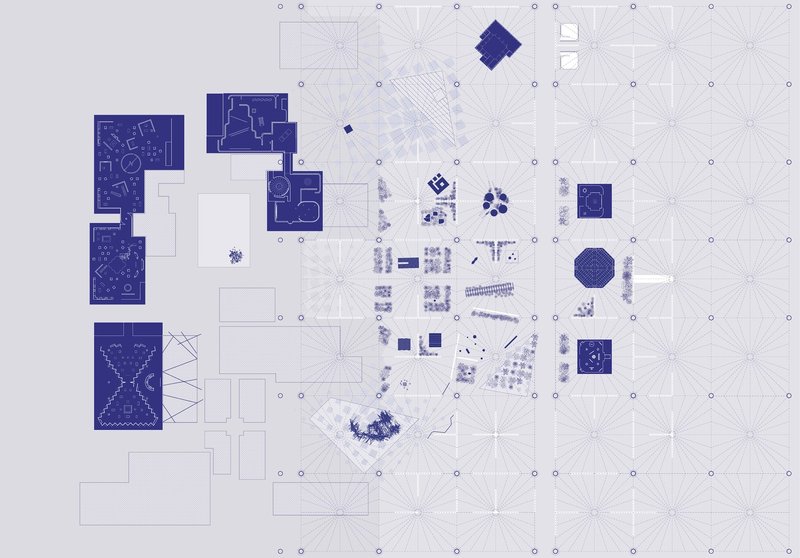
Spanning 120,000 m², the biennale is divided into five galleries, two pavilions, and expansive outdoor installations. The exhibition is structured around three primary indoor sections—AlBidayah (The Beginning), AlMadar (The Orbit), and AlMuqtani (Homage)—while the outdoor Almidhallah (The Canopy) creates a dynamic landscape for site-specific installations. Each space is carefully choreographed to guide visitors through a journey of cultural and artistic exploration.
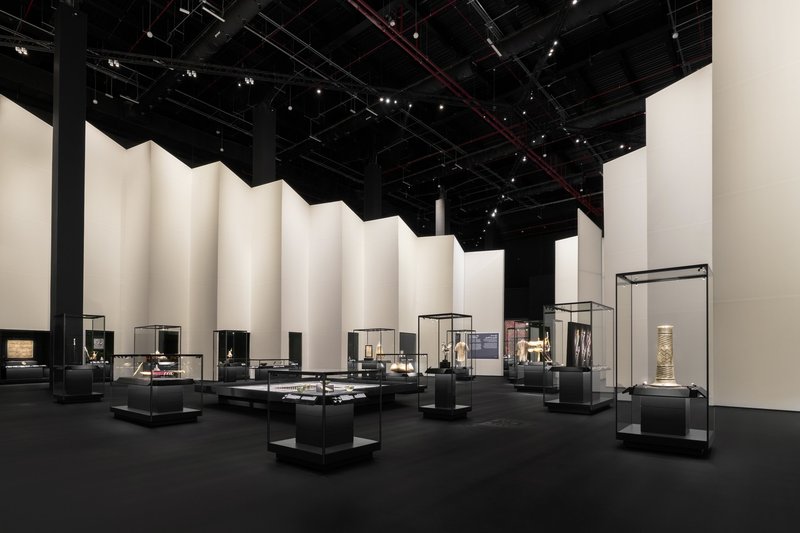
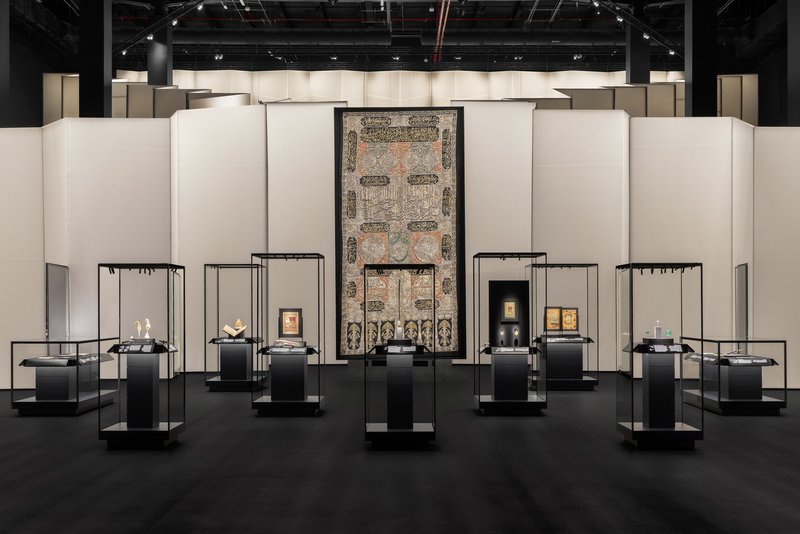
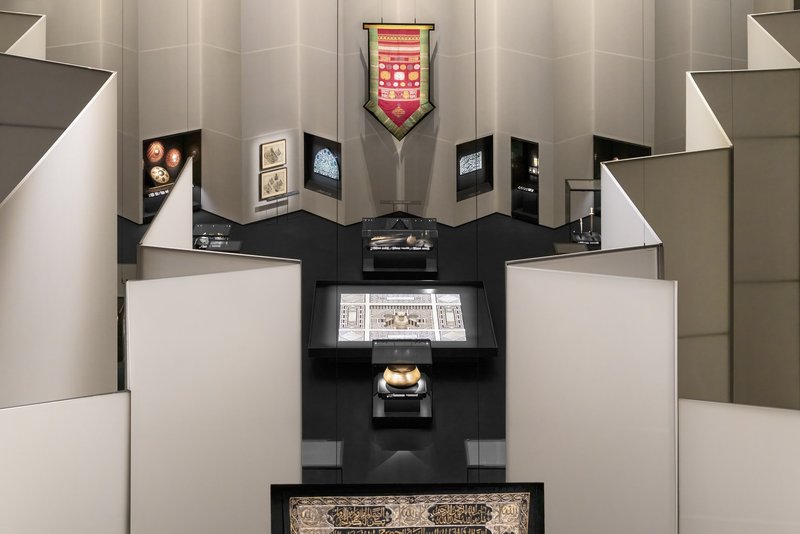
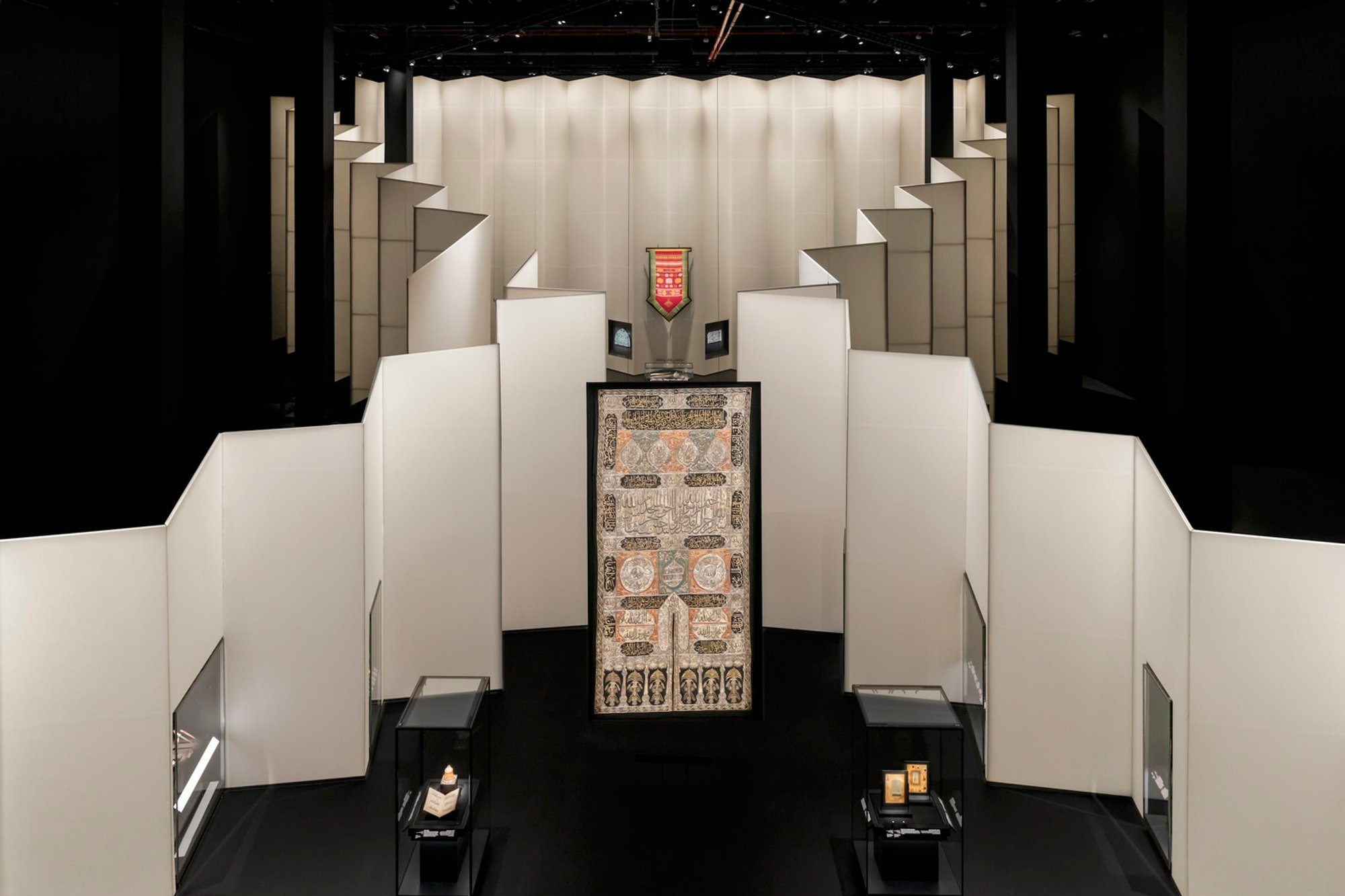
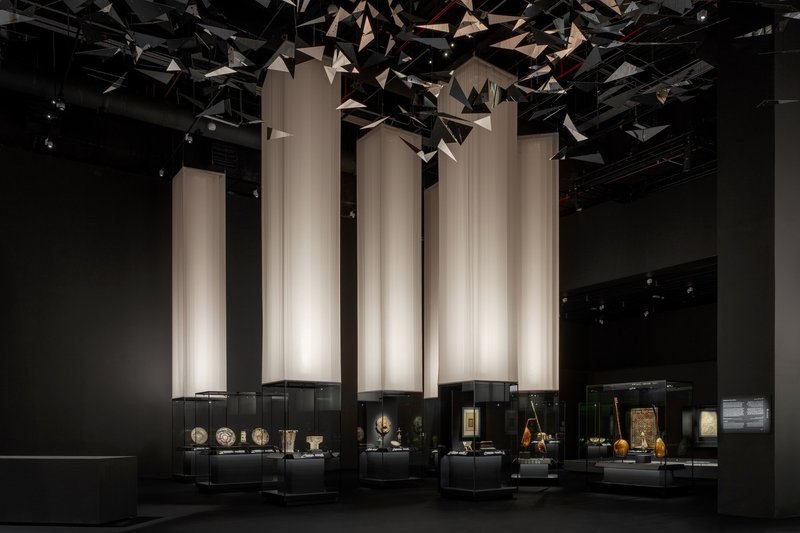
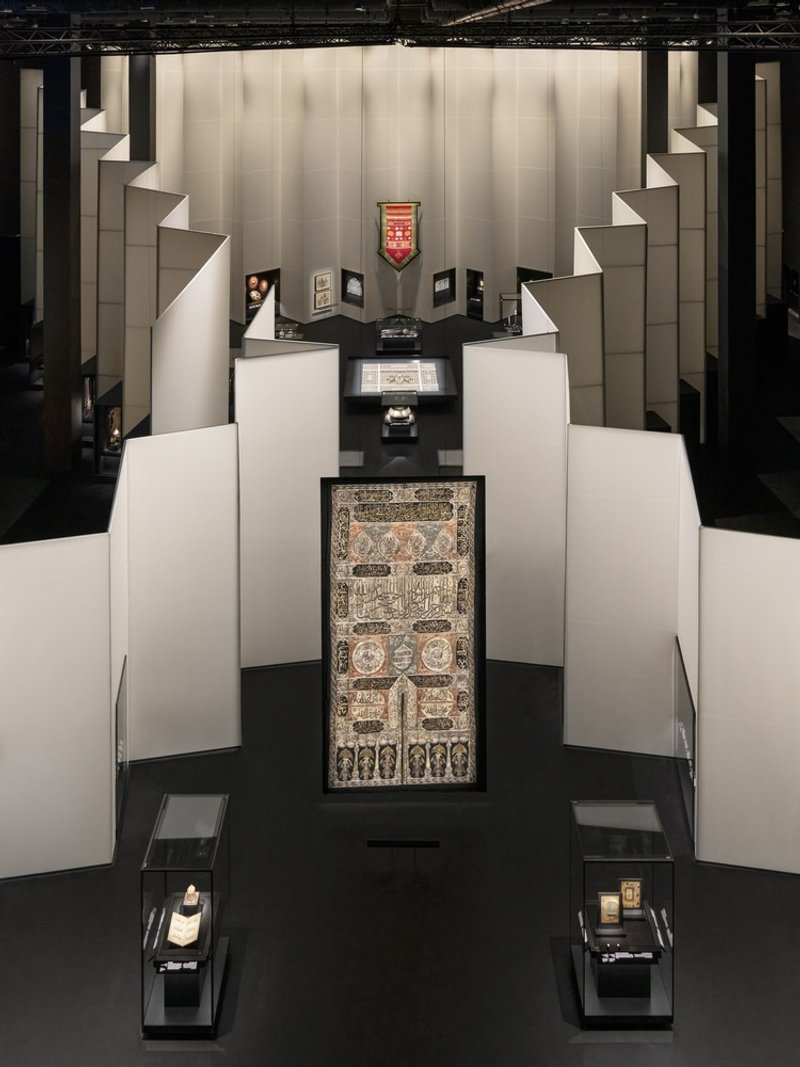
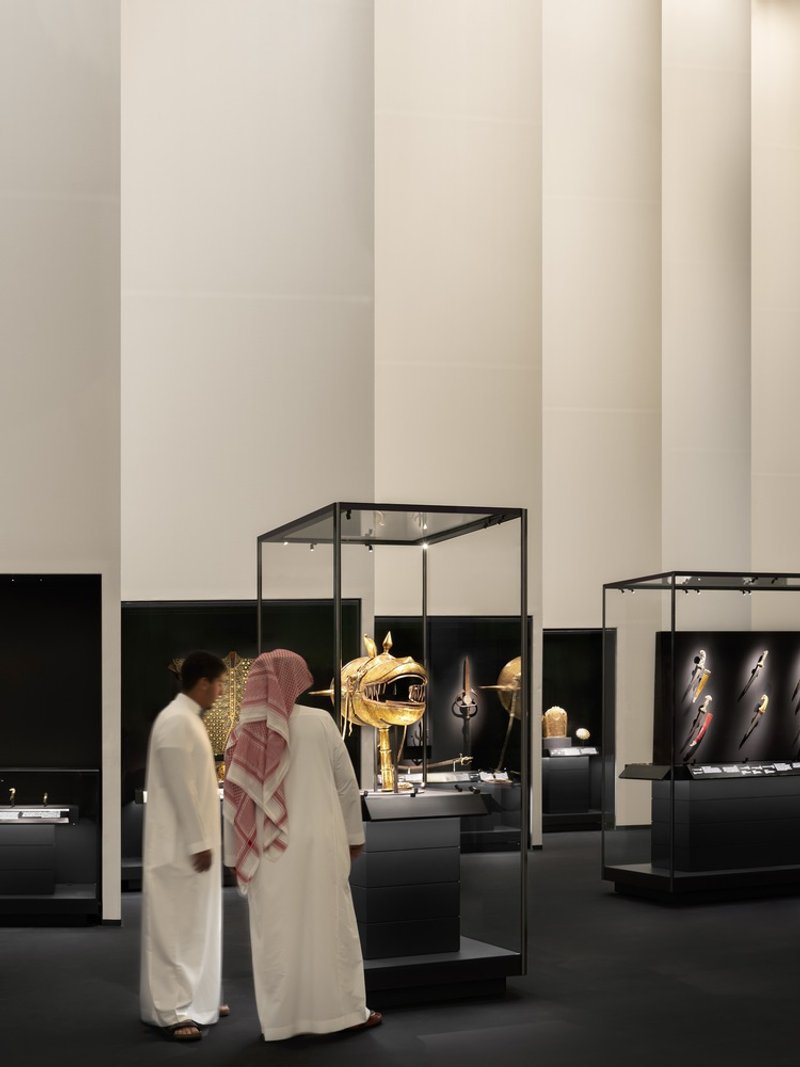
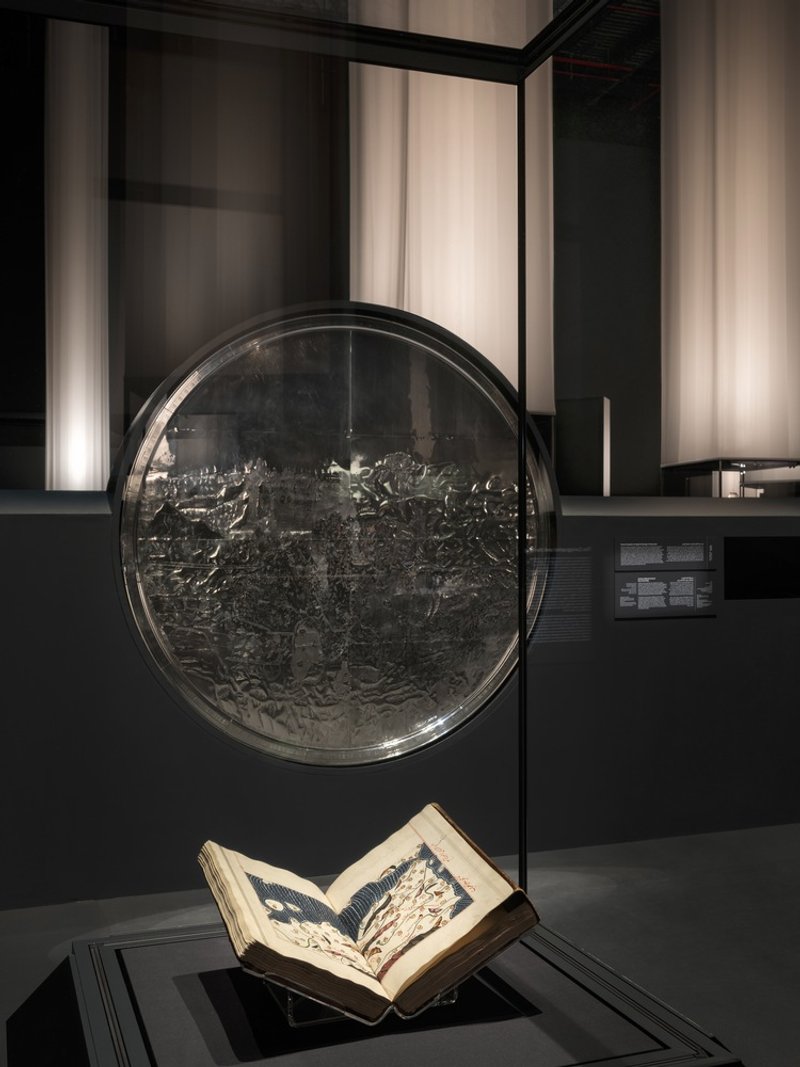
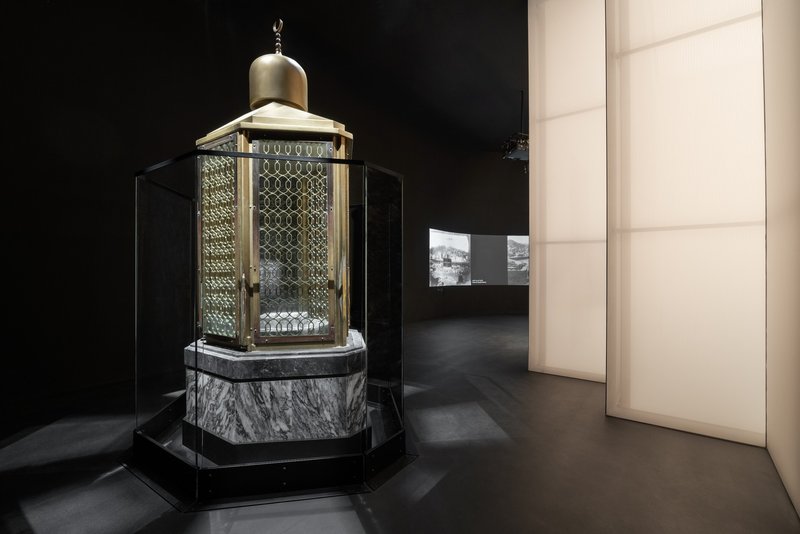
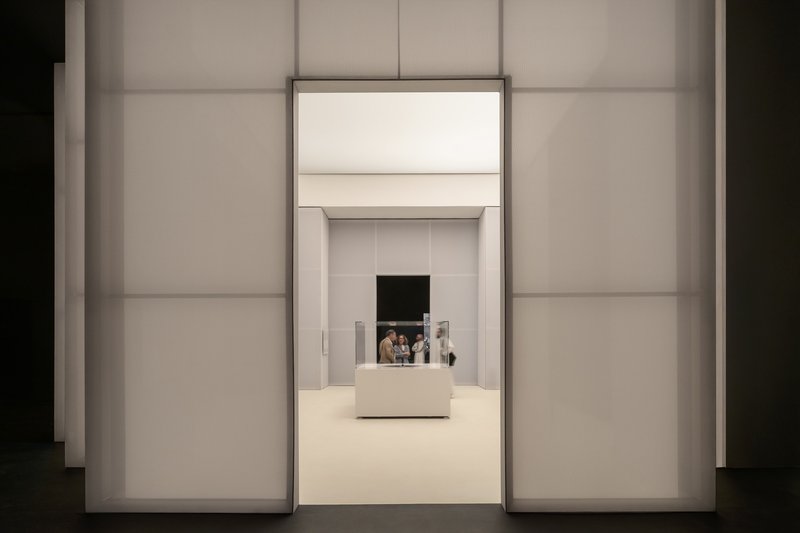
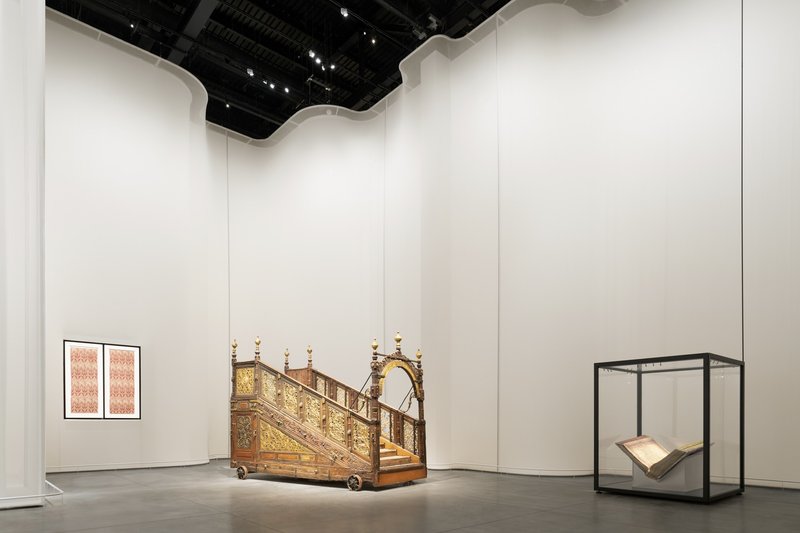
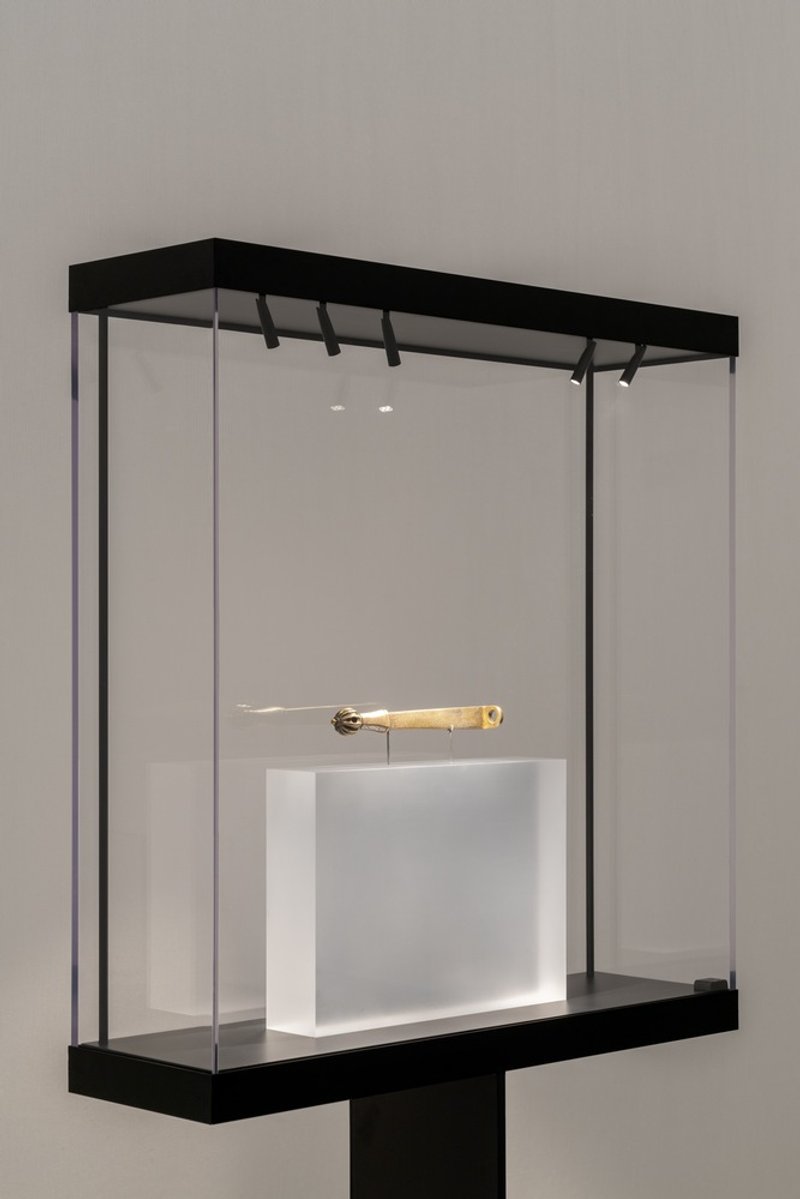
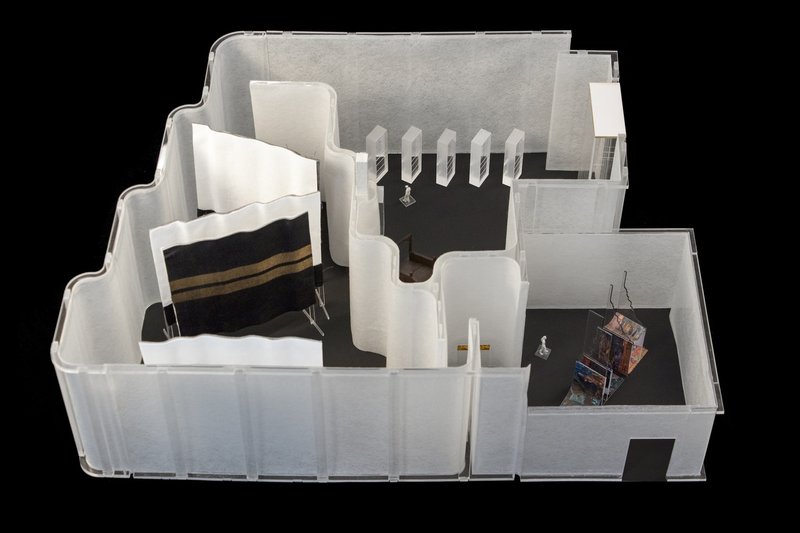
OMA’s scenography employs a minimalist approach, using white fabric in various forms to establish a cohesive visual language. The perceived color variations across the exhibition are achieved through nuanced lighting techniques, while black-painted vitrines create striking contrasts that emphasize the displayed artifacts. This careful orchestration of materiality and light enhances the exhibition’s immersive quality, allowing historical and contemporary works to engage in a fluid dialogue.
Spatial Narratives in Exhibition Design
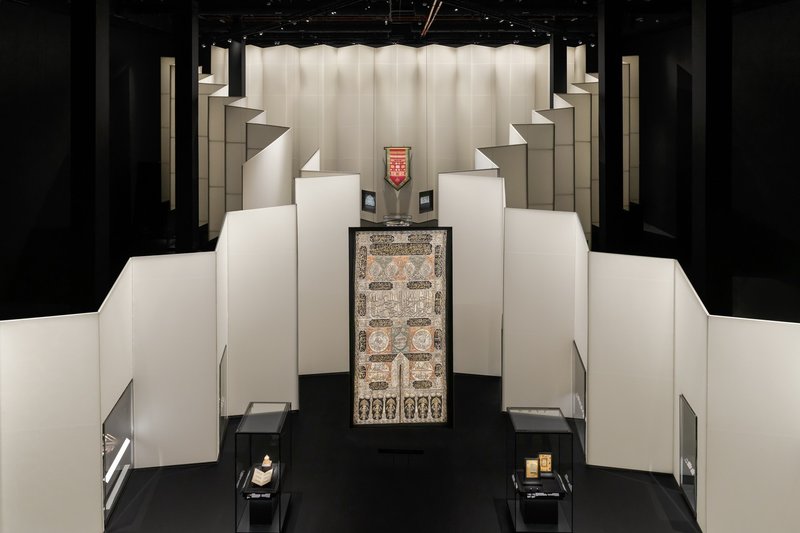
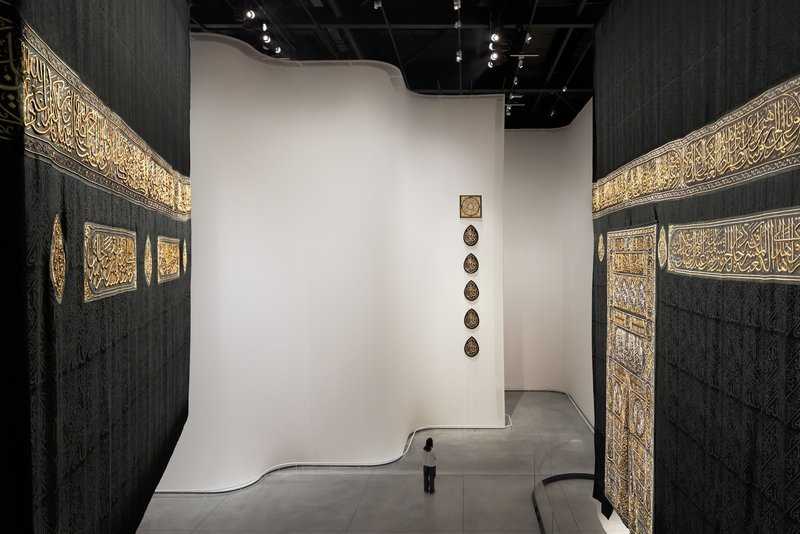
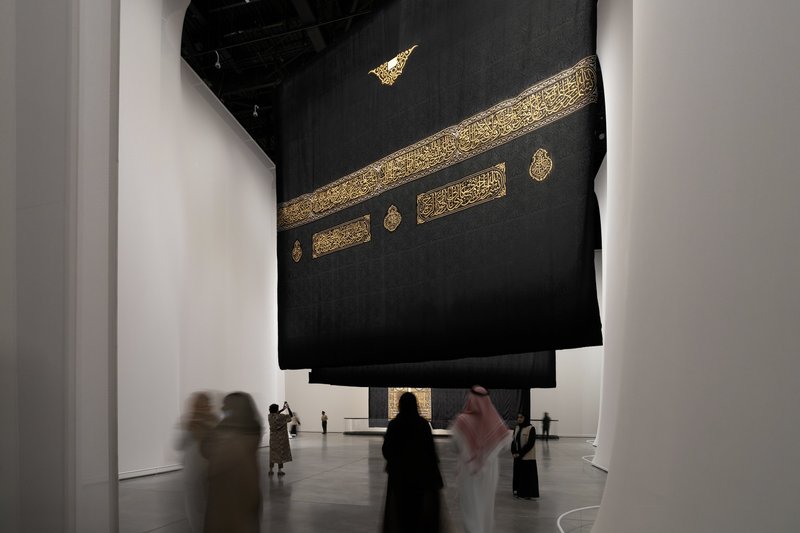
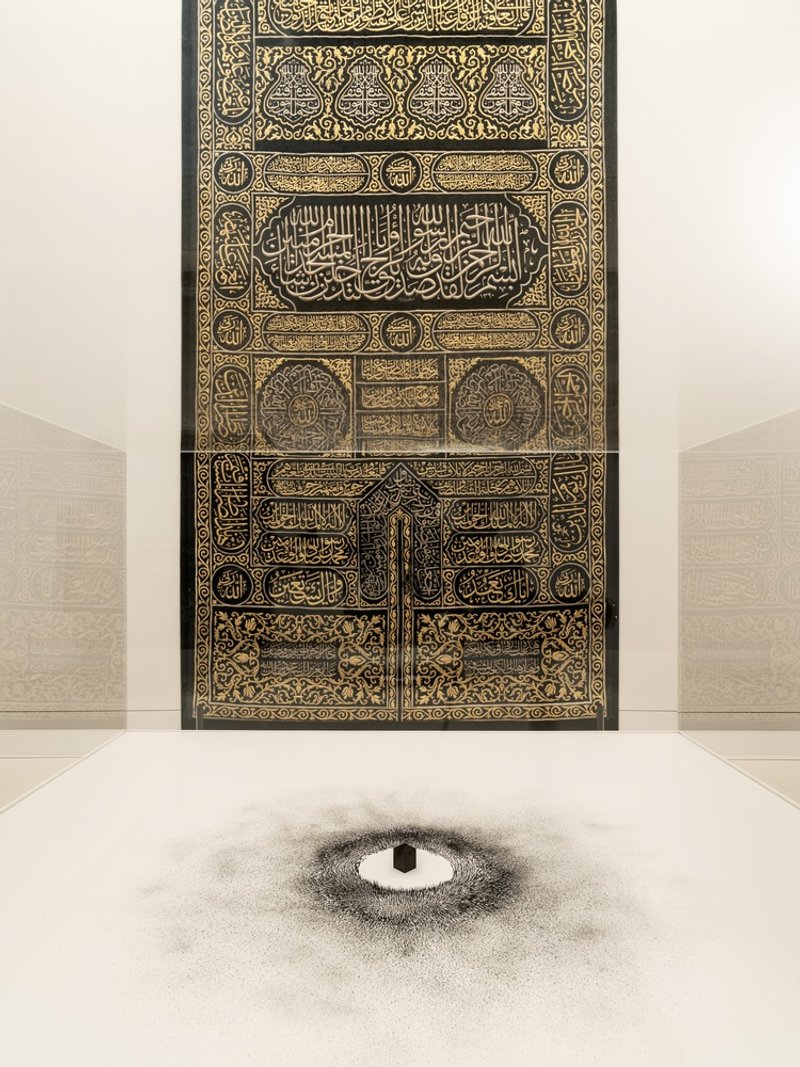
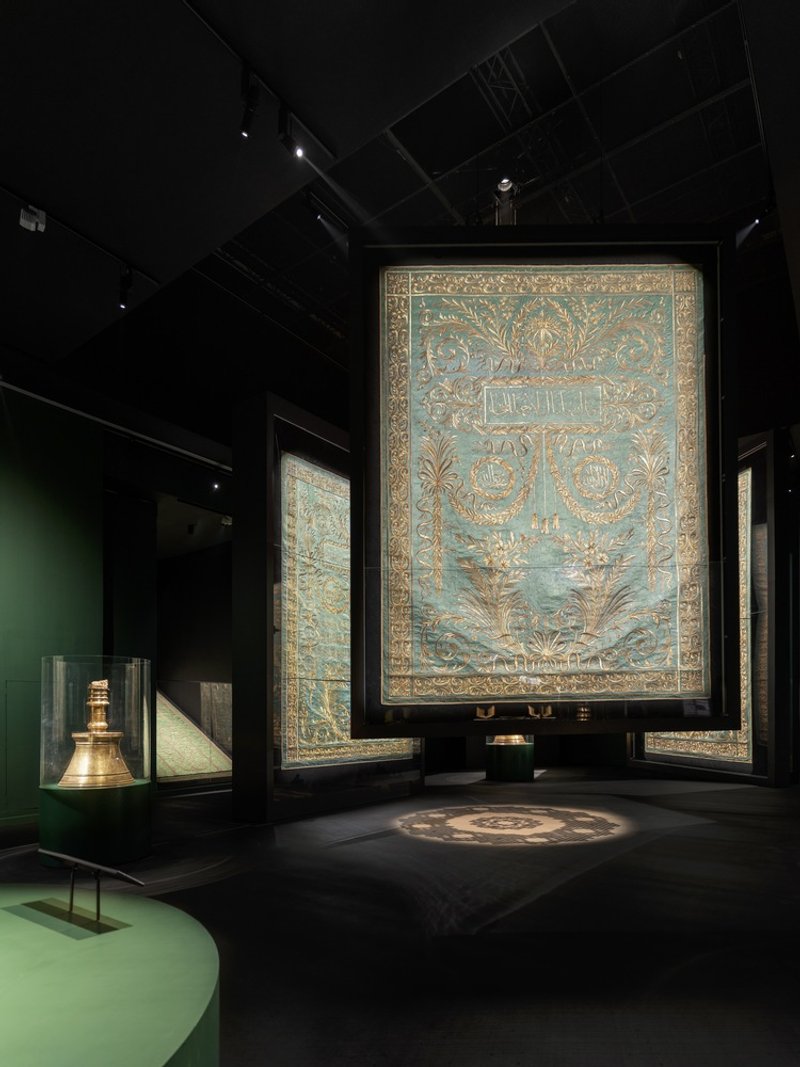
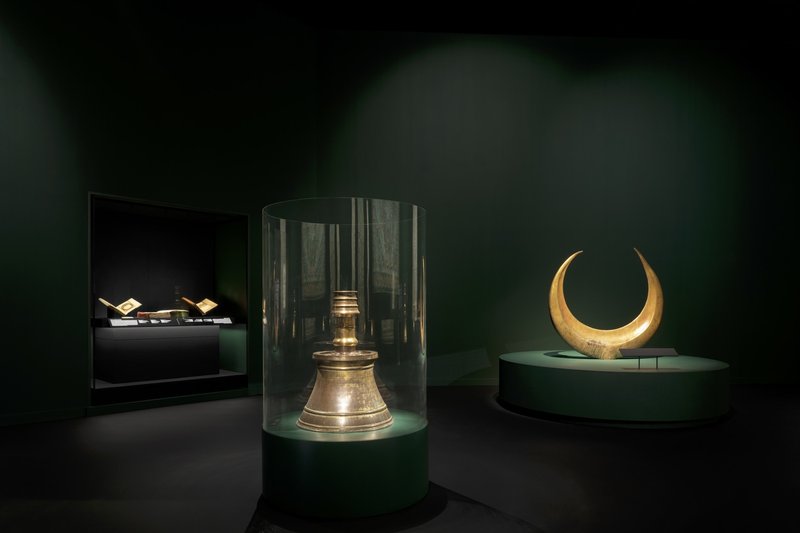
AlBidayah is dedicated to sacred artifacts and features towering translucent walls that amplify the monumental presence of the displayed objects. This section includes the unprecedented full exhibition of four Kiswahs of the Holy Kaaba, presented in their entirety for the first time. Two pavilions—AlMukarramah and AlMunawwarah—extend this sacred narrative under the canopy. AlMukarramah is conceived as a darkened space with a glowing white chamber at its core, while AlMunawwarah adopts a fluid, non-linear spatial arrangement. These contrasting environments evoke a sense of discovery and reverence, reinforcing the spiritual significance of the artifacts.
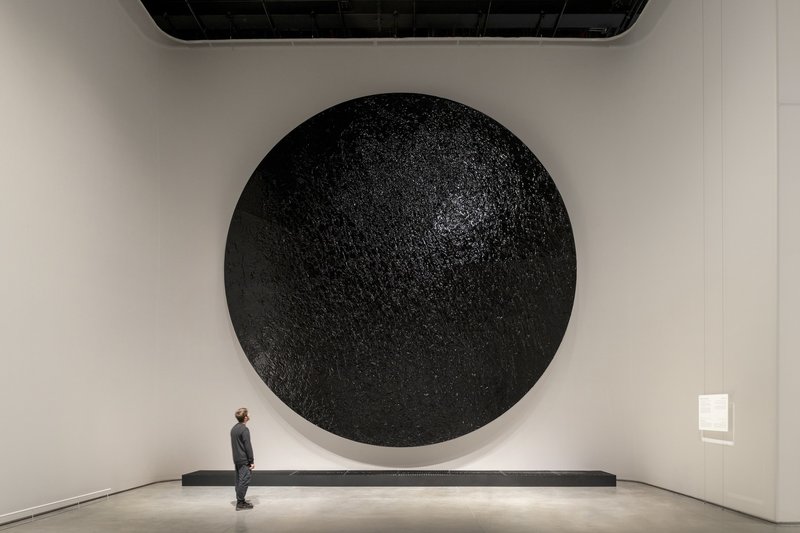
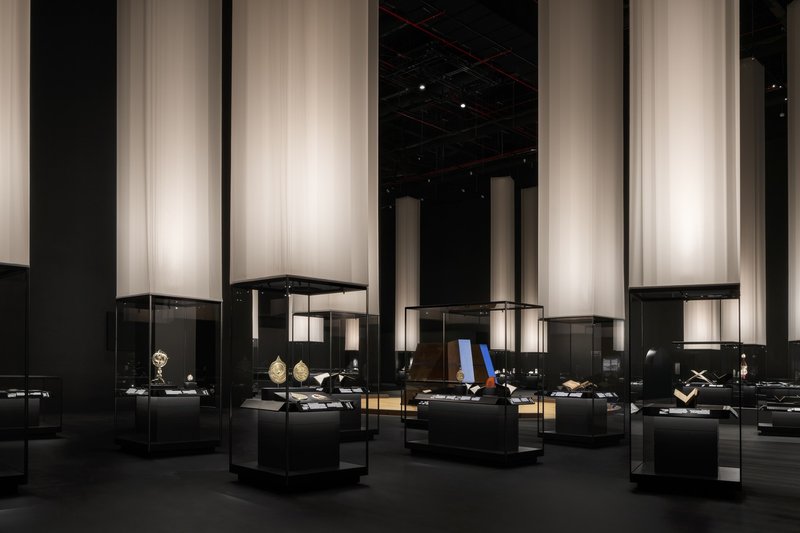
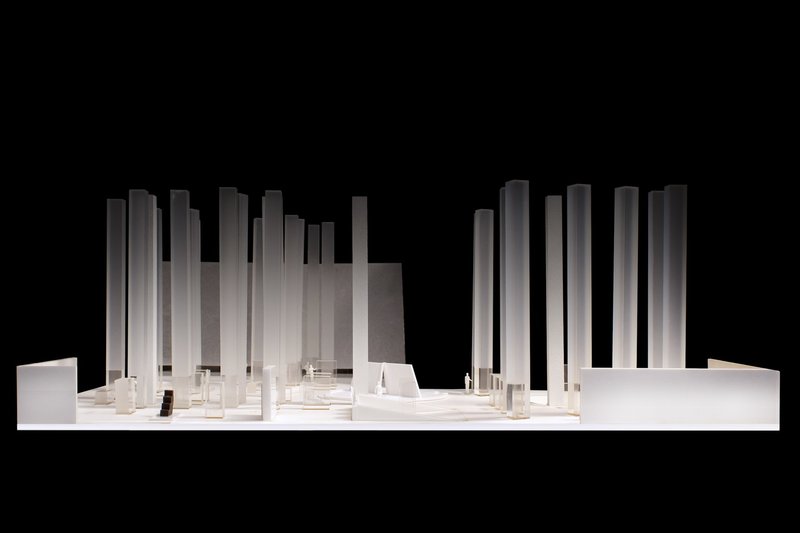
AlMadar, a space that incorporates contributions from 34 institutions across 21 countries, introduces an innovative architectural composition. The design features 37 abstract rectangular columns made of concentric translucent textiles, internally illuminated to create an ethereal forest-like effect. These columns serve as extensions of the vitrines below, rising towards the ceiling and dissolving into darkness. Their density and placement help visitors intuitively navigate thematic clusters, creating a fluid and immersive spatial experience.
A Dynamic Approach to Display Design
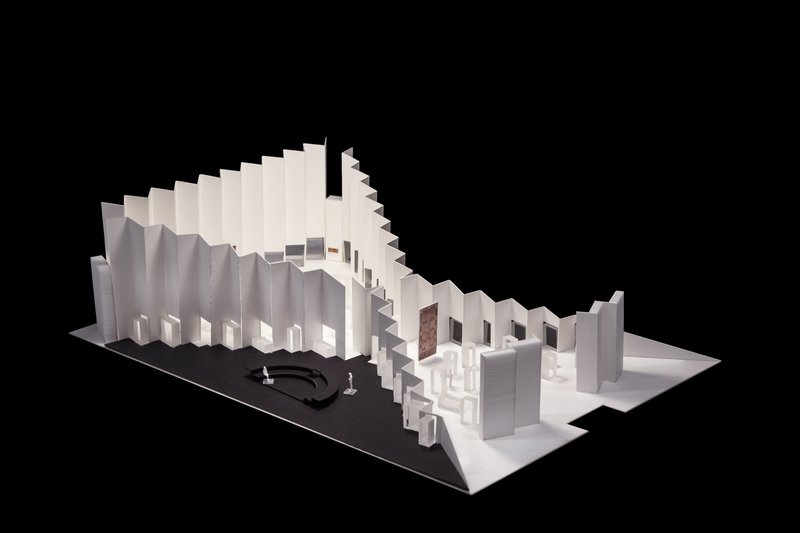
The AlMuqtani section is carefully structured to ensure equal emphasis on two distinct collections. Its bowtie-shaped layout divides the gallery into two symmetrical triangular zones, each dedicated to a separate collection. Pleated walls extend from eye level to the full room height, seamlessly integrating vitrines within the folds. As visitors move through the space, the exhibition unfolds dynamically, reinforcing the curatorial narrative through architectural intervention.
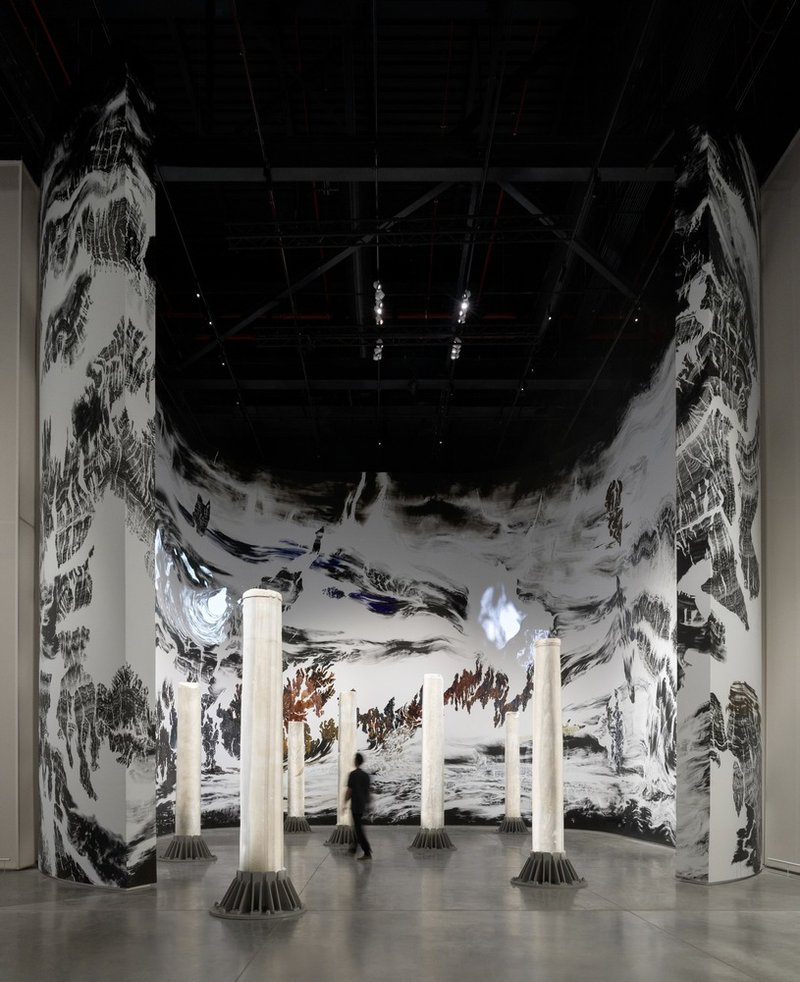
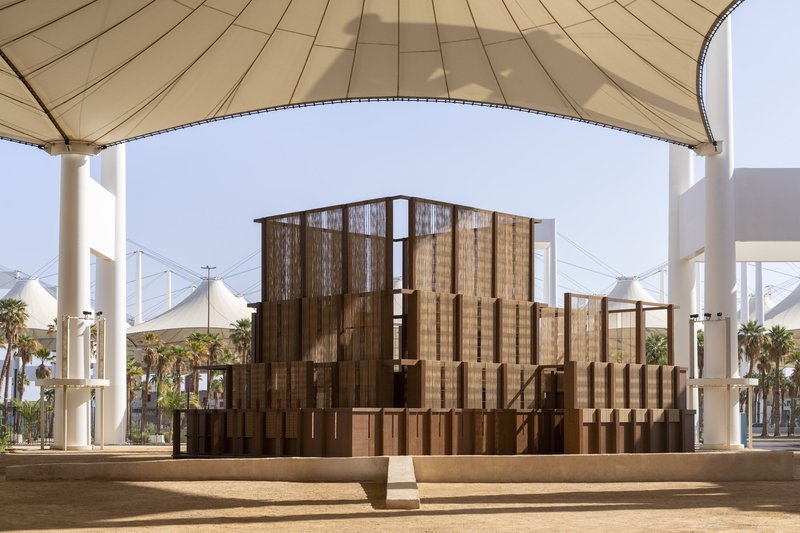
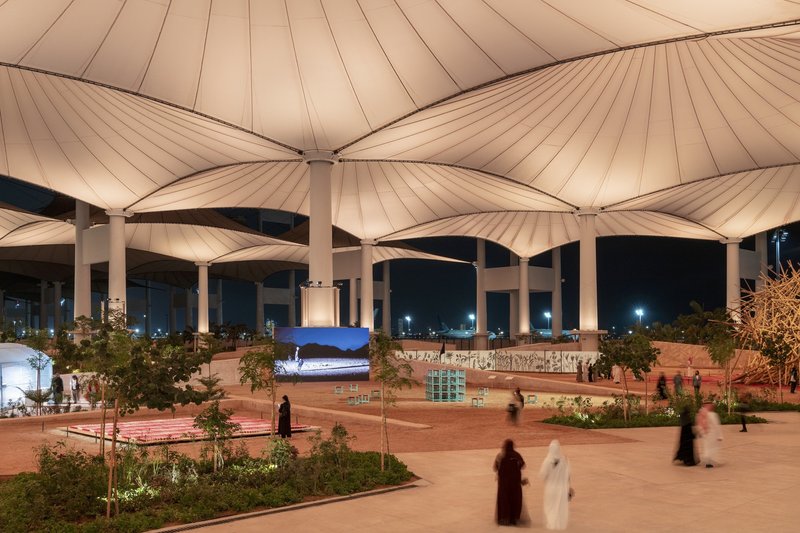
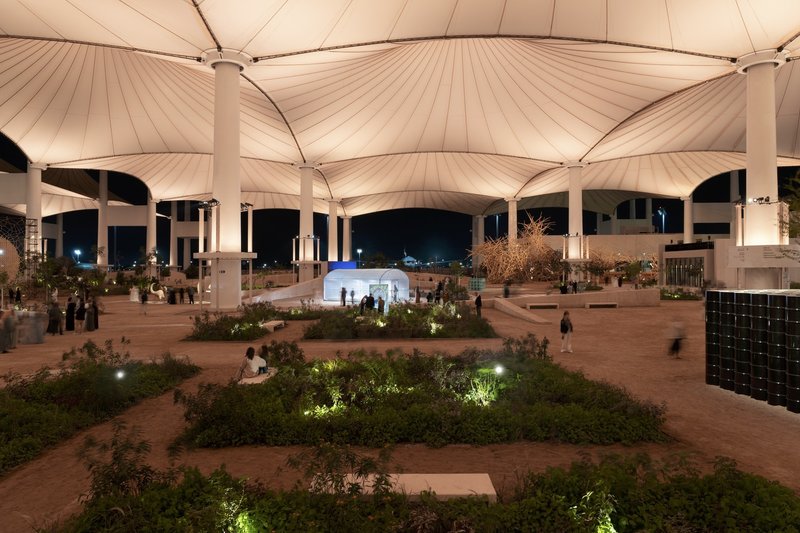
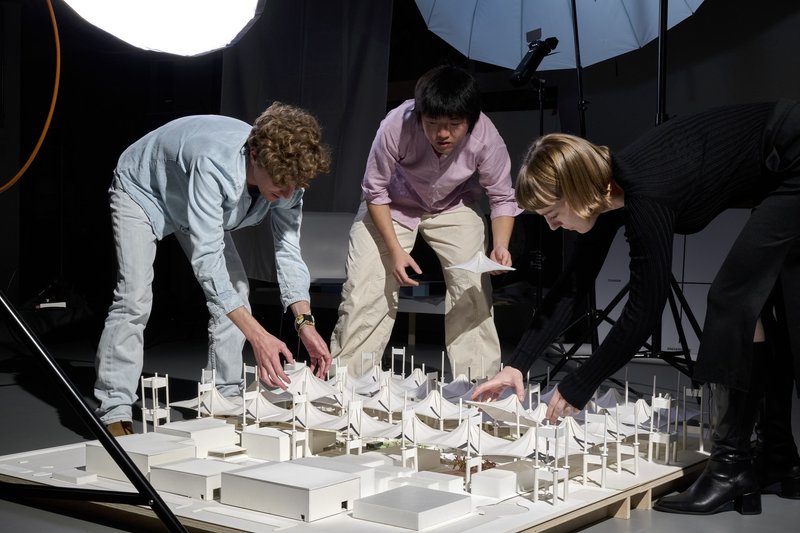
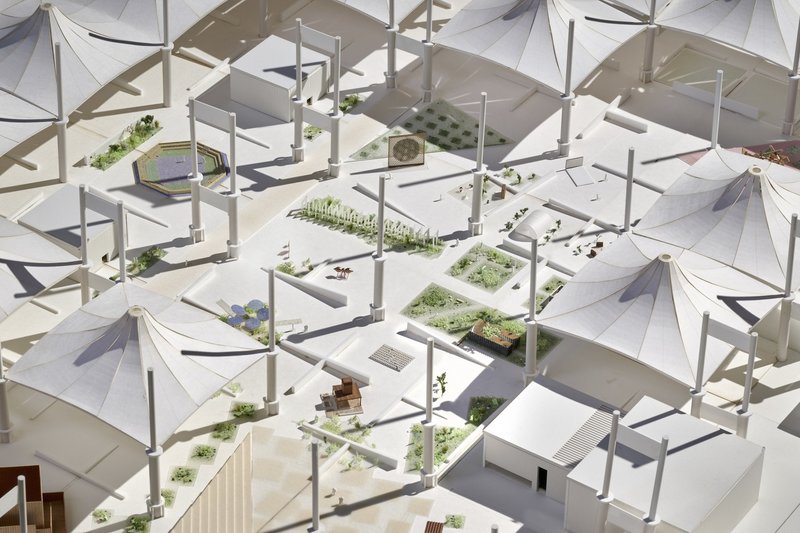
The outdoor Almidhallah segment explores the theme of gardens in Islamic culture, with site-specific installations arranged within a structured landscape. Building upon OMA’s previous 2023 intervention, the new design introduces extensive plantations that shape the exhibition’s spatial rhythm. Nine canopy bays define a central square, creating a more intimate and immersive outdoor experience that contrasts with the grandeur of the indoor spaces.
Redefining Exhibition Scenography in Architecture
OMA’s scenography for the 2025 Islamic Arts Biennale exemplifies the transformative power of exhibition scenography in architecture. By merging spatial abstraction with cultural symbolism, the design creates a multi-layered sensory experience that enhances the understanding and appreciation of Islamic art. The deliberate use of materiality, lighting, and spatial composition reinforces the exhibition’s thematic depth, demonstrating how architecture can serve as an active medium in curatorial storytelling.
This innovative approach sets a new precedent for exhibition design, illustrating how contemporary architectural strategies can reinterpret historical narratives. Through its thoughtful integration of space, light, and form, OMA’s scenography establishes a compelling dialogue between the past and present, offering visitors an immersive and deeply resonant cultural experience.
All Photographs are works of Marco Cappelletti