
Exploring Three Ecological Pavilions by the Sea: A Fusion of Art and Ecology
The article describes three ecological pavilions on Lingang's coastline, emphasizing unique designs that blend architecture with marine science themes.


The "Three Ecological Pavilions by the Sea" at Lingang, Pudong, China, represent a visionary endeavor in ecological architecture, blending environmental consciousness with artistic expression. These installations, integral to the Shanghai Lingang Ecological Restoration Project, underscore the harmonization of architectural innovation with the natural seascape.
Design Philosophy and Ecological Integration
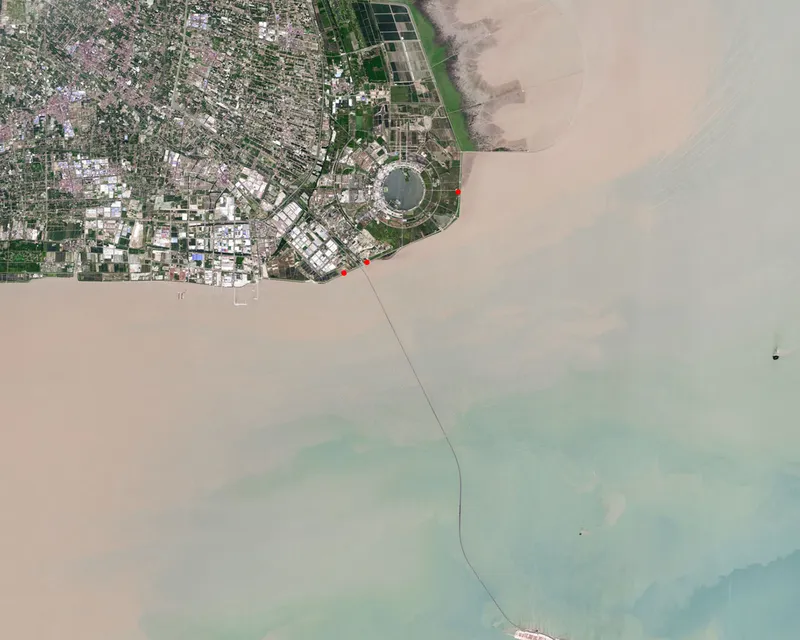
The pavilions are strategically positioned along a 17-kilometer stretch of coastline, each crafted to provide refuge and educational insights into marine ecology. The architects at HCCH Studio were tasked with creating structures that were visually striking yet functionally minimalistic, ensuring each pavilion stood out as a landmark while fostering ecological awareness and interaction.
Unique Architectural Features
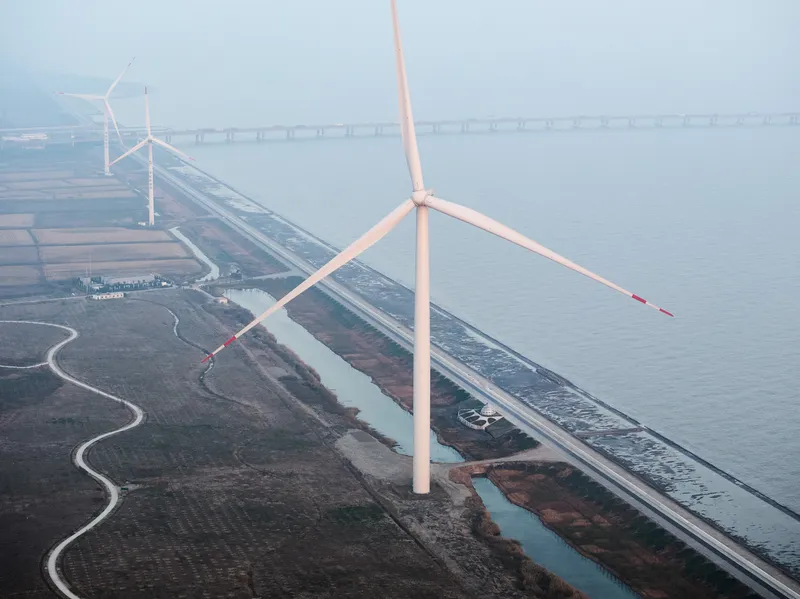
Membrane Sea Snail Pavilion
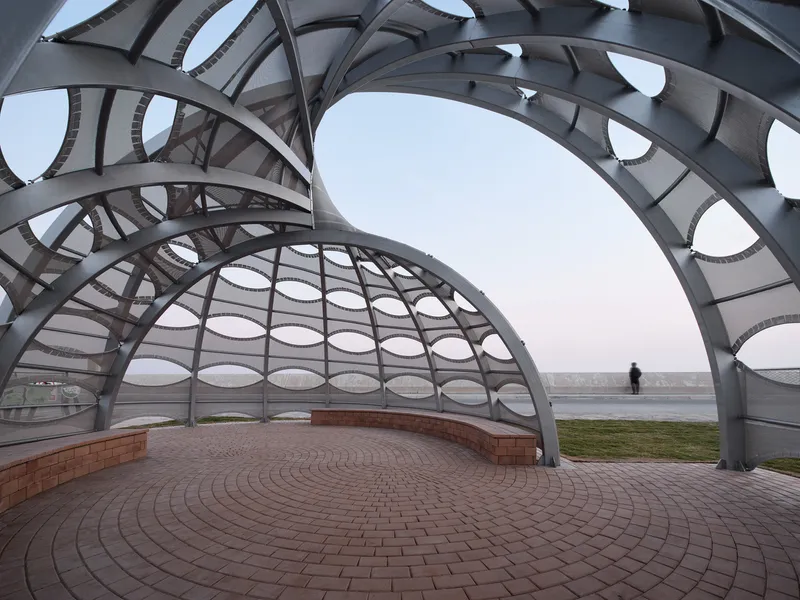
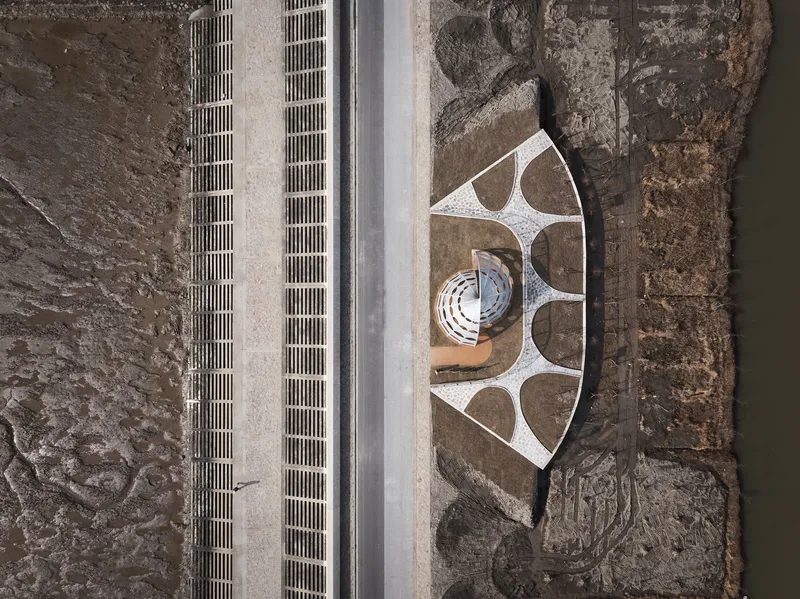
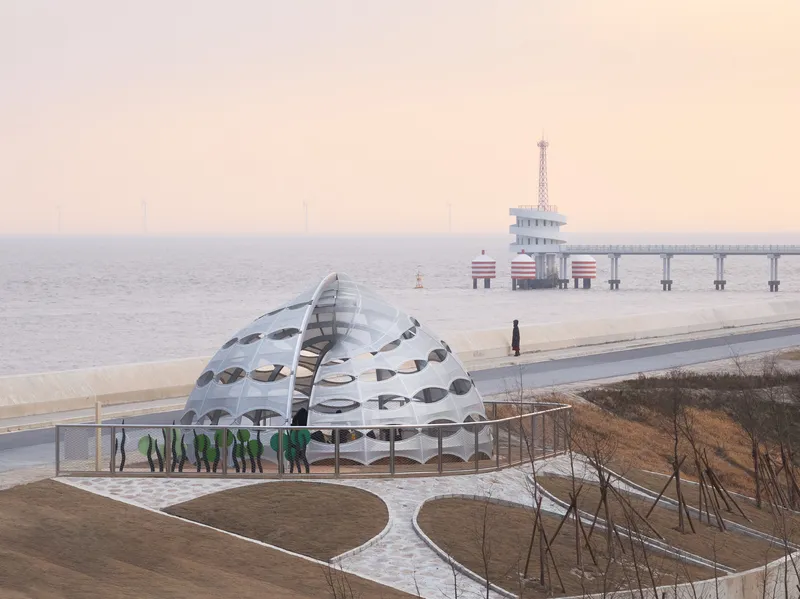
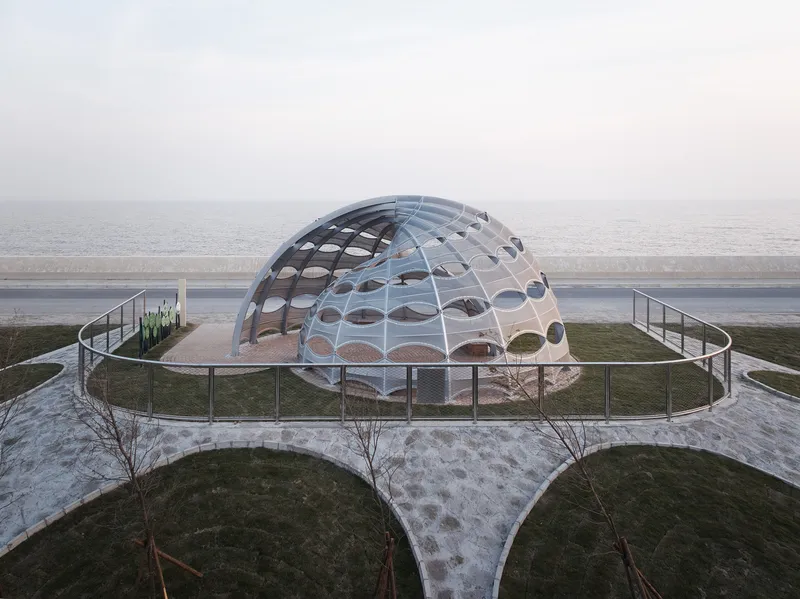
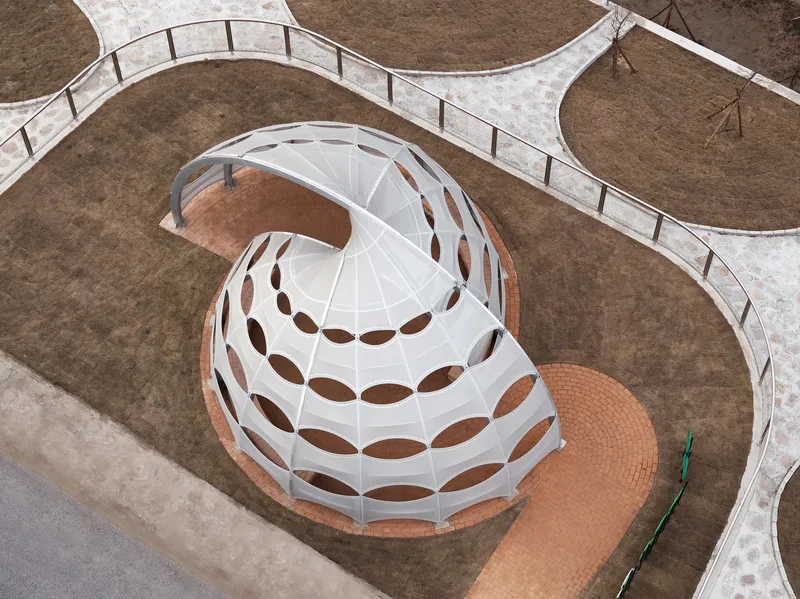
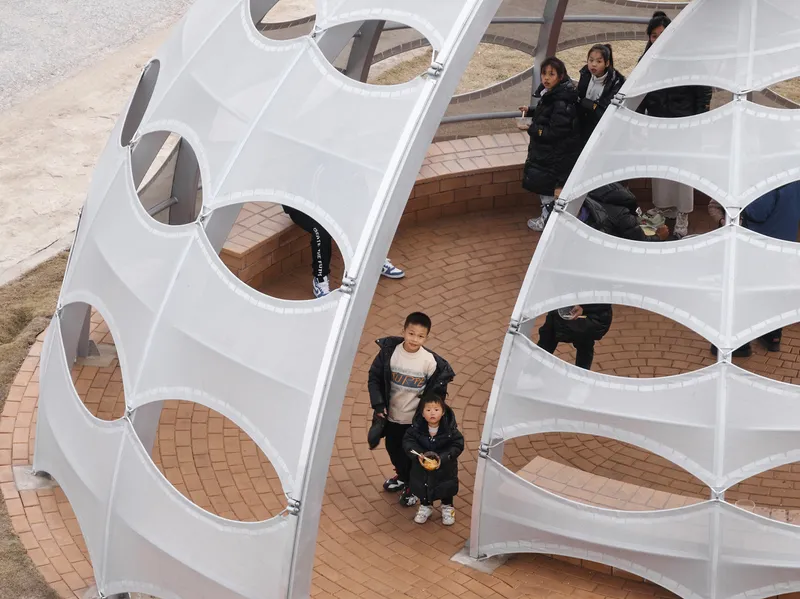
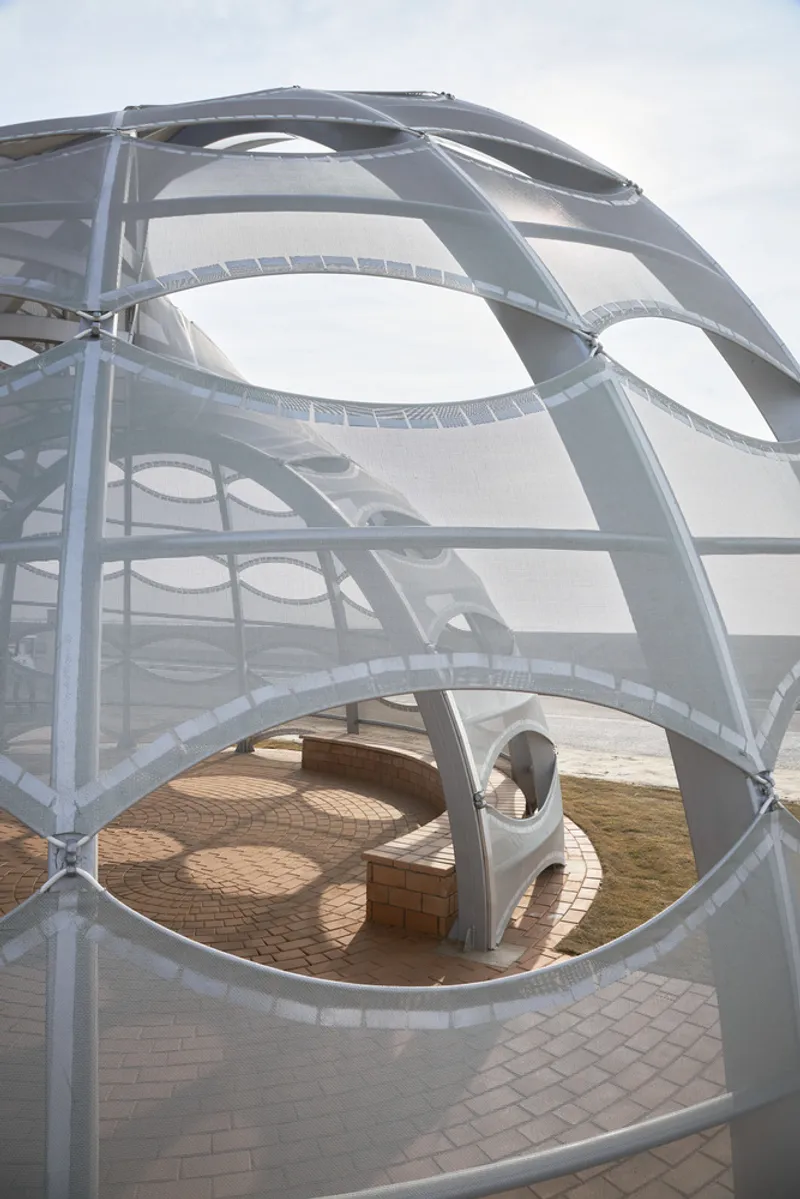
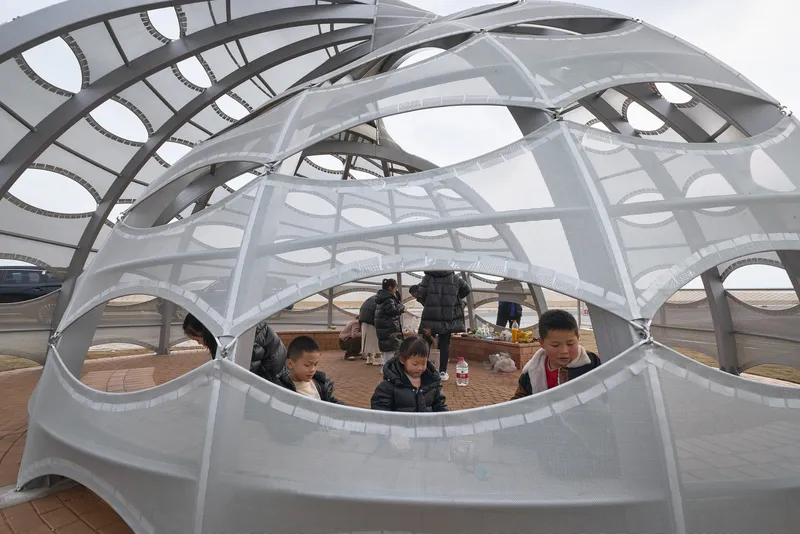
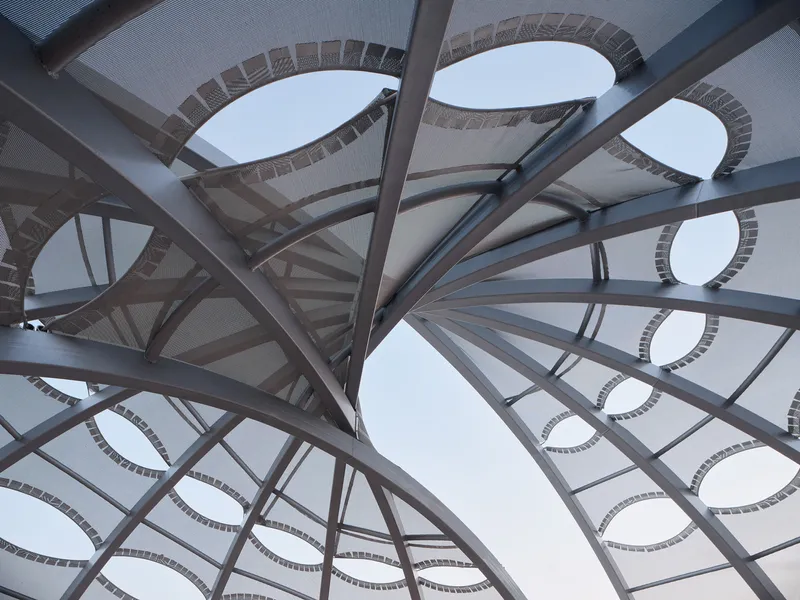
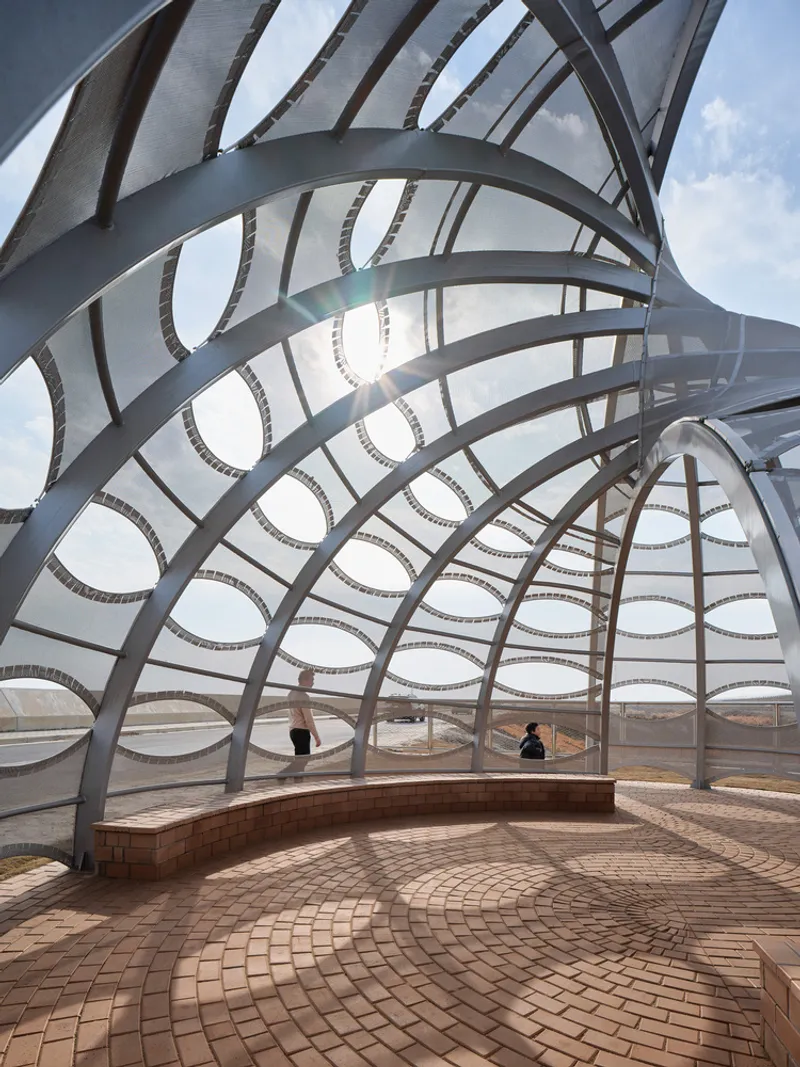
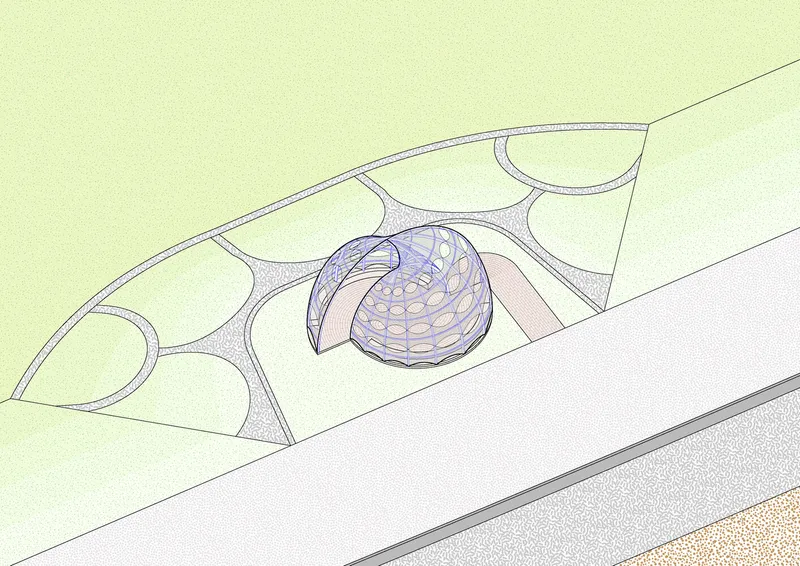
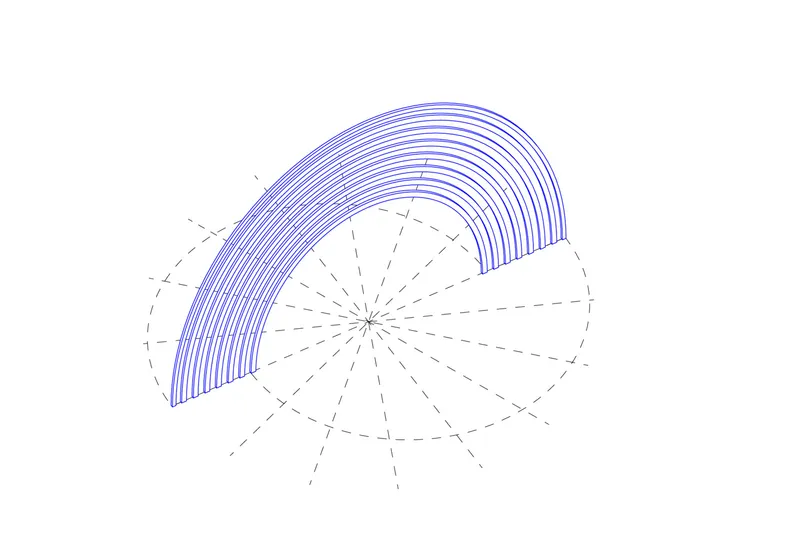
Positioned beneath a towering wind turbine, the Membrane Sea Snail Pavilion boasts a futuristic design with its fabric membrane stretched over steel arches. This structure not only provides shelter but also serves as a dynamic space for communal gatherings, echoing the organic forms of marine life while allowing views of the vast sea and sky.
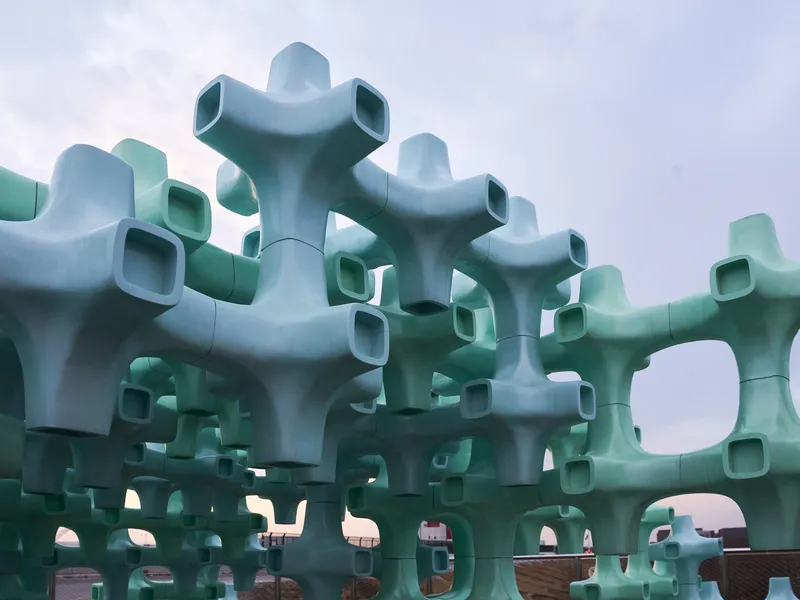
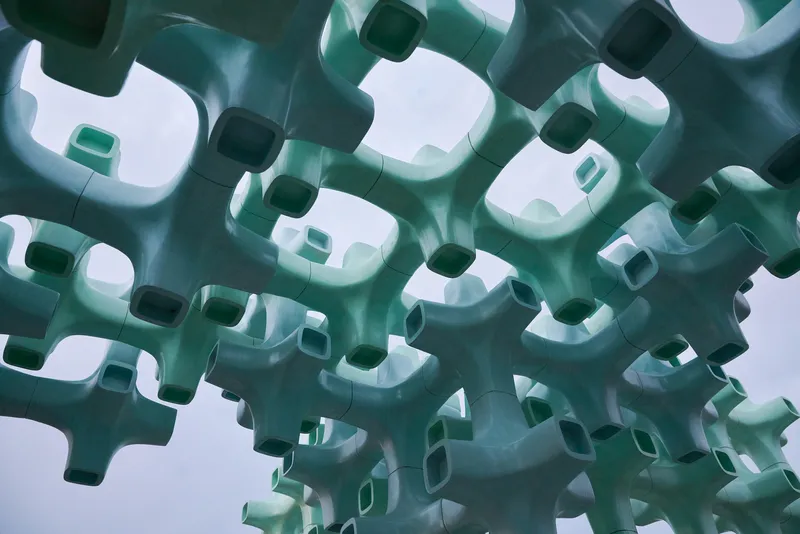
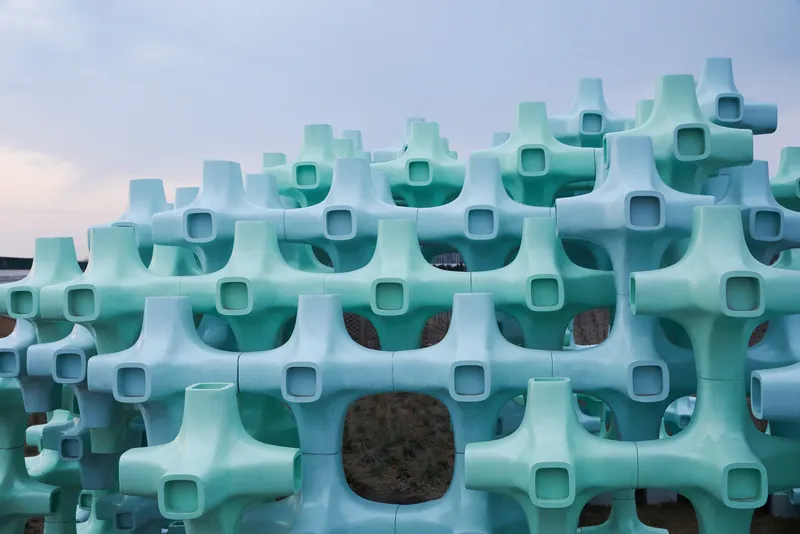
3D-Print Plastic Wave Breaker Splash
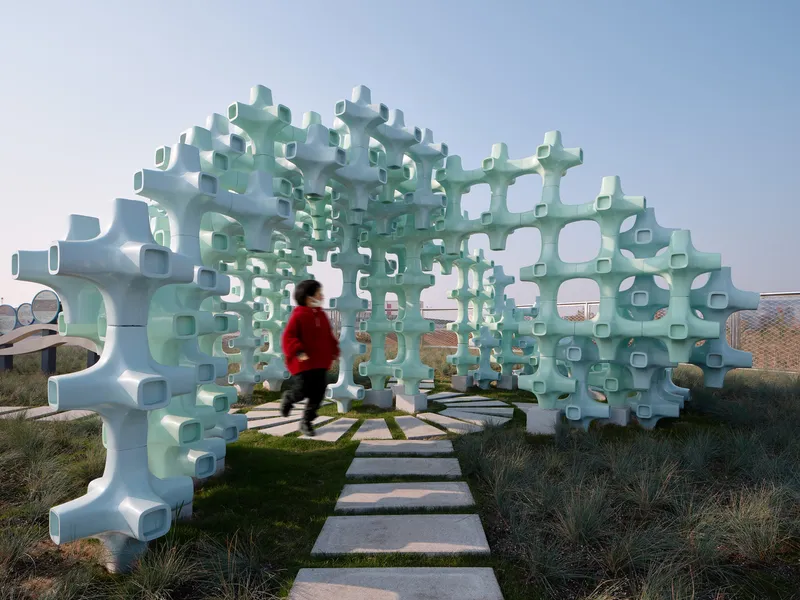
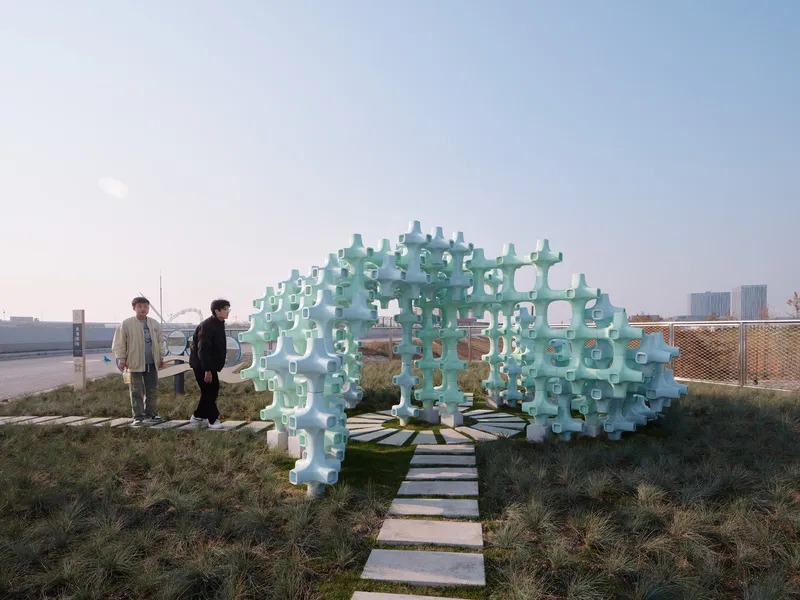
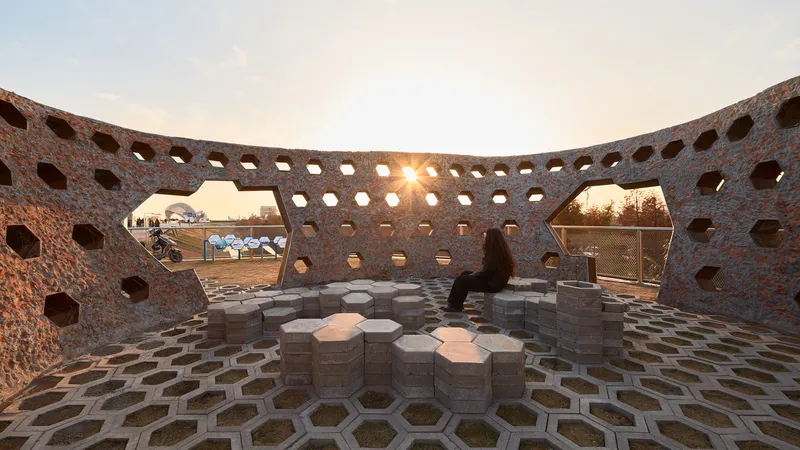
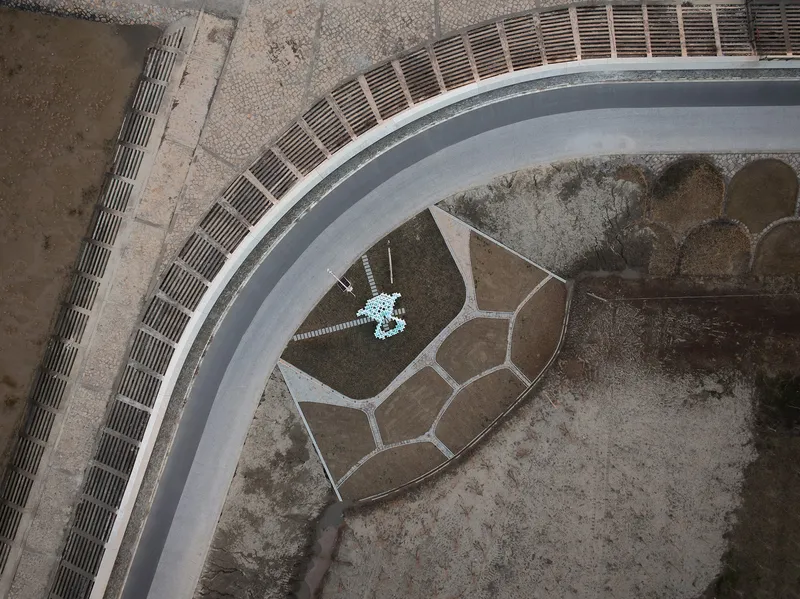
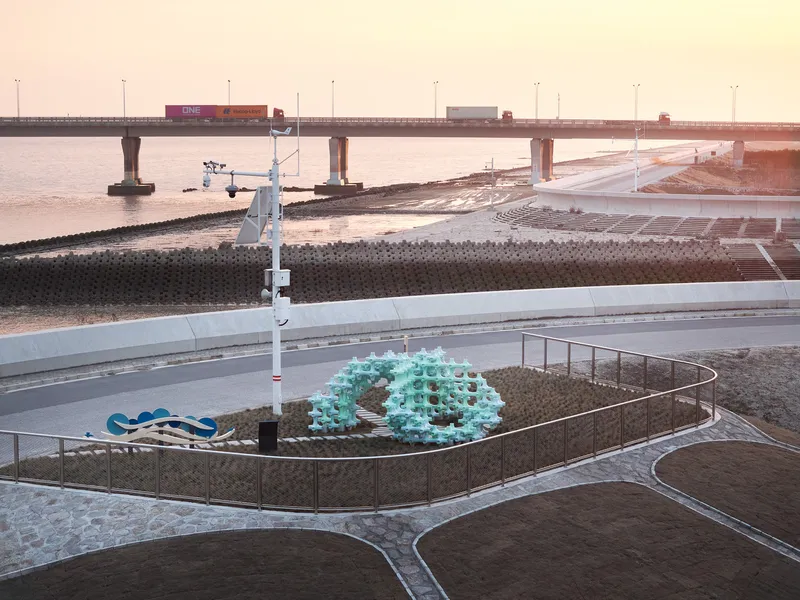
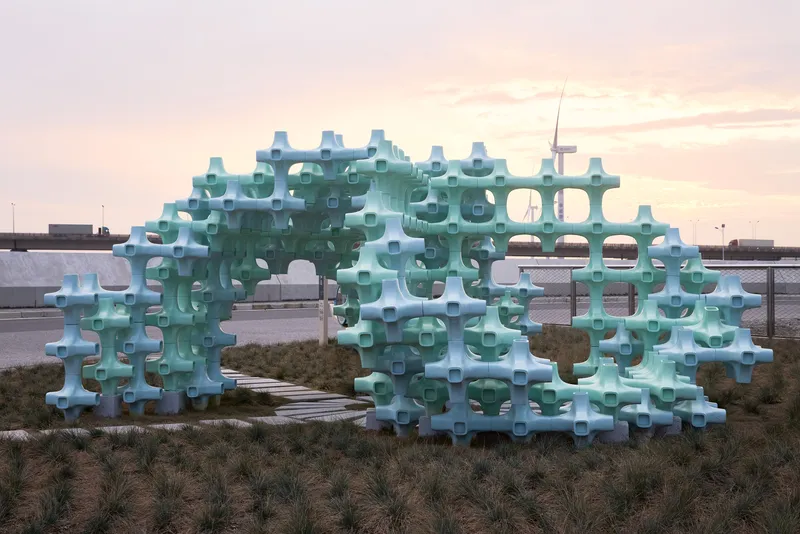
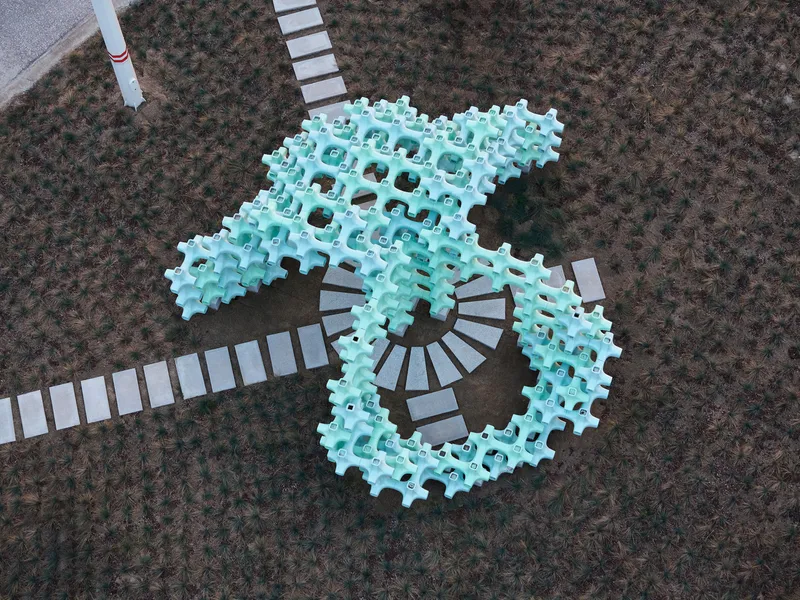
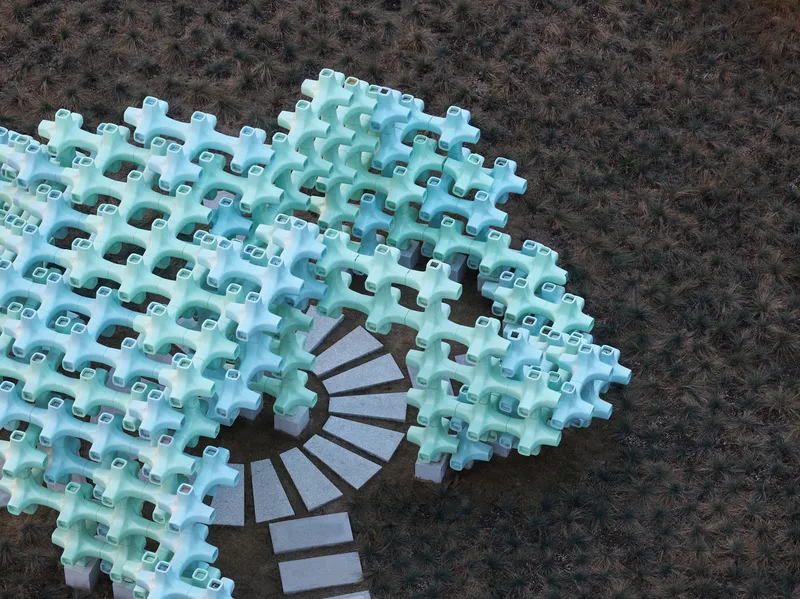
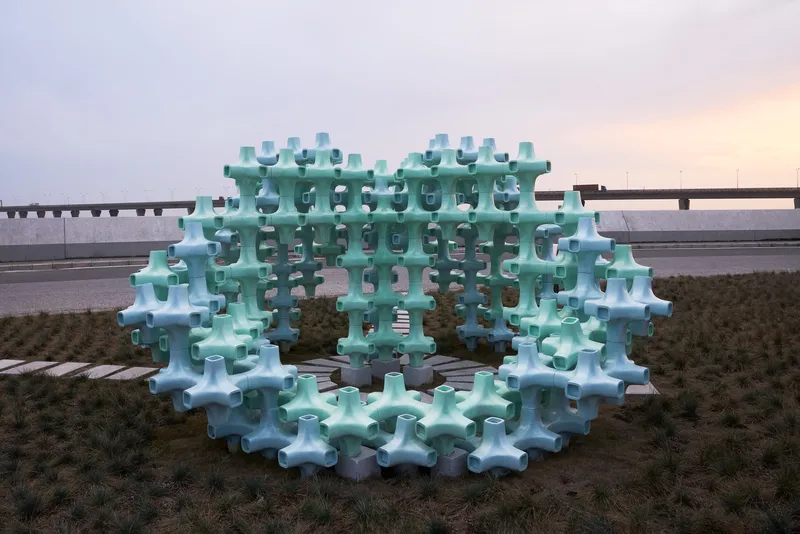
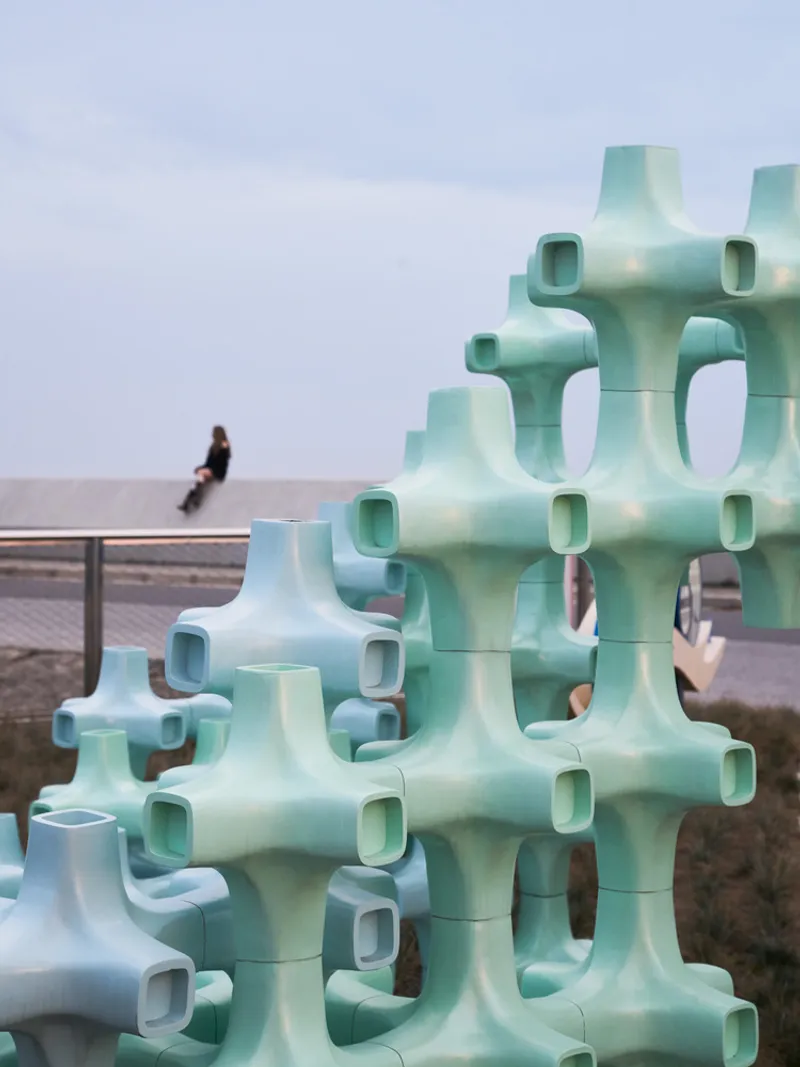
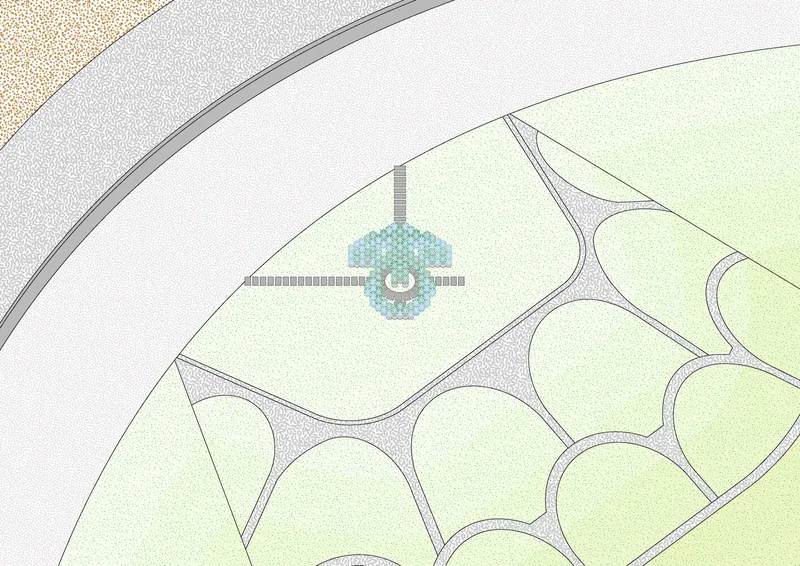
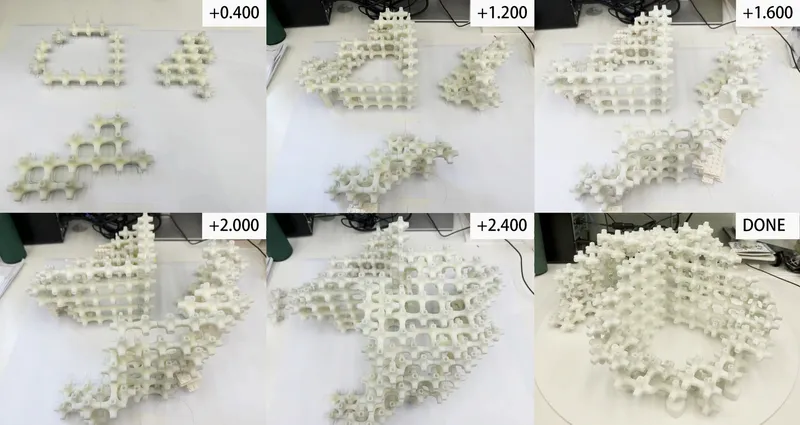
Adjacent to the iconic Donghai Bridge, this pavilion utilizes advanced 3D printing technology to create a porous landscape that mimics wave breakers. Constructed from high-strength plastic units, it invites visitors to navigate through its wave-like corridors, offering a tactile exploration of artificial rock formations inspired by natural scholar stones.
Recycled Brick Coral Reef
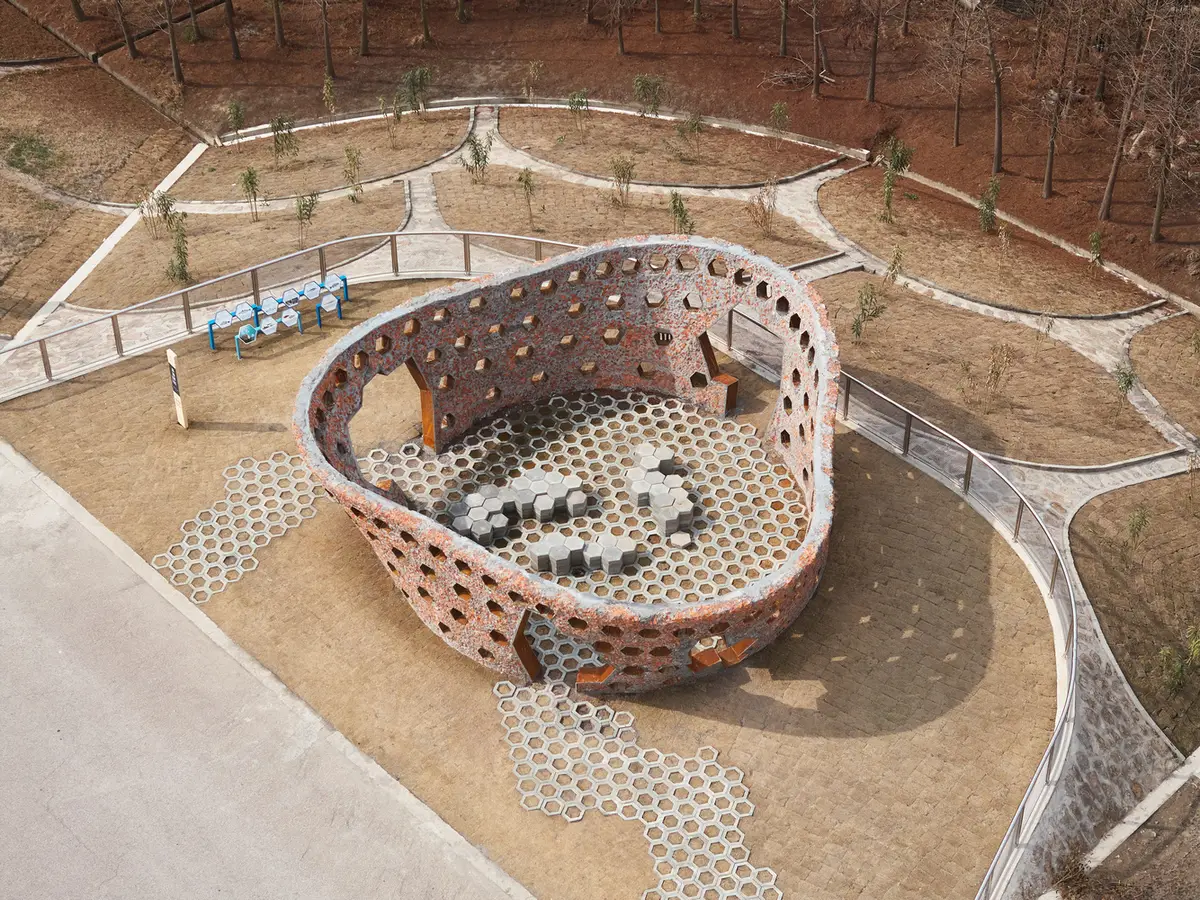
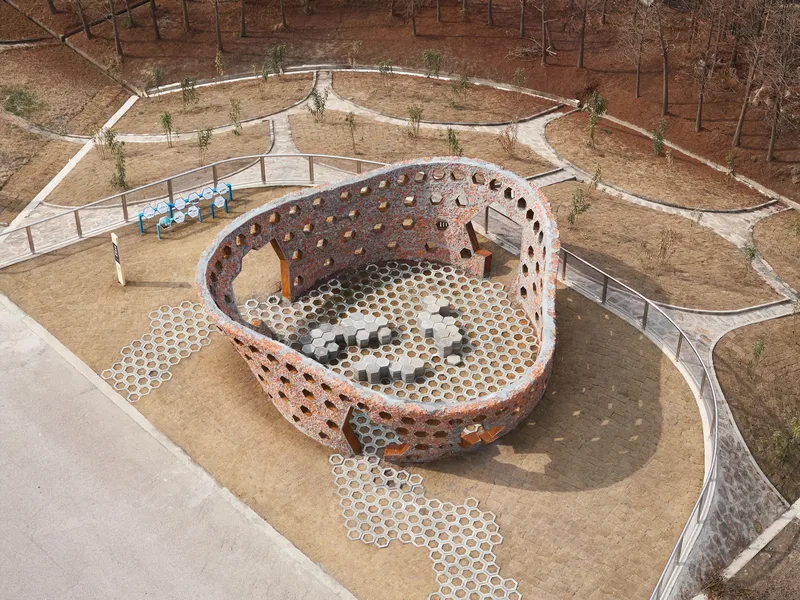
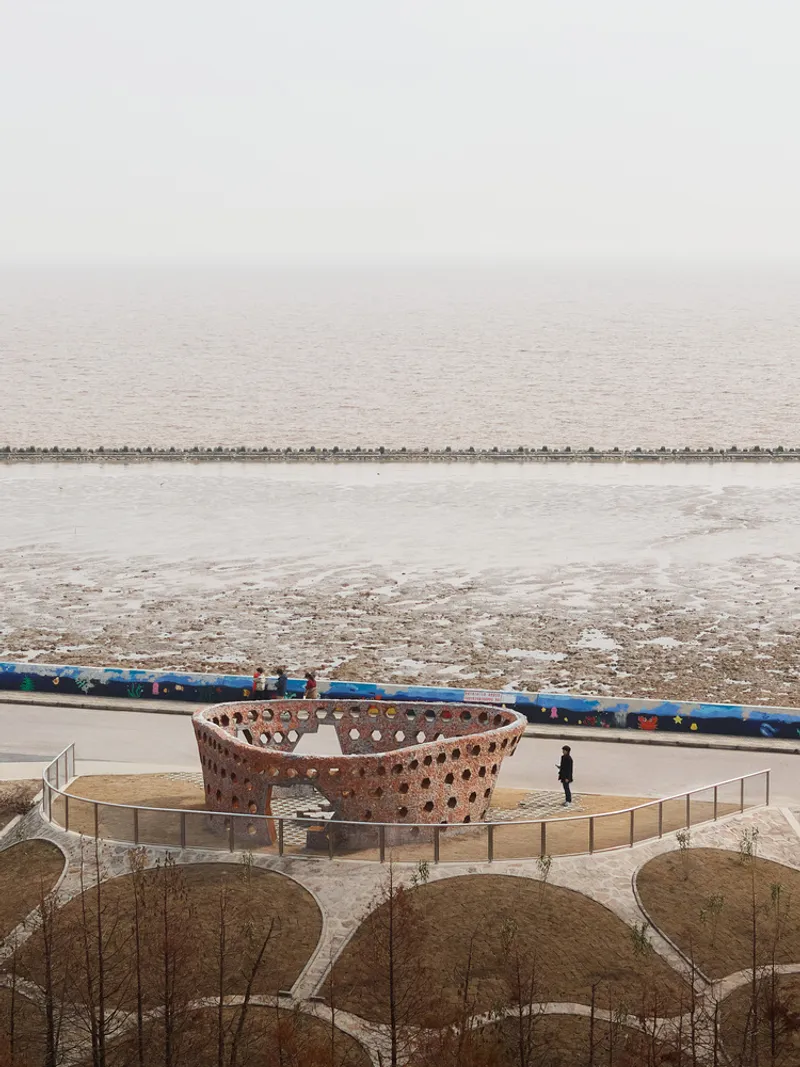
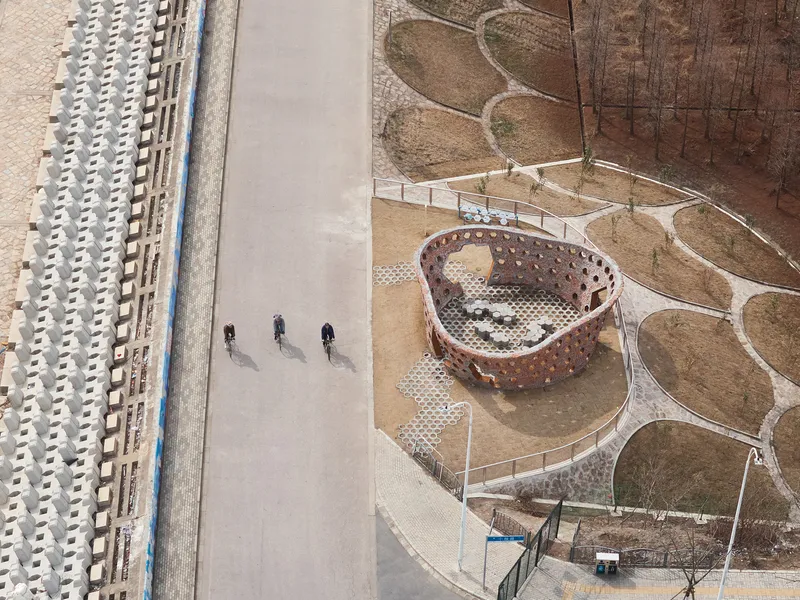
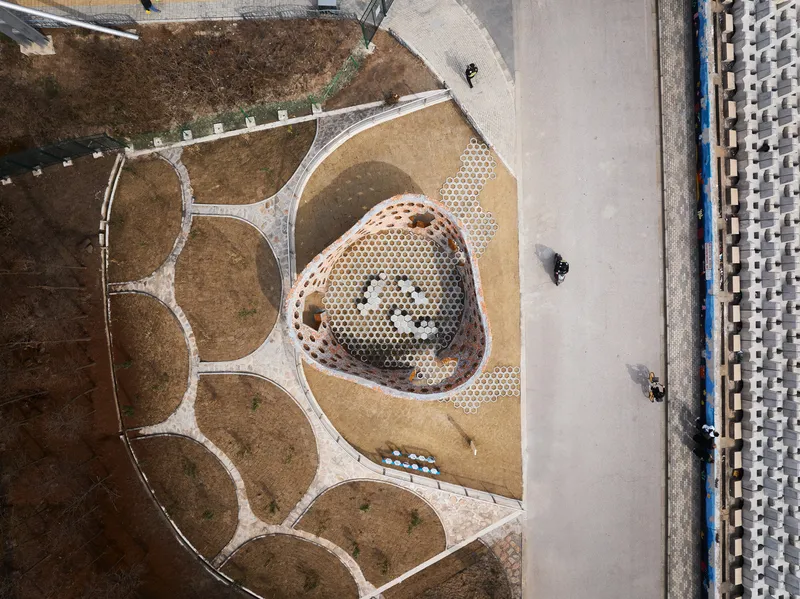
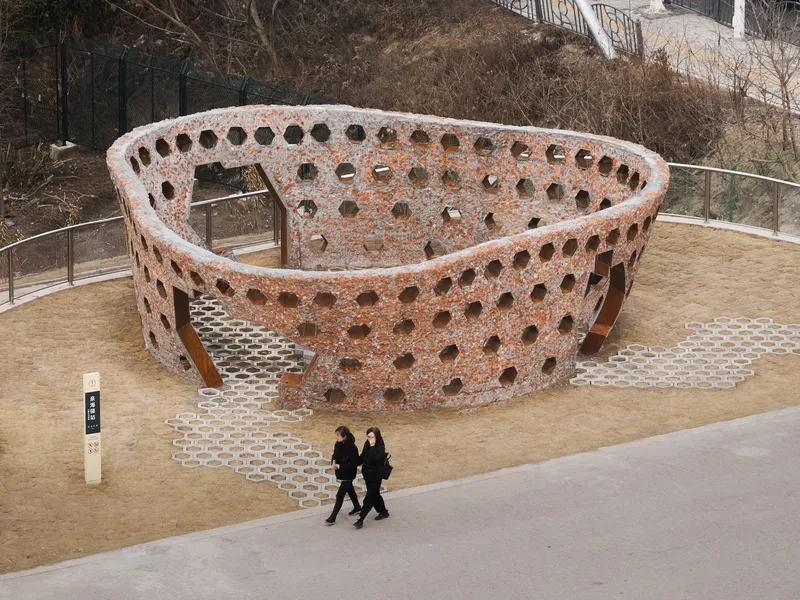
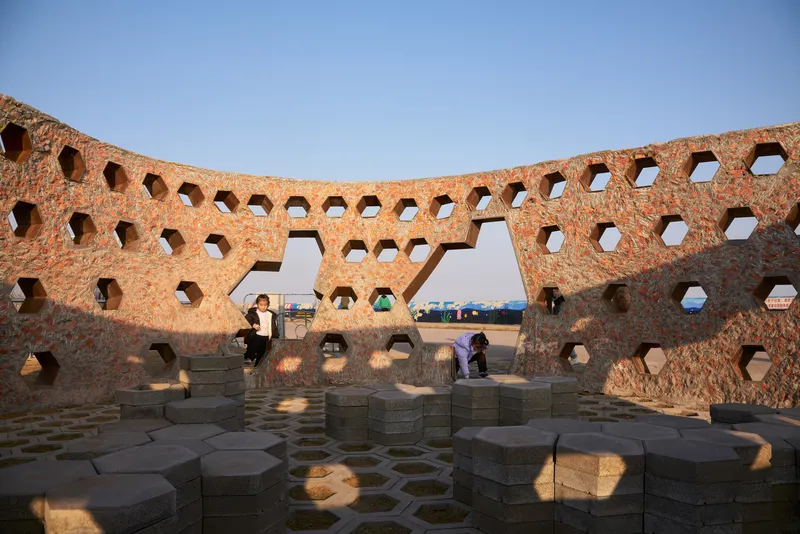
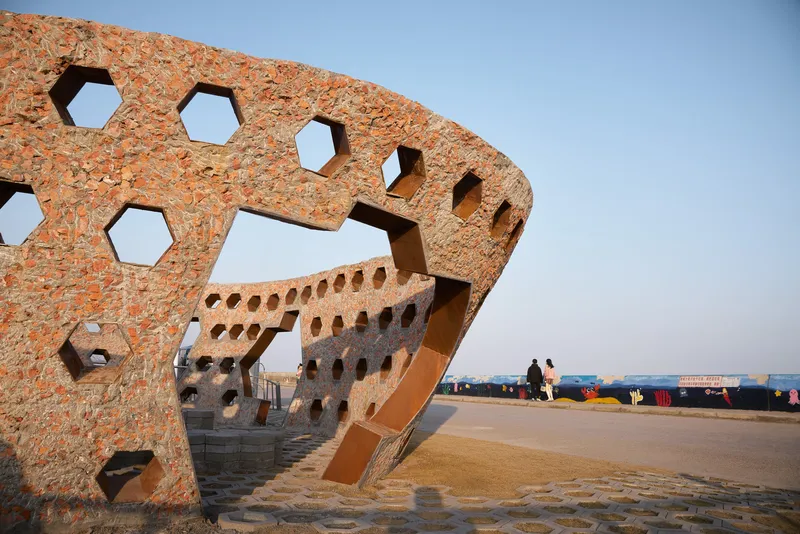
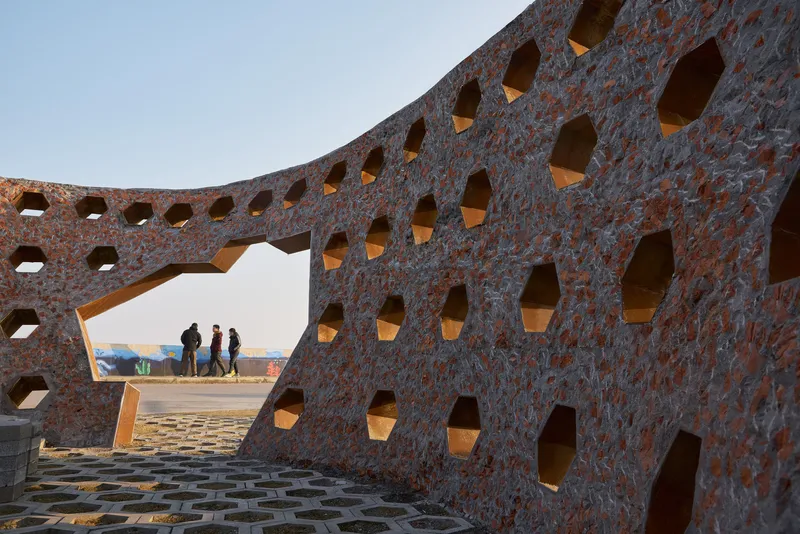
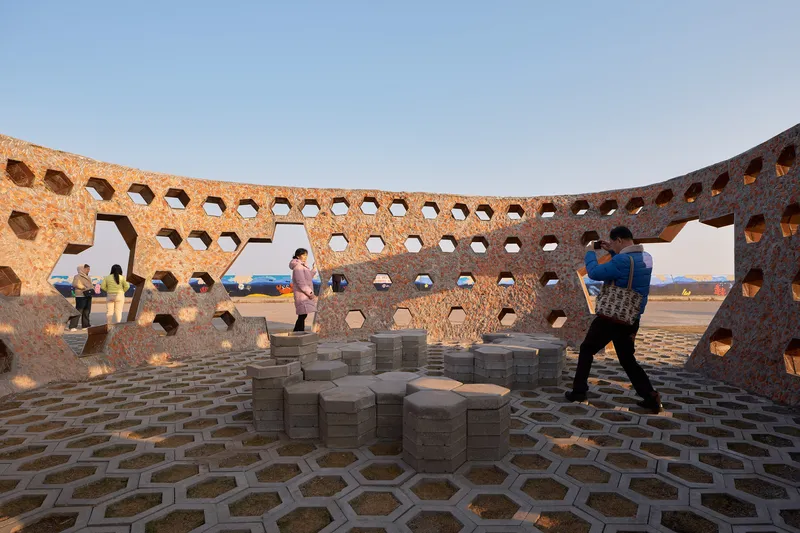
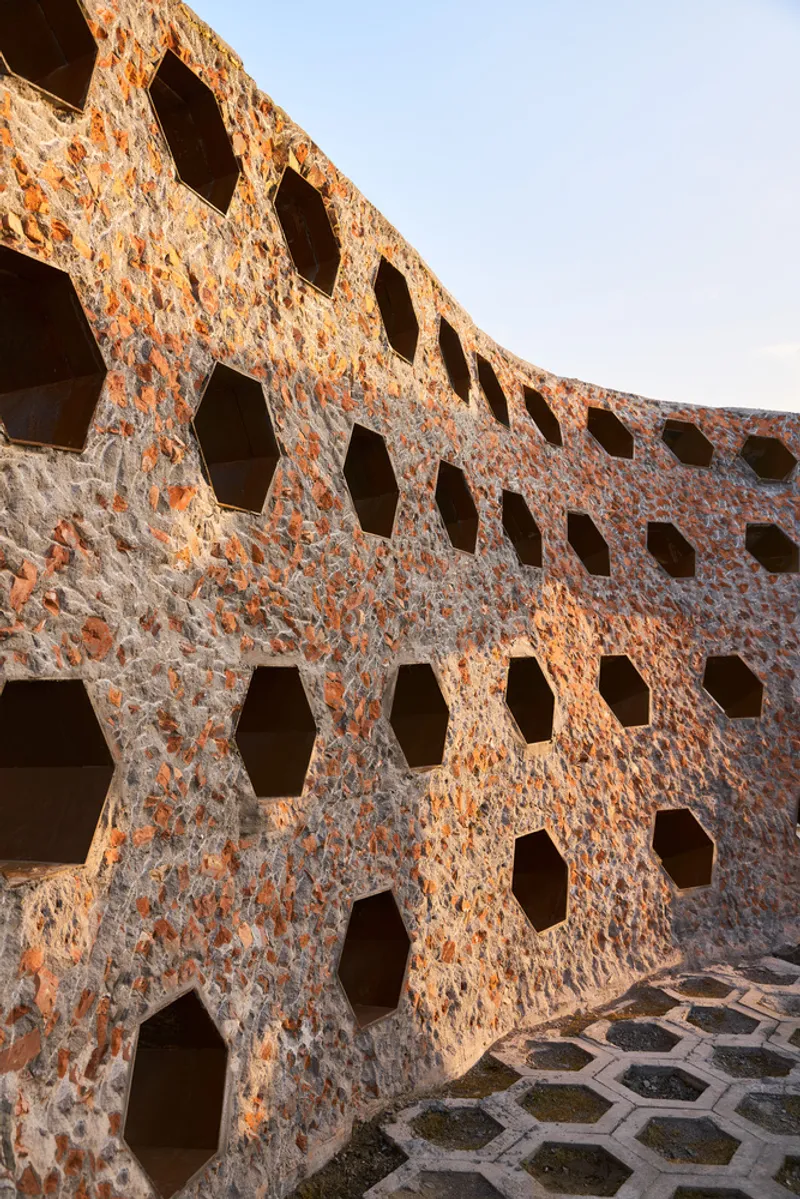
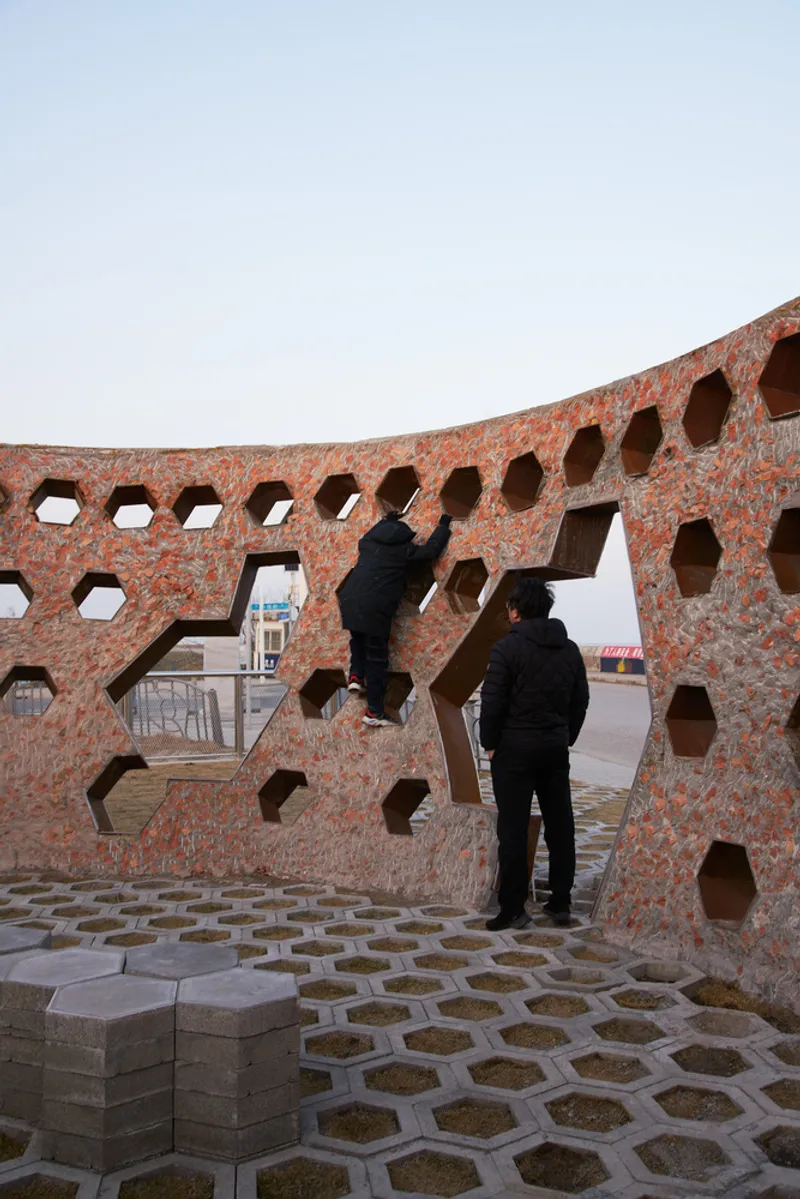
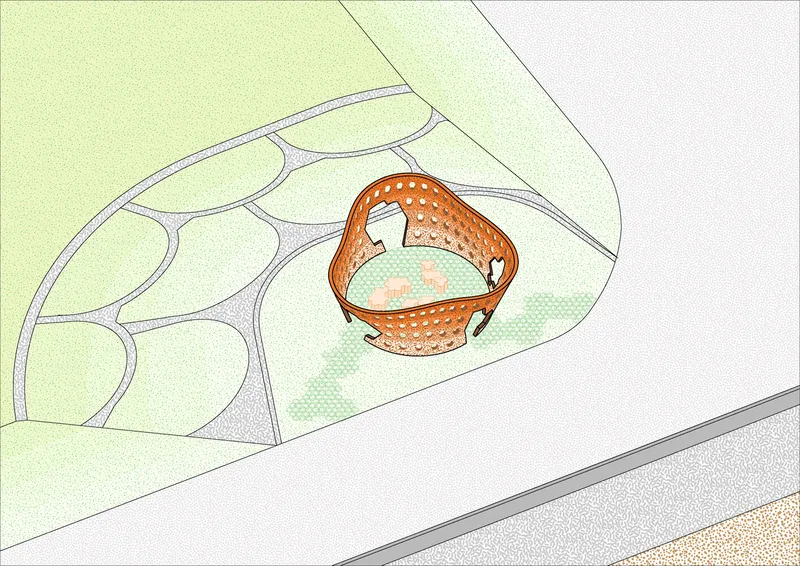
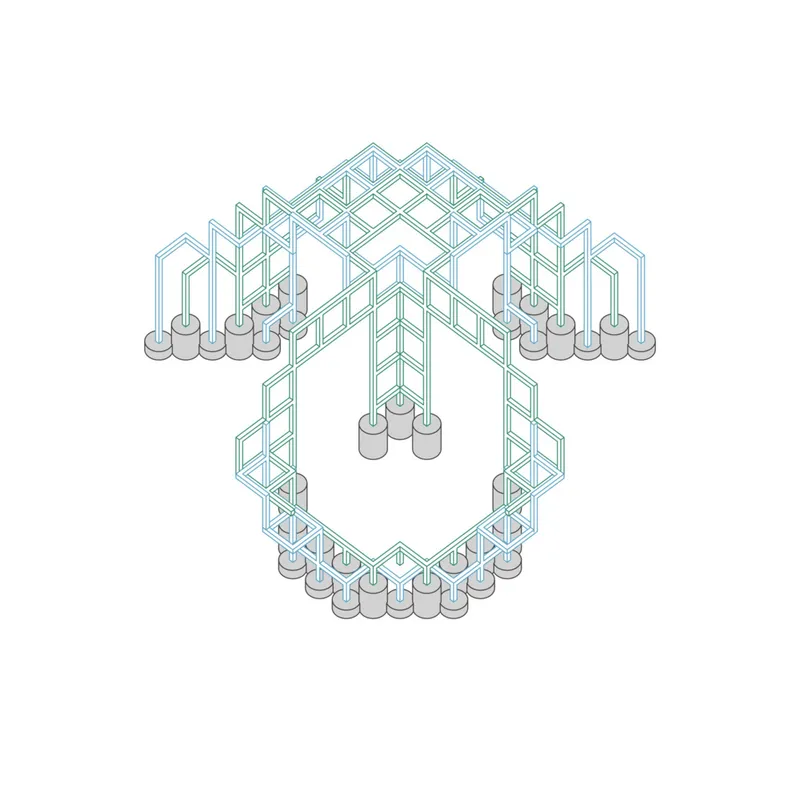
Near the Lingang landmark, the Coral Reef Pavilion takes shape with a design reminiscent of concrete artificial coral reefs. Comprising recycled brick fragments, this pavilion forms a rugged, porous wall that integrates seamlessly with the coastal environment. It provides not just a visual anchor but also a functional space for social interactions and leisure activities.
Sustainable Practices and Material Innovation
Each pavilion emphasizes sustainability through the use of innovative materials and construction techniques. From the semi-transparent membrane of the Sea Snail to the recycled components of the Coral Reef, these structures reflect a commitment to environmentally friendly practices. They serve as educational tools themselves, teaching visitors about sustainability and ecological preservation through design and materiality.
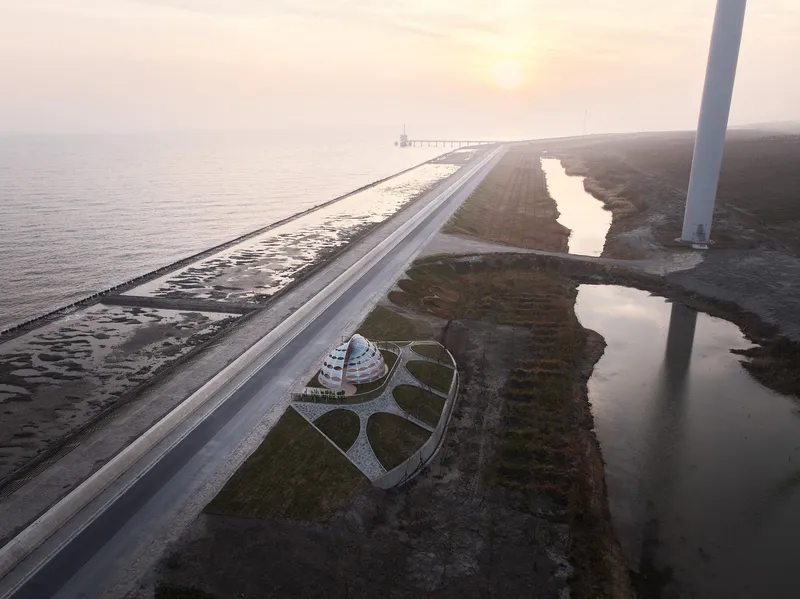
The "Three Ecological Pavilions by the Sea" by HCCH Studio are more than just architectural constructs; they are a celebration of ecological thought, artistic expression, and community engagement. These pavilions not only enhance the coastal landscape but also inspire visitors to contemplate the delicate balance between human activity and natural ecosystems. As landmarks of Lingang's ecological restoration, they symbolize hope and innovation for sustainable architectural practices worldwide.

All photographs are work of Qingyan Zhu


Popular Articles
Popular articles from the community


ALGAL REALM: A Bio-Integrated Lunar Habitat Design for Life Beyond Earth
ALGAL REALM reimagines lunar habitat design with algae-powered life support, 3D-printed regolith, and vertical living for a lunar future.

Co-life: Sustainable Architecture for Age-Friendly Community Living
Co-life reimagines sustainable architecture for seniors through courtyards, rammed earth, shared gardens, and spaces designed for belonging.

Hill & Cross Opera: Sculptural Opera House Architecture Shaped by Tallinn’s Landscape and Identity
Hill & Cross Opera reimagines opera house architecture in Tallinn through its sculptural hill, civic plaza, glass wave and a luminous cross.

The Musturak Paradise: Senior Living Architecture for a Connected Future in Temara, Morocco
The Musturak Paradise reimagines senior living architecture in Temara via private homes, social spaces, culture, community, and shared care.

Similar Reads
You might also enjoy these articles


Hodi-Mandai Geram
Project Function: Preservation and revitalization of the Intangible heritage and socio-spatial identity of the Hodi by Housing, Cultural Memory Center, Sacred Grove, landscape, local tourism economy


Olio Towers: A Mid-Rise for Performers That Fuses Housing, Rehearsal, and Stage
Located blocks from Houston's Theater District, this modular tower stacks living units around a central performance atrium.

Oasis: Modular Green Housing Carved into Dhaka's Urban Fabric
A shortlisted Plugin Housing entry reclaims unauthorized settlements in Dhaka with stepped concrete volumes, green roofs, and ventilation-driven design.

Black Hole: A Floating Megastructure for the Post-Physical Era
Emiliano Mazzarotto envisions a spherical, self-scaling arena where e-sports, digital hotels, and holographic stadiums replace traditional public space.

Explore Ocean Plastic Competitions
Discover active competitions in this discipline

Challenge to reimagine the Iron Throne

Photograph architecture without architects

Illustrate the lost glory of Angkor Wat - Render Challenge

Design challenge to reuse E-waste
Comments (0)
Please login or sign up to add comments
No comments yet. Be the first to comment!