

FOLD
Folding terracotta surfaces integrate housing with public space, creating flexible, interactive, and sustainable living environments.

Approach to the Concept of Sustainability
In the proposed design, the concept of sustainability is addressed through issues such as material use and construction techniques. However, it was important that this concept not be limited to ecological practices alone. Sustainability encompasses not only the physical preservation of materials or structures but also the continuity of social and communal life.
The coexistence of housing and public spaces, the ability of the relationships established in these areas to find a place in social life, and the continuity of these relationships are also important issues. For this reason, the proposed design aims to produce a sustainable and healthy solution for the relationship between housing and public space.
Problem Definition
The project area and its surroundings have been examined on a larger scale under three main headings: the relationship of the residences with the street, the relationship of the residences with each other, and the spatial organization within the residences. As a result of this analysis, it was observed that the relationships between the houses and between the houses and the street were limited by physical barriers. When the surroundings of the project area are examined, sharp and impermeable boundaries are evident between the streets and the houses and among the houses themselves. Looking at the houses located along the roads extending from the inner parts of the city to the project area, it is seen that the walls surrounding their gardens completely sever the relationship between street and house. Similarly, such boundaries are observed between two houses as well.
This situation reduces spatial permeability and largely prevents interaction, encounters, and shared living practices. As a result, the street begins to function merely as a transportation corridor. However, the street should also be a social space where people walk and have daily encounters.
The separation of the houses from each other damages the sense of community and belonging. This way of living, divided by strict boundaries, also eliminates intermediate spaces. However, when we look at the historical development of housing typologies, semi-public spaces such as courtyards, terraces, and front gardens integrated with the street have held an important place as areas where neighborly relations were formed and social interaction took place.
Focusing on the interior spaces of houses, it is seen that new needs have emerged in line with contemporary living practices. With the development of technology, the dependence of work life on space has decreased, and for some professions, the home has also become a workplace. This change has led to an increase in the time spent at home and a reevaluation of the functions of the spaces needed at home. For example, dining rooms, which were used daily in the past, have now turned into spaces used only on special occasions or not used at all. Thus, the functional transformation of spaces within the home has become a problematic issue.
Design Proposal
The proposed design is structured around the relationships between housing, the street coming from the city center, public spaces, and semi-private spaces. The street extending from the city center to the project area gradually transforms into a qualified urban ground. This surface infiltrates the voids between the houses along the street and creates public spaces. Some of these areas serve functions such as bicycle stations or agricultural fields, while others are designed simply as places for sitting and socializing. In this way, the aim is to create a sustainable and lively street life.
Upon reaching the project area, the urban ground further expands and shifts into different levels. Various public programs are included at these levels. At the same time, this surface descends to the 4.50 level within the project area. At this level, public uses such as a library, gym, market area, and workshops are located. The green space on the river side also connects to the 4.50 level with a ramp, and the continuity of green space is maintained around this level.
On the 0.00 and upper levels, some of the residential and semi-private programs are located. These programs are separated by a semi-permeable wall that runs longitudinally through the project area. This porous and permeable wall functions as a threshold, enabling the transition between public and semi-private space. Semi-private programs are spaces not used by everyone, but where residents occasionally gather and establish neighborly relationships. While creating these areas, spaces that are less used in a family but more needed when people come together were considered. Areas such as dining rooms, living rooms, and playrooms where several families can spend time together are located in these regions.
At the residential scale, it is aimed that users can personalize their living spaces according to their own working and sheltering needs. For this reason, only a fixed bathroom unit has been placed in each housing unit, and the remaining spaces are left to be divided by partition walls according to the user’s needs. These non-load-bearing partition walls are designed to be demolished and reconfigured, and even recycled if necessary.
Material and Construction Technique
The design is shaped by the idea of surfaces folding to become spatial elements. Terracotta is chosen as the primary material for these surfaces; it is used with different components and forms depending on location and function. The folded surfaces become urban ground, walls, or eaves, forming the defining elements of the structure.
In areas where terracotta is used on the ground, waterproofing and surface protection are applied to ensure durability. On surfaces in front of windows, where sun protection and privacy are desired, a brick form is used. The gaps between the bricks vary to balance permeability and privacy.
Terracotta bricks are also used in interior partition walls. As these walls are not load-bearing, they can be demolished and reconfigured if necessary, making the material easy to recycle. This enables users to adapt their spaces according to changing needs.

Popular Articles
Popular articles from the community

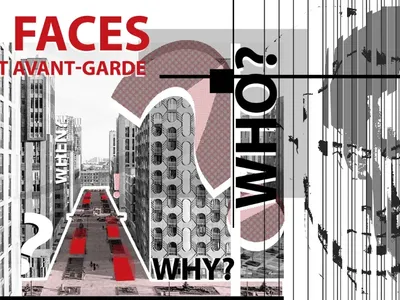
Faces of the Soviet Avant-Garde: Turning Moscow's Street Names into an Open-Air Museum
A network of sculptural installations across a Moscow residential district transforms forgotten architect names into spatial encounters with cultural memor
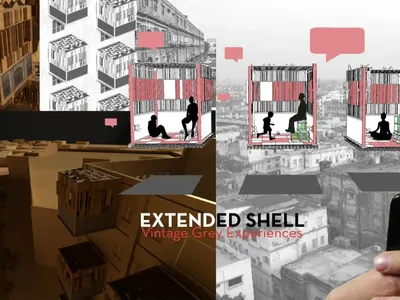
Extended Shell: Retrofitting Kolkata's Balconies as Living Urban Thresholds
A modular retrofit system recovers the social and environmental intelligence of Kolkata's historic verandas for contemporary Park Street residents.

Singing Woman: Contemporary Architecture Inspired by Estonia’s Voice and the Sea
Singing Woman turns Estonia’s song culture into flowing opera house architecture, blending public life, landscape, sea, and national memory.

The Amber Palace Opera: A Geological Fiction Surfaces on Tallinn's Baltic Waterfront
Pierre Brillard reimagines a Baltic legend as a public landscape, opera house, and waterfront promenade rooted in Tallinn's coastal identity.

Similar Reads
You might also enjoy these articles

Day and Night Park: A Time-Based Urban Newsstand in Beijing
A temporary urban newsstand in Beijing blending travel, light, and reading through poetic colors, compact form, and community-focused design.

Modernist Patio Renovation in El Masnou, Barcelona by Oliver Segura Arquitectura + Cebrià Arquitectura
Modernist patio renovation blending tradition and innovation with a movable pool, leveled floors, and Catalan materials in El Masnou.

Alto Residencial Coop: Cooperative Housing Development in Santiago de Compostela by Carbajo Barrios Arquitectos
A linear cooperative housing complex blending white volumes and perforated metal façades, enhancing community living, natural light, privacy, and urban integration.
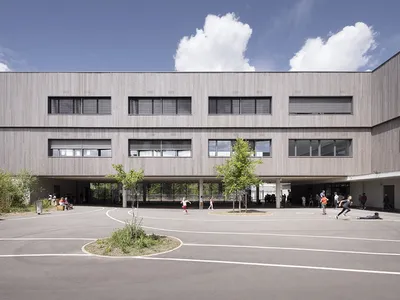
Vil Genis School by BPA ARCHITECTURE – Massy, France
Vil Genis School in Massy, France, features sustainable design, south-facing classrooms, community integration, accessible spaces, and modern educational architecture.

Explore Social Sustainability Competitions
Discover active competitions in this discipline


Challenge to reimagine the Iron Throne

Photograph architecture without architects

Illustrate the lost glory of Angkor Wat - Render Challenge

Design challenge to reuse E-waste
Comments (0)
Please login or sign up to add comments
No comments yet. Be the first to comment!