Food Street: A Contemporary Urban Food Market Architecture Connecting City, Culture, and Riverfront
A modular urban food market architecture in New York that connects chefs, visitors, and the waterfront through flexible dining spaces and vibrant public streets.


Urban food markets have become powerful catalysts for social interaction, cultural exchange, and neighborhood revitalization. The Food Street project reimagines the concept of food market architecture by creating a dynamic and adaptable culinary destination that brings together chefs, visitors, and the surrounding cityscape. Designed by Gulmeena Barlas, Marie-Helene Lesiege, and Ngan Phan, the project proposes a vibrant riverfront environment where food, architecture, and public life converge.
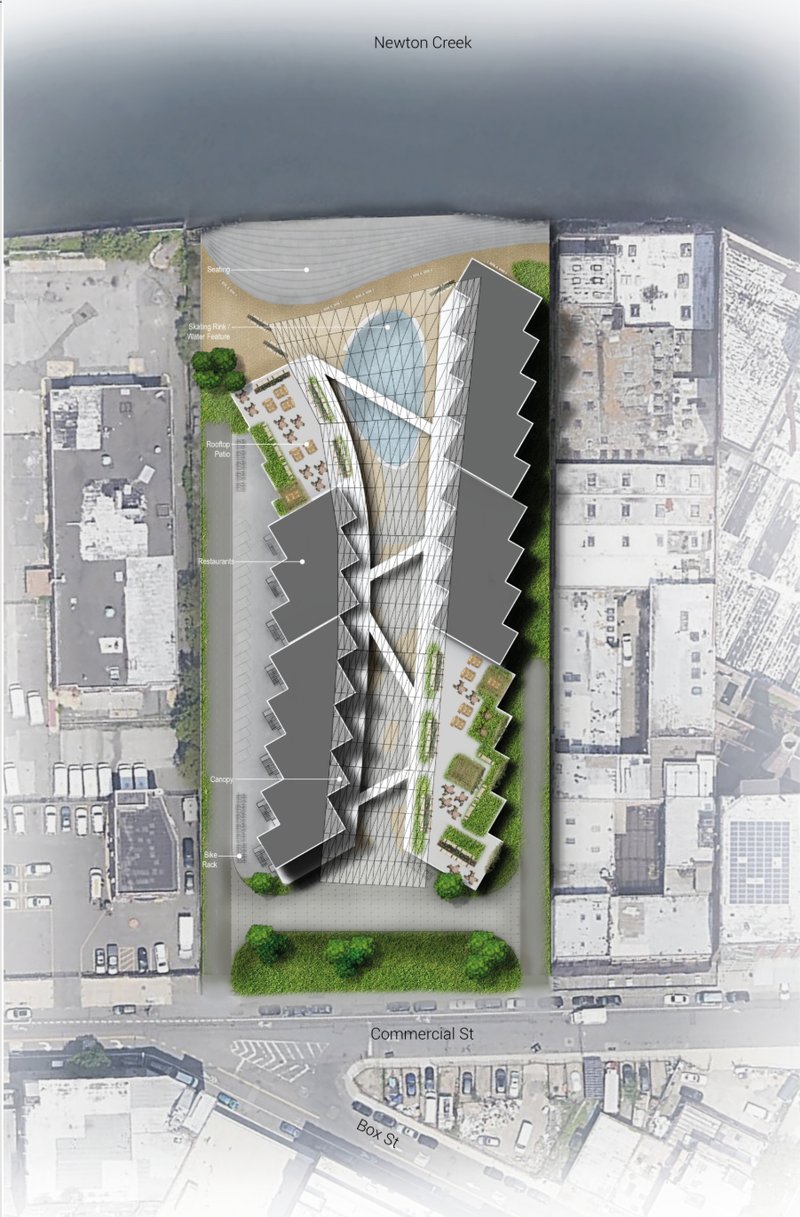
Located along Newton Creek in New York, the design transforms the site into a pedestrian oriented urban food corridor. The architecture organizes restaurants, communal spaces, and circulation paths into a layered spatial system that promotes exploration, interaction, and flexibility. By combining modular restaurant units, open circulation streets, and a dramatic structural canopy, the project creates an immersive experience that celebrates food culture while strengthening the relationship between the city and the waterfront.
Urban Food Market Architecture as a Social Connector
The central ambition of the Food Street proposal is to develop an urban food market architecture that fosters connections between chefs and visitors while activating the surrounding neighborhood. The design removes traditional barriers between kitchens and customers and instead promotes openness, transparency, and direct interaction.
A pedestrian friendly environment allows visitors to walk through a series of culinary spaces, observe food preparation, and engage with chefs directly. The design introduces visual transparency through curtain wall facades and open kitchen arrangements. This approach transforms dining into an interactive experience where food preparation becomes part of the spatial narrative.
At the urban scale, the project acts as a destination that attracts both residents and tourists. By encouraging casual encounters, events, and social gatherings, the architecture becomes a catalyst for community building and neighborhood revitalization.
Site Strategy and Riverfront Orientation
The project site sits along Newton Creek with visual connections toward Manhattan and the waterfront. The architecture is carefully oriented to maximize views of the river and skyline. Staggered building volumes frame sightlines toward the water while simultaneously creating sheltered public spaces between the structures.
The site plan organizes two primary building bands along a central pedestrian street. This configuration forms a spatial corridor that acts as the heart of the development. Visitors enter this urban street and move through a sequence of restaurants, patios, and event spaces while gradually progressing toward the riverfront plaza.
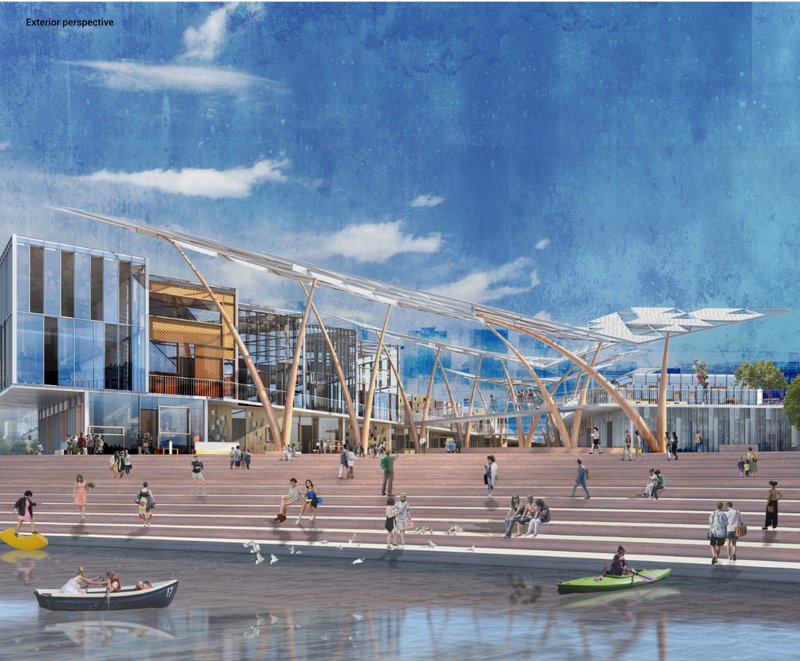
At the northern edge of the site, stepped terraces transition from the architectural platform down toward the water. These terraces provide seating areas, informal gathering spaces, and viewpoints that allow visitors to experience the landscape and skyline.
Modular Restaurant Units and Flexible Layouts
Flexibility is one of the defining characteristics of the Food Street concept. The design introduces modular restaurant units that allow spaces to expand, contract, or combine depending on operational needs.
Different restaurant models are integrated into the layout including:
• Single restaurant classic model • Workshop model for collaborative dining experiences • Banquette style restaurants • Bar oriented layouts • Double restaurant configurations for larger venues
Each unit contains its own kitchen and service core while shared service corridors at the rear allow deliveries and operational functions to occur without disrupting the public experience.
This modular system allows chefs and restaurant operators to adapt their spaces over time. Units can be joined to create larger restaurants or divided to host smaller culinary concepts. As a result the architecture remains responsive to evolving food cultures and changing market demands.
Multi Layered Circulation and Spatial Experience
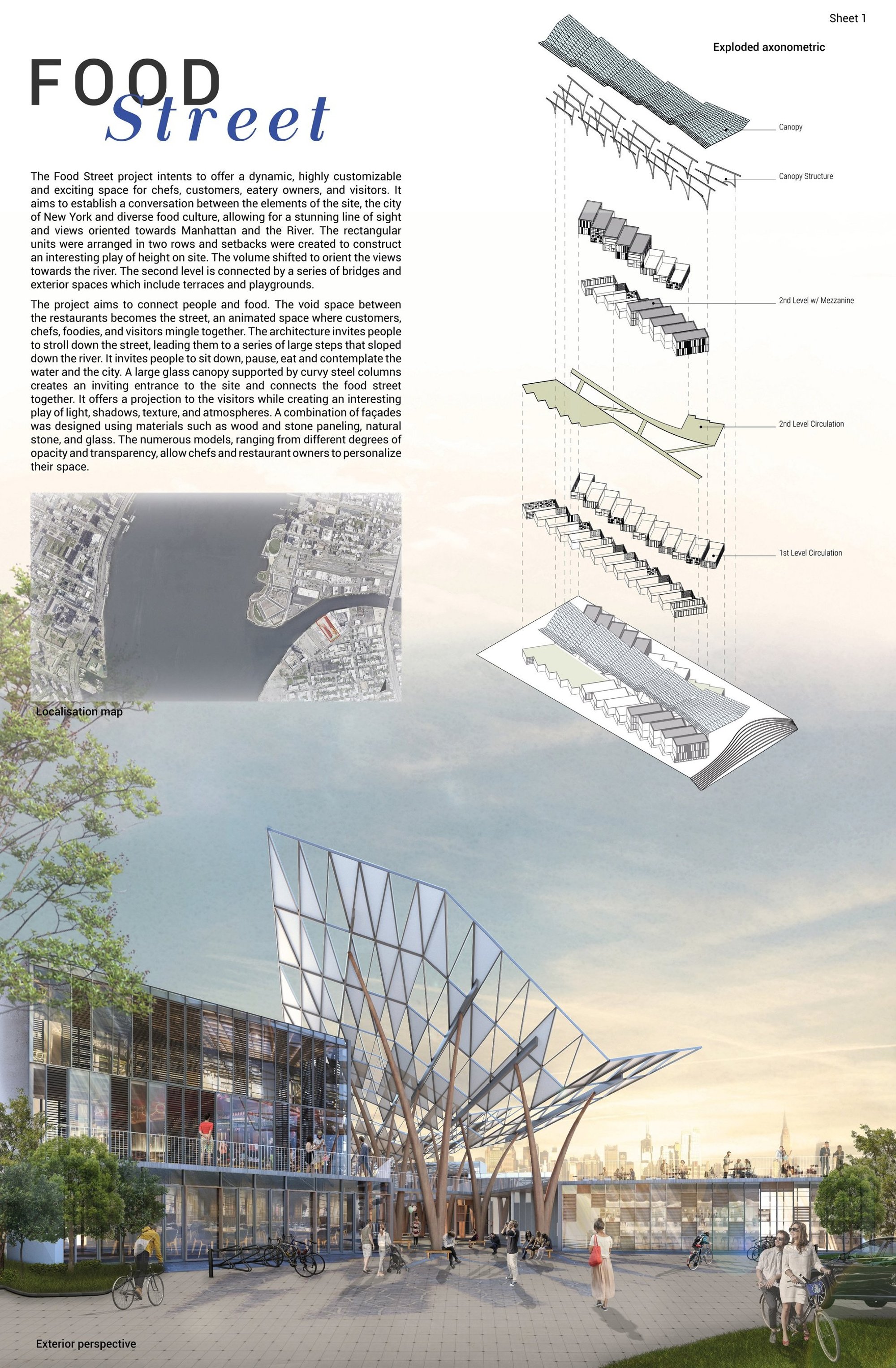
The spatial organization of the project is structured around four layers of circulation that guide visitors through the complex.
The ground level acts as the primary public street where restaurants open directly onto the pedestrian corridor. Upper levels introduce terraces, bridges, and viewing platforms that allow visitors to experience the architecture from different perspectives.
Bridges connect the buildings across the central street, creating a network of elevated pathways. These circulation routes encourage exploration and generate varied visual connections between interior dining areas, outdoor terraces, and the river landscape.
The layered movement system transforms the project into a dynamic urban environment where architecture, food, and public life intersect.
Architectural Form and Structural Canopy
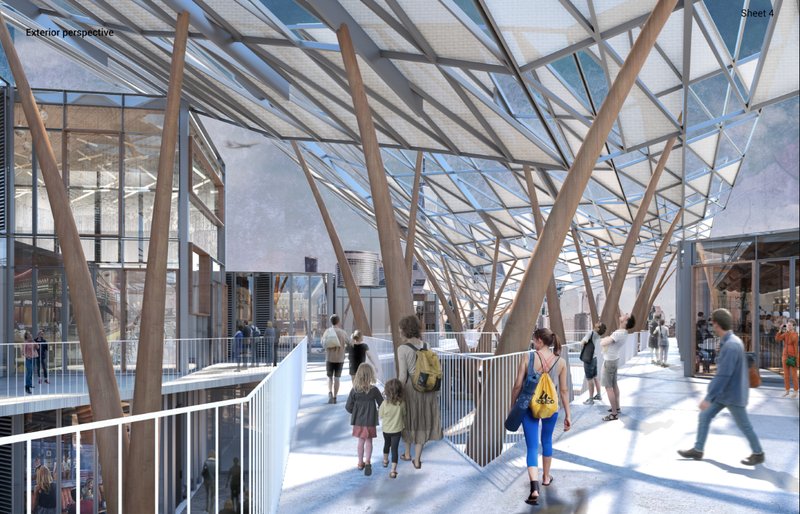
A defining visual feature of the Food Street project is the expressive canopy structure that spans across the circulation street. The canopy is supported by branching structural columns that rise from the ground and spread outward like a network of organic supports.
This lightweight roof structure performs several roles within the project:
• Provides shade and weather protection for outdoor circulation areas • Creates a recognizable architectural identity for the food market • Frames views toward the skyline and waterfront • Defines the central gathering space beneath it
The canopy introduces rhythm and movement into the architecture while reinforcing the idea of a public urban street sheltered within a larger architectural framework.
Interior Dining Experience
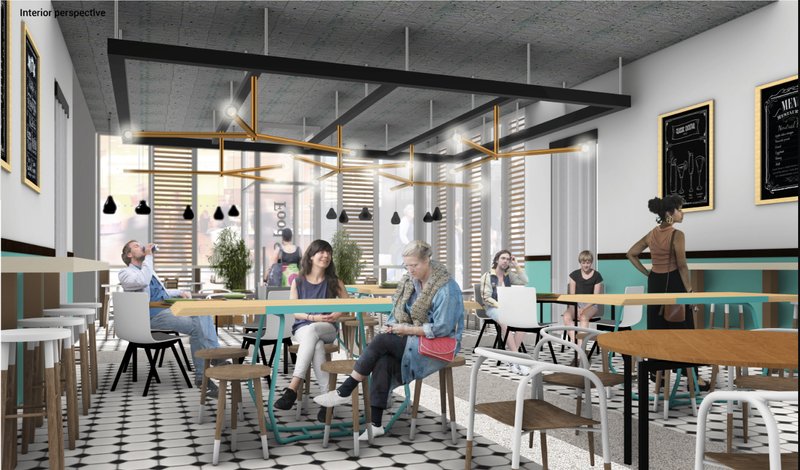
Inside the restaurant spaces, the design emphasizes openness and visual connectivity. Large glazed facades allow natural light to enter the interiors while maintaining strong visual relationships with the surrounding circulation spaces.
Furniture arrangements vary depending on the restaurant model. Long communal tables encourage collaborative dining experiences while smaller seating arrangements provide more intimate environments. The interior design balances industrial urban textures with warm materials such as wood and metal accents.
The open kitchen concept further strengthens the connection between chefs and visitors. Customers can observe the preparation process, creating a sense of transparency and authenticity within the dining experience.
Adaptability and Future Growth
The Food Street proposal is designed to evolve over time. The modular building system allows expansion as culinary businesses grow or as new concepts emerge.
Patio spaces on upper levels can be adapted for outdoor dining or enclosed to respond to seasonal changes. Mezzanine levels provide additional seating areas and allow restaurants to scale their capacity according to demand.
Because the structural framework and service infrastructure are standardized, new restaurant units can be integrated without disrupting the overall spatial organization. This adaptability ensures that the project remains relevant as the neighborhood and food culture continue to evolve.
Revitalizing the Neighborhood Through Food and Public Space
Beyond its architectural qualities, the Food Street project aims to play an important role in the revitalization of the surrounding neighborhood. By introducing public gathering spaces, cultural events, and diverse culinary offerings, the development brings new life to an otherwise underutilized urban site.
Residents gain access to a lively destination where they can dine, socialize, and experience the waterfront. Visitors are drawn to the site by the variety of cuisines, architectural atmosphere, and scenic views of New York.
In this way the project demonstrates how food market architecture can become a driver of urban regeneration. The combination of social spaces, flexible restaurant environments, and strong connections to landscape transforms the site into an active urban hub.
Food Street represents a forward thinking approach to contemporary food market design. Through modular architecture, layered circulation systems, and strong connections to the waterfront, the project creates an environment where culinary culture and urban life merge.
Designed by Gulmeena Barlas, Marie-Helene Lesiege, and Ngan Phan, the project illustrates how architecture can shape social interaction, support local businesses, and transform underused sites into vibrant public destinations. By reimagining the relationship between food, public space, and city infrastructure, Food Street offers a compelling model for the future of urban food market architecture.